
Gjør som tusenvis av andre bokelskere
Abonner på vårt nyhetsbrev og få rabatter og inspirasjon til din neste leseopplevelse.
Ved å abonnere godtar du vår personvernerklæring.Du kan når som helst melde deg av våre nyhetsbrev.

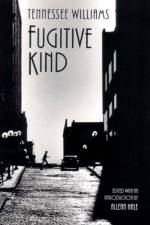
Fugitive Kind, one of Tennessee Williams's earliest plays, is one of his richest in dramatic material. Written in 1937 when the playwright was still Thomas Lanier Williams, Fugitive Kind introduces the character who will inhabit most of his later plays: the marginal man or woman who, through no personal fault, is a misfit in society but who demonstrates an admirable will to survive. Signature Tennessee Williams' characters, situations, and even the title (which was used as The Fugitive Kind for the 1960 film based on Orpheus Descending) have their genesis here. At age twenty-six, Williams was still learning his craft and this, his second full-length play, shows his debt to sources as diverse as thirties gangster films (The Petrified Forest, Winterset) and Romeo and Juliet. Fugitive Kind, with its star-crossed lovers and big city slum setting, takes place in a flophouse on the St. Louis waterfront in the shadow of Eads Bridge, where Williams spent Saturdays away from his shoe factory job and met his characters: jobless wayfarers on the dole, young writers and artists of the WPA, even gangsters and G-men. Fugitive Kind was also Williams's second play to be produced by The Mummers, a St. Louis theatre group devoted to drama of social protest. Called "vital and absorbing" by a contemporary review in The St. Louis Star-Times, this play reveals the young playwright's own struggle between his radical-socialist sympathies and his poetic inclinations, and signals his future reputation as our most compassionate lyric dramatist.
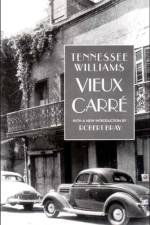
The drama takes it form from the shifting scenes of memory, and Williams's surrogate self invites us to focus, in turn, on the various inhabitants or his dilapidated rooming house in the Vieux Carré: the comically desperate landlady, Mrs. Wire; Jane, a properly brought-up young woman from New York making at last grab at pleasure with Tye, the vulgar but appealing strip-joint barker; two decayed gentlewomen politely starving in the garret; and the dying painter Nightingale, who tries to teach the young writer something about love--both of the body and of the heart. This is a play about the education of the artist, and education in loneliness and despair, in giving and not giving, but most of all in seeing, hearing, feeling, and learning that "writers are shameless spies," who pay dearly for their knowledge and who cannot forget. Building on two decades of Williams scholarship since Vieux Carré was originally published, Robert Bray, editor of The Tennessee Williams Annual Review, has provided a new introduction for this edition, giving the most authoritative account yet of its background and genesis.
Few poets have possessed so great a gift or so great a body of work-when she died at 74, she had been a published poet for more than half a century. The poems themselves shine with the artistry of a writer at the height of her powers.
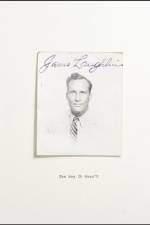
James Laughlin-poet, ladies' man, heir to a steel fortune, and the founder of New Directions-was still at work on his autobiography when he died at 83. He left behind personal files crammed with memories and memorabilia: in "M" he is taking Marianne Moore to Yankee games (outings captured here in charming snapshots) to discuss "arcane mammals," and in "N" nearly plunging off a mountain, hunting butterflies with Nabokov ("Volya was a doll in a very severe upper-crust Russian way").With an accent on humor, The Way It Wasn't is a scrapbook loaded with ephemera-letters and memories, clippings and photographs. This richly illustrated album glitters like a magpie's nest, if a magpie could have known Tennessee Williams, W.C. Williams, Merton, Miller, Stein, and Pound. In "C": "I wish that nice Jean Cocteau were still around. He took me to lunch at the Grand Véfours in the Palais-Royal and explained all about flying saucers. He understood mechanical things. He would advise me." In "P": "There was not much 'gracious living' in Pittsburgh, where at one house, the butler passed chewing gum on a silver salver after coffee." And: "The world is full of a large number of irritating people." In "H" there's Lillian Hellman: "What a raspy character. When I knocked at her door to try to borrow one of her books (hoping to butter her up) she only opened her door four inches and said words to the effect: 'Fuck off, you rapist.'" Marketing in "M": "I think it's important to get the 'troubadours' into the title. That's a 'buy-me' word." In "G": "Olga asked Allen Ginsberg if he was also buying Pound Conference T-shirts for his grandchildren. She was most lovable throughout." In "L": "Wyndham Lewis wrote 'Why don't you stop New Directions, your books are crap.'" And we find love in "L": "Cicero noted that an old love pinches like a crab." But in The Way It Wasn't James Laughlin's love of the crazy world and his crazier authors does not pinch a bit: it glows with wit and enlarges our feeling for the late great twentieth century.
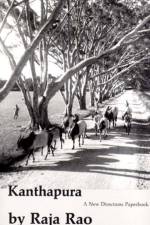
Kanthapura is the story of how Gandhi's struggle for independence from the British came to a typical village, Kanthapura, in South India. Young Moorthy, back from the city with "new ideas," cuts across the ancient barriers of caste to unite the villagers in non-violent action--which is met with violence by landlords and police. The dramatic tale unfolds in a poetic, almost mythical style which conveys as never before the rich textures of Indian rural life. The narrator is an old woman, imbued with the legendary history of the region, who knows the past of all the characters and comments on their actions with sharp-eyed wisdom. Her narrative, and the way she tells it, evokes the spirit of India's traditional folk-epics. This edition includes extensive notes on Indian myths, religion, social customs, and the Independence movement (given at the end of the book) which fill out the background for the American reader's more complete understanding and enjoyment.
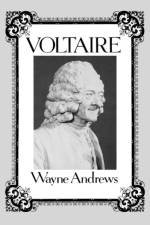
This is a short biography. Its subject, François Marie Arouet de Voltaire (1694-1778), would not have objected--he was careful to point out that "the surest way of being a bore is to tell everything." What Wayne Andrews's Voltaire may lack in laundry lists is made up in wit, learning, and an elegance of style eminently appropriate for an appreciation of a man who was never so ruthless as when eliminating the last trace of dust from his own writing. Indeed, Voltaire was the most successful writer of the eighteenth century. It matters little that his plays are today a lost cause, as is his poetry--the author of Candide and the Age of Louis XIV will always have his audience. His irreverence guarantees his immortality. While stressing Voltaire's eternal campaign against Christianity and his monumental efforts to effect justice in an autocratic era, Andrews maintains that his primary loyalty was always to himself. The fervent anti-Christian had his firm friends in the Church. The social philosopher courted Catherine the Great with near servility. But, in Victor Hugo's words: "His smile put an end to violence, his sarcasm put an end to despotism, his irony put an end to infallibility, his perseverance put an end to stubbornness, and the truth he proclaimed put an end to ignorance."
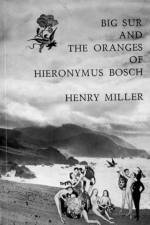
"A surreal semi-autobiographical blackbook record of a semi-mad period of my life, in that mindless, timeless state most romantics pass through, confusing flesh madonnas with spiritual ones." This is how the author describes this extraordinary expatriate novel.
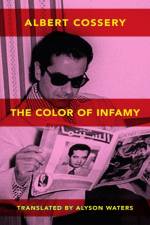
His eyes "shine with a glimmer of perpetual amusement"; his sartorial taste is impeccable; Ossama is "a thief, not a legitimated thief, such as a minister, banker, or real-estate developer; he is a modest thief." He knows "that by dressing with the same elegance as the licensed robbers of the people, he could elude the mistrustful gaze of the police," and so he glides lazily around the cafe¿s of Cairo, seeking his prey. His country may be a disaster, but he's a hedonist convinced that "nothing on this earth is tragic for an intelligent man."One fat victim ("everything about him oozed opulence and theft on a grand scale") is relieved of his crocodile wallet. In it Ossama finds not just a gratifying amount of cash, but also a letter - a letter from the Ministry of Public Works, cutting off its ties to the fat man. A source of rich bribes heretofore, the fat man is now too hot to handle; he's a fabulously wealthy real-estate developer, lately much in the news because one of his cheap buildings has just collapsed, killing 50 tenants. Ossama "by some divine decree has become the repository of a scandal" of epic proportions. And so he decides he must act. . . .Among the books to be treasured by the utterly singular Albert Cossery, his last, hilarious novel, The Colors of Infamy, is a particular jewel.
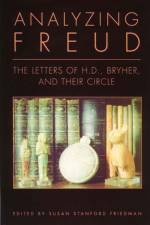
A landmark book in the studies of Freud, H.D., modernism, gender, and sexuality. The poet H.D. (1886-1961) was in psychoanalysis with Sigmund Freud in Vienna during the spring of 1933 and again in the fall of 1934. She visited him daily at his study at 19 Berggasse, while outside Nazi thugs and militia bullied their way through the streets. Freud was old, and fragile. H.D. was forty-six and despairing of her writing life, which seemed to have reached a dead end, for all her success. Her sessions with Freud proved to be the point of transition, the funnel into which were poured her memories of the past and associations in the presentand from which she emerged reborn. H.D. came to Freud at the urging of her companion, the novelist Bryher (1884-1983), the daughter of a wealthy British shipping magnate. Freud welcomed H.D. as a creative spirit whose work he respected, but he did ask her not to prepare for their sessions, write about them in her journal, or talk about them with her friends, especially Bryher, who remained home in England. H.D.'s letters from Vienna filled the gap. Breezy, informal, irreverent, vibrant with detail, they revolve around her hours with Freud, making her correspondence unique in the spectrum of reminiscences, journals, memoirs, and biographies swirling around the legacy of the "Professor" and the movement he founded. The volume includes H.D. and Bryher's letters, as well as letters by Freud to H.D. and Bryher, most of them published for the first time. In addition, the book includes H.D. and Bryher's letters to and from Havelock Ellis, Kenneth MacPherson, Robert McAlmon, Ezra Pound, and Anna Freud, among others. Fully annotated with Index and Photographs
Freud was old and fragile. H.D. was forty-six and despairing of her writing life, which, for all her success, seemed to have reached a dead end. Her sessions with Freud proved to be the point of transition, the funnel into which she poured her memories of the past and associations in the present and from which she emerged reborn. Breezy, informal, irreverent, vibrant in detail, H.D.'s letters to her companion, the novelist Bryher, revolve around her hours with Freud. This volume includes H.D.'s and Bryher's letters, as well as letters by Freud to H.D. and Bryher, most of them published here for the first time. In addition, the book includes H.D.'s and Bryher's letters to and from Havelock Ellis, Kenneth MacPherson, Robert McAlmon, Ezra Pound, and Anna Freud, among others.
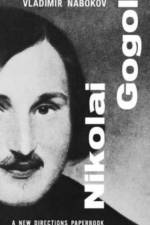
This biography begins with Gogol's death and ends with his birth, an inverted structure typical of both Gogol and Nabokov. The biographer proceeds to establish the relationship between Gogol and his novels, especially with regard to "nose-consciousness", a peculiar feature of Russian life and letters, which finds its apotheosis in Gogol's own life and prose. There are more expressions and proverbs concerning the nose in Russian than in any other language in the world. Nabokov's style in this biography is comic, but as always leads to serious issues-in this case, an appreciation of the distinctive "sense of the physical" inherent in Gogol's work. Nabokov describes how Gogol's life and literature mingled, and explains the structure and style of Gogol's prose in terms of the novelist's life.
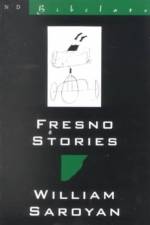
Selected from New Directions' collections of Saroyan's early stories (The Man With the Heart In the Highlands) and his later work (Madness In the Family), Fresno Stories spans his whole remarkable career.
In his great triptych "The Millennium," Bosch used oranges and other fruits to symbolize the delights of Paradise.
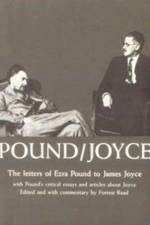
This is the record of one of the most interesting personal relationships of modern literature. Between 1913, when Yeats first called Joyce's work to Pound's attention, and 1920 there was a steady flow of letters, in which we see Pound finding publishers for Joyce, collecting money for him, defending him against censorship, even sending spare clothes. More than sixty letters from Pound to Joyce have survived, while those from Joyce to Pound will be found in the Viking Press Joyce correspondence volumes. Perhaps the most remarkable letters are those in which Pound gives his spontaneous reactions as the scripts of Dubliners, Portrait of the Artist, Exiles and Ulysses first reached him. We can then trace how these judgments were refined and amplified in the series of pieces that Pound wrote on Joyce for various magazines, the earliest sustained criticism of his work. And finally there are the later insights of the Rome broadcast of 1941 and the references to Joyce in The Pisan Cantos. Pound/Joyce has been edited, with an introduction, extensive running commentary, notes, and a wealth of related material from many sources, by Forrest Read, who is Professor of English at the University of North Carolina.
Playing on Zola's famous letter denouncing the anti-Semitism of the French government throughout the Dreyfus affair, Aharon Shabtai's title can be taken literally: it charges his government and his people with crimes against the humanity of their neighbors. Here we find snipers shooting children, spin-masters trying to whitewash blood baths, ammunition "distributed like bars of chocolate," and "technicians of slaughter" for whom morality is merely "a pain in the ass."With a splendid lyrical physicality that accentuates Shabtai's terse immediacy and matter-of-fact scorn, the poems cover a period of six yearsfrom the 1996 election of Netanyahu as prime minister through the curfews, lynchings, riots, sieges, and bombings of the second intifada. But at the heart of J'Accuse is the fate of the ethical Hebrew culture in which the poet was raised: Shabtai refuses to abandon his belief in the moral underpinnings of Israeli society or to be silent before the barbaric and brutal. He witnesses, he protests, he warns. Above all, he holds up a mirror to his nation.
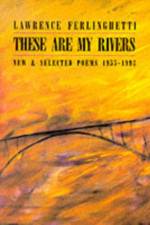
Lawrence Ferlinghetti, "one of our ageless radicals and true bards" (Booklist), has gathered here four decades of poetry in his inimitable everyman's voice, including more than fifty pages of new work. The tone has deepened over the years, and he may now be seen as a true maestro in his field. Behind the irresistible air of immediacy and spontaneity lies much erudition and an antic imagination intent on subverting "the dominant paradigm." From his earliest books, including his landmark Coney Island of the Mind, Ferlinghetti has written poetry "in ways that those who see poetry as the province of the few and educated had never imagined. That strength has turned out to be lasting" (Joel Oppenheimer, N. Y. Times Books Review).
The study of Chinese culture was a dominant concern in Ezra Pound's life and work. His great Canto XIII is about Kung (Confucius), Cantos LII-LXI deal with Chinese history, and in the later Cantos key motifs are often given in Chinese quotations with the characters set into the English text. His introduction to Oriental literature was chiefly through Ernest Fenollosa whose translations and notes were given him by the scholars widow in London about 1913. From these notebooks came, in time, the superb poems entitled Cathay and Pound's edition of Fenollosa's Chinese Written Character as a Medium for Poetry. But it was Confucius' ethical and political teachings--that most influenced Pound. And now, for the first time, his versions, with commentary, of three basic texts that he translated have been assembled in one volume: The Great Digest (Ta Hsio), first published in 1928; The Unwobbling Pivot (Chung Yung), 1947; and The Analects (Lun-yü), 1950. For the first two, the Chinese characters from the ancient "Stone Classics" are printed en face in our edition, with a note by Achilles Fang. Pound never wanted to be a literal translator. What he could do, as no other could, is to identify the essence, pick out "what matters now," and phrase it so pungently, so beautifully, that it will stick in the head and start new thinking.
It begins with the poetry (French and English en face), including such masterpieces as "Le Cimetiere Marin" and portions of "La Jeune Parque"; then ranges through Valéry's work in fields as various as architecture, logic, the dance, literature, philosophy, and painting. It concludes with excerpts from his creative writings such as Monsieur Teste and the drama Mon Faust.The list of translators for this volume is distinguished. Among them are Lionel Abel, Léonie Adams, Malcolm Cowly, James Kirkup, C. Day Lewis, Jackson Mathews, Louise Varese, and Vernon Watkins.
One of Henry James's most mesmerizing and unusual novels, The Sacred Fount (1901) has for its scene a weekend party at the great English country house Newmarch. Here James leads the reader down a bizarre garden path. The Sacred Fount--his only novel to employ a first-person narrator--places us in the hands of an obsessive novelist (never named and never described, but perhaps familiar), who detects alarming changes in his acquaintances. A woman known for her élan has lost her poise, a dull man is charming; a friend is suddenly aged, a plain woman sparkles. Where one improves, another seems to suffer. With "plunges of insight," "as noiseless and guarded as if I were trapping a bird," the narrator stalks his fellow guests through the weekend, avidly trying to make sense of what he comes to believe are actual exchanges of life force. "The sacred fount," as R.P. Blackmur noted, "is the mystery of the power that passes among us, depleting or restoring us, in friendship, in love, even in more public relations .... [Here] is the beautiful, the critical job of making that mystery manifest."
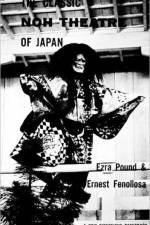
The Noh plays of Japan have been compared to the greatest of Greek tragedies for their evocative, powerful poetry and splendor of emotional intensity.
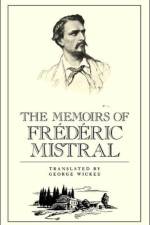
Frédéric Mistral (1830-1914) was without a doubt the greatest modern Provençal poet and the foremost champion of his native Provence, the guiding spirit of a group of latter-day troubadours who revived and refined the language of Southern France as a literary medium. For this achievement and for his own poetry, Mistral was awarded the Nobel prize in 1904--characteristically, he gave the prize money to a folklore museum he had founded in Arles. Two years later, at the age of seventy-six, Mistral published his charming book of Memoirs, which is not so much an autobiography as a recollection of the life of ordinary country people in his early years, filled with delightful anecdotes, tales, folksongs, and poetry. Written in the relaxed conversational style of an elderly gentleman reminiscing about the old days, the Memoirs describe the circumstances of Mistral's childhood and early manhood - the Provençal landscapes, the seasonal life of the farm, the religious observances and seasonal festivities, many clearly of pagan origin. Although educated in the classics and law in Avignon and Aix, Mistral felt out of place among the French-speaking bourgeois and returned to his family farm to devote his life to writing for the simple farming people of his region. He soon began his long poem Mireio (eventually transformed into the opera Mireille by Gounod), whose heroine was modeled on the peasant girls he saw and worked with daily. At the same time, he and several other young men came together to form the Felibrige, a society dedicated to restoring the Provençal language and preserving local traditions. The Memoirs concludes with the death of young Mistral's father and the success of Mireio (1859), so quietly understated that one would hardly suspect that the author had been hailed as a major poet while still in his twenties. Mistral wrote his Memoirs in Provençal and himself translated them into French. A previous English translation (abridged and paraphrased from the French) was published in 1907 and has been out of print ever since. In his new translation, George Wickes of the University of Oregon has mined Mistral's monumental dictionary, Lou Tresor dóu Félibrige. This illustrated edition includes the original texts of Provençal songs and verse, with Professor Wickes' English versions printed en face.
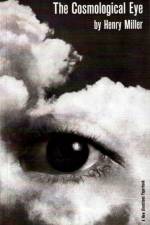
They are taken from the Paris books Black Spring (1936) and Max and the White Phagocytes (1938) and were for the most part, written at about the satire time as Tropic of Capricorn-the period of Miller's and Durrell's life in the famous Villa Seurat in Paris.As is usual with Miller, these pieces cannot be tagged with the label of any given literary category. The unforgettable portrait of Max, the Paris drifter, and the probably-autobiographical Tailor Shop, are basically short stories, but even here the irrepressible vitality of Miller's personality keeps breaking into the narrative. And in the critical and philosophical essays, the prose poems and surrealist fantasies, the travel sketches and scenarios, Miller's passion for fiction, for telling the endless story of his extraordinary life, cannot be held down. Life, as no other modern author has lived it or can write it, bursts from these pages-the life of the mind and the body; of people, places and things; of ideas and the imagination.
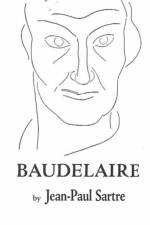
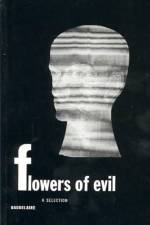
Sartre's study of Baudelaire is one of the more brilliant achievements of modern criticism. We may often disagree with his interpretations of the poet's personality, but we cannot fail to wonder at the mastery with which he presents his case. It is the case, quite patently, of an Existentialist who wishes to psychoanalyze a paramount literary figure in terms of his own beliefs.Perhaps Sartre's greatest contribution to Existentialism has been his own personality. He made it a living philosophy, giving it his exotic imagination, his penchant for controversy, and above all his daring. He turned abstractions like Existence and Being, Freedom and Nature, into a theory of psychoanalysis, grounded in man's creativity and opposed to Freudian determinism. Then he put the theory into practice in this book on Baudelaire.Baudelaire, man of shadows, opium-addict, dandy, frigid disciple of volupté; and then the greatest lyric poet of the age. Sartre lays bare the "lunar landscape of this distressed soul." We see Baudelaire, with anguished intelligence, selecting and arranging his own evil destiny, juggling the values of a world at the turning point of modern times.
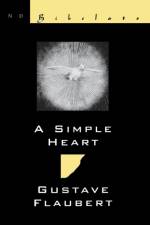
In A Simple Heart, the poignant story that inspired Julian Barnes' Flaubert's Parrot, Félicité, a French housemaid, approaches a lifetime of servitude with human-scaled but angelic aplomb. No other author has imparted so much beauty and integrity to so modest an existence. Flaubert's "great saint" endures loss after loss by embracing the rich, true rhythms of life: the comfort of domesticity, the solace of the Church, and the depth of memory. This novella showcases Flaubert's perfectly honed realism: a delicate counterpoint of daily events with their psychological repercussions. "Flaubert is diagnosis," Ezra Pound wrote, "the whole of Flaubert, the whole fight for the novel as 'histoire morale contemporaine' was a fight against maxims, against abstractions, a fight back toward a human and/or total conception."
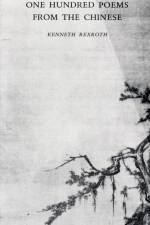
The lyric poetry of Tu Fu ranks with the greatest in all world literature. Across the centuries-Tu Fu lived in the T'ang Dynasty (731-770)-his poems come through to us with an immediacy that is breathtaking in Kenneth Rexroth's English versions. They are as simple as they are profound, as delicate as they are beautiful.Thirty-five poems by Tu Fu make up the first part of this volume. The translator then moves on to the Sung Dynasty (10th-12th centuries) to give us a number of poets of that period, much of whose work was not previously available in English. Mei Yao Ch'en, Su Tung P'o, Lu Yu, Chu Hsi, Hsu Chao, and the poetesses Li Ch'iang Chao and Chu Shu Chen. There is a general introduction, biographical and explanatory notes on the poets and poems, and a bibliography of other translations of Chinese poetry.
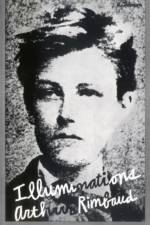
The prose poems of the great French Symbolist, Arthur Rimbaud (1854-1891), have acquired enormous prestige among readers everywhere and have been a revolutionary influence on poetry in the twentieth century. They are offered here both in their original texts and in superb English translations by Louise Varèse. Mrs. Varèse first published her versions of Rimbaud's Illuminations in 1946. Since then she has revised her work and has included two poems which in the interim have been reclassified as part of Illuminations. This edition also contains two other series of prose poems, which include two poems only recently discovered in France, together with an introduction in which Miss Varèse discusses the complicated ins and outs of Rimbaldien scholarship and the special qualities of Rimbaud's writing. Rimbaud was indeed the most astonishing of French geniuses. Fired in childhood with an ambition to write, he gave up poetry before he was twenty-one. Yet he had already produced some of the finest examples of French verse. He is best known for A Season in Hell, but his other prose poems are no less remarkable. While he was working on them he spoke of his interest in hallucinations--"des vertiges, des silences, des nuits." These perceptions were caught by the poet in a beam of pellucid, and strangely active language which still lights up--now here, now there--unexplored aspects of experience and thought.
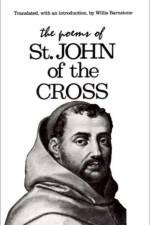
Many critics regard the work of Saint John of the Cross (1542-91), the 16th-century mystic, to be among the finest poetry Spain has produced. This bilingual edition, the first in modern English, was originally published in hard cover in 1968 by the Indiana University Press. Most of these poems were written during a period of nine months, in 1577-78, when Saint John (San Juan de la Cruz) was imprisoned and tortured in the dungeon of a small Carmelite monastery in Toledo, and their recurrent motifs are both metaphysical and deeply personal.
Abonner på vårt nyhetsbrev og få rabatter og inspirasjon til din neste leseopplevelse.
Ved å abonnere godtar du vår personvernerklæring.