
Gjør som tusenvis av andre bokelskere
Abonner på vårt nyhetsbrev og få rabatter og inspirasjon til din neste leseopplevelse.
Ved å abonnere godtar du vår personvernerklæring.Du kan når som helst melde deg av våre nyhetsbrev.

This official War Office manual shows soldiers how to operate in urban areas. Among the subjects covered are weaponry; planning attacks and defence; how to clear houses' site guns, climb walls and handle explosives.
The siege of Carlisle was one of the longest in English history, lasting intermittently from the autumn of 1644 to the summer of 1645. The border town was held by the Royalists but besieged by a Scottish Parliamentary army under Lord Leven. This brief account, written by a Carlisle historian, gives a vivid account of a neglected episode of the English Civil War.
2nd RGH reached Egypt in October 1941 as part of British 22nd Armoured Brigade. The unit took part in many of the key battles in Operation Crusader. In subsequent engagements the RGH suffered many casualties and was re-equipped on two occasions. 2nd RGH fought its final action at Battle of Alam el Halfa, on 31 August to 5 September 1942. Expecting to be re-equipped the regiment was instead disbanded with 'F', 'G' and 'H' Squadrons transferred to the 4th Hussars, Royal Wiltshire Yeomanry and the 8th Hussars respectively. HQ Squadron was divided and sent to the 5th Royal Tank Regiment and the 3rd Hussars.
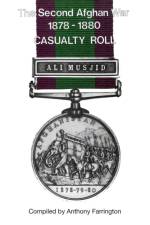
This history covers the period 1857 to 1946. For much of the 19th century the Regiment was the 19th Bengal Infantry. In 1903 it became the 19th Punjabis and in 1922, it became 1/14 Punjab Regiment. This is a sound and readable narrative history, with plenty of helpful detail of the Regiment's campaigns including ther second Afghan War of 1878-80; Col. Younghusband's 1904 expedition to Tibet; the Great War in Persia and the North West Frontier; and the Second World War in Malaya. The Appendices include a list of former COs, extracts from Bn Standing Orders, list of Stations and movements complete this history. Note: the Regiment's Indian name "Sherdil-ki-Paltan" translates as "Regiment of the Lionhearted" This is a sound and readable narrative history, with plenty of helpful detail.
The British Army is frequently criticised for not having learned the lessons of the Great War, and for 'marking time' between the wars and failing to pursue such developments as the arrival of the tank.This concise report, then, is of uncommon historical interest in being the official findings of a high-powered committee of Generals which in October 1932 reported to the War Office on lessons learned from the 1914-18 conflict. Among the conclusions reached by the committee (which, as early as 1932, foresaw the possibility of a 'second round' fought with Germany), - were the importance of a centrally controlled War Department which would not delegate powers to local theatres; the necessity of a rapid expansion of Britain's small professional army; the importance of keeping abreast of scientific developments relevant to warfare; training up an officer corps rather than allowing them to be killed early as cannon fodder; and the necessity of forming a national 'non-party' government. Brief though it is, this is an extremely interesting and important insight into military thinking among the Higher Command in the period leading up to the Second World War. Rare in its original printing just 125 sets issued .
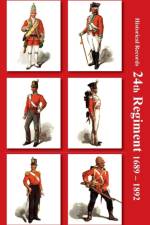
Best known for its heroic role in the defence of Rorke's Drift, during the Zulu War of 1879, when it won seven of the 14 Victora Crosses awarded, the 24th Regiment, South Wales Borderers, was an exceptional unit, and this is an exceptionally good history. Founded in 1689, the year after the Glorious Revolution, the Duke of Marlborough was appointed the Regiment's Hon. Colonel, and it took part in his four great victories of Blenheim, Ramillies, Oudenarde and Malplaquet. It helped defend the island of Minorca in the War of the Austrian Succession, and saw colonial service in Canada, Egypt, the Punjab and the Indian Mutiny before its immortal actions in the Zulu War. The history contains several exciting descriptions of the defence of Rorke's Drift, including the official report by the Officer Commanding, Lt. Chard, written within hours of the battle. There are biographies and medal citations of the VCs won that day, and a portrait photograph of Lt Gonville Bromhead VC, Chard's second-in-command. In addition the history contains colour plates of regimental uniforms at different stages of its life, portrait photographs and officers and commanders' rolls.
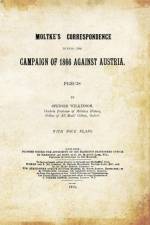
Helmuth von Moltke, the ruthless Chief of the Prussian General Staff, achieved a lightning victory over Austria and its German allies in the six-week war of 1866, resulting in hegemony over the disparate German states passing from Vienna to Berlin. This summary of Moltke's military correspondence in the short, sharp war reveals him as a meticulous planner - culminating in the great Prussian victory of Koniggraz in Bohemia (also called Sadowa). Superior Prussian élan and organisation decided the result, despite an Austrian superiority in numbers. Austria lost seven times the number of Prussians killed. This book gives an invaluable insight into a great military mind.
The narrative of twelve months' experience in the hospitals of Koulali and Scutari.
Published halfway between the new Polish Army's surprise humbling of the vast but untrained Red Army in 1920 and its obliteration at the hands of Hitler's Wehrmacht in 1939, this handbook gives the British War Office's official view of the new kid on the European block. It is, however, much more than a portrait of the Polish army in isolation - as it also gives a rundown of the new Polish state - its natural features, roads and rail, population, ethnography, religion, education and 'national character'. There is much on the constitution and Government of the new state; and another chapter is devoted to the industry, agriculture and natural resources of Poland. The chapters on the army itself are completely comprehensive, covering command, training, Arm., transport, Organisation, recruitment, uniforms, artillery, cavalry and mechanisation and much more. Poland's navy and air force, too, are not forgotten. With charts of uniform insignia, maps this is a complete picture of a new state and its army before nemesis arrived.
Abonner på vårt nyhetsbrev og få rabatter og inspirasjon til din neste leseopplevelse.
Ved å abonnere godtar du vår personvernerklæring.