








Gjør som tusenvis av andre bokelskere
Abonner på vårt nyhetsbrev og få rabatter og inspirasjon til din neste leseopplevelse.
Ved å abonnere godtar du vår personvernerklæring.Du kan når som helst melde deg av våre nyhetsbrev.

Designed for the use of officers, NCOs and other ranks early in the Great War, this elementary introduction to map reading aims to ensure that all who read it will be able to read a map and find their way around with the help of a prismatic compass. It introduces its military readers to the basic signs and symbols used in maps, and shows them how to make a field sketch of their own.
Detailed history of the part played by the Welch in the Great War. Primarily employed on the Western Front, the Regiment's battalions also saw service at Gallipoli; Mesopotamia, and in Palestine and Macedonia. The Regular battalions of the Regiment were deployed in France and Belgium from the outbreak of war in 1914; and took part in the battle and retreat from Mons; and the other battles of the war of movement - the Marne; Aisne and first Ypres. Later engagements in which the Regiment fought included Aubers Ridge and Loos in 1915; the Somme in 1916; Arras, Messines and Third Ypres (Passchendaele) in 1917; and the German Spring offensives and final advance to victory in 1918. This is a fine and detailed history of one of the most famous names in the British Army, illustrated by striking photographs and detailed maps.
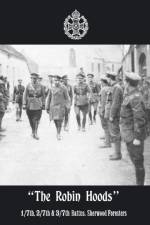
This is a collective history, authored by its own officers, of the ''Robin Hoods'' - the Territorial Army Battalions of the Sherwood Foresters'' Regiment; named after the most famous legendary fighting man of their native Nottingham. The Robin Hoods were rushed to France to meet manpower shortages on the western front early in 1915. Though woefully short of ammunition, The ''Terriers'' played a vital part in holding the line through the remainder of 1915 and the first six months of 1916 while Kitchener''s mass volunteer ''New Armies'' were trained. The First Section of the book records the history of the 1st/7th Battalions and their service at Mt. Kemmel; in the Ypres salient at Hooge and the Bluff; at Vimy Ridge; on the Somme at Gommecourt and at St Elie. The Second Section records the history of the 2nd/7th Battalion in Ireland; the Somme, and 3rd Ypres (Passchendaele) as well as Cambrai. The Third Section of the book concerns the history of the 7th Battalion from January 1918 to the end of the war - including the ''blood tub'' at Bullecourt. There is also a Fourth Section on the home service of the 3rd/7th Battalion, plus a Roll of Honour and a List of Honours and Awards. his is a full and satisfying unit history.
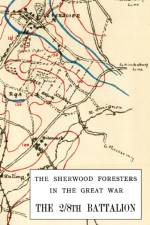
The 2/8th Battalion of the Sherwood Foresters was a Territorial unit which spent the early part of the Great War on garrison duty in Newark, Luton, Dunstable and Watford. Rushed to Ireland on the outbreak of the Easter Rising in 1916, it saw severe street fighting in Dublin before the rebellion was quelled. The Battalion spent the rest of the year on garrison duty in Ireland before finally reaching France in February 1917 where it had its first taste of trench warfare at Le Verguier. Its later battle honours included Third Ypres (Passchendaele) and Cambrai. Illustrated by maps and photographs and with Rolls of Honour an Award lists this is a marvellous unit history of very varied war service.
Although this is part of the Official History of New Zealand in the Second World War it is, in fact, the only official history of Prisoners of War produced by any Allied nation dealing with POWs, and is therefore of exceptional interest since it necessarily touches on prisoners of all other Allied countries too. The author''s aim has been to build up what he calls a ''mosaic'' picture of POW life from a multitude of accounts. The picture presented is a grim one - far from the glamour presented in films such as ''The Great Escape'' - but also one of the endurance of the human spirit under extreme stress. Some 9,000 New Zealanders were taken prisoner in the war, from theatres as diverse as the Far East, North Africa, the Middle East, the Mediterranean and Europe. Of these, as many as 718 managed to escape, including 110 who got to neutral Switzerland from Germany and Italy. Accompanied by interesting and revealing photos and drawings made by prisoners, and by maps showing the locations of POW camps, this shows the grim but inspiring reality of the POW.
On New Year''s day 1915, the aged British battleship HMS Formidable was sunk by the German submarine U-24 - the first such sinking of a major capital ship by a U-Boat in the Great War. The authors, intirigued by the listing of four of Formidable''s crew on their local war memorial in Crewe, set about reconstructing the Formidable''s almost forgotten story. They have succeeded magnificently, and, in a lavishly illustrated book that does honour to amateur historians everywhere, they recreate a fascinating and tragic story. Along with the story of the ship, its sinking, and the life stories of several of its crew, the book lists all 547 seamen who went down with their ship, the wreck site of which is now a protected War Grave.
The two battles of Newbury, fought midway through the Civil War, were missed opportunities to end the fighting, since both ended indecisively, but they were hard-fought actions involving some of the Civil War's best known commanders. The first battle, fought in September 1643, was a virtual repeat of the battle of Edgehill, the opening battle of the war, fought between the same commanders - Charles I and the Earl of Essex. The Royalists deployed first, but Essex made better use of the ground and a day's fighting , which cost 3,500 casualties, failed to give either side a decisive advantage. Horrified by the bloodshed, Charles I refused to renew the struggle the next day.The battle is notable for the virtual suicide of Lord Falkland, the King's Secretary of State, who, depressed by the fratricidal conflict, deliberately plunged into the heat of the action, successfully inviting death.The Second Battle of Newbury in October 1644 followed the Royalist triumph at Lostwithiel in Cornwall. Charles I returned from the West Country to lift the sieges oi Basing House and Donnnington Castle. A combined Parliamentary force commanded by Sir WIlliam Waller of the Southern Association and the Earl of Manchester leading the Eastern Association faced him. The Parliamentarians divided their army, hoping to surprise and outflank the Royalists, but Waller's attack from the north was unsupported by Manchester who claimed he did not hear the signal cannon to attack. When battle was joined a bloody engagement resulted, characterised by cavalry charges by Lord Goring's Cavaliers and Ollver Cromwell's Ironsides. Once again, however, there was to be no decisive victory and the Royalists were able to raise the Roundhead siege of Donnington the following month. Parliamentary disappointment at the result of the battle led to the Self-Denying Ordnance and the replacement of Essex and Manchester by the more capable Cromwell and Fairfax, as well as the formation of the war-winning New Model Army.This is a full and well-illustrated late Victorian account of both campaigns and an indispensible addition to the library of any CIvil War student.
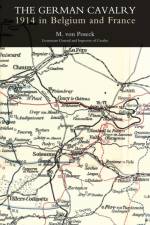
The German cavalry - the fierce lancers known as Uhlans, in their distinctive spiked 'Pickelhaube' helmets, - struck terror into the hearts of the terrified civilian populations of Belgium and France as they struck deep into the heart of Flanders, ranging far ahead of the main advance of the German armies in August 1914. The Uhlans acted as scouts - the eyes and ears of the army - and in the days before air warfare and the formation of the trench lines developed, these cavalrymen were an invaluable part of the army's intelligence, although in many senses the 1914 campaign was the cavalry's last hurrah before the mechanised warfare of the 20th century took hold and made mounted warfare obsolete This fascinating book tells the story of the German cavalry's role in that summer campaign. Written by an author who as a Lieutenant General and Inspector of Cavalry was an authority on his subject, it gives a minutely detailed day by day, almost minute by minute account of the campaign and will be of interest to anyone fascinated by the Great War in general, and by the history of cavalry warfare in particular.
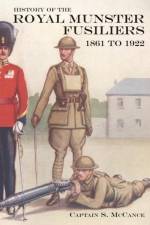
This history relates the story of one of the British Army's fighting Irish units from the middle of the 19th century to its disbandment on the attainment of Irish independence in 1922. Originating in India as the 101st Regiment of Foot (Royal Bengal Fusiliers) the Munster Fusiliers subsequently served in the Boer War. The bulk of this history, however, covers their distinguished record in the Great War when they were deployed at Gallipoli - being among the units that landed on 'V Beach' from the 'River Clyde' on April 25th 1915. The Munsters subsequently landed at Suvla Bay in August 1915, and continued to serve in the Dardanelles until the evacuaion in January 1916. After being re-deployed to France in March 1916, the Munsters served at Ginchy on the Somme; at Wytschaete in the battle of Messines in June 1917; at Cambrai in November 1917; and resisted the German offensive in March 1918. They took part inn the final Allied advance to victory from July 1918, serving on the Drocourt-Queant Line; and the Canal du Nord. The Munsters were formally disbanded in July 1922. This is a handsome unit history, with colour illustrations, which will fascinate any student of the Great War - particularly Gallipoli- and anyone interest in the Irish units of he British Army.
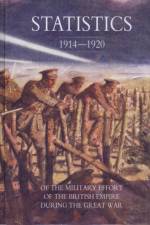
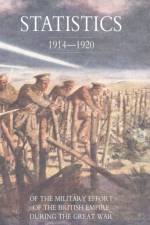
Full title: 'Statistics of the Military Effort of the British Empire During the Great War 1914-1920'.
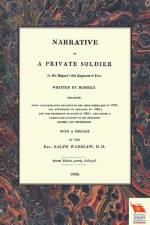
Written by himself. Detailing many circumstances relative to the insurrection in Ireland in 1798; the expedition to Holland in 1799; and the expedition to Egypt in 1801.
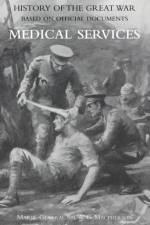
Our picture of the Great War is indelibly bound up with the suffering of the soldiers who fought. Lines of men blinded by poison gas hanging on to their comrades; wounded soldiers on stretchers patiently awaiting treatment; stretcher bearers themselves struggling through the mud to bring their comrades aid and succour; and the unbearably poignant pictures of limbless or shell-shocked troops in hospital back in Blighty struggling to come to terms with their devastating conditions.The story of the military medical services in the war is a fascinating but little-told one Now the Naval and Military Press is proud to republish that story, in the shape of these reprints of the rare Official Histories of the Army's medical service compiled by Major-General Sir W. G. Macpherson. The service in 1914 was much improved thanks to reforms after the Boer War, in which thousands of troops had died needlessly of disease thanks to the lack of proper medical care. In 1914, by contrast, the service was ready to cope with high casualties. The author was himself deputy-director of the Army's medical service throughout the war, and is described as having a 'genius for organisation and improving the service and untiring energy'.His four-volume history is no dry-as-dust record of administration as one might expect, but a practical, well-written day to day description of how the wounded and sick were cared for from front line casualty clearing stations to base hospitals far behind the lines. It skilfully weaves essential medical details and statistics into a narrative of battles and campaigns from every theatre of the war. It is also a record of a steep learning curve, as the medical services struggled - often successfully - to keep abreast with casualties inflicted by the changing technology of war. At first, in 1914, most wounds were caused by bullets, but with the increasing use of artillery, shell splinters, shrapnel balls and poison gas accounted for the majority. The heavily manured soil of France and Flanders ensured hat there was a high incidence of tetanus and gas gangrene. The use of blood transfusions, and increased understanding of the importance of blood groups, saved many lives, while behind the lines the pioneering use of plastic surgery strove to repair the hideous damage inflicted by weapons of war.This is a moving record of compassion in action, and of a service which stove to mitigate, heal and help relieve the inevitable suffering caused by the most destructive war that the world had yet seen.
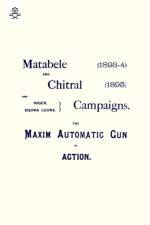
This book is effectively a sales manual for the new Maxim Automatic ( or Machine) gun invented by Hiram Maxim who is seen proudly brandishing his brainchild in the frontispiece. The book brings together newspaper accounts of small African campaigns in the 1890s to demonstrate how the new wonder weapon can overawe or scythe down even numerically vastly superior enemies. Accompanied by pages of photos showing how the gun can be transported or adapted, the book is an effective demonstration of how lethal technology allowed the western powers to cominate their colonies.
This book is a curious and fascinating piece of personal military history. Its author, Dr James McLean of St Louis, was a purveyor of patent medicines - and an inventor and manufacturer of guns and munitions. His book is summed up in its sub-title: 'We command all nations to keep the peace' - in that it is an avowed attempt to make future wars impossible by increasing the destructive power of current weaponry. Published in 1880 in the aftermath of such conflicts as the American Civil War, the Crimean War and the Franco-Prussian war, the book, complete with detailed illustrations and diagrams, features many of McLean's military innovations including, a portable fortress ( iron boxes filled with debris and fitted together); metal shields with loopholes which can be joined up to protect infantry; 'ironclad' ships, torpedoes, the Hercules naval gun; and a forerunner of the machine gun called 'the Pulverizer' which, the author claims, can fire 1,200 shots in a minute. Whether we believe McLean's's noble intentions in inventing such fearsome weapons, or dismiss it as a cynical piece of brilliant advertising for his own products, 'Peace-Makers' cannot fail to interest students of military hardware at the dawn of the age of fully mechanised warfare.
An instructional manual, designed by its author for instructing raw levees of militia men in the arts of early 19th century soldiering. Aimed at 'foot lancers' ie. troops who can fight on foot as well as horseback, the manual gives instructions on maintianing general health and well-being, and issues of morale and morality -such as the treatment of prisoners - as well as the rudiments of orthodox military tactics such as: how to defend a village; how to make ball cartridges etc. Illustrated with coloured diagrams.
Erskine Childers, the author of this book, was one of the most fascinating figures or the early 20th century. Best known today for his thriller 'The Riddle of the Sands' a nautical yarn which employed Childers' skill as a yachtsman to warn Britain of the growing threat posed by Germany in the run-up to the Great War, he later ironically was notorious for running rifles in his yacht to Irish republicans, of whom he became a fanatical supporter. He was eventually shot by a firing squad of the Irish Free State forces for taking the extreme Republican side in the Irish CIvil War in which he directed Republican propaganda. Earlier in his career Childers was a respected military historian and critic, writing a history of the Boer War which he witnessed as a correspondent. In this volume, which boasts an admiring foreword by Field-Marshal Lord Roberts, he gives a critique of the armament and purpose of the cavalry, using his own experiences in the Boer War and the recent Russo-Japanese war (1904) to bolster his argument that the cavalry should evolve from lancers to mounted infantry, each horseman equipped with swords and carbines. An interesting study in military tactics written by a man who was never content to be an armchair warrior.
The Franco-Prussian war of 1870-71 was a transitional war in the sense that for the first time in Europe rifles and machine guns were on the same battlefield as balloons and cavalry. The German needle gun and the French Chassepot were face to face, and the French mitrailleuse added its weight to infantry tactics. The siege of Paris was characterised by starvation, fever and riots.This book, published in the immediate aftermath of the war, gives the reader a very good picture of the events leading up to the conflict, as well as the fighting itself. It is a well written and balanced book, showing how the French lost the war as much as the Prussians won it. Small articles are of importance in the book, such as the effect of the new Krupp breech-loading guns and their range, the conflicting reports on the battle of Courcelles, the effect of the French machine gun and the problems of the army defending Paris. Although this war is often seen as no more than a short European interlude between Napoleon and Kaiser Wilhelm it was in fact significant in the use of modern weapons, which were subsequently developed into the killing machines of the First World War.
This new bibliography gives the reader much more than just a list of all the major official histories from around the world. Divided into two sections, the first section gives a bibliography of the primary official histories that cover the military, naval and aviation histories. The second section gives a chronology of events cross-referenced to the primary official histories. Finally within the appendices, the secondary official histories and diplomatic official histories are listed. In the first bibliographical section, each individual book title is given a block of information and in some cases detailed notes have been added giving background information. This data is principally for dealers and collectors, giving an idea of the structure of the volume ranging from the size and binding through to the number of pages and illustrations. The second cross referencing section is aimed at the researcher drawing together the events with the histories. This Bibliography is a must for any serious academic, collector or book dealer.
Abonner på vårt nyhetsbrev og få rabatter og inspirasjon til din neste leseopplevelse.
Ved å abonnere godtar du vår personvernerklæring.