








Gjør som tusenvis av andre bokelskere
Abonner på vårt nyhetsbrev og få rabatter og inspirasjon til din neste leseopplevelse.
Ved å abonnere godtar du vår personvernerklæring.Du kan når som helst melde deg av våre nyhetsbrev.

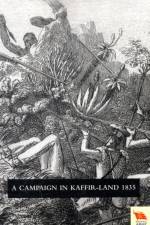
A Voyage of Observation Among the Colonies of Western Africa, and a Campaign in Kaffir-Land in 1835.
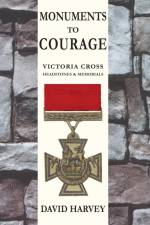
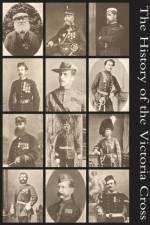
An account of how the VC was won by 520 of its recipients. Brief biographical information is provided in respect of commissioned officers. A portrait photograph of the recipient is included in 392 cases; typically the subject is deicted in uniform and wearing the VC and medals. The appendices include transcripts of several official reports which relate to Kavanagh's VC deed, the Rorke's Drift VC action (written by Chad VC and Reynolds VC) and the posthumous VC deeds of Coghill and Melvill. Also included is a list of VCs by service or regiment.
The Balkans at the end of the 19th century were - then as now - a focus for the bigger European powers. As the grip of the Turkish Ottoman Empire - 'the sick man of Europe' - on the Balkans loosened, the newly emerging nations such as Roumania - positioned between Turkey and Russia - became more important. This importance was born out in the world wars when Roumania fought ( and lost) twice. This report by a British military observer, gives a snapshot of the country; its military geography; and the organisation and distribution of its army - both standing and territorial. There are chapters on the officer corps; uniforms; pay; Education; drill and discipline and the Roumanian navy, together with a large map of the kingdom.
This classic manual of artillery, written by Major-General Alessandro D'Antoni (1715-1786), chief director of the Royal Military Academies of Artillery and Fortification in the city of Turin, combines three books in one. There is a treatise on the properties and treatment of gunpowder; a treatise on firearms; and a treatise on the practical application of artillery in wartime. Illustrated with many drawings and diagrams showing the use of artillery in both sieges and set-piece battles, this is a faithful facsimile printing of the book's original English translation which appeared in 1789, the year of the French Revolution, when the tactics and weaponry of which it treats so learnedly and lucidly were about to be unleashed on a European scale.
The story of a typical infantry battalion of a county regiment as they fought their way from the beaches of Normandy to the River Elbe. In the proud words of Lt. Gen. G.I. Thomas, their divisional commander, the 4th Somersets 'Never had a failure and never lost an inch of ground.... they knew they were better men than the Germans and never ceased to show it'.Unusually for an official history of this kind, the book has no single author, but includes contributions from all ranks to build a picture of such hard-fought actions as Hill 112 and Mount PIncon in the Normandy campaign; the heavily contested crossing of the RIver Seine, the 'taking out' of the ancient German town of Cleve, and finally the taking of the north German port city of Bremen. This is the story of the final months of the Second World War in Europe seen through the eyes of the men who won it.
The Siege of Louisbourg was a significant success in Britain's conquest of Canada from the French during the Seven Years War. This is a brief contemporary account of the dramatic siege, ordered by Britain's aggressively expansionist Prime Minister, William Pitt the Elder. An amphibious force was formed in Halifax to attack and reduce the French fortresss of Louisbourg on Novia Scotia. The military force was commanded by General Jeffrey Amhurst, while Admiral Edward Boscawen commanded the strong Fleet that accompanied the soldiers, one of whose commanders was the youthful James Wolfe who later achieved fame in the hour of his death by conquering Quebec. On the first day of the siege, June 8th, 1758, British troops succeeded in breaching the French defences, and French spirits were further lowered when their flagship L'Entreppenant was hit by a mortar, caught fire and blew up taking two other vessels with her. When the port's Governor Drucour offered to surrender at the end of July he was refused the honours of war by Amhurst, and the French retaliated by destroying their weapons rather than handing them over to the British. Upon receiving the French capitulation the British systematically destroyed the port, ensuring that it would never be fortified by the French again. This book gives a day by day account of the siege and should be read by all those interested in 18th century warfare and the building of British Canada.
The Findings of an exhaustive examination of ship's logs, signal records, records of participants. by a Committee appointed by the Lords Commissioners of the Admiralty "for purpose of thoroughly examining & considering the whole of the evidence relative to the tactics employed by Nelson at the Battle of Trafalgar." Additionally "To prepare a diagram showing the approximate positions of the ships at the commencement of the action. To state what alterations are required in the model at Greenwich & the plan in H.M.S. 'Victory.' To report the result of their enquiry, giving the reasons in detail for the concusions arrived at. "The resulting report is minutely detailed including reproductions of pertinent parts of ship's logs .
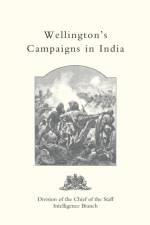
The Duke of Wellington made his military reputation not in fighting Napoleon's armies in the Peninsular War or at Waterloo - but in a series of colonial campaigns in the early days of British rule in India. Wellington - then Colonel Sir Arthur Wellesley - arrived in British-ruled Bengal in 1797 and over the next seven years fought a series of engagements, including sieges and pitched battles, against such foes as the bandit chief Dhoondiah Waugh, and the Mahratta confederacy, . He was uniformally successful and left India a General on the threshold of one of history's greatest military careers. This full official account of Wellington's Indian military apprenticeship, supported by excellent and detailed maps drawn up by the Army's Intelligence Branch, will interest students of the Duke's life, Napoleonic buffs and all those fascinated by Britain's role in India.
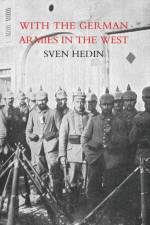
The conduct of the German forces in their attack on Belgium that brought Britain into the Great War has long been controversial. Reports of atroctities - including the mass shooting of civilians and wanton vandalism - were played up in Allied propaganda - and subsequently widely disbelieved, only to be revived by modern scholars. This book is something of a rarity - and caused a furore when it was first published - as it is a propagandist work written from the German side and published in English in 1915 shortly after the events it describes, while the war was raging and hatred for Germany at its height. Its author, the celebrated Swedish explorer and mountaineer, Dr Sven Hedin, although officially a neutral, was an unashamed admirer of Germany given priledged access to interview German soldiers as well as Allied prisoners. He denies that his beloved Germans took part in any cruel atrocities and in his preface he berates Britain for entering the war at all - and re-states his faith in German victory. In an apologetic note, Hedin's English publisher, John Lane, says his purpose is to 'rouse the British Lion by tweaking its tail', pointing out that Hedin's account of the 1914 campaign gives a true picture of the efficiency of the German military - which Lane calls 'the wonderul organisation against which we are fighting'. Plentifully illustrated with photos, drawings and maps, this eye-witness account of the campaign that set the course of the war, despite its admitted bias, is a must for all Great War buffs - and for students of wartime propaganda. Hedin went on to write other similar pro-German books in both world wars, and became an adm irer of Hitler and the Third Reich, though he was never an open Nazi.
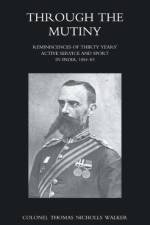
Utilizes his own notes and Mr. Gibbin's book for writing memoirs of events from the beginning of the mutiny to the relief of Lucknow.The major portion of the book is concerned with the mutiny.
John Ryder Oliver was a young Lieutenant in the Royal Artillery who had been posted to garrison duty in South Africa when news arrived of the Indian Mutiny. His unit was re-assigned and he arrived in Calcutta on board the S.S. 'Penelope' in September 1857. Oliver particiupated in the suppression of the mutiny in central India, being present at the recapture of Cawnpore and Lucknow, two important centres of the mutinies where prolonged sieges and massacres had taken place. Mentioned in despatches, he later was awarded the LUcknow campaign medal. In the final stages of the mutiny's suppression he marched with Sir Colin Campbell into Oude (Oudh). In this brief campaign diary, Oliver describes his experiences, and gives an excellent eye-witness account.
Narrative of the Siege of Delhi and the Campaign in Rohilkund. The major portion of this book is concerned with the Mutiny.
A vivid eye-witness description of the opening months of the Indian Mutiny in 1857. D'Oyly, an experienced East India Company officer attached to the Bengal Staff Corps, was stationed at Haupper close to Meerut where the mutiny first erupted. As such he had a ringside seat and visited Delhi, Cawnpore and other centres of the outbreak. HIs brief account is an unvarnished but clear and honest account of the most tragic and significant event in Britain 's rule over India.
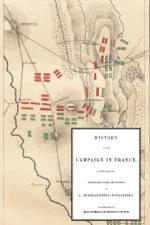
The Campaign of France - Napoleon's fighting retreat across his own country in 1814 after his disastrous defeat at Leipzig - was one of the most amazing episodes in the great soldier's stellar career. With his back to the wall, and facing a formidible coalition of his Russian, Prussian and Austrian enemies, the wily Corsican flought tenaciously every step of the way. Sometimes his exhausted, outnumbered and severely depleted army was called on to fight a battle every two days. But despite French ciourage and rthe Emperor's resourcefulness there could be only one outcome: Napoleon was forced back to Paris where he was compelled to abdicate. The long, slogging campaign is here narrated from the viewpoint of a Russian officer who was an aide-de-camp to Tsar Alexander I and had a grandstand view of the action. Occasionally critical of Russia's allies, the book offers a detailed contemporary account of a campaign perhaps less familiar than other Napoleonic setpieces.
The names of Havelock and Outram will forever be associated with the relief of the epic siege of Lucknow in the Indian Mutiny. But this book is a graphic account of an earlier episode in the two Generals' military careers, when they commanded a punitive expedition into Persia and modern Iraq in 1856, the year before they achieved immortality at Lucknow. Hardly had their successful operations in Persia concluded, than news reached Persia of the mutiny which called Havelock and Outram to India. Written by Captain G.H Hunt, a junior officer who took part in the campaign (and who died of cholera while the book was going to press) the book is edited by the military historian Goerge Townsend who had added an interesting and informative outline of Persian history for those unfamiliar with the ancient roots of this key country and empire. With Iran a key player in the equally troubled region today, this book will be of keen interest to students of Middle Eastern history, not least for an account of the author's visit to Baghdad. Illustrated by engravings of Persian scenes, this book is a rare account of an overlooked Imperial episode.
A booklet giving instructions for the full range of weapons used by mid-Victorian cavalry: swords, carbines, pistols and lances. Illustrated by diagrams, the 1858 book also gives instructions on standing gun drill.
The state of Russian military preparedness was of consuming interest to Britain in 1890 when this report was drawn up for the Intelligence Department of the War Office. Britain and Russia were bitter rivals in the 'Great Game' being played out around Afghanistan for control of the approaches to India; and reports of the strength of the Russian forces in Asia were much valued. This book covers the Russian military presence in Transcaspia, Turkestan; Omsk and Irkutsk in Siberia and Pri-amur. There are chapters on Russian infantry, cavalry and artillery; and tactical notes on marches, bivouacs and outposts; as well as appendices on the Russian alphabet, vocabulary; Morse code and its Asian order of battle.
Translated from the German, this manual was published in 1897. The system of infantry attack expounded by the author is based on the principle of 'extended' order which the translator recommends could well be adopted by the British army. The author also gives hints on practical company training - subordinating the idea of taking cover to tactical considerations - and of combining fire and movement during an attack. The author also recommends studying the great battles of history - not as tactical models, since modern weaponry has made that redundant - but as examples of errors to be avoided. Interesting to anyone studying the use of infantry at the opening of the 20th century, this is an eye-opening book.
Mexico at the dawn of the 20th century was a dangerous and unknown quantity among western nations. Having repeatedly clashed with the United States, in 1906 it was emerging from the relative - if oppressive- stablity of Porfiro Diaz's long dictatorship, but was about to plunge into a decade of chaotic civil war and anarchy, as rival Presidents, and warlords like Emilio Zapata and Pancho Villa vied for control. This 1906 War Office handbook, based on information culled by Britain's military attache in Washington, gives as comprehensive picture of Mexico and its army as possible. Its chapters cover the Government - especially the War Department - and recruitment. The arms - infantry, artillery and cavalry - of the army, and such subjects as medical facilities; supply and transport; military reserves; uniforms, education and military law.
This manual strives to inculcate an offensive spirit and gives practical instructions backed by a wide range of detailed diagrams on such subjects as the siting and digging of trenches; how to construct trenches in wet ground; sanitation and latrines; the size and depth of dug-outs; drainage and flooding; Day and night routine; the care of feet; wiring and strong points; and notes on attack and defence. Studying this book and examining the diagrams will give the reader a clear idea of trench warfare as it should be conducted - at least according to the official view.
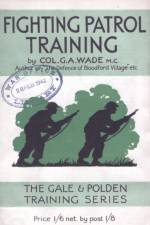
This short illustrated booklet, produced early in the Second World War under War Office guidance, is designed to teach tactics of fighting patrolling to inexperienced officers commanding equally raw recruits. The author is keen to emphasise aggression and maintaining morale - and cautions against splitting the patrol: ' Keep your men together, keep up momentum ( and) you will find yourself enjoying the finest sport on earth'. There are handy hints - and very clear diagrams - on such subjects as street fighting; clearing houses, and synchronisation. Gives a clear idea of the sort of instructions issued to Home Guard and UK Defence forces when a German invasion was expected at any moment.
Abonner på vårt nyhetsbrev og få rabatter og inspirasjon til din neste leseopplevelse.
Ved å abonnere godtar du vår personvernerklæring.