Gjør som tusenvis av andre bokelskere
Abonner på vårt nyhetsbrev og få rabatter og inspirasjon til din neste leseopplevelse.
Ved å abonnere godtar du vår personvernerklæring.Du kan når som helst melde deg av våre nyhetsbrev.

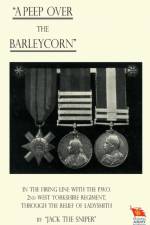
A lively unofficial companion to the official log of this battalion's part in the Boer War ( also published byt the Naval and Military Press) - this is the pseudonymous author's ('Jack the Sniper's' real name was Charles James O'Mahony) personal account of the 1899-1902 campaign - including the lifting of the siege of Ladysmith. The West Yorkshires were constantly engaged in some of the fiercest actions of the war, and this is very much a front-line soldier's view, and all the better for it.
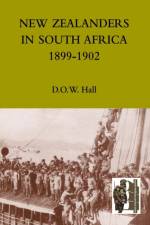
A good account of all ten NZ Contingents in the Boer War, it contains a very useful Roll of Honour both Killed in Action and Died of Wounds
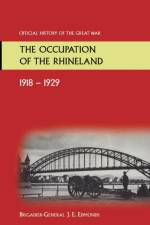
Originally published in a restricted edition of 100 copies - ironically in 1945, as another British occupation of Germany was beginning - this final volume of the official history of the Great War covers in great detail the ten-year occupation of the area of the Rhineland, centred on the cities of Aachan and Cologne. It describes how, under the terms of the Armistice, the British armies moved slowly forward from the line they had reached at the Armistice on November 11th 1918 to occupy and administer the area - a task that continued for the next decade.
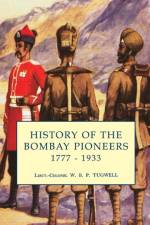
This is the full official history of the Bombay Pioneers of the Indian Army from its formation in 1777 to 1933, and is one of the most comprehensive of all Indian Army unit histories. The book's narrative goes from the 1790s through the Pioneers' service in first Afghan War, the Mutiny, Abyssinia (today's Ethiopia), the Second Afghan War and operations on the North-West Frontier' Somaliland in 1902/4 through to the Waziristan campaign of 1920/23. The second half of the book is devoted entirely to the Regiment's Great War service - on the western front and in Mesopotamia; Palestine and Persia ( today's Iran).
One of the best of the Official History volumes. Cambrai, where tanks were first used en masse, was initially a great victory; the church bells rang out in celebration. Within a few days the Germans had struck back and victory turned to ashes and Douglas Haig ordered an enquiry into the disaster. A very readable account of a most important battle.
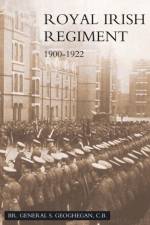
In the long history of Irish regiments serving with the British Army, few units have acquired more battle honours than the Royal Irish Regiment, ranging from Marlborough's great victories in the 18th century to the Crimean and Boer Wars. This volume covers the actions of the regiment's nine battalions in the Great War, in which it saw continuous action from the first battle (Mons) to the last (Hindenburg LIne). As well as service in all the major and minor battles in France and Flanders - Marne, Aisne, the three Ypres; the Somme; Messines; Passchdendaele and Cambrai, the regiment served in other theatres including Gallipoli; Macedonia; and Palestine. It is a proud record to which this history does full justice, with appendices on the distinguished Colonels of the regiment (including Field Marshal Sir John French) and Rolls of Honour.
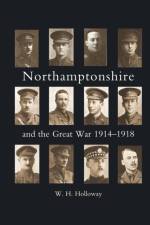
Northamptonshire is a small Midlands county with a proud record of service in the Great War at least equal to its larger neighbours. This book is a fine and well-illustrated account of the efforts of the sons of Northants. The Northamptonshire Regiment was among the first in France with the BEF in 1914, taking part in the retreat from Mons and the first battle of Ypres. 1915 was a year of disasters with the N Northamptons taking heavy casualties in the catastrophic attacks at Aubers Ridge and Loos and enduring what the book calls 'a dreadful winter i n the trenches'. Meanwhile the regiment's reserve battalions were serving in the Middle East, where they helped to drive the Turks from the Holy Land thus 'helping to complete the work of the Crusaders who built the regiment's Parish Church in Northampton' as the book's frontispiece proudly recalls. The Northamptons served on the Somme at Trones Wood and Thiepval, where they lost their Colonel; but took part in the final breaking olf the HIndenburg Line in 1918. The book has additional chapters on the county's Victoria Cross winners.
Originally privately published, this brief narrative tells of the part played in the Battle of Majuba Hill - a notable British defeat in the first Boer War - by the young Lieutenant Ian Hamilton, who later found fame - though not, alas, glory - as the hapless commander of the disastrous Dardanelles expedition. At Majuba, Hamilton, serving with the Gordon Highlanders, fought heroically (he was recommended for a VC but was considered too young); was badly wounded (his left hand was disabled for life); and captured. A cultivated and literary man, his memoir is of value not only to students of the Boer Wars, but also as a well-written account of action by a gifted and brave young officer.
Abonner på vårt nyhetsbrev og få rabatter og inspirasjon til din neste leseopplevelse.
Ved å abonnere godtar du vår personvernerklæring.