

Gjør som tusenvis av andre bokelskere
Abonner på vårt nyhetsbrev og få rabatter og inspirasjon til din neste leseopplevelse.
Ved å abonnere godtar du vår personvernerklæring.Du kan når som helst melde deg av våre nyhetsbrev.

The first of the three enemies referred to in the title of this history of the 7th Queen 's Own Hussars in the Second World War were the Italians, against whom they were deployed in north-west Africa in June 1940. Their first action was the capture of Fort Capuzzo and Maddalena. In January 1941 the 7th took part in the battles of Bardia and Sidi Barrani and the attack on the port of Tobruk. The destruction of the Italians was completed at Beda Fomm when the 7th fought continuously for 36 hours, helping in the capture of 20,000 prisoners and 112 tanks.The second enemy was Rommel's Afrika Korps which began to push back the Allies into Egypt. The 7th's first encounter with the new enemy was when they met 50 panzers, whose armament totally outclassed the 7th's Mark VI tanks. Nonetheless, the Regiment held off the German armoured division's attacks for four days until they only had two working tanks left and had their CO killed.After refitting, they embarked in January 1942 for Rangoon in Burma where they met their third enemy: the Japanese. The 7th covered the retreat of the Army from Burma, using their Stuart tanks to smash roadblocks, and earning the praise of Field-Marshal Alexander who said that without them 'we would never have got the Army out of Burma'.Before crossing the Chindwin river, the Regiment had to destroy their tanks and only their remnants staggered into Imphal where a famous stand would be made. In three months the regiment had covered a thousand miles, losing 46 killed and fifty wounded.Returning to Egypt, the 7th were re-equipped with Sherman tanks. In 1944 they joined the advance up Italy attached to the 2nd Polish Corps. They took part in the battles for Ancona and the piercing of the Gothic Line.
First published in 1867, at the height of the Victorian Age of Empire, this regimental history records the role of the 26th (Cameronian) Regiment, Scotland's only rifle regiment, and one of the famously fierce Lowland regiments which contributed so much to the British Army's success in war. Founded in 1689 just after the 'Glorious Revolution' with the Earl of Angus as its first Colonel, the Regiment took part in William III's war with France, including the battle of Steinkirk and the capture of Namur. In the War of Spanish Succession it fought under the Duke of Marlborough at all four of his great victories of Blenheim, Ramillies, Oudenarde and Malplaquet, as well as many sieges. Back in Britain it was used to suppress the first major Jacobite rising in 1715 at the battle of Preston; defended Gibraltar in 1727, and fought in the American War of Independence. In the Napoleonic Wars it served in Egypt, took part in Sir John Moore's retreat to Corunna; and later in the 19th century served in India and China.
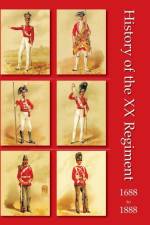
This is a regimental history of the Lancashire Fusiliers, one of the greatest names in the British Army for 200 years from its foundation down to 1888. Founded in 1688, the year of William III's Glorious Revolution, the regiment first saw service in the Caribbean before being deployed to defend the Rock of Gibraltar during the great siege. In the War of the Austrian Succession, it took part in the battles of Dettingen and Fontenoy against France; helped suppress Bonnie Prince Charlie's 1745 Jacobite rebellion at Culloden. Probably the Regiment's most famous member was Gen. James Wolfe, and though it missed his great victory at Quebec, the regiment took part in other battles of the Seven Years' War - notably Minden. In the Napoleonic Wars, the Fusiliers were present at Sir John Moore's retreat to Corunna, and in the Peninsular War fought at Vittoria, the Pyrenees, Nivelle and Orthes. During the Crimean War, the regiment fought at all the major battles - the Alma, Balaclava, Inkerman and the Siege of Sebastopol. Almost immediately, the regiment was embarked for India to fight the Mutiny - taking part in the relief of the Siege of Lucknow.
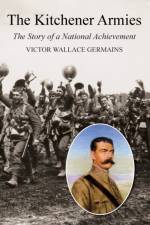
The fierce image of the pointing finger of Lord Kitchener, sternly summoning Britain''s youth to arms in 1914, is emblematic of the patriotic spirit that saw millions volunteer to answer their country''s call. This book, originally published in 1930, tells the story of what became the ''New Armies'' , including the famous ''Pals'' battalions, based on towns and factories of the industrial north. These men, after training, received their tragic blooding on the Somme in July 1916. Kitchener, successful Imperial commander turned War Minister and national icon, was one of the few who saw at the start of the war that the struggle would be a long one, and that Britain''s 100,000 strong professional army did not have the numbers to sustain such a protracted struggle. The equipping, training and organising of armies ten times that number was a mammoth task whose successful accomplishment is well told in this valuable and fascinating book, a must for all Great War fans.
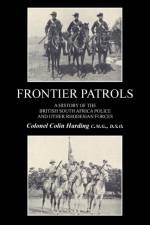
A sound and stirring history of the mounted forces recruited during the 'scramble for Africa' of the late 19th century to help guard Britain's huge imperial possessions in South Africa and Rhodesia. The British South Africa Police had a vast territory to patrol, and Colonel Harding, the author of this history, took part in its campaigns against risings by Rhodesia's two major tribes - the Mashona and the Matabele - along with the Jameson Raid, the famous precursor to the Boer War, and the Boer War itself. During the Great War the unit took part in campaigns against German South West Africa ( modern Namibia) and the long and gruelling fight against the German forces of that guerilla genius, Colonel Paul Von Lettow-Vorbeck in East Africa. This history contains an index, roll of Honour, and Honours and Awards for all ranks of the unit during the Great War.
Comprehensive history of both regular & territorial force battalions, mainly Middle East (inc. Tobruk & Alamein), North-West Europe & 1st Bn. with Chindits in Burma 1944. Rolls of Honour and awards.
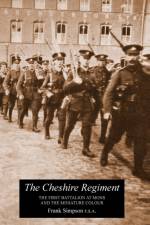
This fascinating book details the extraordinary history of a regimental flag - the 'miniature colour' lost by the First Battalion, Cheshire Regiment during the retreat from Mons in 1914, but restored to the regiment in 1918 after being hidden throughout the German occupation by Belgian villagers. First made as a exact miniature of the Cheshire's regimental standard, the Colour was sewn by wives of the First Battalion's officer in 1911 as a company shooting trophy. Taken to France by B Company in 1914, it was entrusted to Drummer 9461 Charles Baker, who, cut off and fearing capture, hid it in the roof of a house in the village of Audregnies near Mons, concealing it under straw. Baker's friend, Private 9865 Harold Riley, confided the secret to a nun, Sister St Loudon, who was treating his wounds. The nun told the village Priest, Father Soudan, who, together with the village schoolmaster, Monsieur Vallee, hid it behind choir stalls in the local church. As the Germans intensified their searches, the colour was moved and hidden yet again this time furled inside a pipe in M. Vallee's school. In November 1918 at the end of the war, a colour party from the 1st Battalion returned to the village to recover the Colour from the faithful villagers. The much travelled Colour now has a permanent home in the Cheshire Military Museum at Chester Castle.
The classical record of the BSACP - authorised in 1889 and disbanded in 1891. The first 85 pages tell the story of the unit's origins and pioneering services in protecting he settlers and merchants who were flooding into Mashonaland and Matabeleland. Never exceeding the Battalion strength, and with only limited British Army support, it ensured an initially peaceful British conquest of the area which would later be known as Southern Rhodesia. The occupation was so peacefull, in fact, that the Force was soon disbanded (with just 40 men being retained inservice as civil force, the Mashonaland Police). The bulk of the text is then devoted to a compilation of detailed biographical notes on each of the 897 men who served with the BSACP. They were recruited from a very broad range of European Adventures and soldiers of fortune.
Military history of all the expeditions between 1900-1920 (when the Mullah was finally defeated by the employment of airpower). Lists of Commands & Staff, Orders of Battle. The author was Secretary to the Somaliland Administration,1916-21.
The author of this contemporary eye-witness description of the famous siege of the Rock was an Army officer who saw the siege at first hand. Hostilities opened on June 24th 1779 when combined French and Spanish soldiers made an attempt to seize the British-held gateway to the Mediterranean using floating batteries if guns. The initial attempt failed, but the assault turned into a sustained siege which lasted for four long years. The hard-pressed garrison, under General Elliot, were able to sustain themselves because the Royal Navy several times broke through the blockade to resupply the defenders. John Drinkwater served as an ensign during the siege and returned to the Rock as a Captain in 1787. His celebrated account of the siege was compiled from his own recollections and those of his comrades. His book includes maps, charts and plans. Four appendices list casualties, expenditure of ammunition, the price of provisions and amounts of prize money. This famous book is a must have for all students of 18th Century war and the story of the Rock.
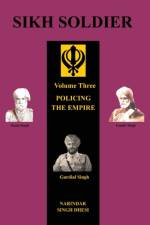
The Regiment had nine Infantry Battalions and the Machine Gun Battalion in the field, plus various training and administrative units. The task of recording their travels and battles in a coherent narrative manner could not have been easy. The author overcame most of the pitfalls by writing a strictly chronological history of the entire regiment but with numerous margin notes to clarify what each Battalion was doing, where, and at what precise dates. The result is a massively factual compilation which is easy to read and follow, and which deals with the Regiment's services in almost every theatre of war between 1939 and 1945. A list of Honours and awards (a statistical summary only) complete this history, which will appeal to anyone interested in India, the Sikhs and their part in the Second World War.
The Northamptonshire Yeomanry was divided in May 1939 to form two Cavalry Light Tank Regiments;1st Northamptonshire Yeomanry (TA) - Regimental Headquarters and "A" Sqn at Northampton, "B" Sqn at Daventry and "C" Sqn at Brackley.2nd Northamptonshire Yeomanry (TA) - Regimental Headquarters and "A" Sqn at Northampton, "B" and "C" Sqns at Kettering.Both Regiments formed part of 20th Light Armoured Brigade (TA) and were mobilised on 1 September 1939.During World War II 1st Northants Yeo (TA) remained in the United Kingdom and from 1941 - 1942 were part of the Coats Mission , the plan to evacuate the Royal Family in the event of a German invasion. In 1944 now as a part of the 33rd Armoured Brigade they participated in the Normandy Landings on D Day June 6. The brigade's three regiments which included the East Riding of Yorkshire Yeomanry and the 144 Regiment RAC, landed on Gold Beach in Normandy. Their role was to support any infantry who were in need of armour support, therefore the Brigade rarely fought as one entity. One of the occasions when the Brigade did undertake an operation on its own was at Le Mesnil-Patry on June 11, 1944. Further battles they were involved in were around Caen, including Operation Charnwood 7 July, the battle to capture Caen. On the July 16, 1944 it was involved in Operation Pomegranate , where it come under the command of the 59th (Staffordshire) Infantry Division. On August 8, 1944 it was involved in Operation Totalize , a planned breakout from the Caen Salient. It was during Operation Totalize that Joe Ekins a Sherman Tank gunner of the Northamptonshire Yeomanry gained recognition for killing the renowned German tank commander, Michael Wittmann, the 4th top scoring tank ace in history, on August 8, 1944 near St. Aignan de Cramesnil, France. They were briefly attached to the 51st (Highland) Division for the actions around the Battle of the Bulge. The Regiment was reformed and re-equipped with LVT 4 (Buffalo , amphibious armoured fighting vehicles) , for the Rhine crossing and was placed under the command of the 79th Armoured Division.
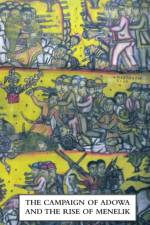
The battle of Adowa was a crucial turning point in the history of African colonialism. By the time it was fought, in March 1896, the ancient Empire of Abyssinia (today's Ethiopia) in the horn of Africa was the last African state to have retained its independence and escaped the 'scramble for Africa' that had seen the rest of the continent fall under the rule of rival European powers. As a latecomer to the colonial feast, Italy viewed Abyssinia, under its Emperor Menelik II, with greedy eyes. The Italians attacked Abyssinia but struggled in a hostile terrain. Urged on by Rome, however, the Italian Governor, General Baratieri, resolved on a full-frontal attack against the Ethiopian army, led by the Emperor himself. He ordered three separate columns totalling almost 20,000 men to advance on three mountain peaks. The Ethiopians, outnumbering the Italians by some five to one, were warned of the advance, ambushed the confused Italians and completely routed them.Adowa was the worst defeat ever inflicted on a European army by an African army. The Italians took a belated revenge in 1935 when Mussolini invaded and briefly conquered the country. This book is the only available account in English of an important and much-neglected campaign.
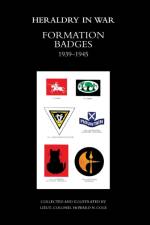
Interested in British military insignia of the Second World War? Then this long out-of-print book is the one for you. Although not aspiring to be a complete authority on the subject, the author's knowledge is immense, and he includes with his drawings of the badges information on how the insignia came to be adopted, and brief details of the war service of the unit concerned. The author's own interest in the subject was first sparked when he was asked to come up with a new badge for a Naval antiaircraft unit. After his idea was adopted, Lt.-Col. Cole began to collect badges and the resulting collection forms the basis for this absorbing book, which takes in armies, corps, divisions and smaller units too. An essential guide for all those interested in the heraldry of modern war.
Although published as a novel to evade wartime censorship Sydney Loch's [Sidney De Loghe was a pen name] searing memoir of the Gallipoli campaign carries the note "This book, written in Australia, Egypt and Gallipoli, is true". Certainly the prose reads as though the author has been to hell and back, making the book a grim classic of Great War literature; 'Death was the farmer of that tranquil field. Look at the corpses, tumbled in every shape, as still as still could be. mark the green uniforms holding the sunlight, and the dusky faces, hideously misshapen with decay. Mark the swollen bodies. Mark the rotting eye socket. By night and by day shells pass over them, but this silent company sleeps on". So honest was Loch in his descriptions of war's hideous reality that the authorities in the Australian state of Victoria banned it when it first appeared during the war. Loch was a sheep farmer who joined up, eager to fight for a just cause. His disillusionment was bitter. His criticism of the shortage of shells and the inept conduct of the campaign by the Higher Command drew the wrath of censors.At first a 'galloper' or horse-borne messenger, Loch became a runner in the trenches where he saw a mate, Lieutenant Lewis, blown to bits beside him. Loch collected the bits in a sack and buried them. The author's prose, always vivid, is sometimes informed by his farming background, as when he describes a 'crater where eight dead men lay around like chickens come to feed at a basin'. Fortunately for him, Loch was finally laid low with dysentery and typhoid and evacuated in a coma in August 1915. Sent back to Melbourne to recover, he began to write this book - one of the most horrifically vivid accounts of Gallipoli ever penned. A humanitarian hero, in the Second World War Loch ran a refugee camp in Greece and Palestine - and was responsible for saving more than a thousand Poles from the Nazis
Written by F. Loraine Petre, one of the most distinguished military historians of the Napoleonic wars, this huge history of the Norfolk Regiment, is naturally strong on its role in the Peninsular War when its battle honours included Rolica, Vimiera, Corunna, Busaco, Salamanca, Vittoria, San Sebastian, and the Nive. First raised in 1685 in the reign of James II, the Norfolks first saw service in the Caribbean and, after Napoleon's defeat, in India, the Crimea, Afghanistan and the Boer War. This detailed and authoritative history takes the regiment's story up to the outbreak of the Great War in August 1914.
A very full and detailed Regimental History, well written by the Regimental historian. The bulk of this history covers their distinguished record of service in India.
Abonner på vårt nyhetsbrev og få rabatter og inspirasjon til din neste leseopplevelse.
Ved å abonnere godtar du vår personvernerklæring.