Gjør som tusenvis av andre bokelskere
Abonner på vårt nyhetsbrev og få rabatter og inspirasjon til din neste leseopplevelse.
Ved å abonnere godtar du vår personvernerklæring.Du kan når som helst melde deg av våre nyhetsbrev.

In August 1914 the SWB consisted of two regular battalions, the 1st in Bordon with 3rd Brigade 1st Division, the 2nd in Tientsin; the 3rd Special Reserve Battalion in Brecon; and one Territorial battalion, the Brecknockshire Battalion, also in Brecon. By the end of the war a further 17 battalions had been raised eight of which went on active service and all of them feature in this excellent history, even if only briefly in the case of those that did not leave the UK. Total dead numbered some 5,500, 64 Battle Honours were awarded and six VCs were won. There is a list of Honours and Awards, including Mention in Despatches and foreign awards, and also the Roll of Honour in which officers are listed alphabetically, other ranks alphabetically by battalions; place and date of death are not given.Battalions of the regiment served on the Western Front, at Gallipoli (2nd and 4th), in Macedonia (7th and 8th) and Mesopotamia (4th). Two of the active service battalions, 11th and 12th, were disbanded in France in Feb 1918 when divisions in the BEF were reduced from twelve to nine battalions. The 1st Battalion landed in France on 13 August 1914 with 3rd Brigade, 1st Division, and stayed with them for the rest of the war, fighting on the Western Front. The 2nd Battalion was in China when war broke out, and its first operation was the capture of the German naval base of Tsingtao, in cooperation with the Japanese, and with this accomplished in November 1914 the battalion returned to the UK where it arrived in January 1915. Back home, it was allocated to the newly formed 'incomparable' 29th Division, the last of the regular divisions to be formed (apart from the Guards Division) and with which it landed on Gallipoli in April that year. After Gallipoli it went to France with the division, arriving in March 1916, and there it stayed to the end.The Brecknocks served throughout the war in Aden and India, the 4th went to Gallipoli with 13th (Western) Division and from there to Mesopotamia where it won two of regiment's six VCs. The 5th and 6th Battalions were Pioneers and fought in France as divisional pioneer battalions while the 7th and 8th, both in 22nd Division, after only a month in France went with the division to Macedonia in November 1915 where they saw out the rest of the war. The 10th and 11th Battalions served with 38th (Welsh) Division in France from the end of 1915, and finally the 12th (Bantam) Battalion crossed to France in June 1916 with 119th Brigade 40th Division in which it served till disbanded in Feb 1918.
South Africa's Cape Corps was composed of Cape Coloured personnel who volunteered to serve in the Great War. Virtually unknown outside South Africa, the Corps is probably now almost forgotten even inside the country. This book, therefore is an important records of a historically interesting formation that - given the country's racial divides- was more important for the men who served rather than their deeds. The book contains a great deal of biographical information about these volunteers, many of whom are shown in captioned photographs. This is a superior genealogical source as well as a rare source of information on South Africans in the Great War. Appendices, Roll of Honour (KIA, DOW and WIA), Honours & Awards (all ranks) and a list of former officers while on detached service complete this excellent history.
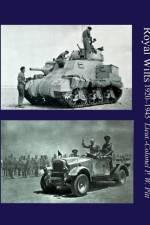
Originally a cavalry regiment, the 'Royal Wilts' were mechanised in 1941 and during the Second World War served in Iraq, and the North African desert - being present at the decisive battle of El Alamein. As part of the Eighth Army, they took part in the invasion of Italy in 1943. This volume recounts these action-packed years, and includes rare photos of Crusader and Grant tanks in action in the desert and excellent maps. Also including a Roll of Honour, awards and nominal rolls. Should be of consuming interest to any fan of armoured warfare and the North African campaign
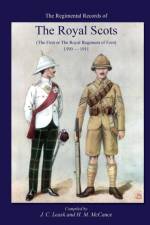
The Royal Scots, one of the earliest and most distinguished names in the British Army, have an unequalled record of service to the Crown and country. This huge history covers the entire early years of the regiment from their garrisoning of Tangier in 1680 down to the Boer War in 1899-1902. Between these deployments, they fought in the Duke of Marlborough's four great victories at Blenheim, Ramillies, Oudenarde and Malplaquet, the expedition to Louisburg, the retreat to Corunna, the Peninsular war battles of Busaco, Vittoria Salamanca, San Sebastian, and the NIve; the Waterloo campaign, the Crimean War. This book contains all you would expect in such a record: not only detailed accounts of all the campaigns and actions, but officers' roils, marching songs, regimental crests and insignia, uniform illustrations, and portraits of the regiment's colonels.
Abonner på vårt nyhetsbrev og få rabatter og inspirasjon til din neste leseopplevelse.
Ved å abonnere godtar du vår personvernerklæring.