Gjør som tusenvis av andre bokelskere
Abonner på vårt nyhetsbrev og få rabatter og inspirasjon til din neste leseopplevelse.
Ved å abonnere godtar du vår personvernerklæring.Du kan når som helst melde deg av våre nyhetsbrev.

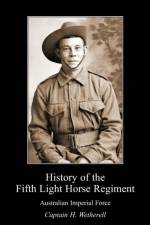
For Australia the First World War remains the most costly conflict in terms of deaths and casualties. From a population of fewer than five million, 416,809 men enlisted, of which over 60,000 were killed and 156,000 wounded, gassed, or taken prisoner. In general terms with Australian unit histories the quality of authorship is very good, most of them share the common strength of making plentiful mention of the individual officers and men who served, fought, died, was wounded, or taken prisoner, or who came safely home at the end of it all. They are a prime source for genealogists and military historians.William Edward 'Billy' Sing, DCM (2 March 1886 - 19 May 1943) was a part Chinese Australian soldier who served in the Australian Imperial Force during World War I, best known as a sniper during the Gallipoli Campaign.
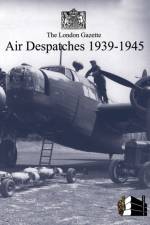
CONTENT: The Battle of Britain. Operations in the Middle East January - May 1941. Operations by the Allied Expeditionary Air Force in NW Europe November- September 1944 Operations in Greece 1940-1941. Liberation of Europe (Operation "Overlord"). Operations of Coastal Command, RAF, May - August 1944. Far East October 1940-December 1941. Report on the Air Operations During the Campaign in Malaya and Netherland East Indies December 1941- March 1942. Operations in Burma and Bay of Bengal January - May 1942. Operations by Fighter Command November 1940 - December 1941. Operations by Air Defence of Great Britain and Fighter Command in Connection with the German Flying and Rocket Offensives,1944-1945. Operations in South East Asia November 1943 - May 1944. Operations in South East Asia November 1943 - May 1944. Operations in South East Asia from June 1944 - to the Occupation of Rangoon May 1945. Operations in South East Asia May 1945 - September 1945. The Part Played by the Allied Air Forces in the Final Defeat of the Enemy in the Mediterranean Theatre March to May 1945.
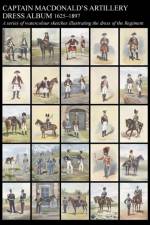
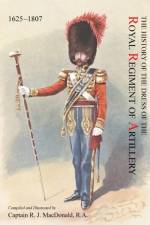
The plates are completed by a brief description and note of authorities quoted and are the work of the author. A definitive history of the dress of the Royal Regiment of Artillery up to the late Victorian period in colour plates.
This is an exceptional study on the history of the dress of The Royal Regiment of Artillery. When the author first joined the Regiment in 1887 it was his ambition to obtain all original prints, books, drawings and manuscripts dealing with the costume of the Royal Artillery. Within a couple of years he had a complete collection and at the request of the Committee of the Royal Artillery Institution to paint a series of water-colour sketches illustrating the dress of the Regiment, the author based them on his collection. They are found in this book depicted through a wealth of black and white illustrations and through twenty-five lavishly coloured plates. The drawings are meticulously accurate in detail and are divided into chapters, each corresponding to a separate reign. The author presents an outline history for each period and also provides a chronological record of Orders. A full description accompanies each plate, together with sources of reference. This is the definitive history of the dress of the Royal Regiment of Artillery up to the late Victorian period.
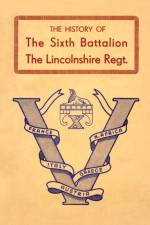
The 6th Lincolnshire''s were in 138th Brigade, commanded by Brigadier G.P. Harding, in 46th Infantry Division which was commanded by Major-General J.L.I. Hawksworth during the Second World War''s Italian campaign..At the Salerno landings on 9 September 1943, 6th Lincs were involved in fierce fighting and completed the expulsion of the Germans from the strong-point of Magazzea. Later on the Herman G├╢ring Panzer and Reconnaisance, and Grenadier Battalions vigourously engaged the 2nd and the Royal Marine Commandos, which were supported by the destroyer HMS Nubian. Towards evening 6th Lincs arrived, tipping the scales, and the action died down.On the night of 22nd/23rd September 46th Division cleared Cava di Terreni, but well sited enemy machine guns spoiled the attempt and neither Santa Croce nor La Molina were cleared, The 2nd/4th K.O.Y.L.I. was hit by friendly fire, as a result of which 6th Lincs on their immediate left, also fell short of their objective. The fierceness of these action can be judged by the casualties, on 23 September 2nd/4th K.O.Y.L.I. suffered 116 and 6th Lincolnshire''s 93.The next action in which they were engaged was the second battle of Monte Camino in the assault on the Bernhardt Line. This was in atrocious weather on 4/5 December 1943 with icy drizzle turning to torrential rain, and the Garigliano, the Peccia, and the Liri rivers in flood. They were in action on the precarious Garigliano bridgehead against heavy German counterattacks from 20 to 22 January 1944.On the night of 26th/27th January the 6th Lincs won a firm footing on the slopes of Monte Rotondo East, going on to capture it on the night of the 28th. In the fierce fighting that followed, on the night of 7th/8th February 6th Lincs twice reached Monte Faito and twice were pushed off it by immediate counterattacks which forced them back to Ornito. From 9 February the whole of the division went over to the defensive as the focal point of the struggle became Cassino and Anzio. On 10 September 6th Lincs were ordered to take Point 449 on the Gemmano Ridge and although badly cut up by shellfire, one company got up to the wooden cross at the top of the hill. Again and again the top of the hill changed hands. When the hill was finally taken by 2nd Cameron Highlanders "round the base of the great black crucifix at the top were the arms of a dead soldier of the 6th Lincoln''s" (quoted from R. Docherty, Eighth Army in Italy 1943-45, page 164).On 9 December the 6th Lincoln''s were again in the thick of it when 90th Panzer Division counterattacked 46 Division''s front at the Faenza bridgehead. 200th Panzer Grenadier Regiment using artillery, tanks, and infantry attacked apparently regardless of casualties, and struck 138th Brigade''s front with the brunt of the fighting falling upon 6th Lincs and a squadron of the Bays. The three companies of the Lincolnshire''s were all under strength due to previous heavy losses, but they held their ground from 7 am to just before midday when the Germans fell back. A second attack was launched at 2 pm but also failed. A third attack, made in conjunction with 305th Infantry Division was also repulsed. But 46th Division had suffered heavy casualties, had reached the end of its fighting fitness and had to be relieved.22 year old Captain John H.C. Brunt of the Sherwood Forresters attached to 6th Lincoln''s as c/o Carrier Platoon, was killed winning the VC on the bridgehead over the Lamone River on 9 December 1944, holding a vital sector of the line at Faenza facing the full fury of the above attack.This fine history covers the Tunisian as well as the Italian campaigns and comes complete with Roll of Honour, awards and the Order of Battle at the end of the war in Europe.
Abonner på vårt nyhetsbrev og få rabatter og inspirasjon til din neste leseopplevelse.
Ved å abonnere godtar du vår personvernerklæring.