Gjør som tusenvis av andre bokelskere
Abonner på vårt nyhetsbrev og få rabatter og inspirasjon til din neste leseopplevelse.
Ved å abonnere godtar du vår personvernerklæring.Du kan når som helst melde deg av våre nyhetsbrev.

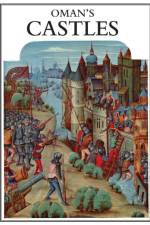
The great historian Sir Charles Oman was commissioned by the Great Western Railway to write a study of castles in the regions served by their lines. The result of this collaboration, published in 1926 was this wonderfully handsome and incredibly informative book, mixing history and military architecture, and telling us all we need to know about the castles themselves and the families who lived in them.Oman covers the castles of the Thames Valley, the West Country, the West Midlands, the Welsh Marches and Wales itself, some eighty in all, both intact and ruined. He explains the origins of castles, their purpose, use and roles in history. The jewel in the crown is Windsor, the great fortress dominating the western approaches to London, and long the principal residence and last resting place of Britain’s Royal family outside the capital. Warwick and Kenilworth are the main castles in the Midlands, the one a magnificent fortress overlooking the river Avon, the other the scene of spectacular shows staged for Queen Elizabeth I by her favourite Robert Dudley. Two of the great ring of castles built by Edward I to subdue North Wales - Harlech, and Criccieth - both feature prominently; as do castles which have played a prominent part in English history, like Berkeley, scene of the gruesome murder of Edward II; and the coastal fortresses of Cornwall - including St Michael’s Mount - built to repel the invading French. Oman personally visited all but six of the castles he writes of, accompanied by his son, responsible for taking most of the photographs in this book. Apart from Oman’s learned but accessible prose, one of the book’s glories is its lavish illustrations. There are 105 in all, including 67 beautiful; five castle plans; two colour plates and two maps. It is a book that all lovers of English and Welsh history should own.
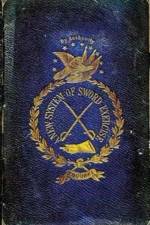
Illustrated with delicately clear line drawings, and first published on the eve of the American Civil War (this revised edition 1872 ) this Edged Weapon Manual tells the aspiring swordsman - mounted or fighting on foot - all he needs to know to defeat, wound and/or kill his opponent by the sword. A must for the American Civil War, and Indian Wars Reenactor.
The biggest and bloodiest battle of the English Civil War, Marston Moor was a major Parliamentary victory which saw an Anglo-Scottish army under Cromwell and Fairfax overwhelm a Royalist force under Prince Rupert and the Marquess of Newcastle. The battle outside York lost the north for King Charles and marked the beginning of the end of the Civil War. This lecture, originally delivered at the battle site, gives a succinct portrait of one of the major engagements of English history.
Described by its author as ‘a useful little treatise’ this book, simply and clearly written, and intended for study by ‘soldiers and subalterns’ is an exposition of the tactics to be used defending outposts. Opportunely published on the eve of the Crimean War and Indian Mutiny – which both featured the tactics it expounds in sieges and storming fortifications, – this timely treatise is also beautifully illustrated with drawings and diagrams.
Published in 1937 and written by an Instructor to the US Marine Corps, this manual of close quarter combat shows students how to fight and kill with knife or bayonet; and how to use Jiu-Jitsu, Savate, and Boxing for those whose duties “may lead them into a ‘Tight Spot’”.
Published at the time of the Crimean War, this is a soildier friendly manual of rifle firing, written at a time when the new weapon was replacing the musket. Covering everything from the design of the weapons to making the cartridges and estimating ranges, and illustrated with drawings and diagrams, this is the perfect book for the ballistics enthusiast.
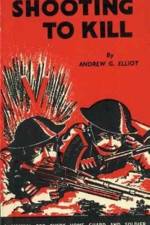
Published in 1941, this aggressively useful little book tells the old Home Guard soldier and the raw young recruit alike all they need to know on such subjects as “killing Nazis when they are moving”; and covers “many other tricks in the desperate art of modern war”.
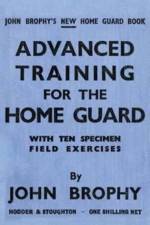
Aimed at the new Home Guard early in World War Two, and the sort of situation they were likely to encounter defending their homes, this little book both advises on tactics, and posits ten situations the Home Guard were likely to face in the event of an enemy invasion.
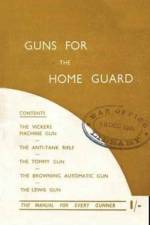
Weapons for the Home Guard were unavailable in the early days, but when they did come on stream, this little guide told recruits how to familiarise themselves with and use the Vickers and Lewis machine guns; the antitank rifle; the ‘Tommy Gun’ (Thompson submachine gun); and the Browning automatic pistol.
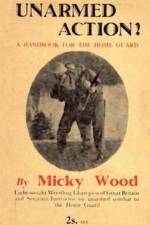
Written by champion wrestler turned unarmed combat instructor Mickey Wood, this concise guide to hurting or killing your enemy with the use of hands, fists arms or legs, was popular reading with the Home Guard recruits at whom it was aimed. Wood outlines in clear language and the aid of photographs: blows, breakfalls and strangleholds - all designed to disarm and overpower an armed opponent.
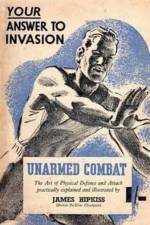
Written by a seasoned Judo practitioner, this booklet - aimed at recruits to the Home Guard early in the Second World War when weapons were hard to find - teaches all that he needed to know about unarmed combat, including such matters as the vulnerable wrist, why a blow with a rigid hand is better than a fist; and how to break a fall when thrown.
The War Diaries for the Great War, held under WO95, represent one of the most popular record collections held at the National Archives, Kew, London. For researchers and family historians, the War Diaries contain a wealth of information of far greater interest than the army could ever have predicted. They provide unrivalled insight into daily events on the front line and are packed with fascinating detail. They contain no modern editing, opinions or poorly judged comments, just the war day by day, written by the men who fought this 'War to end all Wars. They are without question, the most important source of information available on the war on the Western Front.Full colour facsimile of each page with specially created chronological index.What is a War Diary?The headquarters of each unit and formation of the British Army in the field was ordered to maintain a record of its location, movements and activities. For the most part, these details were recorded on a standard army form headed 'War diary or intelligence summary'.What details are given?Details given vary greatly, depending on the nature of the unit, what it was doing and, to some extent, the style of the man writing it. The entries vary from very simple and repetitive statements like 'Training' up to many pages of description when a unit was in battle. Production of the diary was the responsibility of the Adjutant of the headquarters concerned.Is there any other information or documents with the diaries?Some diaries have other documentation attached, such as maps, operational orders and after-action reports.
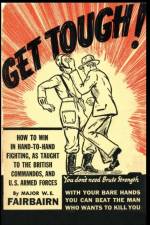
This book, by the man who taught them, shows how the British Commandos fought in the Second World War in unarmed hand-to hand combat. It shows how they won their fights - even against enemies who were bigger, stronger, and armed. Brute strength is not required. This book shows you how to put a thug out of action with your bare hands, so fast he won't know what's hit him.Get Tough is filled with clear, graphic line drawings which, with the easy-to-follow directions, demonstrate the Fairbairn System. The author, Major W. E. Fairbairn, was a tough Police officer who spent 30 years with the Shanghai Municipal Police, where he learned ju-jitsu (Judo), Chinese boxing and other martial arts. He was senior instructor to British Special Forces during the war, and was the co-inventor of the legendary Sykes-Fairbairn Commando knife. While in China he became the first foreigner, living outside Japan, ever admitted to Kodokan Jiu-Jutsu University in Tokyo where he was awarded the black belt, second degree. Combining all the knowledge thus acquired he developed a system that stopped the Shanghai terrorists in their tracks, demoralised the Nazis, and probably proved a decisive factor in the success of Allied Special forces in World War Two.This is a must book for the armed forces, civilian defence groups, police, security guards, and indeed anyone whose life may be threatened.
The War Diaries for the Great War, held under WO95, represent one of the most popular record collections held at the National Archives, Kew, London. For researchers and family historians, the War Diaries contain a wealth of information of far greater interest than the army could ever have predicted. They provide unrivalled insight into daily events on the front line and are packed with fascinating detail. They contain no modern editing, opinions or poorly judged comments, just the war day by day, written by the men who fought this 'War to end all Wars. They are without question, the most important source of information available on the war on the Western Front.Full colour facsimile of each page with specially created chronological index.What is a War Diary?The headquarters of each unit and formation of the British Army in the field was ordered to maintain a record of its location, movements and activities. For the most part, these details were recorded on a standard army form headed 'War diary or intelligence summary'.What details are given?Details given vary greatly, depending on the nature of the unit, what it was doing and, to some extent, the style of the man writing it. The entries vary from very simple and repetitive statements like 'Training' up to many pages of description when a unit was in battle. Production of the diary was the responsibility of the Adjutant of the headquarters concerned.Is there any other information or documents with the diaries?Some diaries have other documentation attached, such as maps, operational orders and after-action reports.
The War Diaries for the Great War, held under WO95, represent one of the most popular record collections held at the National Archives, Kew, London. For researchers and family historians, the War Diaries contain a wealth of information of far greater interest than the army could ever have predicted. They provide unrivalled insight into daily events on the front line and are packed with fascinating detail. They contain no modern editing, opinions or poorly judged comments, just the war day by day, written by the men who fought this 'War to end all Wars. They are without question, the most important source of information available on the war on the Western Front.Full colour facsimile of each page with specially created chronological index.What is a War Diary?The headquarters of each unit and formation of the British Army in the field was ordered to maintain a record of its location, movements and activities. For the most part, these details were recorded on a standard army form headed 'War diary or intelligence summary'.What details are given?Details given vary greatly, depending on the nature of the unit, what it was doing and, to some extent, the style of the man writing it. The entries vary from very simple and repetitive statements like 'Training' up to many pages of description when a unit was in battle. Production of the diary was the responsibility of the Adjutant of the headquarters concerned.Is there any other information or documents with the diaries?Some diaries have other documentation attached, such as maps, operational orders and after-action reports.
The War Diaries for the Great War, held under WO95, represent one of the most popular record collections held at the National Archives, Kew, London. For researchers and family historians, the War Diaries contain a wealth of information of far greater interest than the army could ever have predicted. They provide unrivalled insight into daily events on the front line and are packed with fascinating detail. They contain no modern editing, opinions or poorly judged comments, just the war day by day, written by the men who fought this 'War to end all Wars. They are without question, the most important source of information available on the war on the Western Front.Full colour facsimile of each page with specially created chronological index.What is a War Diary?The headquarters of each unit and formation of the British Army in the field was ordered to maintain a record of its location, movements and activities. For the most part, these details were recorded on a standard army form headed 'War diary or intelligence summary'.What details are given?Details given vary greatly, depending on the nature of the unit, what it was doing and, to some extent, the style of the man writing it. The entries vary from very simple and repetitive statements like 'Training' up to many pages of description when a unit was in battle. Production of the diary was the responsibility of the Adjutant of the headquarters concerned.Is there any other information or documents with the diaries?Some diaries have other documentation attached, such as maps, operational orders and after-action reports.
The War Diaries for the Great War, held under WO95, represent one of the most popular record collections held at the National Archives, Kew, London. For researchers and family historians, the War Diaries contain a wealth of information of far greater interest than the army could ever have predicted. They provide unrivalled insight into daily events on the front line and are packed with fascinating detail. They contain no modern editing, opinions or poorly judged comments, just the war day by day, written by the men who fought this 'War to end all Wars. They are without question, the most important source of information available on the war on the Western Front. Full colour facsimile of each page with specially created chronological index. What is a War Diary? The headquarters of each unit and formation of the British Army in the field was ordered to maintain a record of its location, movements and activities. For the most part, these details were recorded on a standard army form headed 'War diary or intelligence summary'. What details are given? Details given vary greatly, depending on the nature of the unit, what it was doing and, to some extent, the style of the man writing it. The entries vary from very simple and repetitive statements like 'Training' up to many pages of description when a unit was in battle. Production of the diary was the responsibility of the Adjutant of the headquarters concerned. Is there any other information or documents with the diaries? Some diaries have other documentation attached, such as maps, operational orders and after-action reports.
The War Diaries for the Great War, held under WO95, represent one of the most popular record collections held at the National Archives, Kew, London. For researchers and family historians, the War Diaries contain a wealth of information of far greater interest than the army could ever have predicted. They provide unrivalled insight into daily events on the front line and are packed with fascinating detail. They contain no modern editing, opinions or poorly judged comments, just the war day by day, written by the men who fought this ''War to end all Wars. They are without question, the most important source of information available on the war on the Western Front.Full colour facsimile of each page with specially created chronological index.What is a War Diary?The headquarters of each unit and formation of the British Army in the field was ordered to maintain a record of its location, movements and activities. For the most part, these details were recorded on a standard army form headed ''War diary or intelligence summary''.What details are given?Details given vary greatly, depending on the nature of the unit, what it was doing and, to some extent, the style of the man writing it. The entries vary from very simple and repetitive statements like ''Training'' up to many pages of description when a unit was in battle. Production of the diary was the responsibility of the Adjutant of the headquarters concerned.Is there any other information or documents with the diaries?Some diaries have other documentation attached, such as maps, operational orders and after-action reports.
The War Diaries for the Great War, held under WO95, represent one of the most popular record collections held at the National Archives, Kew, London. For researchers and family historians, the War Diaries contain a wealth of information of far greater interest than the army could ever have predicted. They provide unrivalled insight into daily events on the front line and are packed with fascinating detail. They contain no modern editing, opinions or poorly judged comments, just the war day by day, written by the men who fought this 'War to end all Wars. They are without question, the most important source of information available on the war on the Western Front.Full colour facsimile of each page with specially created chronological index.What is a War Diary?The headquarters of each unit and formation of the British Army in the field was ordered to maintain a record of its location, movements and activities. For the most part, these details were recorded on a standard army form headed 'War diary or intelligence summary'.What details are given?Details given vary greatly, depending on the nature of the unit, what it was doing and, to some extent, the style of the man writing it. The entries vary from very simple and repetitive statements like 'Training' up to many pages of description when a unit was in battle. Production of the diary was the responsibility of the Adjutant of the headquarters concerned.Is there any other information or documents with the diaries?Some diaries have other documentation attached, such as maps, operational orders and after-action reports.
The War Diaries for the Great War, held under WO95, represent one of the most popular record collections held at the National Archives, Kew, London. For researchers and family historians, the War Diaries contain a wealth of information of far greater interest than the army could ever have predicted. They provide unrivalled insight into daily events on the front line and are packed with fascinating detail. They contain no modern editing, opinions or poorly judged comments, just the war day by day, written by the men who fought this 'War to end all Wars. They are without question, the most important source of information available on the war on the Western Front.Full colour facsimile of each page with specially created chronological index.What is a War Diary?The headquarters of each unit and formation of the British Army in the field was ordered to maintain a record of its location, movements and activities. For the most part, these details were recorded on a standard army form headed 'War diary or intelligence summary'.What details are given?Details given vary greatly, depending on the nature of the unit, what it was doing and, to some extent, the style of the man writing it. The entries vary from very simple and repetitive statements like 'Training' up to many pages of description when a unit was in battle. Production of the diary was the responsibility of the Adjutant of the headquarters concerned.Is there any other information or documents with the diaries?Some diaries have other documentation attached, such as maps, operational orders and after-action reports.
The War Diaries for the Great War, held under WO95, represent one of the most popular record collections held at the National Archives, Kew, London. For researchers and family historians, the War Diaries contain a wealth of information of far greater interest than the army could ever have predicted. They provide unrivalled insight into daily events on the front line and are packed with fascinating detail. They contain no modern editing, opinions or poorly judged comments, just the war day by day, written by the men who fought this 'War to end all Wars. They are without question, the most important source of information available on the war on the Western Front. Full colour facsimile of each page with specially created chronological index. What is a War Diary? The headquarters of each unit and formation of the British Army in the field was ordered to maintain a record of its location, movements and activities. For the most part, these details were recorded on a standard army form headed 'War diary or intelligence summary'. What details are given? Details given vary greatly, depending on the nature of the unit, what it was doing and, to some extent, the style of the man writing it. The entries vary from very simple and repetitive statements like 'Training' up to many pages of description when a unit was in battle. Production of the diary was the responsibility of the Adjutant of the headquarters concerned. Is there any other information or documents with the diaries? Some diaries have other documentation attached, such as maps, operational orders and after-action reports.
The War Diaries for the Great War, held under WO95, represent one of the most popular record collections held at the National Archives, Kew, London. For researchers and family historians, the War Diaries contain a wealth of information of far greater interest than the army could ever have predicted. They provide unrivalled insight into daily events on the front line and are packed with fascinating detail. They contain no modern editing, opinions or poorly judged comments, just the war day by day, written by the men who fought this 'War to end all Wars. They are without question, the most important source of information available on the war on the Western Front.Full colour facsimile of each page with specially created chronological index.What is a War Diary?The headquarters of each unit and formation of the British Army in the field was ordered to maintain a record of its location, movements and activities. For the most part, these details were recorded on a standard army form headed 'War diary or intelligence summary'.What details are given?Details given vary greatly, depending on the nature of the unit, what it was doing and, to some extent, the style of the man writing it. The entries vary from very simple and repetitive statements like 'Training' up to many pages of description when a unit was in battle. Production of the diary was the responsibility of the Adjutant of the headquarters concerned.Is there any other information or documents with the diaries?Some diaries have other documentation attached, such as maps, operational orders and after-action reports.
The War Diaries for the Great War, held under WO95, represent one of the most popular record collections held at the National Archives, Kew, London. For researchers and family historians, the War Diaries contain a wealth of information of far greater interest than the army could ever have predicted. They provide unrivalled insight into daily events on the front line and are packed with fascinating detail. They contain no modern editing, opinions or poorly judged comments, just the war day by day, written by the men who fought this 'War to end all Wars. They are without question, the most important source of information available on the war on the Western Front.Full colour facsimile of each page with specially created chronological index.What is a War Diary?The headquarters of each unit and formation of the British Army in the field was ordered to maintain a record of its location, movements and activities. For the most part, these details were recorded on a standard army form headed 'War diary or intelligence summary'.What details are given?Details given vary greatly, depending on the nature of the unit, what it was doing and, to some extent, the style of the man writing it. The entries vary from very simple and repetitive statements like 'Training' up to many pages of description when a unit was in battle. Production of the diary was the responsibility of the Adjutant of the headquarters concerned.Is there any other information or documents with the diaries?Some diaries have other documentation attached, such as maps, operational orders and after-action reports.
The War Diaries for the Great War, held under WO95, represent one of the most popular record collections held at the National Archives, Kew, London. For researchers and family historians, the War Diaries contain a wealth of information of far greater interest than the army could ever have predicted. They provide unrivalled insight into daily events on the front line and are packed with fascinating detail. They contain no modern editing, opinions or poorly judged comments, just the war day by day, written by the men who fought this 'War to end all Wars. They are without question, the most important source of information available on the war on the Western Front.Full colour facsimile of each page with specially created chronological index.What is a War Diary?The headquarters of each unit and formation of the British Army in the field was ordered to maintain a record of its location, movements and activities. For the most part, these details were recorded on a standard army form headed 'War diary or intelligence summary'.What details are given?Details given vary greatly, depending on the nature of the unit, what it was doing and, to some extent, the style of the man writing it. The entries vary from very simple and repetitive statements like 'Training' up to many pages of description when a unit was in battle. Production of the diary was the responsibility of the Adjutant of the headquarters concerned.Is there any other information or documents with the diaries?Some diaries have other documentation attached, such as maps, operational orders and after-action reports.
The War Diaries for the Great War, held under WO95, represent one of the most popular record collections held at the National Archives, Kew, London. For researchers and family historians, the War Diaries contain a wealth of information of far greater interest than the army could ever have predicted. They provide unrivalled insight into daily events on the front line and are packed with fascinating detail. They contain no modern editing, opinions or poorly judged comments, just the war day by day, written by the men who fought this 'War to end all Wars. They are without question, the most important source of information available on the war on the Western Front.Full colour facsimile of each page with specially created chronological index.What is a War Diary?The headquarters of each unit and formation of the British Army in the field was ordered to maintain a record of its location, movements and activities. For the most part, these details were recorded on a standard army form headed 'War diary or intelligence summary'.What details are given?Details given vary greatly, depending on the nature of the unit, what it was doing and, to some extent, the style of the man writing it. The entries vary from very simple and repetitive statements like 'Training' up to many pages of description when a unit was in battle. Production of the diary was the responsibility of the Adjutant of the headquarters concerned.Is there any other information or documents with the diaries?Some diaries have other documentation attached, such as maps, operational orders and after-action reports.
Abonner på vårt nyhetsbrev og få rabatter og inspirasjon til din neste leseopplevelse.
Ved å abonnere godtar du vår personvernerklæring.