






Gjør som tusenvis av andre bokelskere
Abonner på vårt nyhetsbrev og få rabatter og inspirasjon til din neste leseopplevelse.
Ved å abonnere godtar du vår personvernerklæring.Du kan når som helst melde deg av våre nyhetsbrev.

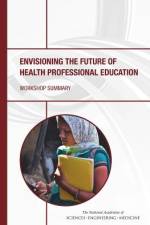
In April 2015, the Institute of Medicine convened a public workshop to explore recent shifts in the health and health care industry and their implications for health professional education (HPE) and workforce learning. This study serves as a follow-up to the 2009 Lancet Commission report on health professions education for the 21st century and seeks to expand the report's messages beyond medicine, nursing, and public health. Envisioning the Future of Health Professional Education discusses opportunities for new platforms of communication and learning, continuous education of the health workforce, opportunities for team-based care and other types of collaborations, and social accountability of the health professions. This study explores the implications that shifts in health, policy, and the health care industry could have on HPE and workforce learning, identifies learning platforms that could facilitate effective knowledge transfer with improved quality and efficiency, and discusses opportunities for building a global health workforce that understands the role of culture and health literacy in perceptions and approaches to health and disease.
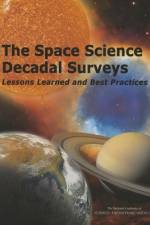
The National Research Council has conducted 11 decadal surveys in the Earth and space sciences since 1964 and released the latest four surveys in the past 8 years. The decadal surveys are notable in their ability to sample thoroughly the research interest, aspirations, and needs of a scientific community. Through a rigorous process, a primary survey committee and thematic panels of community members construct a prioritized program of science goals and objectives and define an executable strategy for achieving them. These reports play a critical role in defining the nation's agenda in that science area for the following 10 years, and often beyond. The Space Science Decadal Surveys considers the lessons learned from previous surveys and presents options for possible changes and improvements to the process, including the statement of task, advanced preparation, organization, and execution. This report discusses valuable aspects of decadal surveys that could taken further, as well as some challenges future surveys are likely to face in searching for the richest areas of scientific endeavor, seeking community consensus of where to go next, and planning how to get there. The Space Science Decadal Surveys describes aspects in the decadal survey prioritization process, including balance in the science program and across the discipline; balance between the needs of current researchers and the development of the future workforce; and balance in mission scale - smaller, competed programs versus large strategic missions.
"The 21st Century Truck Partnership (21CTP) works to reduce fuel consumption and emissions, increase heavy-duty vehicle safety, and support research, development, and demonstration to initiate commercially viable products and systems. This report is the third in a series of three by the National Academies of Sciences, Engineering, and Medicine that have reviewed the research and development initiatives carried out by the 21CTP. Review of the 21st Century Truck Partnership, Third Report builds on the Phase 1 and 2 reviews and reports, and also comments on changes and progress since the Phase 2 report was issued in 2012."--Publisher's description.
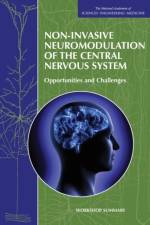
Based on advances in biotechnology and neuroscience, non-invasive neuromodulation devices are poised to gain clinical importance in the coming years and to be of increasing interest to patients, clinicians, health systems, payers, and industry. Evidence suggests that both therapeutic and non-therapeutic applications of non-invasive neuromodulation will continue to expand in coming years, particularly for indications where treatments are currently insufficient, such as drug-resistant depression. Given the growing interest in non-invasive neuromodulation technologies, the Institute of Medicine's Forum on Neuroscience and Nervous System Disorders convened a workshop, inviting a range of stakeholders - including developers of devices and new technologies, researchers, clinicians, ethicists, regulators, and payers - to explore the opportunities, challenges, and ethical questions surrounding the development, regulation, and reimbursement of these devices for the treatment of nervous system disorders as well as for non-therapeutic uses, including cognitive and functional enhancement. This report highlights the presentation and discussion of the workshop.
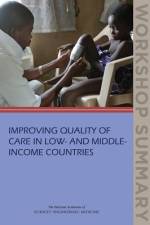
Quality of care is a priority for U.S. Agency for International Development (USAID). The agency's missions abroad and their host country partners work in quality improvement, but a lack of evidence about the best ways to facilitate such improvements has constrained their informed selection of interventions. Six different methods - accreditation, COPE, improvement collaborative, standards-based management and recognitions (SBM-R), supervision, and clinical in-service training - currently make up the majority of this investment for USAID missions. As their already substantial investment in quality grows, there is demand for more scientific evidence on how to reliably improve quality of care in poor countries. USAID missions, and many other organizations spending on quality improvement, would welcome more information about how different strategies work to improve quality, when and where certain tools are most effective, and the best ways to measure success and shortcomings. To gain a better understanding of the evidence supporting different quality improvement tools and clarity on how they would help advance the global quality improvement agenda, the Institute of Medicine convened a 2-day workshop in January 2015. The workshop's goal was to illuminate these different methods, discussing their pros and cons. This workshop summary is a description of the presentations and discussions.
In 1993, the United States signed the Chemical Weapons Convention (CWC), an international treaty outlawing the production, stockpiling, and use of chemical weapons. The chemical weapons stockpiles at five of the U.S. chemical weapons storage sites have now been destroyed. At those sites, the munitions were robotically opened and the chemical agent was removed, collected, and incinerated. One of the remaining sites with chemical weapons stockpiles is the Blue Grass Army Depot near Richmond, Kentucky. In this case, caustic hydrolysis will be used to destroy the agents and energetics, resulting in a secondary waste stream known as hydrolysate. Review Criteria for Successful Treatment of Hydrolysate at the Blue Grass Chemical Agent Destruction Pilot Plant develops criteria for successfully treating the hydrolysate, identifies systemization data that should factor into the criteria/decision process, suggests potential modifications to suggested treatment that would allow continued onsite processing, and assesses waste disposal procedures. This study further examines the possibility of delay or failure of the existing technology and examines possible alternatives to onsite treatment.
Recent scientific evidence points to the origins of childhood obesity as an outcome of the dynamic interplay of genetic, behavioral, and environmental factors throughout early development, with a compelling body of evidence suggesting that both maternal and paternal nutritional and other exposures affect a child's risk of later obesity. The burgeoning field of epigenetics has led researchers to speculate that many of the observed associations between early developmental exposures and later risk of childhood obesity are mediated, at least in part, through epigenetic mechanisms. To explore the body of evolving science that examines the nexus of biology, environment, and developmental stage on risk of childhood obesity, the Institute of Medicine and the National Research Council convened a workshop in February 2015. The workshop focused on the prenatal period, infancy, and early childhood and addressed evidence from both animal and human studies. Workshop objectives were to (1) identify epigenetic-mediated relationships between exposure to risk factors during sensitive periods of development (gestation through age 3) and subsequent obesity-related outcomes; (2) explore the science around periods of plasticity and potential reversibility of obesity risk in the context of early childhood development; and (3) examine the translation of epigenetic science to guide early childhood obesity prevention and intervention to reduce obesity risk. This report summarizes the information presented and discussed at the workshop.
Universal health coverage (UHC) has been recognized by the World Health Organization as a key element in reducing social inequality and a critical component of sustainable development and poverty reduction. In most of the world UHC is sought through a combination of public and private-sector health care systems. In most low- and middle-income countries health systems are evolving to increasingly rely on the private sector because the public sector lacks the infrastructure and staff to meet all health care needs. With growing individual assets available for private-sector expenditure, patients often seek better access to technology, staff, and medicines. However, in low-income countries nearly 50 percent of health care financing is out-of-pocket. With the expected increase in the overall fraction of care provided through the private sector, these expenditures can be financially catastrophic for individuals in the informal workforce. In the global workforce of approximately 3 billion people, only 10 to 15 percent are estimated to have some type of access to occupational health services. The informal workforce is growing worldwide, and the degree to which its occupational health needs are satisfied depends on the capabilities of the general health care system. In July 2014, the Institute of Medicine held a workshop on approaches to universal health coverage and occupational health and safety for informal sector workers in developing countries. This report summarizes the presentations and discussions from this workshop. Approaches to Universal Health Coverage and Occupational Health and Safety for the Informal Workforce in Developing Countries identifies best practices and lessons learned for the informal workforce in developing countries in the financing of health care with respect to health care delivery models that are especially suitable to meeting a population's needs for a variety of occupational health issues, including the prevention of or mitigation of hazardous risks and the costs of providing medical and rehabilitation services and other benefits to various types of workers within this population. These experiences and lessons learned may be useful for stakeholders in moving the discussions, policies, and mechanisms forward to increase equitable access to quality health services without financial hardship for the informal workforce.
The U.S. National Climate Assessment identified a number of ways in which climate change is affecting, and is likely to affect, people, infrastructure, natural resources, and ecosystems. Those impacts, in turn, are increasingly having important current and potential future consequences for human health. There is a need to probe more deeply into how climate change impacts on the environment can create environmental stressors that, in turn, are having and/or have the potential to have significant impact on human health in a number of dimensions. In response to this need, the U.S. Global Change Research Program (USGCRP) has initiated an interagency Scientific Assessment on the Impacts of Climate Change on Human Health in the United States. The Assessment is intended to inform public health authorities, other planning and policy entities, and the general public. Review of the Draft Interagency Report on the Impacts of Climate Change on Human Health in the United States evaluates the scientific basis, findings, and key messages of the USGCRP Draft Assessment. This report offers a number of overarching suggestions on how the USGCRP report authors can enhance their identification and assessment of the science and better communicate their conclusions to all of their target audiences. These recommendations this help the Assessment to play a significant role in continued efforts to examine and explore the impacts of climate change on human health.
On February 7, 2013, the committee convened a workshop titled "Innovation, Diversity, and Success in the SBIR/STTR Programs" to examine the participation of women, minorities, and other underrepresented groups in the SBIR/STTR programs and identify ways to increase that participation. The workshop examined both broad demographic trends in the science and engineering workforce and the need for more female and minority representation within that workforce, as well as pragmatic solutions to boost SBIR awards to women and minorities. This is that workshop summary.--
On August 25-26, 2014, the Instituto de Pesquisas Energéticas e Nucleares (IPEN) and the National Research Council of the U.S. National Academy of Sciences convened the Brazil-U.S. Workshop on Strengthening the Culture of Nuclear Safety and Security. The workshop, held on the IPEN Campus in São Paulo, Brazil, examined how a culture of nuclear safety and security is built and maintained within the nuclear science, technology, and industrial sectors. Participants identified opportunities for cooperation to strengthen that culture and shared research, perspectives, and practices. This report summarizes the presentation and discussion of that event.
The massive increase in digital information in the last decade has created new requirements for institutional and technological structures and workforce skills. Preparing the Workforce for Digital Curation focuses on education and training needs to meet the demands for access to and meaningful use of digital information, now and in the future. This study identifies the various practices and spectrum of skill sets that comprise digital curation, looking in particular at human versus automated tasks. Additionally, the report examines the possible career path demands and options for professionals working in digital curation activities, and analyzes the economic benefits and societal importance of digital curation for competitiveness, innovation, and scientific advancement. Preparing the Workforce for Digital Curation considers the evolving roles and models of digital curation functions in research organizations, and their effects on employment opportunities and requirements. The recommendations of this report will help to advance digital curation and meet the demand for a trained workforce.
Fractured rock is the host or foundation for innumerable engineered structures related to energy, water, waste, and transportation. Characterizing, modeling, and monitoring fractured rock sites is critical to the functioning of those infrastructure, as well as to optimizing resource recovery and contaminant management. Characterization, Modeling, Monitoring, and Remediation of Fractured Rock examines the state of practice and state of art in the characterization of fractured rock and the chemical and biological processes related to subsurface contaminant fate and transport. This report examines new developments, knowledge, and approaches to engineering at fractured rock sites since the publication of the 1996 National Research Council report Rock Fractures and Fluid Flow: Contemporary Understanding and Fluid Flow. Fundamental understanding of the physical nature of fractured rock has changed little since 1996, but many new characterization tools have been developed, and there is now greater appreciation for the importance of chemical and biological processes that can occur in the fractured rock environment. The findings of Characterization, Modeling, Monitoring, and Remediation of Fractured Rock can be applied to all types of engineered infrastructure, but especially to engineered repositories for buried or stored waste and to fractured rock sites that have been contaminated as a result of past disposal or other practices. The recommendations of this report are intended to help the practitioner, researcher, and decision maker take a more interdisciplinary approach to engineering in the fractured rock environment. This report describes how existing tools--some only recently developed--can be used to increase the accuracy and reliability of engineering design and management given the interacting forces of nature. With an interdisciplinary approach, it is possible to conceptualize and model the fractured rock environment with acceptable levels of uncertainty and reliability, and to design systems that maximize remediation and long-term performance. Better scientific understanding could inform regulations, policies, and implementation guidelines related to infrastructure development and operations. The recommendations for research and applications to enhance practice of this book make it a valuable resource for students and practitioners in this field.
The United States prides itself on being a nation of immigrants, and the country has a long history of successfully absorbing people from across the globe. The integration of immigrants and their children contributes to our economic vitality and our vibrant and ever changing culture. We have offered opportunities to immigrants and their children to better themselves and to be fully incorporated into our society and in exchange immigrants have become Americans - embracing an American identity and citizenship, protecting our country through service in our military, fostering technological innovation, harvesting its crops, and enriching everything from the nation's cuisine to its universities, music, and art. Today, the 41 million immigrants in the United States represent 13.1 percent of the U.S. population. The U.S.-born children of immigrants, the second generation, represent another 37.1 million people, or 12 percent of the population. Thus, together the first and second generations account for one out of four members of the U.S. population. Whether they are successfully integrating is therefore a pressing and important question. Are new immigrants and their children being well integrated into American society, within and across generations? Do current policies and practices facilitate their integration? How is American society being transformed by the millions of immigrants who have arrived in recent decades? To answer these questions, this new report from the National Academies of Sciences, Engineering, and Medicine summarizes what we know about how immigrants and their descendants are integrating into American society in a range of areas such as education, occupations, health, and language.
River and coastal floods are among the nation's most costly natural disasters. One component in the nation's approach to managing flood risk is availability of flood insurance policies, which are offered on an individual basis primarily through the National Flood Insurance Program (NFIP). Established in 1968, the NFIP is overseen by the Federal Emergency Management Agency (FEMA) and there are about 5.4 million individual policies in the NFIP. The program has experienced a mixture of successes and persistent challenges. Successes include a large number of policy holders, the insurance of approximately $1.3 trillion of property, and the fact that the large majority of policy holders - 80% - pay rates that are risk based. NFIP challenges include large program debt, relatively low rates of purchase in many flood-prone areas, a host of issues regarding affordability of premiums, ensuring that premiums collected cover payouts and administrative fees, and a large number of properties that experience severe repetitive flood losses. At the request of FEMA, A Community-Based Flood Insurance Option identifies a range of key issues and questions that would merit consideration and further analysis as part of a community-based flood insurance program. As the report describes, the community-based option certainly offers potential benefits, such as the prospect of providing coverage for all (or nearly all) at-risk residents and properties in flood-prone communities. At the same time, many current challenges facing the NFIP may not necessarily be resolved by a community-based approach. This report discusses these and other prominent issues to be considered and further assessed.
Globally, between 15-71 percent of women will experience physical and/or sexual abuse from an intimate partner at some point in their lifetime. Too often this preventable form of violence is repetitive in nature, occurring at multiple points across the lifespan. The prevalence of intimate partner violence is on the higher end of this spectrum in East Africa, with in-country demographic and health surveys indicating that approximately half of all women between the ages of 15-49 in Uganda, Kenya, and Tanzania having experienced physical or sexual abuse within a partnership. It is now widely accepted that preventing intimate partner violence is possible and can be achieved through a greater understanding of the problem; its risk and protective factors; and effective evidence-informed primary, secondary, and tertiary prevention. To that end, on August 11-12, 2014, the Institute of Medicine's Forum on Global Violence Prevention, in a collaborative partnership with the Uganda National Academy of Sciences, convened a workshop focused on informing and creating synergies within a diverse community of researchers, health workers, and decision makers committed to promoting intimate partner violence-prevention efforts that are innovative, evidence-based, and crosscutting. This workshop brought together a variety of stakeholders and community workers from Uganda, Kenya, and Tanzania to engage in a meaningful, multidirectional dialogue regarding intimate partner violence in the region. Preventing Intimate Partner Violence in Uganda, Kenya, and Tanzania summarizes the presentations and discussion of the workshop.
"The Federal Aviation Administration (FAA) is currently undertaking a broad program known as Next Generation Air Transportation System (NextGen) to develop, introduce, and certify new technologies into the National Airspace System. NextGen is a fundamentally transformative change that is being implemented incrementally over a period of many years. Currently, the FAA is putting into place the foundation that provides support for the future building blocks of a fully operational NextGen. NextGen is a challenging undertaking that includes ground systems, avionics installed in a wide range of aircraft, and procedures to take advantage of the new technology. Transformation in the Air assesses the FAA's plan for research on methods and procedures to improve both confidence in and the timeliness of certification of new technologies for their introduction into the National Airspace System. This report makes recommendations to include both ground and air elements and document the plan's relationship to the other activities and procedures required for certification and implementation into the National Airspace System."-- Publisher description.
Childhood cancer is an area of oncology that has seen both remarkable progress as well as substantial continuing challenges. While survival rates for some pediatric cancers present a story of success, for many types of pediatric cancers, little progress has been made. Many cancer treatments are known to cause not only significant acute side effects, but also lead to numerous long-term health risks and reduced quality of life. Even in cases where the cancer is considered curable, the consequences of treatment present substantial long-term health and psychosocial concerns for children, their families, their communities, and our health system. To examine specific opportunities and suggestions for driving optimal care delivery supporting survival with high quality of life, the National Cancer Policy Forum of the Institute of Medicine and the American Cancer Society co-hosted a workshop which convened experts and members of the public on March 9 and 10, 2015. At this workshop, clinicians and researchers in pediatric oncology, palliative, and psychosocial care, along with representatives from the U.S. Food and Drug Administration, National Cancer Institute, Children's Oncology Group, pharmaceutical companies, and patient advocacy organizations, discussed and developed a menu of options for action to improve research, quality of care, and outcomes for pediatric cancer patients and their families. In addition, parents of children with cancer and pediatric cancer survivors shared their experiences with care and provided poignant personal perspectives on specific quality of life concerns and support needs for children and families across the life spectrum. This report summarizes the presentations and discussion of the workshop.
On February 5, 2015, the Institute of Medicine Roundtable on Population Health Improvement hosted a workshop to explore the relationship between public health and health care, including opportunities, challenges, and practical lessons. The workshop was convened in partnership with the Association of State and Territorial Health Officials (ASTHO)-Supported Primary Care and Public Health Collaborative. Organized in response to the 2012 IOM report Primary Care and Public Health: Exploring Integration to Improve Population Health, this workshop focused on current issues at the interface of public health and health care, including opportunities presented by and lessons learned from the Centers for Medicaid and Medicare Services State Innovation Models program. The workshop featured presentations on several dimensions of the public health-health care relationship. Collaboration Between Health Care and Public Health summarizes the presentations and discussion of the event.
"This report summarizes a joint workshop convened by the Institute of Medicine and National Research Council with Fundacao Maria Cecilia Souto Vidigal in November 2014 in Sao Paulo, Brazil. The workshop presentations and discussions highlighted efforts made to scale program investments across health, education, nutrition, and social protection that aim to improve children's developmental potential. Speakers explored four topics around scaling up program investments: impact, scalability, sustainability, and governance. Participants shared their experiences scaling up programs and implementing early childhood services into a comprehensive national policy. Scaling Program Investments for Young Children Globally synthesizes up-to-date evidence on effective programs and interventions in Latin America and other regions, including an account of their strengths and challenges. This report highlights the presentations and discussions of the event."--Publisher's description.
The National Research Council's Roundtable on Public Interfaces of the Life Sciences held a 2-day workshop on January 15-16, 2015, in Washington, DC to explore the public interfaces between scientists and citizens in the context of genetically engineered (GE) organisms. The workshop presentations and discussions dealt with perspectives on scientific engagement in a world where science is interpreted through a variety of lenses, including cultural values and political dispositions, and with strategies based on evidence in social science to improve public conversation about controversial topics in science. The workshop focused on public perceptions and debates about genetically engineered plants and animals, commonly known as genetically modified organisms (GMOs), because the development and application of GMOs are heavily debated among some stakeholders, including scientists. For some applications of GMOs, the societal debate is so contentious that it can be difficult for members of the public, including policy-makers, to make decisions. Thus, although the workshop focused on issues related to public interfaces with the life science that apply to many science policy debates, the discussions are particularly relevant for anyone involved with the GMO debate. Public Engagement on Genetically Modified Organisms: When Science and Citizens Connect summarizes the presentations and discussion of the workshop.
Workshop took place on December 2-3, 2014, in Washington, D.C.
"An Evaluation of the Public Schools of the District of Columbia is a comprehensive five-year summative evaluation report for Phase Two of an initiative to evaluate the District of Columbia's public schools. Consistent with the recommendations in the 2011 report A Plan for Evaluating the District of Columbia's Public Schools, this new report describes changes in the public schools during the period from 2009 to 2013. An Evaluation of the Public Schools of the District of Columbia examines business practices, human resources operations and human capital strategies, academic plans, and student achievement. This report identifies what is working well seven years after legislation was enacted to give control of public schools to the mayor of the District of Columbia and which areas need additional attention."--Publisher's description.
In the last few decades great strides have been made in chemistry at the nanoscale, where the atomic granularity of matter and the exact positions of individual atoms are key determinants of structure and dynamics. Less attention, however, has been paid to the mesoscale--it is at this scale, in the range extending from large molecules (10 nm) through viruses to eukaryotic cells (10 microns), where interesting ensemble effects and the functionality that is critical to macroscopic phenomenon begins to manifest itself and cannot be described by laws on the scale of atoms and molecules alone. To further explore how knowledge about mesoscale phenomena can impact chemical research and development activities and vice versa, the Chemical Sciences Roundtable of the National Research Council convened a workshop on mesoscale chemistry in November 2014. With a focus on the research on chemical phenomena at the mesoscale, participants examined the opportunities that utilizing those behaviors can have for developing new catalysts, adding new functionality to materials, and increasing our understanding of biological and interfacial systems. The workshop also highlighted some of the challenges for analysis and description of mesoscale structures. This report summarizes the presentations and discussion of the workshop.
Diplomacy for the 21st Century recommends steps that the Department of State should embrace to take full advantage of the leading science and technology (S&T) capabilities of the United States. These capabilities provide the department with many opportunities to promote a variety of the interests of the United States and its allies in a rapidly changing world wherein S&T are important drivers of economic development at home and abroad and help ensure international security. This report assesses and makes recommendations concerning the changing environment for the conduct of diplomacy in the years ahead, with a focus on the role of S&T in the development and implementation of U.S. policies and programs. According to this report, prompt steps by the department's leadership are essential to ensure adequate comprehension of the importance of S&T-related developments throughout the world and to incorporate this understanding within the nation's foreign policy for the 21st century. This report also urges the adoption by the department of a broader whole-of-society approach in carrying out its responsibilities at home and abroad - extending beyond traditional interagency coordination and the narrow band of current external partners to include foundations, universities, research centers, and other groups who are extending their international reach.
Active remote sensing is the principal tool used to study and to predict short- and long-term changes in the environment of Earth - the atmosphere, the oceans and the land surfaces - as well as the near space environment of Earth. All of these measurements are essential to understanding terrestrial weather, climate change, space weather hazards, and threats from asteroids. Active remote sensing measurements are of inestimable benefit to society, as we pursue the development of a technological civilization that is economically viable, and seek to maintain the quality of our life. A Strategy for Active Remote Sensing Amid Increased Demand for Spectrum describes the threats, both current and future, to the effective use of the electromagnetic spectrum required for active remote sensing. This report offers specific recommendations for protecting and making effective use of the spectrum required for active remote sensing.
Floods take a heavy toll on society, costing lives, damaging buildings and property, disrupting livelihoods, and sometimes necessitating federal disaster relief, which has risen to record levels in recent years. The National Flood Insurance Program (NFIP) was created in 1968 to reduce the flood risk to individuals and their reliance on federal disaster relief by making federal flood insurance available to residents and businesses if their community adopted floodplain management ordinances and minimum standards for new construction in flood prone areas. Insurance rates for structures built after a flood plain map was adopted by the community were intended to reflect the actual risk of flooding, taking into account the likelihood of inundation, the elevation of the structure, and the relationship of inundation to damage to the structure. Today, rates are subsidized for one-fifth of the NFIP's 5.5 million policies. Most of these structures are negatively elevated, that is, the elevation of the lowest floor is lower than the NFIP construction standard. Compared to structures built above the base flood elevation, negatively elevated structures are more likely to incur a loss because they are inundated more frequently, and the depths and durations of inundation are greater.Tying Flood Insurance to Flood Risk for Low-Lying Structures in the Floodplain studies the pricing of negatively elevated structures in the NFIP. This report review current NFIP methods for calculating risk-based premiums for these structures, including risk analysis, flood maps, and engineering data. The report then evaluates alternative approaches for calculating risk-based premiums and discusses engineering hydrologic and property assessment data needs to implement full risk-based premiums. The findings and conclusions of this report will help to improve the accuracy and precision of loss estimates for negatively elevated structures, which in turn will increase the credibility, fairness, and transparency of premiums for policyholders.
Climate change poses risks to human health and well-being through shifting weather patterns, increases in frequency and intensity of heat waves and other extreme weather events, rising sea levels, ocean acidification, and other environmental effects. Those risks occur against a backdrop of changing socioeconomic conditions, medical technology, population demographics, environmental conditions, and other factors that are important in determining health. Models of health risks that reflect how health determinants and climate changes vary in time and space are needed so that we can inform adaptation efforts and reduce or prevent adverse health effects. Robust health risk models could also help to inform national and international discussions about climate policies and the economic consequences of action and inaction. Interest in resolving some of the challenges facing health effects modelers and health scientists led the National Research Council's Standing Committee on Emerging Science for Environmental Health Decisions to hold a workshop on November 3-4, 2014, in Washington, DC, to explore new approaches to modeling the human health risks of climate change. Throughout the workshop, the discussions highlighted examples of current application of models, research gaps, lessons learned, and potential next steps to improve modeling of health risks associated with climate change. Modeling the Health Risks of Climate Change summarizes the presentation and discussion of the workshop.--
From its very beginning, neuroscience has been fundamentally interdisciplinary. As a result of rapid technological advances and the advent of large collaborative projects, however, neuroscience is expanding well beyond traditional subdisciplines and intellectual boundaries to rely on expertise from many other fields, such as engineering, computer science, and applied mathematics. This raises important questions about to how to develop and train the next generation of neuroscientists to ensure innovation in research and technology in the neurosciences. In addition, the advent of new types of data and the growing importance of large datasets raise additional questions about how to train students in approaches to data analysis and sharing. These concerns dovetail with the need to teach improved scientific practices ranging from experimental design (e.g., powering of studies and appropriate blinding) to improved sophistication in statistics. Of equal importance is the increasing need not only for basic researchers and teams that will develop the next generation of tools, but also for investigators who are able to bridge the translational gap between basic and clinical neuroscience. Developing a 21st Century Neuroscience Workforce is the summary of a workshop convened by the Institute of Medicine's Forum on Neuroscience and Nervous System Disorders on October 28 and 29,2014, in Washington, DC, to explore future workforce needs and how these needs should inform training programs. Workshop participants considered what new subdisciplines and collaborations might be needed, including an examination of opportunities for cross-training of neuroscience research programs with other areas. In addition, current and new components of training programs were discussed to identify methods for enhancing data handling and analysis capabilities, increasing scientific accuracy, and improving research practices. This report highlights the presentation and discussion of the workshop.
The inclusion of genomic data in a knowledge-generating health care system infrastructure is one promising way to harness the full potential of that information to provide better patient care. In such a system, clinical practice and research influence each other with the goal of improving the efficiency and effectiveness of disease prevention, diagnosis, and treatment. To examine pragmatic approaches to incorporating genomics in learning health care systems, the Institute of Medicine Roundtable on Translating Genomic-Based Research for Health hosted a workshop which convened a variety of stakeholder groups, including commercial developers, health information technology professionals, clinical providers, academic researchers, patient groups, and government and health system representatives, to present their perspectives and participate in discussions on maximizing the value that can be obtained from genomic information. The workshop examined how a variety of systems are capturing and making use of genomic data to generate knowledge for advancing health care in the 21st century. It also sought to evaluate the challenges, opportunities, and best practices for capturing or using genomic information in knowledge-generating health care systems. Genomics-Enabled Learning Health Care Systems summarizes the presentations and discussion of the workshop.
Abonner på vårt nyhetsbrev og få rabatter og inspirasjon til din neste leseopplevelse.
Ved å abonnere godtar du vår personvernerklæring.