














Gjør som tusenvis av andre bokelskere
Abonner på vårt nyhetsbrev og få rabatter og inspirasjon til din neste leseopplevelse.
Ved å abonnere godtar du vår personvernerklæring.Du kan når som helst melde deg av våre nyhetsbrev.

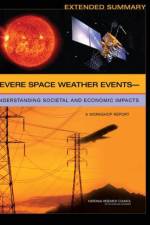
The adverse effects of extreme space weather on modern technology--power grid outages, high-frequency communication blackouts, spacecraft anomalies--are well known and well documented, and the physical processes underlying space weather are also generally well understood. Less well documented and understood, however, are the potential economic and societal impacts of the disruption of critical technological systems by severe space weather. This volume, an extended four-color summary of the book, Severe Space Weather Events--Understanding Societal and Economic Impacts, addresses the questions of space weather risk assessment and management. The workshop on which the books are based brought together representatives of industry, the government, and academia to consider both direct and collateral effects of severe space weather events, the current state of the space weather services infrastructure in the United States, the needs of users of space weather data and services, and the ramifications of future technological developments for contemporary society's vulnerability to space weather. The workshop concluded with a discussion of un- or underexplored topics that would yield the greatest benefits in space weather risk management.
Few countries have endured as many attacks of terrorism during the past two decades as has Russia. From bombings on the streets of a number of cities, to the disruption of pipelines in Dagestan, to the taking of hundreds of hostages at a cultural center in Moscow and at a school in Beslan, the Russian government has responded to many political and technical challenges to protect the population. The measures that have been undertaken to reduce vulnerabilities to terrorist attacks and to mitigate the consequences of attacks have been of widespread interest in many other countries as well. In June 1999, the Presidents of the National Academy of Sciences and the Russian Academy of Sciences initiated an inter-academy program to jointly address common interests in the field of counter-terrorism. Four workshops were held from 2001 to 2007 and additional consultations were undertaken prior to and after the series of workshops. This report includes 35 of the Russian presentations during the workshop series. Collectively they provide a broad overview of activities that have been supported by Russian institutions.
"National Academies Keck Futures Initiative Conference on Complex Systems"--T.p. verso.
Based on the outcomes of a workshop convened by the US National Committee for Psychological Science and informed by a survey of social scientists who have led cross-national projects, this report addresses the multiple benefits of research extending across national boundaries and describes factors common among successful collaborations.
Theory is an integral part of all biological research. By examining how theory can help biologists answer questions like 'What are the engineering principles of life?' or 'How do cells really work? This book shows how theory synthesizes biological knowledge from the molecular level to the level of whole ecosystems.
The state of science in violence prevention reveals progress, promise, and a number of remaining challenges. This title highlights the need for the development of an integrated, science-based approach and agenda to support research, clinical practice, program development, policy analysis, and advocacy for violence prevention.
Early detection is essential to the control of emerging, reemerging, and novel infectious diseases, whether naturally occurring or intentionally introduced. This title is part of a 10 book series that summarizes the recommendations and presentations of the workshop.
This volume reports on discussions among multiple stakeholders about ways they might help transform health care in the United States. The U.S. healthcare system consists of a complex network of decentralized and loosely associated organizations, services, relationships, and participants. Each of the healthcare system's component sectors--patients, healthcare professionals, healthcare delivery organizations, healthcare product developers, clinical investigators and evaluators, regulators, insurers, employers and employees, and individuals involved in information technology--conducts activities that support a common goal: to improve patient health and wellbeing. Implicit in this goal is the commitment of each stakeholder group to contribute to the evidence base for health care, that is, to assist with the development and application of information about the efficacy, safety, effectiveness, value, and appropriateness of the health care delivered.
Nutrigenomics and Beyond: Informing the Future - Workshop Summary (2007)
A respected resource for decades, the Guide for the Care and Use of Laboratory Animals has been updated by a committee of experts, taking into consideration input from the scientific and laboratory animal communities and the public at large. The Guide incorporates new scientific information on common laboratory animals, including aquatic species, and includes extensive references. It is organized around major components of animal use: Key concepts of animal care and use. The Guide sets the framework for the humane care and use of laboratory animals. Animal care and use program. The Guide discusses the concept of a broad Program of Animal Care and Use, including roles and responsibilities of the Institutional Official, Attending Veterinarian and the Institutional Animal Care and Use Committee. Animal environment, husbandry, and management. A chapter on this topic is now divided into sections on terrestrial and aquatic animals and provides recommendations for housing and environment, husbandry, behavioral and population management, and more. Veterinary care. The Guide discusses veterinary care and the responsibilities of the Attending Veterinarian. It includes recommendations on animal procurement and transportation, preventive medicine (including animal biosecurity), and clinical care and management. The Guide addresses distress and pain recognition and relief, and issues surrounding euthanasia. Physical plant. The Guide identifies design issues, providing construction guidelines for functional areas; considerations such as drainage, vibration and noise control, and environmental monitoring; and specialized facilities for animal housing and research needs. The Guide for the Care and Use of Laboratory Animals provides a framework for the judgments required in the management of animal facilities. This updated and expanded resource of proven value will be important to scientists and researchers, veterinarians, animal care personnel, facilities managers, institutional administrators, policy makers involved in research issues, and animal welfare advocates.
The National Academy of Construction (NAC) has determined that disputes, and their accompanying inefficiencies and costs, constitute a significant problem for the industry. In 2002, the NAC assessed the industry's progress in attacking this problem and determined that although the tools, techniques, and processes for preventing and efficiently resolving disputes are already in place, they are not being widely used. In 2003, the NAC helped to persuade the Center for Construction Industry Studies (CCIS) at the University of Texas and the Alfred P. Sloan Foundation to finance and conduct empirical research to develop accurate information about the relative transaction costs of various forms of dispute resolution. In 2004 the NAC teamed with the Federal Facilities Council (FFC) of the National Research Council to sponsor the "Government/Industry Forum on Reducing Construction Costs: Uses of Best Dispute Resolution Practices by Project Owners." The forum was held on September 23, 2004, at the National Academy of Sciences in Washington, D.C. Speakers and panelists at the forum addressed several topics. Reducing Construction Costs addresses topics such as the root causes of disputes and the impact of disputes on project costs and the economics of the construction industry. A second topic addressed was dispute resolution tools and techniques for preventing, managing, and resolving construction- related disputes. This report documents examples of successful uses of dispute resolution tools and techniques on some high-profile projects, and also provides ways to encourage greater use of dispute resolution tools throughout the industry. This report addresses steps that owners of construction projects (who have the greatest ability to influence how their projects are conducted) should take in order to make their projects more successful.
Une bonne sante commence par une saine alimentation, et une saine alimentation repose sur un regime alimentaire equilibre qui fournit les quantites adequates d'energie et de nutriments.
Summarizes a workshop organized by the National Academies Roundtable on Science and Technology for Sustainability. This report offers discussions at the workshop, including common themes about the process of linking knowledge with actions for sustainable development that emerged across a range of cases, sectors, and regions.
Developing Biomarker-Based Tools for Cancer Screening, Diagnosis, and Treatment
The US Department of Energy (DOE) promotes scientific and technological innovation to advance the national, economic, and energy security of the US. This book provides an evaluation of the program and its infrastructure plan. It finds that GTL's research offers to deliver scientific advancements that contribute to the achievement of DOE's goals.
Addressing Foodborne Threats to Health: Policies, Practices, and Global Coordination, Workshop Summary (2006)
Marta Tienda sees life stories in numbers. She is a sociologist, a scientist who studies human society. Numbers are the tools she uses to uncover information about people and their behavior. This work presents the story of this Mexican American girl raised in a home without books who grew up to become one of the world's leading sociologists.
Adriana Ocampo grew up in Buenos Aires, Argentina, dreaming about exploring planets. She never doubted that all her dreams would come true someday. How did Adriana land a job with NASA while still in her teens? How did a robot parked on Mars make her fall in love with rocks - and instantly decide to become a planetary geologist?
A collection of papers, which intends to introduce the reader to the complicated problems of urban air pollution and energy choices in China.
Based on a report of a workshop held in 2003 to address best practices and remaining challenges with respect to national laboratory-university collaborations.
In January 2004, the Institute of Medicine (IOM) hosted the 1st Annual Crossing the Quality Chasm Summit, convening a group of national and community health care leaders to pool their knowledge and resources with regard to strategies for improving patient care for five common chronic illnesses. This summit was a direct outgrowth and continuation of the recommendations put forth in the 2001 IOM report Crossing the Quality Chasm: A New Health System for the 21st Century. The summit's purpose was to offer specific guidance at both the community and national levels for overcoming the challenges to the provision of high-quality care articulated in the Quality Chasm report and for moving closer to achievement of the patient-centerd health care system envisioned therein.
A report that presents the summary of the fourth workshop of The Roundtable on Environmental Health Sciences, Research, and Medicine.
Recommends that NOAA Fisheries adopt procedural guidelines to ensure that the scientific information used in the development of fishery management plans is relevant and timely and is the product of processes characterized by inclusiveness, transparency and openness, timeliness, and peer review.
US public schools are responsible for educating large numbers of English language learners and students with disabilities. This book considers policies for including students with disabilities and English language learners in assessment programs. It also examines the research findings on testing accommodations and their effect on test performance.
The United States has publicly funded its human spaceflight program on a continuous basis for more than a half-century, through three wars and a half-dozen recessions, from the early Mercury and Gemini suborbital and Earth orbital missions, to the lunar landings, and thence to the first reusable winged crewed spaceplane that the United States operated for three decades. Today the United States is the major partner in a massive orbital facility - the International Space Station - that is becoming the focal point for the first tentative steps in commercial cargo and crewed orbital space flights. And yet, the long-term future of human spaceflight beyond this project is unclear. Pronouncements by multiple presidents of bold new ventures by Americans to the Moon, to Mars, and to an asteroid in its native orbit, have not been matched by the same commitment that accompanied President Kennedy\'s now fabled 1961 speech-namely, the substantial increase in NASA funding needed to make it happen. Are we still committed to advancing human spaceflight? What should a long-term goal be, and what does the United States need to do to achieve it? Pathways to Exploration explores the case for advancing this endeavor, drawing on the history of rationales for human spaceflight, examining the attitudes of stakeholders and the public, and carefully assessing the technical and fiscal realities. This report recommends maintaining the long-term focus on Mars as the horizon goal for human space exploration. With this goal in mind, the report considers funding levels necessary to maintain a robust tempo of execution, current research and exploration projects and the time/resources needed to continue them, and international cooperation that could contribute to the achievement of spaceflight to Mars. According to Pathways to Exploration, a successful U.S. program would require sustained national commitment and a budget that increases by more than the rate of inflation. In reviving a U.S. human exploration program capable of answering the enduring questions about humanity's destiny beyond our tiny blue planet, the nation will need to grapple with the attitudinal and fiscal realities of the nation today while staying true to a small but crucial set of fundamental principles for the conduct of exploration of the endless frontier. The recommendations of Pathways to Exploration provide a clear map toward a human spaceflight program that inspires students and citizens by furthering human exploration and discovery, while taking into account the long-term commitment necessary to achieve this goal.
This report to the Chemical Sciences Roundtable presents a collection of contributed papers that report success stories for increasing diversity. The report provides background information on the value of diversity in the undergraduate environment, and the success stories address both undergraduate and graduate chemistry programs as well as chemical industry.
Presents dietary reference values for the intakes of nutrients. This book establishes recommendations for energy, carbohydrate, fiber, fat, fatty acids, cholesterol, protein, and amino acids. It also includes recommendations for both physical activity and energy expenditure to maintain health and decrease the risk of disease.
While various accomplishments have answered important questions about the physics of the Sun, the interplanetary medium, and the space environments of Earth and other solar system bodies, they have also highlighted other questions. This book organizes these questions in terms of five challenges, to be the focus of scientific investigations.
Genetic-based animal biotechnology has produced new food and pharmaceutical products and promises many more advances to benefit humankind. This book identifies science-based and policy-related concerns about animal biotechnology. It includes a short history of the field and provides understandable definitions of terms like cloning.
Abonner på vårt nyhetsbrev og få rabatter og inspirasjon til din neste leseopplevelse.
Ved å abonnere godtar du vår personvernerklæring.