



Gjør som tusenvis av andre bokelskere
Abonner på vårt nyhetsbrev og få rabatter og inspirasjon til din neste leseopplevelse.
Ved å abonnere godtar du vår personvernerklæring.Du kan når som helst melde deg av våre nyhetsbrev.

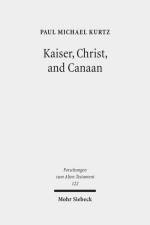
In this work, Paul Michael Kurtz examines the historiography of ancient Israel in the German Empire through the prism of religion, as a structuring framework not only for writings on the past but also for the writers of that past themselves. The author investigates what biblical scholars, theologians, orientalists, philologists, and ancient historians considered "religion" and "history" to be, how they understood these conceptual categories, and why they studied them in the manner they did. Focusing on Julius Wellhausen and Hermann Gunkel, his inquiry scrutinizes to what extent, in an age of allegedly neutral historical science, the very enterprise of reconstructing the ancient past was shaped by liberal Protestant structures shared by dominant historians from the late nineteenth and early twentieth centuries.
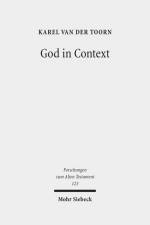
In this work, Karel van der Toorn explores the social setting, the intellectual milieu, and the historical context of the beliefs and practices reflected in the Hebrew Bible. While fully recognizing the unique character of early Israelite religion, the author challenges the notion of its incomparability. Beliefs are anchored in culture. Rituals have societal significance. God has a history. By shifting the focus to the context, the essays gathered here yield a deeper understanding of Israelite religion and the origins of the Bible.
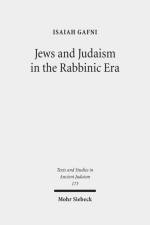
This collection of essays by Isaiah M. Gafni reflects over forty years of research on central issues of Jewish history in one of its formative eras. Questions relating to representations of the past, beginning with Josephus but primarily in rabbinic and post-rabbinic literature, represent an axial theme in this volume. Throughout the collection the author addresses the tension between realities on the ground and the historiography that shaped the image of that reality for all subsequent generations. Two specific clusters of studies analyze the emergence and development of the Babylonian rabbinic community, as well as the complex relationship between the Judaean centre and the Jewish diaspora in Late Antiquity. A final selection of essays examines the impact of modern ideologies and revised methods of research on the image of Jewish life and rabbinic leadership in late antique Judaism.
The phenomena we call magic and mysticism had a profound effect on the shaping of Judaism in late antiquity. In this volume, Michael D. Swartz offers a wide-ranging study of the purposes, world-views, ritual dynamics, literary forms, and social settings of ancient Jewish magic and mysticism and their function in religion and history. Based on the author's studies over the past few decades, he proposes innovative methods for the study of these two phenomena. The author focuses especially on the rituals of early Jewish magic and mysticism, their social contexts, and the textual dimension of this complex literature. He also offers introductions to these phenomena. Michael D. Swartz argues that the authors of these texts employed intricate technologies, literary and artistic forms, and physical practices to negotiate between the values and world-views of their cultures and the texture of everyday life.
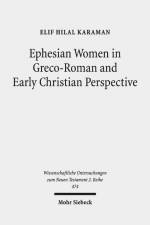
In this volume, Elif Hilal Karaman examines the lives of Ephesian women in their historical and social contexts, considering in particular their roles as mothers, wives, teachers, and individuals in the private and public spheres. She presents Greco-Roman and early Christian sources relevant to Ephesus and relating to women, including more than 300 Ephesian inscriptions, and analyses them comparatively. By doing this she illuminates the impact of early Christianity upon the roles of women. The evidence presented demonstrates the extent to which early Christian authors utilized Greco-Roman cultural elements to construct a social background for the nascent Christian communities for whom they wrote. Elif Hilal Karaman's work thus advocates for the interpretation of early Christian texts in conversation with local archaeological and literary evidence in order to develop more nuanced understandings of the social and historical contexts of these important works.
An epicenter in present-day Pauline scholarship is the issue of the Law. The interpretation of this contentious issue started before Paul's letters and found its way into them by his citing how others perceived of his theology, and in Paul rendering rumors and criticism, and also interacting with them. To this reception-oriented perspective belong also punitive actions taken against Paul by synagogues. As a reception of Paul, Acts is included, leaving a more complex picture than argued by advocates of Paul within Judaism. Thus Karl Olav Sandnes uncovers the first interpretation or reception of Paul's view on Torah. It is limited in its scope, but provides a critical and necessary view on common trends in Pauline scholarship. Paul's decentering of the Torah was considered endangering for morality, for Jews and Gentiles alike. Perceptions of Paul's theology must be accounted for in Pauline studies.
In this study, Justin Buol analyzes the writings connected with the deaths of Ignatius of Antioch, Polycarp of Smyrna, and Pothinus of Lyons in light of earlier accounts of the noble deaths of military, political, and religious leaders from Greco-Roman literature and the Bible, which record benefits accruing to a group on account of its leader's death. The author argues that the accounts of these three bishops' martyrdoms draw upon those prior models in order to portray the bishops as dying to unite, protect, and strengthen the Church, oppose false teaching and apostasy, and solidify the teaching role of the episcopal office. Finally, by providing a foundation for Irenaeus to argue for apostolic succession, these second-century bishop martyrs also help form a lasting contribution to the growth of episcopal power.
Biblical books, which were transmitted on separate scrolls in antiquity, are not necessarily identical with books in the modern sense of a coherent and self-contained compositional unit. The books of the Primary History especially constitute a larger master narrative. This raises the question of how the distribution of the text to different scrolls relates to its compositional history. Were the respective books conceived as physically separate parts of a multivolume composition (whether Pentateuch, Hexateuch, Deuteronomistic History or Enneateuch) from the outset, or are we dealing with a more complex development of originally independent compositional units that were only connected or separated by later redaction? The present volume addresses these issues with respect to the transitions between the books of Genesis/Exodus and Joshua/Judges, which have obviously developed in dependency upon each other.
This volume contains seventeen essays written by Eckhard J. Schnabel, written over the past 25 years. The essays focus on the realities of the work of Jesus, Paul, John, and the early church, exploring aspects of the history, missionary expansion, and theology of the early church including lexical, ethical, and ecclesiological questions. Specific subjects discussed include Jesus' silence at his trial, the introduction of foreign deities to Athens, the understanding of Rom 12:1, Paul's ethics, the meaning of baptizein , the realities of persecution, Christian identity and mission in Revelation, and singing and instrumental music in the early church.
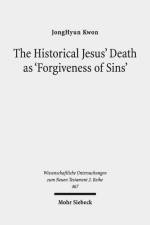
JongHyun Kwon's research aims to discover whether the historical Jesus understood his death as a means of forgiveness by comparing Paul and Matthew's treatment of these themes. The strong tie between Jesus' death and forgiveness of sin in nascent Christianity is attenuated in Jesus research. Hence, the author's central question: Is this a true understanding of the historical Jesus, or a post-Easter theology? JongHyun Kwon's investigation is conducted through a comparison of the Pauline epistles and the Gospel of Matthew. The result is then compared against Jewish writings contemporary to Jesus.Through this methodology, JongHyun Kwon finds that Paul and Matthew correspond to one another on the issue of the strong affinity between Jesus' death and forgiveness. He then concludes that the historical Jesus may have understood his death as a means of forgiveness, as they describe.
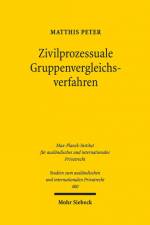
In der europaweit geführten Diskussion über Verfahren des kollektiven Rechtsschutzes rücken anstelle der Sammelklagen zunehmend Instrumente der einvernehmlichen Streitbeilegung in den Mittelpunkt. Anstatt auf Anspruchsprüfung und Urteil sind Gruppenvergleichsverfahren ausschließlich auf den Abschluss eines gerichtlichen Vergleichs unter den zahlreichen Parteien ausgerichtet. Matthis Peter untersucht aus vergleichender Perspektive die Funktionsweise und die Wirksamkeit ausgewählter Gruppenvergleichsverfahren in den USA, den Niederlanden und Deutschland. Auf Basis der Länderberichte diskutiert er mit Blick auf einen schweizerischen Gesetzesentwurf einige Kernprobleme dieses relativ neuartigen Verfahrensansatzes.
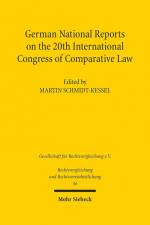
Contributions from members of the German Association for Comparative Law will be among the papers presented at this summer's twentieth International Congress of Comparative Law, to be held for the first time in Asia at Fukuoka, Japan, in July. In a strong range of topics, one focus during the six-day congress will be on questions of multiculturalism and language that concern both comparative law methodology and other legal fields such as family law. Further dealt with will be matters particularly relevant to consumer protection, ranging from choice of court agreements to price control in contracts, duty of information, the regulation of crowd-funding, as well as leisure and travel contracts. Another focus will be on digitalisation's far-reaching economic, societal and legal implications, with questions of data protection in the realm of comparative law accentuated by contributions on the right to be forgotten or current national legal orders. Overall, the volume will reflect the present state of discussions within German jurisprudence. With contributions by:Christina Breunig, Moritz Brinkmann, Johanna Croon-Gestefeld, Anatol Dutta, Katharina Erler, Matthias Fervers, Stefan Grundmann, Beate Gsell, Dirk Hanschel, Wolfgang Hau, Leonhard Hübner, Luca Kaller, Jürgen Kühling, Sebastian Mock, Joachim Münch, David Rüther, Anne Sanders, Bianca Scraback, Stefanie Schmahl, Martin Schmidt-Kessel, Boris Schinkels, Andreas Spickhoff, Klaus Tonner; Jan Thiessen, Tobias H. Tröger, Lars Viellechner, Marc-Philippe Weller, Matthias Weller, Bettina Weisser
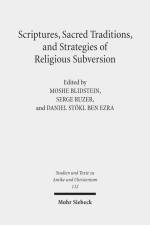
The articles in this volume discuss polemically charged re-evaluations of the religious traditions and scriptures of the Western world, employed throughout the centuries in various religious contexts. These studies consider new religious outlooks not as glosses on inherited traditions, but as acts of power exercised in the struggle for identity: contestation, appropriation, interpretation and polemics against the religious "other", involving, sometimes covertly, critiques of inherited tradition. The volume outlines a typology of the variety of attested strategies, highlighting cases of borderline extremes involving subversions of mainstream forms of belief as well as elucidating more moderate avenues of interaction. Most of the studies were presented at a 2016 conference in Jerusalem honouring Guy G. Stroumsa, a renowned scholar of early Christianity and Late Antiquity, recipient of many scholarly awards, including the Leopold Lucas Prize 2018. Contributors:Nicole Belayche, Moshe Blidstein, Philippe Borgeaud, Hubert Cancik, Hildegard Cancik-Lindemaier, Gilles Dorival, Giovanni Filoramo, Aryeh Kofsky, Sergey Minov, Maren R. Niehoff, Lorenzo Perrone, Serge Ruzer, John Scheid, Zur Shalev, Mark Silk, Adam Silverstein, Daniel Stökl Ben Ezra, Yuri Stoyanov, Guy Stroumsa, Michel Tardieu, Sharon Weisser
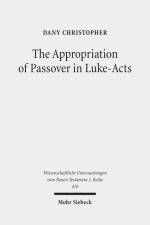
Within Lukan scholarship, studies on the theme of Passover have mostly been confined to the pericope of the Last Supper (Luke 22:1-20). Few have ventured outside it and explored the presence, let alone the significance, of the theme in other passages throughout Luke-Acts. Thus, the aim of this study by Dany Christopher is to show where, how, and why Luke appropriates the theme of Passover in his writings. The author proposes that besides the passion narrative, allusions to Passover can be found in three other sets of passages: the infancy narrative, the Parousia discourses in Luke 12 and Luke 17, and the rescue stories of Peter (Acts 12) and Paul (Acts 27). He shows that the theme of Passover plays a major role in how Luke structures his narratives and conveys the message of God's salvation.
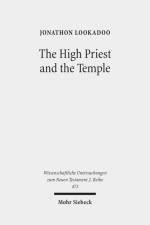
Jonathon Lookadoo explores Ignatius's pairing of high priestly and temple metaphors in order to understand more clearly how Ignatius viewed Jesus and the church. The metaphors of high priest and temple are closely related in three of Ignatius's letters. This study allows readers to appreciate better how Ignatius portrayed Jesus's identity and work. The author also sheds light on how some of Ignatius's audiences were to demonstrate unity. By exploring each metaphor with a view to its rhetorical function in a particular letter as well as to similar imagery in early Jewish and early Christian literature, Jonathon Lookadoo freshly illuminates Ignatius's letters in a way that is of interest not only to Ignatian scholars, but to all who study early Christian letters, rhetoric, and theology in the first two centuries CE.
The figure Balaam has interested exegetes and scribes for millennia. Jonathan Miles Robker examines the different versions of the literary character Balaam as attested in biblical and epigraphic literature. By contrasting the distinct information about Balaam presented in the various sources (the plaster inscription from Della, Numbers 22-24; 31; Deuteronomy 23; Joshua 13; 24; Judges 11; Micah 6; and Nehemiah 13), the author seeks to trace the development of characterizations of Balaam from the oldest available material to the youngest in the Hebrew Bible. In this way, Jonathan Miles Robker advances discourse about the literary and tradition-historical development of the texts that became the Hebrew Bible. Beyond the text of the Hebrew Bible, he also traces the continued development of Balaam's characterization through the texts of Qumran and the New Testament. To this end, the author contributes discussions of the history of religion in Antiquity.
In this volume, scholars of Judaism, Christianity, and late antique religion demonstrate how special attention to the ritual and rhetorical functions of space can improve modern interpretations of ancient literary, liturgical, and ritual texts. Each chapter is concerned with reconstructing the dynamic interaction between space and text. Demonstrating the pliability of the idea of space, the contributions in this volume span from Second Temple debates over Eden to Byzantine Christian hymnography. In so doing, they offer a number of answers to the seemingly simple question: What difference does space make for how modern scholars interpret ancient texts? The nine contributions in this volume are divided into the three interrelated topics of the rhetorical construction of places both earthly and cosmic, the positioning of people in religious space, and the performance of ritual texts in place.
This volume is based on presentations delivered at a symposium held in March 2016 at the University of Tokyo. It seeks to reinvigorate the scholarly exchange which can be traced back to the late 19th century between company law academics in Germany, China, Japan and South Korea. Contributions from all four jurisdictions include papers on corporate divisions and valuation of shares and its procedure as well as studies on the civil liability of the company and its directors for false financial statements and the corporate law rules on the squeeze-out of minority shareholders. With contributions by:Ruoying Chen, Moon Hee Choi, Koji Funatsu, Li Guo, Sunseop Jung, Takahito Kato, Lars Klöhn, Jens Koch, Hyeok-Joon Rho, Klaus Ulrich Schmolke, Ok-Rial Song, Eiji Takahashi, Rüdiger Veil, Jiangyu Wang
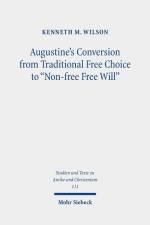
The consensus view asserts Augustine developed his later doctrines ca. 396 CE while writing Ad Simplicianum as a result of studying scripture. His early De libero arbitrio argued for traditional free choice refuting Manichaean determinism, but his anti-Pelagian writings rejected any human ability to believe without God giving faith. Kenneth M. Wilson's study is the first work applying the comprehensive methodology of reading systematically and chronologically through Augustine's entire extant corpus (works, sermons, and letters 386-430 CE), and examining his doctrinal development. The author explores Augustine's later theology within the prior philosophical-religious context of free choice versus deterministic arguments. This analysis demonstrates Augustine persisted in traditional views until 412 CE and his theological transition was primarily due to his prior Stoic, Neoplatonic, and Manichaean influences.
A renewed focus on the role of interpersonal relationships in the cultivation of religious sensibilities is emerging in the study of religion. Matthew Ryan Robinson addresses this question in his study of Friedrich Schleiermacher's notion of "free sociability". In Schleiermacher's ethics, the human person is formed in and consists of intimate, tightly interconnecting relationships with others. Schleiermacher describes this sociability as a natural tendency prompted by experiences of physical and existential limitation that lead one to look to others to complete one's experience. But this experience of incompleteness and orientation to "the completion of humanity" also constitute the fundamental structure of religion in Schleiermacher's theory of religion as orientation to "the universe and the relationship of humanity to it." Thus, Schleiermacher not only presents sociability as basic to human nature, but also as inherently religious - and, potentially, redemptive. What making such a claim means and the implications it raises are central considerations of this study of Schleiermacher's ethics, theory of religion and ecclesiology.
Religion requires education. Soon after the emergence of Christianity, religious education became crucial to the development of Christian communities in towns and in the countryside. The present volume analyzes the human agents of this education: bishops, catechists, mothers and fathers, monastic teachers. It thus offers a comparative analysis of teachers' roles in Christian educational contexts, dealing with questions such as: Who taught in late antique Christianity? Which imagery is used to describe such teaching? What impact do gender ascriptions have on teaching roles and processes? And where do conflicts emerge between different roles and their social settings?C ontributors:Christoph Birkner, Carmen Angela Cvetkovi¿c, Juliette Day, Therese Fuhrer, Peter Gemeinhardt, Katharina Greschat, Henrik Rydell Johnsén, Olga Lorgeoux, Andreas Müller, Maria Munkholt Christensen, David Rylaarsdam, Arthur Urbano
This interdisciplinary volume originates from talks given at the international conference "Memory and Memories in Early Christianity", held at the Universities of Lausanne and Geneva in June 2016. Exploring a fresh problem in the study of the origins of Christianity and of the New Testament, namely the "work of memory" undertaken in the discourses and practices of the believers in Jesus, these studies not only apply a heuristic analytical tool - "social memory theory" - to the literature and history of Christian beginnings, but also endeavour to show the socio-religious resonance of this "work of memory" in the language and ideology of the first believers. Contributors:Celilia Antonelli, Simon Butticaz, Adriana Destro, Andreas Dettwiler, Jörg Frey, Sandra Huebenthal, Judith M. Lieu, Christoph Markschies, Daniel Marquerat, Enrico Norelli, Mauro Pesce, Jens Schröter, Claudio Zamagni, Jean Zumstein
In this study, Christopher T. Holmes provides a focused analysis of the rhetorical and stylistic features of Hebrews 12:18-29, their intended effects upon the audience, and the role of the passage in the larger argument of Hebrews. He draws extensively from the first-century treatise, De Sublimitate, arguing that it provides a significant context for interpreting the rhetoric and style of Hebrews. Although New Testament scholars have drawn significantly from the ancient handbooks of Aristotle, Quintilian, and Cicero in the last several decades, this is the first monograph-length study to use De Sublimitate as the primary analytical tool for New Testament interpretation. The result of the study shows that the author's efforts to move the readers "beyond persuasion" shed new light on the thought and genre of Hebrews. Christopher T. Holmes offers both exegetical insights about Hebrews and an additional way to think about the distinctiveness of early Christian rhetoric.
The political rhetoric of ancient Israel took several literary, architectural, and graphic forms. Much of the relevant material concerns kingship, but other loci of authority and submission also drew significant attention. Mark W. Hamilton illustrates how these "texts" interacted with other political rhetorics, especially those of the great Mesopotamian empires. By paying close attention to the argumentation of the Israelite literature as well as their function as epideictic oratory building solidarity with hearers he reveals the complexity of Israelite intellectual activity both during and after the period of the monarchy. By doing this he shows that this body of thought lies at the heart of Western political thought even today.
This volume explores existential questions within the following three thematic fields: first, experiences of anxiety and despair as related to the question of what these phenomena show about freedom and its difficulties; second, hermeneutical theories as related to the question of how we can develop an existential hermeneutics that can account for the ambiguities of self-understanding between transparency and opacity, and, third, selfhood between self-understanding and self-alienation as a focal point of existential psycho(patho)logy. What can disturbances to or breakdowns in self-understanding teach us about personhood? Making visible one¿s own blindness by articulating the shadows of our knowledge and abilities is at the core of a negativistic approach to existential questions discussed in a dialogue between philosophical anthropology, phenomenology, theology, psychoanalysis, and psychiatry.
In this work, Christina Harker deconstructs the prevailing treatment of the New Testament as anti-imperial by contextualizing both New Testament scholarship and the Galatian experience within imperialist discourses that survived the dissolution of conventional empires in the twentieth century. She critiques simplistic treatments of empire as post-imperial (that is, replicating patterns of imperialist ideology, albeit unwittingly). To solve the problem, a new interpretation of Galatians is proposed that reworks and complicates the portrait of the Galatians themselves, rather than Paul, within what then emerges as a diverse social world peopled by complex individuals with heterogeneous social and cultural identities. The author is thus able to show how New Testament scholars who rehabilitate the Bible and Paul as anti-empire perpetuate the same imperialist modes of interpretation they seek to repudiate.
Were there figurines in Yehud during the Achaemenid period, and in particular in Jerusalem? A positive answer to this question disproves the general consensus about the absence of figurines in Yehud, which is built on the assumption that the figurines excavated in Judah/Yehud are chronologically indicative for Iron Age II in this area (aside from a few typological exceptions). Ephraim Stern and others have taken this alleged absence of figurines as indicative of Jewish monotheism¿s rise. Izaak J. de Hulster refutes this `no figurines -> monotheism¿ paradigm by detailed study of the figurines from Yigal Shiloh¿s excavation in the `City of David¿ (especially their contexts in Stratum 9), providing ample evidence for the presence of figurines in post-587/586 Jerusalem. The author further reflects on the paradigm¿s premises in archaeology, history, the history of religion, theology, and biblical studies, and particularly in coroplastics (figurine studies).
Over the last decade, Chinese stock markets have developed rapidly. Most importantly, their opening to foreign investment has meant a steady increase in international influence, but also confronted China with a number of challenges in ensuring stable and well-functioning markets. This volume discusses these developments and analyses the efforts needed to secure market integrity and investor protection, particularly through enforcement mechanisms in both capital markets and corporate law. It sheds light on the tasks and experiences met along the way and provides further food for thought on possible reforms of Chinese capital markets law.
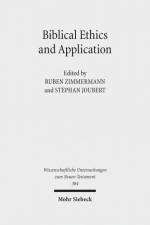
The authors of this volume discuss the relevance and influence of various Old and New Testament documents, and early Christian and Jewish texts in terms of their impact in shaping the moral character, identity, and behaviour of the specific communities in which they were produced as well as their ethical application throughout the centuries. Against a narrow understanding of ethics, the term "application" is not used to analyse the texts of the Bible as step-by-step manuals for moral conduct. Rather, the contributors engage with biblical texts within the framework of a complex hermeneutical process of application of the relevance of these texts in contemporary ethical discourse. Contributors: Paul N. Anderson, Robert L. Brawley, Cilliers Breytenbach, Ulrich Busse, R. Alan Culpepper, Jan Willem van Henten, Rainer Hirsch-Luipold, Stephan Joubert, Craig R. Koester, Bart J. Koet, Michael Labahn, Tobias Nicklas, Bert Jan Lietaert Peerbolte, Udo Schnelle, Michael Theobald, D. Francois Tolmie, Joseph Verheyden, Ben Witherington, III, Ellen van Wolde, Michael Wolter, Mirjam Zimmermann, Ruben Zimmermann
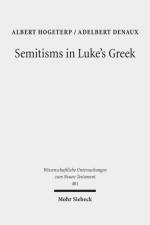
The Gospel of Luke has long been known for its variation between good, educated Greek and Semitic influences. In the last century, five theories have attempted to explain the Semitic influence: Semitic sources; imitation of the Greek Bible; the Greek of the ancient synagogue; literary code-switching between standard Greek and semitized Greek; and the social background of bilingualism. Albert Hogeterp and Adelbert Denaux revisit Luke's Greek and evaluate which alleged Semitisms of vocabulary and syntax are tenable in light of comparative investigation across corpora of Greek, Hebrew, and Aramaic, literary as well as documentary, texts. They contend that Semitisms in Luke's Greek are only fully understood in light of a complementarity of linguistic backgrounds, and evaluate them in diachronic respect of Synoptic comparison and in synchronic respect of their place in Luke's narrative style and communicative strategy.
Abonner på vårt nyhetsbrev og få rabatter og inspirasjon til din neste leseopplevelse.
Ved å abonnere godtar du vår personvernerklæring.