



Gjør som tusenvis av andre bokelskere
Abonner på vårt nyhetsbrev og få rabatter og inspirasjon til din neste leseopplevelse.
Ved å abonnere godtar du vår personvernerklæring.Du kan når som helst melde deg av våre nyhetsbrev.

This is the first book to put Aesthetic Theory into context and outline the main ideas and relevant debates, offering readers a valuable guide through this huge, difficult, but revelatory work.
Psychosemantics explores the relation between commonsense psychological theories and problems that are central to semantics and the philosophy of language. Building on and extending Fodor's earlier work, it puts folk psychology on firm theoretical ground and rebuts externalist, holist, and naturalist threats to its position.
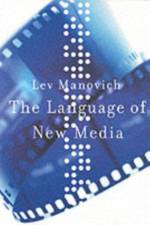
A stimulating, eclectic accountof new media that finds its origins in old media, particularly the cinema.In this book Lev Manovich offers the first systematic and rigorous theory of new media. He places new media within the histories of visual and media cultures of the last few centuries. He discusses new media's reliance on conventions of old media, such as the rectangular frame and mobile camera, and shows how new media works create the illusion of reality, address the viewer, and represent space. He also analyzes categories and forms unique to new media, such as interface and database.Manovich uses concepts from film theory, art history, literary theory, and computer science and also develops new theoretical constructs, such as cultural interface, spatial montage, and cinegratography. The theory and history of cinema play a particularly important role in the book. Among other topics, Manovich discusses parallels between the histories of cinema and of new media, digital cinema, screen and montage in cinema and in new media, and historical ties between avant-garde film and new media.
A highly original theory of how the mind-brain works, based on the author's study of single neuronal cells.In I of the Vortex, Rodolfo Llinas, a founding father of modern brain science, presents an original view of the evolution and nature of mind. According to Llinas, the "mindness state" evolved to allow predictive interactions between mobile creatures and their environment. He illustrates the early evolution of mind through a primitive animal called the "sea squirt." The mobile larval form has a brainlike ganglion that receives sensory information about the surrounding environment. As an adult, the sea squirt attaches itself to a stationary object and then digests most of its own brain. This suggests that the nervous system evolved to allow active movement in animals. To move through the environment safely, a creature must anticipate the outcome of each movement on the basis of incoming sensory data. Thus the capacity to predict is most likely the ultimate brain function. One could even say that Self is the centralization of prediction.At the heart of Llinas's theory is the concept of oscillation. Many neurons possess electrical activity, manifested as oscillating variations in the minute voltages across the cell membrane. On the crests of these oscillations occur larger electrical events that are the basis for neuron-to-neuron communication. Like cicadas chirping in unison, a group of neurons oscillating in phase can resonate with a distant group of neurons. This simultaneity of neuronal activity is the neurobiological root of cognition. Although the internal state that we call the mind is guided by the senses, it is also generated by the oscillations within the brain. Thus, in a certain sense, one could say that reality is not all "out there," but is a kind of virtual reality.
Abonner på vårt nyhetsbrev og få rabatter og inspirasjon til din neste leseopplevelse.
Ved å abonnere godtar du vår personvernerklæring.