









Gjør som tusenvis av andre bokelskere
Abonner på vårt nyhetsbrev og få rabatter og inspirasjon til din neste leseopplevelse.
Ved å abonnere godtar du vår personvernerklæring.Du kan når som helst melde deg av våre nyhetsbrev.

Being-in-the-World is a guide to one of the most influential philosophical works of this century: Division I of Part One of Being and Time.
Architecture and Utopia leads the reader beyond architectural form into a broader understanding of the relation of architecture to society and the architect to the workforce and the marketplace.Written from a neo-Marxist point of view by a prominent Italian architectural historian, Architecture and Utopia leads the reader beyond architectural form into a broader understanding of the relation of architecture to society and the architect to the workforce and the marketplace. It discusses the Garden Cities movement and the suburban developments it generated, the German-Russian architectural experiments of the 1920s, the place of the avant-garde in the plastic arts, and the uses and pitfalls of seismological approaches to architecture, and assesses the prospects of socialist alternatives.
A comprehensive text and reference that covers all aspects of computer music, including digital audio, synthesis techniques, signal processing, musical input devices, performance software, editing systems, algorithmic composition, MIDI, synthesizer architecture, system interconnection, and psychoacoustics. The Computer Music Tutorial is a comprehensive text and reference that covers all aspects of computer music, including digital audio, synthesis techniques, signal processing, musical input devices, performance software, editing systems, algorithmic composition, MIDI, synthesizer architecture, system interconnection, and psychoacoustics. A special effort has been made to impart an appreciation for the rich history behind current activities in the field. Profusely illustrated and exhaustively referenced and cross-referenced, The Computer Music Tutorial provides a step-by-step introduction to the entire field of computer music techniques. Written for nontechnical as well as technical readers, it uses hundreds of charts, diagrams, screen images, and photographs as well as clear explanations to present basic concepts and terms. Mathematical notation and program code examples are used only when absolutely necessary. Explanations are not tied to any specific software or hardware.The material in this book was compiled and refined over a period of several years of teaching in classes at Harvard University, Oberlin Conservatory, the University of Naples, IRCAM, Les Ateliers UPIC, and in seminars and workshops in North America, Europe, and Asia.
This groundbreaking collection of thirteen original essays analyzes connections between film and two highly influential twentieth-century movements.
Through close reading of two major figures of modern architecture, Adolf Loos and Le Corbusier, this text argues that architecture only becomes modern in its engagement with the mass media. It suggests that modern architecture renegotiates the relationship between public and private.
In this series of overlapping essays on architecture and art, John Rajchman attempts to do theory in a new way that takes off from the philosophy of the late Gilles Deleuze. Starting from notions of folding, lightness, ground, abstraction, and future cities, he embarks on a conceptual voyage whose aim is to help "construct" a new space of connections, to "build" a new idiom, perhaps even to suggest a new architecture. Along the way, he addresses questions of the new abstraction, operative form, other geometries, new technologies, global cities, ideas of the virtual and the formless, and possibilities for critical theory after utopia and transgression.
The Renaissance architect Andrea Palladio was one of the most influential figures that the field of architecture has ever produced. For classical architects, the term Palladian stands for a vocabulary of architectural forms embodying perfection and beauty. Of even greater significance than Palladio's buildings is his treatise I quattro libri dell'architettura (The Four Books On Architecture), the most successful architectural treatise of the Renaissance and one of the two or three most important books in the literature of architecture. First published in Italian in 1570, it has been translated into every major Western language.This is the first English translation of Palladio in over 250 years, making it the only translation available in modern English. Until now, English-language readers have had to rely mostly on a facsimile of Isaac Ware's 1738 translation and the eighteenth-century engravings prepared for that text. This new translation by Robert Tavernor and Richard Schofield contains Palladio's original woodcuts, reproduced in facsimile and positioned correctly, adjacent to the text. The book also contains a glossary that explains technical terms in their original context, a bibliography of recent Palladio research, and an introduction to Palladio and his times.The First Book discusses building materials and techniques, as well as the five orders of architecture: Tuscan, Doric, Ionic, Corinthian, and Composite. Palladio describes the characteristics of each order and illustrates them. The Second Book discusses private town houses and country estates, almost all designed by Palladio. The Third Book discusses streets, bridges, piazzas, and basilicas, most of ancient Roman origin. The Fourth Book discusses ancient Roman temples, including the Pantheon.
The most comprehensive collection to date of the artist Bruce Nauman's writings plus all of his major interviews from 1965 to 2001.
Statistical approaches to processing natural language text have become dominant in recent years. This foundational text is the first comprehensive introduction to statistical natural language processing (NLP) to appear. The book contains all the theory and algorithms needed for building NLP tools. It provides broad but rigorous coverage of mathematical and linguistic foundations, as well as detailed discussion of statistical methods, allowing students and researchers to construct their own implementations. The book covers collocation finding, word sense disambiguation, probabilistic parsing, information retrieval, and other applications.
A comprehensive introduction to contract theory, emphasizing common themes and methodologies as well as applications in key areas.Despite the vast research literature on topics relating to contract theory, only a few of the field's core ideas are covered in microeconomics textbooks. This long-awaited book fills the need for a comprehensive textbook on contract theory suitable for use at the graduate and advanced undergraduate levels. It covers the areas of agency theory, information economics, and organization theory, highlighting common themes and methodologies and presenting the main ideas in an accessible way. It also presents many applications in all areas of economics, especially labor economics, industrial organization, and corporate finance. The book emphasizes applications rather than general theorems while providing self-contained, intuitive treatment of the simple models analyzed. In this way, it can also serve as a reference for researchers interested in building contract-theoretic models in applied contexts.The book covers all the major topics in contract theory taught in most graduate courses. It begins by discussing such basic ideas in incentive and information theory as screening, signaling, and moral hazard. Subsequent sections treat multilateral contracting with private information or hidden actions, covering auction theory, bilateral trade under private information, and the theory of the internal organization of firms; long-term contracts with private information or hidden actions; and incomplete contracts, the theory of ownership and control, and contracting with externalities. Each chapter ends with a guide to the relevant literature. Exercises appear in a separate chapter at the end of the book.
Expands on the Wicksell lectures presented at the Stockholm School of Economics in April 1990.
This book is a critical reappraisal of contemporary theories of urban planning and design and of the role of the architect-planner in an urban context. The authors, rejecting the grand utopian visions of "total planning" and "total design," propose instead a "collage city" which can accommodate a whole range of utopias in miniature.
The long-awaited second edition of an important textbook on economic growth—a major revision incorporating the most recent work on the subject.This graduate level text on economic growth surveys neoclassical and more recent growth theories, stressing their empirical implications and the relation of theory to data and evidence. The authors have undertaken a major revision for the long-awaited second edition of this widely used text, the first modern textbook devoted to growth theory. The book has been expanded in many areas and incorporates the latest research. After an introductory discussion of economic growth, the book examines neoclassical growth theories, from Solow-Swan in the 1950s and Cass-Koopmans in the 1960s to more recent refinements; this is followed by a discussion of extensions to the model, with expanded treatment in this edition of heterogenity of households. The book then turns to endogenous growth theory, discussing, among other topics, models of endogenous technological progress (with an expanded discussion in this edition of the role of outside competition in the growth process), technological diffusion, and an endogenous determination of labor supply and population. The authors then explain the essentials of growth accounting and apply this framework to endogenous growth models. The final chapters cover empirical analysis of regions and empirical evidence on economic growth for a broad panel of countries from 1960 to 2000. The updated treatment of cross-country growth regressions for this edition uses the new Summers-Heston data set on world income distribution compiled through 2000.
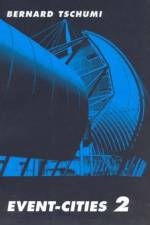
The sequel to Bernard Tschumi's best-selling Event-Cities, documenting his recent architectural projects and updating his thoughts on architectures and cities.In Event-Cities (MIT Press, 1994), Bernard Tschumi expanded his architectural concerns to address the issue of cities and their making. Event-Cities 2 continues this project through new selections from his recent architectural projects. The book includes the first comprehensive documentation of the drawings for the award-winning Parc de la Villette (including many previously unpublished drawings), his project for the expansion of the Museum of Modern Art, two architectural schools, a concert and exhibition hall, a student center, a railway station, a department store, and other urban projects. Tschumi suggests that architecture can accelerate the events of everyday life through new forms of organization. Using various modes of notation ranging from rough models to sophisticated computer-generated images, he reveals the complexities of the architectural process and the rich texture of events that define urban reality today.
Below the level of the musical note lies the realm of microsound, of sound particles lasting less than one-tenth of a second. Recent technological advances allow us to probe and manipulate these pinpoints of sound, dissolving the traditional building blocks of music—notes and their intervals—into a more fluid and supple medium. The sensations of point, pulse (series of points), line (tone), and surface (texture) emerge as particle density increases. Sounds coalesce, evaporate, and mutate into other sounds. Composers have used theories of microsound in computer music since the 1950s. Distinguished practitioners include Karlheinz Stockhausen and Iannis Xenakis. Today, with the increased interest in computer and electronic music, many young composers and software synthesis developers are exploring its advantages. Covering all aspects of composition with sound particles, Microsound offers composition theory, historical accounts, technical overviews, acoustical experiments, descriptions of musical works, and aesthetic reflections. The book is accompanied by an audio CD of examples.
According to Thomas Metzinger, no such things as selves exist in the world: nobody ever had or was a self. All that exists are phenomenal selves, as they appear in conscious experience. The phenomenal self, however, is not a thing but an ongoing process; it is the content of a "transparent self-model." In Being No One, Metzinger, a German philosopher, draws strongly on neuroscientific research to present a representationalist and functional analysis of what a consciously experienced first-person perspective actually is. Building a bridge between the humanities and the empirical sciences of the mind, he develops new conceptual toolkits and metaphors; uses case studies of unusual states of mind such as agnosia, neglect, blindsight, and hallucinations; and offers new sets of multilevel constraints for the concept of consciousness. Metzinger's central question is: How exactly does strong, consciously experienced subjectivity emerge out of objective events in the natural world? His epistemic goal is to determine whether conscious experience, in particular the experience of being someone that results from the emergence of a phenomenal self, can be analyzed on subpersonal levels of description. He also asks if and how our Cartesian intuitions that subjective experiences as such can never be reductively explained are themselves ultimately rooted in the deeper representational structure of our conscious minds.
In this revealing study, Larry Hirschhorn examines the rituals, or social defenses, organizations develop to cope with change.
By closely following Goethe's explanations of the color phenomena, the reader may become so divorced from the wavelength theory—Goethe never even mentions it—that he may begin to think about color theory relatively unhampered by prejudice, ancient or modern.By the time Goethe's Theory of Colours appeared in 1810, the wavelength theory of light and color had been firmly established. To Goethe, the theory was the result of mistaking an incidental result for an elemental principle. Far from pretending to a knowledge of physics, he insisted that such knowledge was an actual hindrance to understanding. He based his conclusions exclusively upon exhaustive personal observation of the phenomena of color.Of his own theory, Goethe was supremely confident: "From the philosopher, we believe we merit thanks for having traced the phenomena of colours to their first sources, to the circumstances under which they appear and are, and beyond which no further explanation respecting them is possible.”Goethe's scientific conclusions have, of course, long since been thoroughly demolished, but the intelligent reader of today may enjoy this work on quite different grounds: for the beauty and sweep of his conjectures regarding the connection between color and philosophical ideas; for an insight into early nineteenth-century beliefs and modes of thought; and for the flavor of life in Europe just after the American and French Revolutions.The book does not have to be studied to be appreciated. Goethe's subjective theory of colors permits him to speak most persuasively of color harmony and aesthetics. In some readers these notions will evoke a positive response on their merits. Others may regard them as pure fantasy, but savor the grace and style of their exposition.The work may also be read as an accurate guide to the study of color phenomena. Goethe's conclusions have been repudiated, but no one quarrels with his reporting of the facts to be observed. With simple objects—vessels, prisms, lenses, and the like—the reader will be led through a demonstration course not only in subjectively produced colors, but also in the observable physical phenomena of color. By closely following Goethe's explanations of the color phenomena, the reader may become so divorced from the wavelength theory—Goethe never even mentions it—that he may begin to think about color theory relatively unhampered by prejudice, ancient or modern.
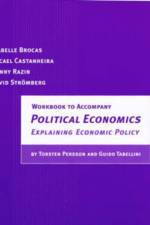
A workbook designed to accompany the theory developed in "Political Economics" of a common mode of analysis, combining theories of macroeconomic policy, public choice and rational choice in political science, to use in the field of political economics.
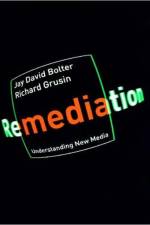
A new framework for considering how all media constantly borrow from and refashion other media.Media critics remain captivated by the modernist myth of the new: they assume that digital technologies such as the World Wide Web, virtual reality, and computer graphics must divorce themselves from earlier media for a new set of aesthetic and cultural principles. In this richly illustrated study, Jay David Bolter and Richard Grusin offer a theory of mediation for our digital age that challenges this assumption. They argue that new visual media achieve their cultural significance precisely by paying homage to, rivaling, and refashioning such earlier media as perspective painting, photography, film, and television. They call this process of refashioning "remediation," and they note that earlier media have also refashioned one another: photography remediated painting, film remediated stage production and photography, and television remediated film, vaudeville, and radio.
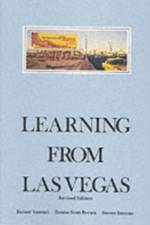
The final part of the 1st ed. is not included in this revision.
A study of how materialism and consumerism undermine our quality of life.In The High Price of Materialism, Tim Kasser offers a scientific explanation of how our contemporary culture of consumerism and materialism affects our everyday happiness and psychological health. Other writers have shown that once we have sufficient food, shelter, and clothing, further material gains do little to improve our well-being. Kasser goes beyond these findings to investigate how people's materialistic desires relate to their well-being. He shows that people whose values center on the accumulation of wealth or material possessions face a greater risk of unhappiness, including anxiety, depression, low self-esteem, and problems with intimacy—regardless of age, income, or culture.Drawing on a decade's worth of empirical data, Kasser examines what happens when we organize our lives around materialistic pursuits. He looks at the effects on our internal experience and interpersonal relationships, as well as on our communities and the world at large. He shows that materialistic values actually undermine our well-being, as they perpetuate feelings of insecurity, weaken the ties that bind us, and make us feel less free. Kasser not only defines the problem but proposes ways we can change ourselves, our families, and society to become less materialistic.
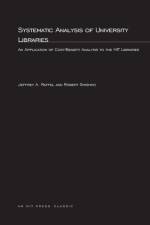
A study in the systematic policy analysis of the MIT Libraries. The study identifies two principal missions for the MIT library system: provide material for students' course work and provide material in general support of research at MIT. The problem is how to organize future library resources into a set of programs that best fulfill these objectives.
Restoring Nietzsche to a Nietzschean context-examining the definitive element that animates his work.
Bringing together neural, perceptual, and behavioral studies, The Merging of the Senses provides the first detailed review of how the brain assembles information from different sensory systems in order to produce a coherent view of the external world.
Abonner på vårt nyhetsbrev og få rabatter og inspirasjon til din neste leseopplevelse.
Ved å abonnere godtar du vår personvernerklæring.