












Gjør som tusenvis av andre bokelskere
Abonner på vårt nyhetsbrev og få rabatter og inspirasjon til din neste leseopplevelse.
Ved å abonnere godtar du vår personvernerklæring.Du kan når som helst melde deg av våre nyhetsbrev.

A new edition of a textbook that provides students with a deep, working understanding of the essential concepts of programming languages, completely revised, with significant new material.This book provides students with a deep, working understanding of the essential concepts of programming languages. Most of these essentials relate to the semantics, or meaning, of program elements, and the text uses interpreters (short programs that directly analyze an abstract representation of the program text) to express the semantics of many essential language elements in a way that is both clear and executable. The approach is both analytical and hands-on. The book provides views of programming languages using widely varying levels of abstraction, maintaining a clear connection between the high-level and low-level views. Exercises are a vital part of the text and are scattered throughout; the text explains the key concepts, and the exercises explore alternative designs and other issues. The complete Scheme code for all the interpreters and analyzers in the book can be found online through The MIT Press web site. For this new edition, each chapter has been revised and many new exercises have been added. Significant additions have been made to the text, including completely new chapters on modules and continuation-passing style. Essentials of Programming Languages can be used for both graduate and undergraduate courses, and for continuing education courses for programmers.
A vision of architecture that transcends concerns of form and function and finds the connections between the architect's wish to design a beautiful world and architecture's imperative to provide a better place for society.The forced polarity between form and function in considerations of architecture—opposing art to social interests, ethics to poetic expression—obscures the deep connections between ethical and poetical values in architectural tradition. Architecture has been, and must continue to be, writes Alberto Pérez-Gómez, built upon love. Modernity has rightly rejected past architectural excesses, but, Pérez-Gómez argues, the materialistic and technological alternatives it proposes do not answer satisfactorily the complex desire that defines humanity. True architecture is concerned with far more than fashionable form, affordable homes, and sustainable development; it responds to a desire for an eloquent place to dwell—one that lovingly provides a sense of order resonant with our dreams. In Built upon Love Pérez-Gómez uncovers the relationship between love and architecture in order to find the points of contact between poetics and ethics—between the architect's wish to design a beautiful world and architecture's imperative to provide a better place for society.Eros, as first imagined by the early lyric poets of classical Greece, is the invisible force at the root of our capacity to create and comprehend the poetic image. Pérez-Gómez examines the nature of architectural form in the light of eros, seduction, and the tradition of the poetic image in Western architecture. He charts the ethical dimension of architecture, tracing the connections between philia—the love of friends that entails mutual responsibility among equals—and architectural program. He explores the position of architecture at the limits of language and discusses the analogical language of philia in modernist architectural theory. Finally, he uncovers connections between ethics and poetics, describing a contemporary practice of architecture under the sign of love, incorporating both eros and philia.
The psychological theory of expectation that David Huron proposes in Sweet Anticipation grew out of the author's experimental efforts to understand how music evokes emotions. These efforts evolved into a general theory of expectation that will prove informative to readers interested in cognitive science and evolutionary psychology as well as those interested in music. The book describes a set of psychological mechanisms and illustrates how these mechanisms work in the case of music. All examples of notated music can be heard on the Web.Huron proposes that emotions evoked by expectation involve five functionally distinct response systems: reaction responses (which engage defensive reflexes); tension responses (where uncertainty leads to stress); prediction responses (which reward accurate prediction); imagination responses (which facilitate deferred gratification); and appraisal responses (which occur after conscious thought is engaged). For real-world events, these five response systems typically produce a complex mixture of feelings. The book identifies some of the aesthetic possibilities afforded by expectation, and shows how common musical devices (such as syncopation, cadence, meter, tonality, and climax) exploit the psychological opportunities. The theory also provides new insights into the physiological psychology of awe, laughter, and spine-tingling chills. Huron traces the psychology of expectations from the patterns of the physical/cultural world through imperfectly learned heuristics used to predict that world to the phenomenal qualia we experienced as we apprehend the world.
Harnessing the power of software platforms: what executives and entrepreneurs must know about how to use this technology to transform industries and how to develop the strategies that will create value and drive profits.
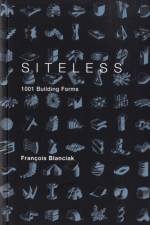
An attempt to free architecture from site and program constraints and to counter the profusion of ever bigger architecture books with ever smaller content.Some may call it the first manifesto of the twenty-first century, for it lays down a new way to think about architecture. Others may think of it as the last architectural treatise, for it provides a discursive container for ideas that would otherwise be lost. Whatever genre it belongs to, SITELESS is a new kind of architecture book that seems to have come out of nowhere. Its author, a young French architect practicing in Tokyo, admits he "didn't do this out of reverence toward architecture, but rather out of a profound boredom with the discipline, as a sort of compulsive reaction.” What would happen if architects liberated their minds from the constraints of site, program, and budget? he asks. The result is a book that is saturated with forms, and as free of words as any architecture book the MIT Press has ever published.The 1001 building forms in SITELESS include structural parasites, chain link towers, ball bearing floors, corrugated corners, exponential balconies, radial facades, crawling frames, forensic housing—and other architectural ideas that may require construction techniques not yet developed and a relation to gravity not yet achieved. SITELESS presents an open-ended compendium of visual ideas for the architectural imagination to draw from. The forms, drawn freehand (to avoid software-specific shapes) but from a constant viewing angle, are presented twelve to a page, with no scale, order, or end to the series. After setting down 1001 forms in siteless conditions and embryonic stages, Blanciak takes one of the forms and performs a "scale test,” showing what happens when one of these fantastic ideas is subjected to the actual constraints of a site in central Tokyo. The book ends by illustrating the potential of these shapes to morph into actual building proportions.
Rock My Religion collects eighteen of Graham's essays from all periods of his work, beginning with his essays on minimalist artists such as Dan Flavin and Donald Judd, continuing with his writings on punk rock and popular culture, and concluding with his more recent considerations of architecture, urban space, and power.Dan Graham's artworks and critical writings have had an enormous influence on the course of contemporary art over the past quarter century. Rock My Religion collects eighteen of Graham's essays from all periods of his work, beginning with his essays on minimalist artists such as Dan Flavin and Donald Judd, continuing with his writings on punk rock and popular culture, and concluding with his more recent considerations of architecture, urban space, and power.Alternating with these theoretical essays are descriptions and documentations of Graham's own works and installations—projects that trace his explorations in conceptual art, video, photography, architecture, and public sculpture, showing the integral connections between Graham's criticism and his own artwork. Although as an artist Graham has been associated with minimalism, conceptual art, and postmodernism, his writing does not conform to the stylistic and theoretical constraints of any specific movement. With sources and topics ranging from Ronald Reagan to the Sex Pistols, from Michel Foucault to Dean Martin, Graham's eclectic investigations into the complex cultural relationships between art production and social reality are always strikingly original. What makes these writings particularly astonishing, though, is Graham's willingness to examine specific manifestations of popular culture (television, magazines, rock and roll, drugs) without regard to traditional qualitative judgments and without separating "high" or "low" culture from the processes of everyday life.
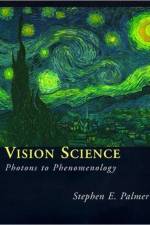
This textbook on vision reflects the integrated computational approach of modern research scientists, combining psychological, computational and neuroscientific perspectives. It covers topics from early neural processing of image structure in the retina to high-level visual attention and awareness.
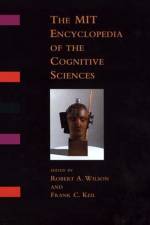
Since the 1970s the cognitive sciences have offered multidisciplinary ways of understanding the mind and cognition. The MIT Encyclopedia of the Cognitive Sciences (MITECS) is a landmark, comprehensive reference work that represents the methodological and theoretical diversity of this changing field. At the core of the encyclopedia are 471 concise entries, from Acquisition and Adaptationism to Wundt and X-bar Theory. Each article, written by a leading researcher in the field, provides an accessible introduction to an important concept in the cognitive sciences, as well as references or further readings. Six extended essays, which collectively serve as a roadmap to the articles, provide overviews of each of six major areas of cognitive science: Philosophy; Psychology; Neurosciences; Computational Intelligence; Linguistics and Language; and Culture, Cognition, and Evolution. For both students and researchers, MITECS will be an indispensable guide to the current state of the cognitive sciences.
Xavier Vives applies a modern game-theoretic approach to develop a theory of oligopoly pricing.
A critical history of site-specific art since the late 1960s.Site-specific art emerged in the late 1960s in reaction to the growing commodification of art and the prevailing ideals of art's autonomy and universality. Throughout the 1970s and 1980s, as site-specific art intersected with land art, process art, performance art, conceptual art, installation art, institutional critique, community-based art, and public art, its creators insisted on the inseparability of the work and its context. In recent years, however, the presumption of unrepeatability and immobility encapsulated in Richard Serra's famous dictum "to remove the work is to destroy the work" is being challenged by new models of site specificity and changes in institutional and market forces. One Place after Another offers a critical history of site-specific art since the late 1960s and a theoretical framework for examining the rhetoric of aesthetic vanguardism and political progressivism associated with its many permutations. Informed by urban theory, postmodernist criticism in art and architecture, and debates concerning identity politics and the public sphere, the book addresses the siting of art as more than an artistic problem. It examines site specificity as a complex cipher of the unstable relationship between location and identity in the era of late capitalism. The book addresses the work of, among others, John Ahearn, Mark Dion, Andrea Fraser, Donald Judd, Renee Green, Suzanne Lacy, Inigo Manglano-Ovalle, Richard Serra, Mierle Laderman Ukeles, and Fred Wilson.
A theoretical and case-study exploration of water politics demonstrates the emergence of alternative institutional forms of global environmental governance that go beyond traditional interstate regimes.
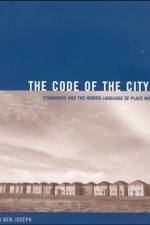
Traces the evolution of urban development codes and standards, examines their effect on city planning and design, and proposes alternatives that will encourage innovation.
How to design a world in which we rely less on stuff, and more on people.
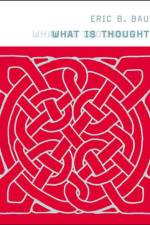
Toward a computational explanation of thought: an argument that underlying mind is a complex but compact program that corresponds to the underlying complex structure of the world.
Over the past three decades the developing world has seen increasing devolution of political and economic power to local governments. Decentralization is considered an important element of participatory democracy and, along with privatization and deregulation, represents a substantial reduction in the authority of national governments over economic policy. The contributors to Decentralization and Local Governance in Developing Countries examine this institutional transformation from comparative and interdisciplinary perspectives, offering detailed case studies of decentralization in eight countries: Bolivia, Brazil, China, India, Indonesia, Pakistan, South Africa, and Uganda.Some of these countries witnessed an unprecedented "big bang" shift toward comprehensive political and economic decentralization: Bolivia in 1995 and Indonesia after the fall of Suharto in 1998. Brazil and India decentralized in an uneven and more gradual manner. In some other countries (such as Pakistan), devolution represented an instrument for consolidation of power of a nondemocratic national government. In China, local governments were granted much economic but little political power. South Africa made the transition from the undemocratic decentralization of apartheid to decentralization under a democratic constitution. The studies provide a comparative perspective on the political and economic context within which decentralization took place, and how this shaped its design and possible impact.ContributorsOmar Azfar, Gianpaolo Baiocchi, Pranab Bardhan, Shubham Chaudhuri, Ali Cheema, Jean-Paul Faguet, Bert Hofman, Kai Kaiser, Philip E. Keefer, Asim Ijaz Khwaja, Justin Yifu Lin, Mingxing Liu, Jeffrey Livingston, Patrick Meagher, Dilip Mookherjee, Ambar Narayan, Adnan Qadir, Ran Tao, Tara Vishwanath, Martin Wittenberg
An introductory text that emphasizes the underlying algorithmic ideas that are driving advances in bioinformatics.This introductory text offers a clear exposition of the algorithmic principles driving advances in bioinformatics. Accessible to students in both biology and computer science, it strikes a unique balance between rigorous mathematics and practical techniques, emphasizing the ideas underlying algorithms rather than offering a collection of apparently unrelated problems. The book introduces biological and algorithmic ideas together, linking issues in computer science to biology and thus capturing the interest of students in both subjects. It demonstrates that relatively few design techniques can be used to solve a large number of practical problems in biology, and presents this material intuitively. An Introduction to Bioinformatics Algorithms is one of the first books on bioinformatics that can be used by students at an undergraduate level. It includes a dual table of contents, organized by algorithmic idea and biological idea; discussions of biologically relevant problems, including a detailed problem formulation and one or more solutions for each; and brief biographical sketches of leading figures in the field. These interesting vignettes offer students a glimpse of the inspirations and motivations for real work in bioinformatics, making the concepts presented in the text more concrete and the techniques more approachable.PowerPoint presentations, practical bioinformatics problems, sample code, diagrams, demonstrations, and other materials can be found at the Author's website.
The new and rapidly growing field of communication sciences owes as much to Norbert Wiener as to any one man. He coined the word for it—cybernetics. In God & Golem, Inc., the author concerned himself with major points in cybernetics which are relevant to religious issues.The first point he considers is that of the machine which learns. While learning is a property almost exclusively ascribed to the self-conscious living system, a computer now exists which not only can be programmed to play a game of checkers, but one which can "learn" from its past experience and improve on its own game. For a time, the machine was able to beat its inventor at checkers. "It did win," writes the author, "and it did learn to win; and the method of its learning was no different in principle from that of the human being who learns to play checkers.A second point concerns machines which have the capacity to reproduce themselves. It is our commonly held belief that God made man in his own image. The propagation of the race may also be interpreted as a function in which one living being makes another in its own image. But the author demonstrates that man has made machines which are "very well able to make other machines in their own image," and these machine images are not merely pictorial representations but operative images. Can we then say: God is to Golem as man is to Machines? in Jewish legend, golem is an embryo Adam, shapeless and not fully created, hence a monster, an automation.The third point considered is that of the relation between man and machine. The concern here is ethical. "render unto man the things which are man's and unto the computer the things which are the computer's," warns the author. In this section of the book, Dr. Wiener considers systems involving elements of man and machine. The book is written for the intellectually alert public and does not involve any highly technical knowledge. It is based on lectures given at Yale, at the Société Philosophique de Royaumont, and elsewhere.
Kevin Lynch's books are the classic underpinnings of modern urban planning and design, yet they are only a part of his rich legacy of ideas about human purposes and values in built form. City Sense and City Design brings together Lynch's remaining work, including professional design and planning projects that show how he translated many of his ideas and theories into practice. An invaluable sourcebook of design knowledge, City Sense and City Design completes the record of one of the foremost environmental design theorists of our time and leads to a deeper understanding of his distinctively humanistic philosophy. The editors, both former students of Lynch, provide a cogent summary of his career and of the role he played in shaping and transforming the American urban design profession during the 1950s, the 1960s, and the 1970s. Each of the seven thematic groupings of writings and projects that follow begins with a short introduction explaining their content and their background.The essays in part I focus on the premises of Lynch's work: his novel reading of large-scale built environments and the notion that the design of an urban landscape should be as meaningful and intimate as the natural landscape. In part II, excerpts from Lynch's travel journals reveal his early ideas on how people perceive and interpret their surroundings—ideas that culminated in his seminal work, The Image of the City. This part of the book also presents Lynch's experiments with children and his assessment of environmental-perception research. The examples of both small-scale and large-scale analysis of visual form in part III are followed by three parts on city design. These include Lynch's more theoretical works on complex planning decisions involving both functional (spatial and structural organization) and normative (how the city works in human terms) approaches, articles discussing the principles that guided Lynch's teaching and practice of city design, and descriptions of Lynch's own projects in the Boston area and elsewhere. The book concludes with essays written late in Lynch's career, fantasy pieces describing utopias and offering new design freedoms and scenarios warning of horrifying "cacotopias."
Kevin O'Rourke and Jeffrey Williamson present a coherent picture of trade, migration, and international capital flows in the Atlantic economy in the century prior to 1914-the first great globalization boom, which anticipated the experience of the last fifty years.
A solution to the "reading war": a prototype for the most effective reading instruction, based on paleographic findings and current research.
Within cognitive science, two approaches currently dominate the problem of modeling representations. The symbolic approach views cognition as computation involving symbolic manipulation. Connectionism, a special case of associationism, models associations using artificial neuron networks. Peter Gärdenfors offers his theory of conceptual representations as a bridge between the symbolic and connectionist approaches.Symbolic representation is particularly weak at modeling concept learning, which is paramount for understanding many cognitive phenomena. Concept learning is closely tied to the notion of similarity, which is also poorly served by the symbolic approach. Gärdenfors's theory of conceptual spaces presents a framework for representing information on the conceptual level. A conceptual space is built up from geometrical structures based on a number of quality dimensions. The main applications of the theory are on the constructive side of cognitive science: as a constructive model the theory can be applied to the development of artificial systems capable of solving cognitive tasks. Gärdenfors also shows how conceptual spaces can serve as an explanatory framework for a number of empirical theories, in particular those concerning concept formation, induction, and semantics. His aim is to present a coherent research program that can be used as a basis for more detailed investigations.
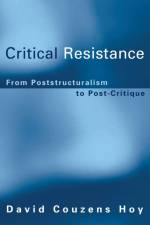
A leading authority on Continental philosophy examines the concept of critical resistance within recent poststructuralist social thought.
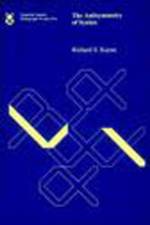
It is standardly assumed that Universal Grammar (UG) allows a given hierarchical representation to be associated with more than one linear order. This book proposes a restrictive theory of word order and phrase structure that denies this assumption. According to this theory, phrase structure always completely determines linear order, so that if two phrases differ in linear order, they must also differ in hierarchical structure.
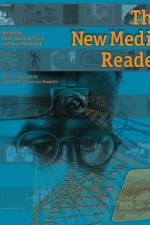
A sourcebook of historical written texts, video documentation, and working programs that form the foundation of new media.This reader collects the texts, videos, and computer programs—many of them now almost impossible to find—that chronicle the history and form the foundation of the still-emerging field of new media. General introductions by Janet Murray and Lev Manovich, along with short introductions to each of the texts, place the works in their historical context and explain their significance. The texts were originally published between World War II—when digital computing, cybernetic feedback, and early notions of hypertext and the Internet first appeared—and the emergence of the World Wide Web—when they entered the mainstream of public life. The texts are by computer scientists, artists, architects, literary writers, interface designers, cultural critics, and individuals working across disciplines. The contributors include (chronologically) Jorge Luis Borges, Vannevar Bush, Alan Turing, Ivan Sutherland, William S. Burroughs, Ted Nelson, Italo Calvino, Marshall McLuhan, Jean Baudrillard, Nicholas Negroponte, Alan Kay, Bill Viola, Sherry Turkle, Richard Stallman, Brenda Laurel, Langdon Winner, Robert Coover, and Tim Berners-Lee. The CD accompanying the book contains examples of early games, digital art, independent literary efforts, software created at universities, and home-computer commercial software. Also on the CD is digitized video, documenting new media programs and artwork for which no operational version exists. One example is a video record of Douglas Engelbart's first presentation of the mouse, word processor, hyperlink, computer-supported cooperative work, video conferencing, and the dividing up of the screen we now call non-overlapping windows; another is documentation of Lynn Hershman's Lorna, the first interactive video art installation.
Slavoj Zizek, a leading intellectual in the new social movements that are sweeping Eastern Europe, provides a virtuoso reading of Jacques Lacan. Zizek inverts current pedagogical strategies to explain the difficult philosophical underpinnings of the French theoretician and practician who revolutionized our view of psychoanalysis. He approaches Lacan through the motifs and works of contemporary popular culture, from Hitchcock's Vertigo to Stephen King's Pet Sematary, from McCullough's An Indecent Obsession to Romero's Return of the Living Dead—a strategy of "looking awry" that recalls the exhilarating and vital experience of Lacan.Zizek discovers fundamental Lacanian categories the triad Imaginary/Symbolic/Real, the object small a, the opposition of drive and desire, the split subject—at work in horror fiction, in detective thrillers, in romances, in the mass media's perception of ecological crisis, and, above all, in Alfred Hitchcock's films. The playfulness of Zizek's text, however, is entirely different from that associated with the deconstructive approach made famous by Derrida. By clarifying what Lacan is saying as well as what he is not saying, Zizek is uniquely able to distinguish Lacan from the poststructuralists who so often claim him.
Co-founder and co-editor of October magazine, a veteran of Artforum of the 1960s and early 1970s, Rosalind Krauss has presided over and shared in the major formulation of the theory of postmodernism.In this challenging collection of fifteen essays, most of which originally appeared in October, she explores the ways in which the break in style that produced postmodernism has forced a change in our various understandings of twentieth-century art, beginning with the almost mythic idea of the avant-garde. Krauss uses the analytical tools of semiology, structuralism, and poststructuralism to reveal new meanings in the visual arts and to critique the way other prominent practitioners of art and literary history write about art. In two sections, "Modernist Myths" and "Toward Postmodernism," her essays range from the problem of the grid in painting and the unity of Giacometti's sculpture to the works of Jackson Pollock, Sol Lewitt, and Richard Serra, and observations about major trends in contemporary literary criticism.
Abonner på vårt nyhetsbrev og få rabatter og inspirasjon til din neste leseopplevelse.
Ved å abonnere godtar du vår personvernerklæring.