



















Gjør som tusenvis av andre bokelskere
Abonner på vårt nyhetsbrev og få rabatter og inspirasjon til din neste leseopplevelse.
Ved å abonnere godtar du vår personvernerklæring.Du kan når som helst melde deg av våre nyhetsbrev.

Powerful photographs of the grand exteriors and crumbling interiors of America's abandoned state mental hospitals.For more than half the nation's history, vast mental hospitals were a prominent feature of the American landscape. From the mid-nineteenth century to the early twentieth, over 250 institutions for the insane were built throughout the United States; by 1948, they housed more than a half million patients. The blueprint for these hospitals was set by Pennsylvania hospital superintendant Thomas Story Kirkbride: a central administration building flanked symmetrically by pavilions and surrounded by lavish grounds with pastoral vistas. Kirkbride and others believed that well-designed buildings and grounds, a peaceful environment, a regimen of fresh air, and places for work, exercise, and cultural activities would heal mental illness. But in the second half of the twentieth century, after the introduction of psychotropic drugs and policy shifts toward community-based care, patient populations declined dramatically, leaving many of these beautiful, massive buildings—and the patients who lived in them—neglected and abandoned. Architect and photographer Christopher Payne spent six years documenting the decay of state mental hospitals like these, visiting seventy institutions in thirty states. Through his lens we see splendid, palatial exteriors (some designed by such prominent architects as H. H. Richardson and Samuel Sloan) and crumbling interiors—chairs stacked against walls with peeling paint in a grand hallway; brightly colored toothbrushes still hanging on a rack; stacks of suitcases, never packed for the trip home. Accompanying Payne's striking and powerful photographs is an essay by Oliver Sacks (who described his own experience working at a state mental hospital in his book Awakenings). Sacks pays tribute to Payne's photographs and to the lives once lived in these places, "where one could be both mad and safe.”
A general framework for constructing and using probabilistic models of complex systems that would enable a computer to use available information for making decisions.Most tasks require a person or an automated system to reason—to reach conclusions based on available information. The framework of probabilistic graphical models, presented in this book, provides a general approach for this task. The approach is model-based, allowing interpretable models to be constructed and then manipulated by reasoning algorithms. These models can also be learned automatically from data, allowing the approach to be used in cases where manually constructing a model is difficult or even impossible. Because uncertainty is an inescapable aspect of most real-world applications, the book focuses on probabilistic models, which make the uncertainty explicit and provide models that are more faithful to reality. Probabilistic Graphical Models discusses a variety of models, spanning Bayesian networks, undirected Markov networks, discrete and continuous models, and extensions to deal with dynamical systems and relational data. For each class of models, the text describes the three fundamental cornerstones: representation, inference, and learning, presenting both basic concepts and advanced techniques. Finally, the book considers the use of the proposed framework for causal reasoning and decision making under uncertainty. The main text in each chapter provides the detailed technical development of the key ideas. Most chapters also include boxes with additional material: skill boxes, which describe techniques; case study boxes, which discuss empirical cases related to the approach described in the text, including applications in computer vision, robotics, natural language understanding, and computational biology; and concept boxes, which present significant concepts drawn from the material in the chapter. Instructors (and readers) can group chapters in various combinations, from core topics to more technically advanced material, to suit their particular needs.
Letters by writer, filmmaker, and cultural revolutionary Guy Debord conjure a vivid picture of the dynamic first years of the Situationist International movement.
A groundbreaking argument that the concept of place is central to Heidegger's thinking--and at the heart of all philosophical inquiry.
In An Engine, Not a Camera, Donald MacKenzie argues that the emergence of modern economic theories of finance affected financial markets in fundamental ways. These new, Nobel Prize-winning theories, based on elegant mathematical models of markets, were not simply external analyses but intrinsic parts of economic processes.Paraphrasing Milton Friedman, MacKenzie says that economic models are an engine of inquiry rather than a camera to reproduce empirical facts. More than that, the emergence of an authoritative theory of financial markets altered those markets fundamentally. For example, in 1970, there was almost no trading in financial derivatives such as "futures." By June of 2004, derivatives contracts totaling $273 trillion were outstanding worldwide. MacKenzie suggests that this growth could never have happened without the development of theories that gave derivatives legitimacy and explained their complexities.MacKenzie examines the role played by finance theory in the two most serious crises to hit the world's financial markets in recent years: the stock market crash of 1987 and the market turmoil that engulfed the hedge fund Long-Term Capital Management in 1998. He also looks at finance theory that is somewhat beyond the mainstream—chaos theorist Benoit Mandelbrot's model of "wild" randomness. MacKenzie's pioneering work in the social studies of finance will interest anyone who wants to understand how America's financial markets have grown into their current form.
In Always Already New, Lisa Gitelman explores the newness of new media while she asks what it means to do media history. Using the examples of early recorded sound and digital networks, Gitelman challenges readers to think about the ways that media work as the simultaneous subjects and instruments of historical inquiry. Presenting original case studies of Edison's first phonographs and the Pentagon's first distributed digital network, the ARPANET, Gitelman points suggestively toward similarities that underlie the cultural definition of records (phonographic and not) at the end of the nineteenth century and the definition of documents (digital and not) at the end of the twentieth. As a result, Always Already New speaks to present concerns about the humanities as much as to the emergent field of new media studies. Records and documents are kernels of humanistic thought, after all—part of and party to the cultural impulse to preserve and interpret. Gitelman's argument suggests inventive contexts for "humanities computing" while also offering a new perspective on such traditional humanities disciplines as literary history. Making extensive use of archival sources, Gitelman describes the ways in which recorded sound and digitally networked text each emerged as local anomalies that were yet deeply embedded within the reigning logic of public life and public memory. In the end Gitelman turns to the World Wide Web and asks how the history of the Web is already being told, how the Web might also resist history, and how using the Web might be producing the conditions of its own historicity.
In this lucid portrayal of human behavior, Fred Dretske provides an original account of the way reasons function in the causal explanation of behavior.
An exploration of the architecture of the grammar, where conditions apply, and the nature of the lexical/functional split.
Ten grids that changed the world: the emergence and evolution of the most prominent visual structure in Western culture.Emblematic of modernity, the grid is the underlying form of everything from skyscrapers and office cubicles to paintings by Mondrian and a piece of computer code. And yet, as Hannah Higgins makes clear in this engaging and evocative book, the grid has a history that long predates modernity; it is the most prominent visual structure in Western culture. In The Grid Book, Higgins examines the history of ten grids that changed the world: the brick, the tablet, the gridiron city plan, the map, musical notation, the ledger, the screen, moveable type, the manufactured box, and the net. Charting the evolution of each grid, from the Paleolithic brick of ancient Mesopotamia through the virtual connections of the Internet, Higgins demonstrates that once a grid is invented, it may bend, crumble, or shatter, but its organizing principle never disappears. The appearance of each grid was a watershed event. Brick, tablet, and city gridiron made possible sturdy housing, the standardization of language, and urban development. Maps, musical notation, financial ledgers, and moveable type promoted the organization of space, music, and time, international trade, and mass literacy. The screen of perspective painting heralded the science of the modern period, classical mechanics, and the screen arts, while the standardization of space made possible by the manufactured box suggested the purified box forms of industrial architecture and visual art. The net, the most ancient grid, made its first appearance in Stone Age Finland; today, the loose but clearly articulated networks of the World Wide Web suggest that we are in the middle of an emergent grid that is reshaping the world, as grids do, in its image.
This is the essential companion to the second edition of Jeffrey Wooldridge's widely used graduate econometrics text. The text provides an intuitive but rigorous treatment of two state-of-the-art methods used in contemporary microeconomic research. The numerous end-of-chapter exercises are an important component of the book, encouraging the student to use and extend the analytic methods presented in the book. This manual contains advice for answering selected problems, new examples, and supplementary materials designed by the author, which work together to enhance the benefits of the text. Users of the textbook will find the manual a necessary adjunct to the book.
The intertwining of biological reproduction and the personal, political, legal, and technological meanings of reproduction, explored through ethnographic studies and analyzed in the context of science and technology studies and feminist theory.
An examination of the artistic development of Robert Rauschenberg, focusing on his relationship with John Cage and his role in the making of the American neo-avant-garde.
Essays exploring the relationship between economic growth and inequality and the implications for policy makers.
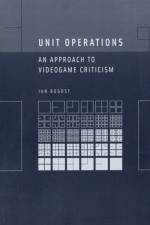
In Unit Operations, Ian Bogost argues that similar principles underlie both literary theory and computation, proposing a literary-technical theory that can be used to analyze particular videogames. Moreover, this approach can be applied beyond videogames: Bogost suggests that any medium—from videogames to poetry, literature, cinema, or art—can be read as a configurative system of discrete, interlocking units of meaning, and he illustrates this method of analysis with examples from all these fields. The marriage of literary theory and information technology, he argues, will help humanists take technology more seriously and hep technologists better understand software and videogames as cultural artifacts. This approach is especially useful for the comparative analysis of digital and nondigital artifacts and allows scholars from other fields who are interested in studying videogames to avoid the esoteric isolation of "game studies."The richness of Bogost's comparative approach can be seen in his discussions of works by such philosophers and theorists as Plato, Badiou, Zizek, and McLuhan, and in his analysis of numerous videogames including Pong, Half-Life, and Star Wars Galaxies. Bogost draws on object technology and complex adaptive systems theory for his method of unit analysis, underscoring the configurative aspects of a wide variety of human processes. His extended analysis of freedom in large virtual spaces examines Grand Theft Auto 3, The Legend of Zelda, Flaubert's Madame Bovary, and Joyce's Ulysses. In Unit Operations, Bogost not only offers a new methodology for videogame criticism but argues for the possibility of real collaboration between the humanities and information technology.
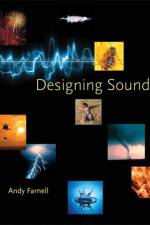
A practitioner's guide to the basic principles of creating sound effects using easily accessed free software.Designing Sound teaches students and professional sound designers to understand and create sound effects starting from nothing. Its thesis is that any sound can be generated from first principles, guided by analysis and synthesis. The text takes a practitioner's perspective, exploring the basic principles of making ordinary, everyday sounds using an easily accessed free software. Readers use the Pure Data (Pd) language to construct sound objects, which are more flexible and useful than recordings. Sound is considered as a process, rather than as data—an approach sometimes known as "procedural audio.” Procedural sound is a living sound effect that can run as computer code and be changed in real time according to unpredictable events. Applications include video games, film, animation, and media in which sound is part of an interactive process. The book takes a practical, systematic approach to the subject, teaching by example and providing background information that offers a firm theoretical context for its pragmatic stance. [Many of the examples follow a pattern, beginning with a discussion of the nature and physics of a sound, proceeding through the development of models and the implementation of examples, to the final step of producing a Pure Data program for the desired sound. Different synthesis methods are discussed, analyzed, and refined throughout.] After mastering the techniques presented in Designing Sound, students will be able to build their own sound objects for use in interactive applications and other projects
Sunk Costs and Market Structure bridges the gap between the new generation of game theoretic models that has dominated the industrial organization literature over the past ten years and the traditional empirical agenda of the subject as embodied in the structure-conduct-performance paradigm developed by Joe S. Bain and his successors.
Philosophers and psychologists discuss new collaborative work in moral philosophy that draws on evolutionary psychology, cognitive science, and neuroscience.
Energy in Nature and Society is a systematic and exhaustive analysis of all the major energy sources, storages, flows, and conversions that have shaped the evolution of the biosphere and civilization. Vaclav Smil uses fundamental unifying metrics (most notably for power density and energy intensity) to provide an integrated framework for analyzing all segments of energetics (the study of energy flows and their transformations). The book explores not only planetary energetics (such as solar radiation and geomorphic processes) and bioenergetics (photosynthesis, for example) but also human energetics (such as metabolism and thermoregulation), tracing them from hunter-gatherer and agricultural societies through modern-day industrial civilization. Included are chapters on heterotrophic conversions, traditional agriculture, preindustrial complexification, fossil fuels, fossil-fueled civilization, the energetics of food, and the implications of energetics for the environment. The book concludes with an examination of general patterns, trends, and socioeconomic considerations of energy use today, looking at correlations between energy and value, energy and the economy, energy and quality of life, and energy futures. Throughout the book, Smil chooses to emphasize the complexities and peculiarities of the real world, and the counterintuitive outcomes of many of its processes, over abstract models. Energy in Nature and Society provides a unique, comprehensive, single-volume analysis and reference source on all important energy matters, from natural to industrial energy flows, from fuels to food, from the Earth's formation to possible energy futures, and can serve as a text for courses in energy studies, global ecology, earth systems science, biology, and chemistry. Vaclav Smil is Distinguished Professor at the University of Manitoba and the author of many books, including Energy at the Crossroads (2003), The Earth's Biosphere: Evolution, Dynamics, and Change (2002), and Energies: An Illustrated Guide to the Biosphere and Civilization (1998), all of which are published by The MIT Press.
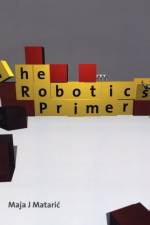
A broadly accessible introduction to robotics that spans the most basic concepts and the most novel applications; for students, teachers, and hobbyists.The Robotics Primer offers a broadly accessible introduction to robotics for students at pre-university and university levels, robot hobbyists, and anyone interested in this burgeoning field. The text takes the reader from the most basic concepts (including perception and movement) to the most novel and sophisticated applications and topics (humanoids, shape-shifting robots, space robotics), with an emphasis on what it takes to create autonomous intelligent robot behavior. The core concepts of robotics are carried through from fundamental definitions to more complex explanations, all presented in an engaging, conversational style that will appeal to readers of different backgrounds. The Robotics Primer covers such topics as the definition of robotics, the history of robotics ("Where do Robots Come From?”), robot components, locomotion, manipulation, sensors, control, control architectures, representation, behavior ("Making Your Robot Behave”), navigation, group robotics, learning, and the future of robotics (and its ethical implications). To encourage further engagement, experimentation, and course and lesson design, The Robotics Primer is accompanied by a free robot programming exercise workbook that implements many of the ideas on the book on iRobot platforms.The Robotics Primer is unique as a principled, pedagogical treatment of the topic that is accessible to a broad audience; the only prerequisites are curiosity and attention. It can be used effectively in an educational setting or more informally for self-instruction. The Robotics Primer is a springboard for readers of all backgrounds—including students taking robotics as an elective outside the major, graduate students preparing to specialize in robotics, and K-12 teachers who bring robotics into their classrooms.
Experts discuss moving beyond the notion of electronic government and its focus on technology and efficiency to a broader concept of "information government" that incorporates the role of information flows within government, between government and citizens, and among citizens themselves.
The solutions manual for Bolton and Dewatripont's Contract Theory includes complete solutions to 27 of the 54 exercises in the text.
The evolution of the concept of subjectivity in the works of Jacques Lacan.
Photographs by one of French cinema's most influential and enigmatic artists.Any new film and any new book by French filmmaker Chris Marker is an event. Marker gave film lovers one of their most memorable experiences with La Jetée (1962)—a time-travel montage set after a nuclear war that inspired Terry Gilliam's Twelve Monkeys (1995). His still camerawork is not as well known, but Marker has been taking photographs as long as he has been making films. Staring Back presents 200 black-and-white photographs from Marker's personal archives, taken from 1952 to 2006. Some of the photographs are related to his classic films (which include Le Jetée, Sans Soleil, ¡Cuba Si!, and The Case of the Grinning Cat), others are portraits of famous faces (Simone Signoret, Akira Kurosawa), but most are pictures of people Marker has encountered as he has traveled the world (an extra who appeared in Kurosawa's Ran, a woman seen on a street in Siberia). The central section of the book contains a series of photographs documenting political protests Marker has witnessed, including the march on the Pentagon in 1967, the events of May 1968 in Paris, and the tumultuous 2006 demonstrations protesting the French government's proposed employment policies. The photographs are accompanied by several unpublished texts by Marker, including the English language text of The Case of the Grinning Cat and Marker's annotations for some of the photos. The book—which appears in conjunction with an exhibition at the Wexner Center for the Arts at The Ohio State University—also includes essays by Wexner Center curator Bill Horrigan and art historian Molly Nesbit.
Analyzes SWB in relation to money, age, gender, democracy, and other factors.
These essays by leading scientists and philosophers address conceptual issues that arise in the theory and practice of evolutionary biology. The third edition of this widely used anthology has been substantially revised and updated. Four new sections have been added: on women in the evolutionary process, evolutionary psychology, laws in evolutionary theory, and race as social construction or biological reality. Other sections treat fitness, units of selection, adaptationism, reductionism, essentialism, species, phylogenetic inference, cultural evolution, and evolutionary ethics.Each of the twelve sections contains two or three essays that develop different views of the subject at hand. For example, the section on evolutionary psychology offers one essay by two founders of the field and another that questions its main tenets. One sign that a discipline is growing is that there are open questions, with multiple answers still in competition; the essays in this volume demonstrate that evolutionary biology and the philosophy of evolutionary biology are living, growing disciplines.Contributors: Robin O. Andreasen, Kwame Anthony Appiah, David A. Baum, John H. Beatty, David J. Buller, Leda Cosmides, James Donoghue, Steven J. Farris, Joseph Felsenstein, Susan K. Finsen, Joseph Fracchia, Stephen Jay Gould, Sarah Blaffer Hrdy, David L. Hull, Philip Kitcher, R. C. Lewontin, Elisabeth Lloyd, Ernst Mayr, Michael Ruse, John Maynard Smith, Elliott Sober, John Tooby, C. Kenneth Waters, George C. Williams, David Sloan Wilson, E. O. Wilson
Well-known art historians from Europe and the Americas discuss the influence of conceptualism on art since the 1970s.
Abonner på vårt nyhetsbrev og få rabatter og inspirasjon til din neste leseopplevelse.
Ved å abonnere godtar du vår personvernerklæring.