

























Gjør som tusenvis av andre bokelskere
Abonner på vårt nyhetsbrev og få rabatter og inspirasjon til din neste leseopplevelse.
Ved å abonnere godtar du vår personvernerklæring.Du kan når som helst melde deg av våre nyhetsbrev.

The Heroic Slave (1852) is a novella by Frederick Douglass. Although he is more frequently recognized as prominent orator and autobiographer who spearheaded the American abolitionist movement, Douglass published one work of fiction in his lifetime. Inspired by the 1841 Creole case, in which an enslaved cook and a crew of nineteen fellow-slaves led a rebellion onboard a ship bound from Virginia to New Orleans, The Heroic Slave seeks to highlight the bravery and autonomy of fugitives and revolutionaries who did what they could to help themselves in the absence of help from their country. Sitting down for dinner, Mr. Listwell, a white southerner, is interrupted by a knock at the door. He opens it to find Madison Washington, a fugitive slave who disappeared without a trace five years prior. Hesitant at first, Listwell agrees to hear the man out, and learns that rather than escape to the north, Washington remained behind to be near his wife and children, hiding in the wilderness the whole time. Moved by his tragic story, Listwell provides him clothes and supplies, and encourages him to head for Canada. Sometime later, he sees a slave gang headed for market, and identifies Washington in chains. Before they part ways once more, perhaps forever, Listwell purchases a set of files and manages to get them to Washington, who remains determined to fight for his freedom until the bitter end. With a beautifully designed cover and professionally typeset manuscript, this edition of Frederick Douglass¿ The Heroic Slave is a classic of African American literature reimagined for modern readers.
Mademoiselle Giraud, My Wife (1870) is a novel by Adolphe Belot. Written at the height of his career as a popular playwright, the novel proved immensely popular and caused a stir with its depiction of homosexuality. Recognized today as an important work of French literature and in the history of sexuality, Mademoiselle Giraud, My Wife is a highly original, frequently funny, and ultimately tragic work of fiction from an underappreciated writer of nineteenth century France.Having forged a life of success and financial security for himself as a businessman, Adrien returns to Paris to find a wife. Singularly obsessed with tying his fate to a respectable woman, he finds himself struggling to remain realistic in his standards. Just when he thinks he will remain a bachelor for the rest of his days, Adrien meets the beautiful Paule Giraud, a friend of the influential Countess Berthe de Blangy. After a brief courtship, he marries Giraud only to find himself rejected in the bedroom. As he succumbs to jealousy and suspicion, Adrien becomes abusive and petulant, eventually leaving his wife in Paris for the city of Nice. There, he meets the Count de Blangy, who reveals to the unsuspecting husband the secret of his wife's sexual habits: for years, she has engaged in a lesbian affair with her friend Berthe. Enraged and dumbfounded, Adrien hatches a plan with the Count to separate their wives and punish them for their sexual deviancy. Tragic and scandalous, Mademoiselle Giraud, My Wife was a bestselling story of homosexuality told from the point of view of an author who clearly possessed his society's reprehensibly oppressive views on sex and gender. Regardless, Belot's novel remains an important landmark in the historical representation of homosexuality in literature.With a beautifully designed cover and professionally typeset manuscript, this edition of Adolphe Belot's Mademoiselle Giraud, My Wife is a classic work of French literature reimagined for modern readers.
James Langdon enjoys his practice of hunting bears in the forests of Canada, convinced that there are few greater thrills. However, as he sets out on a hunt for a towering grizzly bear, Langdon makes a stunning discovery. Different from the start, the hunt begins after the giant grizzly, who is named Thor, is injured by a hunter. While nursing his wounds, Thor meets a young black bear cub, who had recently been orphaned. Taking the young cub under his care, the two bears enjoy the peaceful riches of the Canadian wilderness, picking berries, fishing, and meeting other animals. However, Langdon is on their trail, and determined to kill Thor, hungry for the acclaim and the thrill of defeating such a large animal. But, when the three finally cross paths, they each find themselves surprised by their own instincts. With gorgeous description, surprising humor, and complex characters, James Oliver Curwood¿s The Grizzly King: A Romance of the Wild is a unique masterpiece. First published in 1916, this reflective adventure novel documents Curwood¿s change of mind regarding conservation. Once an avid hunter himself, Curwood wrote The Grizzly King: A Romance of the Wild to encourage others to appreciate nature without harming it. Featuring a rare point of view, Curwood created a gripping and beautiful tale that considers multiple perspectives. The Grizzly King: A Romance of the Wild inspired a film adaptation titled The Bear, and remains to a fan-favorite of the prolific author¿s work. This edition of The Grizzly King: A Romance of the Wild by James Oliver Curwood now features a new, eye-catching cover design and is printed in a font that is both modern and readable. With these accommodations, this edition of The Grizzly King: A Romance of the Wild crafts an accessible and pleasant reading experience for modern audiences while restoring the original beauty of James Oliver Curwood¿s literature.
When Edward ¿ becomes king, he uses his new authority to pardon his favorite nobleman, Piers Gaveston, from his exile, angering key supporters. Soon after he inherits the throne, King Edward ¿ of England writes a letter to his favorite nobleman, Piers Gaveston, who had previously been exiled, asking him to come back to England. Eager to return and happy to have the king¿s favor, Gaveston travels to the kingdom immediately. However, when the other noblemen and advisors hear of Edward¿s decision, they quickly try to talk him out of it. Believing that Gaveston is a manipulative social climber, the noblemen warn Edward that he should reconsider his pardon. However, Edward loves Gaveston deeply, and refuses to revoke his pardon. He appoints Gaveston the power to issue commands and draw money from the treasury, happy to be reunited with the man. Meanwhile, the angered noblemen start to gather a group of resistance. Concerned about the power Edward has given Gaveston, they continue their attempts to disillusion him, convincing others close to Edward to talk him into turning against the man. As some of Edward¿s closest friends and family, take a side against him, the distrust the nobles hold for Gaveston begins to bleed into contempt for the king. With schemes of manipulation, invasion, and abdication plague the kingdom, Edward must reconsider his love for Gaveston before it causes his downfall. First debuted in 1592, Edward the Second is among the legendary playwright¿s final works. Considered to be Marlowe¿s masterpiece, Edward the Second is praised for its unique topic, disciplined rhetoric, and homoeotic undertones. Having been adapted for film and radio, as well as inspiring theatre revivals, Edward the Second is one of Marlowe¿s most popular and celebrated works. With exemplary writing and a high-stakes plot, Edward the Second provides an intriguing perspective on the rule of Edward ¿ that remains fascinating to modern audience. This edition of Edward the Second by Christopher Marlowe is now presented in an easy-to-read font and features a striking new cover decision, creating an accessible reading experience. With these accommodations, Edward the Second is restored to modern standards while the original genius and vivid imagery of Marlowe¿s poetry is preserved.
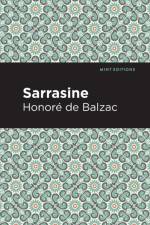
Sarrasine (1831) is a novella by French author Honoré de Balzac. Written as part of his La Comédie humaine sequence, Sarrasine is one of Balzac¿s earliest works published without a pseudonym and helped to establish his reputation as a serious writer and distinguished member of Parisian high society. Noted for its controversial exploration of homosexuality and castration, Balzac¿s novella would become the subject of Roland Barthe¿s groundbreaking work of literary criticism, S/Z (1970).Composed as a frame narrative, Sarrasine begins during a ball at the mansion of the wealthy Monsieur de Lanty. The unnamed narrator, from a window overlooking the garden, listens to the conversations of partygoers and watches as his guest, Beatrix Rochefide, is approached by a mysterious older man. The next night, the narrator tells Beatrix a story involving the man, a respected member of de Lanty¿s circle. He begins with the life of Ernest-Jean Sarrasine, a successful young sculptor who, on a trip to Rome, fell in love with an opera star named Zambinella. Convinced she represents the ideal feminine form, he rejects Zambinelläs misgivings and vague excuses, becoming increasingly obsessed with the beautiful singer. Devising a plan to kidnap Zambinella during a party at the French embassy, Sarrasine discovers the truth: the singer is a castrato, a classical operatic performer who was selected and castrated before puberty. Sarrasine, a powerful novella, explores themes of idealization and obsession while illuminating the conflation of sex and gender.With a beautifully designed cover and professionally typeset manuscript, this edition of Honoré de Balzac¿s Sarrasine is a classic of French literature reimagined for modern readers.
Revenge: A Tale of Old Jamaica (1919) is a novel by H. G. de Lisser. Born and raised in Jamaica, H. G. de Lisser was one of the leading Caribbean writers of the early twentieth century. Concerned with issues of race, urban life, and modernization, de Lisser dedicated his career to representing the lives and concerns of poor and middle-class Jamaicans. In Revenge: A Tale of Old Jamaica, de Lisser portrays the deadly Morant Bay Rebellion of 1865, a protest by poor black laborers unsatisfied with the economic and political establishment and the widespread lack of opportunity for freedmen in Jamaica. In response to a period of scarcity brought on by drought and disease, as well as to acts of police brutality against peaceful protestors, a group of several hundred Jamaicans led by Paul Bogle took to the streets in an effort to fight for their rights. In de Lisser¿s fictionalized version of events, he explores the experiences of white and black Jamaicans in the days leading up to the violence. As signs of unrest grow impossible to ignore, those in power prove more than willing to reject the pleas of the oppressed, writing their anger off as nothing more than a passing phase. Seated on their veranda overlooking the mountains of the Jamaican countryside, the Carlton family observes a series of fires growing in the nearby hills. While the women see them as a sign of violence to come, the men seem entirely unphased by the threat of an uprising. In response to his mother¿s fears, Dick Carlton attempts to calm her: ¿¿Our people are just now passing through one of their periodical fits of depression, and you will probably hear them expressing fears of negro uprisings and all that sort of thing [¿] and you may be frightened. Don¿t allow yourself to be. The danger is purely imaginary.¿¿ As night falls with no end to the fires, however, and as the songs and cries of the oppressed grow closer, his sense of security will prove a foolish thing indeed. With a beautifully designed cover and professionally typeset manuscript, this edition of H. G. de Lisser¿s Revenge: A Tale of Old Jamaica is a classic of Jamaican literature reimagined for modern readers.
When William Came (1913) is a novel by Saki. Considered a masterpiece of invasion literature, When William Came indulges in the paranoid atmosphere of the leadup to the Great War to weave a sinister tale of espionage, survival, and conspiracy. Keenly aware of the heightening tensions between Britain and Germany, Saki crafts an entertaining story with a political purpose: to call for national conscription in the event of war. Much has changed in London since Murrey Yeovil left for a hunting trip in Eastern Siberia. War came and went, London fell to German forces, and his wife Cicely found a younger lover. Disembarking from the train, he gets into a cab and gives his address, only to discover his driver speaks German. Slowly, he grows accustomed to the rhythms of life under an occupying force, but it is impossible to ignore how many people have been lost. Of those who survived the war, many fled for the countryside or to colonies and nations overseas. They are the lucky ones, who need not fear a trip to the store or a turn down the wrong street might lead to imprisonment¿or worse. Soon, Murrey must decide where his true loyalties lie. With a beautifully designed cover and professionally typeset manuscript, this edition of Saki¿s When William Came is a classic of British invasion literature reimagined for modern readers.
The Uncalled (1898) is a novel by African American author Paul Laurence Dunbar. Published while Dunbar was at the height of his career as one of the nation¿s leading black poets, The Uncalled marked his debut as a novelist with a powerful vision of faith and perseverance who sought to capture and examine the diversity of the African American experience. When his mother dies, Freddie Brent¿whose father is presumed dead¿is officially orphaned. Although some members of the church community think it best to send him to the local orphanage, Miss Hester, an unmarried older woman, declares it her duty to provide for the boy. Having never raised a child before, however, she struggles to ascertain and fulfill Freddie¿s needs, focusing instead on her perception of his troubled upbringing and punishing the boy for his parents¿ supposed sinfulness. Freddie looks forward to visits from Eliphalet Hodges, Miss Hester¿s longtime suitor, who acts as a father figure and shows him kindness and respect. With a beautifully designed cover and professionally typeset manuscript, this edition of Paul Laurence Dunbar¿s The Uncalled is a classic of African American literature reimagined for modern readers.
Freckles knows what it¿s like to struggle. Raised in a Chicago orphanage, he learned to navigate life with one hand while suffering abuse for his flame-red hair and accent. Searching for work, he finds his way to the Limberlost Swamp, where he joins a lumber crew and hopes to prove himself. Freckles is a novel by Gene Stratton-Porter.
Beginning with a visceral description of the society and politics of Paris, The Girl with the Golden Eyes considers the sex life of the upper class by its raw depiction of the underside of Parisian life. Henri de Marsay is a young, rich man who is nearly devoid of morals and virtue. After he meets Paquita Valdes, a mysterious and beautiful woman, he becomes infested with a deviant lust for her. When his plan to seduce her succeeds, Henri and Paquita maintain an intensely sexual relationship. However, when Henri starts to suspect Paquita is involved with another lover, he becomes overwhelmed with rage and jealousy. As he allows this emotion to cloud his judgement and conscience, Henri''s possessiveness plots a heinous act--immoral even by his questionable standards, leading to shocking discoveries and sick twists. The surprise and awe invoked by Honoré de Balzac''s The Girl with the Golden Eyes ensures a memorable narrative that has won the attention of critics and inspired a 1961 film adaptation. With elements of homosexuality, sexual slavery, incest and violence, The Girl with the Golden Eyes is a lustful tale that remains to be appalling and taboo. With raw and ruthless realism, Honoré de Balzac creates a portrait and reflection of an entire society through the vivid depiction of Paris and the specific amorous vice of the protagonists. While exploring the vices of the Parisian upper class, The Girl with the Golden Eyes also invites reflection on the brutal effects misogyny and ill-intended men have on women, exposing a truth that is still applicable to modern society. Though The Girl with the Golden Eyes has traditionally been published among a collection, this edition of Honoré de Balzac''s work stands alone in the spotlight it has earned. Featuring a brand new, eye-catching cover design and a modern, readable font, this edition of The Girl with the Golden Eyes is accessible to contemporary audiences and encourages conversation on torrid and taboo affairs.
The classic short novel of love, deceit, and tragedy, Ethan Frome by Edith Wharton has been breaking hearts and shocking readers for over a century. Ethan Frome is a ruin of a man, aged and limping. Alienated from the other residents of desolate Starkfield, Massachusetts, he can barely draw a living from the stony soil of his family farm. For twenty-four years, Frome has held a secret in his heart: he loved not his waspish wife Zeena, but her young cousin Mattie, whom Zeena depended on for care. When an enigmatic newcomer arrives in Starkfield one frigid winter and takes pity on Frome, the tragic twist of Frome¿s love and desire, and the reason for his crippling injuries, are set to be revealed. Ethan Frome is a classic tragic love story. The inability of Ethan and Mattie to articulate their feelings save through gestures¿as small as a broken plate, as large as a horrific accident¿speak to the power of author Edith Wharton¿s gimlet eye. And the reversal of fortune in the denouement continues to shake readers over a century after it was written. Adapted as a film starring Liam Neeson and Particia Arquette in 1993, Ethan Frome has broken the hearts of generations of readers. The Mint Editions version of Ethan Frome features expressive cover art and contemporary typesetting, making it a fine addition to any bookshelf.
True Love: A Story of English Domestic Life (1891) is the first and only novel by Sarah E. Farro. Inspired by the works of Dickens and Thackeray, this novel models itself on the stories of romance and everyday life popular in Victorian England. When True Love: A Story of English Domestic Life appeared in print, Farro became the first black woman to publish a novel in the United States. Despite this distinction, her name and reputation would largely have faded into history if not for the effort of recent scholarship, which seeks to restore her status as a pioneering African American woman while contextualizing her work within the study of Victorian literature. Mrs. Brewster is an unhappy woman. A carpenter¿s daughter, she spent years in poverty before receiving a sizable inheritance from a distant relative, granting her and her two daughters a minimum of stability for the first time in their lives. Despite this, she endures an abusive, joyless marriage to a merchant tailor and longs for a way to escape middle class life. When her daughter Janey becomes engaged to a wealthy aristocrat, Mrs. Brewster grows hopeful of the opportunity to tie herself to her fate. Not far from the Brewster home, Charles Taylor lives in an ornately decorated mansion. Having inherited a large sum from his capitalist father, he leads a boring, luxurious existence. For Taylor, marriage is a matter of romance, a bond between a man and a woman with no economic significance whatsoever. For Mrs. Brewster, her daughter is ¿worth her weight in gold.¿ With a beautifully designed cover and professionally typeset manuscript, this edition of Sarah E. Farrös True Love: A Story of English Domestic Life is a classic of African American literature reimagined for modern readers.
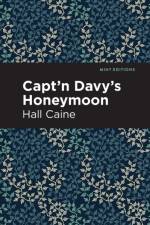
Capt¿n Davy¿s Honeymoon (1893) is a novella by British author Hall Caine. Set on the Isle of Man¿the proud British island where Caine¿s father was born¿the story begins with the separation of Capt¿n Davy from his wife Nelly after only ten days of marriage following a heated argument over money. With humorous and emotional dialogue enriched with an authentic Manx flavor, detailed portraits of land and seascapes, and a critical eye for society¿s shortcomings, this novella is a classic work of romantic comedy from one of Victorian Britain¿s most successful writers.Born into poverty, and orphaned at the age of fifteen, Davy Quiggin is taken in by the Kinvig family in Ballavolley, Isle of Man. For several years, Davy lives with Kinvig¿a farmer and local Methodist leader¿his wife, and their daughter Nelly, in relative harmony. But when Davy¿s love for Nelly is discovered by her parents, he is forced to leave. Thus begins a life at sea that will take Davy across the world to South America, where he becomes a steamboat captain, amasses a sizable fortune, and achieves for himself a life far surpassing his humble origins or his wildest dreams. Davy returns home to marry Nelly, but finds himself wrapped up with a crowd of old friends and acquaintances more than happy to indulge his tastes for drinking and gambling. As his wealth disappears, and as his marriage threatens to end before it even truly began, Davy must find a way to adjust himself to life back home¿a place and a people he thought he knew so well. Meanwhile, Nelly is forced to pick up the pieces of their relationship while navigating a community that seems more intent on gossip than it does on mutual aid. Hall Caine¿s Capt¿n Davy¿s Honeymoon investigates the limits of friendship, marriage, and society with a keen ear for the rhythm of everyday speech and a sense of what makes us human.Although he was one of the most famous and acclaimed authors of his time, Caine¿s work remains relatively unknown today. With this edition, it is hoped that Hall Caine once again receives not only the attention he deserves, but the respect and admiration his work demands.With a beautifully designed cover and professionally typeset manuscript, this edition of Hall Caine¿s Capt¿n Davy¿s Honeymoon is a classic of English literature reimagined for modern readers.
Touch Me Not (1887) is a novel by José Rizal. Published in Berlin, the novel was originally conceived as a collaborative project to be written by a group of Filipino nationalist writers living in Madrid. Disappointed in his comrades' lack of engagement, however, Rizal wrote the novel alone, blending aspects of his own life story with his critique of Spanish imperialism in the Philippines. Banned by Spanish authorities, the novel was smuggled into his home country, where it quickly galvanized Rizal's fellow nationalists in opposition to the Spanish Empire. Returning home to Laguna province after seven years in Europe, Crisóstomo Ibarra, a young mestizo man, attempts to pick up the pieces following the death of his father. Noticing some hostility from Padre Dámaso, a local curate who had long been a friend of his family, Crisóstomo soon learns that his father's death may not have been an accident after all. Focusing on his goal of building a school for the local children, Crisóstomo longs to do justice to Don Rafael Ibarra's legacy. When he goes to visit his grave, however, he is told by the groundskeeper that his father's body was moved to a local Chinese burial ground following an order by Padre Dámaso. As the story unfolds, a vast web of conspiracy involving Spanish authorities and Filipino revolutionaries threatens Crisóstomo's life while testing the limits of his loyalty to family and nation alike.Since our inception in 2020, Mint Editions has kept sustainability and innovation at the forefront of our mission. Each and every Mint Edition title gets a fresh, professionally typeset manuscript and a dazzling new cover, all while maintaining the integrity of the original book. With thousands of titles in our collection, we aim to spotlight diverse public domain works to help them find modern audiences. Mint Editions celebrates a breadth of literary works, curated from both canonical and overlooked classics from writers around the globe.
Botchan (1906) is a novel by Natsume S¿seki. Inspired by his experience as a teacher on the island of Shikoko, S¿seki composed a beloved tale of growth and moral decency that continues to be read in Japan and around the world to this day. Filled with humorous asides and heartwarming scenes, Botchan is a classic bildungsroman from one of Japan¿s most successful twentieth century writers.Ever since his childhood days in Tokyo, Botchan has experienced bouts of ¿hereditary recklessness,¿ an inability to think and act as others expect him to. Frequently injured, always in trouble, he develops a reputation in his neighborhood as a young rapscallion, a misfit at home and in school. When his mother dies unexpectedly, Botchan is raised by Kiyo, his family¿s elderly servant, who sees something in him no one else has been able to recognize. Through positive reinforcement and a focus on fostering good morals, she helps Botchan achieve a certain amount of respectability without forcing him to sacrifice his fiercely independent nature. He excels in school and finds a job as a middle school math teacher on the island of Shikoku. Thinking the days of schoolyard drama are behind him, he is surprised to discover that the antics and conflicts inherent to boyhood are rampant among his fellow teachers. Joining forces with Porcupine, he sets out to dethrone head teacher Red Shirt, who indiscriminately wields his power over colleagues and students alike. Hilarious and eminently human, Botchan is a beloved story of class, morality, and conflict from a master of Japanese fiction.With a beautifully designed cover and professionally typeset manuscript, this edition of Natsume S¿seki¿s Botchan is a classic work of Japanese literature reimagined for modern readers.
The Land that Time Forgot follows the narrative of Bowen Tyler, who is among the few who survived after their ship sank while heading for a battle during World War ¿. Accompanied by Lys La Rue, the only woman on the ship, and a loyal dog, Bowen is rescued by a British ship. However, their relief does not last long after they discover that a German spy is aboard and has been sabotaging the vessel and crew. Forced to drop their anchor at a mysterious island, the group makes their way to shore, united only by their will to survive. After finding a corpse close to the shore, the group are disheartened, but have nowhere else to go. As the group explore part of the island and make a camp, they notice the prehistoric fauna, flora, and exotic species that surround them, uncovering a great threat to their survival. While a war rages on in the world around them, this group of diverse nationalities must reconcile and work with one another in order to survive the mysterious and isolated island. Inspired by the work of Sir Arthur Conan Doyle and Jules Verne, The Land that Time Forgot by Edgar Rice Burroughs is a high adventure, pulp fiction fantasy with elements of romance. Featuring topics of evolution, war, and human nature, The Land that Time Forgot is an intriguing adventure with sequences of action, romance, and mystery. First published in 1924, this imaginative work has remained to be a fun read, and has inspired both film and comic adaptations. This edition of The Land that Time Forgot by Edgar Rice Burroughs features a new, eye-catching cover design and is printed in an easy-to-read font. With these accommodations, The Land that Time Forgot caters to a modern audience while preserving the original wonder and adventure of Edgar Rice Burroughs¿ work.
Following the events of The Land That Time Forgot, Tom Billings wrangles a crew and leads a search effort to find the missing Bowen Tyler. He¿s unknowingly pulled into the island¿s many conflicts. Bowen Tyler is still missing after being marooned on the Antarctic island of Caprona. Tom Billings plans a group expedition to find Bowen and his remaining crew. When his plane is attacked by a gang of creatures, he crashes into an unspecified area. He encounters several inhabitants, both friend and foe, while seeking guidance on his journey. With the remaining team en route, Tom must fend for himself in this fantastical world of mystical beasts.The People That Time Forgot is part of the Caspak trilogy, which centers the occupants of Caprona island. It¿s a prehistoric fantasy with elements of romance and adventure. The story is driven by the unwavering commitment of one man and his need to uncover the truth.With an eye-catching new cover, and professionally typeset manuscript, this edition of The People That Time Forgot is both modern and readable.
The son of the rajah of Chutneypore falls in love with a nautch dancer, which disturbs the political order causing a rift between the powers-that-be. It''s a love story plagued by outside interference from both family and friends. Indru is the young son of Punka, the rajah of Chutneypore. Despite his royal standing, Indru plans to marry a nautch dancer named Hollee Beebee. Indru is a high caste member and Hollee is not, making it difficult to wed. Indru takes a drastic measure to make he and Hollee are more compatible. Meanwhile, another member of the royal family resorts to lies and theft to secure his place as the rajah''s new heir. The Rajah of Chutneypore, also known as The Nautch Girl, is a classic tale of the haves and the have-nots. It''s a reminder that love always finds a way and good will always triumph over evil. Upon its initial release, the opera was based in England and performed more than 200 shows. With an eye-catching new cover, and professionally typeset manuscript, this edition of The Rajah of Chutneypore is both modern and readable.
Lyrics of Sunshine and Shadow (1905) is a collection of poems by African American author Paul Laurence Dunbar. Published while Dunbar was suffering from tuberculosis, alcoholism, and depression, Lyrics of Sunshine and Shadow builds on his reputation as an artist with a powerful vision of faith and perseverance who sought to capture and examine the diversity of the African American experience. In "The Place Where the Rainbow Ends," Dunbar, perhaps reflecting on his proximity to death, provides a simple song with a cautionary, utopian vision of hope and happiness: "Oh, many have sought it, / And all would have bought it, / With the blood we so recklessly spend; / But none has uncovered, / The gold, nor discovered / The spot at the rainbow's end." Meditative and bittersweet, Dunbar rejects wealth and power as a means of achieving fulfillment, looking instead to establish an inner peace for himself that he might "find without motion, / The place where the rainbow ends," a place "[w]here care shall be quiet, / And love shall run riot, / And [he] shall find wealth in [his] friends." Whether a vision of heaven or of the possibility of peace on earth, this poem finds echoes across Dunbar's penultimate volume. Nearing death at such a young age, he prepares himself to lose the life he had fought so hard to achieve, a life devoted to reaching the hearts and minds of others. As we all must, he ends on a question, opening himself to the unknown without losing hope for the possibility of peace and reunion to come: "Where shall we meet, who knows, who knows?" In the reader, his song carries on. With a beautifully designed cover and professionally typeset manuscript, this edition of Paul Laurence Dunbar's Lyrics of Sunshine and Shadow is a classic of African American literature reimagined for modern readers.
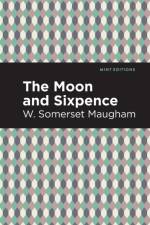
The Moon and Sixpence (1919) is a novel by W. Somerset Maugham. Inspired by the life of French painter Paul Gauguin, Maugham set out to capture the disconnect between an artist's desire to create and their obligations to their loved ones and society. Praised for its multifaceted portrayal of tortured genius and wasted talent, The Moon and Sixpence explores the distance between expectation and desire in a man whose decisions, however, hastily made, are done with the loftiest of intentions. Some people live their whole lives without daring to dream, going from moment to moment in a haze of dreary reality, following expectation from birth to grave. Strickland seems to be one of these people-singularly dedicated to his work as a London stockbroker, uninterested in the arts, married as though through obligation alone. One day, he unexpectedly leaves his wife and children to pursue a career as a painter in Paris, completely and irrevocably severing himself from the professional and familial ties he sent his whole life building. Somehow, he proves incredibly adept, but each brilliant work of art is made at the expense of those he leaves behind. The Moon and Sixpence is a tale of creativity, disappointment, and struggle by a master stylist with a keen sense of the complications inherent to human nature. With a beautifully designed cover and professionally typeset manuscript, this edition of W. Somerset Maugham's The Moon and Sixpence is a classic work of British literature reimagined for modern readers.
Harlem Shadows (1922) is a poetry collection by Claude McKay. Published at the height of the Harlem Renaissance, Harlem Shadows earned praise from legendary poet and political activist Max Eastman for its depictions of urban life and the technical mastery of its author. As a committed leftist, McKay¿who grew up in Jamaicäcaptures the life of Harlem from a realist¿s point of view, lamenting the poverty of its African American community while celebrating their resilience and cultural achievement. In ¿The White City,¿ McKay observes New York, its ¿poles and spires and towers vapor-kissed¿ and ¿fortressed port through which the great ships pass.¿ Filled him with a hatred of the inhuman scene of industry and power, forced to ¿muse [his] life-long hate,¿ he observes the transformative quality of focused anger: ¿My being would be a skeleton, a shell, / If this dark Passion that fills my every mood, / And makes my heaven in the white world¿s hell, / Did not forever feed me vital blood.¿ Rather than fall into despair, he channels his hatred into a revolutionary spirit, allowing him to stand tall within ¿the mighty city.¿ In ¿The Tropics in New York,¿ he walks past a window filled with ¿Bananas ripe and green, and ginger-root, / Cocoa in pods and alligator pears,¿ a feast of fresh tropical fruit that brings him back, however briefly, to his island home of Jamaica. Recording his nostalgic response, McKay captures his personal experience as an immigrant in America: ¿My eyes grew dim, and I could no more gaze; / A wave of longing through my body swept, / And, hungry for the old, familiar ways, / I turned aside and bowed my head and wept.¿ With a beautifully designed cover and professionally typeset manuscript, this edition of Claude McKay¿s Harlem Shadows is a classic of Jamaican literature reimagined for modern readers.
A Night in a Moorish Harem (1896) is a Victorian erotic novella. Published under the pseudonym ¿Lord George Herbert,¿ the novella has proved both popular and controversial as the subject of several obscenity trials. Noted for its orientalist tropes, the novella remains relevant to scholars of postcolonial literature and Victorian culture. ¿My first duty was to kiss the fair hands which had aided me, and then I explained the accident which had brought me among them and the plan I had formed for escape before dawn. I then gave my name and rank. While doing this I had an opportunity to observe the ladies; there were nine of them and any one of them would have been remarked for her beauty. Each one of them differed from all the others in the style of her charms: some were large and some were small; some were slender and some plump, some blonde and some brunette, but all were bewitchingly beautiful.¿ Tired of life onboard, a young midshipman decides to spend his afternoon off in a small boat attached to the side of the naval vessel he serves. Comforted by the gentle waves and hot Mediterranean sun, he falls into a deep sleep. When he wakes, he finds himself drifting close to the Moroccan shore and is unable to spot his ship along the haze-strewn horizon. As he prepares himself to be sold into slavery¿or worse¿he spots a group of beautiful women watching him from the rocks. Helped ashore, the midshipman is brought to the safety of their harem, where he spends one night of ecstasy exploring their nimble bodies and learning the stories of their lives. With a beautifully designed cover and professionally typeset manuscript, this edition of A Night in a Moorish Harem is a classic work of Victorian erotica reimagined for modern readers.
Scenes of Bohemian Life (1851) is a novel by Henri Murger. Written at the beginning of his career as a popular French poet and novelist, Scenes of Bohemian Life is composed of vignettes inspired by the author¿s experience as a starving artist in Paris¿ Latin Quarter. Adapted countless times for theater and film, Murger¿s novel served as inspiration for Puccini¿s opera La bohème (1896) and for the hit musical Rent (1996). ¿The Bohemians know everything and go everywhere, according as they have patent leather pumps or burst boots. They are to be met one day leaning against the mantel-shelf in a fashionable drawing room, and the next seated in the arbor of some suburban dancing place. They cannot take ten steps on the Boulevard without meeting a friend, and thirty, no matter where, without encountering a creditor.¿ Distinguished by their sense of fashion and impoverished lifestyle, Paris¿ Bohemians are part of a historical avant-garde, a cultural phenomenon found in any artistic society. Living day to day, these artists and radicals commune with the world as it is, taking nothing and no one for granted. In Scenes of Bohemian Life, four friends¿Rodolphe, Marcel, Colline, and Schaunard¿avoid landlords and old lovers on the streets of the Latin Quarter, a district known for its countercultural figures. Hilarious and preeminently human, Scenes of Bohemian Life is a masterpiece of nineteenth century fiction from a writer whose lifestyle informed much of his work. With a beautifully designed cover and professionally typeset manuscript, this edition of Henri Burger¿s Scenes of Bohemian Life is a classic of French literature reimagined for modern readers.
Clouds and Sunshine (1920) is a collection of poems by Sarah Lee Brown Fleming. Published during the Harlem Renaissance, Clouds and Sunshine is a powerful work of poetry exploring themes of faith, racial identity, loss, and love in twentieth century America. Recognized as a leading advocate for the advancement of Black girls and women throughout her life, Fleming is a writer whose voice never falters from the task at hand: telling the story of her people. Separated into three sections, Clouds and Sunshine shows Flemings prowess as a lyric poet of the Romantic persuasion, a dialect poet in the tradition of Paul Laurence Dunbar, and a groundbreaking political writer who observed the experiences of Black Americans while recording and examining her own. In ¿Tuskegee,¿ she offers an ode to the iconic institution founded by Booker T. Washington in Alabama: ¿On thy consecrated ground / Is carved a wondrous story, / Out of chaos, Washington / Raised this place to glory.¿ In ¿The Black Man¿s Hope,¿ located in the section titled ¿Race Poems,¿ Fleming condemns the politics of the United States, which promises so much to white Americans while betraying time and again a people it never meant to recognize as citizens: ¿I hear the talk of the white man¿s hope / In the ring and at the poll, / But never a word of the black man¿s hope / Do I hear as time doth roll. // Bowed with the weight which slavery left / Upon his chattled frame, / No star of hope comes into view / The weight is still the same.¿ In two brief stanzas, Fleming effectively condemns the emptiness offered with every election cycle. Far from despairing, she makes a powerful case for resistance while telling a terrible truth: prejudice is a manmade thing, and only targeted action can undo it. With a beautifully designed cover and professionally typeset manuscript, this edition of Sara Lee Brown Fleming¿s Clouds and Sunshine is a classic work of African American literature reimagined for modern readers.
Hope¿s Highway: A Novel (1918) is a historical novel by Sarah Lee Brown Fleming. Published during the Harlem Renaissance, Fleming¿s novel is a powerful work of fiction exploring the lives of formerly enslaved Black people living in the South during Reconstruction. Recognized as a leading advocate for the advancement of Black girls and women throughout her life, Fleming is a writer whose voice never falters from the task at hand: telling the story of her people. In the aftermath of the Civil War, the promise of the Emancipation Proclamation is fulfilled to with varying results throughout the South. On John Vance¿s plantation, many of his former slaves have remained to work in their new capacity as wage laborers, fearful of change and confident in the relative kindness of their former master. Among them, Enoch receives financial support and an education, eventually rising to the role of first Black teacher in the Reconstruction South. When John Vance dies, his land and belongings are divided among his former slaves, including the influential Institute, now left for Enoch to run. As much as their situation promises some hope for the future, the specter of enslavement and prejudice lurks around every corner, forcing them to use caution when dealing with those who would sooner have them back in chains than treat them as fellow humans. Hope¿s Highway: A Novel is a story of tragedy and redemption set in the South during the period of Reconstruction, a time of immense change and even greater promise in a nation only just emerged from the shadows of war. With a beautifully designed cover and professionally typeset manuscript, this edition of Sara Lee Brown Fleming¿s Hope¿s Highway: A Novel is a classic work of African American literature reimagined for modern readers.
For better or worse, the Comstock family is tied to the Limberlost Swamp. Though it provides them food and shelter, the swamp will forever be connected to the death of Katharine¿s husband, who drowned in quicksand while his wife was pregnant. Now a teenager, Elnora yearns for a normal life. A Girl of the Limberlost is a novel by Gene Stratton-Porter.
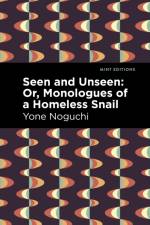
Seen and Unseen: Or, Monologues of a Homeless Snail (1897) is a collection of poems by Yone Noguchi. Written only three years after his arrival in San Francisco, these poems capture the emotions of a young man far from home. Fluent in English and adept with the open, flowing style of free verse, Noguchi remains unique in his vision of earthly life.Noguchi¿s poems are songs of light and shadow, in tune with animals, seasons, spirits, and complex emotions. His words are leaves, his thoughts are curtains knocking ¿with their shadowy hands¿ upon his door. His ¿[p]oetry begins with the tireless songs of the cricket, on the lean gray haired hill, in sober-faced evening. / And the next page is Stillness.¿ Alone in a foreign country, he finds solace in the strange music of nature, hope in the words he can make of it. He envisions himself asleep in the depths of a canyon, writing letters that will never arrive, longing for the crickets to sing. ¿The homeless snail climbing up the pillow, stares upon the silvered star-tears on my eyes! [¿] Oh, I am alone! Who knows my to-night¿s feeling!¿ He asks, the homeless snail asks, and his reader longs to answer.With a beautifully designed cover and professionally typeset manuscript, this edition of Yone Noguchi¿s Seen and Unseen: Or, Monologues of a Homeless Snail is a classic of Japanese American literature reimagined for modern readers.
The Secret Rose (1897) is a collection of poems by W.B. Yeats. Written in response to demands that the poet write ¿a really national poem or romance,¿ The Secret Rose exhibits Yeats¿ devotion to personal mythology and occult orders, and is a brilliant display of symbolism by one of Irish literature¿s premier poets.¿To the Secret Rose¿ opens the collection. The poem, inspired by Yeats¿ membership in the Rosicrucian Hermetic Order of the Golden Dawn, uses symbolism to evoke religion, myth, and history. The ¿Far off, most secret, and inviolate Rose¿ is an image of utopian longing, an ideal moment the poet awaits, envisions, and longs for. ¿The Crucifixion of the Outcast¿ is a parable in which a wandering bard is led by Christian brothers to his execution. As his cross is set in the earth, he offers a portion of his last meal to the beggars who have gathered to watch. When he is nailed to the cross, however, he finds that mercy without humility is a seed that cannot grow. In ¿The Curse of the Fires and of the Shadows,¿ Puritan soldiers storm an abbey and attack a group of friars. Before he dies, the abbot raises the cross upon the altar, and promises divine vengeance. Immediately afterward, the soldiers are told that two messengers have escaped on horseback to warn and gather the people for a counterattack. The Secret Rose explores themes of faith and persecution while illuminating the proximity of life and myth for a poet whose subject is the soul.With a beautifully designed cover and professionally typeset manuscript, this edition of W.B. Yeats¿s The Secret Rose is a classic of Irish literature reimagined for modern readers.
When the famed 18th century astrologer, John Partridge, publicly discredited the Christian church, Jonathan Swift developed an immense distaste for the man. Feeling insulted and malicious, Swift decided to celebrate his favorite holiday, All Fools Day, more commonly known as April Fools, while also appeasing his self-appointed feud with Partridge. Under the disguise of a pseudonym, Swift published The Bickerstaff-Partridge Papers as a series of three letters. The first letter, titled Predictions for the Year 1708 started with a criticism of the cultural impact astrology had on their society. Eventually, the narrative shifts to list predictions including political uprisings, the birth of children, weather patterns, battle outcomes, and most importantly, the death of notable figures, including John Partridge. To accompany this letter, Swift next published The Accomplishments of the First of Mr. Bickerstaff¿s Predictions, which was written from the perspective of a government employee who supported and confirmed the validity of Bickerstaff¿s predictions. This section also included an elegy for John Partridge, furthering the claim that the man was dead. These papers gained immense popularity, and convinced the public that these predictions were legitimate. This caused quite the disturbance for Partridge, who was often waken by the sound of people crying outside his home, mourning his death. After Partridge published a paper to deny the rumors that he was dead, Swift responded with the final part of The Bickerstaff-Partridge Papers, pondering the philosophical definition of death to convince his audience that Partridge was dead once more. Though it began as a prank, Swift¿s The Bickerstaff-Partridge Papers transformed into a life-altering work that employed careful prose and satire so supreme that it went unnoticed by many. Following its popularity in 1708 and 1709, The Bickerstaff-Partridge Papers further inspired celebrated authors such as Richard Steele, Benjamin Franklin, and H.P. Lovecraft. This edition of The Bickerstaff-Partridge Papers by Jonathan Swift features a new, eye-catching cover design and is printed in a readable font, making it both accessible and modern.
Wrestling with the disease of alcoholism for most of his life, Jack London tells all in his autobiography John Barleycorn. Beginning with a discussion of the prohibition movement and its effects, London explores the ways that alcohol affects daily life in the Victorian era. Because there were not many forms of affordable entertainment or reliable communication, bars were the perfect spot for social activity. People were able to sit and drink, enjoying themselves while hearing the gossip and news from the other townspeople. However, this social practice can quickly deteriorate into a disease that infects every aspect of life, damaging those at home, threatening financial security, and even risking their safety. From personal experience, London explains what being an alcoholic is like with stories of humor and shame delivered with sharp accuracy. While doing so, John Barleycorn includes tales of London¿s interesting and numerous careers, such his time as a sailor, oyster pirate, and gold miner. Set to the vivid backdrop of the California Bay Area, he discloses his wildest stories and paints a portrait of his stomping grounds. Featuring themes of masculinity and friendship, John Barleycorn possesses a duality of lauding the social power of alcohol while warning against falling for its addictive qualities. The fine line between enjoying a drink and struggling alcoholism is characterized in clear prose and demonstrative narratives as London both brags about and laments his personal experiences with the substance. Employing thoughtful, honest, and exceptional prose, Jack London¿s John Barleycorn made a debut as one of the first intelligent and empathetic narratives about alcoholism. With both emotional and historical significance, London explores the unfortunately common disease while also explaining the cultural impact of alcohol in the 19th century, bleeding even to modern times. Both original and profound, John Barleycorn has earned a reputation for leaving audiences stunned by its emotional and frank narrative. This edition of Jack London¿s John Barleycorn features a new, eye-catching cover design and a readable, stylish font, crafting a perfect and approachable experience for the modern reader.
Abonner på vårt nyhetsbrev og få rabatter og inspirasjon til din neste leseopplevelse.
Ved å abonnere godtar du vår personvernerklæring.