





Gjør som tusenvis av andre bokelskere
Abonner på vårt nyhetsbrev og få rabatter og inspirasjon til din neste leseopplevelse.
Ved å abonnere godtar du vår personvernerklæring.Du kan når som helst melde deg av våre nyhetsbrev.

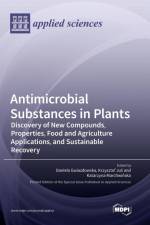
Microbial contamination of agriculture and food commodities may cause significant losses, with economic, social and environmental consequences. Therefore, the search for new, promising substances that demonstrate antagonism towards different microorganisms has been observed in recent years. Different plants, as well as differentiated methods of obtaining of biological compounds, are the research subject. Moreover, current trends focus on the sustainable recovery of antimicrobial substances from waste materials. The contributed articles present original research with a focus on:The biological activity of plant-derived extracts and oils: the research is concentrated on the discovery of new sufficient antimicrobial substances, characterized by broad biological properties including antibacterial, antifungal, antimycotoxigenic and cytotoxic activity.Novel extraction techniques to obtain plant-derived extracts such as supercritical fluid extraction (SFE), which has gained acceptance for the extraction of valuable substances due to its environmentally friendly character, or ultrasound-assisted extraction (UAE). The extraction techniques of the plant-derived bioactive compounds have a significant impact on the quality of the extracts and their chemical composition
The arterial pole is one of the most complex parts of the heart both in development and disease. It involves the collaboration and orchestration of contributions from the first and second heart fields as well as the neural crest. The precursor cells differentiate into endocardial cushions and putative cardiac valves, the myocardium, and epicardium of the heart, but also into the different layers of the main arterial vessels. These include not only the aorta and the pulmonary trunk but also the pulmonary and coronary arteries, and during development, the arterial duct. Many transcriptional and signaling networks act in timely concert to acquire the proper asymmetric development and function and pressure and flow dynamics. This is not only a human or even mammalian 'enterprise,' but is also taking place in so-called ancestral forms from fish to reptiles, including birds. In humans, it is small wonder that many clinical syndromes may arise when something in this complexity is amiss.This Special Issue of JCDD contains contributions focussed on the heart fields, congenital cardiac malformations and associated syndromes, with special emphasis on the cardiac outflow tract.The Issue is devoted to Prof. Dr. Adriana Gittenberger-de Groot, who dedicated her extensive career to research on cardiovascular development.
Abonner på vårt nyhetsbrev og få rabatter og inspirasjon til din neste leseopplevelse.
Ved å abonnere godtar du vår personvernerklæring.