











Gjør som tusenvis av andre bokelskere
Abonner på vårt nyhetsbrev og få rabatter og inspirasjon til din neste leseopplevelse.
Ved å abonnere godtar du vår personvernerklæring.Du kan når som helst melde deg av våre nyhetsbrev.

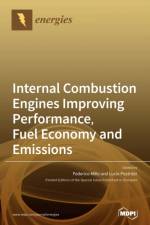
This Special Issue, consisting of 14 papers, presents the latest findings concerning both numerical and experimental investigations. Their aim is to achieve a reduction in pollutant emissions, as well as an improvement in fuel economy and performance, for internal combustion engines. This will provide readers with a comprehensive, unbiased, and scientifically sound overview of the most recent research and technological developments in this field. More specific topics include: 3D CFD detailed analysis of the fuel injection, combustion and exhaust aftertreatments processes, 1D and 0D, semi-empirical, neural network-based control-oriented models, experimental analysis and the optimization of both conventional and innovative combustion processes.
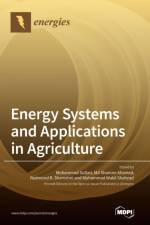
Agriculture, as a production-oriented sector, entails energy as a substantial input by which global food security is ensured. Agricultural systems require energy for farm machinery and equipment; lighting; heating, ventilation, and air-conditioning (HVAC); food processing and preservation; fertilizer and chemical production; and water/wastewater treatment/application. Increasing agriculture mechanization mitigates conventional energy reserves that escalate greenhouse gas emissions and climate change.This book aims to offer energy-efficient and/or environment-friendly ways for the agriculture sector to achieve the 2030 UN Sustainable Development Goals. The book provides cutting-edge research on next-generation agricultural technologies and applications to develop a sustainable solution for modern greenhouses, temperature/humidity control in agriculture, farm storage and drying, crop water requirements, agricultural built environment, and wastewater treatment.
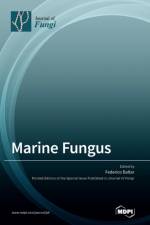
Most of the available studies on marine fungi are based on the isolation and identification of fungi from different surfaces (e.g., submerged wood, sediments, macrophytes), mostly in coastal benthic environments. However, recent evidence suggests that fungi are also present in the oceanic water column, most likely mainly associated to particles, with the genomic potential to significantly contribute to marine biogeochemical cycles. Still, we lack even basic information on the ecology of the oceanic mycobiome, precluding us from determining the ecological role of this enigmatic kingdom in our oceans. The aim of this book and Special Issue was to focus on the ecology of marine fungi. Topics include, fungal abundance, distribution, activity, and phylogenetic and/or functional diversity in coastal to open ocean environments, including seawater column and sediments, derived both from laboratory and field studies.
Abonner på vårt nyhetsbrev og få rabatter og inspirasjon til din neste leseopplevelse.
Ved å abonnere godtar du vår personvernerklæring.