



























Gjør som tusenvis av andre bokelskere
Abonner på vårt nyhetsbrev og få rabatter og inspirasjon til din neste leseopplevelse.
Ved å abonnere godtar du vår personvernerklæring.Du kan når som helst melde deg av våre nyhetsbrev.

At present, the impact of distributed energy resources in the operation of power and energy systems is unquestionable at the distribution level, but also at the whole power system management level. Increased flexibility is required to accommodate intermittent distributed generation and electric vehicle charging. Demand response has already been proven to have a great potential to contribute to an increased system efficiency while bringing additional benefits, especially to the consumers. Distributed storage is also promising, e.g., when jointly used with the currently increasing use of photovoltaic panels.This book addresses the management of distributed energy resources. The focus includes methods and techniques to achieve an optimized operation, to aggregate the resources, namely, by virtual power players, and to remunerate them. The integration of distributed resources in electricity markets is also addressed as a main drive for their efficient use.
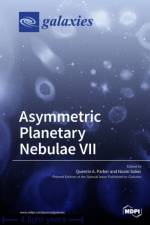
This book contains the best and most up-to-date contributions in the field of late stage stellar evolution, as presented at the APNVII conference in Hong Kong in December 2017. A total of 60 scientists from 20 countries gathered to present, listen, interact and discuss the most current issues and problems in planetary nebulae and related objects research. The emphasis of this influential series of meetings, which was the seventh occasion over the last 20 years, has always been on the hypothesized and observed physical shaping mechanisms of the ejected nebulae that have such wonderful and intriguing forms. This special Galaxies conference issue of fully refereed contributions brings together a representative compilation of the meeting presentations in paper form. It captures the current “snap shot” status of this research field in some real sense. Such proceedings are well received and can be used as a reference material by both participants and all others working in the field for years to come.
Molecular magnets show many properties not met in conventional metallic magnetic materials, i.e. low density, transparency to electromagnetic radiation, sensitivity to external stimuli such as light, pressure, temperature, chemical modification or magnetic/electric fields, and others. They can serve as “functional” materials in sensors of different types or be applied in high-density magnetic storage or nanoscale devices. Research into molecule-based materials became more intense at the end of the 20th century and is now an important branch of modern science. The articles in this Special Issue, written by physicists and chemists, reflect the current work on molecular magnets being carried out in several research centers. Theoretical papers in the issue concern the influence of spin anisotropy in the low dimensional lattice of the resulting type of magnet, as well as thermodynamics and magnetic excitations in spin trimers. The impact of external pressure on structural and magnetic properties and its underlying mechanisms is described using the example of Prussian blue analogue data. The other functionality discussed is the magnetocaloric effect, investigated in coordination polymers and high spin clusters. In this issue, new molecular magnets are presented: (i) ferromagnetic high-spin [Mn6] single-molecule magnets, (ii) solvatomagnetic compounds changing their structure and magnetism dependent on water content, and (iii) a family of purely organic magnetic materials. Finally, an advanced calorimetric study of anisotropy in magnetic molecular superconductors is reviewed.
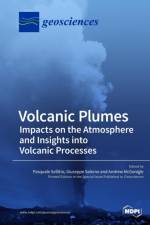
Volcanoes release plumes of gas and ash to the atmosphere during episodes of passive and explosive behavior. These ejecta have important implications for the chemistry and composition of the troposphere and stratosphere, with the capacity to alter Earth's radiation budget and climate system over a range of temporal and spatial scales. Volcanogenic sulphur dioxide reacts to form sulphate aerosols, which increase global albedo, e.g., by reducing surface temperatures, in addition to perturbing the formation processes and optical properties of clouds. Released halogen species can also deplete stratospheric and tropospheric ozone. Volcanic degassing, furthermore, played a key role in the formation of Earth’s atmosphere, and volcanic plumes can affect air quality, pose hazards to aviation and human health, as well as damage ecosystems. The chemical compositions and emission rates of volcanic plumes are also monitored via a range of direct-sampling and remote-sensing instrumentation, in order to gain insights into subterranean processes, in the respect of the magmatic bodies these volatiles exsolve from. Given the significant role these gases play in driving volcanic activity, e.g., via pressurisation, the study of volcanic plumes is proving to be an increasingly fruitful means of improving our understanding of volcanic systems, potentially in concert with observations from geophysics and contributions from fluid dynamical modelling of conduit dynamics.This Special Issue is aimed at presenting the state of the art of the multidisciplinary science concerning all aspects of volcanic plumes, of relevance to the volcanology, climatology, atmospheric science, and remote sensing communities.
Abonner på vårt nyhetsbrev og få rabatter og inspirasjon til din neste leseopplevelse.
Ved å abonnere godtar du vår personvernerklæring.