












Gjør som tusenvis av andre bokelskere
Abonner på vårt nyhetsbrev og få rabatter og inspirasjon til din neste leseopplevelse.
Ved å abonnere godtar du vår personvernerklæring.Du kan når som helst melde deg av våre nyhetsbrev.

This Special Issue of Sustainability reports on recent research aiming to make the freight transport sector more sustainable. The sector faces significant challenges in different domains of sustainability, including the reduction of greenhouse gas emissions and the management of health and safety impacts. In particular, the intention to decarbonise the sector’s activities has led to a strong increase in research efforts—this is also the main focus of the Special Issue. Sustainable freight transport operations represent a significant challenge with multiple technical, operational, and political aspects. The design, testing, and implementation of interventions require multi-disciplinary, multi-country research. Promising interventions are not limited to introducing new transport technologies, but also include changes in framework conditions for transport, in terms of production and logistics processes. Due to the uncertainty of impacts, the number of stakeholders, and the difficulty of optimizing across actors, understanding the impacts of these measures is not a trivial problem. Therefore, research is not only needed on the design and evaluation of individual interventions, but also on the approach of their joint deployment through a concerted public/private programme. This Special Issue addresses both dimensions, in two distinct groups of papers—the programming of interventions and the individual sustainability measures themselves.
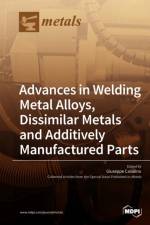
Welding technology has been taken for granted as a mature and established technology for too long. However, many new welding technologies have been included among the alternatives to joining materials. They come both from the areas of fusion and solid-state welding. Moreover, a recent approach has offered one more alternative. This is hybrid welding, which couples two or more welding sources in a cooperative or synergic welding mode. Welding engineers and scientists have the task to understand which is the best technology for a specific application. This task requires deep knowledge and great intelligence to tackle the challenge of producing light and smart structures and products.In this book, a glimpse of recent developments in metal alloy welding is presented. Laser, friction, and arc welding are the main protagonists of the papers that are included. Processes, materials, and tools are described and studied along with investigation procedures and numerical simulations.This book will make you aware of most of the subjects discussed in the scientific community and new potentialities of welding as a leading technology in manufacturing.I hope you enjoy reading this Special Issue, "Advances in Welding Metal Alloys, Dissimilar Metals and Additively Manufactured Parts".
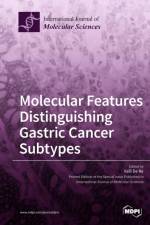
Gastric cancer is a leading cause of cancer deaths, but analysis of its molecular and clinical characteristics has been complicated by histological and aetiological heterogeneity. Stomach cancers are 90% adenocarcinoma; lymphoma, carcinoid, and stromal tumours may occur. Adenocarcinoma can be subdivided into histological Lauren and the World Health Organization (WHO) classifications, but this information has not led to the development of histologic subtype-specific treatment options. One way to potentially improve treatment for gastric cancers is to better understand the pathogenesis of this disease, the contribution of Helicobacter pylori infection, and host immune response to lead to the development of integrated histological and molecular classification schemes for gastric cancer. The hope is that these studies may facilitate the development of clinical trials to explore therapies in defined sets of patients, ultimately improving survival from this deadly disease.
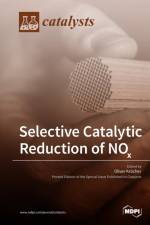
The most efficient process to reduce NOx emissions from lean exhaust gases, selective catalytic reduction (SCR) with ammonia, has undergone tremendous development over the past decades. Originally only applied in stationary power plants and industrial installations, SCR systems are now installed in millions of mobile diesel engines, ranging from off-road machineries, to heavy-duty and light-duty trucks and passenger cars, to locomotives and ships. All of these applications involve specific challenges due to tighter emission limits, new internal combustion engine technologies, or alternative fuels.Three review articles and 14 research articles in this book describe recent results and research trends of various aspects of the SCR process. Reaction engineering aspects, such as the proper dosage of ammonia or urea, respectively, are as important as further developments of the different SCR catalysts, by deepening the understanding of their functionality or by systematic improvements of their properties, such as low-temperature activity, selectivity, or poisoning-resistance. Another covered aspect is cost reduction through the use of cheaper base materials for the production is active and stable SCR catalysts. Finally, research efforts are reported to develop SCR processes with different reducing agents, which would open doors to new applications in the future. The range of topics addressed in this book will stimulate the reader’s interest as well as provide a valuable source of information for researchers in academia and industry.
Abonner på vårt nyhetsbrev og få rabatter og inspirasjon til din neste leseopplevelse.
Ved å abonnere godtar du vår personvernerklæring.