






Gjør som tusenvis av andre bokelskere
Abonner på vårt nyhetsbrev og få rabatter og inspirasjon til din neste leseopplevelse.
Ved å abonnere godtar du vår personvernerklæring.Du kan når som helst melde deg av våre nyhetsbrev.

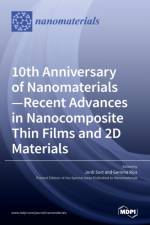
This monography corresponds to a collection of articles celebrating the 10th anniversary of the Nanomaterials journal, in the form of a Special Issue in the Section "Nanocomposite Thin Films and 2D Materials" (ISSN 2079-4991; CODEN: NANOKO) in 2020.The set of papers is the response by the Nanomaterials journal community, submitting either their recent original work or up-to-date reviews to this Special Issue. The broad scope of this Special Issue adequately reflects the diversity and inclusiveness of the research covered by the MDPI journal Nanomaterials and provides an overview of many the topics covered by our discipline.
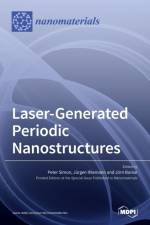
This book is the printed edition of the Special Issue Published in Nanomaterials. The book provides an overview on current international research activities in the field of laser-generated periodic surface micro- and nanostructures. It covers fundamental and applied aspects and collects contributions of renowned scientists in the fields of laser processing, materials science, physics, chemistry, and engineering in order to foster the current knowledge and present new ideas for future applications and new technologies.
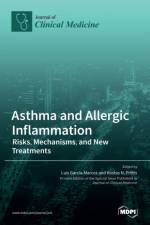
Asthma is a multifaceted and puzzling disease. In the present book, well-known scholars offer their expert opinions and revise aspects of our current knowledge of this disease. Using new data (available in the upcoming Global Asthma Network study) on the epidemiology of asthma to explore the everlasting ''chicken-or-egg'' conundrum, the authors present clear information on topics such as new biological treatments, new approaches to inhalation combination therapy or sublingual immunotherapy, and present an in-depth exploration of old and new risk factors related to the novel epidemics of non-communicable diseases such as obesity. Regarding the ''chicken-or-egg'' conundrum, the book offers some information on asthma inception and how this could relate to early lung development. Both editors are grateful for the time and effort that the authors have put into this project, and hope that this book will help healthcare providers to gain a better understanding of this complex disease.
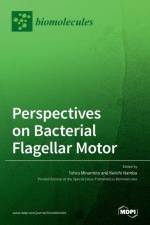
The bacterial flagellum is a supramolecular motility machinery consisting of the basal body acting as a rotary motor, the hook as a universal joint and the filament as a helical propeller. The bacterial flagellar motor composed of a rotor ring and a dozen stators is powered by an electrochemical-potential difference of specific ions across the cytoplasmic membrane and rotates in either the counterclockwise (CCW) or clockwise (CW) direction. A sensory signal transduction pathway regulates the switching between the CCW and CW states of the motor in response to environmental stimuli, allowing bacterial cells to migrate more desirable environments for their survival. The core structure of the bacterial flagellum is conserved among bacterial species. However, recent structural analyses of intact flagellar structures derived from various bacterial species by electron cryotomography and subtomogram averaging have shown that novel and divergent structures surround the core structure, suggesting that the flagellar motors have adapted to function in various environments of the habitat of bacteria. This Special Issue of Biomolecules covers recent advances in our understanding of and perspectives on the flagellar motor derived from different bacterial species.
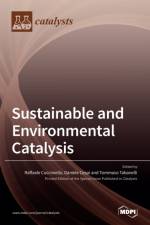
Over the last few decades, an increasing amount of interest from academia and industry has been devoted to the application of the 12 Principles of the green chemistry in order to pursue the Sustainable Development Goals (SDG). They are based on the fundamental idea of guiding research and innovation toward more environmentally-friendly practices and solutions. This book, entitled Sustainable and Environmental Catalysis, collects original research papers, reviews, short communications, and commentaries reflecting the state-of-the-art and future applications in this field, with particular emphasis on the adoption of green chemistry principles at both a laboratory and industrial scale.
Abonner på vårt nyhetsbrev og få rabatter og inspirasjon til din neste leseopplevelse.
Ved å abonnere godtar du vår personvernerklæring.