























Gjør som tusenvis av andre bokelskere
Abonner på vårt nyhetsbrev og få rabatter og inspirasjon til din neste leseopplevelse.
Ved å abonnere godtar du vår personvernerklæring.Du kan når som helst melde deg av våre nyhetsbrev.

This Book serves to highlight the mechanisms related to the low intestinal drug absorption, the strategies to overcome the obstacles or intestinal drug absorption, and in situ, in vitro, and in silico methodologies to predict to intestinal drug absorption.This Book presents a series of drug absorption studies and related technologies that predict intestinal permeation of drugs that govern the pharmacokinetic features of therapeutic drugs. It also contains the mechanistic understanding regarding the first-pass metabolism and intestinal efflux that modulate the pharmacokinetics of drug and suggest the formulation strategies to enhance the bioavailability of investigated drugs.
This book serves to highlight the pharmacokinetics/drug-drug interactions and mechanistic understanding in relation to the drug-metabolizing enzymes and drug transporters.This book presents a series of drug metabolism and transport mechanisms that govern the pharmacokinetic features of therapeutic drugs as well as natural herbal medicines. It also covers the pharmacokinetic interactions caused by inhibiting or inducing the metabolic or transport activities under disease states or the coadministration of potential inhibitors. It also deals with microenvironmental pharmacokinetic profiles as well as population pharmacokinetics, which gives new insights regarding the pharmacokinetic features with regard to drug metabolism and transporters.
Musculoskeletal disorders are a serious burden for patients and modern society. In Europe alone, 100,000,000 individuals suffer from musculoskeletal disorders and 40,000,000 affected workers cause losses due to work absence and a productivity loss of EUR 12 billion per year. Worldwide, musculoskeletal disorders are the second most common cause of pain and disability. Adequate diagnosis and early initiation of treatment are key elements in the care for patients suffering from musculoskeletal disorders, yet, for many musculoskeletal disorders, diagnostic tests lack appropriate accuracy. Treatment of musculoskeletal disorders is challenging as the mechanisms causing the complaints and mechanisms of action for the available treatment options are largely unknown. Moreover, these mechanisms and effectiveness might depend on specific patients'' characteristics and call for personalized strategies. This Special Issue invited researchers in the field to contribute to the state of the art in the diagnosis and treatment of musculoskeletal disorders. As many different healthcare professionals are involved in the diagnosis and treatment of musculoskeletal disorders, the Special Issue published high-quality studies from different areas of healthcare. Studies reporting on original research (e.g., randomized controlled trials, cohort studies), but also systematic literature reviews and meta-analyses within the scope of the Special Issue were considered. Given recent debates around the effectiveness of surgical interventions for musculoskeletal disorders and concomitant risks for adverse side-effects, intervention studies on non-surgical treatment options were prioritized.
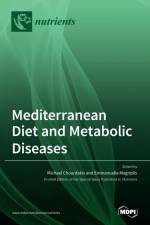
Dear Colleagues,There is increasing interest regarding the protective effect of dietary patterns on a series of metabolic diseases as compared to specific food items and nutrients, since it is well accepted that foods act synergistically. In recent years, the Mediterranean diet (MD) has gained popularity as one such dietary pattern, demonstrated to deliver many benefits according to a variety of different studies (cohort, RCT, etc.), adding to its legacy.The intention of this Special Issue is to stimulate sharing of additional clues that may further develop our understanding of the relationship between the Mediterranean diet and metabolic diseases. Another aim is to clarify potential differences in the benefits observed by different MD patterns. Moreover, as more info becomes available on the effect of MD patterns in the microbiome but also in the area of proteomics and epigenetics, relevant mechanisms and involved key mediators still need to be identified in order to provide further clarity in the description of the underlying mechanisms and the potential health outcomes occurring in response to adhering to MD. You are cordially invited to submit proposals for manuscripts that bring new elements into this interesting and promising topic.We invite clinicians and researchers to submit relevant scientific work from epidemiological or clinical studies, either original articles or reviews, to this Special Issue of Nutrients entitled "Mediterranean Diet and Metabolic Diseases".
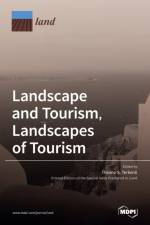
Landscape is central to tourism. It is key to the development, marketing/promotion, and consumption of tourism destinations, to triggering and sustaining tourism markets, and to enticing tourist dreams, fantasies, and behaviors. From ''sight-seeing'' practices-at the basis of all tourism activities-landscape figures prominently all the way to the overall spatial planning and management of a destination for tourism development.The intertwined relationship between tourism and landscape comes with a series of costs and benefits, in the context of tourism landscapes. Landscapes of tourism reflect and stage recreational trends, multifunctional livelihood systems, conflicts and opportunities for employment and income generation, as well as human, cultural, and natural resource management and use. This Special Issue aims to enhance the interdisciplinary scientific dialogue on these issues and challenges, while highlighting their range and significance for tourism and the landscape, in terms of theory, empirical practice, approach, policy, ethics, and future prospects.Some of the questions posed for consideration here are: What are landscapes of tourism, for whom and how/why? What is the role of the landscape in tourism promotion, attraction, and experience? How does tourism affect the landscape? What lessons do the history and geography of tourism have to offer to tourism landscape stewardship? How may we best plan for and manage the landscape in the context of various forms of tourism growth and spread, at various scales? Scholarly advances in the past few decades have steadily built on a diverse-but spread-out and not adequately connected-bibliographical basis for future research. Much remains to be understood and exchanged as landscape and tourism-two highly complex and multifaceted scientific areas-come together in the scope of this Special Issue in a variety of ways across time, space, and culture.
This book covers a broad range of sea surface temperature studies from very different points of view and scales; the SST is observed from very local to regional and oceanic scales. The chapters of this book move from local and remote data sensing validation to local and regional trend analysis, and also give some insight into marine heatwaves and future climate scenarios.
Abonner på vårt nyhetsbrev og få rabatter og inspirasjon til din neste leseopplevelse.
Ved å abonnere godtar du vår personvernerklæring.