
Gjør som tusenvis av andre bokelskere
Abonner på vårt nyhetsbrev og få rabatter og inspirasjon til din neste leseopplevelse.
Ved å abonnere godtar du vår personvernerklæring.Du kan når som helst melde deg av våre nyhetsbrev.

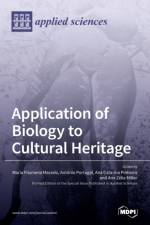
This book compiles the Special Issue of Applied Sciences, entitled "Application of Biology to Cultural Heritage", and aims to cover all the latest outstanding progress on the biological and biochemical methods developed and applied to cultural heritage.Eleven excellent papers (including both reviews and full research articles) form part of this book and each paper went through a hard and demanding review in order to ensure maximum quality. We do thank all the reviewers for their efforts which are so crucial for the improvement of the now-published papers.In the field of cultural heritage, biodiversity and biodeterioration have received a great deal of research attention in recent years. This book intends to provide a comprehensive examination of the science of biology in various fields and areas, as well as its practical application for the preservation of cultural heritage. Full research articles and reviews on all aspects of biological causes, modes of action, biocidal treatments, and the protection of cultural heritage are here presented, as well as long-term studies on the biodeterioration of cultural heritage sites and monuments. Analyses and tests of macro- and micro-organisms affecting the preservation of cultural heritage are also addressed.The knowledge that has arisen from the papers published on the studies on new techniques and new products applied to the field of cultural heritage may now be translated into new conservation and restoration treatments in similar objects, sites and supports. This was the main goal and it was achieved in a mission that we carried out with great pleasure and dedication.
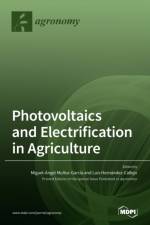
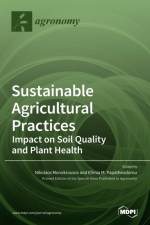
Integration of photovoltaics and electrification in agriculture. Works on the integration of photovoltaics in agriculture, as well as electrification and microgrids in agriculture. In addition, some works on sustainability in agriculture are added.
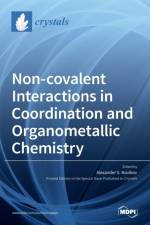
Non-covalent interactions in coordination and organometallic compounds (hydrogen, halogen, chalcogen, pnictogen, tetrel, and semi-coordination bonds; agosic and anagosic interactions; stacking, anion-/cation-π interactions; metallophilic interactions, etc.) are topical in modern chemistry, materials science, crystal engineering, and related fields of knowledge. Both experimental and theoretical methods are widely used for investigations of the nature and various properties of such weak contacts in gas, liquid, and solid states. Non-covalent interactions could be the driving force to design smart materials with valuable redox, electronic, mechanical, magnetic, and optical properties, which is promising for the manufacture of LEDs, photovoltaic cells of solar power plants, porous structures, sensors, battery cells, and liquid crystals.This Special Issue highlights and presents an overview of modern trends in non-covalent interactions in coordination and organometallic compounds, and bringing various different types to the attention of the scientific community.
Abonner på vårt nyhetsbrev og få rabatter og inspirasjon til din neste leseopplevelse.
Ved å abonnere godtar du vår personvernerklæring.