





Gjør som tusenvis av andre bokelskere
Abonner på vårt nyhetsbrev og få rabatter og inspirasjon til din neste leseopplevelse.
Ved å abonnere godtar du vår personvernerklæring.Du kan når som helst melde deg av våre nyhetsbrev.

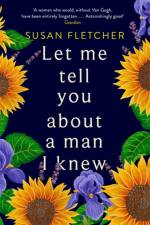
Provence, May 1889. The hospital of Saint-Paul-de Mausole is home to the mentally ill. An old monastery, it sits at the foot of Les Alpilles mountains amongst wheat fields, herbs and olive groves. For years, the fragile have come here and lived quietly, found rest behind the shutters and high, sun-baked walls. Tales of the new arrival - his savagery, his paintings, his copper-red hair - are quick to find the warden's wife. From her small white cottage, Jeanne Trabuc watches him - how he sets his easel amongst the trees, the irises and the fields of wheat, and paints in the heat of the day. Jeanne knows the rules; she knows not to approach the patients at Saint-Paul. But this man - paint-smelling, dirty, troubled and intense - is, she thinks, worth talking to. So ignoring her husband's wishes, the dangers and despite the word mad, Jeanne climbs over the hospital wall. She will find that the painter will change all their lives.Let Me Tell You About A Man I Knew is a beautiful novel about the repercussions of longing, of loneliness and of passion for life. But it's also about love - and how it alters over time.
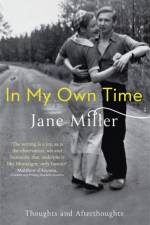
For the past four years Jane Miller, author of Crazy Age: Thoughts on Being Old, has been writing a column for an American magazine called In These Times. Her beautifully observed pieces about life, politics and Britain open a window to her American readers of a world very different from their own.'Her erudition is both dazzling and lightly borne, the personal often illuminating the political . . . Miller's is a welcome, necessary voice - readable, informative and entertaining' Times Literary SupplementJane Miller, author of the acclaimed Crazy Age, has for the past few years been writing a column for an American magazine based in Chicago called In These Times. Now, these beautifully observed pieces about life, politics and Britain, which opened a window for Americans on a world rather different from their own, are collected and published for the first time for her British readers.'Miller is a fantastic companion' Viv Groskop, Telegraph
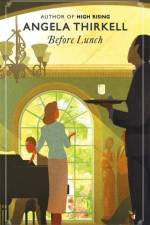
Jack Middleton likes to imagine himself a country squire. At weekends he retires to Laverings Estate with his wife, Catherine. He may be pompous, and they may seem ill-matched, but the couple are devoted to each other.When Jack's widowed sister, Lilian, and her two stepchildren arrive to spend the summer in the neighbouring house, he dreads the intrusion to his idyll: Daphne, capable and ambitious, is too lively for his taste, whereas her brother Denis, a composer, he finds a crashing bore. But their wit and good sense charm the residents of Barchester, and they win over Lord Bond with an impromptu Gilbert and Sullivan evening. Even Jack begins to thaw.Before long, Daphne and Lord Bond's son become attracted to each other, but each believes the other is attached to someone else. Can disaster be averted before she marries the wrong man? First published in 1939, Before Lunch is a sparkling comedy from Angela Thirkell's much-loved classic series.
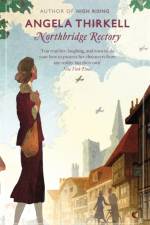
As the war continues it brings its own set of trials to the the village of Northbridge. Eight officers of the Barsetshire Regiment have been billeted at the rectory, and Mrs Villars, the Rector's wife, is finding the attentions of Lieutenant Holden (who doesn't seem to mind that she is married to his host) quite exhausting. The middle-aged ladies and gentlemen who undertake roof-spotting from the church tower are more concerned with their own lives than with any possible parachutist raids. There is the love triangle of Mr Downing, his redoubtable hostess Miss Pemberton and the hospitable Mrs Turner at the Hollies. And, to add to Mrs Villar's woes, egocentric, imperious Mrs Spender, the Major's wife, is foisted on the rectory when she is bombed out of her London home. First published in 1941, Northbridge Rectory is a captivating comedy of an English village in the War years.
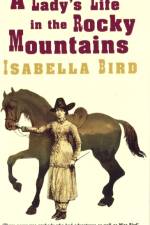
Born in 1831, Isabella, daughter of a clergyman, set off alone to the Antipodes in 1872 'in search of health' and found she had embarked on a life of adventurous travel. In 1873, wearing Hawaiian riding dress, she rode on her spirited horse Birdie through the American 'Wild West', a terrain only recently opened to pioneer settlement. Here she met Rocky Mountain Jim, her 'dear (one-eyed) desperado', fond of poetry and whisky - 'a man any women might love, but no sane woman would marry'. He helped her climb the 'American Matterhorn' and round up cattle on horseback.The wonderful letters which make up this volume were first published in 1879 and were enormously popular in Isabella Bird's lifetime. They tell of magnificent unspoilt landscapes and abundant wildlife, of small remote townships, of her encounters with rattlesnakes, wolves, pumas and grizzly bears and her reactions to the volatile passions of the miners and pioneer settlers.
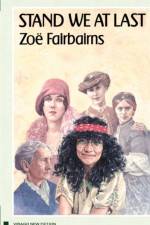
Written by the author of Benefits and Closing, this novel spans 120 years and three continents and chronicles the lives of five generations of women set against a background of Victorian repression, prostitution, the fight for the vote, the devastation of the war and the women's movement.
A profound essay collection from the beloved author of Gilead, Houskeeping and Lila, now including Marilynne Robinson's conversation with President Barack Obama. Robinson has plumbed the depths of the human spirit in her trilogy of novels - Pulitzer Prize-winning Gilead, Orange-Prize winning Home and National Book Critics Circle Award-winning Lila - and in her moving essay collection When I Was a Child I Read Books. Now, in The Givenness of Things, she brings a profound sense of awe and an incisive mind to the essential questions of contemporary life and faith. Through fourteen essays of remarkable depth and insight, Robinson explores the dilemmas of our modern predicament. How has our so-called Christian nation strayed from so many of the teachings of Christ? How could the great minds of the past, Calvin and Locke-and Shakespeare-guide our lives? And what might the world look like if we could see the sacredness in each other? Exquisite and bold, these essays are a necessary call for us to find wisdom and guidance in our cultural treasures, to seek humanity and compassion in each other. The Givenness of Things is a reminder of what a marvel our existence is in its grandeur - and its humility.
By the author of The Handmaid's Tale and Alias GraceStan and Charmaine are a married couple trying to stay afloat in the midst of economic and social collapse. Living in their car, surviving on tips from Charmaine's job at a dive bar, they're increasingly vulnerable to roving gangs and in a rather desperate state. So when they see an advertisement for the Positron Project in the town of Consilience - a 'social experiment' offering stable jobs and a home of their own - they sign up immediately. All they have to do in return for this suburban paradise is give up their freedom every second month, swapping their home for a prison cell. At first, all is well. But slowly, unknown to the other, Stan and Charmaine develop a passionate obsession with their counterparts, the couple that occupy their home when they are in prison. Soon the pressures of conformity, mistrust, guilt and sexual desire take over, and Positron looks less like a prayer answered and more like a chilling prophecy fulfilled.
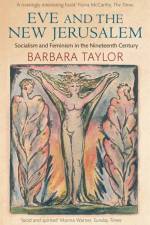
A new edition of Barbara Taylor's classic book, with a new introduction.In the early nineteenth century, radicals all over Europe and America began to conceive of a 'New Moral World', and struggled to create their own utopias, with collective family life, communal property, free love and birth control. In Britain, the visionary ideals of the Utopian Socialist, Robert Owen, attracted thousands of followers, who for more than a quarter of a century attempted to put theory into practice in their own local societies, at rousing public meetings, in trade unions and in their new Communities of Mutual Association.Barbara Taylor's brilliant study of this visionary challenge recovers the crucial connections between socialist aims and feminist aspirations. In doing so, it opens the way to an important re-interpretation of the socialist tradition as a whole, and contributes to the reforging of some of those early links between feminism and socialism.
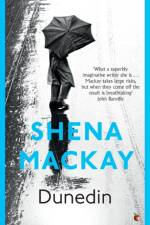
New Zealand, 1909. After weeks at sea the new minister, Jack Mackenzie, arrives from Scotland with his unhappy wife and children in tow. A keen naturalist, he is more enthralled by the botanical - and carnal - delights of Dunedin than in the wellbeing of his flock. In London, eighty years later, Jack Mackenzie's descendants are middle-aged, searching for a way out of their loneliness. Olive, embittered with her loveless life, steals a baby from a crowded tube; William, distraught at the death of a pupil, abandons his job as headmaster and struggles to fill his empty days. Jay Pascal, a young New Zealand vagrant of mysterious parentage arrives in London, looking for a place where he might belong.
'What made the orchard miraculous was an abandoned railway carriage, set down as if by magic, its wheels gone, anchored by long grass and nettles. Ruby and I stared at it and each other . . . dark-windowed, out of place in a thicket of thorns, it was the perfect hide-out, house, the camp of our dreams'When April's parents move from London to rural Kent she makes her first best friend. With flame-haired, fearless Ruby, April shares secrets, dares and laughter. But Ruby has secrets of her own -bruises that she hides.Also seeking April's friendship is old Mr Greenidge, immaculate in his linen suit, with eyes like blue glass. He follows her around the village with his beguiling dachshund, and wants to learn everything about her.
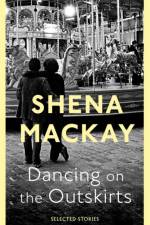
Here is a wonderful collection of short stories by the writer known for 'the Mackay vision, suburban - as kitsch, as unexceptional, and yet as rich in history and wonder as a plain Victorian terrace house, its threshold radiant with tiling and stained-glass birds of paradise encased in leaded lights' - Guardian.Shena Mackay, who first came to fame before the age of twenty with two novellas, is the doyenne of the short form. In this volume of previously uncollected stories - including those read on radio - she constantly surprises with a view of the ordinary world that is not at all ordinary.A grasshopper determinedly takes up residence on a bathroom ceiling; a gecko hiding in a cupboard brings a strange sort of luck; a woman spies from a distance two older women friends after many long years and a memory of how they gallopedin the playground as Starlight Blaze and Pepperpot plays sweetly, suddenly in her mind; pigs are swaddled in blankets, looking like babies in shawls; luggage is packed with youthful hopes and ideals.She observes how people rub along and reveals the best and worst of us all: a disgruntled schoolboy and his hapless teacher conquer mountains and their antipathy for each other; a girl with green eyes and iridescent hair discovers revenge; a race to be the best mushroom-picker creates only losers; and rotten apples, in the right pair of hands, make a loving pie. Shena Mackay is a generous and keen-eyed chronicler of the everyday; she deftly brings wisdom and humour to the worlds she creates, worlds that we suddenly, excitingly see anew. She is an utterly original writer.
In 1914, when Nicandra is eight, all is well in the grand Irish estate, Deer Forest. Maman is beautiful and adored. Dada, silent and small, mooches contendedly around the stables. Aunt Tossie, of the giant heart and bosom, is widowed but looks splendid in weeds. The butler, the groom, the landsteward, the maids, the men - each as a place and knows it. Then, astonishingly, the perfect surface is shattered; Maman does something too dreadful ever to be spoken of.'What next? Who to love?' asks Nicaranda. And through her growing up and marriage her answer is to swamp those around her with kindness - while gradually the great house crumbles under a weight of manners and misunderstanding.
'Janet Frame's luminous words are the more precious because they were snatched from the jaws of the disaster of her early life . . . and yet to read her is no more difficult than breathing' Hilary Mantel When Janet Frame's doctor suggested that she write about her traumatic experiences in mental institutions in order to free herself from them, the result was Faces in the Water, a powerful and poignant novel. Istina Mavet descends through increasingly desolate wards, with the threat of leucotomy ever present. As she observes her fellow patients, long dismissed by hospital staff, with humour and compassion, she reveals her original and questing mind. This riveting novel became an international classic, translated into nine languages, and has also been used as a medical school text.Books included in the VMC 40th anniversary series include: Frost in May by Antonia White; The Collected Stories of Grace Paley; Fire from Heaven by Mary Renault; The Magic Toyshop by Angela Carter; The Weather in the Streets by Rosamond Lehmann; Deep Water by Patricia Highsmith; The Return of the Soldier by Rebecca West; Their Eyes Were Watching God by Zora Neale Hurston; Heartburn by Nora Ephron; The Dud Avocado by Elaine Dundy; Memento Mori by Muriel Spark; A View of the Harbour by Elizabeth Taylor; and Faces in the Water by Janet Frame
I'm a short story addict, both reading and writing them, and I always keep hoping for the perfect story.' (Janet Frame to Tim Curnow, January 1984)THE DAYLIGHT AND THE DUST is the most comprehensive selection of Janet Frame's stories ever published, taken from the four different collections released during her lifetime and featuring many of her best stories. Written over four decades, they come from her classic prize-winning collection THE LAGOON AND OTHER STORIES, first published in 1952, right up to the volume YOU ARE NOW ENTERING THE HUMAN HEART, published in the 1980s. This new selection also includes five works that have not been collected before. Janet Frame's versatility dazzles. Her themes range from childhood to old age to death and beyond. Within the pages of one book the reader is transported from small town New Zealand to inner-city London, and from realism to fantasy. This volume offers the most comprehensive collection of Janet Frame's unique and powerful writing.
A deeply rewarding and beautiful novel' Hilary Mantel, GuardianLife in England seems transitory for Grace Cleave as the pull of her native New Zealand grows stronger. She begins to feel increasingly like a migratory bird. Grace longs to find her own place in the world, if only she can decide where that is. But first she must learn to feel comfortable in her own skin, feathers and all.Written in 1963, Janet Frame considered this novel too personal to be published in her lifetime.'In this deeply personal novel of exile and loneliness, Janet Frame proves the master of nostalgia, beauty and loss. Frame is, and will remain, divine' Alice Sebold'Exceptional . . . comic, melancholy and piercingly observant' Sunday Telegraph
All I had experienced, all the stories I had read or dreamed came to me the moment I, a stranger, turned the key in the lock of the unknown house.'In a sweltering basement in downtown Baltimore, Mavis Halleton, writer, ventriloquist and gossip, is struggling to write her novel when an unexpected invitation arrives. The Garretts, a couple Mavis has never heard of but who admire her work, are to spend time in Italy, and offer the use of their airy home in the Berkeley hills.During her stay, an earthquake hits northern Italy, and Mavis, to her surprise, inherits the house. But, surrounded by museum replicas and tasteful imitations, she finds reality itself is on shaky ground.In this highly inventive novel, reality, fiction and dreams are woven together as Janet Frame playfully explores the process of writing fiction.
John and Laura have come to Venice to try and escape the pain of their young daughter's death.But when they encounter two old women who claim to have second sight, they find that instead of laying their ghosts to rest they become caught up in a train of increasingly strange and violent events.The four other haunting, evocative stories in this volume also explore deep fears and longings, secrets and desires: a lonely teacher who investigates a mysterious American couple, a young woman confronting her father's past, a party of pilgrims who meet disaster in Jerusalem and a scientist who harnesses the power of the mind to chilling effect."e;Don't Look Now"e; is a strange and intimate masterpiece: a perfect distillation of the confusion and desire that attend grief, which, as the story progresses, adventures forward through the winding streets of Venice with the logic of nightmare. - Ethan Rutherford: http://www.npr.org/2013/05/19/177638074/ghost-ships-murders-bird-attacks-stories-to-keep-you-awake
'Hugely funny and peopled with a cast of characters I came to love like my own friends, Rush Oh! reminded me why I love reading' Hannah Kent, bestselling author of Burial RitesMary Davidson, the eldest daughter of a whaling family in New South Wales,chronicles the particularly difficult season of 1908 - a story that is poignant and hilarious, filled with drama and misadventure. Mary Davidson has got used to looking after her five siblings whilst catering for her father's boisterous whaling crew. But when John Beck, an itinerant whaleman with a murky past, arrives on the doorstep wanting to join her father, Mary promptly develops an all-consuming crush which upends her world...Swinging from Mary's hopes and disappointments, both domestic and romantic, to the challenges that beset their tiny whaling operation, Rush Oh! is an enchanting celebration of both Mary's unique voice and an extraordinary episode in Australian history when a family of whalers formed a fond, unique allegiance with a pod of frisky killer whales - led by one named Tom.
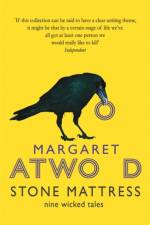
BY THE AUTHOR OF THE HANDMAID'S TALE AND ALIAS GRACEA recently widowed fantasy writer is guided through a stormy winter evening by the voice of her late husband. An elderly lady with Charles Bonnet syndrome comes to terms with the little people she keeps seeing, while a newly formed populist group gathers to burn down her retirement residence. A woman born with a genetic abnormality is mistaken for a vampire, and a crime committed long ago is revenged in the Arctic via a 1.9 billion-year-old stromatolite.In these nine tales, Margaret Atwood ventures into the shadowland earlier explored by fabulists and concoctors of dark yarns such as Robert Louis Stevenson, Daphne du Maurier and Arthur Conan Doyle - and also by herself, in her award-winning novel Alias Grace. In Stone Mattress, Margaret Atwood is at the top of her darkly humorous and seriously playful game.*Praise for Stone Mattress 'Dark and witty tales from the gleefully inventive Margaret Atwood. Witty verve, imaginative inventiveness and verbal sizzle vivify every page' -SUNDAY TIMES'Atwood has characters here close to death, dead already, unwittingly doomed or - in one memorable case - freeze-dried; but her own curiosity, enthusiasm and sheer storytelling panache remain alive and kicking. Anyone keen to consign literary fiction to an early grave will have to deal with her first' -INDEPENDENT'Atwood's prose is so sharp and sly that the effect is bracing rather than bleak' -GUARDIAN
Is feminism still a dirty word? We asked twenty-five of the brightest, funniest, bravest young women what being a feminist in 2015 means to them.We hear from Laura Bates (of the Everyday Sexism Project), Reni Eddo-Lodge (award-winning journalist and author), Yas Necati (an eighteen-year-old activist), Laura Pankhurst, great-great granddaughter of Emmeline Pankhurst and an activist in her own right, comedian Sofie Hagen, engineer Naomi Mitchison and Louise O'Neill, author of the award-winning feminist Young Adult novel Only Ever Yours. Writing about a huge variety of subjects, we have Martha Mosse and Alice Stride on how they became feminists, Amy Annette addressing the body politic, Samira Shackle on having her eyes opened in a hostel for survivors of acid attacks in Islamabad, while Maysa Haque thinks about the way Islam has informed her feminism and Isabel Adomakoh Young insists that women don't have to be perfect. There are twelve other performers, politicians and writers who include Jade Anouka, Emily Benn, Abigail Matson-Phippard, Hajar J. Woodland and Jinan Younis.Is the word feminist still to be shunned? Is feminism still thought of as anti-men rather than pro-human? Is this generation of feminists - outspoken, funny and focused - the best we've had for long while? Has the internet given them a voice and power previously unknown?Rachel Holmes' most recent book is Eleanor Marx: A Life; Victoria Pepe is a literary scout; Amy Annette is a comedy producer currently working on festivals including Latitude; Alice Stride works for Women's Aid and Martha Mosse is a freelance producer and artist.
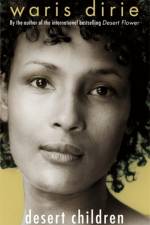
Fashion model, UN ambassador and courageous spirit, Waris Dirie was born into a family of tribal desert nomads in Somalia. She told her story - enduring female circumcision at five years old; running away through the desert; being discovered by Terence Donovan and becoming a top fashion model - in her book, the worldwide bestseller, DESERT FLOWER. In DESERT DAWN she wrote about becoming a UN Special Ambassador against FGM (female genital mutilation) and returning to her family in Somalia. DESERT CHILDREN tells us how she and the journalist Corinna Milborn have investigated the practice of FGM in Europe - they estimate that up to 500,000 women and girls have undergone or are at risk of FGM. At the moment, France is the only European country in which offenders are convicted and no European country officially recognises the threat of genital mutilation as a reason for asylum. Here are the voices of women who have felt encouraged and emboldened by Waris Dirie's courage. They speak out for the first time and move us to action.
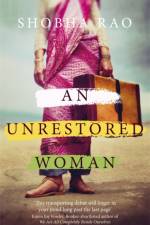
In An Unrestored Woman, the partition of India and Pakistan in 1947 cuts a jagged path through the lives of ordinary women and men, leaving ripples of sorrow through time and space. Each couplet of stories spans the Indian subcontinent, from refugee camps and torched trains to the spacious verandas of the British Raj, and billows into the wider world. An old woman recounts the murdering of what was most precious to her, and the many small cuts that led her to that act. A girl forced into prostitution wields patience as deftly as a weapon, and manages to escape her fate. An Indian servant falls in love with his employer, and spins a twisted web of deceit.The characters in these fearless stories stumble - occasionally towards love, more often towards survival - and find that history, above all, is their truest and greatest opponent. And what emerges, in the midst of newly erected barriers, boundaries, and nations, is a journey into the centre of the only place that matters - the human heart.
A Radio 4 Book of the Week'See Naples and die', said Goethe. But Katherine Wilson saw Naples and started to live. Katherine is fresh out of college when she arrives in Naples to intern at the US Consulate. There she meets handsome, studious Salvatore, and finds herself enveloped by his family - in particular by his elegant mother, Raffaella, who begins her real education: never eat the crust of a pizza first, always stand up and fight for yourself and your loved ones, and remember that mealtimes are sacred. Immersed in Neapolitan culture, tradition and cooking, slowly and unexpectedly falling for Salvatore, and basking in Raffaella's company and guidance, Katherine discovers how to prepare meals that sing, from rich rag to pasta al forno, with bacon, b chamel and four kinds of cheese. Through courtship, culture clashes, Sunday Mass, marriage and motherhood, Katherine slowly comes to appreciate carnale, the quintessentially Neapolitan sense of comfort and confidence in one's own skin. Steeped in sunlight, wine and unforgettable food, Only in Naples is a love letter to a city and a family, a coming-of-age story, and a transporting account of learning to live the Italian way. 'Katherine Wilson gives us more than the fabulous food of Naples. She offers us a passport to an exotic country we would never be able to enter on our own.' Ruth Reichl, author of My Kitchen Year
By the author of THE HANDMAID'S TALE and ALIAS GRACEWhat is the role of the writer? Prophet? High Priest of Art? Court Jester? Or witness to the real world? Looking back on her own childhood and the development of her writing career, Margaret Atwood examines the metaphors which writers of fiction and poetry have used to explain - or excuse! - their activities, looking at what costumes they have seen fit to assume, what roles they have chosen to play. In her final chapter she takes up the challenge of the book's title: if a writer is to be seen as 'gifted', who is doing the giving and what are the terms of the gift?Margaret Atwood's wide and eclectic reference to other writers, living and dead, is balanced by anecdotes from her own experiences as a writer, both in Canada and on the international scene. The lightness of her touch is underlined by a seriousness about the purpose and the pleasures of writing, and by a deep familiarity with the myths and traditions of western literature.Praise for On Writers and Writing: '...a streetwise, erudite suggestive enquiry into problems and myths of the writer's role. Her light touch on hard thoughts, her humour and eclectic quotations, lend enchantment to an argument that has as many undulating tentacles as a well developed sea anemone' -INDEPENDENT'Her witty, occasionally self-deprecating and always ingenious approach is a delight' -SUNDAY TIMES'A witty and profound rumination about writing' -THE TIMES
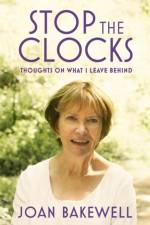
Joan Bakewell has led a varied, sometimes breathless life: she has been a teacher, copywriter, studio manager, broadcaster, journalist, the government's Voice of Older People and chair of the theatre company Shared Experience. She has written four radio plays, two novels and an autobiography - The Centre of The Bed. Now in her 80s, she is still broadcasting. Though it may look as though she is now part of the establishment - a Dame, President of Birkbeck College, a Member of the House of Lords as Baroness Bakewell of Stockport - she's anything but and remains outspoken and courageous. In Stop the Clocks, she muses on all she has lived through, how the world has changed and considers the things and values she will be leaving behind.Stop the Clocks is a book of musings, a look back at what she was given by her family, at the times in which she grew up - ranging from the minutiae of life such as the knowledge of how to darn and how to make a bed properly with hospital corners, to the bigger lessons of politics, of lovers, of betrayal. She talks of the present, of her family, of friends and literature - and talks too of what she will leave behind. This is a thoughtful, moving and spirited book as only could be expected from this extraordinary woman.
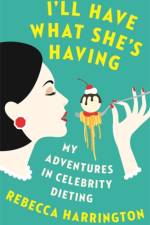
Rebecca Harrington leaves no cabbage soup unstirred in I'll Have What She's Having, her wickedly funny, wildly absurd quest to diet like the stars. Elizabeth Taylor mixed cottage cheese and sour cream; Madonna subsisted on 'sea vegetables' and Marilyn Monroe drank raw eggs whipped with warm milk. Where there is a Hollywood starlet offering nutritional advice, there is a diet Rebecca Harrington is willing to try. Facing a harrowing mix of fainting spells, pimples and salmonella, Harrington tracks down illegal haggis to imitate Pippa Middleton, paces her apartment until the wee hours drinking ten Diet Cokes la Karl Lagerfeld, and attempts something forbiddingly known as the 'Salt Water Flush' to channel her inner Beyonc . Rebecca Harrington risks kitchen fires and mysterious face rashes, all in the name of diet journalism. Taking cues from noted beauty icons like Posh Spice (alkaline!), Sophia Loren (pasta!) and Cameron Diaz (savory oatmeal!), I'll Have What She's Having is completely surprising, occasionally unappetising, and always outrageously funny.
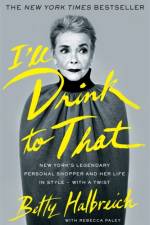
Betty Halbreich is a true original. Now in her eighties, she has spent nearly forty years at the luxury store Bergdorf Goodman, working with socialites, stars and ordinary women. She has led many to appreciate their real selves through clothes, frank advice and her unique brand of wisdom; she is trusted by the most discriminating persons - including Hollywood's top stylists - to tell them what looks best. But her own transformation from cosseted girl to fearless truth-teller is the greatest makeover of all.Born into a successful Chicago family, aged twenty Betty married dashing Sonny Halbreich and came to Manhattan, where the couple threw themselves into a whirlwind of long hours, cocktails and Park Avenue parties, living the high life in 1950s New York. However, the marriage began to fray and after two decades came undone completely. Bereft, Betty attempted suicide. As she embarked on the frightening process of reclaiming herself, she was offered a lifeline: a job at Bergdorf Goodman. For Betty, with her innate sense of style and craftsmanship, it was a perfect fit.Hardworking, elegant, and gifted with sparkling wit and razor-sharp powers of observation, in her amazing life story as in her style guidance Betty Halbreich is never afraid to tell it straight.
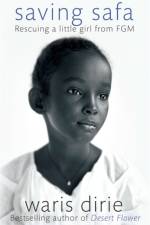
Waris Dirie, the Somalia nomad who became a supermodel, and an anti-FGM activist, first came to the world's attention with the publication of her autobiography, Desert Flower. The book was subsequently made into a film and little Safa Nour, from one of the slums of Djibouti in the Horn of Africa, was chosen to play the young Waris. The book and the film record many extraordinary things - from facing down a tiger, to being discovered by a famous photographer in London - but it also tells the grim story of female circumcision, an ordeal that the young Waris had to endure. Saving Safa opens with a letter from Safa, now aged seven, who explains that she is worried that she will undergo FGM in spite of the contract her parents have signed with Dirie's Desert Flower Foundation stating that they will never have their daughter cut. Waris drops everything and flies to Djibouti where she meets Safa's father and mother who thinks her daughter should be cut to stop the community ostracising them. As Safa was saved from FGM through a contract with her parents, the Foundation believes a thousand other girls can be saved through providing their families with aid in return for a promise not to mutilate their daughters
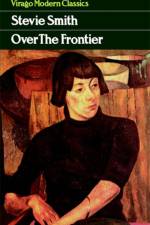
It is 1936. Pompey Casmilus (the heroine of Smith's debut, Novel on Yellow Paper) lives in London with her beloved Aunt, bothered by the menace of German militarism, bothered too by the humbug which confronts it, bothered most of all by her hopeless love affair with Freddy. Its ending plunges Pompey into melancholy; six months of rest and recuperation are prescribed and Pompey goes to Schloss Tilssen on the northern German border, only to fall in with a strange band of conspirators: the plum-coloured Mrs Pouncer, the absent-minded Colonel Peck and the dashing Major Tom Satterthwaite, whom Pompey comes to love.How Pompey gets into uniform and becomes a spy is only one of the astounding events in this extraordinary novel which, on a serious level, is also about a powerful investigation of power and cruelty in a world preparing for war.
Abonner på vårt nyhetsbrev og få rabatter og inspirasjon til din neste leseopplevelse.
Ved å abonnere godtar du vår personvernerklæring.