









Gjør som tusenvis av andre bokelskere
Abonner på vårt nyhetsbrev og få rabatter og inspirasjon til din neste leseopplevelse.
Ved å abonnere godtar du vår personvernerklæring.Du kan når som helst melde deg av våre nyhetsbrev.

During the fifteenth century England was split in a bloody conflict between the Houses of York and Lancaster over who should claim the crown. The civil wars consumed the whole nation in a series of battles that eventually saw the Tudor dynasty take power. In A Brief History of the Wars of the Roses, Desmond Seward tells the story of this complex and dangerous period of history through the lives of five men and women who experienced the conflict first hand. In a gripping narrative the personal trials of the principal characters interweave with the major events and personalities of one of the most significant turning points in British history.
'From the Fury of the Northmen deliver us, O Lord.'Between the eighth and eleventh centuries, the Vikings surged from their Scandinavian homeland to trade, raid and invade along the coasts of Europe. Their influence and expeditions extended from Newfoundland to Baghdad, their battles were as far-flung as Africa and the Arctic. But were they great seafarers or desperate outcasts, noble heathens or oafish pirates, the last pagans or the first of the modern Europeans? This concise study puts medieval chronicles, Norse sagas and Muslim accounts alongside more recent research into ritual magic, genetic profiling and climatology. It includes biographical sketches of some of the most famous Vikings, from Erik Bloodaxe to Saint Olaf, and King Canute to Leif the Lucky. It explains why the Danish king Harald Bluetooth lent his name to a twenty-first century wireless technology; which future saint laughed as she buried foreign ambassadors alive; why so many Icelandic settlers had Irish names; and how the last Viking colony was destroyed by English raiders. Extending beyond the traditional 'Viking age' of most books, A Brief History of the Vikings places sudden Scandinavian population movement in a wider historical context. It presents a balanced appraisal of these infamous sea kings, explaining both their swift expansion and its supposed halt. Supposed because, ultimately, the Vikings didn't disappear: they turned into us.
In this colourful new history of Venice, Elizabeth Horodowich, one of the leading experts on Venice, tells the story of the place from its ancient origins, and its early days as a multicultural trading city where Christians, Jews and Muslims lived together at the crossroads between East and West. She explores the often overlooked role of Venice, alongside Florence and Rome, as one of the principal Renaissance capitals. Now, as the resident population falls and the number of tourists grows, as brash new advertisements disfigure the ancient buildings, she looks at the threat from the rising water level and the future of one of the great wonders of the world.
'Clements has a knack for writing suspenseful sure-footed conflict scenes: His recounting of the Korean invasion led by samurai and daimyo Toyotomi Hideyoshi reads like a thriller. If you're looking for a samurai primer, Clements' guide will keep you on the hook' Japan Times, reviewed as part of an Essential Reading for Japanophiles series From a leading expert in Japanese history, this is one of the first full histories of the art and culture of the Samurai warrior. The Samurai emerged as a warrior caste in Medieval Japan and would have a powerful influence on the history and culture of the country from the next 500 years. Clements also looks at the Samurai wars that tore Japan apart in the 17th and 18th centuries and how the caste was finally demolished in the advent of the mechanized world.
Who was Robin Hood? Throughout history the figures of the hooded man of Sherwood forest and his band of outlaws have transfixed readers and viewers; but where does the myth come from? The story appeared out of the legend of the Green man but found its location during the reign of Richard II, the Lionheart, who was away from England fighting in the crusades. In his absence his brother John lay waste to the country. But does this tell the full story? Was Robin a bandit prince ahead of a troop of brigands? Who was the Sherrif and was he in fact the legitimate law in the land fighting vigilantes?
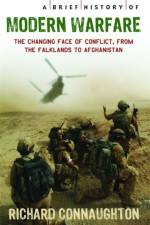
Since Vietnam, both the way we fight and our reasons for going to war have become much more complex.The importance of a conflict is determined not by its size or by the numbers of combatants involved but by its ripple effects and its influence upon future events. In a series of thrilling recreations of eight of the most significant encounters of the last three decades, military historian Richard Connaughton presents a fascinating insight into modern warfare, including interviews with some of the major figures. The conflicts include Goose Green in the Falklands, the invasion of Grenada, Operation Desert Storm - the first Iraq War, Operations in Mogadishu as immortalized in the book and film Blackhawk Down, the Siege of Gorazde and Operation Barras in Sierra Leone, as well as more recent events at Fallujah, Iraq, and in Helmand Province, Afghanistan. Richard Connaughton has interviewed most of the major figures involved in each of the conflicts and offers powerful insights into why battles either work or don't. This book will tell you what warfare means in the contemporary world and how it can affect tomorrow.
The Victorian era has dominated the popular imagination like no other period, but these myths and stories also give a very distorted view of the 19th century. The early Victorians were much stranger that we usually imagine, and their world would have felt very different from our own and it was only during the long reign of the Queen that a modern society emerged in unexpected ways. Using character portraits, events, and key moments Paterson brings the real life of Victorian Britain alive - from the lifestyles of the aristocrats to the lowest ranks of the London slums. This includes the right way to use a fan, why morning visits were conducted in the afternoon, what the Victorian family ate and how they enjoyed their free time, as well as the Victorian legacy today - convenience food, coffee bars, window shopping, mass media, and celebrity culture.Praise for Dicken's London:Out of the babble of voices, Michael Paterson has been able to extract the essence of London itself. Read this book and re-enter the labyrinth of a now-ancient city.' Peter Ackroyd
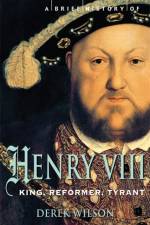
Henry VIII changed the course of English life more completely than any monarch since the Conquest. In the portraits of Holbein, Henry Tudor stands proud as one of the most powerful figures in renaissance Europe. But is the portrait just a bluff?In his new book Derek Wilson explores the myths behind the image of the Tudor Lion. He was the monarch that delivered the Reformation to England yet Luther called him 'A fool, a liar and a damnable rotten worm'. As a young man he gained a reputation as an intellectual and fair prince yet he ruled the nation like a tyrant. He treated his subjects as cruelly as he treated his wives. Based on a wealth of new material and a life time's knowledge of the subject Derek Wilson exposes a new portrait of a much misunderstood King.PRAISE FOR DEREK WILSON'S PREVIOUS WORKS:The Uncrowned Kings of England: 'Stimulating and authorative.' John Guy'Masterly. [Wilson] has a deep understanding of...characters, reaching out accross the centuries.' Sunday TimesHans Holbein: Portrait of an Unknown Man:'Fascinating.' Sarah Bradford, Daily Telegraph'Highly readable...The most accurate and vivid portrayal to date.' Alison Weir
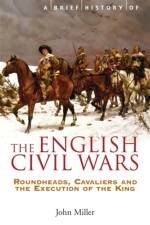
The English Civil War is one of the most hotly contested areas of English History and John Miller is one of the experts on the period. Amid dramatic accounts of the key battles and confrontations, Miller explores what triggered the initial conflict between crown and parliament and how this was played out in England, Scotland and Ireland in the lead-up to war. As the war developed, personalities and innovations on the battlefield became increasingly important, culminating in the rise of Oliver Cromwell and the radical New Model Army. The wars changed the political, social, religious and intellectual landscape of the country for ever. Using a lifetime's knowledge and study on the period, John Miller brings this extraordinary turning point in British history to life.
Who was the real King Arthur? What do the historical documents tell us about the Knight of the Round Temple? It is just a chivalric fantasy? The story of Arthur has been handed down to us by Medieval poets and legends - but what if he actually existed and was in fact a great king in the early years of Britain's story. Mike Ashley visits the source material and uncovers unexpected new insights into the legend: there is clear evidence that the Arthurian legends arose from the exploits of not just one man, but at least three originating in Wales, Scotland and Brittany. The true historical Arthur really existed and is distantly related to the present royal family.
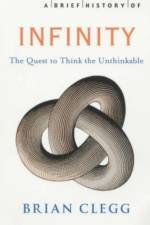
'Space is big. Really big. You just won't believe how vastly, hugely, mind-bogglingly big it is. I mean, you may think it's a long way down the street to the chemist, but that's just peanuts to space.' Douglas Adams, Hitch-hiker's Guide to the GalaxyWe human beings have trouble with infinity - yet infinity is a surprisingly human subject. Philosophers and mathematicians have gone mad contemplating its nature and complexity - yet it is a concept routinely used by schoolchildren. Exploring the infinite is a journey into paradox. Here is a quantity that turns arithmetic on its head, making it feasible that 1 = 0. Here is a concept that enables us to cram as many extra guests as we like into an already full hotel. Most bizarrely of all, it is quite easy to show that there must be something bigger than infinity - when it surely should be the biggest thing that could possibly be. Brian Clegg takes us on a fascinating tour of that borderland between the extremely large and the ultimate that takes us from Archimedes, counting the grains of sand that would fill the universe, to the latest theories on the physical reality of the infinite. Full of unexpected delights, whether St Augustine contemplating the nature of creation, Newton and Leibniz battling over ownership of calculus, or Cantor struggling to publicise his vision of the transfinite, infinity's fascination is in the way it brings together the everyday and the extraordinary, prosaic daily life and the esoteric.Whether your interest in infinity is mathematical, philosophical, spiritual or just plain curious, this accessible book offers a stimulating and entertaining read.
Using wide-ranging evidence, Martyn Whittock shines a light on Britain in the Middle Ages, bringing it vividly to life. Thus we glimpse 11th century rural society through a conversation between a ploughman and his master.The life of Dick Whittington illuminates the rise of the urban elite. The stories of Roger 'the Raker' who drowned in his own sewage, a 'merman' imprisoned in Orford Castle and the sufferings of the Jews of Bristol reveal the extraordinary diversity of medieval society. Through these characters and events - and using the latest discoveries and research - the dynamic and engaging panorama of medieval England is revealed.Interesting facts include:When the life expectancy for women dropped to 26 years in Sierra Leone in 2002, following a catastrophic civil war, it was one year longer than the estimate for early medieval women.So great was the extent of church construction in the thirteenth century that it has been calculated it was the equivalent, in modern terms, of every family in England paying 500 every year, for the whole century!Murder rates for East Anglia, in the fourteenth century, were comparable with those of modern New York. For England generally the homicide rate was far higher than that of the urban USA today.
Starting AD 400 (around the time of their invasion of England) and running through to the 1100s (the 'Aftermath'), historian Geoffrey Hindley shows the Anglo-Saxons as formative in the history not only of England but also of Europe. The society inspired by the warrior world of the Old English poem Beowulf saw England become the world's first nation state and Europe's first country to conduct affairs in its own language, and Bede and Boniface of Wessex establish the dating convention we still use today. Including all the latest research, this is a fascinating assessment of a vital historical period.
Why did the medieval Church bless William of Normandy's invasion of Christian England in 1066 and authorise cultural genocide in Provence? How could a Christian army sack Christian Constantinople in 1204? Why did thousands of ordinary men and women, led by knights and ladies, kings and queens, embark on campaigns of fanatical conquest in the world of Islam? The word 'Crusade' came later, but the concept of a 'war for the faith' is an ancient one. Geoffrey Hindley instructively unravels the story of the Christian military expeditions that have perturbed European history, troubled Christian consciences and embittered Muslim attitudes towards the West. He offers a lively record of the Crusades, from the Middle East to the pagan Baltic, and fascinating portraits of the major personalities, from Godfrey of Bouillon, the first Latin ruler of Jerusalem, to Etienne, the visionary French peasant boy who inspired the tragic Children's Crusade. Addressing questions rarely considered, Hindley sheds new light on pressing issues surrounding religious division and shows how the Crusades have helped to shape the modern world and relations between Christian and Muslim countries to this day.
Grief is a natural reaction to loss but in some cases it can be devastating, preventing you from moving on in your life and affecting your relationships and work. This self-help guide offers an examination and explanation of the grieving process and offers strategies, based on CBT, to help you adjust to life without a loved one. This practical bookl is also an ideal resource for health professionals and carers.- What to expect when you are grieving- Physical and psychological reactions to grief- Practical strategies to help you cope with your grief
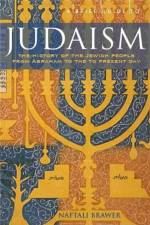
The Jewish religion is one of the major faiths of the world yet one of the least understood. In a wide-ranging and accessible guide for the general reader Rabbi Naftali Brawer outlines the major themes and history of over 5,000 years of Jewish faith from its Abrahamic origins and the foundations of Jerusalem to the eras of exile, diaspora, and persecution. From ritual and practise to faith and politics, the theology and history of Judaism are bound together.Brawer argues that Judaism is poised between heaven and earth. On the one hand it calls on its adherents to transcend the material world through ritual and prayer: on the other hand Judaism positively celebrates joys of food, family and society. Through this seeming paradox, Brawer explores the nature and characteristics of faith - God and Man, Torah, Mitzvah, the Jewish People and the Land of Israel. He also shows how ritual and practise punctuate Jewish existence, from daily prayers to the rites of passage that chart a lifetime.
Exploring the beliefs, history and politics of the ordinary people of Muslim countries, Grieve cuts through the complexities as he examines all aspects of Islam. He also addresses the big issues: can Islam support true democracy? Is true democracy what the West really wants for Muslim countries or are we merely seeking a cover of legitimacy for a policy of 'might is right'?Paul Grieve is an unbeliever - he is not a born-again Muslim, a proselytizer or a frustrated desert romantic. His aim is to inform. The result is an accessible but never simplistic guide that challengesstereotypical views, from women and banking to war and Malcolm X. Complete with advice for visitors to Muslim countries, and with carefully chosen primary sources, maps and illustrations, this is the ideal summary for the reader looking for an unbiased overview of the religious and political world issues that have become part of our everyday lives.
At fourteen years old, Simon Britten is a keen ufologist. When his dad dies, two things happen: a UFO-watch on Wimbledon Common turns up something distinctly out of this world; and his mother joins a local 'church' and attempts to contact her deceased husband beyond the grave. Caught between the Extra-Terrestrial and the First Church of Christ the Spiritualist, Simon struggles to work out just what - or whom - he should believe in.
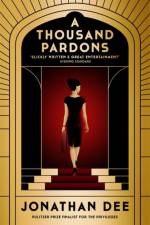
Ben and Helen Armstead have reached breaking point. Once a privileged and loving couple, widely envied and respected, it takes just one afternoon - and a single act of recklessness - for Ben to deal the final blow to their marriage, spectacularly demolishing everything they built together.Separated from her husband, Helen and her teenage daughter Sara leave their family home for Manhattan, where Helen must build a new life for them both. Thrust back into the working world, Helen takes a job in PR - her first in many years - and discovers she has a rare gift: she can convince arrogant men to admit their mistakes, spinning crises into second chances. Faced with the fallout from her own marriage, and her daughter's increasingly distant behaviour, Helen finds that the capacity for forgiveness she nurtures so successfully in her professional life is far harder to apply to her personal one.A Thousand Pardons is an elegant, audacious, gripping and sharply observed novel about a marriage in ruins and a family in crisis; about the limits of self-invention and the seduction of self-destruction.Praise for Jonathan Dee:'A deliciously sophisticated engine of literary darkness.' Jonathan Franzen.'Dee is graceful; articulate and perceptive, and often hilariously funny... full of elegance, vitality and complexity.' New York Times.'The Privileges is verbally brilliant, intellectually astute and intricately knowing. It is also very funny and a great, great pleasure to read. Jonathan Dee is a wonderful writer.' Richard Ford.'The Privileges is a pitch-perfect evocation of a particular stratum of New York society as well as a moving meditation on family and romantic love. The tour de force first chapter alone is worth the price of admission.' Jay McInerney.
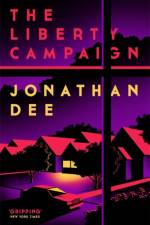
Gene Trowbridge, a successful advertising executive, fills the days before his retirement assessing his past and contemplating the future, increasingly aware of his own irrelevance in a field dominated by the very young. But a chance meeting with Albert Ferdinand, a reclusive neighbour who wins his regard and friendship, upsets the tenuous balance of Gene's cosseted world. Spurred on by a persistent journalist and overwhelmed by his instinctive liking and acceptance of a man apparently capable of indescribable evil, Gene is drawn into a suspenseful search for the truth about Ferdinand's past.The Liberty Campaign is a riveting, multilayered portrait of an ordinary man whose moral universe is tested by a situation that defies the parameters of his decidedly American upbringing and sensibility.
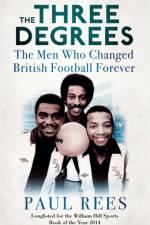
When Cyrille Regis became one of the first black players to be selected for the full England team, he was sent a package in the mail. Inside it was a silver bullet and a note that read: You ll get one of these through your knees if you step on our Wembley turf. In the 1978/79 football season Regis' club West Bromwich Albion, an unglamorous and little publicised club from the West Midlands, became the first British football team to field three black players: Cyrille Regis, Laurie Cunningham and Brendon Batson. They did so against the backdrop of the most divisive and poisonous racial tension in the UK s history a time when the National Front movement was at its most virulent. This book will tell the story of a defining and groundbreaking chapter in the history of British football and the country as a whole. The story is one about sport but also as much one about social change.
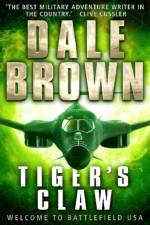
THE FIGHT FOR THE PACIFIC BEGINS . . .When China launches the first successful test of its deadly new Dong Feng-21D antiship ballistic missile, President Phoenix finds himself facing up to a terrible reality: he has just slashed the military budget to reduce the national debt. But without funds to compete with China's advancing technology, the future looks bleak - are America's days of Pacific naval supremacy numbered?Retired US Air Force Lieutenant General Patrick McLanahan refuses to accept this fate. The government may lack money, but McLanahan believes it's possible to revive their old - but still potent - long-range B-1B Lancer bombers to push back against Chinese aggression. The President backs McLanahan, and soon America stands ready to deploy a battle task force in the South China Sea. The stage is set for an epic battle for supreme Pacific dominion.New York Times bestselling author Dale Brown is at the top of his game, bringing to life a thrilling and dramatic story that could almost foreshadow the headlines of the not-so-distant future.Praise for Dale Brown:'Dale Brown is the best military adventure writer in the country.' Clive Cussler.'Brown puts us in the cockpit...authentic and gripping.' New York Times.
Robert Wilson is an aimless, chronically untruthful young Englishman who has passed himself off as a Muslim, in order to secure a job at the newly established Wimbledon Independent Islamic Boys' Day School. East of Wimbledon is the hilarious story of Mr Wilson's decline and fall, as he demonstrates the failure of a post-colonial Briton to understand another great imperial culture that has absolutely no need of him.
Henry Farr is forty years old. He is suburban, average, conventional - and desperate to be rid of his wife, Elinor. Inspired by a grisly episode in Wimbledon's local history, Farr begins to concoct a recipe for the perfect murder. But his plans go terribly, terribly wrong - and before long, poor Henry's best efforts to set himself free, in fact send him spiralling wildly out of control.
What was it like to be a dog or cat when the world was at war? When food was rationed and cities were bombed? Pets (on the whole) do not write memoirs, so to find the answer to that question, Clare Campbell went in search of voices of those people whose lives were entwined with animals.She found stories - inspiring and harrowing - of animals under fire, of evacuated and homeless pets, of brave animals who provided comfort to humans while the bombs fell. Of pets unwittingly entangled in war, like the Dunkirk pets and the camp followers who switched sides to stay alive; and the 6,000 dogs recruited by the British Army - loaned for duty by their families - many never to return. Meanwhile with food in short supply, government officials launched a ruthless campaigns against pets... Thoroughly researched and deeply moving, Bonzo's War gives a fascinating account of, and platform for, the forgotten stories as yet unheard, of the creatures big and small caught up in a human conflict far beyond understanding.
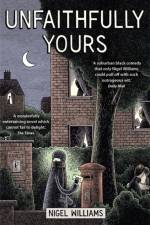
When Elizabeth Price engages private detective Roland 'Orlando' Gibbons to find out the truth about her husband's suspected affair, she unwittingly sets off a chain of correspondence that reunites four formerly close-knit couples. They all live just a few suburban streets away from each other; they are all still married; so how - and why - did they become so estranged? In a series of letters - from love notes to condolence messages (the latter one arriving some years late) - each protagonist is far more self-revealing than they would ever be in person. The result is an uproarious and poignant portrait of four marriages, and a story about how little we know those we think we know best.Nigel Williams' new novel of suburban intrigue and late-flowering lust (and love) Unfaithfully Yours heralds the return of one of the country's finest comic writers, in peak condition: all hail Nigel Williams, chronicler of England's sleepy suburbs, where all is not quite as cricket as it seems . . .
Deep down, we're just like animals. Some of us are selfish like apes. Some are chaotic like ants. . . And somehow the two clash and coalesce in 'antagonistic harmony'. A fascinating look at the evolutionary psychology, instincts and tactics of the workplace.My Manager & Other Animals examines the evolutionary psychology of work, focusing on the office, workshop, corporation or government department, and the complex and fascinating evolutionary tactics that have developed to deal with working life.37 years ago Richard Dawkins wrote The Selfish Gene and it didn't take long for the business community to latch on to the 'selfish' part and adopt it as an industry standard. After all, it fitted in with the notion that, since we are all descended from apes, we should be like them: selfish, aggressive and competitive. More recently, astounding discoveries in human and animal behaviour (particularly ants) have shown that, in all animals, cooperation and altruism is more common than we think and more useful than we could imagine. It seems we contain an inner ape and an inner ant. How confusing; they seem like opposites, because co-operation means helping others, competition means swatting them. What are we, ape or ant? This book shows that ant and ape are both important. Co-operation without leadership is random, leadership without co-operation is slavery. The result of these two colliding is the mad mad mad world of work and life, lovingly described in the book.
Around the world it is estimated that 130 million bicycles are sold every year, making the trusty bike our favourite mode of transport whether we are commuting to work or cycling for pleasure. Bikes come in all shapes and sizes, from the most basic, least expensive models to the most sophisticated sports cycles that can cost as much as a family car. But whether it was bought cheaply or cost a packet, people form a bond with their bikes that becomes a true affair of the heart. Donato Cinicolo has sought out and photographed scores of bicycle lovers including the naturist stuntman who rides a ladies' racer dressed in nothing but fluorescent yellow shorts; the retired postman who rides a retired GPO delivery bike; the old lady who carries her enormous cat in the basket on her handlebars; and the penny farthing fan. From racing geeks to affectionate collectors, every one of Donato's pictures tells a story and, of course, every devoted bike rider has a story to tell.
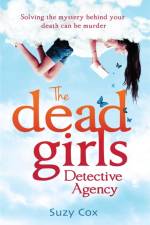
Solving the mystery behind your death can be murder.Charlotte wakes up at Hotel Atessa, home to murdered New York teenagers and HQ of The Dead Girls Detective Agency. Before she has time to adjust to her new, erm, dead self, she's thrust into the arms of her new afterlife companions, Lorna, Nancy and the cute - if slightly hostile - dead boy, Eddison.But where does this leave Charlotte and her boyfriend David? Is it possible to have a long-distance relationship from beyond the grave? The only way out of this limbo is to figure out who killed her, or she'll have to spend eternity here. But who could hate her enough to want her dead?
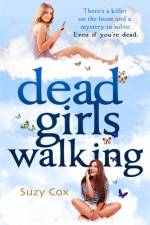
Lorna has been dead long enough to know the Rules. But that doesn t stop her showing up at her little sister s high school production of Hipster Hamlet. But when she arrives, a lighting rig comes crashing down on the lead cast member mid-performance. All fingers point to Lorna s little sister, Emma, and it s up to The Dead Girls Detective Agency to find the real culprit. Unless Em s not as innocent as she looks? Charlotte wants to help Lorna prove her sister s innocence, but she s completely distracted. Not only is her ghostly-self suspended in this New York-limbo-hotel, she is having to deal with the fact that the very alive love of her life has moved on. And then there s the cute dead boy Edison, who seems to be acting nice all of a sudden. But is Charlotte ready for a new boyfriend, and one with such a murky past? Praise for The Dead Girls Detective Agency:'Mean Girls meets The Lovely Bones.' Grazia'Full of smart, funny one-liners and observations that had me giggling like a teenager.' - Sunday Express'A spooky teen thriller with the glam of Gossip Girl' Cosmopolitan
Abonner på vårt nyhetsbrev og få rabatter og inspirasjon til din neste leseopplevelse.
Ved å abonnere godtar du vår personvernerklæring.