










Gjør som tusenvis av andre bokelskere
Abonner på vårt nyhetsbrev og få rabatter og inspirasjon til din neste leseopplevelse.
Ved å abonnere godtar du vår personvernerklæring.Du kan når som helst melde deg av våre nyhetsbrev.

"The Miscellaneous Writings and Speeches of Lord Macaulay, Volume 1" is a collection of essays, speeches, and reviews by the renowned British historian, essayist, and politician Thomas Babington Macaulay. The book was first published in 1852, and it remains a significant work of English literature to this day. The collection includes a wide variety of Macaulay's writings, ranging from literary criticism and historical essays to speeches on political and social issues of the time. Some of the most notable pieces in the volume include his essays on John Milton and Lord Byron, his speech on parliamentary reform, and his reviews of the works of Samuel Johnson. Throughout the collection, Macaulay's writing is marked by his characteristic wit, erudition, and passion for his subjects. He is a master of language, with a keen eye for detail and a talent for bringing his ideas to life with vivid imagery and compelling arguments. At its heart, "The Miscellaneous Writings and Speeches of Lord Macaulay, Volume 1" is a celebration of the power of words and ideas to shape the world around us. Macaulay's writing is a testament to the enduring relevance of literature, history, and political discourse, and it continues to inspire readers and writers today.
History of the Reformation in the Sixteenth Century, Volume 1 is a comprehensive and influential account of the events leading up to the Protestant Reformation. Written by the Swiss historian J. H. Merle d'Aubigné, the book was released in French in 1835 and later translated into English. The book covers the period from the early 16th century, with the publication of Martin Luther's 95 Theses in 1517, to the outbreak of the Peasants' War in 1524. D'Aubigné provides a detailed account of the religious, political, and social factors that led to the Reformation, including the corruption and abuses of the Catholic Church, the rise of humanism, and the emergence of new forms of religious expression. D'Aubigné's writing is clear and engaging, presenting a narrative history that combines detailed research with a dramatic flair.
"The Purple Land" is a novel by W. H. Hudson, a British-Argentine author known for his naturalist writing. The book tells the story of Richard Lamb, a young Englishman who travels to Uruguay in search of adventure and fortune. Set against the backdrop of the Uruguayan countryside, the novel follows Lamb as he navigates the landscape and encounters a range of colorful characters. Along the way, he falls in love with a beautiful young woman named Juana, and the two embark on a passionate and tumultuous romance. Hudson's writing is characterized by its vivid descriptions of the natural world, and "The Purple Land" is no exception. The novel is filled with lush descriptions of the countryside, from the rolling hills to the expansive sky. Hudson also draws on his own experiences living in Uruguay to create a rich and detailed portrait of the country and its people.
Frank Harris' autobiographical book "My Life and Loves" was released in four volumes. The book offers a thorough description of Harris's sexual encounters and love encounters throughout the course of his life, beginning with his early years in Ireland and covering his time in the US and Europe. Each chapter of the book, which is separated into sections, examines a particular connection or experience. Harris describes his interactions with women from many walks of life, including prostitutes, actors, and society ladies, in a direct and sometimes graphic style. Harris also focuses on his personal and philosophical views throughout the book, notably in regard to morality, love, and sex. He contends that having sexual desires is a normal and healthy element of being a person, and that society's rigid moral and behavior norms often work to suppress and suffocate this component of our existence. Although the book was divisive when it was first published, it is now recognized as a significant contribution to the study of human sexuality and the history of sexual liberation.
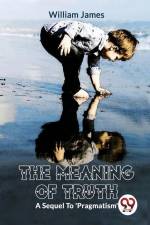
'The Meaning of Truth: A Sequel to 'Pragmatism' by William James is a collection of lectures and essays that explore the nature of truth and its role in human experience. Building on the ideas of his earlier work 'Pragmatism, ' James argues that truth is not an abstract or fixed concept, but rather a dynamic process that evolves over time and is shaped by human experience and perspective. The book is divided into five chapters, each of which explores a different aspect of truth, including its relationship to reality, its role in religion and ethics, and its importance in the quest for knowledge. Throughout the book, James draws on a wide range of sources, from philosophy and psychology to literature and history, to illustrate his points and bring his ideas to life. With its engaging style and thought-provoking insights, 'The Meaning of Truth' remains a landmark work in the history of American philosophy
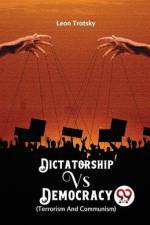
A Marxist revolutionary and political thinker named Leon Trotsky authored the book "Dictatorship Vs. Democracy" in 1937. Trotsky's writings and articles collected in this volume analyses the political climate in the Soviet Union, the emergence of fascism in Europe, and the conflict between democracy and autocracy. According to Trotsky, Joseph Stalin's rule over the Soviet Union resulted in its transformation into a totalitarian dictatorship. Stalin's installation of an oppressive dictatorship and betrayal of the principles of the Russian Revolution are criticized by Trotsky. He also talks on the danger of fascism and how crucial it is to protect democracy against it. The Soviet Union banned the book because it was so divisive. Stalin finally ordered Trotsky's exile and murder in 1940. "Dictatorship Vs Democracy" is nevertheless an important contribution to Marxist theory and a crucial document in the history of the Soviet Union despite its contentious character.
W. H. Hudson first released his love story "Green Mansions". The protagonists of this story, which is set in the Venezuelan jungle, are Abel, a young guy who runs away to the forest to escape his horrific past, and Rima, a mysterious young woman who lives in the bush and is known to have magical abilities. Abel is so taken with Rima that he resolves to find out more about her. He discovers that she was born of a bird-like creature and was nurtured in the forest, among the animals and plants that she loves. The love between Rima and Abel is complicated by Rima's partial humanity and their disparate social and cultural backgrounds. As they go further into the forest, Abel and Rima face several perils, including hostile tribes and frightening animals. They also get a deeper understanding of one another and the significance of love and sacrifice. The narrative finally takes a catastrophic turn when Abel is forced to choose between his love for Rima and his duty to the outside world. A wonderfully written novel, "Green Mansions" skillfully weaves together literature about romance, adventure, and the environment. It has received accolades for its moving representations of the Venezuelan jungle and the way it shows how humans and nature interact.
The biography "Napoleon and His Court" by C.S. Forester provides a thorough account of the life of Napoleon Bonaparte and the individuals who made up his court when he was Emperor of France. Napoleon's character and rise to power are vividly portrayed by Forester, beginning with his humble Corsican upbringing and ending with his accession to the French throne. The book also examines Napoleon's many military and political tactics for enhancing his power and enlarging his realm. The book also discusses Napoleon's intimate friends, family, and advisers in addition to other courtiers. Forester offers an insight into the intricate political and social dynamics that reigned at the court by spotlighting the power struggles, rivalries, and intrigues that occurred there. Anyone interested in history, politics, or military strategy should read "Napoleon and His Court" for a thorough examination of one of history's most notable figures and the society he lived in.
P. G. Wodehouse's book "Love Among the Chickens" was originally released in 1906. The humorous tale of love, miscommunications, and bizarre circumstances in the picturesque English countryside. Jeremy Garnet, a failing author, is the story's main character. He is convinced to join his buddy Stanley Featherstonehaugh Ukridge in starting a chicken farm in the countryside by Stanley. A typical Wodehouse character, Ukridge is ambitious, ebullient, and devoid of any sense. Phyllis, a young lady Jeremy is in love with, convinces Jeremy to support Ukridge in his plot. However, things quickly go wrong when Ukridge employs a collection of incompetent workers to assist with the farm, including Captain Biscuit, an ex-boyfriend of Phyllis. The plot develops as Jeremy's relationship with Phyllis grows more convoluted and Ukridge's chicken farm becomes more chaotic. When Ukridge's treasured rooster is stolen, the matter to a head, and the gang embarks on an outrageous quest to find it. There are several amusing incidents, misunderstandings, and clever conversations along the road, as only Wodehouse can provide. The book is a fun and enjoyable read that features the author's wit and humor.
German writer Friedrich Schiller is celebrated in "The Works of Friedrich Schiller", a collection featuring his poetry, essays, and dramas. Adept at crafting dynamic storylines with attractive characters, Schiller's command of language is on full display in this compilation. His plays tackle themes of individualism, freedom, and justice, while his essays delve into the intricacies of art and the interplay of morality and beauty. Schiller's impact on the German Romantic movement was sizable, with his writing resonating across several generations of authors, none more so than Johann Wolfgang von Goethe. The literary canon certainly benefited from Schiller's contributions, with 'The Works of Friedrich Schiller' serving as a poignant record of his artistic abilities and giving readers a rare insight into one of Germany's most revered wordsmiths.
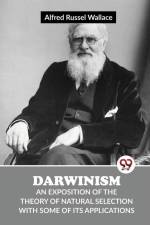
Alfred Russel Wallace was a British naturalist and explorer who independently discovered the theory of evolution through natural selection around the same time as Charles Darwin. In his book, "Darwinism: An Exposition of the Theory of Natural Selection with Some of Its Applications," Wallace explains the key principles of Darwin's theory and their implications for the understanding of life on earth. Wallace argues that the principle of natural selection is the driving force behind the evolution of species, with organisms that are better adapted to their environment more likely to survive and reproduce. He also discusses the concept of variation, or the idea that individuals within a species exhibit differences that can be inherited by their offspring and that can accumulate over time. Wallace also delves into the social implications of Darwin's theory, noting that it challenges traditional religious and philosophical views of human nature and our place in the natural world. He argues that Darwinism offers a more rational and scientific approach to understanding the diversity of life on earth and our own place in the evolutionary process. Overall, Wallace's "Darwinism" provides a clear and concise overview of the theory of natural selection and its applications, as well as its broader implications for science, philosophy, and society.
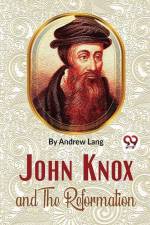
"John Knox and the Reformation" by Andrew Lang is a historical account of the life and work of John Knox, a Scottish Protestant reformer who played a key role in the Scottish Reformation of the 16th century. The book details Knox's early life as a Catholic priest and his conversion to Protestantism under the influence of the reformer George Wishart. Knox became a fiery preacher and advocate for the reformed faith, and his teachings and writings helped to spread the Protestant message throughout Scotland. The book also describes Knox's involvement in the political and social upheavals of his time, including his support for the Scottish nobility in their struggle against the Catholic Queen Mary, and his eventual role in the establishment of the Presbyterian Church of Scotland. Through his leadership and preaching, Knox inspired a generation of Scots to reject the authority of the Catholic Church and embrace the principles of the Reformation. Despite persecution and opposition from the Catholic establishment, Knox's legacy endured, and his ideas helped shape the religious and political landscape of Scotland for centuries to come. Overall, "John Knox and the Reformation" is a vivid and engaging account of one of the most important figures in Scottish history and his impact on the Protestant movement.
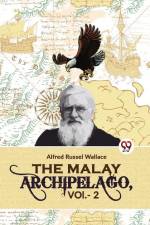
"The Malay Archipelago" is a two-volume book written by British naturalist and explorer Alfred Russel Wallace. The second volume of the book recounts Wallace's travels through the Malay Archipelago (present-day Indonesia, Malaysia, and surrounding areas) between 1854 and 1862. In Volume 2, Wallace continues his exploration of the region, documenting his experiences in New Guinea, the Moluccas, and the Philippines. He describes the diverse flora and fauna he encountered, including rare and exotic species such as the bird-of-paradise and the giant Rafflesia flower. One of the key themes of the book is Wallace's observations on the biogeography of the region, which he saw as a laboratory for the study of evolution. Throughout the book, Wallace also reflects on the impact of colonialism and the exploitation of natural resources in the region and offers insights into the social and cultural practices of the indigenous peoples he encountered.
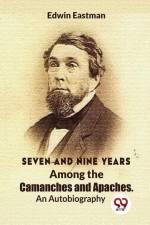
Seven and Nine Years Among the Camanches and Apaches is a personal narrative written by Edwin Eastman, which details his experiences during his time living with and among the American Indian tribes of the Camanches and Apaches. The book is divided into two parts, with the first covering Eastman's seven years among the Camanches and the second covering his two years among the Apaches. Eastman's account provides a unique perspective on the culture, customs, and beliefs of the Camanche and Apache tribes. He describes their hunting methods, social structure, and rituals, as well as their interactions with other tribes and with the white settlers who were encroaching on their land. The narrative also offers insight into the challenges and dangers that Eastman faced as a white man living among the tribes. Throughout the book, Eastman portrays the American Indians as complex and multifaceted people, with their own distinct traditions, values, and ways of life.
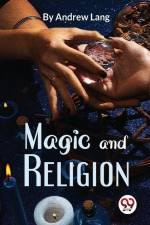
"Magic and Religion" by Andrew Lang is a collection of essays that explore the relationship between magic and religion in different cultures throughout history. The book examines the ways in which magic and religion have intersected and influenced each other, as well as the similarities and differences between these two forms of belief. Lang argues that both magic and religion are attempts by humans to understand and interact with the supernatural, but that they differ in their approach and their goals. Magic is often associated with individualistic and practical goals, such as achieving success in love or business, while religion is more concerned with communal and spiritual goals, such as salvation or enlightenment. The book also discusses the role of ritual in both magic and religion, and how rituals can be used to create a sense of community and connection to the divine. Lang draws on examples from a wide range of cultures and historical periods, including ancient Greece, medieval Europe, and indigenous cultures from around the world, to illustrate his arguments. Overall, "Magic and Religion" is a thought-provoking exploration of the complex and often overlapping relationship between two fundamental aspects of human belief and experience.
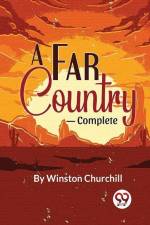
"A Far Country" by Winston Churchill is a novel set in the late 19th century that tells the story of Hugh Paret, a young man from a small town in the American Midwest, who moves to Boston to pursue a career in law. In Boston, Hugh becomes involved with the city's elite, including the wealthy and powerful Waterman family, and is exposed to their luxurious lifestyle and political ambitions. Despite his reservations, Hugh is drawn into their world and begins to pursue his own political aspirations. As Hugh rises through the ranks of Boston society, he becomes increasingly disillusioned with the corruption and hypocrisy of the political system. As the novel progresses, Hugh is forced to confront the darker side of his ambitions and the consequences of his choices. Ultimately, he must decide what kind of life he wants to lead and whether he is willing to sacrifice his integrity and principles for power and success. Overall, "A Far Country" is a compelling tale of ambition, love, and the corrupting influence of wealth and power.
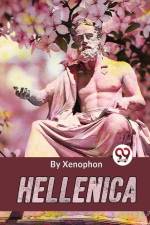
Xenophon's "Hellenica" is a historical account of the events in Greece and the Greek world from 411 BC to 362 BC. It begins with the fall of Athens in the Peloponnesian War and covers the rise of Sparta, the war with Persia, and the power struggles among the Greek city-states. The first four books of the "Hellenica" cover the period of the Peloponnesian War and the subsequent peace negotiations. The remaining books cover the rise of Spartan power and the decline of Athens, as well as the battles fought between various Greek city-states. Throughout the work, Xenophon presents a pro-Spartan viewpoint, portraying them as the defenders of Greek culture and civilization. He also emphasizes the importance of piety, obedience to the law, and the virtues of the Greek city-state system. Overall, "Hellenica" provides a valuable historical account of the turbulent period of Greek history in the fourth century BC, with insights into the political, social, and cultural factors that shaped the ancient Greek world.
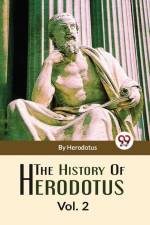
The History of Herodotus is a monumental work of ancient Greek literature that spans over two volumes. Volume 2 of the History of Herodotus, written by Herodotus himself, continues where the first volume left off, recounting the events of the Persian Wars between the Greeks and the Persians. The book begins with the story of the Battle of Marathon, where the Athenians defeated the Persians in a surprising victory. Herodotus then delves into the events leading up to the second Persian invasion, including the intrigue and betrayal that took place within the Persian court. Throughout the book, Herodotus provides rich and detailed descriptions of the cultures and customs of the various peoples involved in the conflict, from the Persians to the Greeks to the various tribes of Asia Minor. He also includes stories of individual heroism and treachery, adding depth and nuance to the historical events he recounts.
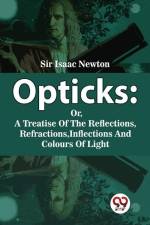
"Opticks" is a groundbreaking work by Sir Isaac Newton that revolutionized the study of optics. The book is structured as a series of experiments and observations that Newton conducted over several years to explore the nature of light and color. One of the most significant contributions of "Opticks" is Newton's theory of color, which he developed through his experiments with prisms. He demonstrated that white light could be separated into a spectrum of colors and that each color was refracted at a different angle. He also explored the idea that colors were not inherent to objects but were instead a result of the way light interacted with those objects. In addition to his work on color, Newton also explored the nature of light itself, proposing that light was made up of particles, which he called "corpuscles," rather than waves. This idea was controversial at the time, but it laid the groundwork for the development of modern particle physics.
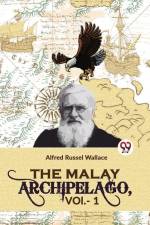
"The Malay Archipelago" is a two-volume book written by British naturalist and explorer Alfred Russel Wallace. The book recounts Wallace's travels through the Malay Archipelago (present-day Indonesia, Malaysia, and surrounding areas) between 1854 and 1862. In Volume 1, Wallace describes his journey through the Malay Archipelago, documenting the flora and fauna he encountered and the people and cultures he encountered along the way. He provides detailed accounts of his adventures, including his encounters with orangutans, his travels along the rivers of Borneo, and his interactions with the indigenous peoples of the region. Are you interested in learning about the flora and fauna of Malay? One of the key themes of the book is Wallace's observations on the distribution of animal species across the region. The author observed that there were distinct regions with their own unique animal populations, which he called "zoological provinces". Throughout the book, Wallace also reflects on the impact of colonialism and the exploitation of natural resources in the region and offers insights into the social and cultural practices of the indigenous peoples he encountered.
The Inequality of Human Races is a book written by Arthur de Gobineau written before 1853. The book is widely considered to be a foundational text of racial theory and is often cited as a precursor to scientific racism. Gobineau's ideas were controversial even in his own time, and the book was widely criticized for its racialist theories. However, the book also had a significant impact on later thinkers, including Friedrich Nietzsche and Houston Stewart Chamberlain, who would go on to develop their own theories of race and culture. Today, the book is widely regarded as a problematic and deeply flawed work that contributed to the development of racist ideologies.
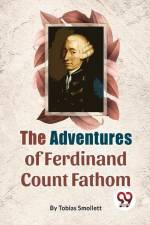
"The Adventures of Ferdinand Count Fathom" is a novel by Tobias Smollett. The story follows the titular character, a young man of unknown parentage who sets out to make his fortune in the world. Fathom is initially presented as charming and charismatic, but soon reveals himself to be a ruthless and deceitful opportunist. Fathom begins his adventures as a con artist, manipulating and swindling people for his own gain. He meets a variety of characters, including wealthy socialites, criminals, and members of the working class. Along the way, he engages in a variety of schemes, from gambling and forgery to seduction and murder. Despite his many misdeeds, Fathom manages to charm his way into the affections of several women, including a wealthy heiress and a virtuous young woman named Monimia. However, his schemes eventually catch up with him, and he is imprisoned and sentenced to death. In the end, he repents of his misdeeds and is spared from execution, but is left to live out his days in ignominy. "The Adventures of Ferdinand Count Fathom" is a darkly comic satire that explores the themes of deception, morality, and class in 18th century society. It is considered one of Smollett's most important works and a notable contribution to the literary genre of picaresque fiction.
"Forty Years Among the Indians" is a memoir by Daniel W. Jones, a Baptist missionary who spent four decades living among various Native American tribes in the western United States during the mid-1800s. The book is a detailed account of Jones' experiences and observations of the different cultures, traditions, and daily life of the indigenous peoples he encountered. Jones describes his early years among the Creek Indians in Alabama, his time with the Choctaws in Mississippi, and his eventual move west to work with the Osages, Cherokees, and other tribes. He also discusses the challenges he faced as a missionary, including language barriers, cultural differences, and the difficulty of converting individuals who held deeply-rooted spiritual beliefs. Throughout the book, Jones expresses admiration for the Native American way of life and their strong sense of community. He also speaks out against the injustices and mistreatment of indigenous peoples by the US government and white settlers, calling for greater respect and understanding of Native American culture. Overall, "Forty Years Among the Indians" provides a unique and valuable perspective on the experiences of a missionary who lived among and interacted with various Native American tribes during a pivotal period in American history.
"The Advancement of Learning" is a philosophical treatise written by Francis Bacon in 1605. The book is divided into two parts, each of which explores the nature of knowledge and its relationship to human progress. In the first part of the book, Bacon argues that knowledge is the key to human progress and that the pursuit of knowledge should be the central goal of society. He advocates for a new method of inquiry based on empirical observation and experimentation, which he calls the "new method." The second part of the book provides a detailed analysis of the state of knowledge in various fields, including theology, philosophy, and natural science. Bacon argues that many of the accepted ideas in these fields are based on outdated or flawed thinking, and that a new approach is needed to unlock the full potential of human knowledge. Throughout the book, Bacon emphasizes the importance of practical knowledge and its application to solving real-world problems. He argues that knowledge should not be pursued for its own sake, but rather as a means of improving the human condition and advancing civilization. Overall, "The Advancement of Learning" is a seminal work in the history of philosophy and science. It laid the groundwork for the scientific method and the Enlightenment, and its ideas continue to influence the way we think about knowledge and progress today.
"Pawned" is a thrilling crime novel written by Frank L. Packard written before 1913. The story follows the character Jimmie Dale, a wealthy socialite by day and a master thief known as "The Gray Seal" by night. Jimmie's double life takes a dramatic turn when he finds himself unwittingly involved in a deadly game of blackmail and murder. The book begins with Jimmie receiving a letter from a mysterious figure known only as "The Tocsin." The letter informs Jimmie that he is being watched and that he must steal a particular item or face the consequences. As Jimmie races to clear his name, he finds himself in a race against time, with danger lurking around every corner. Along the way, he teams up with a spunky newspaper reporter named Marie LaSalle, who helps him navigate the seedy underbelly of New York City's criminal underworld. "Pawned" is a classic crime novel filled with suspense, danger, and unexpected twists and turns. It offers a glimpse into the criminal mind and the lengths to which people will go to protect their secrets.
"The Country of the Blind" is a short story by H.G. Wells about a mountaineer named Nunez who stumbles upon a remote valley. The valley is cut off from the rest of the world and is home to a small community of people who have been blind for generations. Despite initially being seen as a strange outsider, Nunez eventually comes to realize that the blindness of the community has given them unique abilities and a rich culture of their own. Nunez attempts to share his knowledge of the outside world with the community, but they are skeptical and dismissive of his claims. They view his sightedness as a form of madness and see their own blindness as a gift. In the end, Nunez realizes that he is the one who is truly disadvantaged in this society and decides to stay in the valley and become one of its citizens. The story explores themes of perspective, cultural relativism, and the limitations of knowledge. It also raises questions about the value of physical abilities and challenges the assumption that those who lack them are necessarily disadvantaged.
"Twilight in Italy" is a collection of essays written by D. H. Lawrence written before 1916. The book is a travelog that details Lawrence's experiences and observations during his visit to Italy in 1912. The collection is divided into several chapters, each one focusing on different aspects of Italian life, culture, and society. In the book, Lawrence writes about his impressions of the Italian landscape, architecture, and people. He explores the countryside, villages, and cities of Italy, describing the beauty of the country's natural scenery and the charm of its old towns. He also writes about his encounters with Italian people, their customs, and their way of life. Through his observations, Lawrence provides a unique insight into Italian culture and character. To read more about this interesting view of Italian culture, readers should go through this book! "Twilight in Italy" is not only a travelog but also a work of literature, offering a glimpse into the mind of one of the most influential writers of the 20th century.
Abonner på vårt nyhetsbrev og få rabatter og inspirasjon til din neste leseopplevelse.
Ved å abonnere godtar du vår personvernerklæring.