













Gjør som tusenvis av andre bokelskere
Abonner på vårt nyhetsbrev og få rabatter og inspirasjon til din neste leseopplevelse.
Ved å abonnere godtar du vår personvernerklæring.Du kan når som helst melde deg av våre nyhetsbrev.

Through the lens of social-scientific criticism, Christian Fasting: Biblical and EvangelicalPerspectives explores the social, cultural, and religious significance of fasting in the first-century Mediterranean world. Old Testament precedents, as well as Mesopotamian, Greek, and Roman influences are examined to form the backdrop for a detailed interpretation of each fasting text in the New Testament. Contemporary evangelical fasting literature is also discussed and analyzed. Finally, H.S. Mathews proposes a solution for reconciling a biblical interpretation of fasting with contemporary evangelical practice.
The book puts into plain words a changing dimension of politics in a traditional regime and offers an insight into the emerging transition to royal, semi-authoritarian democracy in Bhutan. Bhutan represents a political system which coalesces the rhetorical acquiescence of democracy with illiberal authoritarian attributes under the former royalist shadow. Royal democracy is a myth and only paints the frontage of democracy. The smokescreen of this kind of authoritarian regime is not yet democracy but is instead a new form of semi-authoritarian rule. The political reforms in Bhutan were orchestrated by the ';traditional regime and elites in a traditional society' as a tightly controlled, top-down process without devolution of power outside the regime. Royal Democracy can best be understood as an attempt to construct a political regime that impersonates democratic institutions but works outside the logic of political representation and seeks to repress any vestige of genuine political pluralism. Exploring the authoritarian logic behind the democratic rhetoric is especially important for Bhutan, which is today glorified by the UN as ';The Mecca of Gross National Happiness' and depicted by many as a model of top down democracy on popular media and in academia.Holding State controlled elections alone does not create a cure for deeper political, economic, and social predicaments besetting Bhutan and does not create a solid foundation for democratic transition. The glitter of royal, semi-authoritarian democracy is a ';Jigmecracy,' an old Jigme's system with new labels, a classic case of transition from a traditional regime in a traditional society.
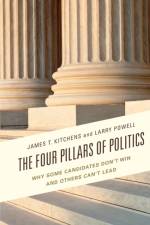
The Four Pillars of Politics provides a uniform foundation for evaluating political campaign strategies. The four pillars identified in this bookfear, national narcissism, consumerism, and religionserve as attitudinal anchors that American voters use in making their voting decisions. The dominant pillar may change from election to election, leading to situations in which a candidate who wins in one election may be defeated four years later. Kitchens and Powell examine how political communication is understood by combining these four pillars with the related matrix of attitudes, beliefs, and values that are integral components of the American culture. The Four Pillars of Politics will appeal to scholars of political science, communication studies, and journalism.
In Recovering Christian Realism, H. David Baer interprets just war theory as political ethic concerned with the moral administration of power. He argues that contemporary just war theorists, by debating the finer points of individual criteria, have lost sight of the theory of politics that gives rise to just war thinking in the first place. Baer attempts to relocate just war theory within the tradition of Christian realism in order to develop an ethic capable of addressing the uses of power. He argues the just war criteria unfold from a description of the political act, one which harnesses power to peace and points the way toward an ethic of armed force and international relations.
This book takes as its starting point the life, activities, and writings of Chen Hengzhe (1890-1976) in order to investigate the effects of transnational experience and in particular the manner in which different, foreign and Chinese, narratives of life were interwoven into activities and attitudes as well as literary and scholarly output at a time ';between orthodoxies' (Jerome Grieder) and of eclectic borrowings in search of change in most areas of national life in China. Chen Hengzhe has been celebrated as China's first female professor, first professor of Western history, and first person to publish a history of the West that was not a translation into Chinese. She is moreover celebrated as one of the first to write fiction and poetry in the vernacular and to have been the first to write children's literature. In 1914 she was among the first group of women to gain a Boxer Indemnity grant to study in America. The reiteration of these many ';firsts' has led to a rather stereotypical portrait of Chen Hengzhe in Chinese sources and, as a result, in most Western references to her. To date we have no critical study of her work or activities in Chinese or any other language. Chen Hengzhe's life and textual production, however, deserve and reward closer scholarly attention. They are not only pertinent to analysis of developments in early twentieth-century China; they speak to important questions in China today.This study, then, is not a biography of a person; it is an attempt to understand the way in which foreign influences (narratives of being, organizing, thinking, writing) seep into a person's life and work and meld with the ';home' influences (narratives of being, organizing, thinking, writing) to produce a mix that cannot be predicted by any overarching ';isms' or theories.
Neo-Socialist Property Rights: The Predicament of Housing Ownership in China examines how urban dwellers' practices of acquiring and defending property rights reshape state-property-family relationality in China. Ubiquitous housing ownership has emerged together with a pervasive yet particularized rights discourse and practice in the past two decades. Cheuk Yuet Ho considers them to be a condensation and vindication of the principles of family values and emergent ';neo-socialist' governance. However, there are manifested and latent contradictions between rights as interests and rights as a moral principle. The book concludes that private property rights are at once enabling and disabling when understood in the light of both the rigorous pursuit of well-being in a market economy and the contestation by those who resist forced eviction or the infringement of owners' rights. In this book, Ho provides rarely available ethnographic record of the encounters between evictees and evictors engaged in housing demolition and approaches the topic of urban housing ownership from the investing perspective in contrast to most anthropologists' consumption-focus analysis. Neo-Socialist Property Rights links property rights practice to the broader human rights discourse as both a working hypothesis and a historical question.
Wilbur Schramm and Noam Chomsky Meet Harold Innis is an original, critical, in-depth analysis of the media and communication thought of Canada's most highly acclaimed scholar, Harold Adams Innis. Even in Canada, however, Innis's writings until now have been only partially cited and interpreted: Innis is usually stereotyped as being merely an economic historian fixated on previous civilizations, whereas in fact he was an astute analyst whose main concerns were with present problems and future trajectories. In the United States, meanwhile, Innis's media and communication writings have been quite neglected and even denigrated. Drawing on Innis's less frequently cited work, including his long neglected Political Economy in the Modern State, Robert Babe opens up Innis's media scholarship as a whole, unfolding it in startling critical, yet ultimately appreciative ways. By comparing Innis's media scholarship with Wilbur Schramms and Noam Chomskys, moreover, Babe tests the claims, positions, and modes of analysis not only of Innis, but also of the other two celebrated scholars as well, casting new light on their works and allowing the reader to imagine what sort of discourses might have been possible had the three been in conversation together. Wilbur Schramm and Noam Chomsky Meet Harold Innis provides comparative insight into foundational media scholarship in the United States and Canada, and explores in some detail the relevance of Innis for twenty-first century digitized society.
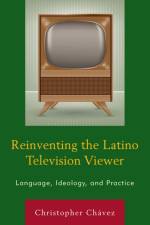
Reinventing the Latino Television Viewer: Language, Ideology, and Practice examines how the relationship between language, power, and industry practice is reshaping the very concept of Hispanic television. Chvez argues that as established mainstream networks enter the Hispanic television space, they are redefining the Latino audience in ways that more closely resemble the mainstream population, leading to auspicious forms of erasure that challenge the legitimacy of Spanish altogether. This book presents the integration of English into the Hispanic television space not as an entirely new phenomenon, but rather as an extension of two ongoing practices within the television industrythe exploitation of consumer markets and the suppression of Latino forms of speech.
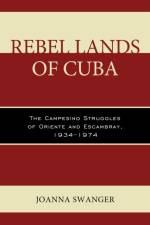
The book is a comparative history of twentieth-century Cuban campesinos in two regions in Cuba marked by extreme differences in race, gender, and land tenure: Oriente and Escambray. It explores the ways these differences articulated with state formation from the pre-revolutionary period of 1934-1959 and then 1959-1974 and seeks to explain why campesinos in Escambray, having been active in the insurrection against Batista, later turned to stage a massive counter-revolution against the government headed by Fidel Castro. Although campesinos in both regions had been equally ignored by pre-1959 governments for different reasons, they developed two distinct understandings of what the role of the state should be in response to political neglect. Rich archival sourcesmany of which have not been accessed previouslydocument the unique shape of land struggles in each region in the 1930s through the 1950s. The author argues that because of the way race and gender and a collectivist land tenure tradition in Oriente mapped nicely onto the goals of the 1959 Revolution, Oriente became a kind of revolutionary showcase. In Escambray, on the other hand, a construct of white masculinity, tied to private property ownership, directly contravened the goals of the Revolution, which fueled the counter-revolution and also led to brutal state repression in the area.
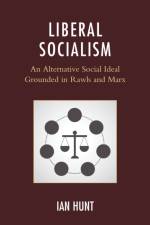
Should we be looking for alternatives to the western world's status quo of neo-liberal capitalism? Should we be seeking a new form of freedom for a more just and better social world? Drawing on Rawls's theory of justice and Marx's critique of capitalism, this book answers those questions in a resounding affirmative. Some think that a just society for Rawls cannot promote a better social world unless it is acceptable to all but, this wrongly treats Rawls as a supporter of minimal government. Setting this aside, the book argues that the ideas of justice behind political and media pundit support of neo-liberal capitalism are faulty, and should be replaced with a Rawlsian idea of justice. Resistance to the idea that an acceptable theory of justice can say that capitalism is unjust is overcome by showing that capitalism, as Marx sees it, must be unjust on Rawls's theory of justice because it breaches the difference principle and involves exploitation of employees. Reasons are then given for a new society that will be just under a modified Rawlsian idea of justice and will promote the Marxian good of free social cooperation on projects pursued independently of demands of nature. What a free life lived in this new society means is spelled out and shown to be acceptable. This book concludes by asking whether society can set out on a path to a better social world.
American Literature, Lynching, and the Spectator in the Crowd: Spectacular Violence examines spectatorship in American literature at the turn of the twentieth century, focusing on texts by Theodore Dreiser, Miriam Michelson, Irvin S. Cobb, and Paul Laurence Dunbar. The spectator functions as a lens through which we view the relationship between violence and social change as depicted in the politically-charged crowds of fictional lynch mob scenes that expose the central tension of American democracythe struggle for balance between the rights of the individual and the demands of the community. This has played out in American fiction through clashes between crowds and the primarily rural images that have so often been used to describe America. While this pastoral vision of America has dominated the study of American literature, this book argues for a reassessment of fiction that takes into consideration that the way the country defines itself collectively is as significant as the way its people define themselves individually.This study distinguishes itself from others by bringing together journalism, crowds, lynching, spectatorship, and literature in new and innovative ways that uncover how American literature at the turn of the twentieth century confronted and pushed beyond passive observation and static visual performances, which are traditionally associated with the terms spectator and spectacle. The crowds in fictional lynch mob scenes clash with the idea of positive collective action because the crowds vigilantism defies legitimate legal and democratic processes. Lynch mobs, in contrast to other crowds like strikes or political rallies, do not reclaim the democratic process from the control of the powerful and wealthy, but rather oppose those practices violently without regard to justice. As a figure who is simultaneously within and outside the crowd, the spectator (often in the form of a reporter character) is in a unique position to express the fractures occurring between the individual and the collective in American society. Racial conflicts are a key aspect of the crowd scenes examined. American writers contended with these issues by using the spectator to observe, question, and challenge readers to consider the impact on the structure of American society.
This book describes the conduct of the US-led post-9/11 war in Afghanistan. Adopting a long-term perspective, it argues that even though Washington initially had an opportunity to achieve its security goals and give Afghanistan a chance to enter a new era, it compromised any possibility of success from the very moment it let bin Laden escape to Pakistan in December 2001, and found itself locked in a strategic overreach. Given the bureaucratic and rhetorical momentum triggered by the war on terror in America, the Bush Administration was bound to deploy more resources in Afghanistan sooner or later (despite its focus on Iraq). The need to satisfy unfulfilled counter-terrorism objectives made the US dependent on Afghanistan's warlords, which compromised the country's stability and tarnished its new political system. The extension of the US military presence made Washington lose its leverage on the Pakistan army leaders, who, aware of America's logistical dependency on Islamabad, supported the Afghan insurgents their historical proxies - more and more openly. The extension of the war also contributed to radicalize segments of the Afghan and Pakistani populations, destabilizing the area further. In the meantime, the need to justify the extension of its military presence influenced the US-led coalition into proclaiming its determination to democratize and reconstruct Afghanistan. While highly opportunistic, the emergence of these policies proved both self-defeating and unsustainable due to an inescapable collision between the US-led coalition's inherent self-interest, hubris, limited knowledge, limited attention span and limited resources, and, on the other hand, Afghanistan's inherent complexity. As the critical contradictions at the very heart of the campaign increased with the extension of the latter's duration, scale, and cost, America's leaders, entrapped in path-dependence, lost their strategic flexibility. Despite debates on troops/resource allocation and more sophisticated doctrines, they repeated the same structural mistakes over and over again. The strategic overreach became self-sustaining, until its costs became intolerable, leading to a drawdown which has more to do with a pervasive sense of failure than with the accomplishment of any noble purpose or strategic breakthrough.
The work of Giorgio Agamben, one of the world's most important living philosophers, has been the object of much scrutiny. Yet, there is one dimension of his thought that remains unexamined by scholars: the presence of the ancient science of astrology in his writings. This book, the first of its kind, identifies the astrological elements and explains the implications of their usage by Agamben. In so doing, this study challenges us to imagine Agamben's thought in a radically new light. A critical account of the presence of astrology and related themes in Agamben's writings, ranging from the earlier works to the more recent publications, illustrates that the astrological signature constitutes a mode of philosophical archaeology that allows for an enhanced understanding of concepts that are central to his works, such as potentiality, the signature, bare life and biopolitics.
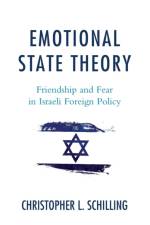
This book develops ';emotional state theory' as a new contribution to international relations theory (IR). The text addresses the State of Israel vis--vis the rest of the world. The rationale for this research perspective stems from the trajectory of Israeli state-building since its foundation in May 1948 to the present date. This trajectory is constructed reflecting the trauma of the past and dreams about the future. Both contribute decisively to a better understanding of the current image and position of the state of Israel. The reference builds on two great Jewish thinkers' works, Theodor Herzl and his book The Jewish State and Sigmund Freuds The Interpretation of Dreams. The author argues that despite the fact that both never met, taken together their ideas lend themselves to shed light on and offer an explanation for Israel's troubled and uncertain position in current international relations. The resulting question underlying this work on the emotionality of states and its impact on international relations is therefore ';whether Israel is still in a process of dreaming' and whether it is therefore to be understood a ';state which has not yet woken from the trauma of the Jewish past. Not a dream's fulfilment of an end of the Diaspora, but a nightmare based on this experience.' Drawing on these two parallel and rather influential texts, Schilling rephrases the leading questions of this book as this: ';Has Israel developed an understanding of itself which sees the country as a modern state among the nations, which is dealing with its neighbors, or rather, does Israel understand itself more as being like a ghetto that is still surrounded by a hostile world? Has Israel become a strong, self-confident country, or has it continued with the nervousness of the Diaspora Jews to become a state with an emotional problem?'.
This monograph narrates the decade-long struggle of workers, unions, and management in transforming one of the largest ailing family-owned jute businesses in India, into a sustainable worker-owned and governed cooperative. It focuses on the variation in the three groups' involvement in the transformation. It begins with the employees' struggles in taking over the business, deserted by its owners, to save their jobs. The study analyzes the tensions between the three groups in creating and maintaining democratic governance that would sustain the initial leap in employee participation in the transformation. The analysis reveals contradictions at multiple levels, starting with the unexpected outcome of information sharing with workers: increased information sharing by management resulting in decreased employee involvement. The study explains this paradox by showing that for workers, information has a symbolic nature and information sharing is a signal of their trustworthiness in the assessment of those who are privy to the information. This means involvement is contingent upon the feeling that the information that workers consider crucial is being shared with them. However, what workers consider crucial, and thus a symbol of trust, changes over time as the nature and breadth of their involvement evolves. Thus, worker expectation as well as management and union expectation of information sharing evolves. However, the evolution has the potential to create a mismatch between the two expectations that might lead to contradictions in employee involvement. While for management, information sharing is an instrument in eliciting involvement, and thus management's expectation of information sharing goes through an instrumental loop, for employees, information sharing is a matter of trust, and thus their expectation of information sharing goes through an institutional trust-based loop. To sustain high employee involvement, the organization should ideally institutionalize the trust-based loop and avoid engaging with the instrumental loop. The author proposes a collaborative approach to organizational transformation that will help deal with the contradictions more effectively, sustaining employee involvement in the transformation. The author also discusses the implications of these propositions for academic scholarship and organizational practices and situates them in the ongoing attempts to reform Industrial Disputes Act in India.
Existential Eroticism: A Feminist Approach to Understanding Womens Oppression-Perpetuating Choices offer a unique lens aimed at the underbelly of the lady through which feminists can reorient discourses on rationality and moral responsibility related to women's oppression-perpetuating choices. Shay Welch utilizes feminist ethics, broadly construed as feminist philosophy concerned with the ethical commitment to eliminate oppression, to scrutinize how women regard and judge one another and to offer a more representative account of restriction, rationality, and responsibility to begin the healing process between diverse and divergent women. The book aims not only to construct an analysis of self-perpetuated oppression that will broaden feminist understandings of experiences that motivate many women to choose as they do, it serves as a means of understanding the marginalized.
This is a biographical pairing of two of the greatest conquerors in human history, drawing its inspiration from Plutarch's Parallel Lives. Like Plutarch, the purpose of the pairing is not primarily historical. While Plutarch covers the history of each of the lives he chronicles, he also emphasizes questions of character and the larger lessons of politics to be derived from the deeds he recounts. The book provides a narrative account both of Alexander's conquest of the Persian Empire and Cortes's conquest of the Aztec Empire while reflecting on the larger questions that emerge from each. The campaign narratives are followed by essays devoted to leadership and command that seek to recover the treasures of the Plutarchian approach shaped by moral and political philosophy. Analysis of leadership style and abilities is joined with assessment of character. Special emphasis is given to the speeches provided in historical sources and meditation on rhetorical successes and failures in maintaining the morale and willing service of their men.
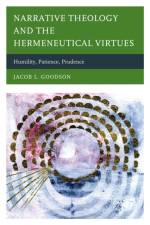
Dr. Jacob L. Goodson will be doing a book signing for Narrative Theology and the Hermeneutical Virtues: Humility, Patience, Prudence at Eighth Day Books in Wichita, KS, on Saturday March 21, 2015, at 4:00pm.In Narrative Theology and the Hermeneutical Virtues: Humility, Patience, Prudence, Jacob L. Goodson offers a philosophical analysis of the arguments and tendencies of Hans Frei's and Stanley Hauerwas' narrative theologies. Narrative theology names a way of doing theology and thinking theologically that is part of a greater movement called ';the return to Scripture.' The return to Scripture movement makes a case for Scripture as the proper object of study within Christian theology, philosophy of religion, and religious ethics. While thinkers within this movement agree that Scripture is the proper object of study within philosophy and religious studies, there is major disagreement over what the word ';narrative' describes in narrative theology. The Yale theologian, Hans Frei, argues that because Scripture is the proper object of study within Christian theology and the philosophy of religion, Scripture must be the exclusive object of study. To think theologically means paying as close attention as possible to the details of the biblical narratives in their ';literal sense.' Different from Frei's contentions, the Christian ethicist at Duke University, Stanley Hauerwas claims: if Scripture is the proper object of study within Christian theology, then the category of narrative teaches us that we ought to give our scholarly attention to the interpretations and performances of Scripture. Hauerwas emphasizes the continuity between the biblical narratives and the traditions of the church. This disagreement is best described as a hermeneutical one: Frei thinks that the primary place where interpretation happens is in the text; Hauerwas thinks that the primary place where interpretation occurs is in the community of interpreters. In order to move beyond the dichotomy found between Frei's and Hauerwas' work, but to remain within the return to Scripture movement, Goodson constructs three hermeneutical virtues: humility, patience, and prudence. These virtues help professors and scholars within Christian theology, philosophy of religion, and religious ethics maintain objectivity in their fields of study.
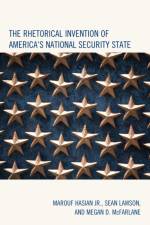
The Rhetorical Invention of America's National Security State examines the rhetoric and discourse produced by and constitutive of America's national security state. Hasian, Lawson, and McFarlane illustrate the importance of rhetoric to the expansion of the American national security state in the post-9/11 era through their examination of the global war on terrorism, enhanced interrogation techniques, drone crew stress, activities of Edward Snowden, rise of Special Forces, and popular representations of counterterrorism. The coauthors contend this expansion was not the result of lone, imperial executives or a nefarious state within a state, but was co-produced by elite and non-elite Americans alike who not only condoned, but also in many cases demanded, the expansion of the national security state. This work will be of interest to scholars in communication studies and political science.
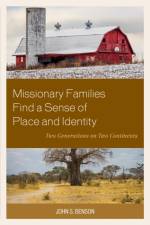
Missionary Families Find a Sense of Place and Identity is a community history of members of nineteen Lutheran missionary families who served in Tanzania. Based on over ninety interviews and John Benson's extensive knowledge of cultural geography, he compares the lives of the missionary generation who grew up in the United States and went to Tanzania as missionaries to those of their children who grew up in Africa but settled in the United States as adults. Benson blends his personal experiences as a child of missionaries in Tanzania to tell the story of both generations. Missionary Families is centered on the themes of connection to place and religious development and will appeal to scholars of geography, cultural studies and religion.
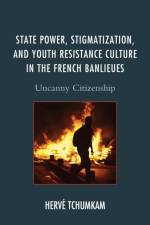
State Power, Stigmatization, and Youth Resistance Culture in the French Banlieues: Uncanny Citizenship foregrounds the literary, sociological, and political structures of urban literature in France. It uses postcolonial theory, sociology, and political philosophy to investigate the modalities surrounding the question of citizenship in a country where citizens of African descent are not only considered a threat to national identity, but also caught between inclusion and exclusion. By examining the literary, sociological, and political structures of urban literatures produced after the 2005 riots, this book interrogates the questions of citizenship, belonging, and coexistence in a context where literature from the periphery has become a site where central political power and mainstream French literary canons are contested. Moreover, these productions clearly reveal an unexplored correlation between geo-aesthetics and contemporary French national geopolitics. Ultimately, this book is a plea for a serious approach to social formation in postcolonial France in a way that transcends skin color, and instead is based on a shared colonial past, as well as current social disqualifications.
Another Phenomenology of Humanity: A Reading of A Dream of Red Mansions is devoted to developing another version of phenomenology of humanityhuman nature, human dispositions and human desiresby taking A Dream of Red Mansions, the crown jewel of Chinese culture, as its main literary paradigm of illustration. The version of phenomenology of humanity at issue is a synthesis of the Confucian, Daoist, Buddhist and Western existentialist phenomenological accounts of humanityfor example, what is humanity, what make humans as human, human nature, human feelings, human desires, three core human existential interests, and four basic problems of human existence.
This book provides a philosophical analysis of adultchild sex and pedophilia. This sex intuitively strikes many people as sick, disgusting, and wrong. The problem is that it is not clear whether these judgments are justified and whether they are aesthetic or moral. By analogy, many people find it disgusting to view images of obese people having sex, but it is hard to see what is morally undesirable about such sex: here the judgment is aesthetic. This book looks at the moral status of such adult-child sex. In particular, it explores whether those who engage in adult-child sex have a disease, act wrongly, or are vicious. In addition, it looks at how the law should respond to such sex given the above analyses.
Conceptual Tension: Essays on Kinship, Politics, and Individualism is a critical philosophical examination of the role of concepts and concept formation in social sciences. Written by Leon J. Goldstein, a preeminent Jewish philosopher who examined the epistemological foundations of social science inquiry during the second half of the twentieth century, the book undertakes a study of concept formation and change by looking at the four critical terms in anthropology (kinship), politics (parliament and Rousseau's concept of the general will), and sociology (individualism). The author challenges prevailing notions of concept formation and definition, specifically assertions by Gottlieb Frege that concepts have fixed, clear boundaries that are not subject to change. Instead, drawing upon arguments by R.G. Collingwood, Goldstein asserts that concepts have a historical dimension with boundaries and meanings that change with their use and context. Goldstein's work provides insight for philosophers, historians, political scientists, anthropologists, and Judaica scholars interested in the study and meaning of critical concepts within their fields.
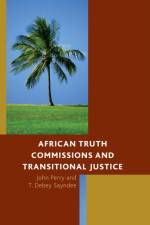
African Truth Commissions and Transitional Justice examines the functioning of truth commissions in Africa, outlining the lessons learned, the best practices, and the successes and failures of seven African truth commissions. Its introduction and conclusion then work further to place truth commissions within the growing academic field of transitional justice. The first African truth commission was convened by the despot Idi Amin for reasons unrelated to the defense of human rights, but despite this ambiguous beginning, other African truth commissions have done important work. The South African Truth and Reconciliation Commission of 1996 has become the ';gold standard' for future truth commissions not only in Africa, but throughout the world: it unearthed much truth about the Apartheid era abuse of human rights and took vital first steps towards restorative justice in the Republic. Each truth commission is distinctive. However, although much has been written about South Africa's truth commissions, much less is known about the other six studied in this bookand an attentive reader will notice the suggestive patterns which emerge.
The purpose of this book is to narrate important, dynamic events that have taken place in the IndoU.S. relations, beginning from 1943 to 2013. This includes the American role in Indias independence, the Cold War, demise of the Soviet Union, resurgence of Islamic fundamentalism, terrorists attack of American cities in 2001, decline of American power, rise of India, and rise of China. The study is confined to only three areas: terrorism, nuclear proliferation, and nuclear energy. The defining moment of the twenty-first century occurred in 2008 when these two estranged great democracies engaged one another to work on common goals and establish a strategic relationship between two natural allies.
Between 1954 and 1963, President Ngo Dinh Diem, against great odds but with U.S. assistance, built a functioning South Vietnamese state. But gravely misled by American journalists in Saigon, the U.S. embassy, in league with second-tier members of the State Department, urged certain South Vietnamese generals to stage a coup against Diem, resulting in his brutal murder. Despite the instability after Diem's murder, the South Vietnamese Army performed well during the 1968 Tet Offensive and the 1972 Easter Offensive. In proportion to population, South Vietnamese Army losses were much greater than American losses. Nevertheless, the American media ignored South Vietnamese sacrifices, and completely misrepresented the consequences of the Tet Offensive. The disastrous ';peace agreement' the U.S. forced on the South Vietnamese in 1973 made continuing American support vital. But Congress began to slash aid to South Vietnam, so that its soldiers had to fight on with dwindling supplies of fuel, ammunition, and medicine. Under these circumstances, the South Vietnamese attempted to regroup their army into the provinces around Saigon, an effort that ended in disaster. The final chapter reflects on the meaning of the conflict and the tragedy that abandonment by Washington and conquest by Hanoi brought upon the South Vietnamese people. An Appendix presents a strategy for preserving a South Vietnamese state with the commitment of a relatively small number of U.S. forces.
This book examines the influences of social class and inequality structures on migration in Africa using information from Ghana. As the country achieves moderate to significant economic gains driven (in part) by the country's diaspora communities, the desire to migrate has intensified. Migration is now synonymous with social mobility and self-improvement. It has been found that existing class and status inequalities are analytically inseparable from the social and cultural processes underpinning the motivations behind Ghanaian migration. Migrant class and socioeconomic attributes are closely intertwined, reinforcing and operating at every level of the migration decision-making to influence the motivation to migrate, the type and form of migration, the direction of the migration, its timing, and ultimately the outcomes and expectations that migrants associate with their decision to migrate.From a historical and contemporary perspective, this book argues that power and class-based structural relationships are significant components in understanding how migratory diasporas shape and are shaped in turn by social class and inequality. The social class identities that Ghanaian immigrants manifest in the United States are often based on immigrant formulations and importation of class dynamics from the home country. These identities are then transformed in the countries of destination and replayed or relived back home, thereby creating multiple class identities that are powerful forces in inducing social changes. In essence, migrant social class attributes formed before and post-migration is significant because it holds the possibilities of transforming the social structures of migrant-sending countries. As migrants return home and seek reintegration into the body polity of the home society, conflicts emanating from changes in their class dynamics may hinder or promote sociocultural and economic development. Hence, the imperative of the central government is to understand and incorporate into national development planning the social class characteristics of its citizens who are leaving, as well as those who are returning.
No study of Black people in America can be complete without considering how openly discriminatory tax laws helped establish a racial caste system in the United States, how they were designed to exclude blacks from lucrative markets and the voting franchise, and how tax laws extracted and redistributed vast sums of black wealth. Not only was slavery nearly a 100% tax on black labor, so too was Jim Crow apartheid and tax laws specified the peculiar institution as ';negro slavery.' The first instances of affirmative action in the United States were tax laws designed to attract white men to the South. The nineteenth-century Federal Tariff indirectly redistributed perhaps a majority of the profits from slavery from the South to the North and is the principle reason the Confederate states seceded. The only constitutional amendment obtained by the Civil Rights Movement is the Twenty-Sixth Amendment abolishing poll taxes in federal elections. Blending traditional legal theory, neoclassical economics, and a pan-African view of history, these six interrelated essays on race and taxes demonstrate that, even in today's supposedly post-racial society, there is no area of human activity where racial dynamics are absent.
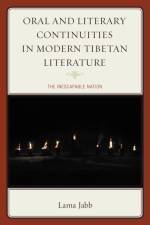
This is the first book-length study to appear in English on the literary, cultural and political roots of modern Tibetan literature. While existing scholarship on modern Tibetan writing takes the 1980s as its point of ';birth' and presents this period as marking a ';rupture' with traditional forms of literature, this book goes beyond such an interpretation by foregrounding instead the persistence of Tibet's artistic past and oral traditions in the literary creativity of the present. While acknowledging the innovative features of modern Tibetan literary creation, it draws attention to the hitherto neglected aspects of continuity within the new. This study explores the endurance of genres, styles, concepts, techniques, symbolisms, and idioms derived from Tibet's rich and diverse oral art forms and textual traditions. It reveals how Tibetan kavya poetics, the mgur genre, life-writing, the Gesar epic and other modes of oral and literary compositions are referenced and adapted in novel ways within modern Tibetan poetry and fiction. It also brings to prominence the complex and fertile interplay between orality and the Tibetan literary text. Embracing a multidisciplinary approach drawing on theoretical insights in western literary theory and criticism, political studies, sociology, and anthropology, this research shows that, alongside literary and oral continuities, the Tibetan nation proves to be an inevitable attribute of modern Tibetan literature.
Abonner på vårt nyhetsbrev og få rabatter og inspirasjon til din neste leseopplevelse.
Ved å abonnere godtar du vår personvernerklæring.