























Gjør som tusenvis av andre bokelskere
Abonner på vårt nyhetsbrev og få rabatter og inspirasjon til din neste leseopplevelse.
Ved å abonnere godtar du vår personvernerklæring.Du kan når som helst melde deg av våre nyhetsbrev.

Impact of Tectonic Activity on Ancient Civilizations: Recurrent Shakeups, Tenacity, Resilience, and Change observes a remarkable spatial correspondence of zones of active tectonism (i.e. plate boundaries in the earth's crust) with the most complex cultures of antiquity (';great ancient civilizations'), and continues to explore the meaning of this relationship from a number of independent angles. Due to resulting site damage, this distribution is counter-intuitive. Nevertheless, systematic differences between ';tectonic' and ';quiescent' cultures show that tectonic activity corresponded in antiquity with more cultural dynamism. Data of several independent types support direct cultural influence of tectonism, including vignettes of the impact of tectonism in specific ancient cultures. An expectation of change seems to be a feature such tectonic cultures shared, and led to an acceleration of development. These dynamics continue though much obscured in the present day.
Ask the average American who takes over in the event something happens to the President of the United States, and you're likely to receive the correct answer. However, what about succession beyond the vice presidency? Fortunately, our nation has an established line of presidential succession that is meant to ensure continuity in the nation's highest office. Unfortunately, there are several fundamental flaws in the model. This work begins by examining the fascinating history of presidential disability and succession, an issue that has impacted our nation's highest office since the very beginning. After highlighting the reoccurring nature of this problem, it then provides an analysis of the alarming state of our current disability and succession guidelines, many of which are dangerously outdated, especially when it comes to the threat of terrorism. It then explores these flaws, specifically the glaring problems associated with including members of Congress in the line of succession. Along with questions concerning suitability and preparedness, statistics detailing the partisan composition of Congress over the last half-century illustrate that a sudden shift in party control of the presidency is not only possible, but likely. Finally, it concludes by highlighting an inherent flaw in a line of succession in which every member is located in one small area that happens to be the most attractive target for a would-be terrorist. While the issues explored in this work have been present for more than a half-century, the combination of an increased partisan divide between the executive and legislative branches, as well as the dangers of terrorist attack, combine to require immediate action. Just as the average American may be surprised to discover the Speaker of the House stands second in the line of succession, they would likely be shocked at the potential for chaos and confusion that could unfold in a battle for the presidency. Therefore, it is vitally important to address these concerns now, before they play out in front of a national audience.
The Pedagogic Mission offers a focused pedagogic exegesis of the philosophies of Heraclitus, Parmenides, Socrates and Plato. Encrypted in their philosophical practices is a pedagogical mission which structures their manner of engagement. The linguistic style, epistemological assumptions, and metaphysical views are shown to be integral to the neophytes' pedagogical experience involving the acquisition of rational skills, an enhanced conceptual framework of understanding, and transformative effect on the subject.
Over the course of nearly a decade, Phillip McReynolds conducted a series of interviews with prominent American philosophers including, among others, Richard Rorty, Hilary Putnam, Joseph Margolis, Richard Bernstein, Bruce Wilshire, John Lachs, Richard Shusterman, and Crispin Sartwell. The American Philosopher: Dialogues on the Meaning of Life and Truth brings these interviews together, bridging a wide variety of topics both personal and professional, and ultimately addressing what it means to be an American philosopher. With interviews that are both philosophical and biographical in nature, this book will be of interest to those who specialize in pragmatism and the history of American philosophy, academics in fields such as comparative literature, history, political science, sociology, and American studies, and to anyone with an interest in ';America' as an idea
Hamlets Problematic Revenge: Forging a Royal Mandate provides a new argument within Shakespearean studies that argues the oft-noted arrest of the play's dramaturgical momentum, especially evident in Hamlet's much delayed enactment of his revenge, represents in fact a succinct emblem of the ';arrested development' in the moral maturity of the entire cast, most notably, Hamlet himselfas the unifying disclosure and tragic problem in the play. Settling for unreflective and short-sighted personal gratifications and cold comforts, they truantly elbow aside a more considerable moral obligation. Again and again, all yield this duty's commanding priority to a childishly self-regarding fear of offending those in nominal positions of power and questionable positions of authorityfigures, like Ophelia and Hamlet's fathers, for instance, demanding an unworthy deference. While Hamlet fails to consider with loving regard the improved well-being of the larger community to which he owes his existence and, fails to interrogate the moral adequacy of the Ghost's command of violent reprisal (two things he never does nor even contemplates doing), ';all occasions' in the play ';do inform against' him and merely ';spur a dull revenge'not, as he interprets his own words, arguing the need for greater urgency in his vendetta, but, instead, to ';inform against' the criminality of that very course itself. His revenge therefore can be argued as ';dull,' not because he cannot summon the wherewithal to enact it more bloodily, but because in obsessing about it ceaselessly he remains unreceptive to its ';dull' or ';unenlightened' opposition to the evil he hopes to eradicate. Hamlet does not avenge his father; this book argues that he becomes him. Amidst a wealth of previously unremarked figurative mirrorings, as well as much of the seemingly digressive material in Hamlet within Shakespearean studies, Hamlet's Problematic Revenge brings to light a new interpretation of the tragic problem in the play.
This book documents and explains the remarkable decline in the American marriage rate that began about 1970. This decline has occurred in spite of the fact that married people are better off than unmarried people in many ways. Many other attempts to explain the ';retreat from marriage' blame it on culture change involving a devaluation of marriage, and/or on ignorance of the benefits of marriage among the unmarried population. In turn, because unmarried adults and single-parent families are poorer than others, poverty and its associated problems are attributed to the failure to marry.The argument presented here is that the declining marriage rate is due to the deteriorating position of workers, particularly men, in the American economy. Not only have jobs disappeared and wages decreased, especially for the less-educated, but existing jobs have become more precarious. Less-educated workers can't count on having jobs in the future, and can't count on earning enough to support families if they have jobs because their wages have stagnated. In this economic environment, the flexibility to change partners becomes a survival strategy for the economically marginalized population, which has been increasing in size for the past four decades. Arrangements such as cohabitation allow for this flexibility; marriage does not. This argument implies that marriage is not a realistic choice for many Americans. In fact, it is a choice that many people don't actually have. Marriages between economically marginal men and women would not eventuate in the benefits that middle-class people experience when they marry, and would eliminate an option they may need to survive in the face of unrelenting poverty. We won't convince these people that marriage would improve their lives, because in most cases it wouldn't be true. To return the marriage rate to its pre-1970 level, we need to address the economic factors that have caused the decline.
Based on Chinese archival documents, interviews, and more than twenty years of research on the subject, Zhihua Shen and Yafeng Xia offer a comprehensive look at the Sino-Soviet alliance between the end of the World War II and 1959, when the alliance was left in disarray as a result of foreign and domestic policies. This book is a reevaluation of the history of this alliance and is the first book published in English to examine it from a Chinese perspective.
Lucretius' philosophical epic De Rerum Natura (On the Nature of Things) is a lengthy didactic and narrative celebration of the universe and, in particular, the world of nature and creation in which humanity finds its abode. This earliest surviving full scale epic poem from ancient Rome was of immense influence and significance to the development of the Latin epic tradition, and continues to challenge and haunt its readers to the present day. A Reading of Lucretius' De Rerum Natura offers a comprehensive commentary on this great work of Roman poetry and philosophy. Lee Fratantuono reveals Lucretius to be a poet with deep and abiding interest in the nature of the Roman identity as the children of both Venus (through Aeneas) and Mars (through Romulus); the consequences (both positive and negative) of descent from the immortal powers of love and war are explored in vivid epic narrative, as the poet progresses from his invocation to the mother of the children of Aeneas through to the burning funeral pyres of the plague at Athens. Lucretius' epic offers the possibility of serenity and peaceful reflection on the mysteries of the nature of the world, even as it shatters any hope of immortality through its bleak vision of post mortem oblivion. And in the process of defining what it means both to be human and Roman, Lucretius offers a horrifying vision of the perils of excessive devotion both to the gods and our fellow men, a commentary on the nature of pietas that would serve as a warning for Virgil in his later depiction of the Trojan Aeneas.
A Theory of theMicrodynamics of Occurrent Thought (T2) is based on a reflective analysis of occurrent thoughts (OTs) in the spirit of phenomenological philosophy and proposes that such thoughts consist of a specific combination of ten or fewer micro phases possessing phenomenal contents that are so brief that most of us are unaware of their existence. The theory specifies the ';movements' of an operating I or central executive in, as, and among these phases in the service of ';processing' their contents by fleetingly ';becoming' them, followed by one of several transitions of attention that bring about different degrees of their objectification. The relatively fixed sequences of the phases of OTs, along with an operating I's immersion in and ';face-up' or ';face-down' surfacing from their phenomenal contents, form a structure that carries and drives ';on-line' cognition, supporting the view that they play a causal role in human information processing. Two categories, two forms, and fifteen different types of OTs are defined based on the transitions of an operating I therein. This book includes detailed illustrations of the different types of OTs.
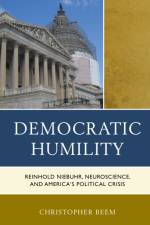
American politics is in a state of crisis but it is not clear why. Nor do we know what to do about it. Reinhold Niebuhr helps us understand what is wrong with our politics and research into the workings of the brain confirms his analysis. Call it sin or motivated reasoning and confirmation bias, the bottom line is that all of us are what Niebuhr calls ';Children of Light.' We are all vain and self-righteous about our beliefs and values, and far too quick to reject any information that goes against them. The unprecedented rise of talk radio and cable news helps to account for why things are so bad. We all want to hear that our group is smarter and more moral than others. To restore a democracy that functions, we need to understand ourselves better and develop the humility that such knowledge should engender.
Kissinger's dual-purpose instrument of the US-China and US-Soviet detente was devised to achieve a stable balance of power in the contemporary world in the second half of the 1960s. Stimulated by both Kissinger's doctrine and the historical novel, the Romance of the Three Kingdoms, Mao's global order of tripolarity was created to feature the new US-China relations in the early 1970s with his initiative of the ping-pong diplomacy through this Kissinger-Mao axis. This made his quest for a modernization revolution possible with the Western market oriented approach.Strengthening Mao's modernization program, Xiaoping's ';good-neighborhood' policy was designed to induce the world to help modernize China. Vitally including Russia with the collapse of the Soviet Union, Deng's policy helped maintain a peaceful and stable international environment, though it also marked the end of Mao's global order.Perceiving the PRC's rise as a threat to its dominance in the Asia Pacific region, the US containment effort was enhanced with US-Japanese collusion and siding with the Philippines and Vietnam in relevant maritime disputes with the PRC. The US united with the Republic of Korea, nations in Southeast Asia, and Australia in establishing a wide-range alliance to go against the ';China threat.'The post-Cold War, eastward expansion of the US-led NATO and the Russian determination to be a great power again, contributed to tension with the United States. The Russian desire to maintain its nuclear deterrent capability was at odds with the US missile defense plans. Thus, the US deployment of its missile shield in Eastern Europe as part of its strategic configuration in Alaska and the Far East was to contain Russia from both the Far East and Europe.
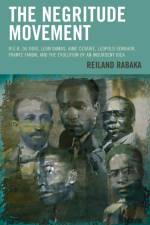
The Negritude Movement provides readers with not only an intellectual history of the Negritude Movement but also its prehistory (W.E.B. Du Bois, the New Negro Movement, and the Harlem Renaissance) and its posthistory (Frantz Fanon and the evolution of Fanonism). By viewing Negritude as an ';insurgent idea' (to invoke this book's intentionally incendiary subtitle), as opposed to merely a form of poetics and aesthetics, The Negritude Movement explores Negritude as a ';traveling theory' ( la Edward Said's concept) that consistently crisscrossed the Atlantic Ocean in the twentieth century: from Harlem to Haiti, Haiti to Paris, Paris to Martinique, Martinique to Senegal, and on and on ad infinitum. The Negritude Movement maps the movements of proto-Negritude concepts from Du Bois's discourse in The Souls of Black Folk through to post-Negritude concepts in Fanon's Black Skin, White Masks and The Wretched of the Earth. Utilizing Negritude as a conceptual framework to, on the one hand, explore the Africana intellectual tradition in the twentieth century, and, on the other hand, demonstrate discursive continuity between Du Bois and Fanon, as well as the Harlem Renaissance and Negritude Movement, The Negritude Movement ultimately accents what Negritude contributed to arguably its greatest intellectual heir, Frantz Fanon, and the development of his distinct critical theory, Fanonism. Rabaka argues that if Fanon and Fanonism remain relevant in the twenty-first century, then, to a certain extent, Negritude remains relevant in the twenty-first century.
This book is an historical account of the emergence of youth gangs and the transformation of these into street gangs in the United States. The author traces the emergence of these gangs in the four major geographical regions over the span of two centuries, from the early 1800s to 2012. The author's authoritative analysis explains gang emergence and expansion from play groups to heavily armed street gangs responsible for a large proportion of urban crimes, including drive-by shootings that often kill innocent bystanders. Nationwide, street gangs now account for 1 in 6 homicides each year, and for 1 in 4 in very large cities. In recent years, the number of gangs, gang members, and gang homicides increased, even though the U.S. has seen a sharp drop in violent and property crimes over the past decade. The author's historical analysis reveals the key contributing factors to transformation of youth gangs, including social disorganization that occurred following large-scale immigration early in American history and urban policies that pushed minorities to inner city areas and public housing projects. This analysis includes the influence of prison gangs on street gangs. The first generation of prison gangs emerged spontaneously in response to dangers inside prisons. The second generation was for many years extensions of street gangs that grew enormously during the 1980s and 1990s, particularly in large urban areas in which public housing projects have served as incubators for street gangs. The third generation of prison gangs is extremely active in street-level criminal enterprises in varied forms, often highly structured and well managed organizations that are actively involved in drug trafficking. In recent years, returning inmates are a predominant influence on local gang violence. Now, prison gangs and street gangs often work together in street-level criminal enterprises. This book identifies the most promising ways that gang violence can be reduced. The best long-term approach is a combination of gang prevention, intervention, and suppression strategies and programs. Targeted suppression of gang violence is imperative. Street-workers that serve as violence interrupters can break the cycle of contagious gang violence.
The American public school system is at a crossroad. One pathway is decorated with signs and institutions that will lead public education towards a destination of collective obligation, accountability, and responsibility that is student-centered, community-based, and driven by educators and parents working in the best interest of students, families, communities, and the broader society. The other pathway is littered with pamphlets, flyers, and electronic billboards falsely advertising the merits of school ';choice.' The direction American public schools appear to have taken over the past few decades is increasingly dotted with charter schools operated by for-profit multinational corporations, and themed public schools. Increasingly, efforts to reform public education in America resemble the business model made popular by the founder of Wal-Mart, Sam Walton. Big Box Schools: Race, Education, and the Danger of the Wal-Martization of Public Schools in America examines the dangers of the Wal-Martization of American public schools and highlights efforts to challenge policies and practices which place greater emphasis on profits than on pupils.
This revaluation of Shakespeare's most seductive tragedy, Antony and Cleopatra, allies itself with neither George Bernard Shaw and Philo's Roman judgment of the lovers as ';strumpet and fool'premised on the idle sensuality and feckless self-regard ever evident in the regal pairnor with the many at the opposite critical pole who have found themselves swept up, to some extent at least, in the ';grand illusion' of the lovers themselves as peerless figures transcending the very deaths to which Caesar's heartless predation drives them. Nor does it seek some middle way, settling into a comfortable agnosticism that claims the poet's view of the pair remains too ambiguous to resolve. Instead, by mining a wealth of metaphoric cross-references and ironical, mirroring figurations provided by the tragedy's subsidiary characterizations, this new analysis argues that Shakespeare's assessment of the lovers is in fact unambiguous: Antony and Cleopatra unknowingly settle for functioning merely as two more of the play's eunuchs fanning the flames of their self-destructive passions for one another when they could have realized the new heaven and new earth Antony promised his queen had their ';intercourse' with one another been more vigorously complete. Not alone their deaths, but their entire experience is this play is but a search for ';easy ways to die' rather than the quest is should have been to live more richly yet and generate new life beyond their respective notorieties as separate individuals to be celebrated.
The book outlines the approaches of classical elite theory and democratic elitism for the study of national power structures. The book displays different research methods for elite study as well as the power conceptions included within these methods. An elite structure typology is derived from the elite theory and applied to chart the changes in the elite structure of one country, Finland. The data of this work is unique in international comparison: postal surveys were conducted among the elites and the citizenry in 1991, 2001, and 2011.The study explores empirically the changes occurring in the elite structure from the early 1990s to the present daya period that has been characterized by important societal upheavals, such as the great recession of the early 1990s, Finland's accession to the European Union in 1995, and the international financial crisis and the Eurozone debt crisis in the 2000s. The main focus is on how the elite structure has changed in terms of vertical social mobility (i.e., openness) on the one hand and horizontal mobility (i.e., coherence) on the other. With regard to vertical social mobility, the research interest focuses on changes in elites' social background and various factors advancing their recruitment and career into elite positions. As for horizontal mobility, the study focuses on the elites' different channels of contact with other influential groups in society, networking with various societal institutions, the attitudinal unanimity within various elites and between the elites and the citizenry, mobility between different elite groups (i.e. circulation), the accumulation of power positions, and the retention and loss of elite positions. The findings are compared with previous international studies, especially Scandinavian elite studies. Finally, the study considers what the results tell us about the state of democracy.
The world of moral theory finds no place for the idea of integrity. The natural intellectual home of the idea of integrity is the American pragmatist tradition. Pragmatism makes possible an account of integrity that enables it to become philosophically central in thinking about morality. The idea of integrity enables what Dewey called ';a working theory of morality.' Other intellectual traditions, including those most prominent in the academic world of moral philosophy, ignore integrity because of its imprecision and its inability to deliver precise answers to questions about what is right or wrong, good or bad. Recovering Integrity: Moral Thought in American Pragmatism explains how integrity can and should become central in philosophical thought about morality. Only within the intellectual tradition of American pragmatism may integrity achieve the intellectual stature it deserves as the central idea in ordinary moral thought. The ideas of morally diverse communities are unified to a remarkable extent when seen through the moral lens of integrity. Diverse communities having diverse ways of life share similar understandings of morality; these similarities are important for understanding what morality fundamentally is in the human world. Philosophical efforts to explain ';the nature of morality' or ';the nature of right action' or ';the nature of the good' founder on their ignorance of moral diversity in the real worlds of human history and culture.
Modern Philosophy, Philosophy of Physics, Philosophy of language, Neurobiology, Philosophy of Perception, Modern Political Philosophyall share a common philosophical foundation: atomism. The theory of atomism that is developed in the writing of Einstein, Bohr, Schrodinger, and Reichenbach shares the same metaphysical roots as the atomism of Gottlob Frege, Ludwig Wittgenstein, and Bertrand Russell. These atomisms share the same foundation as the one developed by John Locke and David Hume. Until now, the full philosophic history, and metaphysical foundations of this theory of atomism have not been presented. Atomist theory not only contains cultural premises of great significance for the fate of public opinion, but it is also an eminently political doctrine, incompatible with the most modest degree of democracy. The atomist theory happens to be false. In this case, the truth does matter.
This book draws attention to the logical contradictions, unstable premises, and unquestioned assumptions that underlie arguments about Man's distinction, while also demonstrating that the way we think about nonhuman animals is only one possibility among many. Vestiges of older ways of thinking continue to inform our understanding of the human-nonhuman animal relationship, disturbing the simple narrative that Man has mastered nature. The reader will additionally find here a history that illuminates popular attitudes toward nature as well as intellectual traditions about the relationship between Man and other animals. As a result, each chapter is an overview of how the past continues to inform the present. The chapters, then, move back and forth between ancient ideas like the myths of Prometheus and Orpheus, Age of Reason philosophers like Francis Bacon and Immanuel Kant and modern practices like petkeeping and vivisection.
Richard Rorty is perhaps the most famous American philosopher internationally, and his later, neopragmatist philosophy is decidedly one of his most commented upon. Values, Valuations, and Axiological Norms in Richard Rortys Neopragmatism proposes different themes in order to delve into the enormous potential that Rortys later philosophical thought possesses, using the perspective of the axiological and normative dimensions. With reference to philosophers such as Kant, Dewey, Santayana, and Kolakowski, Krzysztof Piotr Skowronski argues that a democratic society is the basic axiological framework and that Rorty's normative focus is the melioration of democratic society. The novelty of this philosophy is that it pays special attention to discourses, narratives, and story-telling as containing within themselves axiological and normative aspects. This book presents these discourses as a way of constructing and reconstructing social reality, rather than as a means of describing reality from a detached perspective. According to this framework, human activity, well-being, and solidarity with other people should be evoked by us much more than any reference to God, the Truth, or absolute Values. This book is written for anyone with interests in American philosophy, intellectual history, or political philosophy.
Analyzing Delinquency among Kurdish Adolescents uses Hirschi's social bonding theory to examine the mediating effect of social bonding on delinquent behavior among Kurdish teenagers, who were used as a case study to test the usefulness of this theory. In this study, participants were selected from one Gulen movement affiliated school and one public or non-Gulen affiliated school. This study sheds light on Turkish society's chaotic conditions in southeastern Turkey, particularly with respect to Kurdish adolescents' involvement in the Kurdish Worker's Party (PKK). There is a lack of research regarding how Kurdish adolescents are involved in delinquent behavior as portrayed in popular Turkish media. Social bonding theory, developed and mainly tested in American and western European contexts, needs additional exploration of its efficiency in a nonwestern, especially Islamic, society. Thus, this book helps to better understand the factors that influence crime and delinquency in developing, culturally diverse social structures. Scholars in sociology, psychology, and criminology, as well as in the fields of political science, Middle Eastern studies, and education, will greatly benefit from this study.
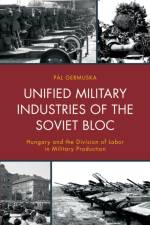
This book draws a subtle picture of Warsaw Pact economic and military cooperation by presenting a complete branchthe military industryfrom the perspective of a smaller member-state, Hungary. It demonstrates that the military industry's cooperation played a crucial role in the development of economic integration within the Soviet Bloc, and it was in this sector that the strongest, most efficient integration was established. The book builds on recently declassified documentation from Soviet-led international economic organizations to give insight into the backstage debates of partner states, to shed light on the intensive conflicts and clashes of interests between the nations, and to highlight the bureaucratic decision making of the Eastern bloc's supranational organ. The transnational analysis is supplemented by the presentation of the national viewpoint: how Hungary intended to vindicate its interests, what measures Budapest took to optimize international cooperation, and what kind of new markets were discovered outside the Warsaw Pact.
This book examines the intersection and interplay between Progressive-Era rhetoric regarding commercialized vice and the realities of prostitution in early-twentieth-century Philadelphia. Arguing that any study of commercial sexual vice in a historical context is difficult given the paucity of evidence, this work instead focuses on reformers' construction of a cultural view of prostitution, which Adams argues was based more upon their perceptions of the trade than on reality itself. Looking at the urban core of the city, Progressive reformers saw vice, immorality, and decaybut as they frequently had little face-to-face interaction with prostitutes plying their trade, they were forced to construct culturally fueled archetypes to explain what they believed they saw. Ultimately, reformers in Philadelphia were battling against a rhetorical creation of their own design, and any study of anti-vice reform in the early twentieth century tells us more about the relationship between activists and the government than it does about vice itself.
Although it may sometimes seem like studying trigonometry in Latin, basic economics really is just plain common sense. But, it's become so complicated in its presentation that very few are able to learn the basics. Whether academics, researchers, pundits, or legislators, few seem to have the skills to present economic topics in easy-to-understand language, or they simply don't know very much themselves. With such misinformation being strewn about, it's easy to see why the average citizen, first-year economics student, young professional, or even elected official becomes so easily confused. The truth, however, is that basic economics is actually quite simple and even more commonsensical . . . and it should be explained that way. It rarely is, however, and that's why I've written this book: to explain the basics of the basics in simple and easy-to-understand language that isn't drier than the Atacama Desert, without the charts, graphs, and formulas typically found in text books. Adding in an occasional dash of humor and politics, this book is intended to be a fun, Cliff's Notes-style supplement to the typical basic econ textbook, but can also be used as a standalone introduction. Topics include most of the themes presented in an Econ 101 course, as well as a number of end-of-chapter discussions on the policies relevant to economics today.
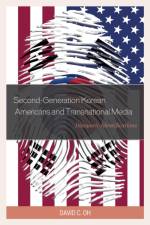
Second-Generation Korean Americans and Transnational Media: Diasporic Identifications looks at the relationship between second-generation Korean Americans and Korean popular culture. Specifically looking at Korean films, celebrities, and popular media, David C. Oh combines intrapersonal processes of identification with social identities to understand how these individuals use Korean popular culture to define authenticity and construct group difference and hierarchy. Oh highlights new findings on the ways these Korean Americans construct themselves within their youth communities. This work is a comprehensive examination of second-generation Korean American ethnic identity, reception of transnational media, and social uses of transnational media.
Kant's Transcendental Deduction of the Categories: Unity, Representation, and Apperception is a distinctively new reading of the Transcendental Deduction of the Categories in the Critique of Pure Reason. Lawrence J. Kaye has discovered a number of previously overlooked arguments and explanations, one of the most significant being an argument that demonstrates that the use of concepts requires the necessary unity of consciousness. He also provides a detailed investigation of Kant's account of representation in the first edition of the Transcendental Deduction of the Categories and shows how it can be understood as a unique type of functional role view. This view of representation leads to a new understanding of Kant's blend of realism and idealism.Kant's notion of transcendental apperception (a priori self-awareness) is also carefully explained. Kaye shows that there is an extremely tight inter-relation between the unity of consciousness, representation, and apperception that constitutes a well-supported framework, one that offers a surprisingly strong set of replies to Hume's skeptical challenges. He applies this framework to produce a coherent and detailed explanation of the Transcendental Deduction of the Categories, offering a thorough, paragraph-by-paragraph examination of the text in both editions. This work should not only be of interest to Kant scholars, but also to any philosophers and cognitive scientists who are invested in any of the following topics: the unity and structure of consciousness, concepts, mental representation, self-awareness, and realism and idealism.
The Korean communities in Sao Paulo and Buenos Aires were the first overseas Korean communities that the new Republic of Korea initiated and supported. The initiative was taken to relieve the economic suffering of the poverty-stricken country in the 1960s. Among South American countries that were open to Korean immigrants, Brazil and Argentina attracted the most, which included even undocumented Korean migrants from neighboring countries. The two Korean communities (about 45,000 people in Sao Paulo and 20,000 in Buenos Aires) represent almost two thirds of the Korean residents in Latin America. Over the years, global forces emanating mainly from East Asia, North America, and South America have affected the Korean communities. The intensity and directions of the triangular pulls and pushes have varied, reflecting changing global socioeconomic conditions. This has created tension and ambiguity among the Korean migrant and host communities. Looking at the two communities comparatively, the focus will be on the effects of the global pulls on Korean identity formation, community development patterns, integration efforts, social mobility, education for children, remigration, return migration, and relationships with the host communities. Wherever applicable, the experiences of Korean communities are compared with that of other East Asian communities, namely the Chinese and Japanese in Latin America.
The conventional wisdom is that small developing countries exert limitedif anyinfluence on the foreign policy of superpowers, in particular the United States. This book challenges that premise based on the experience of the small developing country of Jamaica and its relations with the United States. It raises the question: if the foreign policy of the United States can be influenced by even a small developing country, should Washington be worried?
On February 25, 1956, Soviet leader Nikita S. Khrushchev delivered the so-called ';secret speech' in the Twentieth Party Congress of the CPSU in which he denounced Stalin's transgressions and the cult of personality around the deceased dictator. Replete with sharp criticism of the Terror of the late 1930s, the unpreparedness of the USSR for the Nazi invasion, numerous wartime blunders, and the deportation of various nationalities, the speech reverberated throughout the subordinate Soviet republics. For republics such as Azerbaijan, the speech was an unmistakable signal to readjust the entire political orientation and figure out ways to redefine governance in post-Stalin era. Previously frozen under the mortal threat of Stalinist persecution, various forms of national self-expression began to experience rapid revival under the Khrushchev thaw. Encouraged by the winds of change at the Center, the Azeris cautiously began to reclaim possession of their administrative domain. Among other local initiatives, the declaration of the Azerbaijani language as the official language was one step that stood out in its audacity, for it was not pre-arranged with the Kremlin and defied the modus operandi of the Soviet leadership. Somewhat reformist in his intentions yet ignorant of the non-Slavic peripheries, Mr. Khrushchev had not foreseen the scenarios that would unfold as a result of its new tone and the developments that would come to be interpreted as the rise of nationalism in the republics. Jamil Hasanli's research on 1950s' Azerbaijan sheds light on this watershed period in Soviet history while also furnishing the reader with a greater understanding of the root causes of the dissolution of the USSR.
Each year, thousands of businesses file for bankruptcy protection because managers fail to efficiently organize the company's operations, misread market trends, pay inadequate attention to product quality, or misinterpret the activities and intentions of rival companies. Perhaps they fail to formulate optimal advertising or financing strategies, procure raw materials and components at least cost, or provide adequate incentives to motivate workers to put forth their best efforts. Managerial economics is the application of economic principles to topics of concern to managers. This textbook develops a framework for predicting managerial responses to changes in the business environment. It combines the various business disciplines with quantitative methods to identify optimal solutions to more efficiently achieve a firm's organizational objectives. The topics discussed in this textbook are readily accessible to students with a background in the principles of microeconomics and business mathematics. The selection and organizations of topics makes the textbook appropriate for use in a wide range of curricula by students with different backgrounds.
Abonner på vårt nyhetsbrev og få rabatter og inspirasjon til din neste leseopplevelse.
Ved å abonnere godtar du vår personvernerklæring.