













Gjør som tusenvis av andre bokelskere
Abonner på vårt nyhetsbrev og få rabatter og inspirasjon til din neste leseopplevelse.
Ved å abonnere godtar du vår personvernerklæring.Du kan når som helst melde deg av våre nyhetsbrev.

An innovator in theoretical approaches in the social sciences, Stein Rokkan developed general models, developmental models, and conceptual maps that specified the main variables and important relationships in European political history. In Historical Sociology, Arne Kommisrud tests these general hypotheses against specific historical and regional contexts. He uses the case of Eastern Europe after the downfall of the Berlin Wall to extend the geography of the model's range, and introduces possibilities for theoretical modification through an analysis of sequential interactions. Covering a period from the Middle Ages through the 1990s, and addressing phenomena overlooked by Rokkan such as statebuilding and nationalism, this book demonstrates that Rokkan's models continue to be relevant to modern political science and sociology. Kommisrud's study is a valuable contribution to Rokkanian approaches and the understanding of Eastern European development within the historical and geographic context of Europe as a whole.
The Supreme Court against the Criminal Jury: Social Science and the Palladium of Liberty is an analysis of the United States Supreme Court decisions in what has come to be called the ';jury-size' and ';jury-decision rule' cases. In Williams v. Florida (1970) and Ballew v. Georgia (1978), a majority of the Supreme Court looked to history, empirical studies, and functional analysis to support its claim that there was ';no discernible difference' between the verdicts of juries of six and juries of twelve. In the process the Court also decided that the number twelve was an historical accident and that the twelve-member jury was not an essential ingredient of trial by jury. Two years later, the Court, following essentially the same line of reasoning used in Williams, decided in the companion cases Apodaca v. Oregon (1972) and Johnson v. Louisiana (1972) that defendants were as well served with juries that reached verdicts by a majority vote of 11-1,10-2 and 9-3 as they were with unanimous jury verdicts. In these cases the Supreme Court rejected the centuries old common law view that the unanimous jury verdict was an essential element of trial by jury. With these four decisions, the criminal jury as it had been known for more than six hundred years under the common law and the Constitution was in principle abandoned. We critique these decisions from the perspective of unreliable jury studies and the impact of these decision on jury nullification.
Heartlands of Eurasia explores how received metageographical knowledge informs the understanding of global processes and is subsequently transformed into geopolitical reasoning with foreign policy implications. It provides a detailed examination of writings, from both within the region and outside, that look into the significance of Halford Mackinder's heritage in the context of a vastly changed world situation. In particular, it attempts to examine how policy makers and strategic thinkers have used these geopolitical concepts as justification for their policy in the region. Finally, it attempts an analysis of the extent to which this policy thinking was translated into practice. While the study looks into how the vision of the 'pivotal' significance of a vast expanse of land finds its echoes in contemporary narratives, it also underlines the very creative ways in which Mackinder's ideas have been reinterpreted in keeping with the changing global dynamics. Making use of the way in which the region has been traditionally defined and the way in which the people defined themselves, the study brings into focus a debate on the usefulness of region or 'area'-based studies that are located in geographical imaginations. Anita Sengupta uses this connection to examine the following issues: geopolitical imaginations and their relevance in identifying 'areas' in the present context; the intersection between how areas are defined from an outsider perspective and how people define themselves; the extent to which these definitions have influenced policy; and the possibility or feasibility of the development of alternative geostrategic discourses. Mackinder himself did not specify the geographical area identified first as the 'pivot' and later the 'heartland,' but his ideas were focused on the 'closed heartland of Euro-Asia,' an area that was unassailable by sea power. This study therefore centers its debates around the Eurasian space in general, though the focus is on the Central Asian region and Uzbekistan in particular. The book is ideal for specialists working on the Eurasian region, graduate students interested in geopolitics as well as Eurasian and Central Asian studies, and undergraduates studying political science and international relations.
FDR's Republicans illuminates the debate over foreign policy that took place in the United States prior to World War II. Robert E. Jenner approaches this issue from the perspective of Republican members of the House and Senate, who eventually came to support the interventionist position of a Democratic president. Unlike other diplomatic histories of this period, FDR's Republicans focuses on domestic components of the foreign policy debate, combining historical analysis and political theory. Jenner recounts the Republican Party's internationalist roots under McKinley, the split of 1912, and the defeat of the League of Nations in deference to its agrarian progressive wing. Taking both a local and national approach, he provides in-depth analysis of the party's reaction to the FDR landslides of 1932 and 1936, the party's resurgence in 1938, FDR's aggressive defense of the New Deal, and the decline of the party's agrarian progressive faction. The result is a broader explanation of the battle that raged between isolationists and interventionists as well as the failure of policy makers to deter fascism at an earlier date.
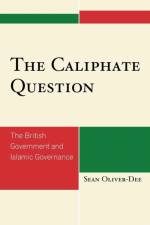
The Caliphate Question combines the disciplines of theology, history, and international relations in order to approach the complex and sensitive issue of how Western governments_in this case the British_have historically engaged with foreign policy issues that have centered around questions of theology or faith. The British government's approach to policy-making in the field of Islamic governance from the First World War through to the early Cold War is the case study for this book, both because of the extensive documentation that exists on the period and because of its relevance to the current geo-political world. While the book is not a critique of current British foreign policy, it does seek to furnish policy-makers and commentators with a framework within which such increasingly necessary policy-making can be created.
Has modern Western society lost its sense of honor? If so, can we find the reason for this loss? Laurie Johnson Bagby turns to the political philosophy of Thomas Hobbes for answers to these questions, finding in him the early modern 'turning point for honor.' She examines Hobbes's use of the word honor throughout his career and reveals in Hobbes's thought an evolving understanding of honor, at least in his analysis of politics and society. She also looks at Hobbes's life and times, especially the English Civil War, a cataclysmic event that solidified his rejection of honor as a socially and politically useful concept. Bagby analyzes key ideas in Hobbes's philosophy which shed further light on his conclusion that the desire for honor is dangerous and needs to be eliminated in favor of fear and self-interest. In the end, she questions whether the equality of fear in the state of nature is actually a better source of social and political obligation than honor. In rejecting any sense of obligation based upon earlier notions of natural superiors and inferiors, does Hobbesian and future liberal thought unnecessarily reject honor as a source of restraint in society that previously promoted protection of the weaker against the stronger?
The Christian Heritage: Problems and Prospects delves into the history of the western Christian heritage. Challenges to the Christian heritage, a heritage nourished both by Judaism and by the western classics, have been stimulated by the very success of the way of life that is promoted, a way of life that is somehow responsible for the emergence of modern science with its revolutionary technology. The reader is encouraged to reconsider authors prominent in the religious tradition of the West. Guidance is provided for examinations of the fundamental assumptions and the enduring questions by which Western Civilization has been guided and challenged for millennia. The enduring texts that we in the West repeatedly encounter, especially the most challenging of them, are apt to draw upon, and to illuminate the fundamental assumptions and the enduring questions by which Western Civilization has been guided and challenged for millennia. Vital to Western Civilization has long been the Christian Heritage. That Heritage has been taken for granted in our general education, in something as prosaic as the everyday operations of our legal system, and perhaps even in our economic and other social arrangements.
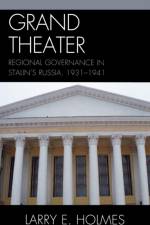
Grand Theater examines bureaucracy not as a readily identifiable structure but rather as a process of day-to-day operation. Thus it is concerned with how agencies of both the communist party and the state apparatus not only implemented directives from above but also responded to perceived successes and failures, chose to produce, share, and conceal information, and reacted when common citizens injected themselves into governance by making demands and complaints. It concentrates on the 1930s as a seminal period when Stalin's regime established a hypercentralized system that dominated the Soviet Union until its collapse and the Russian Federation since then. It also focuses on the administration of schools as the primary window through which to examine governance because of the importance of education to Soviet authorities, most notably Stalin himself, and the accessibility of archival documents in this field, one not classified as particularly sensitive. Grand Theater provides novel insights into the functioning of Stalinist bureaucracy, brings to the forefront a new understanding of center-periphery relations, and reveals the important role of individuals in what has heretofore been largely regarded, when beyond the Kremlin's inner circle, as a highly impersonal system. It also examines in unprecedented ways the reciprocal relationship between ideology and policy formation, on the one hand, and actual administrative practices, on the other, a relationship that more often than not had negative and dysfunctional consequences for both the governed and governing. Holmes argues that the Soviet administrative system during the 1930s was much like grand theater. The documents produced for and by that system were the script for a discursive theatrical reality that inspired neither a careful appraisal of problems nor a dispassionate search for workable solutions.
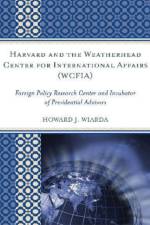
Harvard's Weatherhead Center for International Affairs (WCFIA) is one of the nation's premier institutions for research on foreign policy, comparative politics, security policy, and international relations. It has also been an incubator of presidential advisors on foreign policy_Bob Bowie, Mac Bundy, Henry Kissinger, Zbigniew Brzezinski. In this insider and first-person book on WCFIA (formerly CFIA), Howard J. Wiarda explores Harvard's history and culture, the founding and development of WCFIA, and how this prestigious institution works. He examines the WCFIA seminar system, the fellows program, and the incredible flow of presidents, prime ministers, foreign ministers, and defense ministers who flow through WCFIA on an everyday basis. He looks at the research agenda at WCFIA, how it influences foreign policy, and the 'in 'n outers' revolving door flow of WCFIA scholars and policy wonks into Washington policy-making at the highest levels. In the process the author provides revealing portraits of such eminent scholars and policy influentials as Gabriel Almond, Brzezinski, Stanley Hoffman, Sam Huntington, Kissinger, Joe Nye, Bob Putnam, Lucian Pye, Myron Wiener, and many others. This book is written in an engaging style and includes the author's own experiences at Harvard and WCFIA over a forty-year period. The book is part of a series by the author on 'Universities, Think Tanks, and War Colleges: The Changing Pattern of Foreign Policy Influence.'
This book examines young African's sexual relationships in the context of village life. It is based on a large in-depth qualitative study in Tanzania, in a region typical of rural sub-Saharan Africa. It describes how dominant community values both discouraged and encouraged adolescent sexual activity. Young people managed these contradictions by concealing their sexual activity, contributing to short-term and/or overlapping relationships. Most adolescents had sex by age 15, but girls were often 5-10 years younger than their partners, and their relationships typically involved more frequent sexual encounters than those of same-aged boys. Motivations to have sex are examined, particularly its importance to masculine identity and its role in meeting young women's basic material needs, such as soap or respectable clothing. By their late teens most young people had experienced three types of sexual relationship: one-time sexual encounters; open-ended relationships involving occasional encounters; and 'main' semi-public partnerships involving frequent sexual contact. Relationships could involve desire, possessiveness, and affection, but romantic idealization of a partner was rare. Many young people expected their partners to be monogamous, but themselves had had concurrent relationships by age 20. Women generally married by age 20 and men by 25, with couples often having met about one month earlier. Marital couples usually spent little time together, and emotional intimacy was not highly valued. About one-third of marriages involved one husband and multiple wives. Extramarital sex, separation and divorce were fairly common. This book details factors shaping young people's sexual health, including access to, and beliefs about, condoms and other contraception. Condoms were rarely used because they were associated with reduced pleasure, infection and promiscuity. Sexually transmitted infections were fairly common, but several factors hindered young people from seeking biomedical treatment for them. Many instead relied on traditional medicine, as they did for contraception, induced abortion, and fertility promotion. Understanding of the biology of HIV/AIDS was very limited, and people with AIDS were sometimes believed to be bewitched with a non-infectious, curable illness. The book concludes by identifying key economic and cultural barriers to reducing sexual risk behavior, as well as factors that potentially facilitate risk reduction.
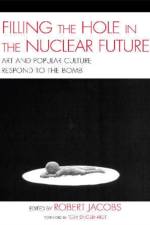
From the dawn of the atomic age, art and popular culture have played an essential role interpreting nuclear issues to the public and investigating the implications of nuclear weapons to the future of human civilization. Political and social forces often seemed paralyzed in thinking beyond the advent of nuclear weapons and articulating a creative response to the dilemma posed by this apocalyptic technology. Art and popular culture are uniquely suited to grapple with the implications of the bomb and the disruptions in the continuity of traditional narratives about the human future endemic to the atomic age. Filling the Hole in the Nuclear Future explores the diversity of visions evoked in American and Japanese society by the mushroom cloud hanging over the future of humanity during the last half of the twentieth century. It presents historical scholarship on art and popular culture alongside the work of artists responding to the bomb, as well as artists discussing their own work. From the effect of nuclear testing on sci-fi movies during the mid-fifties in both the U.S. and Japan, to the socially engaged visual discussion about power embodied in Japanese manga, Filling the Hole in the Nuclear Future takes readers into unexpected territory
Race and racism have played a divisive and defining role throughout much of America's history. Slavery, Jim Crow laws, segregation, and Ku Klux Klan terrorism have inflicted deep psychic wounds, social disparities, and economic disadvantages that have diminished the promise of equal rights and opportunities for all. While much progress in race relations has been made in recent years_including the election of Barack Obama as President of the United State_it's clear that our journey to a post-racial era is far from complete. In virtually every measurable category, whether income levels, job opportunities, access to health care, life expectancy, high school diplomas, incarceration rates, do not fare well compared to their white counterparts. The dialogue entitled Race and Reconciliation in America was convened to provide a forum for a long overdue, open, honest, and constructive discussion among people of good will about the need for the American people to truly grasp the depth of past misdeeds, why the legacies of past oppression persist, and how we can achieve a more fair and just society embodied in the American Dream.
Indian Diaspora in the United States takes a new perspective on the topic of brain drain, departing from the traditional literature to include discussions on brain gain and brain circulation using Indian migration to the United States as a case study. Sahay acknowledges that host country policies create the necessary conditions for brain drain to take place, but argues that source countries may also benefit from out-migration of their workers and students. These benefits are measured as remittances, investments, and savings associated with return, and social networking that links expatriates with their country of origin. Through success and visibility in host societies, diaspora workers further influence economic and political benefits for their home countries. This type of brain gain becomes an element of soft power for the source country in the long term. Indian Diaspora in the United States is a ground-breaking work that intersects economic and political issues to the dimension of migration and the concerns over brain drain. With its rigorous, connectionist approach, this book is a valuable contribution to the fields of diaspora, labor, globalization, and Indian studies.
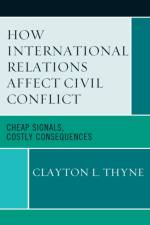
Given the appalling consequences of civil wars, why are the competing actors within a state unable to come to a settlement to avoid the costs of conflict? How might external parties affect the likelihood that a civil war begins? How do their actions affect the duration and outcome of civil conflicts that are already underway? How International Relations Affect Civil Conflict draws on three main approaches_bargaining theory, signaling theory, and rational expectations_to examine how external actors might affect the onset, duration and outcome of civil wars. Signals from external actors are important because they represent a potential increase (or decrease) in fighting capabilities for the government or the opposition if a war were to begin. Costly signals should not affect the probability of civil war onset because they are readily observable ex ante, which allows the government and opposition to peacefully adjust their bargaining positions based on changes in relative capabilities. In contrast, cheap hostile signals make civil war more likely by increasing the risk that an opposition group overestimates its ability to stage a successful rebellion with external support. Cheap supportive signals work in the opposite manner because they represent increased fighting capabilities for the government. Furthermore, signals sent in the pre-war period have important implications for the duration and outcome of civil conflicts because competing intrastate actors develop expectations for future interventions prior to deciding to fight. In this book, Clayton L. Thyne tests this theory by examining the likelihood of civil war onset, the duration, and the outcome of all civil wars since 1945, finding strong support from empirical tests for each component of this theory. The conclusion offers specific advice to US policy-makers to prevent the outbreak of civil conflict in states most at-risk for civil war and to help end those that are currently underway. This book will appeal to undergraduate and graduate students and scholars interested in political science, international studies, conflict resolution, and peace science.
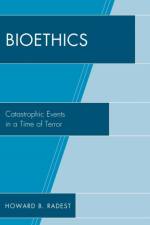
Fire, flood, earthquake, famine, pestilence, and warfare are no strangers to our experience. Once, we sought to placate the gods who brought these evils upon us. Today, clinicians, engineers, and politicians replace priests, prophets, seers, and shamans, and we_Americans in particular_think to impose our will upon the world. In times of catastrophe, issues of good and evil surrender to rapid, nearly automatic, operational response. Yet the catastrophic event poses unavoidable moral choices, ones that are more politically and emotionally complex since 9/11 and our 'War on Terrorism.' This book benefits from the emergence of bioethics as it has evolved from its clinical roots to address policy, politics, and social practice far removed from that origin. At the same time, the clinical focus on narratives and cases provides a tangible center for ethical reflection. It reminds us that ethics is about persons and their choices, a perspective often lost to abstraction when ethics is left to the ministrations of academe. By treating the catastrophic event as both a category and a genre, Bioethics connects to aesthetics and so enables us to enrich ethical inquiry by ranging from pandemic, hurricane, and flood to terrorist attack.
One of the most disturbing problems in American education today is the unequal achievement of children in schools. Few problems have sparked greater concern than the issue of why students from different social origins differ so significantly in their academic performance. This book explores the role played by families and schools in this troubling problem. It employs a social constructionist approach in considering how ascribed characteristics (race, gender, and class) intersect with the daily interactions of teachers and students in classrooms and with the educational practices and structures within schools (tracking, testing, and teacher expectations) to play an exacting role in the construction of success or failure. It suggests that the new student identity that begins to emerge as a result of these processes provides a self-fulfilling prophesy of expectation and belief, which defines how students see themselves as learners and achievers. Through these practices, schooling becomes a crucial factor in the social construction of academic success. The author's final conclusion is inescapable: unequal achievement in school is largely a social construction. But it is a social construction facilitated both by student attributes including gender, race, and class and by the educational structures and policies some schools employ. Because of this undeniable fact, parents, educational practitioners, and policy makers must continue to investigate social policies and practices relative to student abilities and make every effort to understand how they may be related to achievement. Informed by research, they must endeavor to see this power inherent in schooling and the need to effect change.
Americans are frustrated with prisons. They recognize the need for these institutions, but at the same time, they worry about whether the money used to build and maintain them is well spent. Older prisons are dirty, disgusting, and dangerous, but even newer facilities come up lacking in terms of offering inmates opportunities to take responsibility for their crimes, support their loved ones, further their education, learn job skills, and develop positive relationships in healthy, safe, respectful communities. This book provides insight into the philosophy of restorative justice, which aims to develop ways we can manage our prisons differently to achieve more positive outcomes. Using the case study of an honor dorm in a maximum security prison, the book posits that most of the inmates never learned the basic tools for living life productively and responsibly. They never thought much about their victims or how their actions affected others. They never learned how to get along with others, pick up after themselves, or how to be of service to their fellow man. Swanson uses the writings and reflections of inmates participating in a restorative justice program to demonstrate the challenges and transformative possibilities of this alternative approach to rehabilitation.
The Skillful Self: Liberalism, Culture, and the Politics of Skill presents a political liberal theory of cultural participation and the goals of cultural policy in contemporary pluralistic democracies. The ideal of cultural participation, which many regard as central to the self-conception of modern constitutional democracies, is often subject to the distorting influences of state perfectionism, paternalism, consumerism, and ideology. These distortions and the problems they raise are intensified by the forces of social, cultural, and economic globalization. Using the tools of contemporary liberal theory,The Skillful Self develops an approach to the politics of culture that focuses on the concept of skill and its place in a liberal conception of the self. Support for this approach is derived from the work of Nussbaum and Sen, who make a conception of human capability basic to their views of public policy and the design of political institutions. But the politics of skill modifies the capability approach by characterizing the central human functional capabilities as functions of the skillful self. The final chapters of the book describe the competences of the skillful self, elaborating a new typology of skills and explaining why basic institutions are obliged to promote them. To make the role of skill in the central capabilities explicit in this way is not to invoke the perfectionist ideal of a culture of skill, but rather to focus on the structural role of skill in a nonperfectionist conception of truly human functioning, and on the social conditions of individual capability viewed as a function of skill.
Japanese animation, video games, and manga have attracted fans around the world. The characters, the stories, and the sensibilities that come out of these cultural products are together called Japan Cool. This is not a sudden fad, but is rooted in manga-Japanese comics-which since the mid-1940s have developed in an exponential way. In spite of a gradual decline in readership, manga still commands over a third of the publishing output. The volume of manga works that is being produced and has been through history is enormous. There are manga publications that attract readers of all ages and genders. The diversity in content attracts readers well into adulthood. Surveys on reading practices have found that almost all Japanese people read manga or have done so at some point in their lives. The skills of reading manga are learned by readers themselves, but learned in the context of other readers and in tandem with school learning. Manga reading practices are sustained by the practices of other readers, and manga content therefore serves as a topic of conversation for both families and friends. Moreover, manga is one of the largest sources of content for media production in film, television, and video games. Manga literacy, the practices of the readers, the diversity of titles, and the sheer number of works provide the basis for the movement recognized as Japan Cool. Reading Japan Cool is directed at an audience of students of Japanese studies, discourse analysts, educators, parents, and manga readers.
Much academic writing on families reflects the ideal of non-involvement and distanced subject matter. Toward More Family-Centered Family Sciences suggests that the family sciences, in their effort to be scientific, have perpetuated this distance between researcher and subject, to the detriment of both. The authors argue that family and kinship ties are transcendent ties, boundary-crossing in numerous ways. They place an emphasis on family love, in contrast and in addition to romantic love, and criticize current approaches for neglecting the importance of transcendent concepts such as love, commitment, respect, and sacrifice in the development and well being of family structures. Drawing from insights both inside and outside of academia, the authors seek to reincorporate transcendent concepts into the study of the family as a unit of society. They argue for a more collaborative, family-centered family science and offer recommendations for how family researchers might work to change the scientific monologue about families to a systemic dialogue with families.
Presidents in Retirement: Alone and Out of the Office describes and analyzes the behavior of those thirty-four former presidents who survived their terms and were faced with deciding how to make the most of their new lives as private citizens. Rather than simply present a chronology of presidential behavior, the book explores the variety of retirement activities with chapters on partisan politics, public service, economic pursuits, leisurely activities, health concerns, and relationships with a successor. The book's emphasis is on the range of social-psychological factors affecting the behavior of ex-presidents once they leave the White House. What did these once powerful men do to fill many empty hours of retirement? Why did they pursue particular avenues of endeavor, and to what degree did these choices provide satisfaction? What discernible patterns of behavior can be identified which can be of predictive value in understanding the retirement behavior of future presidents? This book offers a unique opportunity to examine the personality and beliefs of our presidents in a relatively pristine setting. The reader can observe these former chief executives without having to factor in the influence of advisors and staff. Retirement grants a personal freedom to engage in activities and express oneself without great concern with political repercussions. Additionally, once out of the White House, ex-presidents are no longer trapped by political crises which are likely to circumscribe their behavior. Retirement is therefore a time when a person can express true inner feelings and behave in a manner consistent with these beliefs. Freeing them from the dictates of a difficult job, retirement offers former presidents the freedom and enjoyment to live their final years in comfort and happiness or under stressful conditions caused by economic or health concerns. Although the step down from the presidency may be much greater than the average person's experiences of entering retirement, the relative problems and rewards are only of a qualitative difference.
Tracing the development of British colonial administration in West Africa over the course of the long eighteenth century, Caulker illuminates the solidification of the administration as it goes through a learning process of power. This book analyzes the documents and treaties that the indigenous peoples of eighteen-century Sierra Leone made with their future British colonizers, and compares them with the writings of Adam Smith to uncover a colonial philosophy linking European economic success with the process of civilizing Africa through moral education. A discussion of other archival materials demonstrates the ways that an emerging anthropological science and pseudo-scientific methodology contributed to colonial ventures and exploration. The book concludes with an analysis of the postcolonial novel The Last Harmattan of Alusine Dunbar, demonstrating that the study of this long eighteenth-century archive has as much to do with the present postcolonial era as it does with the period of African colonization.
Steadfast Movement examines how people from Chuuk State in the Federated States of Micronesia (FSM) move about and their cultural interpretations of movement itself. Special consideration is made of movement on the atoll of Satowan in Chuuk State as intimately associated with clan, lineage, and locality, as well as the influence of a system of local beliefs and attitudes based on combinations of age, marital status, and childbirth. Lola Quan Bautista also investigates the ways in which the current movement of citizens from Chuuk State and others from FSM to Guam fits within larger contexts that emphasize historical circumstances and more current political-economic considerations. Considering movement as being steadfast makes this study one of the few undertaken in the Pacific to self-consciously attempt to provide a sense of agency and interconnectivity between transnationalism and circular mobility.
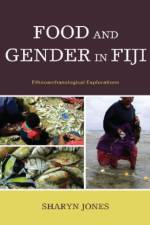
Food and Gender in Fiji is an ethnoarchaeological investigation of the social relations surrounding foodways on the island of Nayau in Fiji. Writing from the perspective of an archaeologist, Jones answers questions raised by her archaeological research using original ethnographic data and material culture associated women and fishing, the intersection that forms the basis of the subsistence economy on Nayau. She focuses on food procurement on the reef, domestic activities surrounding foodways, and household spatial patterns to explore the meaning of food amongst the Lau Group of Fiji beyond the obvious nutritional and ecological spheres. Jones presents her findings alongside original archaeological data, demonstrating that it is possible to illuminate contemporary food-related social issues through historical homology and comparison with the lifeways of the Lauan people. Offering a comprehensive and rigorous example of ethnoarchaeology at work, this book has major implications for archaeological interpretations of foodways, gender, identity, and social organization in the Pacific Islands and beyond.
Linda Benbow examines the organizational culture and various levels of diversity found in an urban United States Postal Service mail processing facility. She shows how employee perceptions of social differences and their interactions with coworkers contributes to their identity and work life within the organization. Painting detailed portraits of race, social class, and gender in a mail processing facility, Benbow looks at ways employees from different backgrounds relate to one another, identifying the issues and occasions that provoke conflict, the ways that participants view one another, and the forces and strategies that mitigate and conciliate conflicts.
Stepping Stones is a joint memoir by two longtime participants in movements for social change in the United States. Staughton and Alice Lynd have worked for racial equality, against war, with workers and prisoners, and against the death penalty. Coming from similar ethical backgrounds but with very different personalities, the Lynds spent three years in an intentional community in Northeast Georgia during the 1950s. There they experienced a way of living that they later sought to carry into the larger society. Both were educated to be teachersStaughton as a professor of history and Alice as a teacher of preschool children. But both sought to address the social problems of their times through more than their professions.After being involved in the Southern civil rights movement and the movement against the war in Vietnam in the 1960s, both Staughton and Alice became lawyers. In the Youngstown, Ohio, area they helped workers to create a variety of rank-and-file organizations. After retirement, they became advocates for prisoners who were sentenced to death or confined under supermaximum security conditions. Through trips to Central America in the 1980s, Staughton and Alice became familiar with the concept of ';accompaniment.' To them, accompaniment means placing themselves at the side of the poor and oppressed, not as dispensers of charity or as guilty fugitives from the middle class, but as equals in a joint process to which each person brings an essential kind of expertise. Throughout, the Lynds, who became Quakers in the early 1960s, have been committed to nonviolence. Their story will encourage young people seeking lives of public service in the cause of creating a better world.
Teacher Education, Diversity, and Community Engagement in Liberal Arts Colleges examines the promise of and issues related to preparing teachers for cultural diversity through community engagement in the liberal arts colleges. This book emphasizes the transformational power of community engagement to both teacher education and the small liberal arts college. Through a careful examination of literature and reflections on practice, Lucy W. Mule underscores the community-engaged approach to teacher education, emphasizing deep relationships with culturally diverse communities, community-based pedagogy, and a consideration of institutional contexts. Building on recent conversations in the areas of teacher education, diversity, and community engagement in liberal arts colleges, she cogently examines a range of issues, from how teacher educations vision, curriculum, and pedagogy can be modified to be more consistent with the goal of educating for cultural diversity through community engagement to some of the program, institutional, and external challenges to community engagement in teacher education. The field of teacher education and small liberal arts colleges will find in Teacher Education, Diversity, and Community Engagement in Liberal Arts Colleges an excellent reason to enact purposeful change and transformation.
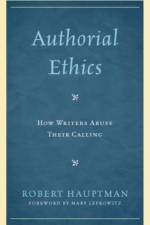
Authorial Ethics is a normative study that deals with the many ways in which writers abuse their commitment to truth and integrity. It is divided by academic discipline and includes chapters on journalism, history, literature, art, psychology, and science, among others. Robert Hauptman offers generalizations and theoretical remarks exemplified by specific cases. Two major abrogations are inadvertent error and purposeful misconduct, which is subdivided into falsification, fabrication, and plagiarism. All of these problems appear in most disciplines, although their negative impact is felt most potently in biomedical research and publication. Professor Mary Lefkowitz, the classicist, provides an incisive foreword.
Educational researchers have long been concerned about the factors that influence the patterns of attendance in higher education and the extent to which higher education has been accessible to all students regardless of their socioeconomic status. Extensive research has indicated that a variety of class-related factors, such as cultural capital, social capital, and economic capital, exert remarkable impacts on the amount and type of education that one receives. Drawing on cultural capital theory, this study aims at analyzing how students' college choice process varies by social class in China. By exploring different cultural and financial factors that influence different stages of students' college choice process, this study hopes to contribute to identifying the most appropriate policies and practices for raising the representation of students from the lowest social class among college participants.
Higher Education as a Field of Study in China: Defining Knowledge and Curriculum Structure concerns the complexity of higher education as an academic field_the evolving nature of the field in light of the overall development of higher education in China. It reviews how higher education as a field of study has evolved in China since 1978 and how the field has been shaped by political and social forces, as well as institutional culture. Xin Wang argues that higher education is becoming an interdisciplinary field rather than a subfield under the discipline of education, especially when higher education has become an enterprise with such a broad scope in China. Wang also expresses a belief that the field of higher education is being challenged by the professional need for preparing and training competent professionals for various administrative positions in China. Higher education as a field will be professionalized with its own knowledge base and a set of skills in applying this knowledge to practical areas. This book also provides an account of the U.S. model of higher education as an example_how the field was formed and developed, how it has evolved from a generalized area of inquiry into a professional specialization, how programs of higher education are structured, what classes they offer, and what challenges they face. The U.S. model presents a comparative perspective for Chinese scholars and program directors about higher education as a field of study.
Abonner på vårt nyhetsbrev og få rabatter og inspirasjon til din neste leseopplevelse.
Ved å abonnere godtar du vår personvernerklæring.