













Gjør som tusenvis av andre bokelskere
Abonner på vårt nyhetsbrev og få rabatter og inspirasjon til din neste leseopplevelse.
Ved å abonnere godtar du vår personvernerklæring.Du kan når som helst melde deg av våre nyhetsbrev.

Allowing legislators to pick the voters that make up their districts is a fundamental conflict of interest and central concern for the popular sovereignty of American elections. In The Realities of Redistricting, Jonathan Winburn examines the extent of this potential problem by focusing on both the incentives and the constraints facing state legislators during the redistricting process. Most research on redistricting tends to examine only the outcomes produced in terms of partisan gains or losses; however, we know much less about what constrains political mapmakers during the process. We know even less about whether constraints built into the process are enough to limit the partisan manipulation of both district boundaries and electoral outcomes. From the beginning stages of redistricting to the resulting outcomes on election day, this book analyzes the constraints and incentives that state legislators face. By examining the entire process, this book investigates who holds the power in the process and improves our understanding of the conditions under which redrawing district boundaries have a significant influence on partisan politics throughout the country. Specifically, reformers, who generally argue for commissions, may find that focusing on the rules rather than the actors is a better path to improving the process. The Realities of Redistricting is an interesting and informative read for anyone concerned with one of the most contentious processes in the American system.
In this engaged critique of the geopolitics of knowledge, Egla Martnez Salazar examines the genocide and other forms of state terror such as racialized feminicide and the attack on Maya childhood, which occurred in Guatemala of the 1980s and 90s with the full support of Western colonial powers. Drawing on a careful analysis of recently declassified state documents, thematic life histories, and compelling interviews with Maya and Mestizo women and men survivors, Martinez Salazar shows how people resisting oppression were converted into the politically abject. At the center of her book is an examination of how coloniality survives colonialisma crucial point for understanding how contemporary hegemonic practices and ideologies such as equality, democracy, human rights, peace, and citizenship are deeply contested terrains, for they create nominal equality from practical social inequality. While many in the global North continue to enjoy the benefits of this domination, millions, if not billions, in both the South and North have been persecuted, controlled, and exterminated during their struggles for a more just world.
Religious pluralism is increasing due to progressively more culturally interactive societies and an escalating exchange of migrants. Nevertheless, as this book shows, the situation in Italy is characterized by several distinct features. Statistically, the level of religiosity is noticeably higher than in other European countries, and the majority of the population declares itself Catholic. Within the Catholic world, however, there are distinct differences in the ways and forms of believing, ranging from the convinced and active faithful to the 'occasional' believer, or the development of new forms of 'Catholic.' Catholic sentiment endures although many believers may not agree with the ethical indications of the ecclesiastical hierarchy. Furthermore, the Church and Catholic groups have reinforced their presence in the public sphere by participating in various campaigns to reassert Christian values on fundamental issues for civil harmony, from the family to bioethics, the limitations of science to the goals of economic development, religious freedom to the secular State, national identity to global equilibriums, and more. The Church therefore moves at various levels in order to keep the nation closely tied to Catholic culture-a commitment which is both applauded and criticized. Some non-believers express appreciation for the Catholic campaigns set out to counteract the lack of values and loss of memory typical of advanced modernity. However, in the non-believing secular world many more criticize the Catholic presence for acting as a lobby in Italian society, accusing the Italian Church of excessive alignment to the diktat issued by the Vatican. The particularity of the Italian case poses unique questions to those who study social phenomena. Why is the Catholic Church in Italy experiencing a period of such vitality in the public sphere? How can this situation be reconciled with the undisputed advance of secularization? And what kind of organizational problems does the assertive dynamism of Italian Catholicism pose in a pluralistic society?
Jean Genet's masterpiece Les N_gres was first published in 1958, in the midst of the Algerian war, and first performed at the ThZ%tre de Lut_ce in Paris in October 1959. Yet even though the play is more than 50 years old, it remains a fundamental contribution to critical race theory, as Genet unequivocally posits that no matter what a black person does or doesn't do, simply to be black in our times is itself a tragedy. Placing Genet in the context of Negritude movement, Race and Sex across the French Atlantic equally reveals and examines blackness within the African-American dialogue with a white French author's provocative questions about race: 'Is a black man always black?' and even more fundamentally, 'What is blackness?' Within this framework, to question 'blackness,' therefore, is to set out on an ontological quest, as 'blackness' has become a real, living thing in its own right within European ideology, social theory, and historical consciousness, even as Les N_gres has taken its place as a major text in the francophone and philosophical tradition of writing on race. In essence, this book concentrates on the way in which language-particularly the French language-has shaped ideas about race within transatlantic discourses, and, with its companion, continental philosophy, has also shaped the historical understanding of discourse on race. It navigates between multiple readings of race within the French Atlantic using Lorraine Hansberry's play Les Blancs; Dany Laferri_re's Comment faire l'amour avec un N_gre sans se fatiguer; Genet's dialogue with the Black Panthers; and different conceptions of the so-called N word. Race and Sex across the French Atlantic thus explores how Les N_gres offered a groundbreaking reading of how race functioned-and continues to function-as an all-pervasive discourse that provides a central principle around which society in general is organized. The play stages a deeply self-reflexive and critical examination of the very essence of 'blackness,' which, in Genet's world, is not simply about the color of a person's skin, but constitutes a critical function within socio-political and historical discourse. This book deals with an understanding of the concept of race in terms of alienation, and asks the question: Why, 50 years after the fact, given the long, historical, negative associations of the term Le N_gre in French language, does the title remain unchanged?
From the Internet to the iPhone, digital technology is no mere cultural artifact. It affects how we experience and understand our world and ourselves at the deepest levels-it is a fundamental condition of living. The digitization of modern life constitutes an essential field of religious concern because it impacts our individual and cultural sensibilities so profoundly. Despite this, it has yet to be thematized as the subject of religious or theological reflection. The Crisis of Transcendence remedies this by asking a single significant question: How is digital technology impacting the moral and spiritual depth of culture? How can something as ineffable and nebulous as the depth of culture be known and articulated, let alone critiqued? Author J. Sage Elwell suggests that an answer lies in the arts. The arts have historically acted as a barometer of the depth of culture, reflecting the spiritual impulses and inclinations at the heart of society. He argues that if the arts matter at all, they will illuminate more than themselves. Through an experimental interpretation of digital art, Elwell offers a critical reflection on how digital technology is changing us and the world we live in at a level of religious significance. Employing a theological aesthetic of digital art, this book shows how the advent of digital technology as a revolutionary cultural medium is transforming the ways we think about God, the soul, and morality.
The God Biographers presents a sweeping narrative of the Western image of God since antiquity, following the theme of how the 'old' biography of God has been challenged by a 'new' biography in the twenty-first century. The new biography has made its case in free will theism, process thought, evolutionary doctrines, relational theology, and 'open theism'_a story of people, ideas, and events that is brought up to the present in this engaging narrative. Readers will meet the God biographers in the old and new camps. On the one side are Job, Augustine, Boethius, Anselm, Aquinas, and Calvin. On the other side is a group that includes the early Unitarian and Wesleyan thinkers, the process thinkers Alfred North Whitehead, Pierre Teilhard de Chardin and Charles Hartshorne, and finally a new breed of evangelical philosophers. This story looks closely at the cultural and scientific context of each age and how these shaped the images of God. In the twenty-first century, that image is being shaped by new human experiences and the findings of science. Today, the debate between the old biographers and the new is playing out in the forums of modern theology, courtrooms, and social movements. Larry Witham tells that panoramic story in an engaging narrative for specialists and general readers alike.
This book examines the political thought of Theodore Roosevelt, specifically his ceaseless desire and effort to reconcile America's individualistic tradition with the more collectivistic ideals of his Progressive brethren. Many scholars and lay-people alike cast Roosevelt as either 'conservative' or 'liberal,' but his political thought defies so simple an interpretation; it was more nuanced and had a larger purpose than mere ideology. A thorough study of Roosevelt's writings reveals his conviction that the concepts of personal autonomy and civic concern were not mutually exclusive. In fact, Roosevelt argued that it was because the principles of self-reliance and personal freedom were important that it was sometimes necessary for the entire community to use its collective power_and, in some cases, the institutions of the government_to enable individuals to do what they could not do alone. Moreover, while Roosevelt advocated and was responsible for a great expansion in the regulatory powers of the national government, he understood, in contrast to many other Progressive reformers, that inspirational rhetoric and positive example could be as good as institutional reform and the force of law in compelling individuals to support one another in a spirit of civic attachment. In his public writings, Roosevelt sought to shape the American mind in ways that he thought proper. Even his writings on nature, hunting, ranching, and military life were part of his political thought in that they were intended to teach Americans about the importance of balancing those individualistic values that are healthy and vital to a society (discipline, personal responsibility, and a strong work ethic) with such positive collectivistic values as an appreciation for mutual support and a concern for the good of the community.
Nationality continues to be an important part of how people identify themselves and others. 'Who am I?' is inseparable from the question 'Who and what are we?' Historically, many nations have made use of the Bible and Christian notions to understand themselves and to justify their political ambitions. Catholic theology, however, has never elaborated on a systematic treatment of nationality. Dorian Llywelyn forges a new approach, treating the nation as a form of culture. He addresses some key questions: How are the religious and national aspects of human identity connected? What does Catholic doctrine have to say about nationality and nationalism? Is there really such a thing as a Christian nation? Is Catholicism compatible with patriotism? Llywelyn's wide-ranging book introduces the reader to contemporary approaches to nationality, nationality, national identity, nationalism and patriotism. Drawing from the insights of sociology, history, and anthropology, he investigates the many ways in which nations and Christianity have intertwined and explores what scripture and twentieth-century papal teaching have to say on the matter. He provides an original, Catholic theology of national belonging, one which is based on the implications of the Incarnation. Examining popular devotions to the Virgin Mary as national patroness and drawing from the metaphysical acumen of the medieval thinker John Duns Scotus, Llywelyn argues for the theological value of nationality and proposes that global community and cultural and national diversity are mutually necessary values.
Hollywood Intellect takes off from the wide-spread hand-wringing over the fate or disappearance of so-called public intellectuals. An account of the title phenomenon, Hollywood Intellect challenges assumptions on which such discussions have rested. James D. Bloom argues that such assumptions are the result of misleading inattention to the intellectual work that mass culture performs. Much of America's influential intellectual work has come out of Hollywood, which has long helped shape America's intellectual agenda. Bloom shows how Hollywood movies often do intellectual work as ambitious as the intellectual work in 'art films,' poems and novels, museums and erudite quarterlies. Hollywood Intellect prompts its readers to reflect on the impact of a variety of Hollywood movies with some of the same assumptions, expectations, and questions customarily applied to literary writing. Hollywood Intellect also illustrates how, in examining the emergence of Hollywood and stardom in general as shapers of the public mind, some of our most renowned poets and novelists enriched our experience of mass entertainment and of elite culture. Drawing on a range of literary works and movies, as well as on the careers of both Hollywood and literary celebrities, Bloom documents how Hollywood regulates curiosity, arbitrates civilization, construes and probes stardom, polices genre, and shapes our language.
Leon H. Keyserling: A Progressive Economist is the insightful biography of the life and thought of the influential liberal reformer Leon H. Keyserling. By examining Keyserling's life in the context of integrative liberalism, the biography aims to explore the origins of the concept of integrative liberalism and Keyserling's profound and provocative contribution to it. The book follows the political reformer's life from the beginning of his career as a member of Democratic Senator Robert Wagner's staff, at the same time showing how the Progressive Movement, before World War I, was the ideological and institutional origin for integrative liberalism. The Great Depression and subsequent New Deal, to which Keyserling was a significant contributor, allowed integrative liberalism to develop until the movement started losing vitality in the 1960's and came to an end during the Reagan Presidency. In the meantime, the book presents Keyserling as a major sculptor of Truman's economic policies, after which he left the government and began effectively debating public policy on his own. Tracing Keyserling's interactions with each presidency, the biography shows that Keyserling's policies and politics were expressive of integrated liberalism, an often-overlooked philosophy of reform in the second half of the twentieth century. The ideological cornerstone of integrative liberalism was a full employment public policy, expressed as economic growth and developed directly from United States history. The fear driving the policy was that there would be wide swings in the business cycle, resulting in underemployment and economic stagnation. This sentiment and fear has an impact even now in the twenty-first century, making Leon H. Keyserling a timely and profitable study for graduate and undergraduate students of history, economics, political science, and public administration.
A revolution in economics, politics, and international affairs has been shaped by the new economics of information. For the first time, we are able to look at our world through a lens illuminated by a much more precise understanding of how economies work and how individuals, groups, and corporations react to them. All of the disciplines of the social sciences are affected by this development but the greatest impact we can expect will be upon public policy-making. Joseph E. Stiglitz and his fellow Nobel Prize-winners have demonstrated, with the precision and force of logic, reason, and mathematics, that the folklore of what has been regarded as 'political economy' for the past two hundred and thirty years has misled us with ideological and mystical but useless ideas such as 'free enterprise' and the immutability of market 'givens.' Houseman describes and demonstrates the new resonance, liveliness, and optimism which characterize the economics of information, calling upon his own experience with 'Third World' issues and problems. He also looks at this new (but often ignored) economics as a challenge to the existing literature of the social sciences and to the practices and assumptions of policy-makers, interest groups such as environmentalists, labor, and multinational corporations, 'think tanks,' international organizations such as the IMF and World Bank, and political activists. Effectively arguing that the changed universe of economics requires any of us concerned with world affairs to re-think and adjust our assumptions, Houseman provides us with the necessary insight to apply this new paradigm to real-world problems.
The first book-length study on the subject in any language, Tolstoy and the Religious Culture of His Time treats Tolstoy's experience as a massive philosophical and religious project rather than a crisis-laden tragedy. Inessa Medzhibovskaya explains the evolution of Tolstoy's religious outlook based on his ongoing dialogue with the tradition of conversion in Europe and Russia, as well as on the demands of his own heart, mind, and spirit. The author contextualizes Tolstoy's conversion, comparing his pattern of religious conversion with that of other notable religious converts-Saint Paul, Saint Augustine, Luther, Pascal, Rousseau-as well with that of Tolstoy's countrymen-Pushkin, Gogol, Chaadaev, Stankevich, Belinsky, Herzen, and Dostoevsky. Stressing the importance of the religious culture of his time for Tolstoy, this study investigates the nineteenth century debates that inspired and repelled Tolstoy as he weighed arguments for or against faith in his dialogues with the culture of his time, covering widely differing fields and disciplines of experimental knowledge. The author considers German Romantic philosophy, the natural sciences, pragmatist religious solutions, theories of social progress and evolution, and the historical school of Christianity. Medzhibovskaya stresses the fact that influential intellectual currents were as important to Tolstoy as believers and nonbelievers were from and beyond his immediate environment. The author argues that, in this sense, Tolstoy's conversion emerges as deeply intertextual, and this surprising discovery should not diminish our trust in Tolstoy's sincerity during his religious evolution, which occurred both spontaneously as well as deliberately. The polyphony of discreet spiritual moments that Tolstoy created by fusing in his narratives of conversion religious and artistic realms is arguably his greatest contribution to spiritual autobiography.
Just as it was not foreordained that the Terror of 1793D1794 should follow the early idealistic years of the French Revolution, neither could it have been imagined that some of those elected deputies who had helped to establish the new republic would become fugitives from their own government. Yet, in May to June 1793, twenty-nine deputies of the moderate Girondin faction were expelled from the National Convention by the radical Jacobin leadership and placed under house arrest. This action followed months of irreconcilable quarrels between the Girondin and Jacobin factions. Some of the proscribed deputies chose to remain in Paris and were subsequently executed in October 1793. Others escaped, fleeing first to Caen in Normandy, where they hoped to ignite a federalist revolt against the government in Paris. When their efforts failed, a small group of the former deputies fled to nearby Brittany and then down the western coast to the Bordeaux area, where they found refuge near St. Emilion. Hiding for several months in the home and attached stone quarry of the deputy Guadet's relatives, four of these fugitives wrote their memoirs before their presence was discovered by one of Robespierre's agents. The memoirs of Fran_ois Buzot, Jerome PZtion, Charles Barbaroux, and Jean-Baptiste Louvet, in addition to correspondence between them and Jean and Manon Roland, provide the basis for this book. This is the first book to examine the lives of the fugitives during the period of the Terror (1793D94), after which only Louvet remained alive.
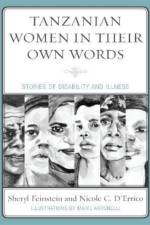
Tanzanian Women in Their Own Words is a compilation of oral histories by Tanzanian women living with disabilities or chronic illnesses. Beginning with their earliest childhood memories, the narrators weave their life stories through adulthood, telling of the hardships and support systems in their daily lives. A rich knowledge of Tanzanian culture is embedded in each story; for instance the pivotal role tribal affiliation, polygamy, and poverty play in society is addressed. HIV/AIDS, cancer, polio, female circumcision, and TB are just a few of the health issues covered; Feinstein and D'Errico make a concerted effort to include the major medical challenges facing this developing country, including an interview with an albino woman that introduces the little discussed atrocity of albinos being murdered for body parts to be used in ritual medicine practices. In spite of the abuse and exclusion many of the women suffer, eventually each learns to live in harmony with her reality. This makes their lives inspiring and gives perspective to those facing physical challenges. Tanzanian Women in Their Own Words encourages readers to consider issues of health care, transportation, ignorance, polygamy, gender discrimination, and rural isolation. Through learning about the health challenges faced by Tanzanian women, students are introduced to the lifeways and concerns of Tanzanian culture, the challenges faced by many developing countries, and the intimate and evocative level of detail that can only be discovered through intensive ethnographic fieldwork.
Sacrifice and Value: A Kantian Interpretation argues that we create values by making sacrifices. Values don't exist outside of us; they exist only when we give a gift without expecting a return. As Sidney Axinn demonstrates, we must have values in order to make decisions, to have friends or lovers, and to choose goals of any sort. Sacrifice is basic to almost everything of importance: care, love, religion, patriotism, loyalties, warfare, friendship, gift giving, morality. Axin uses Aristotle, Cicero, and Kant, and contemporary philosophers Oldenquest, Frankfurt, Friedman, Starobinski and others to analyze the role of sacrifice. A novel feature is the attention given to Kant's use of sacrifice. Sacrifice and Value will interest advanced students and scholars of philosophy_particularly value theory and moral theory_as well as women's studies, religion, political theory, and psychology.
From his vantage point in the nineteenth century, John Henry Newman offers much needed clarity to the twenty-first century, an age characterized by significant tension between science and religion and by a marginalization of the humanities. As a philosopher, theologian, priest, and man of Letters, he sheds light on our modern age by distinguishing between the different ways reason functions in science, religion, and literature. During his time, in response to a looming crisis in both religion and education, Newman challenged the usurpation of reason by science and empirical philosophy. He affirmed the need for the opening of the modern mind to other equally legitimate ways of knowing and defended the kinds of reason cultivated in the liberal arts. Jane Rupert delves into Newman's perception of the magisterial function of the imagination in both poetry and our knowledge of God, contributing unique insight into the study of his thought and showing how well it serves us to study this important nineteenth-century Catholic thinker. She presents a deep reflection of Newman's thought on several fronts, including intellectual history, theories of knowing, the controversy between science and religion, the defense of the liberal arts, and the aims of Catholic education.
This book traces the growth of a new kind of transnational social movement inspired by the Zapatista National Liberation Army (EZLN) in Mexico that has spread to urban Mexico and abroad. Based on ethnographic data in Mexico City and Los Angeles, this work traces the development of an urban, transnational, and transcultural network of community-based organizations that attempt to implement a Zapatista political vision. The purpose of this book is to demonstrate the complex and problematic linkages between these diverse communities and political discourses originating from indigenous communities in Mexico. This study centers on the influence of indigenous cultural politics on urban political culture in Mexico City and Los Angeles.
The purpose of this book is to provide a belief system to empower people using the democratic system and human rights law. This author contends that neo-liberalism has created a large underclass and has impinged upon the right to development for those who do not fit into the 'neo-liberal square'. Economic, social, and cultural rights, which have been rising in importance within the United Nations and have been denied to many, can be implemented using the core minimum obligations as defined by the General Comments of the United Nations Committee on Economic, Social and Cultural Rights. This will go a long way toward civilizing neo-liberalism. Core minimum obligations such as ensuring basic shelter and housing and essential primary health care only amount to 'top-down' provisions. This book argues that people are most likely to become aware of their human rights if these rights are taught using a more elementary, 'bottom-up' approach. Consequently human rights education should also be regarded as a core minimum obligation especially given that the people of the world have been deliberately kept ignorant of what constitutes basic human rights. Human rights education will enable people to decide through the democratic process whether they want to see economic, social and cultural rights included in domestic human rights law.
Kurdish Politics in the Middle East analyzes political and social dimensions of Kurdish integration into the mainstream socio-political life in Iran, Iraq, and Turkey. Its central thesis is that ethnic conflict constitutes a major challenge to the contemporary nation-state system in the Middle East. Long vanquished is the illusion of the 'melting pot,' or the concept that assimilation is an inexorable process produced by 'modernization' and the emergence of a relatively strong and centralized nation-state system in the region. Perhaps no single phenomenon highlights this thesis more than the historical Kurdish struggle for self-determination. This book's focus is on Kurdish politics and its relationship with broader regional and global developments that affect the Kurds. It does not claim to cover everything Kurdish, and it does not promote the political agenda of any group, movement, or country.
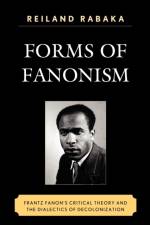
When Frantz Fanon's critiques of racism, sexism, colonialism, capitalism, and humanism are brought into the ever-widening orbit of Africana critical theory something unprecedented in the annals of Africana intellectual history happens: five distinct forms of Fanonism emerge. Forms of Fanonism: Frantz Fanon's Critical Theory and the Dialectics of Decolonization is discursively distinguished from other engagements of Fanon's thought and texts insofar as it is the first study to consciously examine his contributions to Africana Studies and critical theory or, rather, the Africana tradition of critical theory. Forms of Fanonism identifies and intensely analyzes Fanon's contributions to the deconstruction and reconstruction of Africana Studies, radical politics, and critical social theory. In highlighting his unique 'solutions' to the 'problems' of racism, sexism, colonialism, capitalism, and humanism, five distinct forms of Fanonism materialize. These five forms of Fanonism allow contemporary critical theorists to innovatively explore the ways in which his thought and texts can be dialectically put to use in relieving the wretched experience of this generation's wretched of the earth. Critics can also apply these forms to deconstruct and reconstruct Africana Studies, radical politics, and critical social theory using their anti-imperialist interests. Throughout Forms of Fanonism, Reiland Rabaka critically dialogues with Fanon, incessantly asking his corpus critical questions and seeking from it crucial answers. This book, in short, solemnly keeps with Fanon's own predilection for connecting critical theory to revolutionary praxis by utilizing his thought and texts as paradigms and points of departure to deepen and develop the Africana tradition of critical theory.
As of 2007, more than 9.25 million people were imprisoned worldwide. Almost half of the persons imprisoned are in the United States, China and Russia. The United States has more persons in prison per capita than any country in the world. Prisons The World Over offers a comprehensive overview of prison demographics and conditions for each of the following countries: United States, Canada, Argentina, Brazil, France, Germany, Great Britain, Italy, Sweden, Hungary, Poland, Russia, Israel, Egypt, Iran, Nigeria, South Africa, India, China, Japan, and Australia. The book includes reports on the number of prisoners, the rate per population, the percent of female prisoners, the number of penal institutions and their occupancy level, and the number of privately run prisons Also reported are the offenses for which the inmates are interred, the average length of incarceration, the availability of parole, conditions in the prisons, the availability of educational and work programs, provisions for children of female prisoners, the availability and quality of medical care, the characteristics of the prison staff, the visitation rights of prisoners, and the presence and treatment of political prisoners.
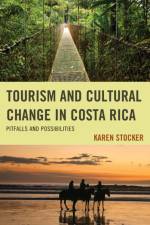
This book examines the consequencespositive, negative, and otherwiseof tourism in Costa Rica. Based on ethnographic research and interviews with tourists, tour operators, tourists-turned-settlers, and locals living in tourist destinations, this book brings together these varied perspectives with the aim of presenting forms of tourism beneficial to all parties. To examine both pitfalls and positive outcomes of tourism, it compares modes of tourism in destinations that are locally owned and foreign owned, ecotourism destinations, beach tourism, adventure tourism sites, and agrotourism projects. Furthermore, the author draws from two decades of research in two distinct communities to trace the ways in which the development of tourism in one community provided the springboard for changing gender roles and new opportunities for women, and, in the other, how the promise of tourism has spurred a cultural revitalization and positive change in Indigenous identity. Interviews with three generations of women in one tourist destination show generational changes in perspectives on tourism, and interviews covering the same time span show how in an Indigenous reservation poised to enter the heritage tourism industry, tourism offers a positive alternative to exploitative forms of labor and the stigma once associated with Indigeneity in that region. Interviews with locals in all four sites reveal the ways in which tourism carried out conscientiously would benefit them. These, juxtaposed with interviews of tourists regarding what they seek through tourism, offer a means of designing a mutually beneficial form of tourism. In sum, this book puts into conversation the varied views of those positioned differently within the realm of tourism in order to inform tourists and foreign land owners as to how they might glean the advantages that such an experience may bring to the traveler, while also playing up the benefits of these endeavors to local communities, and minimizing the potential damage these practices may cause.
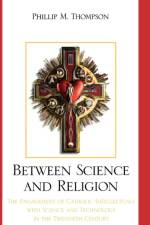
In exploring the role of Catholic intellectuals in engaging science and technology in the twentieth century, this book initially provides a background context for this evolution by examining the Modernism crisis in the first chapter. In order to unpack the subsequent evolution, Thompson then concentrates in separate chapters on the distinctive contributions of four specific Catholic intellectuals, Jacques Maritain (1882D1973), Pierre Teilhard de Chardin (1881D1955), Bernard Lonergan (1904D1984), and Thomas Merton (1915D1968). All of these intellectuals experienced some degree of official restraint in their efforts but through their distinctive intellectual trajectories, they contributed to a different engagement of the Church with science and technology. In the final chapters, the book first reviews the changes within the institutional Church in the twentieth century toward science and technology. Finally, it then applies some key ideals of the four intellectuals to anneal and extend John Paul II's approach of 'critical openness' to suggest how the Church can now engage science and technology.
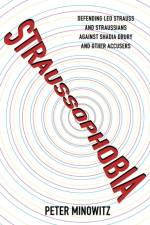
Leo Strauss and his students have long been accused of mendacity, elitism, and militarism, but the Iraq War has prompted unprecedented levels of caustic and inaccurate denunciations. Inappropriate criticisms have issued from artists (Tim Robbins), politicians (Ron Paul), journalists (Joe Klein), and even highly lauded scholars such as Arthur Schlesinger, Jr., Gordon Wood, Douglas Massey, Stephen Holmes, Anne Norton, Shadia Drury, Sheldon Wolin, John Pocock, John Yolton, Nicholas Xenos, and Brian Leiter. In Straussophobia, Peter Minowitz provides a methodical and detailed critique of the major offenders, especially of Drury, who maintains that Strauss established a 'covert tyranny' that would keep the Western world 'mired in perpetual war.' In replying to such charges_and to various authors who belittle Strauss's contributions as a scholar_Minowitz highlights the imaginative yet meticulous manner in which Strauss interpreted Thucydides, Plato, Xenophon, Farabi, Machiavelli, Hobbes, Locke, and Carl Schmitt. Straussophobia also provides both a comprehensive assessment of Strauss's 1933 letter that commended 'fascist, authoritarian, and imperial' principles, and a compelling account of Strauss's influence, or lack of influence, on neoconservative promoters of the Iraq War (e.g., Paul Wolfowitz, Richard Perle, and Lewis Libby). The book likewise breaks new ground in employing diversity discourse to explain and combat the bigotry and buffoonery that pervade attacks against Strauss and Straussians_and in drawing on Strauss to illuminate the distortions that mar some widely-used arguments for affirmative action.
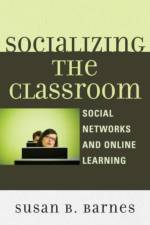
Socializing the Classroom: Social Networks and Online Learning, by Susan B. Barnes, examines how social media can be used in education through two research grants and real-world applications. Barnes analyzes social media including Facebook, Courseware, and Second Life, while providing a theoretical foundation for examining social software. A new generation of students is surrounded by digital technologies, leading scholars and teachers to consider virtual worlds to engage students.By bringing together human-computer-interaction theories with social theory, Socializing the Classroom creates a theoretical foundation for future research in the area of social media, online learning technologies, and the development of social networks. Readers will gain a better understanding of how students use online learning environments to communicate task-oriented messages and maintain social interactions. This is an essential text for scholars, students, and those interested in social networks and the implementation of technology in education.
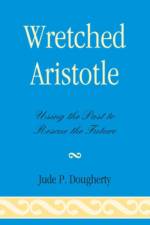
About eighty-five years ago, philosophers and literary intellectuals as diverse as Edmund Husserl, George Santayana, and Paul ValZry, aware of the declining influence of Christianity, spoke of 'the crisis of Western civilization.' In Wretched Aristotle: Using the Past to Rescue the Future, Jude P. Dougherty offers an intriguing reexamination of this crisis in contemporary times. Situating his argument in the context of ongoing debate concerning the nature of the public philosophy that underpins ideas of freedom, Dougherty identifies the essential features of Western culture through a series of interrelated essays. Each essay reinforces the idea that modernity cannot be understood apart from its break with classical antiquity. Wretched Aristotle offers a refreshing historical approach to this issue that will make it appealing to those interested in the mutual influence of science and culture and the role of religion in culture.
The Perfect Response is a lucid account of the social origins of fluency from a scholar recognized as 'a leading analyst of the dramaturgical dimensions of politics.' In this imaginative study Gary C. Woodward creates and elucidates the idea of 'The Rhetorical Personality, using a deft blend of communication theory, social history and rhetorical criticism. With unusual capacities for expressiveness, persuasiveness, and sensitivity, Rhetorical Personalities thrive in settings that call for communication that will transcend differences and engage others. They typically have a heightened sense of their own persuasive power, a skill for 'reading' audiences, and the capacity to function effectively in unfamiliar settings. Each chapter of The Perfect Response probes the nature of these uniquely social persons from a different perspective: through the sympathetic characters of a prolific Hollywood filmmaker; by examining the nature of the social isolation in individuals with autism-spectrum disorders; through cross-cultural comparisons; and by assessing seminal and recent social science research on key benchmarks of rhetorical skill, such as 'high self monitoring,' 'other-direction,' and 'the capacity for engagement with others.' Focusing on public figures that range from comedian Steve Martin to political leaders as diverse as Bill Clinton and Tony Blair, Woodward builds a detailed 'conceptual map' for profiling the kinds of individuals who naturally maximize the possibilities of communication in public settings.
Traditional scholarship often points to the Calvinists and Max WeberOs writing on the Protestant ethic as the catalysts to changing Christian attitudes concerning profit-seeking and wealth. Author Skip Worden argues that the seeds of this change occurred centuries earlier. From the beginning of the Commercial Revolution to the fifteenth-century Renaissance, he shows that the predominant Christian thought on economics went through a fundamental shift, becoming favorable toward profit-seeking and wealth-holding. Worden discusses this dramatic change and explains how the general antagonism toward the pursuit of wealth before the Commercial Revolution transformed into Protestant theologians' fighting against the prevailing view of a pro-wealth paradigm during the fifteenth century. Worden contends that the shift away from the Patristic view of wealth occurred well before the addition of the Calvinist spirit of capitalism and the Puritan work ethic into Christian economic vernacular. Drawing on Plato, Cicero, and Augustine, early Protestant theologians unsuccessfully sought to check the rising dominance of the pro-wealth Christian paradigm, which they believed had been pushed too far. These theologians of the sixteenth and seventeenth century felt it was too close to advocating love of gain itself, something too close to the sin of greed. How well the Reformation succeeded can be assessed by WordenOs insightful concluding study of John D. Rockefeller, the ascetic steward of GodOs Gold in the form of monopoly.
Over the past two decades, independent director Gregg Araki has emerged as one of the most intriguing auteurs of contemporary U.S. cinema. A leading figure of the New Queer Cinema movement of the early 1990s, Araki is known for his innovative, eye-opening, and at-times-controversial films aimed primarily at queer audiences. Images for a Generation Doomed: The Films and Career of Gregg Araki explores the films and career trajectory to date of this New Queer Cinema pioneer. Offering in-depth analyses of films such as The Living End, Totally F***ed Up, The Doom Generation, Nowhere, and Splendor, Kylo-Patrick R. Hart demonstrates how, over the course of the 1990s, the director's cinematic offerings became increasingly devoid of their early subversive potential. Hart goes on to argue that as the 1990s progressed, Araki's films were largely irrelevant to the cultural project of providing groundbreaking on-screen representations of non-heterosexual individuals living in the age of AIDS. However, Hart sees Mysterious Skin as evidence of Araki's successful attempt at reestablishing his cinematic and cultural relevancy in relation to the approaches and subject matter of contemporary queer cinema in the new millennium.
What exactly is happening when politicians evoke a center space beyond partisan politics to advance what are unmistakably political arguments? Drawing from an analysis of pivotal speeches surrounding Bill Clinton's 1992 presidential campaign and first term in office, Centrist Rhetoric: The Production of Political Transcendence in the Clinton Presidency takes an extended look at this question by showing how the possibility of political transcendence takes form in the rhetoric of the political center. Faced with a divided and shrinking party, and later with a pitched battle against a resurgent conservative movement, Clinton used the image of a political center, a 'third way' beyond liberal and conservative orthodoxies, to advance his strategic goals, define his adversaries, and overcome key political challenges. As appeals to the center helped Clinton to achieve these advantages in specific cases, however, they also served to define the means, ends, and very essence of democracy in ambiguous and contradictory ways. Touching on controversies from the early 1990s over the future of the Democratic Party, racial identity in American politics, the threat of rightwing extremism, and the role of government, Antonio de Velasco show how centrist rhetoric's call to transcendence weaved together forms of identification and division, insight and blindness, so as to defy the conventional assessments of both Clinton's supporters and his detractors. Centrist Rhetoric thus offers general insight into the workings of political rhetoric, and a specific appreciation of Clinton's attempts to define and adjust to the political exigencies of a critical period in history of the Democratic Party and politics in the United States.
Abonner på vårt nyhetsbrev og få rabatter og inspirasjon til din neste leseopplevelse.
Ved å abonnere godtar du vår personvernerklæring.