





















Gjør som tusenvis av andre bokelskere
Abonner på vårt nyhetsbrev og få rabatter og inspirasjon til din neste leseopplevelse.
Ved å abonnere godtar du vår personvernerklæring.Du kan når som helst melde deg av våre nyhetsbrev.

Peace in Turkey 2023: The Question of Human Security and Conflict Transformation, by Tim Jacoby and Alpaslan zerdem, explores how the Kurdish conflict could possibly be transformed towards positive peace. By drawing on peace, conflict transformation and human security theories, Peace in Turkey 2023 seeks to redress a long-felt concern in Turkey: how to address the current challenge of establishing sustainable peace in the country. What will Turkey look like at its Republic's centenary celebrations in 2023? Will it be able to resolve the Kurdish crisis through peaceful means and successfully transform the conflict towards positive peace? Will it be a country of peace, prosperity, rule of law, and democracy, or will the current violence intensify and continue to polarize society? To address these questions, Jacoby and zerdem use scenario-writing derived from peace theory to highlight new ways to consider political violence and the future of Turkey, this study will appeal to both specialist and non-specialist students and teachers from a diverse range of disciplinary backgrounds.
Plato has often been read as denigrating the cognitive and ethical value of poetry. In his dialogues, the faculty that corresponds to the poeticthe imaginationis located at the lowest level of human intelligence, and so it is furthest from true understanding. Simultaneously, the Platonic dialogues violate Plato's own alleged prohibitions against quoting and imitating poets, and much of the writing in the dialogues is poetic. All too often, the voluminous literature on Plato dismisses Plato's poetic formulations as merely the unintended contradictions of an otherwise meticulous author. In Praise of Plato's Poetic Imagination asks whether this ubiquitous reading misses something truly significant in Plato's understanding of the cognitive and ethical dimensions of human existence. Throughout the dialogues, Plato formulates ideas so precisely, utilizing carefully crafted images and structures, that we must question whether his flagrant and performative poetics can be mere mistakes, and inquire into how the poetic and creative arts contribute to true understanding. This book approaches the latter question by analyzing the role of the imagination in Platonic dialogues. It argues that critiquing poetry by poetic means, just as arguing against mimsis mimetically in the Republic or writing against the written word in the Phaedrus, constitute performative contradictions that bear significant philosophical meaning on further examination. The book suggests that the elusive examples of dialectic referred to in the divided line are the dialogues themselvesthe putting into practice of ethical ideals. If so, the role of the imagination is to be sought in the unfolding of the dialogues themselves, not simply in what is said, but also in what takes place within the dialogues.
Since industrialization, two major theoretical perspectives have accompanied the vibrant practice of social change. The first, hegemony, emerged as a less deterministic route to revolution from Marxist theory, and forms the common sense of social movement today. Within hegemonic resistance, rhetoric links issues, ideas, and identities to form a recognizable collective agent, whose aim is to transform the status quo into its vision of the world. The second major mode of resistance, transgression, grows from anarchist and autonomous resistance to capitalism. Transgression attempts to free individuals' uniqueness and creative power by deconstructing authority and explicating the body in resistance. Transgression as a Mode of Resistance: Rethinking Social Movement in an Era of Corporate Globalization provides the conceptual mapping for scholars, students, and practitioners to participate in the growing debate between these rich and powerful forces of social change. Through a broad perspective on philosophy and history, Christina R. Foust demonstrates that hegemony and transgression are sometimes conflicting, oftentimes inter-related practices. She responds to critics who believe that without a social change agent, resistance appears baseless and na ve; without a representational economy to cohere and express common interests, social movement is impossible. Through alternative social relationships and political performances, transgressive resistors may reinvent daily life.
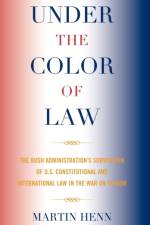
Under the Color of Law constitutes a full and critical scholarly commentary to the text of five key Bush administration legal memoranda formative of U.S. counterterrorism policy from 2001 to 2009. This volume is dedicated to the idea that these documents are worthy of being read and critically examined in themselves as primary text, precisely because the act of critical assessment may yield meaningful policy reform in the ongoing debate facing the nation over balancing security interests with the preservation of civil liberties. This volume is intended to provide counterpoint for, and antithesis to, positions vigorously defended by President Bushs attorneys working at the OLC inside the Department of Justice, and it is designed to be used primarily in conjunction with and examined as response to the Bush-era documents themselves. Martin Henn investigates five central questions, each framed around commentary to a specific administration document. This work addresses the Yoo-Flanigan Memorandum of September 25, 2001, and asks whether any President has constitutional power to initiate a foreign war without congressional authorization. Regarding President Bushs November 13 executive order of 2001, Henn asks whether an emergency of war permits any President to usurp judicial and legislative powers to interpret law and define and punish offences against the law of nations. Along with many other questions these documents initiate, the author carefully analyzes and seeks to answer questions regarding the Bush administration, the use of interrogational coercion and torture in the war on terror.
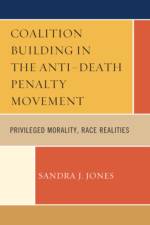
While a great deal of research has been done about many aspects of the death penalty, very little attention has been paid to the movement organized against it. Coalition Building in the Anti-Death Penalty Movement fills that gap with an empirical examination of the external and internal factors that shape the role race plays in the anti-death penalty movement. While the death rows across the U.S. are overwhelmingly filled with racial minorities and the poor, the ranks of the anti-death penalty movement are dominated by white, middle-class professionals. The attention given to race arise out of this racial distinction between death row inmates and the activists who advocate for them. By conducting interviews with white, black, and Latino anti-death penalty activists, this book examines the influence of race on the mobilization of activists and their approach toward abolition. The concepts of political opportunity, mobilizing structures, and framing provided by the political process model, are used to describe the complex manner in which moral opposition to the death penalty is shaped by the racial realities of the activists. Although racial tensions lie just below the surface, they nonetheless create real obstacles for the movement as it strives to build a racially diverse coalition of activists aimed at death penalty abolition.
Inhuman Thoughts is a philosophical exploration of the possibility of increasing the physiological and psychological capacities of humans to the point that they are no longer biologically, psychologically, or socially human. The movement is from the human through the trans-human, to the post-human. The tone is optimistic; Seidel argues that such an evolution would be of positive value on the whole. Seidel's initial argument supports the need for a comprehensive ethical theory, the success of which would parallel that of a large-scale scientific revolution, such as Newtonian mechanics. He elaborates the movement from the improved-but-still-human to the post-human, and philosophically examines speculated examples of post-human forms of life, including indefinitely extended life-span, parallel consciousness, altered perception, a-sociality, and a-sexuality. Inhuman Thoughts is directed at those interested in philosophical questions on human nature and the best life given the possibilities of that nature. Seidel's overall argument is that the most satisfactory answer to the latter question involves a transcendence of the present confines of human nature.
In 1995D96 the President of Azerbaijan, Heydar Alieyev, launched a program of agrarian reforms that caused a sweeping and irreversible shift from Soviet-style collective agriculture to individual farming in his country. These reforms led to an impressive recovery and substantial productivity improvements in agriculture. The agrarian transition in Azerbaijan contrasts with that in Russia, Ukraine, and Kazakhstan, where land privatization has been accompanied by policies encouraging the persistence of large corporate farms and where agricultural recovery has been much less impressive. For this reason Azerbaijan is today viewed as one of the few examples of successful land reform in the former Soviet Union. The impact of the Aliyev agrarian reforms went far beyond the recovery of agricultural production. The new policies had a significant impact on rural poverty and they were instrumental in increasing the incomes of Azerbaijan's large rural population, which relies on agriculture for a substantial part of the family budget. To understand the successes and limitations of land reform, Rural Transition in Azerbaijan evaluates the record of rural reforms, focusing on policy change, farm level performance, and the impact of reforms on rural incomes and rural family well-being-issues that today are at the core of the agenda in many international organizations.
Shaping and Reshaping Chinese American Identity: New York's Chinese in the Years of the Depression and World War II explores the role played by Chinese Americans in New York in the 1930's who laid the foundation for future generations to fight for civil rights as American citizens. The stories of Chinese Americans during the Depression years and World War II are under-represented in the existing literature that has been confined to the early days of the settlement of Chinese Americans on the west coast of the United States. They were usually depicted as passive victims of exclusion as a result of Chinese Exclusion Laws. This book focuses on the active participation of the Chinese American in New York City in mainstream political, economic, and social life that helped them to forge new identity as Chinese Americans. Their active participation in federal and local elections as a means of claiming their rights as American citizens demonstrated their growing political consciousness. Chinese New Yorkers' support of both China and United States during the war reflected their dual identity as both Chinese and Americans. Their contributions to the war front and to the home front after Pearl Harbor eventually forced the reconsideration of the Chinese Exclusion Laws. The book concludes by relating the active participation of the Chinese in New York during the war years to the national movement for racial equality that resulted in new federal civil rights legislation.
This unique work takes a method of textual analysis commonly used in studies of ancient Western and Eastern manuscripts and applies it to twenty-one early Qur'an manuscripts. Keith Small analyzes a defined portion of text from the Qur'an with two aims in view: to recover the earliest form of text for this portion, and to trace the historical development of this portion to the current form of the text of the Qur'an. Small concludes that though a significantly early edited form of the consonantal text of the Qur'an can be recovered, its original forms of text cannot be obtained. He also documents the further editing that was required to record the Arabic text of the Qur'an in a complete phonetic script, as well as providing an explanation for much of the development of various recitation systems of the Qur'an. This controversial, thought-provoking book provides a rigorous examination into the history of the Qur'an and will be of great interest to Quranic Studies scholars.
In Indirect Perpetrators Andrew Szanajda examines the administration of correctional and transitional justice in postwar Germany from 1945 to 1955. He is specifically concerned with the prosecution of those who had denounced others to the authorities during the National Socialist era. The first part of this work looks at the reasons behind the decision to prosecute informers with perpetrating a crime against humanity and the philosophical, legal, and practical problems associated with the administration of justice retroactively in the German courts through legislation specifically enacted for this purpose under the auspices of the Allied occupation powers and subsequent legislation enacted by the German authorities. The second part of the book examines the implementation of this law and the prosecution of informers in the American, French, and British occupation zones and then later in the Federal Republic of Germany, drawing on court proceedings and the judgments that were handed down in these cases. Szanajda discusses the problems associated with the implementation of this law in the respective zones and in the Federal Republic of Germany and the lessons to be drawn from this historically significant attempt to call individuals to account for their crimes against humanity after they had occurred through the use of retroactive legislation.
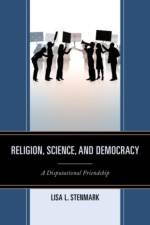
Despite the increasing popularity of ';religion and science' as an academic discourse, the intersection of science and religion remains a front line in an ongoing ';culture war.' The reasons for this lie in an approach to discourse that closely resembles the model of discourse promoted by John Rawls, in which plural discourse such as between religion and science is based on a foundation of shared beliefs and established facts. This leads to a ';doctrines and discoveries' approach to the relationship of religion and science, which focuses on their respective truth claims in an attempt to find areas of agreement. This framework inherently privileges scientific perspectives, which actually increases conflict between religion and science, and undermines public discourse by inserting absolutes into it. To the extent that the science and religion discourse adopts this approach, it inadvertently increases the conflict between religion and science and limits our ability to address matters of public concern.This book suggests an alternative model for discourse, a disputational friendship, based on the work of Hannah Arendt. This approach recognizes the role that authorities and thus religion and science play in public life, but undermines any attempt to privilege a particular authority, because it promotes the position of the storyteller, who never settles on a single story but always seeks to incorporate many particular stories into her account. A disputational friendship promotes storytelling not by seeking agreement, but by exploring areas of disagreement in order to create the space for more conversations and to generate more stories and additional interpretations. Successful discourse between religion and science is not measured by its ability to determine ';truth' or ';fact,' but by its ability to continually expand the discourse and promote public life and public judgment.
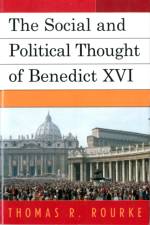
Covering the entire trajectory of his religious life, this meticulously researched book identifies the roots of political and social order in Pope Benedict XVI's philosophy and analyzes his views on the role of Christian faith in politics. Although not generally characterized as a political philosopher, the Benedict's writings shed significant and unique light on the world of politics today. In an age when modern politics has lost sight of its proper relationship within the larger scheme of human affairs and existence, Thomas R. Rourke shows that, as both Pope and the former Cardinal Ratzinger, Benedict has made a conscious effort to relate political issues to the broader dialogue on human endeavor, ethics, and culture. Bringing to the fore Benedict's belief on the necessary place of the Christian tradition in a contemporary politics of reason, Rourke details the Pope's contribution to solving the deeper problems of politics today. A valuable study in political theory and religion, this book should be read by those interested in Catholic social and political thought.
Pierre Bourdieu: The Last Musketeer of the French Revolution argues that Bourdieu appointed himself as the representative of the French people and acted as its National Assembly. In that capacity, he set himself to work with the charter of the preamble toThe Declaration of the Rights of Man and the Citizen to remind the members of the social body of their rights and obligations; to monitor the legislative and executive powers and compare them with the Republican purposes of ideal political and social agendas decreed by the revolutionaries of 1789; and, overall, to maintain the tenets of the French constitution. In that sense, like d'Artagnan in Dumas'The Three Musketeers, Bourdieu took it upon himself to be the fighter for true France, namely the keeper of the Republican tradition of the French Revolution. Bourdieu's entire oeuvre was indeed motivated by the failed promise of the French Revolution and by the demise of its most noble ideals. His passionate analyses_of educational stratification, cultural production and consumption, gender relations, the social structure of the economy, and the effects of globalization_were always carried out with the moral benchmark of the revolution in mind. Bourdieu was indeed passionately tied to the values of the French Revolution, notably to liberty and meritocracy, to social equality and to the democratization and universalization of government. But wherever he looked, he saw those values betrayed by the very people who argued for their implementation, and by the governmental bodies which were devised in order to guarantee their effectiveness. Committed to the values of the Declaration, he was constantly frustrated by the betrayals of universalization by the Fifth Republic.
Screaming for Change advances an understanding of punk rock by going beyond description of punk as a musical, political, social, and cultural genre of communication. Previous scholarship about punk rock has primarily dealt with those boundaries of genre. Previous scholars neglected to examine the ideology of punk across the decades and continents. That ideology, in a word, is deviance. Through Gramscian textual analysis, this book uncovers this ideology of deviance with some surprises along the way. Students and scholars of punk rock will value the book's attention to both well known and more esoteric punk artists. Punk is arguable the most studied "e;subculture"e; to ever launch itself onto the larger social agenda as a possible counterbalance to the mainstream cultural hegemony. During the late 1970s, punk scenes sprouted up in large numbers all over the globe, and it appears that deep feelings of discontent towards the inherent alienation present in the capitalist system were the motivational seed that facilitated their growth. Unconvinced that the historical accounts have been successful in adequately describing and proficiently capturing the essence of punk, this study examines the phenomenon in slightly different terms. This study proposes that punk should be understood as a way of seeing the world, as a way of reasoning, or, essentially, as a philosophy on its own terms.
The Rhetoric of Soft Power: Public Diplomacy in Global Contexts provides a comparative assessment of public diplomacy and strategic communication initiatives, in order to portray how Joseph Nye's notion of ';soft power' has translated into context-specific strategies of international influence. The book examines four cases Japan, Venezuela, China, and the United States to illuminate the particular significance of culture, foreign publics, and communication technologies for the foreign policy ambitions of each country.
The greatness of America's most influential preachers of the twentieth century came from their significant contributions to both religious and secular society. Some names, like Martin Luther King, Jr. and Billy Graham, are universally recognized and typically thought of first by people today. Assorted reviews have also listed other notable names from various Christian denominations, but little recognition has been given to the Catholic contribution to preaching in the twentieth century.
If there is one utterly inescapable problem for the metaphysician, it is this: is metaphysics itself a theoretically legitimate discipline? Is it, in other words, capable of a systematic and well-confirmed set of theoretical results? And if not, why not? From its inception, metaphysics has found itself exercised by the nagging worry that its own inquiries might reveal it to be a subject without an object, or a mode of inquiry without a method. Such concerns were voiced as early as Plato's discussion of the battle between the Gods and Giants. Since then, no era of its history has spared metaphysics some rehearsal of this question. In Empiricism and the Problem of Metaphysics, Paul Studtmann defends an empiricist critique of metaphysical theorizing. At the heart of the critique is an empiricist view of a priori knowledge, according to which all a priori knowledge is empirical knowledge of the results of effective procedures. Such a view of a priori knowledge places severe limits on the scope a priori speculation and indeed places beyond our ken the types of claims that metaphysicians as well as traditional epistemologists and ethicists have typically wanted to make.
Acting Alone: A Scientific Study of American Hegemony and Unilateral Use-of-Force Decision Making is a straight-forward analysis of unilateral U.S. military actions, which are dependent upon the power disparity between the U.S. and the rest of the world. In solving the puzzle as to why individual presidents have made the "e;wrong"e; decision to act alone, the author lays out a president's behavior, during a crisis, as a two-step decision process. Acting Alone reviews the well-studied first decision, deciding to use force, based on international conflict literature and organized along traditional lines. The author then details the second decision, deciding to use unilateral force, with an explanation of the criticisms of multilateralism and the reasons for unilateralism. To test a new theory of unilateral use of force decision making, Acting Alone devises a definition and coding rules for unilateral use of force, develops a sequential model of presidential use of force decision making, and constructs a new, alternative measure of military power, a Composite Indicator of Military Revolutions (CIMR). It then uses three methods - a statistical test with a heckman probit model, an experiment, and case studies - to test U.S. crisis behavior since 1937. By applying these three methods, the author finds that presidents are realists and make expected utility calculations to act unilaterally or multilaterally after their decision to use force. The unilateral decision, in particular, positively correlates with a wide military gap with an opponent, an opponent located in the Western hemisphere, and a national security threat.
The Case for Gridlock explains how Progressive ideas about government have led to severe representational problems in the American political system. Having rejected the Framers' institutional arrangement as sluggish and frustrating, Progressives have, for over a century, worked to circumvent the Madisonian system by establishing policy-making power in executive agencies and commissions. Ironically, the most consequential legacy of Progressivism is an institutional system that became more perfectly and efficiently responsive to the inherently unbalanced organized political power that they lament. Drawing on an analysis of administrative law and decades of research on interest groups, The Case for Gridlock explores the faulty logic and na_ve thinking of the Progressive perspective, revealing the uncertainties and anomalies in legal doctrine that have emerged as a result of their effort to graft 'efficient' designs onto the gridlock-prone system that James Madison and the other Framers left us. The problems of 'interest group liberalism' and the accumulation of powerful interests that undermine economic growth and political stability have long been recognized by political scientists and economists. The Case for Gridlock argues that these problems are not inevitable and that a solution exists in reasserting the Constitutional Principle as the foundation for the design and operation of U.S. governmental institutions. The public's interests can prevail over those of organized special interests by returning power to the gridlock-prone institutional arrangement established in the Constitution.
The Search for Extra-Terrestrial Intelligence, or SETI, has attracted both praise and sharp criticism from the mainstream scientific community over the years. Extraterrestrials: A Philosophical Perspective explores the important philosophical issues that are at play in this discussion. AndrZ Kukla closely examines several of the prominent ideas surrounding the possibility of extraterrestrial life such as the vastness of the universe argument, the argument from mediocrity and the one world, one science argument while offering innovative theories of his own. Among other things, Kukla show uses Chomsky's account of language acquisition to explain why humans will never be able to communicate with extraterrestrials. Extraterrestrials offers a close and thorough treatment of extraterrestrial life that will intrigue a wide audience, especially those who are interested in the philosophy of science.
In the early years of the Atlantic Alliance, no bilateral relationship was more important than that between the Federal Republic of Germany and the United States. Even so, the West German-American alliance was taxing for both sides during much of the first two decades of the Cold War. Ultimately, despite frequent, significant challenges to the alliance from without and within, the two allies managed to achieve a positive and productive relationship - Eisenhower and Adenauer explains how they did so. In both capitals, the top foreign policy makers were deeply involved in the conduct of what they viewed as a vital bilateral alliance, with both President Dwight Eisenhower and Chancellor Konrad Adenauer taking the lead in his own government. For the Americans, a rearmed FRG tightly bound to the West was the bedrock of any European security policy that could contain the Soviet Union for the long-term. For the West German government, their relationship with the United States was the bedrock of rehabilitation and, indeed, survival as an independent country. In this book, their alliance is closely analyzed to form new knowledge on the West German-American relationship during the Cold War.
Postapocalyptic Fiction and the Social Contract: "e;We'll Not Go Home Again"e; provides a framework for our fascination with the apocalyptic events. The popular appeal of the end of the world genre is clear in movies, novels, and television shows. Even our political debates over global warming, nuclear threats, and pandemic disease reflect a concern about the possibility of such events. This popular fascination is really a fascination with survival: how can we come out alive? And what would we do next? The end of the world is not about species death, but about beginning again.This book uses postapocalyptic fiction as a terrain for thinking about the state of nature: the hypothetical fiction that is the driving force behind the social contract. The first half of the book examines novels that tell the story of the move from the state of nature to civil society through a Hobbesian, a Lockean, or a Rousseauian lens, including Lucifer's Hammer by Larry Niven and Jerry Pournelle, Alas, Babylon by Pat Frank, Malevil by Robert Merle, and Into the Forest by Jean Hegland. The latter half of the book examines Octavia Butler's postapocalyptic Parable series in which a new kind of social contract emerges, one built on the fact of human dependence and vulnerability.
Children, Consumerism, and the Common Good explores the impact of consumer culture on the lives of children in the United States and globally, focusing on two phenomena: advertising to children and child labor. Christian communities have a critical role to play in securing the well-being of children and challenging the cultural trends that undermine that well-being. Themes in the tradition of Catholic social teaching can move us beyond the tensions between children's rights activists and those who propose a return to 'family values' and can inform practices of resistance, participation, and transformation. Roche argues that children are full, interdependent members of the communities of which they are a part. They have a claim on the fruits of our common life and are called to participate in that life according to their age and ability. The principle of the common good forms the benchmark for analyzing children's participation in the market and the ways in which market logic shapes other institutions of civil society, particularly educational institutions. The Cristo Rey Network of schools is highlighted as an example of institutional transformation which shapes children's participation in education and the economic life of their families and communities in a spirit of solidarity.
This book examines BritainOs role and influence in a pivotal decade. The postwar international order was still taking shape in the 1950s. Much was unsettled, and in these circumstances Britain could realistically expect to remain, and be treated as, one of the 'Big Three' world powers along with the United States and Soviet Union. Some adjustments were required in British priorities and methods, in view of changing pressures and needs at home and abroad, but the continuing desire was to make BritainOs position 'tenable' in those parts of the world that were of special importance to British prestige, power, strategy, prosperity, and security. This book elucidates the motives behind key decisions, discusses their far-reaching consequences, explains why some options were taken and others rejected, and places British policy-making in the appropriate international context. Designed primarily for undergraduate and beginning postgraduate students, the book offers an up-to-date, single volume treatment of major themes in British and international history; historiographical synthesis and comment; detailed narrative; accessible, easy-to-follow analysis; and a clear, evidence-based point of view concerning the survival of British power in challenging times.
In contemporary political philosophy, there is much debate over how to maintain a public order in pluralistic democracies in which citizens hold radically different religious views. The Political Problem of Religious Pluralism deals with this theoretically and practically difficult issue by examining three of the most influential figures of religious pluralism theory: John Rawls, Jacques Maritain, and Alasdair MacIntyre. Drawing on a diverse number of sources, Kozinski addresses the flaws in each philosopher's views and shows that the only philosophically defensible end of any overlapping consensus political order must be the eradication of the ideological pluralism that makes it necessary. In other words, a pluralistic society should have as its primary political aim to create the political conditions for the communal discovery and political establishment of that unifying tradition within which political justice can most effectively be obtained. Kozinski's analysis, though exhaustive and rigorous, still remains accessible and engaging, even for a reader unversed in the works of Rawls, Maritain, and MacIntyre. Interdisciplinary and multi-thematic in nature, it will appeal to anyone interested in the intersection of religion, politics, and culture.
Erik Root's book, Sons of the Fathers explores the Virginia Slavery Debate of 1831D1832, conducted in the House of Delegates. This is possibly the greatest debate to have occurred in any southern state before the Civil War. The speeches in this book provide, for the first time ever, an unedited version of that debate where many of the sons of America's Founders deliberated over the necessity of emancipating the slaves in Old Dominion. In August 1831, Nat Turner led the most successful slave rebellion in America's history, killing some 60 men, women, and children. This insurrection provided the historical backdrop to the proposal for a gradual emancipation plan. The forces for emancipation, led by Thomas Jefferson's grandson, Thomas Jefferson Randolph, were defeated in the course of the debate as the members of the House of Delegates rejected that it was a necessity to free the slaves. As a result, rift between what is now Virginia and Western Virginia developed, never to heal. Some in the debates believed slaves had the same rights as every human being. Those who balked at emancipation diminished slavery as an 'evil' and came closer to the view that the slaves were mere property. They affirmed that the slave was property and rejected the natural rights grounding of the Founding. In this collection of primary source material-which consists of the speeches made public to the press and the people-the reader will be able to decide just how close the emancipation forces attached themselves to the 'laws of Nature and Nature's God.' The reader will also be able to decipher how far many Virginians departed from not only the Declaration of Independence, but the Virginia Declaration of Rights.
Think tanks have become increasingly important in American politics foreign policy. In the last thirty years think tanks have emerged as major actors on the political stage, comparable in influence to large interest groups, political parties, and government agencies. In the same time span these think tanks have replaced universities as the main source for new policy ideas and the background research and arguments to justify them. This book discusses think tanks in general but focuses specifically on the Foreign Policy Research Institute (FPRI) in Philadelphia. Though a smallish 'tank,' FPRI has been enormously influential, feeding its ideas into government and policy debate even at the level of presidential politics. The author discusses FPRI within the context of the growing influence of presidential politics. The author discusses FPRI within the context of the growing influence of think tanks over public policy in general and foreign policy in particular.
The importance of Immanuel Kant's Critique of Pure Reason in the history of philosophy is matched only by its difficulty. In particular, readers are often frustrated by how difficult it is to extract Kant's arguments from his dense prose. This book reconstructs, using the tools of propositional logic, the central arguments of the Critique. In all, the book reconstructs thirty-six of Kant's arguments spanning the Transcendental Aesthetic, Transcendental Analytic, and Transcendental Dialectic. For each argument, they begin with a quote from Kant's text followed by a synopsis that explains the argument informally. Finally, each synopsis is followed by a formal reconstruction of the argument. The synopses offer examples, metaphors, historical background, and objections/responses to aid the reader in appreciating Kant's arguments. Even though many readers who approach Kant for the first time have a good philosophical vocabulary, few will understand Kant's unique lexicon. In addition to formally reconstructing Kant's arguments, the book also includes a glossary that defines the technical terms that Kant uses in his arguments. Finally, since this book is directed largely at students, Bryan Hall enlisted two of his own students to ensure that the book is maximally student friendly. In contrast to most pedagogical philosophical literature, the content of this book has been tailored by students for students.
Even whether to call the Gulf 'Arabian' or 'Persian' is an unending argument. Regardless of its name, the Gulf is one of the most politically important regions of the world. Despite its constant presence in the headlines, the fact that it was part of the British Indian empire for many years has gone unappreciated. The long period of British control and the connections with India are, in fact, necessary in understanding the contemporary Middle East. With more than ten years of experience as a government advisor in Saudi Arabia and Qatar, Paul Rich draws on previously closed archives to document the actual heritage of the area and dispel the myths. Rich shows that the influences of Britain and India are far deeper than commonly acknowledged, and that the sheikhs are actually the creation of the British Raj. He explains that they owe their thrones to a small group of British political agents_the 'Heaven Born'_who created the satraps and then proceeded to rule from behind the scenes by a clever use of stagecraft and ritual that was heavily flavored by their experiences at English public schools and in Masonic lodges. In its attempt to make sense of the complexity of Arab sheikhdoms in the Gulf, Creating the Arabian Gulf is an ideal book for students and scholars interested in Middle East studies and international relations.
Max Stirner (1806-1856) is recognized in the history of political thought because of his egoist classic The Ego and Its Own. Stirner was a student of Hegel, and a critic of the Young Hegelians and the emerging forms of socialist and communist thought in the 1840s. Max Stirner's Dialectical Egoism: A New Interpretation examines Stirner's thought as a critique of modernity, by which he meant the domination of culture and politics by humanist ideology. In Stirner's view, 'humanity' is the supreme being of modernity and 'humanism' is the prevailing legitimation of social and political domination. Welsh traces Stirner's thought from his early essays to The Ego and Its Own and Stirner's responses to his critics. He also examines how Benjamin Tucker, James L. Walker, and Dora Marsden applied Stirner's dialectical egoism to the analysis of (a) the transformations of capitalism, (b) culture, ethics, and mass psychology, and (c) feminism, socialism, and communism. All three viewed Stirner as a champion of individuality against the collectivizing and homogenizing forces of the modern world. Welsh also takes great care to dissociate Stirner's thought from that of the other great egoist critic of modernity, Friedrich Nietzsche. He argues that the similarities in the dissidence of Stirner and Nietzsche are superficial. The book concludes with an interpretation of Stirner's thought as a form of dialectical egoism that includes (a) a multi-tiered analysis of culture, society, and individuality; (b) the basic principles of Stirner's view of the relationship between individuals and social organization; and (c) the forms of critique he employs. Stirner's critique of modernity is a significant contribution to the growing literature on libertarianism, dialectical analysis, and post-modernism.
Abonner på vårt nyhetsbrev og få rabatter og inspirasjon til din neste leseopplevelse.
Ved å abonnere godtar du vår personvernerklæring.