


















Gjør som tusenvis av andre bokelskere
Abonner på vårt nyhetsbrev og få rabatter og inspirasjon til din neste leseopplevelse.
Ved å abonnere godtar du vår personvernerklæring.Du kan når som helst melde deg av våre nyhetsbrev.

What does it mean to insist on the visual as a form of psychic and political violence? And how are women specifically targeted by symbolic violence during periods of war and colonization? Between Image and Identity highlights postcolonial feminist efforts to transform violence into aesthetic and political strategies of resistance. This book explores the 'autobiographical' literature, visual, and performance art of postcolonial women from Maghreb and Southeast Asia including Leila Sebbar, Assia Djebar, and Theresa Hak Kyung Cha. Karina Eileraas critically examines how contemporary these artists actively participate in the violence of representation in order to re-imagine the relationship between image and identity. By exploring the creative potentials of fantasy, alienation, and misrecognition in their work, these artists rewrite postcolonial history and re-vision the relationships between sexual politics, symbolic violence, and national memory. Between Image and Identity is a compelling and innovative book that will appeal to those interested in postcolonial and feminist studies, autobiography, visual culture, war and trauma studies.
Becoming Nietzsche is an essential book for understanding Nietzsche's philosophical genealogy from 1866 to 1868, a phase that is punctuated by the influence of Friedrich Lange and a surprising rejection of Schopenhauer's theory of the will. During this phase, Nietzsche focuses on the scientific and artistic status of teleological judgments and their relevance for thinking about organic life and representation. Paul A. Swift deftly connects Nietzsche's philology with the development of his theory of human understanding by providing scholarly analysis and short original translations of Nietzsche's early work on Democritus, Schopenhauer, and Kant. A first of its kind study suitable for Nietzsche specialists, historians of philosophy, and newcomers who have broad interests in the humanities, Becoming Nietzsche investigates how Democritus's rejection of teleology and Kant's analysis of reflective judgment directly influenced Nietzsche's aesthetic perspectivism in the 1860s.
The Art of Power is a challenge to traditional political theory. Diego A. von Vacano examines the work of Machiavelli, arguing that he establishes a new, aesthetic perspective on political life. He then proceeds to carry out the most extensive analysis to date of an important relationship in political theory: that between the thought of Machiavelli and Friedrich Nietzsche. Arguing that these two theorists have similar aims and perspectives, this work uncovers the implications of their common way of looking at the human condition and political practice to elucidate the phenomenon of the persistence of aesthetic, sensory cognition as fundamental to the human experience, particularly to the political life. By exploring this relationship, The Art of Power makes a significant contribution to the growing interest in the intersection of aesthetic theory and political philosophy as well as in interdisciplinary and comparative perspectives on political theory.
The United States in the past half-century has consistently led the world in the strength of its economy and in scientific research and development. Now, this position at the forefront of industry and innovation is threatened. Asia's Educational Edge warns that the United States relies heavily on the talent of foreign-born scientists and engineers_skilled workers who face increasing, and increasingly favorable, options for employment elsewhere. East Asia's and India's emerging economies are expanding their own higher education capacity in the sciences and their own research and development infrastructure. Accordingly, the United States faces great and growing competition in attracting talented students and professionals from the international community. In this carefully researched volume, Yugui Guo asks: Can the U.S. education system succeed in training enough high-quality students in the sciences to meet the ever-growing need? Asia's Educational Edge is essential reading for industrial and research leaders, policy makers, educators, and scholars of international and comparative education.
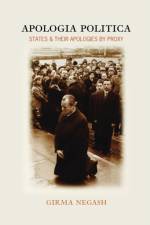
Apologia Politica defines and explores the nature of public apology. Focusing on collectivities and their agencies in the apology process, author Girma Negash examines public apology as ethical and public discourse, recommends criteria for the apology process, analyzes historical and contemporary cases, and formulates a guide to ethical conduct in public apologies. This is a groundbreaking work, elaborating upon the interface between ethics and statecraft in the domain of public apology. Using democracy, moral identity, and accumulated wisdom as a yardstick in the prescription of ethical conduct, Apologia Politica proposes four imperatives for successful public apology: acknowledgement; public exposure and truth-telling; remorse through public record; and, finally, defining identity for accountability. It is a valuable resource for those interested in peace-building or the relationships between Germany and Israel, Japan and its neighboring countries, the international community and Rwanda, and the United States and China.
Although free enterprise and free economies now proliferate around the globe, the idea of business as a holy vocation is one that has received little attention. Few business figures have depicted their professions in this light, as few have seen how their roles might bridge the divide between the economic and theological realms. Franois Michelin is an exception. Years of experience with the Michelin group-the company famous for introducing the radial tire that revolutionized the car industry-have convinced Michelin that the entrepreneur produces great moral and material good as he or she fulfills the myriad responsibilities of the job. In this illuminating series of interviews, Michelin explains his belief that the work of a business leader closely reflects God's creative act. And Why Not: Morality and Business argues convincingly for the valuation of a profound theological dimension of business life and advocates for a greater appreciation of men and women in business, on whose efforts the health of a nation stands.
Although Lu Xun was a leading intellectual and writer in twentieth century China, and his representative character Ah Q, hero of 'The True Story of Ah Q,' is considered an iconic repository of progressive Chinese thinking about the national character, few works examine the major discourses in his thought and writing relative to broader historical and intellectual currents outside the context of his politicization. Ah Q Archaeology, however, concretely situates Lu Xun's critique of national character vis-a-vis metanarratives of nationalism and modernity through a close examination of his works in their historical context. Paul B. Foster uses a discursive approach to tie together Lu Xun's major theme of national character critique and its fate in China's tumultuous twentieth century. This book is an important and unique contribution to modern Chinese intellectual history and modern Chinese literature.
A significant contribution to the ongoing debate on aid effectiveness, Aid Effectiveness in Africa starts from the premise that money alone will not bring sustained development to Africa. With grounding in years of experience and fieldwork, Phyllis R. Pomerantz examines the relationship between aid donors and recipients and the extent to which trust is present in today's aid environment. Pomerantz concludes that there are serious gaps, created in part by a striking lack of knowledge of the African context and culture on the part of the donors, and troublesome institutional constraints that make it difficult for aid agencies to change the way they operate. Joining the urgent call to transform aid agencies and increase aid effectiveness, and eschewing pat solutions and simple formulae, the book offers realistic recommendations and provides an eloquent argument for further, far-reaching reform.
After Multiculturalism: The Discourse on Race and the Dialectics of Liberty provides a unique critique of multiculturalist thought in social theory and public policy from an individualist perspective. Contemporary academic and policy discourse on race and racism in the United States is dominated by collectivist social theories that are founded on the idea that the only meaningful challenges to racism are those that foster collective social identities and seek to influence and direct the use of state power in the interest of particular racial and ethnic groups. Multiculturalism is the prevailing incarnation of anti-racist thought that informs and mediates political process and organizational life in the United States. The multicultural discourse on race has become tribalist, anti-western, anti-market, and statist. After Multiculturalism challenges the notion that collectivist and statist ideologies 'own' racism as an educational and public policy issue. Welsh demonstrates that individualist philosophies entail critiques of racism that follow directly from their anti-collectivist and anti-statist foundations. He argues that multiculturalism is unlikely to promote the types of social action and changes essential to overcoming racism and that the individualist and libertarian ideas discussed in the book make important contributions toward the realization of a world free of racial domination. To this end, the ideas of Ayn Rand, Murray Rothbard, Benjamin, Benjamin Tucker, Lysander Spooner, Max Stirner and contemporary libertarian scholars are discussed to the lay the foundation for a critique of multiculturalism. The book explores the concepts of post-ethnicity and transracialism as individualist and libertarian expressions of a society 'after multiculturalism.' Welsh's discussions of transracialism and post-ethnicity constitute unique and important contributions to social thought. This book will hold great interest for scholars and students concerned with race, ethnicity, political theory, or individualist thought, as well as scholars and students of the history of ideas.
Liberalism under Siege: The Political Thought of the French Doctrinaries is a compelling examination of the French Doctrinaries, a largely neglected group of liberal thinkers in post-revolutionary France who were proponents of a nuanced sociological and historical approach to political theory. The first systematic interpretation of the French Doctrinaries' political writings to appear in English, Liberalism under Siege combines textual analysis and historical interpretation to explore the Doctrinaires' ideas on the French Revolution, democracy, political power, sovereignty of reason, publicity, capacity, and representative government. Aurelian Craiutu's detailed work is not only an argument for the reappraisal of the Bourbon Restoration as a golden age of political thought; it is also a passionate and persuasive addition to contemporary debates about the diversity of liberalism.
The African Foreign Policy of Secretary of State Henry Kissinger outlines in clear, comprehensive terms the details of Secretary of State Henry Kissinger's foreign policy toward Africa and how that policy related to other aspects of his global viewpoint. For the first time, editors Hanes Walton, Jr., Robert Louis Stevenson, and James Bernard Rosser bring together a diverse collection of public documents, speeches, and congressional presentations for critical analysis and in-depth discussion. This book presents an intellectual evaluation of governmental sources to determine the kinds of foreign policy proposals and programs that Kissinger developed for the various crises and problems which were under way in Africa. The essays demonstrate how Kissinger used his brand of shuttle diplomacy to set up delicate negotiations to ease the new international tensions and the power-rivalry. The African Foreign Policy of Secretary of State Henry Kissinger offers important insight that will stimulate debate and be a lively read for those interested in international politics and political science.
Author Ken Dorter, in a passage-by-passage analysis traces Plato's depiction of how the most basic forms of human functioning and social justice contain the seed of their evolution into increasingly complex structures, as well as the seed of their degeneration. Dorter also traces Plato's tendency to begin an investigation with models based on rigid distinctions for the sake of clarity, which are subsequently transformed into more fluid conceptions that no longer sacrifice complexity and subtlety for clarity. It's the author's claim that virtually every positive doctrine put forward in the dialogue is problematized somewhere else in the dialogue. This accounts for the apparent incoherence among various parts of the Republic. The dramatic changes of style and content after Books 1, 4, 7, and 9 give it an appearance of being a pastiche of material written at different times, as it is often interpreted. Dorter locates an underlying structure that explains these changes. It is widely recognized that the dialogue is organized symmetrically in the form of an arch, with the beginning and end sharing related themes, the second and penultimate sections sharing other related themes, and so on until the forward series and the reverse series meet in the middle of the dialogue. Dorter's original claim is that the symmetrical segments of the arch reflect the levels of the 'Divided Line.' Dorter contends that the overall organization of the Republic can be seen to illustrate and imitate the philosophers' ascent from the cave, and their subsequent return to it with altered perspectives. This erudite, salient, and expansive new look at Plato's Republic is essential for philosophy, political theorists, and anyone interested in Plato scholarship.
This book discusses the religious policies of the Soviet military authorities and their allies in the Socialist Unity Party in the Soviet zone, but more importantly, who devised them, how they did so, and how they attempted to implement them. In doing so, it illustrates how the Soviet authorities recreated the Soviet zone along Stalinist lines with regards to religious policy, a process which they implemented throughout all of Eastern Europe as well in East Germany. While I examine how these policies were devised, I place greater emphasis on their implementation in the Soviet zone, especially its most important province, Berlin-Brandenburg. Furthermore, this book demonstrates how the leadership of the Churches responded to the policies of the Soviet military authorities and their allies in the Socialist Unity Party, especially after they took and increasingly anti-religious tone during the late 1940s. The diverse responses of the Church leadership in the Evangelical Church during the Soviet occupation reveal the foundations of the eventual break within the leadership of the Evangelical church in the 1960s over the issue of how to deal with the atheist SED-regime. At the same time, the stances of Evangelical Bishop Otto Dibelius and the Catholic Bishop Konrad von Preysing as stalwart opponents of the creation of the second German dictatorship in the 1940s demonstrate how Churches would become central actors in the East German dissident movement in the 1970s and 1980s.
From the foundation of the American Republic, presidents have had to deal with both internal and external national security threats. From President Washington and his policy of neutrality during the wars between Great Britain and France in the eighteenth century, to President Lincoln and the war to save the union, to President Wilson during the war to end all wars, to President Roosevelt and war of the Greatest Generation, to President Truman and his steel during the forgotten war, and most recently to President Bush and the War on Terror, presidents have had to use their power as commander-in-chief to meet the challenges of national crisis and war. The judiciary, specifically the Supreme Court, has also played an integral part in the historical development and defining of the commander-in-chief power in times of war and national crisis from the earliest days of the republic. How these powers have grown is a consequence of how the presidents have viewed the office of the presidency and how the judiciary has interpreted the commander-in-chief and executive power clauses of the U.S. Constitution over time. Supreme Court Jurisprudence in Times of National Crisis, Terrorism, and War provides a chronological review of the major national security and war events in American history. Garrison reviews the great debates between Hamilton and Madison and Chief Justice Roger Taney and Attorney General Edward Bates on presidential executive power and how subsequent presidents have adopted the Hamiltonian view of the presidency. He also examines how Article III courts, specifically the Supreme Court, have defined, expanded, and established boundaries on the commander-in-chief power. With this historical backdrop, Garrison reveals how, for over two centuries, the judiciary has defended the rule of law and maintained the principle that under the U.S. Constitution neither the guns of war nor threats to safety have silenced the rule of law.
Democracy and Leadership: On Pragmatism and Virtue presents a theory of leadership drawing on insights from Plato's Republic, while abandoning his authoritarianism in favor of John Dewey's democratic thought. The book continues the democratic turn for the study of leadership beyond the incorporation of democratic values into old-fashioned views about leading. The completed democratic turn leaves behind the traditional focus on a class of special people. Instead, leadership is understood as a process of judicious yet courageous guidance, infused with democratic values and open to all people.The book proceeds in three parts, beginning with definitions and an understanding of the nature of leadership in general and of democratic leadership in particular. Then, Part II examines four challenges for a democratic theory of leadership. Finally, in Part III, the theory of democratic leadership is put to the test of addressing problems of poverty, educational frustration, and racial divides, particularly aggravated in Mississippi.
Threat Perceptions: The Policing of Dangers from Eugenics to the War on Terrorism is a study of the legal, scientific and social constructions of danger and risk of crime in the United States since the late nineteenth century. Governance of risk has emerged as an intrinsic part of the legislative and administrative processes of contemporary societies. While institutional practices of risk management are more prevalent in contemporary times, the rationality of controlling or eliminating potential risks is not necessarily new in history. Specific aspects of contemporary risk-management techniques were present in certain early twentieth-century crime control policies. Some of the earliest instances were the defective delinquency laws directed at controlling the peril of the so-called 'feebleminded' criminals. Similarly, policing of political dissent before and after the advent of McCarthyism contained elements of techniques that have been revised and expanded in the contemporary era of the PATRIOT Act. The very idea of 'risk' is contingent on, and produced through the intersection of various social processes. Prevailing social conditions and political trends influence the production of risk perceptions, just as legislations and judicial precedents institutionalize the calculation and control of risk by criminal justice and security apparatuses of a nation. Simultaneously, the prediction of risk is established by scientific discourses and practices, as psychological profiles, statistical models, and other measures of risk factors render the future calculable-hence, predictable. Thus, a comprehensive understanding of risk management and security practices necessitates the analysis of these processes that essentially transforms a possibility into reality, which then forms the basis of public policies and governmental processes.
The National War College at Fort McNair in Washington, D.C., is the apex of the American system of military Professional Military Education (PME) Schools. The War College has trained such leading foreign policy specialists as former National Security Director Brent Scowcroft, former Secretary of State Colin Powell, and current National Security Director James Jones. Yet, despite its prestige, not all is right at the College. There is a festering conflict between the military brass who run the school and the civilian academics who teach there. The curriculum is outdated, the courses are old-fashioned, and the college failed completely to prepare a new generation of military leaders for guerilla terrorism, a-symmetrical warfare of the kind we are now facing in Iraq and Afghanistan, and democracy-promotion and national building. In Military Brass vs. Civilian Academics at the National War College: A Clash of Cultures, Howard J. Wiarda uses his first-hand experience to examine the conflict between the two cultures, military and civilian, that coexist uneasily at the College. He also explores the issues_tenure, academic freedom, research, teaching_that divide them. While this study focuses on the National War College, what Wiarda has to say about the tensions and 'clash of culture' applies to all PME schools.
This book provides a critical account of the transformations, both structural and in terms of journalism practice, undergone by Xinhua, the top Party organ of the Communist regime in China, since the start of the reform age in the late 1970s. It sets out to answer a number of key questions: How far has the most influential news organization in China been marketized? How far has the marketization process changed the way in which Xinhua practices journalism? What has the impact of marketization been on Xinhua's relationship with central, local and global actors? What does the case of Xinhua tell us about the transformation of Chinese media more generally?The book draws on a wealth of empirical data derived from a combination of documentary research at Xinhua and Reuters together with more than100 semi-structured interviews with news executives, journalists, officials and academics in Beijing, Shanghai, Guangzhou, Macau, Hong Kong and London.This book also offers:A critical review of theories of globalization, as they relate to media and communication studies, as well as Chinese studies;A discussion of the historical roots of Party journalism in China;An authoritative guide to China's contemporary media and political environment.The book will be an invaluable reference for students and academics in communication and media studies, Chinese studies, Asian studies, international studies and development studies.
The question of the relativity of interpretations and the relevance of the author's intentions for interpretation has been at the center of controversy for the past century in different philosophical traditions, but there has been very little effort to examine the different ways this question has been addressed in contemporary philosophy within the space of a single book. Relativism and Intentionalism in Interpretation. Davidson, Hermeneutics, and Pragmatism brings diverse philosophical viewpoints to bear on these issues, addressing them through analytic philosophy, hermeneutics, and pragmatism. Kalle Puolakka develops a view of interpretation drawing on Donald Davidson's late philosophy of language and mind defending the role of authorial intentions against criticisms intentionalist views have received particularly in hermeneutics and pragmatism. In addition to relativism and intentionalism, the book discusses such issues as the role of imagination and aesthetic experience in interpretation, and it presents a thorough critique of hermeneutic conceptions of interpretation which emphasize the essential historical nature of our understanding. Relativism and Intentionalism in Interpretation shows how it is possible to combine a pluralistic attitude towards art without resurrecting the role of the author's intentions in interpretation.
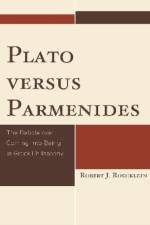
Plato versus Parmenides investigates the concept of genesis, or coming into being, a problem that has absorbed the greatest philosophical thinkers. Robert J. Roecklein explores two philosophical giants who tackled this issue: Plato and Parmenides from Elea. Particularly interesting to Roecklein is how the respective arguments of reality, or lack thereof, of coming into being functions as a political barometer: how Plato and Parmenides sketch foundations for political regimes. Plato and Parmenides, philosophers of immeasurable respect and influence, represented two sides of a fierce debate. On one side, Parmenides gives the famous argument that coming into being cannot possibly be a reality in nature. The other side, Plato proves in his dialogue the Parmenides that coming into being is a very real thing in nature. He argues that perception does indeed provide accurate information about the external world. In Plato versus Parmenides, Robert J. Roecklein presents the great debate between these two schools, and examines the disposition of other PreSocratic philosophers who were influenced by these great intellectual rivals.
An enduring question for most nations has been how to best represent their citizens and their needs. This is a complex issue as there is no universally accepted definition of good representation. Representation and Institutional Design addresses the issues of institutions and representation by examining how variation in institutional design can affect many aspects of how legislators represent their constituents. It does so by examining the relationships between legislative design (electoral laws, term limits, professionalism, and district size and magnitude) and many aspects of representation (symbolic, service, and policy representation, as well as legislators' incentives to represent). A key finding is that each aspect of professionalism has a unique set of effects on representation. Legislators with staff have closer relationship with their constituents than others. Legislators with other legislative resources engage in more symbolic and service representation but not policy representation. And legislators in institutions with greater capacity were similar to others in their representative style. Findings also indicate that term limits weaken relationships between legislators and constituents and electoral laws, and district size and magnitude have some but limited effects. This is an important study not only because of the importance of representation but also because of the dearth of research on how institutional design affects representation in state legislatures.
Citizens, political theorists, and politicians alike insist that political or partisan motives get in the way of real democracy. Real democracy, we are convinced, is embodied by an ability to form collective judgments in the interest of the whole. The Rhetorical Surface of Democracy: How Deliberative Ideals Undermine Democratic Politics, by Scott Welsh, argues instead that it is our easy rejection of political motives, individual interests, and the rhetorical pursuit of power that poses the greatest danger to democracy. Our rejection of politics understood as a rhetorical contest for power is dangerous because democracy ultimately rests upon the perceived public legitimacy of public, political challenges to authority and the subsequent reconstitution of authority amid the impossibility of collective judgment. Hence, rather than searching for allegedly more authentic democracy, rooted in the pursuit of ever-illusive collective judgments, we must find ways to come to terms with the persistence of rhetorical, political contests for power as the essence of democracy itself. Welsh argues that the impossibility of any kind of public judgment is the fact that democracy must face. Given the impossibility of public judgment, rhetorical competitions for political power are not merely poor substitutes for an allegedly more authentic democratic practice, but constitute the essence of democracy itself. The Rhetorical Surface of Democracy is an iconoclastic investigation of the democratic process and public discourse.
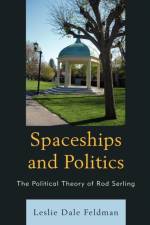
Spaceships and Politics: The Political Theory of Rod Serling examines the political themes in The Twilight Zone. In this unique show, Rod Serling used fantasy and the supernatural to explore political ideas such as capital punishment, the individual and the state, war, conformity, the state of nature, prejudice, and alienation. He used aliens and machines to understand human nature. While the themes in The Twilight Zone often reflected political concerns of the time, like the Cold War and post-industrial technology, the messages had broader political implications. This book looks at Serling's mechanistic view of the world and emphasis on fear through Hobbesian themes like diffidence and automata.
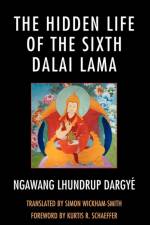
The life of the Sixth Dalai Lama does not end with his supposed death at Kokonor in November 1706, on the way to Beijing, and an audience with the Manchu Emperor Kangxi. This book, the so-called Hidden Life, presents a very different Tsangyang Gyamtso, neither a louche poet nor a drinker, but a sober Buddhist practitioner, who chose to escape at Kokonor and to adopt the guise of a wandering monk, only appearing some years later, after many fantastical and mystical adventures, in what is today Inner Mongolia, where he oversaw monasteries and lived as a Buddhist teacher. The Hidden Life was written by a Mongolian monk in 1756, ten years following the death of the lama, his spiritual teacher, whom he identifies as Tsangyang Gyamtso, and in whose identity as the Sixth Dalai Lama he clearly has complete faith. However, as one might imagine, there is nowadays no agreement among the wider Tibetan, Mongolian and Tibetological scholarly community as to whether this man was a charlatan or deluded, or whether he was indeed the Sixth Dalai Lama. The text is divided into four parts. The first part gives an account of the background and birth of the Sixth Dalai Lama, while the opening section of the second part (which is in direct speech, dictated by the lama) continues on, through the political intrigue in Lhasa at the end of the seventeenth century, to the lama's escape at Kokonor. The remainder of the second part consists of a visionary narrative, in which the lama travels through Tibet and Nepal, and in which he encounters divine figures, yetis, zombies and a man with no head, all of which is presented as fact. The third and longest part is an account of the final thirty years of the lama's life, and his activity in Mongolia as an influential Buddhist teacher, including a lengthy and moving description of his death. The final part includes a list of his students and, most interestingly perhaps, a theological and philosophical justification for the coexistence of the Sixth and Seventh Dalai Lamas.
Afro-Colombian Hip-Hop: Globalization, Transcultural Music, and Ethnic Identities, by Christopher Dennis, explores the impact that globalization and the transnational spread of U.S. popular culturespecifically hip-hop and rapare having on the social identities of younger generations of black Colombians. Along with addressing why and how hip-hop has migrated so effectively to Colombia's black communities, Dennis introduces readers to some of the country's most renowned Afro-Colombian hip-hop artists, their musical innovations, and production and distribution practices. Above all, Dennis demonstrates how, through a mode of transculturation, today's young artists are transforming U.S. hip-hop into a more autonomous art form used for articulating oppositional social and political critiques, reworking ethnic identities, and actively contributing to the reimagining of the Colombian nation. Afro-Colombian Hip-Hop uncovers ways in which young Afro-Colombian performers are attempting to use hip-hop and digital media to bring the perspectives, histories, and expressive forms of their marginalized communities into national and international public consciousness.
Are human beings naturally violent? Is war the fate of the human race? Despite the depressing record of the past, the worlds future depends upon avoiding war and drastically reducing violence. Living Nonviolently: Language for Resisting Violence examines carefully the language of violence and war. One of the first casualties of violence is language, which in turn makes resistance to violence difficult to articulate. In the first four chapters, Gabriel Moran proposes distinctions for the interconnected ideas of force, power, aggressiveness, violence. and warnot to invent a new and logical language but to ground the meaning of these terms in our human experience. That revitalization of ordinary language depends upon an inclusive language of men and women, adults and children, human and nonhuman animals. The fifth chapter locates the potential for both encouraging violence and resisting violence in the peculiar logic of religion. Jesus Sermon on the Mount is commonly invoked by people who say that nonviolence may be an admirable ideal for a few people but it is irrelevant for most people and for all nations; in this chapter, Moran examines the widely misunderstood sermon in detail to illustrate its potential for resisting violence. For a conclusion, he discusses practical means of education that are helpful to reaching some understanding of violence and resistance to violence. Living Nonviolently is written for scholars in peace studies, political philosophy, or religious studies and for anyone who wishes to understand the roots of violence and war.
Nature's Primal Self examines Corrington's thought, called ';ecstatic naturalism,' in juxtaposition to both C. S. Peirce's pragmatic and semiotic concept of the self and Karl Jaspers' existential elucidation of Existenz. Peirce's and Jaspers' anthropocentrism is thus corrected by Corrington's ecstatic naturalism. Ecstatic naturalism, as a new movement, is both a semiotic theoretical method and a metaphysics that probes deeply into the ontological divide between nature naturing and nature natured. Author Nam T. Nguyen attempts to achieve three goals: first, to present and elucidate the underlying philosophical concepts of Charles Peirce, Karl Jaspers, and Robert Corrington; second, to critique the anthropocentric self of Peirce's semiotic pragmatism and of Jaspers' existential anthropology (periechontology) from the standpoint of ecstatic naturalism; and third, to introduce the concept of nature's primal self, radically grounded in the perspective of ecstatic naturalism, as a judicious, more encompassing, and richer framework compared to Peirce's semiotic construction of the self and Jaspers' existential concept of Existenz.
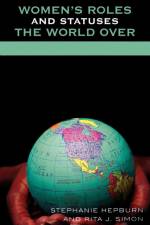
Women's Roles and Statuses the World Over stands alone in the unique contribution it makes to the field of women's rights. Based solely on statistics and empirical data as opposed to opinion, authors Stephanie Hepburn and Rita Simon have crafted an important contribution to the study of women in society by comparing women's position in society within 26 nations throughout the world. This distinctive work addresses the status of women in the areas of education, work force, marriage and divorce, the Constitution, abortion and contraceptives, public office, military service, and health care. The countries selected reflect a representative pool of the world's cultures, religions, traditions, races, laws, and politics. Hepburn and Simon present the weaknesses, strengths, and progress or digression of each of the selected nations, painting a clear picture of how much more progress must occur in order to set men and women on equal footing. Women's Roles and Statuses the World Over is intended to serve scholars and general audiences alike as a handbook providing empirical data and comprehensive references on the social issues, problems, and practices that affect women today.
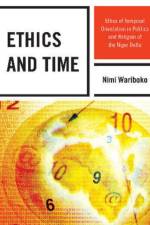
Ethics and Time attempts to locate ethical thinking within the response to the questions raised by temporal orientation. Time is the matrix and Moloch of social life and, for the purpose of this book, the starting point for ethical reflection. Nimi Wariboko boldly attempts to reconceptualize temporal orientation and begin a new discussion of time and ethics, using the creative synthesis of ethology, political philosophy, sociological, and intercultural perspectives. Most academic discourse contextualizes temporal orientation in terms of either Otimes of originO and time preference. Wariboko identifies a third option, developing the theory and methodology that render it an object of ethical analysis and liberatory thought. He suggests that temporal orientation is the production of new temporalities that allow humans to manifest their potentialities and creatively resist obstacles that impede their thriving. Wariboko liberates the notion and habit of temporal orientation from excessive concern with conservatism and utilitarianism, showing how ethicists can use the theory of temporal orientation to question all present temporal conditions in the name of freedom.
Immortal Passage: Philosophical Speculations on Posthuman Evolution is Asher Seidel's speculative account of posthuman evolution. Seidel begins with the transitional period in which humans begin to live for significantly extended periods, then moves to the closer future in which, having transitioned, the now posthumans enjoy enhanced cognitive and creative powers. Finally, Seidel enters the distant future, where our descendants might possess abilities beyond the limits of what is presently conceivable. Seidel's speculations engage various philosophical problems. Seidel seeks an ethical theory that co-develops with a deeper scientific understanding of ourselves. He also examines the metaphysical and epistemological presuppositions of his recommendation for human to posthuman transitioning, including mind-body dualism vigorous enough to allow for full-bodied consciousness, but insufficient for freewill; perceptual direct realism; and self-identity. As the speculations reach further into the future, various socio-political questions regarding the difficulties of transitioning are explored. Speculated possibilities of pain-free living, cooperative relationships, nonbiological selfhood, and radically enhanced cognitive abilities, are examined in depth in this mind-bending ride into the future of humankind.
Abonner på vårt nyhetsbrev og få rabatter og inspirasjon til din neste leseopplevelse.
Ved å abonnere godtar du vår personvernerklæring.