





















Gjør som tusenvis av andre bokelskere
Abonner på vårt nyhetsbrev og få rabatter og inspirasjon til din neste leseopplevelse.
Ved å abonnere godtar du vår personvernerklæring.Du kan når som helst melde deg av våre nyhetsbrev.

Focusing on the post war reconstruction of the education systems in Japan and Germany under U.S. military occupation after World War II, this book offers a comparative historical investigation of education reform policies in these two war ravaged and ideologically compromised countries. While in Japan large-scale reforms were undertaken swiftly after the end of the war, the U.S. zone in Germany maintained most of the traditional aspects of the German education system. Why did Japan so readily accept ideas and values developed in the allied countries while Germany resisted? Masako Shibata explores this question, arguing that the role of the university and the pattern of elite formation, which can be traced back to the period of the formation of Meiji Japan and the Kaiserreich, created the conditions for differing reactions from educational leaders in each country; this had a decisive impact on the proposed reforms. By examining these reactions through a sociological, cultural, and historical frame, an explanation emerges. Japan and Germany under the U.S. Occupation will prove to be a valuable resource both to scholars of history and education reform.
'Are they really Muslims?' Islam in China reveals the struggle for identity of the small yet vital Muslim community of China, a little studied minority on the fringes of the Islamic world now thrust into the spotlight by the opening of China to the world and the rise of independent Muslim republics on China's western borders. Both timely and important, the multifaceted essays-_ collection of over twenty years of Raphael Israeli's scholarship on Chinese Muslims_offer detailed insight into the relationship between China's non-Muslim majority and an increasingly self-confident guest culture. The work uncovers a history of uneasy ethnic, philosophical, and ideological coexistence, the gradual sinification of the Chinese Muslim creed, and the increasing accommodation of Islam by a modern, westernizing China. In addition, it highlights a religious group riddled with sectarianism; factional rifts that reveal the doctrinal, social, and political diversity at the core of Chinese Islam.
In Israel's Higher Law, Steven V. Mazie draws on the voices of Israeli citizens to shed new light on the relationship between liberal democracy and religion. By analyzing Israelis' perspectives on a number of divisive issues-including Jewish state symbols, marriage law, public Sabbath observance and funding for religious education-Mazie identifies a rift between Israeli and American understandings of 'separation of religion and state' and a gulf between Jewish and Arab citizens' visions for Israel's religion-state arrangement. Mazie's compelling study offers more valuable insight into these dilemmas than any publication to date and proposes new guidelines for resolving them. Israel's Higher Law is the definitive work on the tensions between religion and democracy in Israel. It is a must-read for anyone interested in politics and Jewish studies.
An Institutional Framework for Policymaking offers a new approach to the study of institutions and adds to the growing body of literature in the field of 'new institutionalism.' Dr. Matt Evans utilizes previous characterizations of institutions to analyze the framework affecting policymaking and the tools used for policy implementation. In examining the effect of institutional change on public policy, this book compares the implementation of population dispersal policy in Israel over two fifteen-year periods. The first period, which includes the years between 1951 and 1965, was characterized by limited electoral competition and societal values that emphasized collective over individual interests. By contrast, the period from 1988 to 2002 constituted a framework of heightened political competition and public policies geared toward individual and group interests. An Institutional Framework for Policymaking provides a critical examination of the role of coercion in public policy, and provides insight into the relevance of national plans and their effectiveness in modern governance. The research in this book will appeal to scholars of political science, public policy, and urban planning.
The Intellectual Origins of Jeffersonian Democracy, available for the first time in this Lexington Books edition, is Douglass Adair's first major work of historical inquiry. Adair was a mentor to many of the nation's leading scholars and has long been admired for his original and profound observations about the founding of the American republic. Written in 1943, The Intellectual Origins of Jeffersonian Democracy has been praised widely as the seminal analysis of the origins of American democracy. The passage of time has not dulled Adair's arguments; instead, his critique of economic determinism, his emphasis on the influence of ideology on the Founders, and his belief in the importance of civic virtue and morality to good republican government have become ever more critical to our conception of American history. With judicious prose and elegant insights, Adair explores the classical and modern European heritage of liberalism, and he raises fundamental questions about the nature of democratic government. This book is for any serious reader interested in American intellectual history, political thought, and the founding of the republic.
Japan is living in the shadow of its economic miracle. Its stagnation and decline relative to other advanced economies since the early 1990s is a consequence of business and government difficulty in breaking away from once-successful practices. The Japanese postwar economic miracle created the world's second largest capitalist economy. This remarkable performance, in the face of such enormous obstacles, helped solidify, even sanctify, the institutions, methods, and political arrangements associated with the economic miracle. Based upon a decade of research articles distributed in the Japan Economic Institute's weekly report on Japan, In the Shadow of the Miracle analyzes the sources of Japanese growth and the nature and scale of its current economic problems. Chapters examine the steps being taken by Japan's government and business leaders to address the mounting national economic problems and the impact on Japan of the wider Asian financial crisis (1997-99). A final section addresses the question of whether Japan is fundamentally different from other advanced economies.
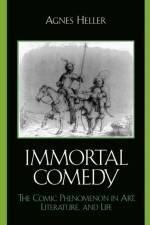
Immortal Comedy is the first book to 'think' philosophically about the comic phenomenon in general. Although author Agnes Heller had written a book that is both deeply scholarly and meditative on the subject of the comic form in film, literature, and life her writing is eminently approachable. In both its subject and style, Immortal Comedy is a seminal book. In it, Heller takes us on a journey through theories of comedy beginning with classical thought. She then detours through foundational political thinkers who refer to, for instance, laughter and power. We are also introduced to modern systematic approaches to thinking comedy, psychological approaches, and existential approaches. The discerning combination of Heller's individual taste for the pantheon of comedic work and, also, what critics may consider 'less significant' work gives this book a character apart from all others. It is the detail with which Heller makes her discussion, how and where she locates 'the comic,' and probably most significantly her discussion of comedy and our own lives that makes Immortal Comedy a principal book for the entire range of humanities scholars and enthusiasts.
History's Place explores nostalgia as one of the defining aspects of the relationship between France and North Africa. Dr. Seth Graebner argues that France's most important colony developed a historical consciousness through literature, and that post-colonial writers revised it while retaining its dominant effect. The North African city became a privileged place in the relationship between literacy and historical discourses in the colony. Graebner analyzes the importance of architecture and urbanism as markers of historical development, as the urban fabric and descriptions of it became signs of difference between metropole and colony. Discussing writers as diverse as Bertrand, Randau, and Kateb, this book examines how the changing Algerian city has remained the locus of a debate colored by various sorts of nostalgia. Graebner demonstrates that nostalgia was symptomatic of historical anxiety generated by colonial conditions, but with literary consequences for mainland France as well. History's Place is a comprehensive and valuable addition to the study of French literature and cultural studies.
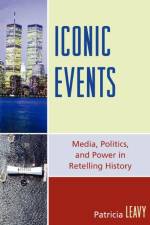
Iconic Events: Media, Power, and Politics in Retelling History examines the processes of collective memory surrounding traumatic events that have been deemed iconic in American culture. Leavy investigates the social and market forces that have shaped the meanings around and enduring significance of events that have captured the public's imagination, including Titanic, Pearl Harbor, Columbine, and September 11th. Iconic Events focuses on three interpretive phases that serve to mold public perception of these events: journalistic representations, political appropriations, and popular adaptations. With a vital, engaging approach, Leavy explores the processes by which traumatic events are made mythic in the public eye. Iconic Events is essential for collective memory scholars and undergraduate courses in communications, American studies, history, and sociology, as well as the general reader.
Perhaps the most important histiographic innovation of the twentieth century was the application of the historical method to wider and more expansive areas of the past. Where historians once defined the study of history strictly in terms of politics and the actions and decisions of Great Men, historians today are just as likely to inquire into a much wider domain of the past, from the lives of families and peasants, to more abstract realms such as the history of mentalities and emotions. Historians have applied their method to a wider variety of subjects; regardless of the topic, historians ask questions, seek evidence, draw inferences from that evidence, create representations, and subject these representations to the scrutiny of other historians. This book severs the historical method from the past altogether by applying that method to a domain outside of the past. The goal of this book is to apply history-as-method to the study of the future, a subject matter domain that most historians have traditionally and vigorously avoided. Historians have traditionally rejected the idea that we can use the study of history to think about the future. The book reexamines this long held belief, and argues that the historical method is an excellent way to think about and represent the future. At the same time, the book asserts that futurists should not view the future as a scientist might-aiming for predictions and certainties-but rather should view the future in the same way that an historian views the past.
Why, in this supposedly rational, early twenty-first century, do large groups of people hate other groups of people and murder them wholesale? Pick up the paper any day of the week: Terrorists, torturers, mass murderers in and out of uniform, extremists of all nationalities, races, ethnic groups, and religions. How do such people justify their violence? What motivates them? What social conditions contribute to climates of hatred? How do those victimized by bigotry fight back? In The Hate Handbook: Oppressors, Victims and Fighters Martin Oppenheimer sets out to answer these questions in clear, conversational, and at times shockingly frank prose. Oppenheimer focuses on cases in recent history, from incidents of police brutality to Nazi executions, from wartime aerial bombing to suicide bombers, in order to shed sociological and psychological light on the behavior of both perpetrators and victims. Heralded by many as a terrific book for the layman and scholar alike, The Hate Handbook is an important core text for sociology, social psychology, history and political science courses, especially those focusing on minorities, conflict and social movements.
Familiar narratives and simplistic stereotypes frame the representation of women in U.S. politics. Pervasive containment rhetorics, such as the distinction between women as mothers and caregivers and men as rational thinkers, create unique hurdles for any woman seeking public office. While these 'governing codes' generally act to constrain female political power, they can also be harnessed as a resource depending on the particular circumstances (e.g., party affiliation, geographic location and personal style). One of these governing codes, the metaphor, is an especially powerful tool in politics today, particularly for women. By examining the political careers of four of the most prominent and influential women in contemporary U.S. politics_Democrats Ann Richards and Hillary Rodham Clinton and Republicans Christine Todd Whitman and Elizabeth Dole_Karrin Vasby Anderson and Kristina Horn Sheeler illustrate how metaphors in public discourse may be both familiar narratives to embrace and boundaries to overturn.
The liberalization of communications markets, especially from the 1980s onward, has witnessed increased regulatory activity within but also above the national state. By examining the European case_concentrating on the European Union, the most advanced example of regionalism_Governing European Communications enhances understanding of the trend toward above-the-national-state regulation, its, drivers and its limitations. Analyzing in detail the origins, dynamics, and evolution of European-level communications governance in the postwar era, Michalis offers a single, comprehensive, and up-to-date account of telecommunications and television policies and regulation and their technological convergence.
In this provocative study, David W. Hall argues that Calvinism had a greater influence on America's founders than contemporary scholars, and perhaps even the founders themselves, have understood. Calvinism's insistence that human rulers tend to err played a significant role in the founders' prescription of limited government and fed the distinctly American philosophy in which political freedom for citizens is held as the highest value. Hall's timely work countervails many scholars' doubt in the intellectual efficacy of religion by showing that religious teachings have led to such progressive ideals as American democracy and freedom.
Nikon (1605-1681), patriarch of Moscow and all Russia, is best known for imposing the religious reforms that ultimately led to the schism of the Russian Orthodox Church. Yet only the Account of Birth, Life, and Upbringing of His Holiness Nikon, Patriarch of Moscow and All Russia (1680s), comes close to immortalizing the vicissitudes of Nikon's entire life. Written by Ioann Shusherin's (d. 1693), the patriarch's protZgZ and confidant, the Account presents Nikon as he appeared to his contemporary supporters. The biography chronicles Nikon's steady rise through the ecclesiastical ranks, dramatic downfall, and extraordinary rehabilitation. While discussing Nikonian religious reforms, the Account focuses on Nikon's relationship with the Romanov royal family and his monastery building program, especially the early history of the New Jerusalem Monastery and its main sanctuary, the Church of the Resurrection. This unique narrative features rare eyewitness accounts of momentous and daily life during a period of unprecedented political, religious, and social change in Russia. From Peasant to Patriarch is the first English language translation of the Account. Dr. Kevin Kain and Dr. Katia Levintova offer extensive commentary, parallel texts, and a glossary of Russian terms that contribute to the depth of this text. From Peasant to Patriarch opens new doors to the study of Russian history, religion, and culture.
From Deterrence to Engagement provides a comprehensive examination of the U.S.-South Korea defense relationship from 1945 to the present. Using deterrence theory as its framework, this work explores the evolving nature of U.S. interests in a region that became a focal point only after the North Korean invasion in 1950. Author Terence Roehrig addresses the changing nature of the threats to U.S. interests in Korea, especially North Korea's buildup and its efforts to acquire nuclear weapons, and examines specific measures utilized by the United States to implement its deterrence policy. While U.S. policy regarding Korea has changed over the years, this timely and important work argues that although the U.S. commitment to protect its ally has been credible and effective the same cannot be said for its attempts to prevent North Korean nuclear proliferation. From Deterrence to Engagement is certain to find an audience amongst scholars of defense policy, national security, and Korean security relations.
Gender, Justice, and the Wars in Iraq offers a feminist critique and reconstruction of just war theory. It points out gender biases in the just war tradition and suggests alternative jus ad bellum and jus in bello standards that emphasize women, political marginality, and empathy. Laura Sjoberg applies this feminist just war theory to analyze the wars in Iraq since the end of the Cold War-the First Gulf War, the war of sanctions, and the Second Gulf War. By examining international political discourse from and about Iraq, it shows where war generally and just war specifically are gendered. Through the stories of key just war characters like Jessica Lynch, this book reveals where women are omitted and subordinated in global politics. Sjoberg suggests that dialogue and empathy replace righteousness in just war thinking for the good of human safety everywhere and concludes with alternative visions of Gulf War policies, inspired by feminist just war theory.
The French Educator Celestin Freinet is a complete overview of the influence of this seminal figure. Although Celestin Freinet is virtually unknown outside of France, his ideas about the integration of technology into the classroom are more relevant now than ever. Victor Acker has succeeded in introducing this figure to the American-Anglophone world.The French Educator Celestin Freinet is Acker's greatest achievement in his lifelong mission, which earned him knighthood from the French Government asa Chevalier dans l'Ordre des Palmes Academiques. Freinet was an advocate of employing correspondence in the classroom as well as using technology to aid learning. In this study, Acker explores the pedagogical ideas of Freinet with an eye toward contemporary education.The French Educator Celestin Freinet is an essential book on an essential figure in 20th century education.
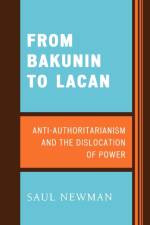
In its comparison of anarchist and poststructuralist thought, From Bakunin to Lacan contends that the most pressing political problem we face today is the proliferation and intensification of power. Saul Newman targets the tendency of radical political theories and movements to reaffirm power and authority, in different guises, in their very attempt to overcome it. In his examination of thinkers such as Bakunin, Lacan, Stirner, and Foucault Newman explores important epistemological, ontological, and political questions: Is the essential human subject the point of departure from which power and authority can be opposed? Or, is the humanist subject itself a site of domination that must be unmasked? As it deftly charts this debate's paths of emergence in political thought, the book illustrates how the question of essential identities defines and re-defines the limits and possibilities of radical politics today.
French Anti-Americanism offers a historical exploration of the central role of anti-Americanism in French thought, and the often compromised position of France's intelligentsia during World War II. It was in the years preceding World War II, with its complex fears and uncertainties, that America first took center stage as a target for French anxieties. Dr. Seth D. Armus examines the cultural stability of French anti-Americanism and how it has survived colossal political shifts nearly unchanged. Focusing on the contributions made by inter-war intellectuals, this book demonstrates how some of the most striking elements of contemporary anti-Americanism, including a frequent intersection with anti-Semitism, were fully developed six or seven decades ago. Through a study of characters ranging from Nazi collaborators to Catholic humanists, Dr. Armus provides a sophisticated analysis of French anti-Americanism as a cultural phenomenon-distinct from mere political opposition to American foreign policy. French Anti-Americanism is an engaging read that will appeal to scholars of French and American studies, as well as those interested in international relations.
On March 16, 1827,Freedom's Journal, the first African-American newspaper, began publication in New York. Freedom's Journal was a forum edited and controlled by African Americans in which they could articulate their concerns. National in scope and distributed in several countries, the paper connected African Americans beyond the boundaries of city or region and engaged international issues from their perspective. It ceased publication after only two years, but shaped the activism of both African-American and white leaders for generations to come. A comprehensive examination of this groundbreaking periodical, Freedom's Journal: The First African-American Newspaper is a much-needed contribution to the literature. Despite its significance, it has not been investigated comprehensively. This study examines all aspects of the publication as well as extracts historical information from the content.
Observing postcommunist Romania with the dual vision of a native and a scholar, Denise Roman focuses on the fluid act of identity-formation, and the construction or absence of identity-politics, in several minority or disempowered groups: youth, Jews, women, and queers. Roman shows how both aesthetic and moral judgments are born from and embedded in popular culture. Fragmented Identities is rich in observation and analysis, broad in scope, and exuberant in its account of cultural innovation and discourse wrought in response to the end of Communism and the influence of globalization.
Framing ADHD Children explores the three social worlds of Attention Deficit/Hyperactivity Disorder: the home, classroom, and clinic. Through intensive interviews with teachers, parents, clinicians, and ADHD children, this book brings to light the human experiences surrounding this behavior disorder. The experiences of interview participants are supplemented with the most detailed historical discussion of ADHD to date, including the past and present debates about the true 'nature' of the disorder, issues concerning children taking stimulant medications, and the continuing discussion of whether or not modern technology can really detect ADHD in the brain. Both the history of ADHD and the people interviewed here demonstrate that ADHD is far from a cut-and-dry phenomenon, but rather a complex social process that requires the negotiation of uncertainty and ambiguity at every step.
Abraham Lincoln worried that the 'walls' of the constitution would ultimately be leveled by the 'silent artillery of time.' His fears materialized with the 1913 ratification of the Seventeenth Amendment, which, by eliminating federalism's structural protection, altered the very nature and meaning of federalism. Ralph A. Rossum's provocative new book considers the forces unleashed by an amendment to install the direct election of U.S. Senators. Far from expecting federalism to be protected by an activist court, the Framers, Rossum argues, expected the constitutional structure, particularly the election of the Senate by state legislatures, to sustain it. In Federalism, the Supreme Court, and the Seventeenth Amendment Rossum challenges the fundamental jurisprudential assumptions about federalism. He also provides a powerful indictment of the controversial federalist decisions recently handed down by an activist U.S. Supreme Court seeking to fill the gap created by the Seventeenth Amendment's ratification and protect the original federal design. Rossum's masterful handling of the development of federalism restores the true significance to an amendment previously consigned to the footnotes of history. It demonstrates how the original federal design has been amended out of existence; the interests of states as states abandoned and federalism left unprotected, both structurally and democratically. It highlights the ultimate irony of constitutional democracy: that an amendment intended to promote democracy, even at the expense of federalism, has been undermined by an activist court intent on protecting federalism, at the expense of democracy.
Anger is central to the Homeric epic, but few scholarly interventions have probed HomerOs language beyond the study of the IliadOs first word: menis. Yet Homer uses over a dozen words for anger. Fighting Words and Feuding Words engages the powerful tools of Homeric poetic analysis and the anthropological study of emotion in an analysis of two anger terms highlighted in the Iliad by the Achaean prophet Calchas. Walsh argues that kotos and kholos locate two focal points for the study of aggression in Homeric poetry, the first presenting HomerOs terms for feud and the second providing the native terms that designates the martial violence highlighted by the Homeric tradition. After focusing on these two terms as used in the Iliad and the Odyssey, Walsh concludes by addressing some post-Homeric and comparative implications of Homeric anger.
Edited by founder and chairman of the National Fatherhood Initiative Don Eberly, The Faith Factor in Fatherhood addresses the key role that religious institutions can play in reviving what Eberly calls the 'sacred vocation of fatherhood.' In response to the wider debate regarding the increased expectations that are being placed by policy makers on faith-based institutions to serve important public purposes, contributors to this volume guide denominations, places of worship, and religious social agencies to recover the role they once played in reaching and supporting young men with a message of responsible fatherhood. Ecumenical in scope, the book addresses what each faith community can do to recover its particular heritage of engaged, involved fathering, through methods including instruction, rites of passage programs, stories, ceremonies, mentoring, and community outreach.
European Football is Black and White offers an engaging interpretation of a disturbing phenomenon in Europe's favorite sport: football violence fueled by racism. While many fans across Europe have used football to further destructive, ethnocentric agendas, there are also Europe-wide initiatives in the football stadium to combat the almost endemic problem. Christos Kassimeris analyses political ideologies that have influenced football supporters, drawing attention to the increasing politicization of football and the footballization of politics. He also considers the contributions of nationalism, social class, and media coverage before assessing attempts by various groups, from the Football Against Racism in Europe (FARE) network to the European Union itself, to rectify the problem. Ultimately, football needs to be dissociated from both racism and politics for the sport to flourish. Unlike more traditional attempts to explain the football violence and racism, this book seeks to establish a Europe-wide as well as national explanatory framework for this racism from a political perspective. This study will draw the interest not only of scholars across the Humanities and Social Sciences, but also of ordinary football supporters.
Despite the West's privileging of slenderness as an aesthetic ideal, the African Diaspora has historically displayed a resistance to the Western European and North American indulgence in 'fat anxiety.' The Embodiment of Disobedience explores the ways in which the African Diaspora has rejected the West's efforts to impose imperatives of slenderness and mass market fat-anxiety. Author Andrea Shaw explores the origins and contradictions of this phenomenon, especially the cultural deviations in beauty criteria and the related social and cultural practices. Unique in its examination of how both fatness and blackness interact on literary cultural planes, this book also offers a diasporic scope that develops previously unexamined connections among female representations throughout the African Diaspora.
The Dutch Diaspora is a comprehensive and personal study of the former colonial empire of the Netherlands. The Netherlands is considered one of the most successful societies and at one point was the world's largest empire_stretching from Japan to the United States. The author, Howard Wiarda, who grew up in western Michigan and is himself of Dutch descent, combines thorough scholarship with first-hand experience of travels to the far-flung former colonies. The study analyzes how colonies reacted to the ideological beliefs implanted by the Dutch settlers and how those colonies evolved in terms of cultural, religious, and political beliefs. For example, the Dutch in the seventeenth century brought Calvinism to South Africa and entrepreneurialism to New Amsterdam and Cura_ao and in the nineteenth century supported slave plantation systems in Indonesia and Suriname, but as time passed the evolution of the colonies was telling. The United States outgrew Great Britain in wealth and power, but while Calvinism declined in the Netherlands it remained vibrant and progressive in the American Midwest. In many ways, the former colonies adapted to modernization better than the mother country. The Dutch Diaspora is an insightful and accessible study of colonialism useful to upper-level undergraduates and all students and researchers of Dutch history.
This collection of original essays by the nation's leading political theorists examines the origins of modernity and considers the question of tolerance as a product of early modern religious skepticism. Rather than approaching the problem through a purely historical lens, the authors actively demonstrate the significance of these issues to contemporary debates in political philosophy and public policy. The contributors to Early Modern Skepticism raise and address questions of the utmost significance: Is religious faith necessary for ethical behavior? Is skepticism a fruitful ground from which to argue for toleration? This book will be of interest to historians, philosophers, religious scholars, and political theorists-anyone concerned about the tensions between private beliefs and public behavior.
Abonner på vårt nyhetsbrev og få rabatter og inspirasjon til din neste leseopplevelse.
Ved å abonnere godtar du vår personvernerklæring.