
















Gjør som tusenvis av andre bokelskere
Abonner på vårt nyhetsbrev og få rabatter og inspirasjon til din neste leseopplevelse.
Ved å abonnere godtar du vår personvernerklæring.Du kan når som helst melde deg av våre nyhetsbrev.

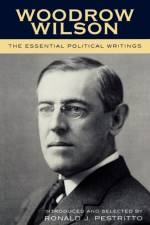
Woodrow Wilson's contribution to American foreign policy is well known, but his role in the development of American political thought and institutions is less recognized. In this volume, Wilson scholar Ronald J. Pestritto presents and introduces the statesman and president's seminal essays on such topics as: state theory; the idea of political liberty and the purpose of government; reform of Congress, the presidency, and political parties; and leadership in politics and administration. This collection makes available in a single volume the most relevant political speeches and writings of this important American leader. It will serve students and scholars as both useful teaching tool and invaluable reference source on the twenty-eighth president of the United States.
Women, the State, and War looks at the intersection of gender, citizenship, and nationalism; marriage, intermarriage, and how states gender that relationship; and the ways in which women are used as symbols to reinforce or further nationalistic goals. Women have long struggled with issues of citizenship, identity, and the challenge of being recognized as equal members of the community. Governments use feminine imagery (e.g., mother country) to create a national identity, while simultaneously minimizing the role that women play as productive contributors to the society. Authors Joyce P. Kaufman and Kristen P. Williams examine the relationship of government and women in four different countries: the United States, Israel, the former Yugoslavia, and Northern Ireland. In each case, numerous similarities appear: conflict plays a significant role in the definition of citizenship for women; women's movements have worked in contradiction to the state; and citizenship and marriage are gendered undertakings.
Harold I. Saperstein served as rabbi of Temple Emanu-El of Lynbrook, N.Y., from 1933 until his retirement in 1980. The specific contours of his career reflect a sustained effort to use the pulpit of this suburban temple to communicate a Jewish perspective based on personal encounters with great issues of the day-including the rise of Nazism and the Holocaust, the civil rights era, the McCarthy era, and other turning points in American history. The fifty-two sermons in this book have been selected, introduced, and annotated by Marc Saperstein, whose award-winning books on the history of Jewish preaching have established him as a leading expert on this subject. No other book illustrates as effectively the value of the sermon as a resource for understanding the challenges faced by American Jews at some of the most dramatic moments in the turbulent history of this century.
Violent non-state actors (VNSA) often serve a destabilizing role in nearly every humanitarian and political crisis faced by the international community. As non-state armed groups gain greater access to resources and networks through global interconnectivity, they have come to dominate the terrain of illegal trade in drugs, guns, and humans. Warlords Rising arms those confronting the mounting challenge by delivering an innovative, interdisciplinary framework of analysis designed to improve understanding of non-state adversaries in order to affect their development and performance. Examining the utility of traditional theories of deterrence and warfighting in light of the insight gained through this interdisciplinary approach, the authors elevate the powerful role of environmental shaping in group development, recast deterrence in ecological terms, and lay out a strategy to defeat non-state adversaries if necessary. Whether the goal is preventing, coercing, or conquering, the framework of analysis presented here is designed to be universal, allowing for structured analysis across regions, types, and functions of non-state actors and providing the decision maker and policy maker witha variety of modes and methods of intervention.
W. E. B. Du Bois and the Problems of the Twenty-First Century utilizes Du Bois's thought and texts to develop an informed critical theory of contemporary society. This book broadens the base of critical theory, making it more multicultural, transethnic, transgender, and non-Western European philosophy focused by placing it in dialogue with theory and phenomena that had been heretofore woefully neglected. Taking the preeminent black intellectual of the twentieth century as his primary point of departure, Reiland Rabaka identifies and analyzes several key contributions that Du Bois and the black racial tradition offer to those interested in redeveloping and racially revising contemporary critical social theory. With chapters on critical race theory, postcolonial theory, feminism, and Marxism, this volume builds bridges from Africana Studies to disparate discursive communities, accessibly demonstrating Du Bois's, and the black radical tradition's, contributions to, and the potential impact on, a wide-range of new social scientific research and radical political struggles.
The Vital Roots of European Enlightenment is a collection of essays which deal with the influence of Ibn Tufayl, a 12th-century Arab philosopher from Spain, on major European thinkers. His philosophical novel, Hayy Ibn Yaqzan, could be considered one of the most important books that heralded the Scientific Revolution. Its thoughts are found in different variations and to different degrees in the books of Thomas Hobbes, John Locke, Isaac Newton, and Kant. But if Ibn Tufayl's fundamental values, such as equality, freedom and toleration, which the thinkers of the European Enlightenment had adopted as theirs, paved the way to the French Revolution, they certainly marked the end of the age of reason in southern Spain and the rest of the Islamic world. Ibn Tufayl's philosophy was appropriated, subverted, or reinvented for many centuries. But the memory of the man who wrote such an influential book was buried in the dust of history. The Vital Roots of European Enlightenment reexamines Ibn Tufayl's momentous book and its continued influence over contemporary philosophy. This intriguing book will appeal to those interested in comparative literature and religion.
Visions of Solidarity is currently the only study of peace activist's transformation from an anti-war struggle to an anti-globalization struggle. It explores the power dynamics between citizen activists in the Global North and South, examining efforts at reframing issues of social justice over time, and highlighting transnational feminist politics and agency at the local level. This book focuses on the way that transnational activists strategies are negotiated across boundaries. Through a comparative ethnographic study of the U.S.-based Witness for Peace and the Wisconsin Coordination Council on Nicaragua, the author, Clare Weber, explores how the organizations came to have very different responses over time to the neoliberal development project imposed on Nicaragua by the United States. Weber skillfully links studies of transnational social movements, women's grassroot activism, and the Central America Peace movement in this unique book.
Values and Objectivity in Science illuminates many of the ethical issues that arise concerning scientific practices and applications, offering an account of how social and ethical values play important roles within science. Hugh Lacey develops and clarifies his previous analysis by arguing for the importance of research being conducted under a plurality of strategies, contrasting 'materialist strategies' with 'agro-ecological strategies.' By displaying the structure of current ethical controversies about the legitimacy of planting transgenic crops, this book illustrates that sound thinking on such issues must be grounded on an adequate philosophy of science, one that can clearly distinguish between the proper and the distorting roles of values in scientific practices. This book will prove useful for science students and practitioners as well as those interested in the growing ethical questions involved in scientific practices.
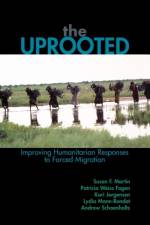
By conservative estimates about 50 million migrants are currently living outside of their home communities, forced to flee to obtain some measure of safety and security. In addition to persecution, human rights violations, repression, conflict, and natural and human-made disasters, current causes of forced migration include environmental and development-induced factors. Today's migrants include the internally displaced, a category that has only recently entered the international lexicon. But the legal and institutional system created in the aftermath of World War II to address refugee movements is now proving inadequate to provide appropriate assistance and protection to the full range of forced migrants needing attention today. The Uprooted is the first volume to methodically examine the progress and persistent shortcomings of the current humanitarian regime. The authors, all experts in the field of forced migration, describe the organizational, political, and conceptual shortcomings that are creating the gaps and inefficiencies of international and national agencies to reach entire categories of forced migrants. They make policy-based recommendations to improve international, regional, national, and local responses in areas including organization, security, funding, and durability of response. For all those working on behalf of the world's forced migrants, The Uprooted serves as a call to arms, emphasizing the urgent need to develop more comprehensive and cohesive strategies to address forced migration in its complexity.
Unpacking Globalization examines the experiences of people living with the forces that are transforming economic systems, culture, gender relationships and governance. The book offers interdisciplinary analysis of the well-being of women and men as they cope with the changes of globalization. Through theory, case studies, and data, several themes emerge indicating that from the household to the continental level, change is leading to new awareness and new survival strategies for both women and men. The contributors to the volume come from Africa, Asia, Europe, and North and South America. They present analysis of global changes and historical background from diverse perspectives and offer case studies on social security, gender, and macroeconomy. They employ feminist theory as well as detail the experiences of current and future women entrepreneurs. An exciting interdisciplinary text, Unpacking Globalization can supplement women's studies, anthropology, sociology, and economic development courses.
Even the most explicitly political contemporary approaches to Shakespeare have been uninterested by his tyrants as such. But for Shakespeare, rather than a historical curiosity or psychological aberration, tyranny is a perpetual political and human problem. Mary Ann McGrail's recovery of the playwright's perspective challenges the grounds of this modern critical silence. She locates Shakespeare's expansive definition of tyranny between the definitions accepted by classical and modern political philosophy. Is tyranny always the worst of all possible political regimes, as Aristotle argues in his Politics? Or is disguised tyranny, as Machiavelli proposes, potentially the best regime possible? These competing conceptions were practiced and debated in Renaissance thought, given expression by such political actors and thinkers as Elizabeth I, James I, Henrie Bullinger, Bodin, and others. McGrail focuses on Shakespeare's exploration of the conflicting and contradictory passions that make up the tyrant and finds that Shakespeare's dramas of tyranny rest somewhere between Aristotle's reticence and Machiavelli's forthrightness. Literature and politics intersect in Tyranny in Shakespeare, which will fascinate students and scholars of both.
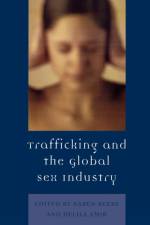
Trafficking of persons (mostly women and children) for commercial sexual activities and forced labor is one of the fastest growing areas of international crime. The United Nations estimates that 4 million men, women, and children become victims of international trafficking each year. Trafficking & the Global Sex Industry focuses on the international trafficking of women and children for forced labor and prostitution. This remarkable anthology takes a broad geographical and economical perspective while also dealing with the specificities of the socio-political background, poverty, opportunity structure, legal conditions, the role of the state, gender structure, and the organization of the trafficking business. The essays create a link from country to country, demonstrating the worldwide nature of the problem. Expertly written and well researched, this collection gives the reader a clearer understanding of the problem and the actions being taken to combat it. Trafficking & the Global Sex Industry will have a broad market for readers on a national and international level, especially among those interested in political science, women's studies, international relations, and criminology.
Tribal Warfare thoroughly investigates a central element of the hit reality television show Survivor that the existing literature on reality television has overlooked: class politics. Christopher J. Wright combines textual analysis and survey research to demonstrate that Survivor operates and resonates as a political allegory. Using the work of Fredric Jameson, this book reveals how Survivor frames its 'characters' as 'haves' and 'have-nots.' For those new to Jameson, Wright breaks down the theorist's complex notion of the political unconscious into easily understandable language. Furthermore, using the results of a survey of Survivor viewers, Tribal Warfare demonstrates that viewers divide along gender, racial, age, and-most significantly-class-related lines in their consumption of, and reaction to, the program. The first book to explore the premise of 'Survivor as society,' this unique work serves as both an engaging analysis of a popular television program and a highly readable primer for those new to critical theory.
Trade and Development in a Globalized World examines how the unfair trade regulations of advanced countries affect developing societies. The most prominent of these regulations are those pertaining to dumping and subsidies. As antidumping and antisubsidy laws have proliferated, they have increasingly undermined the trade-related development strategies of poor countries. To determine how developing states attempt to cope with the problems created by unfair trade rules, Rothgeb and Chinapandhu conducted a case study of the ThaiDU.S. trade relationship. The results, revealed here, show that unfair trade regulations have evolved substantially from their origins as devices for ensuring that international markets can not be manipulated to confer advantages upon selected exporters and that these regulations now serve as the primary protective mechanisms for guaranteeing that advanced country producers will not face competition from developing country industries.
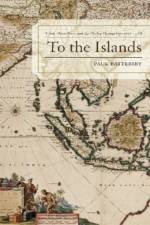
To the Islands offers a unique perspective on the evolution of economic, social and political interconnections between Australia and its island region spanning two centuries, from the early years of British colonization to the present day. The book advances the argument that globalizing processes are drawing Australia incrementally closer to modern day South East Asia and the wider Asia Pacific. While globalization is a term commonly associated with the twentieth century world, this study traces the history of Australia's regionalisation back to the nineteenth century; to the lived experiences of Australian travelers, tourists, prospectors, mining entrepreneurs in the Netherlands Indies, Malaya and Siam or Thailand as it is known today. To the Islands challenges the orthodox view that Australia's relations with its regional neighbors were insignificant before the outbreak of war in the Pacific in 1941. By the early 1900s, Java was a popular tourist destination for Australians while Malaya and Siam were emerging as major Australian foreign investment destinations. In placing economic and social interactions ahead of political and security concerns in the analysis of Australia's regional relations, the book highlights the role of non-state actors and people-to-people connections in shaping the contours of Australian diplomatic engagement with South East Asia and the South West Pacific. To the Islands is an essential book for advanced students and researchers of the history and politics of the Asia Pacific and Australia.
Until 1989 most Soviet Jews wanting to immigrate to the United States left on visas for Israel via Vienna. In Vienna, with the assistance of American aid organizations, thousands of Soviet Jews transferred to Rome and applied for refugee entry into the United States. The Struggle for Soviet Jewry in American Politics examines the conflict between the Israeli government and the organized American Jewish community over the final destination of Soviet Jewish ZmigrZs between 1967 and 1989. A generation after the Holocaust, a battle surrounded the thousands of Soviet Jewish ZmigrZs fleeing persecution by choosing to resettle in the United States instead of Israel. Exploring the changing ethnic identity and politics of the United States, Fred A. Lazin engages history, ethical dilemma, and diplomacy to uncover the events surrounding this conflict. This book is essential reading for students and scholars of public policy, immigration studies, and Jewish history.
Sustaining Identity, Recapturing Heritage examines the complex web of public history, race, cultural identity, and tourism in Luray, Virginia, a rural Southern town. The 'texts' associated with this town's public history_tourist brochures, promotional narratives, historic homes, memorials, and monuments_are devoted to the founding eighteenth-century families and Confederate soldiers in Luray's past, but they also marginalize the history and heritage of African Americans and American Indians, and nearly obliterate the history of women in this region. Thus, the public history does not reflect the actual history of this town. A close look at one town helps to debunk the ideas and ideologies of the existence of a monolithic 'South', since the term could mean Mississippi, North Carolina, or somewhere-in-between. Luray and the Shenandoah Valley, with their distinctive geographical, economical, architectural, and cultural history can boast of its own discrete 'southern' identity. The book reveals how African-American texts and history reveal contributions to the town of Luray and the Shenandoah Valley region. The book studies the 'Ol' Slave Auction Block', a controversial public history site that subverts the white, hegemonic heritage of the town. Sustaining Identity, Recapturing Heritage is groundbreaking in its study of African-American tourism.
Stepping Out of the Brain Drain is an important contribution to the intensifying debate about highly skilled migration from developing to developed countries. Addressing the issue from the perspective of Catholic social thought, the authors demonstrate that both the economic and ethical rationales for the teaching's opposition to 'brain drain' have been undermined in recent years and show how the adoption of a less critical policy could provide enhanced opportunities for poor countries to accelerate their economic development.
Written by one of America's foremost political and legal theorists, Storm Over the Constitution examines the arguments of some of the leading proponents of the doctrine of 'original intent.' According to legal scholars such as Judge Robert Bork, Lino Gralia, Charles Cooper, and Supreme Court Justice Antonin Scalia, a jurisprudence of original intent requires that judges bring no theory to the interpretation of the Constitution. In this brilliant new book, Harry Jaffa illustrates how judges under the influence of this definition of 'original' intent particularly neglect the Declaration of Independence as a guide. Jaffa shows that this definition is, from the point of view of the American Founding, anything but original; moreover, it is openly hostile to the natural-rights theory of those who wrote and ratified the Constitution. The author implores Americans to follow the example set by Abraham Lincoln, who admired the Declaration of Independence more openly, interpreted it more deeply, and implemented it more practically than any other president before or since. Lincoln's achievement fulfilled a tradition of civic understanding and scholarship closer in time and purpose to the founders, and was thus more 'original.'
In this provocative work, David N. Stamos tackles the problem of determining exactly what a biological species is: in short, whether species are real and the nature of their reality. Although many have written on this topic, The Species Problem is the only comprehensive single-authored book on this central concern of biology. Stamos critically considers the evolution of the three major contemporary views of species: species nominalism, species as classes, and species as individuals. Finally, he develops his own solution to the species problem, a solution aimed at providing a universal species concept worthy of the Modern Synthesis. This book will be of interest to philosophers of biology and of science in general, to historians of biology, and to biologists concerned with one of the most significant (and practical) conceptual issues in their field.
Spirit, Soul, and City offers a new reading of Coriolanus, Shakespeare's most political play and the last of his great tragedies. Portraying the founding of the Roman republic and the life and soul of its legendary warrior, Coriolanus, the play brings to light not only the hidden working of Rome's mixed regime but the inherent tragic tensions in the soul's spirited tendency to strive to go beyond itself in order to be true to itself. Distinguished scholar Jan H. Blits provides a fresh interpretation of this rich, complex, and often perplexing play, combining meticulous detail and insightful breadth. Proceeding line-by-line through the play, this book reaches its conclusions by closely examining Shakespeare's text-his plot, characters, language, structure, allusions, puzzles, and other devices.
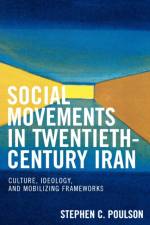
In this work Stephen C. Poulson, a scholar of collective action and social movements, investigates cycles of social protest in Iran from 1890 to the present era. He illuminates the following social movements: the 1890-1892 Tobacco Movement; the 1906-1909 Constitutional Revolution; two post-World War II movements, the Tudeh (Masses) and the National Front; the 1963 Qom Protest; and the 1978-1979 Iranian Revolution. These movements confronted two primary questions: How should the Iranian state achieve independence in the world and what rights should individual Iranians enjoy in their political and social system? Poulson examines the framing of these questions and their answers by various Iranian political actors over time, revealing both continuity and change.
Americans care about the public value of moral habits. They like to see virtue rewarded and vice censured, appealing as this does to the nation's deep sense that one's success rests neither in money nor in power but in one's civility. In The Soul of Civil Society Don Eberly and Ryan Streeter look beyond such abstractions as the 'voluntary sector' and superficial communitarian solutions to civic anomie to identify the pivotal role played by local voluntary associations in a civil society. Not only important for the services they provide, these 'little platoons,' as Edmund Burke labeled them, are the public incubators of a 'new' morality, their emphasis on civic engagement at the local level central to preserving America's democratic culture on the national and international stage. More than simply championing the promise of a social renaissance, The Soul of Civil Society is essential reading for those seeking to do battle with a culturally entrenched individualism that threatens the core of America's moral vitality.
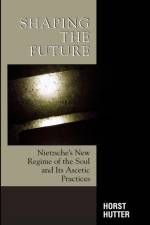
Shaping the Future maps out the ascetic practices of a Neitzschean way of life. Hutter structures his argument around the belief that Nietzsche, despite his ostensive enmity to Platonism and Socratism, understood himself to be a Socratic and someone called upon by fate to renew the Platonic task of being a philosophical legislator of modern souls, culture, and political society. Hutter also considers the paths of reasoning opened up by Pierre Hadot in his studies of ancient philosophers as teachers of life and not just as providers of 'true' opinions and doctrines about the world.Shaping the Future applies the reasonings of Hadot to the work of Nietzsche, arguing that Nietzsche himself, throughout his philosophical career, conceived of doctrines as never identical to philosophy itself, but instead as a means of self-creation that had to be related to working on oneself. Hutter makes a great contribution to the study of Nietzsche and the growing movement that sees philosophy as a practical activity and way of life.
Shopping as an Entertainment Experience explores the ways in which shopping has become a significant entertainment feature in our daily lives. Dr. Mark H. Moss examines the department store, the mall, and the e-store to demonstrate how shopping is often the most common leisure experience that people indulge in to occupy themselves. This unique book focuses on the historical evolution of shopping environments into contemporary entertainment or cultural zones. Through a phenomenological framework, Moss analyzes the way stores, outlets, and restaurants in malls mingle and merge aspects of consumption and merchandising. Shopping as an Entertainment Experience appeals to sociologists, cultural theorists, and those interested in popular culture.
Americans introduced themselves to the world by declaring their independence. They recognized that their 'unalienable rights' were secured by institutionalized government that derives its just powers from the consent of the governed. In Self-Government, The American Theme, Will Morrisey defines the concept of self-government and tracks its permutations in the ardent writings of key American presidents. He shows how the transition to a more powerful national state was managed on political soil where 'self-government' was not an indigenous crop. Morrisey considers the genesis of 'self-government' in the political thought of the founding U.S. presidents, comparing their understanding of the term with that of President Abraham Lincoln and Confederate States of America President, Jefferson Davis. In this text Morrisey aptly demonstrates how the regime of the founders was replaced by a much more statist regime during the Civil War. He offers salient interpretations of the writings of the key presidents of founding and civil war periods, and interpretations centered on the key word, 'self-government'. This book is an essential contribution to the understanding of early American history and politics.
A Search for Unity in Diversity examines the traditional readings of John Dewey's relationship to Hegel and demonstrates that Dewey's later pragmatism was a development of the historicist/humanistic Hegel, rather than a turning away from Hegelian philosophy. Good argues that Dewey drew upon resources he found in the writings of St. Louis Hegelians to fashion a non-metaphysical reading of Hegel. A Search for Unity in Diversity reasons that Hegel encouraged Dewey to understand philosophy as an exercise in individual and cultural reconstruction. Beyond exposing fatal flaws in the traditional reading of Dewey's relationship to Hegel, Good shows that Dewey's pragmatism is a development, rather than a rejection, of Hegel's philosophy. This not only explains Dewey's Hegelian deposit, it also sheds light on why recent Hegel scholars have found elements of pragmatism in Hegel's thought and provides grounds for rapprochment between American pragmatism and Continental European philosophy.
Salsa and Its Transnational Moves presents a brilliant critical analysis of salsa dancing in a major North American city. Drawing from a vast number of disciplines, author Sheenagh Pietrobruno focuses on the tension between the status of dance as a bodily expression of identity and its function as a cultural commodity within the economic life of modern day cities. This engaging work investigates the transnational movements of salsa by exploring the circulation of salsa within the Montreal dance scene, nourished by the continuous flow of a people, and examining the commodification of the Latino culture. Pietrobruno's analysis is singular in highlighting how the migration of a people and a dance represent displacements that are not always homologous. At the core of this work, Pietrobruno offers an extensive and intricate ethnography of the institutions and individuals involved in shaping the Montreal salsa scene that will appeal to academics and general audiences alike, who are interested in the study of anthropology, popular music, dance, gender, ethnicity, and culture.
Secular Spirituality challenges the traditional dichotomy between Enlightenment reason and religion. It follows French romantic socialists' and spiritists' search for a new spirituality based on reincarnation as a path to progress for individuals and society. Leaders like Allan Kardec argued for social reform; spiritist groups strove for equality; and women mediums challenged gender roles. Lynn L. Sharp looks closely at what it meant to practice spiritism, analyszing the movement's social and political critique and explaining the popularity of the new belief. She explores points of convergence and conflict in the interplay between spiritism and science, spiritism and psychology, and spiritism and the Catholic church to argue that the nineteenth century was not as 'disenchanted' as has been thought. Secular Spirituality successfully places spiritism within a larger cultural conversation, going beyond the leaders of the movement to look at the way spiritism functioned for its followers.
'The United States is a country of machines. Without the use of these machines through Lend-Lease, we would lose this war.' -Josef Stalin (1943), quoted in W. Averell Harriman and Elie Abel, Special Envoy to Churchill and Stalin, 1941-1946, Random House, N.Y., 1975, p. 277 The United States shipped more than $12 billion in Lend-Lease aid to Stalin's Russia during World War II. Materials lent, beginning in late 1941 before the Japanese attack on Pearl Harbor, included airplanes and tanks, locomotives and rails, construction materials, entire military production assembly lines, food and clothing, aviation fuel, and much else. Lend-Lease is now recognized by post-Soviet Russian historians as essential to the Soviet war effort. Wielding many facts and statistics never before published in the U.S., author Albert L. Weeks keenly analyzes the diplomatic rationale for and results of this assistance. Russia's Life-Saver is a brilliant contribution to the study of U.S.-Soviet relations and its role in World War II.
Abonner på vårt nyhetsbrev og få rabatter og inspirasjon til din neste leseopplevelse.
Ved å abonnere godtar du vår personvernerklæring.