











Gjør som tusenvis av andre bokelskere
Abonner på vårt nyhetsbrev og få rabatter og inspirasjon til din neste leseopplevelse.
Ved å abonnere godtar du vår personvernerklæring.Du kan når som helst melde deg av våre nyhetsbrev.

The concepts that organize our thinking wield, by virtue of this fact, a great deal of political power. This book looks at five concepts whose dominion has increased, steadily, during the bourgeois period of modernity: Labor, Time, Property, Value, and Crisis. These ruling ideas are central not only to many academic disciplines from philosophy and law to the political, social, and economic sciences but also to everyday life.These ruling ideas explain the cultural attitudes of boredom and multitasking, revealing the inescapable internalized consciousness of time that has become a mode of political domination. They also explain the terrifying environmental problem of privatized property in water and the terrifying humanitarian problem of privatized property in human bodies and body parts. Finally, they explain the affective dimensions of the housing crisis, and especially why capitalism cultivates the desire to own a home that is beyond one's means.
The basic contention of this study is that the colonial rule had far more serious consequence than it has been realized. It radically transformed the nature of the Islamic societies of Egypt and Muslim India to that of an ';Islamicate'societies. This affected the religious, cultural, social, and legal aspects including ethnic and minority relations, gender relations and even their educational system. The phrase ';Islamicate' is here borrowed from Marshall Hodgson, who used it in his The Ventures of Islam to indicate the changes that took place due to the modernization under the impact of the West and colonial rule. However, our investigation takes it into a different direction, demonstrating how and what ways this phenomenon of the ';Islamicate' has changed the Islamic identity of Egypt and Muslim India. This study analyzes varied aspects such as religious, social, cultural, legal, and other aspects of the Egyptian and Muslim Indian societies through the mechanisms of change that the colonial rule brought to them.
Artistic residency has become widely adopted in Western countries while only recently having become popular and well-supported within Taiwan. This book explores the challenges that this form of art practice faced in contemporary Taiwan from the revocation of Martial Law in 1987 to the 2000sarguably one of the most exciting periods in the sociocultural history of the island. Case studies show what is at stake politically, historically, and socially in artists' endeavours to give shape to a sense of Taiwanese identity.Despite the prevalence of artists engaged in social issues in today's world and the undeniable contributions of artistic residency to contemporary art practice, little literature or scholarly research has been conducted on the practical, conceptual, and ideological aspects of artist residency. Very often, it is perceived in very narrow terms, overlooking explicit or hidden issues of localism, nationalism and globalization. If artistic residence did indeed emerge from the radical movements of the 1960s and 70s in the Western worldand especially Britainthen this book argues that the contemporary sociocultural context of Taiwan calls for redefined, culturally-specific models of residency. The precarious geo-political situation of Taiwan has made issues of cultural identitytackled by artists and successive governments alikevery sensitive. A new genre of artistic residence in Taiwan would mean that artists involved from whatever cultural background operate as engaging interpreters; their roles would not be confined to mirroring culture and society. These artists-in-residence would contribute to cultural awakening by offering ways of negotiating creatively with otherness, and this for the sake of a better social life and shared identity.
This volume illuminates the relationship of China's radical past to its reformist present as China makes a way forward through very differently conceived and contested visions of the future. In the context of early twenty-first century problems and the failures of global capitalism, is China's history of revolutionary socialism an aberration that is soon to be forgotten, or can it serve as a resource for creating a more fully human and radically democratic China with implications for all of us? Ranging from the early years of China's revolutionary twentieth-century to the present, the essays collected here look at the past and present of China with a view toward better understanding the ideas, ideals, and people who have dared to imagine radical transformation of their worlds and to assess the conceptual, political, and social limitations of these visions and their implementations. The volume's chapters focus on these issues from a range of vantage points, representing a spectrum of current scholarship. The first half of the book brings new insights to understanding how early-twentieth century intellectuals interpreted ideas that allowed them to break with China's past and to envision new paths to a modern future. It treats of Chen Duxiu, a founder of the Communist party, Mao Zedong, and Mao in relation to the non-Communist Liang Shuming and with the Dalai Lama. With continuing threads of nation and nationalities, of peasants, utopias and dystopias linking the chapters, the book's second half looks broadly at the consequences of the implementations of radical ideas, at the same time critiquing our accepted frameworks of analysis. Moving up to the present, the book investigates the effects of the reforms since the 1980s on long-term environmental degradation and on the emergence of a capitalist rural economy. It gives an unsparing view into contemporary rural China through independent films. The book concludes with an analysis of the unshakable persistence of the shibboleth, 'the rise of China,' in popular and academic imagination and argues for the importance instead of taking seriously the twentieth-century history of radicalism in China and its significance for understanding China's present and its future potentials.
Terror and Reconciliation explores the English language literature that has emerged from Sri Lanka's quarter-century long ethnic conflict. It examines poetry, short fiction and novels by both diasporic writers and writers resident in Sri Lanka. Its discussion of resident Sri Lankan writers is particularly important because it calls attention to a rich and ambitious body of work that has largely been ignored in the Western academy and media until now. The book outlines the ways in which a wide range of resident and diasporic writers have sought to represent the conflict, mourn the violence and terror associated with the conflict, and present options for reconciliation in the conflict's aftermath. The writers discussed grapple with issues of terrorism, human rights, nationalism, war, democracy, gender, ethnicity, and reconciliation, making this a study of profound interest for students and scholars of South Asian literature and culture, postcolonial studies, race and ethnic studies, women's studies, and peace studies.
Chinas rise in the global arena is undeniably altering the global status quo. Its rise is closely linked to and reflected in its rising dependence on imported oil, adroit soft power, economic prowess and corresponding impressive economic growth, its military modernization, and its strategic engagement of the world as an alternative model of political and economic development. As the status quo changes, the United States theoretically becomes less influential politically, economically, and militarily, because China is skillfully harnessing and strategically exercising the elements of national power to acquire scarce oil energy resources in the Near East, Western Hemisphere, and Sub-Saharan Africa.Chinese Energy Futures and Their Implications for the United States, by George Eberling, examines how Chinese oil energy specifically will shape future Sino-American relations under conditions of dependency and non-dependency, and whether competition or cooperation for scarce energy resources will result. Eberling uses both scenario analysis and the PRINCE method to examine three possible Chinese oil energy futures: Competitive Dependency, Competitive Surplus, and Cooperative Surplus. Chinese Energy Futures also discusses and evaluates the strategic implications of these scenarios with respect to the United States.
Placing it within the theoretical perspectives and debates in Organizational Theory (OT), this book explores the organizational design and internal functioning of a rather emblematic and widely acclaimed transnational social organization: the alternative globalization movement (previously anti-globalization movement). The issue of power in particular remains the central feature of the book. Based on a detailed study of two of the movement's essential constituents (transnational campaigns and the World Social Forum), the book examines the complexity in which certain forms of internal relations or mechanisms of power emerge. In other words, how is the organizational hierarchy conceived and how are important responsibilities executed? What are the principal modes of authority and control? What are the priorities and motives of the leading individuals and groups within the movement? Furthermore, what makes certain echelons, groups, or individuals wield more influence and authority than others, and also justify their legitimacy through diverse means? These questions are especially valid owing to the movement's proper interpretation of power which considers the concentration of power as totally unacceptable. The movement draws lessons from the history of social changes to suggest that political parties and labour movements tended to give rise to the seizure of power by a few, a heavy bureaucracy, and the lack of transparency. Logically, then, a new organizational vision should emerge, avoiding hierarchies and encouraging a more diffused process of power sharing. However, an informal manner of functioning has instead created many ambiguities, with new sets of interests and power relations gradually becoming manifest within the movement. All carefully considered, the book draws three principal conclusions: first, an informal organization structure does not mean that there is an absence of power; second, the exercise of power takes place while denying it; and third, there is seemingly a lack of internal resistance to power concentration.
Interpreting the Republic focuses on contemporary French literary and cinematic works (1986-2003) that reflect on what it means to belong to a nation such as France by giving voice to those who find themselves marginalized by French society. While citizenship and belonging can be, and indeed are, interpreted differently depending on the socio-cultural and political context, it is the foundational universalist republican principle of egalitarianism that has remained the sacred cow of French society. One of the major claims of this study is that the rigidity of French national discourse that attempts to impose a certain homogeneity in its official identificatory practices - all citizens are French, and thus difference (ethnic, sexual or other) ceases to matter - is but one of the many possible interpretations of the notion of the Republic. Vinay Swamy seeks to show how such supposedly unshakeable principles, too, can be, and often are, reinterpreted in novel ways by the works analyzed in this study, which carve out niches for their protagonists that are otherwise foreclosed in the French national space. Swamy examines the different tactics of identification deployed in works ranging from early 'romans beurs' by Azouz Begag, Farida Belghoul and Soraya Nini, and Allah Superstar, the 2003 satirical novel by Y.B., to a number of films including Gazon maudit (1995), Ma vie en rose (1997), Le Placard (2001), Chouchou (2003), all of which (re)interpret the Republic in an effort to legitimize their protagonists' otherwise marginalized social position(s). He demonstrates how all these works put pressure, in a variety of ways, on an unacknowledged understanding of the institutional positions. Vinay Swamy underscores some of the central concerns of these works, which include a quest to unravel the often-thorny questions such as 'who represents the Republic' or 'who is represented by the institution of republican ideals,' and as a corollary, 'who or what is not represented?' In privileging moments of such questioning, Interpreting the Republic underscores some of the discursive limits of the understanding of multicultural identity formation in Contemporary France.
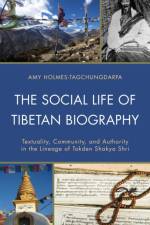
The Social Life of Tibetan Biography explores the creation of Tibetan religious authority in Tibetan cultural areas throughout East, Inner, and South Asia through engaging with the relationship between textual biography and social community in the case of the Eastern Tibetan yogi Tokden Shakya Shri (18531919). It explores the different mechanisms used by Shakya Shri's community in the creation of his biographical portrait to develop his lineage, including the use of biographical tropes, details of interpersonal connections, educational and patronage networks, and representations of sacred site creation and maintenance. In doing so, this study decenters Tibetan and Himalayan religious history through recognizing that peripheries could act as alternative centers of authority for diverse Tibetan Buddhist communities.
Bitter Harvest, a historical ethnographic study, examines the property changes prompted by the early post-socialist neoliberal reforms designed to build capitalism in Poland. Historically, the book traces the halting but steady emergence of privatization and liberalization, even under socialism, and how these anticipated the reforms of the post-socialist period. Contrary to the view that the 1989 post-socialist policy represented a radical departure from former state socialist policies via the importation of Western ';shock therapy' reforms, including the key economic institution of private property, this book dispenses with the sharp divide between the ';socialist past' and ';capitalist present' and argues the lasting importance of these historical antecedents in shaping both post-socialist policy and responses to it. Ethnographically, the book provides a detailed account of the different yet interdependent ways the post-socialist reform program influenced existing agricultural property formssmall farmers, production cooperatives, and state farmsleading in each case to unexpected economic results and political contestation of the policy objectives. This historical and ethnographic study of multiple forms of ownership poses a challenge to the common conception of a homogenized socialism based on state property. It also refutes the reductionist representation of the reality after socialism as the creation of Western-style, private propertybased economic systems, unaffected by the unique Eastern European sociopolitical context. Instead, looking at Poland's property changes through the eyes and experiences of diverse agricultural owners, this book employs the notion of conjoint property to unpack the complexity of ownership under socialism and theorize its evolution into an incomplete exclusive ownership after socialism. This new conceptual framework of property changes in early transition helps us to understand current developments in Eastern Europe as it integrates with the European Union and intersects with global capitalism. It further sheds light on the limits of the universality of the Western notion of private property.
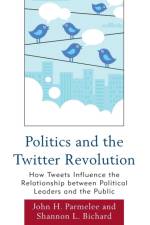
Politics and the Twitter Revolution: How Tweets Influence the Relationship between Political Leaders and the Public, by John H. Parmelee and Shannon L. Bichard, is the first comprehensive examination of how Twitter is used politically. Surveys and in-depth interviews with political Twitter users answer several important questions, including: Who follows the political leaders on Twitter, and why? How persuasive are political tweets? Is political Twitter use good for democracy? These and other questions are answered from theoretical perspectives, such as uses and gratifications, word-of-mouth communication, selective exposure, innovation characteristics, and the continuity-discontinuity framework. In addition, content analysis and frame analysis illustrate how political leaders tweets frame their policies and personalities.The findings in Politics and the Twitter Revolution show Twitter to be surprisingly influential on political discourse. Twitter has caused major changes in how people engage politically. Followers regularly take actions that are requested in leaders tweets, and, in many cases, leaders tweets shape followers political views more than friends and family. Other findings raise concerns. For some, Twitter use contributes to political polarization, and there is frequently a disconnect between what followers expect from leaders on Twitter and what those leaders are giving them.
The Department of Housing and Urban Development (HUD) emphasizes the word ';community' for building economic development, citizen participations, and revitalization of facilities and services in urban and rural areas. Resident Councils are one way to develop and build community among residents of public housing. Despite HUD stressing community building in public housing and investing money and policies around it, there are some resident councils that are not fulfilling the expectations of HUD.This book is my attempt to describe and explain HUD's expectations for the resident council as an active agent for community building and the actual practices of the resident council. I argue that policies and regulations of resident councils which exist to support the effectiveness of the resident council in creating and implementing community-building, self-sufficiency, and empowerment activities and goals in a public housing community may do more harm than good. The Department of Housing and Urban Development invests and spends billions on Public Housing Programs (6.6 billion in 2013). The majority of the 1.2 million people who live in public housing do not live in large urban areas with thousands of people confined to a certain space. The majority of public housing units (90%) have fewer than 500 units. These smaller units and the people that live in them tend to go unnoticed. This ethnographic case study focuses on explaining and understanding the factors and constraints that exist between HUDs expectations for the resident council as an active agent for community building and the actual practices of the resident council. To explain the disjunctionin fact, to determine if such disjunctions identified by Rivertown council members are real. Using the tenets of Critical Race Theory allows us to understand what forceseither real or imagined, structural or culturalprevent the resident council from being an effective agent for change in the public housing community.
During the first few days of the Spanish Civil War, women played an integral role in the spontaneous uprising that prevented the immediate success of the Nationalist coup. Around one thousand of these women went on to join the militias who fought at the front. Women also played an important role in the defense of cities, with another several thousand forming sections of the armed rearguard. Indeed, women's participation in the anti-fascist resistance constituted one of the greatest mass political mobilizations of women in Spain's history.Milicianas provides a comprehensive picture of what life was like for the women who fought during the first year of the civil war, focusing on how the women themselves viewed this experience. It demonstrates that the significance of the miliciana phenomenon lies in the fact that these women took up arms in relatively large numbers, were self-motivated, participated in combat equally with their male comrades, and played an extensive and sophisticated military role.By late 1936, attitudes towards women in combat began to change drastically, and by March 1937, the majority of milicianas had been removed from their combat positions. Though there existed a consensus around this issue among the male leadership of both the Republican government and left-wing political groups, female combatants viewed this turn of events differently. The majority of the milicianas had deep reservations about their recall from the front, and saw it as a retreat from the gains women had made during the war and revolution. Indeed, while the political leadership within the Republic presented numerous arguments for why it was necessary to remove women from combat, this book argues that the reason it was initially considered acceptable for women to fight, and then seen as undesirable eight months later, was connected to the course of the social revolution.
Whiteness and Racialized Ethnic Groups in the United States, in order to account for the never ending discrimination toward racialized ethnic groups including First Nations, blacks, Chinese, and Mexicans, revisits the history of whiteness in the United States. It shows the difference between remembering a history of human indignities and recreating one that composes its own textual memory. More specifically, it reformulates how the historically reliant positionality of whiteness, as a part of the everyday practice and discourse of white supremacy, would later become institutionalized. Even though ';whiteness studies,' with the intention of exposing white privilege, has entered the realm of academic research and is moving toward antiracist forms of whiteness or, at least, toward antiracist approaches for a different form of whiteness, it is not equipped to relinquish the privilege that comes with normalized whiteness. Hence, in order to construct a post white identity, whiteness would have to be denormalized and freed of it of its presumptive hegemony.
History of the Future presents a set of ideas about where we are in history. It focuses on the great majority of people in each society, and shows that life in the modern world will be almost completely different from all previous human experience. The present time is best understood as a period of transition during which one country after another is following along parallel paths from traditional to modern. The process of becoming modern is so powerful that it will have similar effects on all countries. Therefore one can predict the future of countries still undergoing this change by looking at the history of countries which have already completed their transition.Singer asserts that a war system has long existed in which the central concern of nations has been to protect their security by military forces and alliances. He makes the dramatic claim that, because of the inherent nature of modern countries, there will be no war system in any region populated solely by modern countries-as illustrated by the current situation in Western Europe-even though human character will not have improved. However, despite the fact that poverty, tyranny, and war will be largely eliminated, the modern world may be worse for people than the traditional world because most of the things that shaped human character will be obsolete.
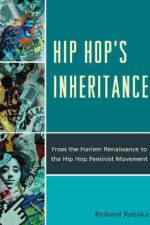
Hip Hop's Inheritance arguably offers the first book-length treatment of what hip hop culture has, literally, 'inherited' from the Harlem Renaissance, the Black Arts movement, the Feminist Art movement, and 1980s and 1990s postmodern aesthetics. By comparing and contrasting the major motifs of the aforementioned cultural aesthetic traditions with those of hip hop culture, all the while critically exploring the origins and evolution of black popular culture from antebellum America through to 'Obama's America,' Hip Hop's Inheritance demonstrates that the hip hop generation is not the first generation of young black (and white) folk preoccupied with spirituality and sexuality, race and religion, entertainment and athletics, or ghetto culture and bourgeois culture. Taking interdisciplinarity and intersectionality seriously, Hip Hop's Inheritance employs the epistemologies and methodologies from a wide range of academic and organic intellectual/activist communities in its efforts to advance an intellectual history and critical theory of hip hop culture. Drawing from academic and organic intellectual/activist communities as diverse as African American studies and women's studies, postcolonial studies and sexuality studies, history and philosophy, politics and economics, and sociology and ethnomusicology, Hip Hop's Inheritance calls into question one-dimensional and monodisciplinary interpretations or, rather, misinterpretations, of a multidimensional and multivalent form of popular culture that has increasingly come to include cultural criticism, social commentary, and political analysis.
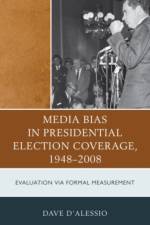
Accusations of partisan bias in Presidential election coverage are suspect at best and self-serving at worst. They are generally supported by the methodology of instance confirmation, tainted by the hostile media effect, and based on simplistic visions of how the news media are organized. Media Bias in Presidential Election Coverage 1948-2008 by Dave D'Alessio, is a revealing analysis that shows the news media have four essential natures: as journalistic entities, businesses, political actors, and property, all of which can act to create news coverage biases, in some cases in opposing directions. By meta-analyzing the results of 99 previous examinations of media coverage of Presidential elections from 1948 to 2008, D'Alessio reveals that coverage has no aggregate partisan bias either way, even though there are small biases in specific realms that are generally insubstantial. Furthermore, while publishers used to control coverage preferences, this practice has become negligible in recent years. Media Bias proves that, at least in terms of Presidential election coverage, The New York Times is not the most liberal paper in America and the Fox News channel is substantially more conservative in news coverage than the broadcast networks. Finally, Media Bias in Presidential Election Coverage 1948-2008 predicts that no amount of evidence will cause political candidates to cease complaining about bias because such accusations have both strategic potential in campaigns and an undeniable utility in ego defense.
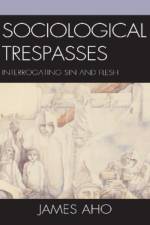
Racism, collective violence, sickness, environmental catastrophe, body obsession, greed, and accelerated life concern everyone. They are also the subject matter of this book. Here, however, they are not viewed as social problems to be solved by technical experts. Instead, they are viewed as products of the joint transference of aspects of ourselves onto objects independent of ourselves. More specifically, they emerge from conviction there is something 'out there'-say, a nation, an enemy, time, money, the environment, a medical cure, a bodily orifice (the mouth or genitals), a significant individual, or an anonymous public, etc.-the advancement of, accumulation of, defeat of, management of, or obeisance to can complete us, secure us, fill us, stabilize us, or in some other way enable us to escape from or deny our 'lack': our existential precariousness or death. Sociological Trespasses attempts to disillusion readers of this conviction. This is not done for itself, but to create space for imagining new horizons of lived-possibility, such as tolerance of human difference, simplicity, slowness, care, and wakefulness.
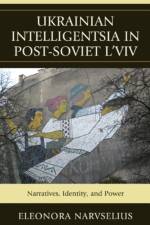
Intelligentsia assumes the right to speak in the name of the entire nation and to extrapolate its own tastes, values and choices to it. Therefore, intelligentsia's voices have been in many ways decisive in the discussions about Ukrainian national identity, which gained momentum in the post-Soviet Ukrainian society. The historical and cultural cityscape of L'viv is an especially apt site for investigation of the nexus intelligentsia-nation not only in the Ukrainian, but in the East-Central European context. This borderline city, while not being a remarkable industrial, administrative or political centre, has acquired the reputation of a site of unique cultural production and a principal center of the Ukrainian nationalist movement throughout the twentieth century. Here the popular conceptions of intelligentsia have been elaborated at the intersection of various cultural, historical and political traditions. This study addresses Ukrainian-speaking intelligentsia and intellectuals in L'viv both as a discursive phenomenon and as the social category of cultural producers who in the new circumstances both articulate the nation and are articulated by it.
On the one hand, Creation and Discovery, Lacan and Klein: An Essay of Reintroduction seeks to disclose the often suppressed or unacknowledged proximity, even intimacy, between Lacan and Klein, and thereby to facilitate a re-introduction between Lacan and Klein such that their works can read anew, both independently and together. On the other hand, by reconstructing the highly divergent metapsychological theories and clinical orientations of Jacques Lacan and Melanie Klein from their discussions of the same case material, the text seeks to demonstrate the irreducible plurality of psychoanalysis and the ethico-political significance of this plurality. Siding with neither Lacan nor Klein's perspective, Adam Rosen-Carole argues that within and between these exaggerated positions, a dialectic of creation and discovery emerges that affords the reader unique insights into the nature and status of psychoanalytic knowing and its particular objects. Special attention is paid to the indelible exaggerations and distortions, the guiding sensitivities and urgencies, and the concomitant structures of blindness and insight organizing various psychoanalytic perspectives. Written for clinicians as well as for students and scholars interested in psychoanalysis and philosophy, this book serves not only as a comprehensive introduction to Lacan, but also a reassessment of psychoanalytic method.
Death metal is one of popular musics most extreme variants, and is typically viewed as almost monolithically nihilistic, misogynistic, and reactionary. Studies tend to view the music as a reflection of these listeners social conditions and are concerned with metals pleasures so long as these can be seen within that context: as responses to cultural and economic circumstances.Michelle Phillipovs Death Metal and Music Criticism: Analysis at the Limits, in contract, offers an account of listening pleasure on its own terms. Through an analysis of death metals sonic and lyrical extremity, Phillipov shows how violence and aggression can be configured as sites for pleasure and play in death metal music, with little relation to the real lives of listeners. In some cases, gruesome lyrical themes and fractured song forms invite listeners to imagine new experiences of the body and of the self. In others, the speed and complexity of the music foster a technical or distanced appreciation akin to the viewing experiences of graphic horror film fans. These aspects of death metal listening are often neglected by scholarly accounts concerned with evaluating music as either progressive or reactionary. By contextualizing the discussion of death metal via substantial overviews of popular music studies as a field, Phillipovs Death Metal and Music Criticism highlights how the premium placed on political engagement in popular music studies not only circumscribes our understanding of the complexity and specificity of death metal, but of other musical styles as well. Exploring death metal at the limits of conventional music criticism helps not only to develop a more nuanced account of death metal listeningit also offers some important starting points for a rethinking of popular music scholarship as a whole.
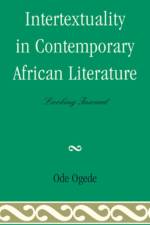
This book is a study in African literary influence. It focuses on the importance of indigenous sources to new writing. The analytical framework for the study draws on recent conceptual advances in theories of authorship. Juxtaposing works and authors that are traditionally thought to be unlikely bedfellows, the book persuasively identifies their hitherto unexamined points of contact, opening up a vigorous debate about the roots of African literature and offering a radical critique of the assumptions underlying conventional notions of African literature. The book provides valuable insight on the roles of such activities as appropriation, copying, pastiche, parody, simulation, foraging, grafting, padding, recycling, and remodeling in underwriting literary expression in Africa. Alive with wit and full of delight in the texts it discusses, it is a marvel of close and attentive, detective reading.
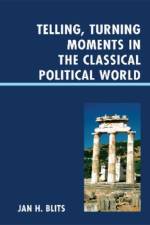
Turning, Telling Moments in the Classical Political World examines developments in the classical political world which are both turning and telling moments. All the moments_from Theseus's founding of Athens to Augustus's establishment of the Principate_possess the double character of being turning points and revealing fundamental aspects of the ancient political world. While most books on ancient history are chiefly concerned with questions of literary sources and historical accuracy, this book deals with the significance of the facts and reports themselves. Blits treats the ancient histories as works of reflection rather than works of research. Instead of focusing on whether, or how, the ancient historians meet the professional standards of present-day historiography, Blits reveals the way they themselves understand-and intend us to understand-the ancient world.
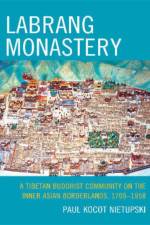
The Labrang Tibetan Buddhist Monastery in Amdo and its extended support community are one of the largest and most famous in Tibetan history. This crucially important and little-studied community is on the northeast corner of the Tibetan Plateau in modern Gansu Province, in close proximity to Chinese, Mongol, and Muslim communities. It is Tibetan but located in China; it was founded by Mongols, and associated with Muslims. Its wide-ranging Tibetan religious institutions are well established and serve as the foundations for the community's social and political infrastructures. The Labrang community's borderlands location, the prominence of its religious institutions, and the resilience and identity of its nomadic and semi-nomadic cultures were factors in the growth and survival of the monastery and its enormous estate. This book tells the story of the status and function of the Tibetan Buddhist religion in its fully developed monastic and public dimensions. It is an interdisciplinary project that examines the history of social and political conflict and compromise between the different local ethnic groups. The book presents new perspectives on Qing Dynasty and Republican-era Chinese politics, with far-reaching implications for contemporary China. It brings a new understanding of Sino-Tibetan-Mongol-Muslim histories and societies. This volume will be of interest to undergraduate and graduate student majors in Tibetan and Buddhist studies, in Chinese and Mongol studies, and to scholars of Asian social and political studies.
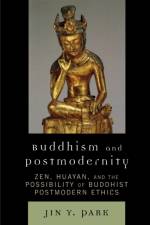
Buddhism and Postmodernity is a response to some of the questions that have emerged in the process of Buddhism's encounters with modernity and the West. Jin Y. Park broadly outlines these questions as follows: first, why are the interpretations and evaluations of Buddhism so different in Europe (in the nineteenth century), in the United States (in the twentieth century), and in traditional Asia; second, why does Zen Buddhism, which offers a radically egalitarian vision, maintain a strongly authoritarian leadership; and third, what ethical paradigm can be drawn from the Buddhist-postmodern form of philosophy? Park argues that, as unrelated as these questions may seem, the issues that have generated them are related to perennial philosophical themes of identity, institutional power, and ethics, respectively. Each of these themes constitutes one section of Buddhism and Postmodernity. Park discusses the three issues in the book through the exploration of the Buddhist concepts of self and others, language and thinking, and universality and particularities. Most of this discussion is drawn from the East Asian Buddhist traditions of Zen and Huayan Buddhism in connection with the Continental philosophies of postmodernism, hermeneutics, and deconstruction. Self-critical from both the Buddhist and Western philosophical perspectives, Buddhism and Postmodernity points the reader toward a new understanding of Buddhist philosophy and offers a Buddhist-postmodern ethical paradigm that challenges normative ethics of metaphysical traditions.
Delivering Modernity: Childbirth in Republican China (1911-1949) is the study of a pivotal period in which traditional midwifery, marked by private, unregulated old-style midwives, was transformed into modern midwifery through the adoption of a highly medicalized and state-sponsored birth model that is standard in urban China today. In the twentieth century, biomedical technologies altered the process of childbirth on virtually every level. What had been a matter of private interest, focusing on the family and lineage, became a national priority, a symbol of the new citizen who would participate in the creation of a revitalized nation. This transformation of reproduction coalesces with the broader story of China's twentieth-century revolutions, marked by an emphasis on science and modernity. The roles of the state and of western medical personnel were paramount in affecting these changes, but equally important are the intense social and cultural shifts that occurred simultaneously. The dominant themes of reproduction in twentieth-century China are characterized by expanding state involvement, shifting gender roles, escalating consumption patterns accompanying the commercialization of private lives, and the increasing medicalization of the birth process.
Crisis of Gender and the Nation in Korean Literature and Cinema is about the changing constructs of modernity, masculinity, and gender relations and discourses in Korean literature and cinema during the crucial decades of the colonial and postcolonial era, based on close historical examination and a wide-ranging theoretical foundation that look at both western and Korean language sources. It examines Korean literary and cinematic texts from the period that spans from the1920s to the 1960s to reveal the ways in which many arrivals of modernity in Korea_through the traumatic pathways and contexts of colonialism, nation building, war, and industrialization_destabilize and set in flux the notions of gender, class, and nationhood. It probes into some of the most significant aspects of Korean culture in the earlier part of the twentieth century through an interdisciplinary inquiry that deploys methods and seminal texts from the fields of Korean Studies, Comparative Literature, Postcolonial Studies, and Film Studies. Each chapter is an exploration of a decade, organized around questions about modernity, gender, class, and the nation that are central to understanding the selected texts and their contexts. The nation of Korea has been under threat since the Japanese colonial period (1910-1945). Crisis of Gender and the Nation critically analyzes the cultural responses of the nation and its gendered subjects in crisis, represented in a selection of Korean literary and cinematic texts from the colonial period, beginning in the 1920s, to the postcolonial period, up to the 1960s, through the lens of both Western and Korean discourses of gender and postcolonial inquiries of literature and film. It delineate the connection between the construction of the nation as a unified, sovereign entity and the ideal of the new Korean masculinity, to show how Korea's Confucian patriarchal tradition and its hold on the national imagination endures over the turbulent decades under examination, by adapting to the new surroundings and social mores, even while its core assumptions and values remain unchanged in significant ways.
Nearly all empirical work in political science is fundamentally historical, yet very little attention has been given to the problem of grounding claims to historical knowledge. In Writing the Arab-Israeli Conflict Jonathan B. Isacoff constructs the nature of historical knowledge by deftly examining the multiple histories of the Arab-Israeli conflict written by generations of Israeli scholars. He also undertakes briefer analysis of literature, drawn from both historians and political scientists of the Vietnam War, demonstrating that historical revisionism is not unique to the study of the Middle East. Focusing on different schools of historical interpretation Writing the Arab-Israeli Conflict argues for a pragmatist approach in the tradition of John Dewey. Most importantly, this exceptional work suggests a number of practical methodological measures that can be taken to produce more sophisticated and nuanced political science scholarship.
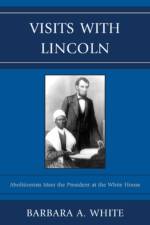
Visits with Lincoln provides a balanced and readable discussion of ten abolitionists, male and female, black and white, who visited President Lincoln in the White House during the Civil War in an attempt to advance their goal of ending slavery immediately. The book paints a portrait of Lincoln through the eyes of his visitors and traces changes in his ideas and attitudes over the course of the war. The visitors include Jessie Benton Fremont, wife of Major General John Charles Fremont, the famous explorer and commander of the Union armys Department of the West; Harriet Beecher Stowe, Isabella Beecher Hooker, and Henry Ward Beecher, three members of the distinguished Beecher family; Frederick Douglas, former slave and recruiter of black soldiers; Anna Dickenson, Republican orator; William Lloyd Garrison and Wendell Phillips, leaders of the Boston abolitionist movement; and Sojourner Truth, ex-slave and itinerant anti-slavery speaker.
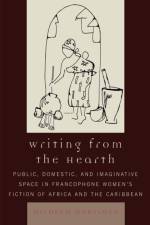
If space is important in the realm of imagination and a key theme in feminist theory, cross-cultural studies of social maps reveal that men and women's spatial experiences differ; women rarely control physical or social space directly. Positing the thesis that women's writing of Francophone Africa and the Caribbean offers important perspectives on the relationship of gender to space,Writing from the Hearth proposes close readings of Francophone women writers of Africa (Aoua KZita, Mariama B%, Ken Bugul, Calixthe Beyala, and Aminata Sow Fall) and the Caribbean (Marie Chauvet, Simon Schwarz-Bart, Maryse CondZ, and Edwidge Danticat). As critical readings of postcolonial African and Caribbean literature show that tropes of confinement appear frequently in female-authored texts_where home is often depicted as a place of alienation_this critical study examines ambiguities associated with domestic space as enclosure as it explores the relationship between the female protagonist and the inner and outer spaces of her world: domestic, imaginative, and public space. Writing from the Hearth probes the hypothesis that the female protagonist can move toward empowerment by entering public space from which she has been excluded by indigenous patriarchs and European colonizers and by establishing a new relationship to domestic space or securing a liberating alternative space within it. Flexible and multipurpose, alternative space is a place of possibilities that can function as a refuge for meditation, recollection, or fantasy, an antechamber for action, and a site of resistance and performance. Here, by telling the tale, writing the creative work, a woman can affirm her sense of self.
Abonner på vårt nyhetsbrev og få rabatter og inspirasjon til din neste leseopplevelse.
Ved å abonnere godtar du vår personvernerklæring.