




















Gjør som tusenvis av andre bokelskere
Abonner på vårt nyhetsbrev og få rabatter og inspirasjon til din neste leseopplevelse.
Ved å abonnere godtar du vår personvernerklæring.Du kan når som helst melde deg av våre nyhetsbrev.

In an age where scholars, lawyers, judges and just plain folk debate the original intent of the U.S. Constitution, Commentary on the Constitution from Plato to Rousseau demonstrates that the issues confronting the foundersas well as issues of understanding what the founders intendedcan be traced back to antiquity. Stein looks at 14 historical figures whoby their words and/or deedsset the stage for political thought before the constitution was written. All the subjects of this book deal as best they can with questions of the relationship between executive and other branches of government; all deal with the role of religion in government; all deal with how much (if any) democracy should be allowed in determining fundamental law and day-to-day governance; all engaged in the thought experiment of asking what life was like before government, and therefore why government was instituted; all deal with the relationship of central authority and provincial (states) rights; all seek to avoid tyranny. Commentary on the Constitution from Plato to Rousseau is not about what the founders took from previous thinkers and political figures; it is a book that allows the reader to consider the U.S. Constitution while learning about people whose genius has transcended time, from Plato to Rousseau.
The Communicated Stereotype: From Celebrity Vilification to Everyday Talk argues that a consequential interactional dilemma is enacted when people communicate stereotypes in everyday talk. The interactional dilemma is a result of the tension between a political correctness movement that prescribes against the communication of stereotypes and the benefits gained from communicating these in conversation. Despite the punishment and shame that befalls celebrities who communicate stereotypes, people continue to communicate stereotypes in everyday conversation often evoking little if any outrage. The Communicated Stereotype advances previous theory and research related to group categorization, stereotype maintenance and functional, discourse analytic, and critical approaches by demonstrating the process whereby the vilification of celebrities diverts attention from the everyday communication of stereotypes and emboldens people to communicate stereotypes without self-criticism. The way this interactional dilemma is handled in conversation helps to explain why stereotypes are maintained over time within a culture despite deterrents intended to dissuade people from using them. An appreciation of stereotypes as poor communication choices provides the potential for the reduction of stereotype use.
Deconstructing South Park: Critical Examinations of Animated Transgression is an edited collection by Brian Cogan that looks at the long and controversial run of one of the most subversive programs on television. South Park, while denounced by many as simply scatological, is actually one of the most nuanced and thoughtful programs on television. The contributors to South Park reveal that, through the lens of four foul-mouthed nine year olds, Trey Parker and Matt Stone have created one of the most astute forms of social and political commentary in television history.Deconstructing South Park, itself the most ambitious deconstruction of popular culture to date, analyzes how South Park is not only entertainment, but a commentary on American culture that tackles controversial issues far beyond the depth of most television. Specifically, the medium of animated sitcom allows the shows creators to contribute to cultural conversations regarding disability studies, religion, sexuality, celebrity, and more. If South Park deconstructs American culture, then Cogan and his contributors deconstruct the deconstructionists and reveal South Park in all its hilarious and often contradictory complexity.
This book focuses on military conscription in 22 countries that represent the worlds regions. The purpose is to shed light on the history, politics, and main events that led to the choice of conscription or professional military forces in the countries under study. While we acknowledge that practical and technological developments played major roles in this choice, we also understand that racial and gender relations, social group and political regime dynamics, regional influences, and international forces also affected military composition and relations to the rest of the society. Through this review, we aim at providing an easy-to-access source of knowledge about military mobilization policies and historical developments as well as the main ideas, politics, and events that shaped them. Through this review, we offer a glimpse on developments that influenced societies and political systems and were reflected in their militaries.
Representations and coverage of S&M have become quite common nowadays, whether we see them in the fashion industry, commercials, the news, on television, film, the internet, and so on. But in the population at large and in the academic community, too, it is still persistently stigmatized. This marginalization, along with its ambivalently persecuted status, is a result, significantly, of a nineteenth century legacy. This legacy begins with Kraftt-Ebing's designation of sadomasochism, along with gay and lesbian desire, as a perversion, and continues in the popular and expert (mis)understandings which prevail.More generally, most people today will recognize that all human relations are power relations. Yet most people will also deny this and mask these power relations by invoking all sorts of things, like romantic love, sentimental attachment, companionate marriage, friendship, peace, non-violence, harmony, and the list goes on, ad nauseam. Not that these do not exist in a sadomasochistic relation, but sadomasochists are unflinching in their recognition that all of these are also permeated by power relations. It is not only impossible to purge these relations of power but for sadomasochists it is also undesirable to do so. It is not only more honest to acknowledge the power that saturates these relations but also more instructive in the sense that S&M provides a context in which one learns to exercise power and to submit to it in a responsible way.Even in scholarly critical and theoretical discussions of S&M, the prevailing opinion is that the power exercised in sadomasochism is not ';real.' It is of course not real in the sense that slavery and violence no longer has a legal status. But reality cannot of course be gauged or even approximated by its legal status alone. For most practitioners, it is hard to deny the reality of pain, of humiliation, of degradation, in the moment of its enactment. One can hardly deny the reality of bringing the whip down on someone's back or of having it sear across one's buttocks.
This interdisciplinary volume of essays studies human rights in political prison literature, while probing the intersections of suffering, politics, and aesthetics in an interliterary and intercultural context. As the first book to explore the concept of global aesthetics in political prison narratives, it demonstrates how literary insight enhances the study of human rights. Covering varied geographical and geopolitical regions, this collection encourages comparative analyses and cross-cultural understanding. Seeking to interrogate linguistic, structural, and cultural constructions of the political prison experience, it highlights the literary aspects without losing sight of the political and the theoretical. The contributors cross various disciplinary boundaries and adopt different interpretive perspectives in analyzing prison narratives, especially memoirs, from such diverse countries as China, Egypt, Morocco, Syria, Romania, Russia, Uruguay, and the U.S. The volume emphasizes the literary works produced since the second half of the twentieth century, particularly since the political seismic shift in 1989. The authors treated range from the canonical to the less well-known: Nawal El Saadawi, Varlam Shalamov, Zhang Xianliang, Cong Weixi, Wumingshi, Carlos Liscano, Fatna El Bouih, Nabil Sulayman, Faraj Bayraqdar, Hasiba 'Abdalrahman, Tahar Ben Jelloun, Nicolae Steinhardt, Irina Ratushinskaya, etc. Critical issues investigated include how the writers represent their sufferings, experiences, and emotions during incarceration; their strategies of survival; and how political prison literature can reveal hidden violations of human rights, while resisting official discourse and serving other functions in society. Examining the commonalities and differences in global experiences of imprisonment, the eight chapters engage with the aesthetics of self-making and resistance, individual and collective memory, denial and conversion, catharsis and redemption, and the experiencing and witnessing of trauma. Topics also include the politics of remembering and the politics of representation, such as the problematic relationship between narrative, language, and representations of torture. Similarly under discussion are prison aesthetics of happiness, the role of spectacle in the criminal justice system, and the intersection of prison, gender, and silences. At a juncture when more and more people all over the world actively defy repressive regimes and demand political reform, this book makes a timely contribution to the advocacy and discourse of universal human rights.
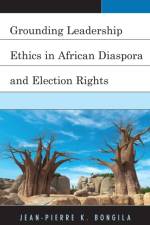
This book analyzes the leadership ethics dilemma of whether the diaspora ought to vote specifically in their homeland franchise. This quagmire becomes even more complex in the case of Africa, where some diasporas participate in their countries' elections and others don't. It implies and goes beyond the mere question of ';why' or what are the reasons behind the fact that members of some countries vote and those of other nations do not. The analysis contained in the book deals with whether it is right or wrong (good or bad; just or unjust; virtuous or immoral, desirable or undesirable) for citizens living overseas to participate in their countries' suffrages, and for the leaders of African countries to extend the franchise rights to their diaspora. Pedagogically, the book proposes an applied methodology of leadership decision-making based on ethical dilemmas, which instructors and learners of various disciplines, particularly those in leadership ethics, as well as global leaders might find useful. The combined DIRR (Description, Interpretation, Rehearsal and Re-discernment) proposed by Enomoto & Kramer (2007) and the prudent pragmatism by Bluhm & Heineman (2007) correspond to the traditional African ';baobab tree' as a physical space of social and political conflict resolutions. In this book, the ';baobab tree', an ethical arena of public debates, helps to weigh primarily the need for diaspora Africans to get the right to vote, as well as the social, political and economic benefits such a right, if it were granted, would entail for all the parties involved. Drawing from the examples of countries that have championed some form of democratic processes, including expatriate elections, the book brings to the forefront the crucial role of both the leadership of Africa and that of their diaspora in spearheading the continent on the path of sustainable development.
Civil Society in Malerkotla, Punjab: Fostering Resilience through Religion by Karenjot Bhangoo Randhawa explores the direct role that religion plays in conflict and peace that has often been difficult to isolate. This study extends previous work on peace and conflict resolution by looking at a town which has witnessed many outbreaks of violence in the past but still holds peace as the norm. The former princely state of Malerkotla, Punjab is a place where riots did not occur during Partition. In this unique Muslim majority town, there are four distinct religious groups that live in close proximity to each other. Yet, the overall pattern of peaceful plurality in the town has resulted in the transcendence of violence even when the threat looms close by. The unique case of Malerkotla, Punjab provides an opportunity to look more closely and critically at Sikhs and their relationship with Muslims in India. As a case study, this work captures the overall pattern of Sikh-Muslim interaction in a town that can transcend conflict and make peace the norm. Randhawa uncovers how religious associations, expressions and activities have helped to build social capital and stabilize peace. This book also emphasizes interreligious understanding, cross-cultural awareness, and conflict transformation, and discusses how interfaith communities can work together to bridge understanding in order to prevent violence.
Within the past ten years, social media such as Twitter, Facebook, MySpace, YouTube, Flickr, and others have grown at a tremendous rate, enlisting an astronomical number of users. Social media have inevitably become an integral part of the contemporary classroom, of advertising and public relations industries, of political campaigning, and of numerous other aspects of our daily existence. Social Media: Usage and Impact, edited by Hana S. Noor Al-Deen and John Allen Hendricks, provides a comprehensive and scholarly analysis of social media. Designed as a reader for upper-level undergraduate and graduate level courses, this volume explores the emerging role and impact of social media as they evolve. The contributors examine the implementation and effect of social media in various environments, including educational settings, strategic communication (often considered to be a merging of advertising and public relations), politics, and legal and ethical issues. All chapters constitute original research while using varied research methodologies for analyzing and presenting information about social media.Social Media: Usage and Impact is a tremendous source for educators, practitioners (such as those in advertising, PR, and media industries), and librarians, among others. This collection is an essential resource for any media technology course. With the rapid proliferation and adoption of social media, it is a juggernaut that must be addressed in the higher education curriculum and research.
The book focuses on the description and analysis of the historical formation of the Czechoslovak and Czech positions in the international system during the course of the 20th century. The first part of the book presents a brief outline of the history of Czechoslovak foreign policy between the First World War and the end of the Cold War. The authors focus on the key periods and turning points in the role of the small Central European state in the international system as well as on the significant actors formulating Czechoslovak foreign policy from the inside and influencing it from the outside. The second, analytical part of the book focuses on the key issues connected to the change of the position of Czechoslovakia and the Czech Republic after 1993 in world politics, and on the formulation of Czech foreign policy priorities and strategies in the globalized world after the end of bipolar confrontation. The authors analytically investigate the activities of the Czech Republic in (Central) European regional integration processes and the integration of the state in the global system of development cooperation. A great deal of attention is paid to the key political actors of the Czech foreign policy discussion and their impact on the formulation of foreign policy goals. Special attention is paid to the dilemmas of Czech foreign policy: the hesitation between the role of a small state and a medium power and also the span of Czech foreign policy between Atlanticism, anti-Americanism and Europeanization.
In the intellectuality of capitalism there are two alternative ways to conceive of reality: the moderate one, which mediates dialectically, and the revolutionary one, which also comprises ruptures with disappearance. The former conforms to, and helps shape, the metaphysics of capitalism itself. The second is akin to the mode of progressing of nature in general, and forms the basis for materialism. Moderate positions tend to be intolerant because they do not recognize the other, which is constantly compelled to mediate. Revolutionary positions instead, recognizing the other, are tolerant and intrinsically non-violent. In capitalism as we know it liberalism, Marxism and anarchism would potentially be revolutionary. But they have been transformed in moderate modes of thought, similar for instance to nationalism, communitarianism, Christian ideas, fascism, socialism. Thus capitalism has become an intolerant world that seems built to block, by means of mediations, its own historical evolution. The outcome is a fascistic economy and polity.
Thomas Paine described the American Revolution as educative. However, as examined in Brian W. Dotts' The Political Education of Democratus: Negotiating Civic Virtue during the Early Republic, what was learned was neither standardized nor uniform. The Federalists, for example, viewed the revolution as a triumph for representative government, but one intended to maintain many remnants of the colonial experience. Anti-Federalists saw a confirmation of representative government at the state and local levels and considered the revolution as authenticating Montesquieu's theories of republicanism. A third, more extreme interpretation of the revolution emerged from radical democrats who viewed the revolution as a fundamental break with mainstream thinking about republicanism. These radicals helped turn conventional understanding of representative government upside down, taking part in unconventional or extra-constitutional action during their negotiation of citizen virtue during the 1790s. Members of each of the societies took an active part in trying to fulfill their expectations for the new American experiment by contributing to the democratization of republicanism.The Political Education of Democratus illuminates the emergence of democratic thought from Aristotle and Machiavelli to more contemporary influences from the British Commonwealth tradition. Dotts examines how the radical ideas of Algernon Sidney, James Harrington, John Milton, Joseph Priestley, and Thomas Paine develop a rich tapestry among the democratic society's correspondence, constitutions, resolutions, and early media. Individual members of the Democratic-Republican Societies, including Philip Freneau, Robert Coram, Benjamin Bache, George Logan, and others energized these radical interpretations of civic republican thought and plunged headlong into party politics, educating early Americans about the practical potentialities of democratic action.
Arizona Dranes (1889-1963) was a true musical innovator whose recordings made for the Okeh label during the years 1926-1928 helped lay the foundations for what would soon be known as gospel music. Her unique blend of ragtime, barrelhouse, and boogie woogie piano plus her exciting and emotional Pentecostal style of singing influenced the development of gospel music for the next forty years and beyond.The School of Arizona Dranes: Gospel Music Pioneer covers the life and career of Dranes and situates her accomplishments in the broader history of African American gospel music and the rise of the Pentecostal movement. Starting with the earliest recordings of the music in the late nineteenth century, this book provides a history of African American sacred and gospel music that convincingly demonstrates the revolutionary nature of Dranes's musical accomplishment. Using specific examples, the author traces the far-reaching influence of Arizona Dranes on African American gospel piano playing and singing.
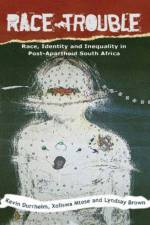
This book draws on the South African experience to develop a theory of race trouble with the central observation that transformation in South Africa has reshaped patterns and practices of encounter and exchange between historically defined race groups. Race continues to feature prominently in these new forms of social interaction and, by participating in them, South Africans are cast once again as racial subjects - advantaged or disadvantaged, included or excluded, colonizers or colonized.
New Mexico and Arizona joined the Union in 1912, despite the opposition from some of their residents. The Fiscal Case against Statehood examines the concerns of the people who lost the battle over statehood in the two territories. Moussalli examines their territorial and early state governments' fiscal behavior and reveals that while their fears of steep increases in the cost of government were well-founded, statehood also significantly improved their governments' accountability for their use of the public purse. She concludes that fiscal officials enabled statehood's growth in government by improving the financial reports and processes.Moussalli examines New Mexico's and Arizona's financial reports before and after statehood, and compares them to the state of Nevada's reports as a control. Through detailed, systematic analysis, Moussalli reveals the fiscal costs and accountability gains of statehood for the residents of New Mexico and Arizona.
The monograph explores the linguistic impact of the colonial and postcolonial situations in South Africa on language policy, on literary production and especially on the stylistics of fiction by indigenous South Africans writing in English. A secondary concern is to investigate the present place of English in the multilingual spectrum of South African languages and to see how this worldly English relates to Global English, in the South African context. The introduction presents a socio-linguistic overview of South Africa from pre-historic times until the present, including language planning policies during and after the colonial era and a cursory review of how the difficulties encountered in implementing the Language Plan, provided for by the new South African constitution, impinge on the development of black South African English. Six chapters track the course of English in South Africa since the arrival of the British in 1795, considered from the point of view of the indigenous African population. The study focuses on ways in which indigenous authors 'indigenize' their writing, innovating and subverting stylistic conventions, including those of African orature, in order to bend language and genre towards their own culture and objectives. Each chapter corresponds to a briefly outlined historical period that is largely reflected in linguistic and literary developments. A small number of significant works for each period are discussed, one of which is selected for a case-study at the end of each chapter, where it is subjected to detailed stylistic analysis and appraised for the degree of indigenization or other linguistic or socio-historic influences on style. The methodology adopted is a linguistic approach to stylistics, focusing on indigenization of English, inspired by the work of Chantal Zabus in her book, The African Palimpsest: Indigenization of Language in the West African Europhone Novel (2007, (1991)). The conclusion reappraises the original hypothesis - that the specific characteristics of South African literary production, including styles of writing, can be related to the political, social and economic context - in the light of many fresh insights; and discusses the place occupied by English in the cultural struggle of the formerly colonized peoples of South Africa.
In Gender and the American Presidency: Nine Presidential Women and the Barriers They Faced, Theodore F. Sheckels, Nichola D. Gutgold, and Diana Bartelli Carlin invite the audience to consider women qualified enough to be president and explores reasons why they have been dismissed as presidential contenders. This analysis profiles key presidential contenders including Barbara Mikulski, Nancy Pelosi, Nancy Kassebaum, Kathleen Sebelius, Christine Gregoire, Linda Lingle, Elizabeth Dole, Dianne Feinstein, and Olympia Snowe. Gender barriers, media coverage, communication style, geography, and other factors are examined to determine why these seemingly qualified, powerful politicos failed to win the White House.
Stories of the stepmother, the substitute mother, or the ';other mother' have infused popular culture for centuries and continue to do so today. She plays a substantial role in our collective imagination, whether we are a part of a step family or not. Despite the fact that the stepmother remains a prevalent figure, both in popular culture and reality, scholars have largely avoided addressing this fraught figure. I Could Not Call Her Mother explores representations of the stepmother in American popular culture from the colonial period to 1960. The archetypal stepmother appears from nineteenth-century romance novels and advice literature to 1930s pulp fiction and film noir. Leslie J. Lindenauer argues that when considered in her historic context, the stepmother serves as a bellwether for changing constructions of motherhood and family. She examines popular cultures role in shaping and reflecting an increasingly normative middle class definition of the ideal mother and family, which by the 1920s became the dominant construct. Lindenauer adds to the rich and growing literature on the history of motherhood. It echoes and is informed by the scholarship that has defined ideal motherhood as a moving target, historically constructed. In so doing, it illuminates the relationship between ideal motherhood and ideal womanhood.
As the director of Badlands, Days of Heaven, The Thin Red Line, and The New World, Terrence Malick has created a remarkable body of work that enables imaginative acts of philosophical interpretation. Steven Rybins Terrence Malick and the Thought of Film looks closely at the dialogue between Malicks films and our powers of thinking, showing how his work casts the philosophy of thinkers such as Stanley Cavell, Martin Heidegger, Walter Benjamin, Andre Bazin, Edgar Morin, and Immanuel Kant in new cinematic light. With a special focus on how the voices of Malicks characters move us to thought, Terrence Malick and the Thought of Film offers new readings of his films and places Malicks work in the context of recent debates in the interdisciplinary field of film and philosophy. Rybin also provides a postscript on Malicks recently-released fifth film, The Tree of Life.
In Metaphorical Metaphysics in Chinese Philosophy: Illustrated with Feng Youlans New Metaphysics, Derong Chen examines Chinese philosophy through a critical analysis of Feng Youlans nnew metaphysics. He views metaphysics in Chinese philosophy as a metaphorical metaphysics separate from Western metaphysics. In examining the historical influences and contemporary reaction to Fengs work, he identifys Fengs system as the continuation of the Chinese philosophical tradition. This approach is most applicable to scholars of comparative philosophy and Chinese philosophy.
This study is about how four representative African American poets in the 1960s, Langston Hughes, Umbra's David Henderson, and the Black Arts Movement's Sonia Sanchez, and Amiri Baraka engage, in the tradition of African griots, in poetic dialogues with aesthetics, music, politics, and Black History, and in so doing narrate, using jazz as meta-language, genealogies, etymologies, cultural legacies, and Black (hi)stories. In intersecting and complementary ways, Hughes, Henderson, Sanchez, and Baraka fashioned their griotism from theorizations of artistry as political engagement, and, in turn, formulated a Black aesthetic based on jazz performativity a series of jazz-infused iterations that form a complex pattern of literary, musical, historical, and political moments in constant cross-fertilizing dialogues with one another. This form of poetic call-and-response is essential for it allows the possibility of intergenerational dialogues between poets and musicians as well as dialogical potential between song and politics, between Africa and Black America, within the poems. More importantly, these jazz dialogisms underline the construction of the Black Aesthetic as conceptualized respectively by the griotism of Hughes, of Henderson, and of Sanchez and Baraka.
This book makes use of in-depth interviews with the residents most active in shaping the racially diverse urban communities in which they live. As most of them are white and progressive, it provides a unique view into the particular ways that color-blind ideologies work among liberals, particularly those who encounter racial diversity regularly. It reveals not just the pervasiveness of color-blind ideology and coded race talk among these residents, but also the difficulty they encounter when they try to speak or work outside of the rubric of color-blindness. This is especially vivid in their concrete discussions of the neighborhoods' diversity and the choices they and their families make to live in and contribute to these communities. This close examination of how they wrestle with diversity in everyday life reveals the process whereby they unintentionally re-create a white habitus inside of these racially diverse communities, where despite their pro-diversity stance they still act upon and preserve comfort and privileges for whites. The book also provides a close examination of white racial identity, as the context of a diverse community provides both the catalyst and, significantly, the space for an examination of an unarticulated racial consciousness, which has implications for our study of whiteness more generally. The layers of ambivalence and pride surrounding the fact of diversity in these neighborhoods and residents' lives reveal both limitations and hope as the nation itself becomes more diverse. This critical and yet compassionate book extends our understanding of contemporary racial ideology and racial discourse, as well as our understanding of the complexities of whiteness.
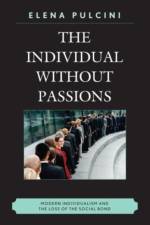
The innovative characteristic of the book lies in its tackling an extremely timely and important issuemainly individualismfrom the original point of view of a theory of passions. It underlines the importance of the problem of the passions both in forming individual identity and in building the social bond. Drawing inspiration from classic authors who represent fundamental milestones along the route of modern individualism (from Montaigne to Hobbes, from Locke to Smith, from Rousseau to Tocqueville etc.), it puts forward new hypotheses that contrast with the consolidated views of contemporary reflection, both modern and postmodern. The main argument is that passions are crucial not only when they are strong (homo oeconomicus), but also when absent or weak (homo democraticus), in both cases producing pathological effects on the Self and the social bond. Finally, the book underlines, in a normative perspective, that the image of the modern individual does not end with the egoistical passions and that it is possible to reactivate empathetic and solidaristic passions; furthermore, it proposes the hypothesis that the (solidaristic) passions go to fight the (egoistical) passions. This is most evident in the phenomenon of the gift (as interpreted by Marcel Mauss and his contemporary heirs), the ';hidden' testimony of a desire for belonging that enables one to think of a new figure of the individual: homo reciprocus.
Better Worlds: Education, Art, and Utopia provides a fresh examination of utopia and education. Adopting an interdisciplinary approach and drawing on literature and the visual arts as well as traditional non-fiction sources, the authors explore utopia not as a model of social perfection but as the active, imaginative building of better worlds. Utopian questions, they argue, lie at the heart of education, and addressing such questions demands attention not just to matters of theoretical principle but to the particulars of everyday life and experience. Taking utopia seriously in educational thought also involves a consideration of that which is dystopian. Utopia, this book suggests, is not something that is fixed, final, or ever fully realized; instead, it must be constantly recreated, and education, as an ongoing process of reflection, action, and transformation, has a central role to play in this process.
Shaheed Nick Mohammeds Communication and the Globalization of Culture: Beyond Tradition and Borders provides a unique perspective on the concept of culture and its fate in the globalized, mediated environment. Acknowledging widespread fears of cultural erosion at the hands of dominant global forces, Mohammed argues that what we understand as culture has always been the product of global forces, including those of trade and exchange. Our very conceptions of culture are questioned. The sanctity of tradition, religion, and heritage, the book suggests, should give way to an appreciation of the quite mundane origins of cultural artifacts, invented often as matters of political or social expedience, adopted sometimes in accidents of history and canonized by time into the catechisms of cultural belief. Communication and the Globalization of Culture also suggests several mechanisms by which pragmatic social practices and fictional discourses make their way into the cultural beliefs and traditions of societies. Shaheed Nick Mohammed examines how the modern globalized environment gives rise to cultural practices that demonstrate cultural inventions, imagined communities, and manufactured cultural products, suggesting that such inventions and imaginations are not uniquely modern but rather a continuation of cultural inventions that long pre-date our media-globalized environment.
In the writings of Jean-Jacques Rousseau, Sally Howard Campbell finds the bridge between the now-dominant psycho-social conception of alienation and the legal-political conception that prevailed prior to Rousseau. She discusses Rousseau's transformation of the concept of alienation and how it laid much of the groundwork for Marx's later, more explicit discussions of man's alienation. Using Discourse on the Origin and Foundations of Inequality, Campbell shows how Rousseau depicts the development of man's awareness of himself as a conscious and moral being, illustrating man's journey from a natural state of self-sufficiency to one of dependence and alienation. Paradoxically, she describes Rousseau's belief that a state of wholeness can only be achieved through a man's total alienation of himself to the community, free from the alienating effects of civil society. She concludes that, like Marx, Rousseau believed that alienation can only be transcended through the merging of the individual and the community.
Mark Moss's The Media and the Models of Masculinity details the impact that the mass media has upon men's sense of identity, style, and deportment. From advertising to television shows, mass consumer culture defines and identifies how men select and sort what is fashionable and acceptable. Utilizing a large mine of mediated imagery, men and boys construct and define how to dress, act, and comport themselves. By engaging critical discussions on everything from fashion, to domestic space, to sports and beyond, readers are privy to a modern and fascinating account of the diverse and dominant perceptions of and on Western masculine culture. Historical tropes and models are especially important in this construction and influence and impact contemporary variations.
Mary Manjikian's Apocalypse and Post-Politics: The Romance of the End advances the thesis that only those who feel the most safe and whose lives are least precarious can engage in the sort of storytelling which envisions erasing civilization. Apocalypse-themed novels of contemporary America and historic Britain, then, are affirmed as a creative luxury of development. Manjikian examines a number of such novels using the lens of an international relations theorist, identifying faults in the logic of the American exceptionalists who would argue that America is uniquely endowed with resources and a place in the world, both of which make continued growth and expansion simultaneously desirable and inevitable. In contrast, Manjikian shows, apocalyptic narratives explore America as merely one nation among many, whose trajectory is neither unique nor destined for success. Apocalypse and Post-Politics ultimately argues that the apocalyptic narrative provides both a counterpoint and a corrective to the narrative of exceptionalism. Apocalyptic concepts provide a way for contemporary Americans to view the international system from below: from the perspective of those who are powerless rather than those who are powerful. This sort of theorizing is also useful for intelligence analysts who question how it all will end, and whether America's decline can be predicted or prevented.
Prefiguring Peace: Israeli-Palestinian Peacebuilding Partnerships, a longitudinal study of more than ten years (19932008), focuses on the major peacebuilding initiatives with an educational encounter-based approach in Israel and Palestine. It examines how non-governmental peacebuilding initiatives adapt to radically changing environments, the challenges they face, and why some are able to adapt and survive while others do not. Michelle I. Gawerc explores two aspects of adaptationthe ability to maintain resources and legitimacy with critical constituencies outside the organization, and the ability to continue to function effectively as an organization.Her study shows that when the environment became more tumultuous and hostile, the effectiveness and even survival of these organizations depended to a significant degree on their ability to manage the power asymmetry between the two sides and work as equally as possible. Indeed, it became critical for building and maintaining trust and respect in the partnership; for preserving legitimacy with one's partner; for maintaining staff and active participant commitment; for managing internal conflict; and even for managing resources. Organizations that failed to deal effectively with matters of equality, and the needs and desires of both sides, ended up struggling to maintain commitment or were doused in conflict that could have been tempered if they strived for more equality.Encompassing various fields, this research contributes to the broad fields of peace and conflict resolution, social movements, and organizational studies. It offers critical insight into how organizations adapt to sudden and drastic changes: what is problematic, what is possible, and what allows some groups to survive while others do not. In addition, it has great import for building sustainable coalitions across inequality, asymmetry, and difference.
Family genealogy research has grown exponentially over the past decade, making it an area worthy of scholarly inquest. Tracing Family Lines: The Impact of Genealogy Research on Family Communication, by Amy M. Smith, explores the connection between women and genealogy by examining the ways inherited familial narratives and data work to position women within American culture. Although studies of women's lives are on the rise, the standpoint(s) of women has historically been marginalized, particularly as women continue to be relegated to domestic and family care. Through researching these standpoints, we are better able to see the political constructions of sexist oppression, as well as the ways genealogy offers a possible site for resistance. Interviewing women who are engaged in the act of researching their own family genealogy provides insight into their motivation for doing so. In documenting the family communication that surrounds the genealogical data, as well as studying the family organizational structure, this study contributes to the existing research regarding family history and family narrative. As many of these women are members of local genealogical societies, they are also able to address aspects of community membership, and the positioning of women within these organizations. As women and genealogy are both under-researched, Tracing Family Lines illuminates the experiences of women genealogists, to understand the impact of genealogical data upon family communication, and to explore family genealogy as a site of feminist resistance to the socio-political marginalization of women.
Abonner på vårt nyhetsbrev og få rabatter og inspirasjon til din neste leseopplevelse.
Ved å abonnere godtar du vår personvernerklæring.