























Gjør som tusenvis av andre bokelskere
Abonner på vårt nyhetsbrev og få rabatter og inspirasjon til din neste leseopplevelse.
Ved å abonnere godtar du vår personvernerklæring.Du kan når som helst melde deg av våre nyhetsbrev.

Bioethics tells a heroic story about its origins and purpose. The impetus for its contemporary development can be traced to concern about widespread paternalism in medicine, mistreatment of research subjects used in medical experimentation, and questions about the implication of technological developments in medical practice. Bioethics, then, began as a defender of the interests of patients and the rights of research participants, and understood itself to play an important role as a critic of powerful interests in medicine and medical practice. Autonomy and the Situated Self argues that, as bioethics has become successful, it no longer clearly lives up to these founding ideals, and it offers a critique of the way in which contemporary bioethics has been co-opted by the very institutions it once sought (with good reason) to criticize and transform. In the process, it has become mainstream, moved from occupying the perspective of a critical outsider to enjoying the status of a respected insider, whose primary role is to defend existing institutional arrangements and its own privileged position. The mainstreaming of bioethics has resulted in its domestication: it is at home in the institutions it would once have viewed with skepticism, and a central part of practices it would once have challenged. Contemporary bioethics is increasingly dominated by a conception of autonomy that detaches the value of choice from the value of the things chosen, and the central role occupied by this conception makes it difficult for the bioethicist to make ethical judgments. Consequently, despite its very public successes, contemporary bioethics is largely failing to offer the ethical guidance it purports to be able to provide. In addition to providing a critique, this book offers an alternative framework that is designed to allow bioethicists to address the concerns that led to the creation of bioethics in the first place. This alternative framework is oriented around a conception of autonomy that works within the ethical guidelines provided by a contemporary form of virtue ethics, and which connects the value of autonomous choice to a conception of human flourishing.
The explosion of the Evangelical movement in Latin America beginning in the last half of the 20th century has changed the face of a continent. Many men have redefined themselves through a religious conversion to Evangelicalism, which challenges notions of machismo. This book explores why they would choose to do so. While they abandon drinking, promiscuity, domestic violence, and aggression, Evangelical converts maintain a strict set of gender roles, which they perceived as a divine mandate. This dramatic change is made possible through the device of an Evangelical Worldview, experienced and lived as cosmic narrative that obligates a Christian masculinity.
Notwithstanding denials by climate-skeptics, the global scientific community considers the world environment is rapidly worsening. They argue that failure to adopt measures to reduce CO2 gas emission in the atmosphere could lead to disastrous social-economic, politico-security and environmental consequences. Skeptics argue that climate changes are due to nature's own cyclical phenomenon. They fail to understand that climatology as a scientific discipline is in its infancy, but overwhelming evidence suggests that human activities are responsible for this. Smart campaigning and some mistakes by the IPCC in its 2007 report enabled skeptics to derail the efforts to adopt a legally binding CO2 emission target in Copenhagen in 2009.
The Performativity of Value: On the Citability of Cultural Commodities addresses the increased commodification of language in the U.S. cultural economy. The marketing of cultural commodities in formats such as websites, videos, movies, books, online games, or television episodesas distributed across a wide range of technological devicesmeans that language is moving across situational contexts to an unprecedented degree. Just as authors quote or paraphrase sources in the construction of a text, subjects ';cite' the commodified words, images, and works of others as they construct their social identities. Steve Sherlock discusses how consumer citational practices generate demand for those cultural commodities which align the self with particular subcultural groups. By ';re-citing' the exchange value frame within which language itself has acquired an economic worth, consumer citational practices have become performative of the U.S. cultural economy. In order to describe this process, the book extends the work of Judith Butler on the performativity of gender to the performativity of exchange value, as well as to the performativity of subcultural values. The book also develops a critique of the increasing commodification of language in the contemporary economy. Sherlock follows Butler in developing a model of performativity based on Jacques Derrida's work, particularly regarding the citability of language into new situational contexts. Derrida's critique of the metaphysics of presence in Western philosophy and culture is extended toward a critique of the assumed presence of exchange value in the cultural marketplace. The book also incorporates the work of the Bakhtin Circle into this frameworkespecially their insight into how everyday utterances, which ';report on' the words of others, become a site for the re-negotiation of values between self and others. The re-citational process used in contemporary identity construction can thus either re-cite the current cultural economy, or resist it. The Performativity of Value contributes to themes examined in social theory, social psychology, literary theory, continental philosophy, and cultural studies, and thus will be of interest to students and scholars working in those areas.
Through an empirical, multi-archival study of a transnational foundationthe Harvard-Yenching Institute (HYI) from the 1920s to the early 1950sthis book presents the story of transplanting Western/American humanities scholarship into Asia/China and addresses central questions in U.S.-China relations. This book focuses on the HYI's programs in teaching, research, and publication of Chinese humanities within China to the early 1950s and, to a lesser extent, its activities at Harvard that had close ties with its China side. Through the HYI story, the author examines in depth the cooperation, tensions, adaptation, and integration in the operation, management, and governance of the HYI's programs on both sides of the Pacific, and the complex multi-layered interactions between American educators and their Chinese partners, treating each side sympathetically but without losing sight of the big picture. As the first comprehensive study on the subject, the book adopts a concept of ';cultural engineering,' which is defined as a conscious design to use cultural heritage to recreate culture in order to promote a societys development, to look at key issues in a way which accounts for interactions and initiatives on both sides and shows the difficult path toward developing common interests without neglecting tensions and conflicts, thus going beyond the various one-sided historiographies which pit Chinese against Americans or nativist rejection of modernity against cultural imperialism. The HYI experience in China from the 1920s to the early 1950s resonates down to the present day in American relations with the world. The United States faces many similar challenges in the Middle East, Asia, Africa, and Latin America today as in revolutionary China of the 1920s to 1950s. Therefore, this study offers a window onto many issues relating to cross-cultural interactions today, especially between the United States and non-Western nations.
Promotion of the low risk ';ABC' behaviorsAbstinence, Being faithful, and Condom usehas had only limited success in Africa. This book draws on a large qualitative study affiliated with an adolescent intervention trial to examine how ABC promotion can be improved. It evaluates the MEMA kwa Vijana sexual health program, which was implemented in 62 primary schools and 18 health facilities in rural Tanzania, scrutinizing its teacher-led curriculum, peer education, youth-friendly health services, youth condom distribution, and community mobilization components. The book examines how implementing such a low-cost, large-scale program involved many compromises, including those between national policies and international ';best practice' recommendations, between the most desirable intervention design and one that was affordable and sustainable at a large scale, between optimal teaching methods and real-world teaching capacity, between ideal curriculum content and what was acceptable to the local community, and between adults' values and youths' realities. The program's impact is evaluated by triangulating findings from three person-years of participant observation, in-depth interviews, survey interviews, and biomedical tests.The book also provides in-depth case studies to examine the motivations and strategies of extraordinary young people who practiced ABC behaviors. It outlines broad principles for ABC promotion, including: acknowledging existing youth sexual relationships; promoting each low risk behavior in complexity and depth; working with preexisting, culturally compelling motivations; and intervening at individual, interpersonal, community, and structural levels. Many recommendations for the promotion of specific ABC behaviors are discussed, such as reducing pressures and incentives for girls to have sex; targeting male risk-perception and self-preservation; promoting alternative forms of masculinity than sexual conquest; strengthening premarital and marital relationships; tailoring fidelity programs for hidden couples, couples planning to marry, and monogamous and polygynous married partners; and addressing pleasure, trust, pregnancy prevention, and fertility protection in condom promotion. The book concludes with additional recommendations specific to school programs, and a review of promising complementary interventions for out-of-school youth, women, men, couples, and parents.
The book probes and examines traditional sources of royal power and control, as well as indigenous socio-political systems in the Malay world. It is focused on the north-western Malaysian Sultanate of Kedah which is acknowledged as the oldest unbroken independent kingship line in the ';Malay and Islamic world' with 1,000 years of history. Little scholarly attention has been paid to its pre-modern history, society, religion, system of government and unique geographic situation, potentially controlling both land and sea lines of communication into the remainder of Southeast Asia. It will thus provide the first comprehensive treatment in English, or other languages, on Kedah's pre-modern and nineteenth century historiography and can provide a foundation for comparative studies of the various Malay states which is presently lacking. The proposed book also sheds much needed light on a range of important topics in Malay history including: Kedah and the northern Melaka Straits history, colonial expansion and rivalry, Southeast Asian history and politics, interregional migration and the influence of the sea peoples or orang laut, traditional Malay socio-political and economic life, Islamic influences and the course of Thai-Malay relations. The book attempts to offer a new understanding, not only of Kedah, but of the political and cultural development of the entire Malay world and of its relationships with the broader forces in both its continental and maritime settings. It argues that Kedah does not seem to follow, and in fact, often seems to contradict what has been commonly been accepted as the ';typical model' of the traditional Malay state. Thus it concludes that the ruling dynasty has historically exploited a wide range of unique environmental conditions, local traditions, global spiritual trends and economic forces to preserve and strengthen its political position.
This book, by Michael J. Brogan, examines government budgeting through the lens of public budget forecast errors. In examining this aspect of the budgetary process, Brogan helps readers understand levels of political and financial risk that policymakers are willing to accept in estimating the likelihood of accurate budget projections. This title is noteworthy in its innovative, accessible approach to examining the budget process through an analysis of forecast errors. Unlike most public budgeting books, which focus primarily on the technical aspects of budgeting or on the politics of the budget process, this book bridges the technical and political aspects of budgeting, thereby providing a more comprehensive analysis of contemporary issues and research in public budgetary matters.In light of the current financial crisis in the United States, this book is crucial for providing readers with a comprehensive review of the limits of budget projections and how political forces shape the forecasting process. Throughout the text, readers are presented with relevant state-specific mini cases. The mini cases highlight some of the difficulties in projecting future revenue and spending patterns, as well as the political conflict that can ensue. The empirical findings, mini cases, and arguments presented throughout this book are intended to empower readers, giving them the expertise needed to better understand how uncertainty in public budget forecasts affects the budget process. Ultimately, this knowledge can help citizens connect the financial management of a state with its governing patterns.
Social Functions of Synagogue Song: A Durkheimian Approach by Jonathan L. Friedmann paints a detailed picture of the important role sacred music plays in Jewish religious communities. This study explores one possible way to approach the subject of music's intimate connection with public worship: applying sociologist mile Durkeim's understanding of ceremonial ritual to synagogue music. Durkheim observed that religious ceremonies serve disciplinary, cohesive, revitalizing, and euphoric functions within religious communities. Drawing upon musical examples from different composers, regions, periods, rites, and services, Friedmann demonstrates how Jewish sacred music performs these functions.
The ';rise of China' has become a ubiquitous and often menacing term in global politics. China's Quest for Global Order: From Peaceful Rise to Harmonious World, by Rosita Dellios, PhD, and R. James Ferguson, PhD, examines how China's leadership has responded to this depiction and the strategic approaches that have been developed to ameliorate threat perceptions. Rather than simply reassuring others that its ';rise' is peaceful, China has taken proactive steps to reduce possible conflicts. Beijing seeks to shape the emerging global governance order as both non-threatening to itself and productive in transnational problem-solving. Borrowing from its own Confucian heritage to promote a harmonious world policy, China's contribution to world order is likely to be more robust than the ';responsible stakeholder' epithet upon which the West has pinned its collective hopes. The book interprets China's quest for global order from Chinese perspectives, old and new, and provides the relevant philosophical and historical background to engage the reader in the ensuing debates. The authors also contextualize Chinese concepts with those from contemporary international relations, strategic studies and systems thinking. Their resultant contributions to existing analyses include the notion of ';Confucian geopolitics' and the interplay between strategic theatres of cooperation and protection.
This timely and important scholarship advances an empirical understanding of Canada's contemporary ';Indian' problem. Where the Waters Divide is one of the few book monographs that analyze how contemporary neoliberal reforms (in the manner of de-regulation, austerity measures, common sense policies, privatization, etc.) are woven through and shape contemporary racial inequality in Canadian society. Using recent controversies in drinking water contamination and solid waste and sewage pollution, Where the Waters Divide illustrates in concrete ways how cherished notions of liberalism and common sense reform neoliberalism also constitute a particular form of racial oppression and white privilege.Where the Waters Divide brings together theories and concepts from four disciplines sociology, geography, Aboriginal studies, and environmental studies to build critical insights into the race relational aspects of neoliberal reform. In particular, the book argues that neoliberalism represents a key moment in time for the racial formation in Canada, one that functions not through overt forms of state sanctioned racism, as in the past, but via the morality of the marketplace and the primacy of individual solutions to modern environmental and social problems. Furthermore, Mascarenhas argues, because most Canadians are not aware of this pattern of laissez faire racism, and because racism continues to be associated with intentional and hostile acts, Canadians can dissociate themselves from this form of economic racism, all the while ignoring their investment in white privilege.Where the Waters Divide stands at a provocative crossroads. Disciplinarily, it is where the social construction of water, an emerging theme within Cultural Studies and Environmental Sociology, meets the social construction of expertise one of the most contentious areas within the social sciences. It is also where the political economy of natural resources, an emerging theme in Development and Globalization Studies, meets the Politics of Race Relations an often-understudied area within Environmental Studies. Conceptually, the book stands where the racial formation associated with natural resources reform is made and re-made, and where the dominant form of white privilege is contrasted with anti-neoliberal social movements in Canada and across the globe.
Windows into Men's Souls uses the works of John Robinson, Thomas Helwys, and John Smyth to examine the concept of religious nonconformity that was inherent in the English Reformation. Kenneth Campbell frames the primary works and historical development of various groups and individuals as examples of a general impulse toward religious nonconformity during the sixteenth and early seventeenth centuries. During this time, religious nonconformity became an integral part of English culture and society, shaped by a historical experience that led to rebellion and civil war. The issues that English thinkers wrestled with during this period led to profound insights on both Christianity and on religious toleration that continue to shape Anglo-American and Western religious culture to the present day. This is the story of courageous peopleCatholics and Protestants, Separatists and non-Separatistswho ignored, defied, or challenged their government to pursue their own version of religious truth in an age of religious intolerance that valued conformity at all costs.
The Narrative Mediterranean: Beyond France and the Maghreb examines literary texts by writers from the Maghreb and positions them in direct relation to increasingly querulous debates on the shifting identity of the modern Mediterranean. This book argues that reading works by writers such as Albert Camus and Tahar Ben Jelloun alongside authors such as Fawzi Mellah and Mahi Binebine in a transnational rather than binary interpretive framework transcends a colonial and postcolonial bind in which France is the dominant point of reference. While focusing on works in French, this book also examines Maghrebi authors who write in Italian. The texts examined in The Narrative Mediterranean critique narrow identitarian labeling, warn against sectarianism, and announce the necessity of multiple forms of translation and historical rewritings. Their modes of expression differ as they range from poetic to baroque to realist, as do their concerns, which include but are not limited tothe human condition, gender identity, and emigration. Claudia Esposito explains how these writers operate between and outside the confines of several nations, tracing imagined affiliative horizons, and consequently address questions of multiple forms of cultural, political, sexual and existential belonging. Esposito convincingly demonstrates that in a Mediterranean context, moving between nations means to be in both foreign and familiar physical, affective and intellectual spaces.
A Defense of Ignorance develops new ideas in feminist epistemology by exploring diverse and sometimes positive roles for ignorance. Cynthia Townley argues that epistemic values cannot simply be reduced to the value of increasing knowledge and that ignorance is not merely inescapable for epistemic agents, but, rather, is valuable. Townley shows that ignorance-friendly epistemology offers a better descriptive and normative account of human epistemic practices. This interpretation challenges the traditional assumption that increasing knowledge is the definitive epistemic goal. The book makes a major contribution to revisionary epistemology and to the expanding fields of social epistemology and feminist epistemology. All social scientists stand to benefit from Townley's analysis, most of all those interested in knowledge and in feminist scholarship.
Based on exploration of boundaries between spirituality and religion, this book argues that theological study of spirituality is important for interpretation of the Christian path in a pluralistic world. As a text for graduate study in spirituality and ministry, it explores relevant sociological studies, post modern culture, contemporary study of Christian spirituality, and a brief history of the relationship between theology and spirituality. The book argues that the revelation and tradition of Christianity understood and interpreted in the light of contemporary culture make a difference to postmodern persons' quests for spirituality. What one believes and how one understands that belief influences the manner in which the Christian path is lived in a pluralistic, global world. The book discusses the role of religion in culture and the relevance of this for the identity of religious spirituality and the study of Christian spirituality.
Chinas Last Imperial Frontier explores imperial Chinas frontier expansion in the Tibetan borderlands during the last decades of the Qing. The empire mounted a series of military attacks against indigenous chieftaincies and Buddhist monasteries in the east Tibetan region seeking to replace native authorities with state bureaucrats by redrawing the politically diverse frontier into a system of Chinese-style counties. Historically, at all the strategic frontier locations, the state had been for the most part outstripped by local institutions in political, military, and ideological strengths. With perceived threats from the Anglo-Russian ';Great Game' accentuating Qing vulnerability in Tibet, the Sichuan government took advantage of the frontier crisis by encroaching upon local and Lhasa domains in Kham. Even though the Kham campaign was portrayed in Qing official discourse as a part of the nationwide reforms of ';New Policies' (xinzheng) and administrative regularization (gaitu guiliu), its progress on the ground was influenced by the dynamics of interregional relations, including Sichuan's competition with central Tibet, power struggles among Qing frontier officials, and varied Khampa responses to the new regime. The growing regionalism intensified the resistance of local forces to imperial authority. Despite the uneven results of the late Qing campaign, it had come to serve as an important source of sovereignty claims and policy inspirations for the subsequent governments.
In Agency of the Enslaved: Jamaica and the Culture of Freedom in the Atlantic World, D.A. Dunkley challenges the notion that enslavement fostered the culture of freedom in the former colonies of Western Europe in the Americas. Dunkley argues the point that the preconception that out of slavery came freedom has discouraged scholars from fully exploring the importance of the agency displayed by enslaved people. This study examines those struggles and argues that these formed the real basis of the culture of freedom in the Atlantic societies. These struggles were not for freedom, but for the acknowledgment of the freedom that enslaved people knew was already theirs. Agency of the Enslaved reveals several major incidents in which the enslaved in Jamaicaa country Dunkley uses as a case study with wider applicability to the Atlantic worlddemonstrated that they viewed slavery as an immoral, illegal, unnecessary, temporary, and socially deprecating imposition. These views inspired their attempts to undermine the slave system that the British had established in Jamaica shortly after they captured the island in 1655. Acts of resistance took place throughout the island-colony and were recorded on the sugar plantations and in the courts, schools, and Christian churches. The slaveholders envisaged all of these sites as participants in their attempts to dominate the enslaved people. Regardless, the enslaved had re-envisioned and had used these places as sites of empowerment, and to show that they would never accept the designation of ';slave.
This book presents the ups and downs of the Soviet-Turkish relations during World War II and immediately after it. Hasanli draws on declassified archive documents from the United States, Russia, Armenia, Georgia, Turkey, and Azerbaijan to recreate a true picture of the time when the 'Turkish crisis' of the Cold War broke out. It explains why and how the friendly relations between the USSR and Turkey escalated into enmity, led to the increased confrontation between these two countries, and ended up with Turkey's entry into NATO. Hasanli uses recently-released Soviet archive documents to shed light on some dark points of the Cold War era and the relations between the Soviets and the West. Apart from bringing in an original point of view regarding starting of the Cold War, the book reveals some secret sides of the Soviet domestic and foreign policies. The book convincingly demonstrates how Soviet political technologists led by Josef Stalin distorted the picture of a friendly and peaceful country_Turkey_into the image of an enemy in the minds of millions of Soviet citizens.
Why Democracy Needs Public Goods provides arguments for a new theoretical perspective in favor of public goods. Kallhoff details the benefits of public goods for any democratic state: they contribute to social inclusion, help generate the public forum, and foster national identity. These arguments are supplemented by reconsidering major counter-arguments against this approach, both from political theory and from theories on public finance. Political philosophers, political theorists, and political economists will benefit most from this perspective.
Modernity, Complex Societies, and the Alphorn provides a fascinating examination of the musical instrument the alphorn, alphorn music and its performance. Indeed, it is the first book about this extraordinary instrument to appear in English. It analyses the alphorn phenomenon as a symbol of the Swiss nation, going back to the Swiss nation building process in the nineteenth century and the ';invention of tradition' which began in the second half of the nineteenth century, before arriving at important issues of contemporary alphorn practice such as: what is tradition? How is it being negotiated? The insightful and valuable comments from key Swiss alphorn players add to the extensive ethnographic and archival material. Departing from this analysis, the case studies of Bavaria, the Netherlands, and Japan shed a light on the issues of worldwide migration of alphorn practice in the modern world, as well as on the diverse concepts of a Swiss imagery. Intellectually sophisticated yet easily accessible, the book ends with an exploration of how to use video and film for musical ethnography, considering the practical issues of filmmaking as well as the theoretical implications of shooting and editing for an ethnomusicological film. Drawing from the alphorn film as a sample, this book covers the entire filmmaking process, from the conception of the film to the feedback-sessions with the protagonists, providing fundamental insights into this technique for ethnomusicologists. Based on solid, careful, and complete research, this work will especially appeal to scholars of musicology, Swiss history, and filmography.
New Media, Old Regimes: Case Studies in Comparative Communication Law and Policy, by Lyombe S. Eko, is a collection of novel theoretical perspectives and case studies which illustrate how different communication law regimes conceptualize and apply universal ideals of human rights and freedom of expression to media controversies in real space and cyberspace. Eko's investigation includes such controversial communication policy topics as North African regimes' failed use of telecommunications to suppress the social change of the Arab Spring, the Mohammad cartoon controversy in Denmark and France, French and American policy of development and diffusion of the Minitel and the Internet, American and Russian regulation of internet surveillance, the problem of managing pedopornography in cyberspace and real space, and other current communication policy cases. This study will aid readers not only to understand different national and cultural perspectives of thorny communication issues, but also show that though freedom of expression is a pluralistic concept, the actions of all political regimes at the national, transnational, and international levels must be held up to the universal standards of freedom of expression set forth in the Universal Declaration of Human Rights. New Media, Old Regimes provides essential scholarship on comparative communication law and policy in a world of new media.
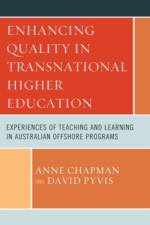
Enhancing Quality in Transnational Higher Education explores issues and questions concerning the provision of quality teaching and learning in university programs delivered ';offshore'. The focus of the book is on what makes for a good and successful education in the context of transnational programs of Australian universities. The book traces research by the authors into the ';lived experiences' of teachers and learners engaged in Australian transnational education across a broad range of universities, locations, programs and models of delivery. The enormous trend towards the delivery of university programs across national borders is compelling evidence of the internationalization of higher education in the 21st century. Universities worldwide are challenged to provide quality assurance for this new kind of education. For universities, this book offers principles to enhance existing frameworks for assuring the quality of learning and teaching in university offshore education programs. The book will also be of particular interest to academics of higher education institutions who are involved in the policy and practice of transnational education.
This engaging feminist approach to Judaism blends the interpretation of primary Jewish sources with contemporary social change. Bonna Devora Haberman shares her first-hand account of the ';Women of the Wall' and a feminist approach to traditional Judaism, while interacting with ancient Jewish texts. In a rich network of sources, seaming together scholarship with activism, Haberman analyzes the sacred, with attention to power and gender. While much religious and national culture focuses on death and sacrifice, Haberman proposes an alternative model for a Jewish theology of liberation: birthno less universal than death. Life-giving rather than life-taking is the nucleus of this work, reformulating performances of gender in a realm of exaggerated sexual difference. Using her experiences with the ';Women of the Wall' movement interwoven in scripture, Haberman contributes toward liberating religious culture from its gender oppressions, and rendering religion a liberating force in society.
Idealism, Pragmatism, and Feminism provides an account of the life and writings of Ella Lyman Cabot (1866-1934), a woman who received formal training, but not formal recognition, in the field of classical American philosophy. It highlights the themes of idealism, pragmatism and feminism as they emerged in the course of career as an educational reformer and ethicist that spanned nearly four decades. Cabots writings, developed in graduate seminars at Harvard and Radcliffe at the turn of the century complement, and in many cases anticipate, the thinking of the fathers of the American philosophical cannon: Charles Sanders Peirce, Josiah Royce, William James, and John Dewey. Her formal philosophical writing focuses on the concepts of growth, creativity, and the moral imaginationa fact that is especially interesting given that these concepts are developed by a woman who faced serious obstacles in her personal and intellectual development. Indeed, these concepts are not merely philosophical ideals, but practical tools that Ella Lyman Cabot used to negotiate the gender roles and intellectual marginalization that she faces at the turn of the century. The discipline of philosophy was very slow to incorporate the insights of women into its self-definition. An analysis of the writings of Ella Lyman Cabot reveals this point, but also the pointed ways in which she sought to express her genuinely creative insights.
Books on abortion (other than collections of readings) typically express and defend a particular position. This book gives both sides, as evenly and objectively as possible; it gets to the heart of each position, the core idea which animates it. It then leaves the reader to make up his or her own mind. It is an introduction to the issue, not only to the basic positions on the issue. Despite being brief, it contains careful analyses and discussions of many topics often not found at all in other works. The treatment is thorough and detailed, but succinct. Understanding Abortion: From Mixed Feelings to Rational Thought is aimed at all people who want a better understanding of what the two sides on this issue are really saying, and what reasons they give for their position. Many people assume that this issue is an interminable one, with ';no clear answers'; a purely emotional debate that cannot be addressed by the use of reasoned arguments. The book shows that this is not the case.
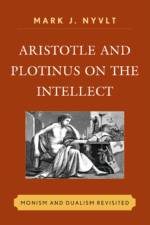
This book emphasizes that Aristotle was aware of the philosophical attempt to subordinate divine Intellect (nou:V) to a prior and absolute principle. Nyvlt argues that Aristotle transforms the Platonic doctrine of Ideal Numbers into an astronomical account of the unmoved movers, which function as the multiple intelligible content of divine Intellect. Thus, within Aristotle we have in germ the Plotinian doctrine that the intelligibles are within the Intellect. While the content of divine Intellect is multiple, it does not imply that divine Intellect possesses a degree of potentiality, given that potentiality entails otherness and contraries. Rather, the very content of divine Intellect is itself; it is Thought Thinking Itself (? ? ?). The pure activity of divine Intellect, moreover, allows for divine Intellect to know the world, and the acquisition of this knowledge does not infect divine Intellect with potentiality. The status of the intelligible object(s) within divine Intellect is pure activity that is identical with divine Intellect itself, as T. De Koninck and H. Seidl have argued. Therefore, the intelligible objects within divine Intellect are not separate entities that determine divine Intellect, as is the case in Plotinus.
This volume of essays explores the bases and significant aspects of the thought of contemporary French philosopher, historian of ideas, and novelist Chantal Delsol. A member of the French Academy of Moral and Political Sciences, she is well known in France as a political analyst and cultural diagnostician. This collection is the first book-length treatment of her thought available in English, bringing together studies that analyze her work. In between, essays present her remarkable portrait of human beings increasingly characteristic of Western societies, as well as her defense of the human person rightly understood. An exposition of the virtues of her conception of the family, as well as her analysis of contemporary ';matriarchy,' complements those treatments. The authors highlight her unique mode of cultural analysis, together with her stout defense of genuine political life. The volume also includes translations of two chapters of her fundamental work of philosophical anthropology, Qu'est-ce que l'homme?, appearing here for the first time in English. A thoughtful examination of Delsol's work, this book provides new resources to those studying this French philosopher and author.
The first biography of Anne Damer since 1908, The Life of Anne Damer: Portrait of a Regency Artist, by Jonathan Gross, draws on Damer's notebooks and previously unpublished letters to explore the life and legacy of England's first significant female sculptor. Best known for her portraits of dogs and other animals, Damer also created busts of England's most important political heroes, sometimes within days or hours of their historical accomplishments. This in-depth biography traces her life during the American Revolution, the French Revolution, the Peace of Amiens and the Hundred Days. Damer was convinced that art could have significant political influence, sending her bust of Nelson to the King of Tanjore to encourage trade with India. Her art stands at the transition between neoclassicism and romanticism and provides a wealth of insight into 19th century British sculpture. In the last twenty years, there has been a strong revival of interest in Damer's life, particularly in gay and lesbian studies due to her famous relationship with author Mary Berry. This text serves as a deeper investigation of this fascinating and important figure of British art history.The emotional menage a trois of Anne Damer, Mary Berry, and Horace Walpole forms the heart of this new biography. Gross contends that all three individuals, had they led more conventional lives, would never have given the world the literary and artistic gifts they bestowed in the form of Strawberry Hill, Belmour, and Fashionable Friends. The struggles they faced will encourage modern readers to appreciate anew the fluidity of sexual identity and passionate friendship, as well as the restraints put in place by society to control them. Anne Damer's life has much to teach a new generation concerned with the complex relationship between love, art, and politics. The Life of Anne Damer will interest historians of Georgian England, and readers in the fine arts, literature, and history.
Neoconservatism is more of a disposition than a single political theory, but it is an attitude that has had a profound impact on the broader conservative effort in the United States since the Fifties. It is a unique blend of skepticism and fortitude about a host of wide-ranging issues, spanning culture, economics, and national defense. This book looks at six ';neoconservative' intellectualsIrving Kristol, Gertrude Himmelfarb, Norman Podhoretz, Midge Decter, Daniel Bell, and Nathan Glazerand the intellectual influences on their thinking about the defects of communism, fascism, progressivism, the dominant American culture, and even capitalism itself. This book looks at the gestation of political criticism within the pages of the neoconservatives' own writings, as well as the books they read and the thinkers they either learned from or came to fear. The book looks at the ways in which the neoconservatives adapted Lenin's formula for success to conservative efforts in the United States, arguing that neoconservatism is an ';anti-ideology ideology,' in that it considers a ';New Class' of professional, ideologically motivated reformers to be the greatest problem facing the United States because of their increased efforts to technocratize ordinary life, their moral relativism, their efforts to usurp human nature and supplant it with their own utopian visions, their anti-Americanism, and their unwillingness to face imminent dangers threatening the American way of life. The book argues that the neoconservative political strategy is to ';take the fight to the enemy.'
Abonner på vårt nyhetsbrev og få rabatter og inspirasjon til din neste leseopplevelse.
Ved å abonnere godtar du vår personvernerklæring.