























Gjør som tusenvis av andre bokelskere
Abonner på vårt nyhetsbrev og få rabatter og inspirasjon til din neste leseopplevelse.
Ved å abonnere godtar du vår personvernerklæring.Du kan når som helst melde deg av våre nyhetsbrev.

Menstruation seldom gets a starring role on screen despite being experienced regularly by nearly all women for a good many decades of their lives. Periods in Pop Culture: Menstruation in Film and Television, by Lauren Rosewarne, turns the spotlight on period portrayals in media, examining the presence of menstruation in a broad range of contemporary pop culture. Drawing on a vast collection of menstruation scenes from film and television, this study examines and categorizes representations to unearth what they reveal about society and about our culture's continuingly fraught relationship with female biology. Written from a feminist perspective, menstrual representations are analyzed for what they reveal about sexual politics and society. Rosewarne's thorough investigation covers a range of topics including menstrual taboos, stigmas and fears, as well as the inextricable link between periods and femininity, sexuality, ageing, and identity. Periods in Pop Culture highlights that the treatment of menstruation in the media remains an area of persistent gender inequality.
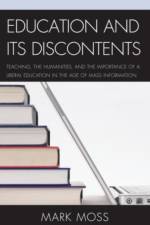
Education and Its Discontents: Teaching, the Humanities, and the Importance of a Liberal Education in the Age of Mass Information, by Mark Moss, is an exploration of how the traditional educational environment, particularly in the post-secondary world, is changing as a consequence of the influx of new technology. Students come to the classroom or lecture hall expecting to have their habits and tastes, gleaned from the online world, replicated in an Educational environment. Faculty who do not adapt face enormous obstacles, and faculty that do adapt run the risk of eroding the integrity of what they have been trained to teach. Students now have access to myriad of technologies that instead of supplementing the educational process, have actually taken it over. Issues that run from plagiarism to the erosion of the humanities are now rampant concerns in the post secondary world. Behavior issues, YouTube videos, cell phones, and the incessant clicking of the computer keys are just a few of the technologies altering the educational landscape. Moss discusses that it is now not only how we learn, but what we continue to teach, and how that enormously important legacy is protected.Education and Its Discontents: Teaching, the Humanities, and the Importance of a Liberal Education in the Age of Mass Information, by Mark Moss, argues that education has changed and the supremacy of the book and the lecture is now open for debate. What has been gained over the last five hundred years is now susceptible to the vagaries of technology, which compel us to question their continuing relevance.
This is a history of Triumpha post-Vatican II, Roman Catholic lay magazinethat examines its origins and decline, paying special attention to the editors' often bellicose views on a range of issues, from Church affairs to the Vietnam War, and civil rights to abortion. Triumph's editors formed the magazine to defend the faith against what they perceived as the imprudent and secular excesses of Vatican II reformers, but especially against what they viewed as an increasing barbarous and anti-Christian American society. Yet Triumph was not a defensive magazine; rather, it was audaciously triumphalistproclaiming the Roman Catholic faith as the solution to America's ills. The magazine sought to convert Americans to Roman Catholicism and to construct a confessional state, which subjected its power to the moral authority of the Roman Catholic Church. If the liberalizing and secularizing trajectory in American society exalted man as sovereign of himself and his world, as Triumph's editors posited, then their mission was to reinstitute Christ's Kingship, to hallow the world in His name.
Ombra is the term which applies to an operatic scene involving the appearance of an oracle or demon, witches, or ghosts. Such scenes can be traced back to the early days of opera and were commonplace in the seventeenth century in Italy and France. Operas based on the legends of Orpheus, Iphigenia, and Alcestis provide numerous examples of ombra and extend well into the eighteenth century.Clive McClellands Ombra: Supernatural Music in the Eighteenth Century is an in-depth examination of ombra and is many influences on classical music performance. McClelland reveals that ombra scenes proved popular with audiences not only because of the special stage effects employed, but also due to increasing use of awe-inspiring musical effects. By the end of the eighteenth century the scenes had come to be associated with an elaborate set of musical features including slow, sustained writing, the use of flat keys, angular melodic lines, chromaticism and dissonance, dotted rhythms and syncopation, tremolando effects, unexpected harmonic progressions, and unusual instrumentation, especially involving trombones. It is clearly distinct from other styles that exhibit some of these characteristics, such as the so-called Sturm und Drang or Fantasia. Futhermore, parallels can be drawn between these features and Edmund Burkes sublime of terror, thus placing ombra music on an important position in the context of eighteenth-century aesthetic theory.
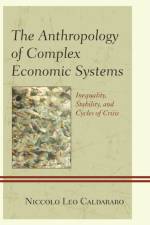
Today we live in what Ulrich Beck has aptly characterized as a ';risk society' shaped by intensifying crises outside of our control and seemingly outside of our comprehension. The master narrative that was supposed to lead us to secular salvationeconomicshas proved to be a large part of the problem rather than the much anticipated solution. In The Anthropology of Complex Economic Systems, Niccolo Caldararo offers a much more radical and challenging answer: that the fundamental assumptions on which the modern ';science' of economics has been erected are false, and that it is through the medium of anthropology, particularly the relatively neglected field of economic anthropology, that an alternative and sound basis for both the understanding of economic behavior and for the shaping of economic futures can be constructed. Caldararo not only challenges the foundational assumptions of conventional economic theory, but situates economic behavior (something quite different and universal amongst human beings) in both a historical and an ecological context. Contemporary discussions of ';sustainability,' especially in the field of development studies, have oddly neglected to look to anthropology. Economic anthropology, is the repository of a vast store of wisdom both about actual alternative and workable economic systems and about their evolution. By drawing on this source, Caldararo builds a model of the evolution of human economies which stir up substantial debate, shows how economic anthropology provides a tool for the interrogation of economic theory, and ties economics to ecology. It has been the rupture of this fundamental relationship that lies at the basis of much of our present crisis and the unsustainable economic patterns that humans have created. By bringing together in a new configuration economic anthropology, ecology, and culture history, Caldararo not only proposes a new model of human social evolution, but equally importantly creates a methodology for speaking to, and against, our present economic and environmental situation.
Brazilian Telenovelas and the Myth of Racial Democracy, by Samantha Nogueira Joyce, examines what happens when a telenovela directly addresses matters of race and racism in contemporary Brazil. This investigation provides a traditional textual analysis of Duas Caras (2007-2008), a watershed telenovela for two main reasons: It was the first of its kind to present audiences with an Afro-Brazilian as the main hero, openly addressing race matters through plot and dialogue. Additionally, for the first time in the history of Brazilian television, the author of Duas Caras kept a web blog where he discussed the publics reactions to the storylines, media discussions pertaining to the characters and plot, and directly engaged with fans and critics of the program.Joyce combines her investigation of Duas Caras with a study of related media in order to demonstrate how the program introduced novel ideas about race and also offered a forum where varying perspectives on race, class, and racial relations in Brazil could be discussed. Brazilian Telenovelas is not a reception study in the traditional sense, it is not a story of entertainment-education in the strict sense, and it is not solely a textual analysis. Instead, Joyces text is a study of the social milieu that the telenovela (and especially Duas Caras) navigates, one that is a component of a contemporary progressive social movement in Brazil, and one that views the text as being located in social interactions. As such, this book reveals how telenovelas contribute to social change in a way that has not been fully explored in previous scholarship.
James S. Baumlin's Theologies of Language in English Renaissance Literature offers a revisionist history of discourse, taking Shakespeare, Donne, and Milton as its touchstones. Their works mark stages in dieEntzauberung or ';disenchantment,' as Max Weber has termed it: that is, in the ';elimination of magic from the world.' Shakespeare's Hamlet questions the word-magic associated with medieval Catholicism; Donne's love lyrics ironize the sacramental gestures of their poetic-priestly speakers; more radical still, Milton's major poems and polemical prose empty language of sacral power, repudiating human persuasion entirely over matters of ';saving faith.' Baumlin describes four archetypes of historical rhetoric: sophism, skepticism, incarnationism, and transcendence. Undergirding the age's competing theologies, each makes unique assumptions regarding the powers of language (both communicative and performative); the nature of being (including transcendent being or deity); the structure of the psyche (whether sin-weakened or self-sufficient); and the capacities of human knowing (whether certain knowledge is communicableor even possible). Working within divergent theologies of language, the poets here studied take theological controversies as explicit themes. The crisis of Hamlet begins not in a king's murder simply, but in his dying without benefit of the sacraments. As if compensating for their loss, young Hamlet ';minister[s]' to Gertrude while acting as ';scourge' to Claudius. Alternating between soul-cursing and soul-curing, Hamlet plays sorcerer and priest indiscriminately.Appropriating the speech-acts of Catholic sacramentalism, Donne's lyrics describe a private ';religion of Love,' over which the poet-lover presides as officiant. Or rather, some lyrics present him as Love's Priest, there being as many personae as there are theologies of language. Beyond Love's Priest, Baumlin describes three such personae: Love's Apostate, Love's Atheist, and Love's Reformer. Focusing on ';Lycidas' and De Doctrina Christiana, Baumlin outlines Milton's plerophoristic ';rhetoric of certitude.' Such texts as these explore the problematic status of preaching. (Can human eloquence contribute to salvation?) They explore competing definitions (Aristotelian vs. Pauline) of pistismeaning alternatively (religious) ';faith' and (rhetorical) ';persuasion.' And they invoke conflicting typologies (classical vs. Hebraic) of authorial ethos. Baumlin's study ends with a glance at the Restoration and Royal Society's final ';disenchantment' or secularization of discourse.
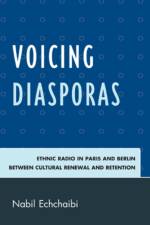
The events of 9/11 have cast a shadow of suspicion on Muslims in Western Europe and fostered a public discourse of arbitrary associations with violence and resistance to social and cultural integration. The antagonistic ascendancy of militant Islam globally and the anxiety this has engendered are animating day-to-day debates on the place and loyalty of Muslims in Western societies. Exploring the neglected reality of ethnic radio in Paris and Berlin, Voicing Diasporas: Ethnic Radio in Paris and Berlin Between Cultural Renewal and Retention examines how Muslim minorities of North African descent in France and Germany resist these glaring generalizations and challenge bounded narratives and laws of cultural citizenship in both countries. Through an analysis of Beur FM in Paris and Radio Multikulti in Berlin, this book also questions the reductionist view of diasporic media as expressions of longing, nostalgia, and cultural dislocation. This ground-breaking study is as essential read for not only scholars and higher educational students in various fields, but for those interested in this ever-changing, topical issue.
The book describes how land plays a central role in the rapid economic growth of a Chinese region (with the fictitious name of ';Dragon County'). Concerned with grain self-sufficiency, the national government of China employs a central planning approach to control the amount of farmland to be converted to urban uses each year. However, the scarcity of land development rights creates high incentives for various local players to evade national policies. Supported by a large number of specific examples, the book illustrates how local players adopt many kinds of strategies to engage in informal land development, and how the national government maneuvers its policies such that both farmland protection and economic growth objectives are achieved. The story of Dragon County, though not necessarily representative of other Chinese regions, suggests that the existing land system has worked reasonably well in promoting land use efficiency and economic growth at the same time, but the distributional problems created reflect a strong need for changing the rules of the game.
The Contested Floodplain tells the story of institutional changes in the management of common pool resources (pasture, wildlife, and fisheries) among Ila and Balundwe agro-pastoralists and Batwa fishermen in the Kafue Flats, in southern Zambia. It explains how and why a once rich floodplain area, managed under local common property regimes, becomes a poor man's place and a degraded resource area. Based on social anthropological field research, the book explains how well working institutions in the past, regulating communal access to resources, have turned into state property and open access or privatization. As a basis for analysis, the author uses Elinor Ostrom's design principles for well working institutions and the approach of the New Institutionalism by Jean Ensminger. The latter approach focuses on external factors and change in relative prices. It explains how local actors face changing bargaining power and use different ideologies to legitimize and shape resource use regulations. The study focuses on the historic developments taking place since pre-colonial and colonial times up to today. Haller shows how the commons had been well regulated by local institutions in the past, often embedded in religious belief systems. He then explains the transformation from common property to state property since colonial times. When the state is unable to provide well functioning institutions due to a lack in financial income, it contributes to de facto open access and degradation of the commons. The Zambian copper-based economy has faced crisis since 1975, and many Zambians have to look for economic alternatives and find ways to profit from the lack of state control (a paradox of the present-absent state). And while the state is absent, external actors use the ideology of citizenship to justify free use of resources during conflicts with local people. Also within Zambian communities, floodplain resources are highly contested, which is illustrated through conflicts over a proposed irrigation scheme in the area. The different actors and interest groups use ideologies such as citizenship vs. being indigenous, ethnic identity vs. class conflict, and modernity vs traditional way of life to legitimize land claims.
Psychoanalysis is a historical discourse of suffering and healing under conditions of modernity rather than a metaphysical discourse of universal truth, and must be so due to the ontological indeterminacy of psychic life. Demonstrating this proceeds through the substantiation of two primary theses. First, pluralism in psychoanalysis, thus the perspectival character of psychoanalytic knowing, is irreducible. Second, psychic life is partially pliable to interpretive constitution rather than a self-subsistent object domain fully available to third-personal, objective description. Together, these theses provide the framework for a radical rethinking of the authority of psychoanalytic knowledge and practice and of the nature of psychoanalytic claims to objectivity. Psychoanalytic interpretations are best understood as existentially interrogative they test who and how one might be and if successful, to some extent identity formative. The validity conditions of psychoanalytic knowledge thus concern the creation/discovery of satisfactory forms of practice-orienting self-narration rather than those regularly operative in the natural sciences. However, an adequate assessment of psychoanalytic claims requires that the claims of science are given due consideration and the impediments to practice-orienting self-narration under conditions of late modernity are acknowledged.
How did modern man come to believe in the object of the economy? What hopes made us accept scientific authority about this illusive thing? What kinds of persons were attracted by objective knowledge in economic discourse? And how does this knowledge guide our economic life? The Making of the Economy tackles such questions surrounding the modern notion of the economy with a fresh look from phenomenological philosophy. In a historical narrative of economic discourses, Till Duppe shows that only due to the scientific culture of economics we speak of an economy. Economic science made the economy. Our economic experiences alone do not trigger an interest in the economywhich makes Husserl's case for the forgetfulness of the life-world. Duppes historical narrative focuses on the emergence of formal economic analysis out of a series of successive life-worlds, or concrete historical situations, an approach which generates a new substantive understanding of both the history of economics and the current discourse of crisis surrounding economics. The book will appeal to historians and philosophers of the social sciences, as well as scholars of history, philosophy, and economics.
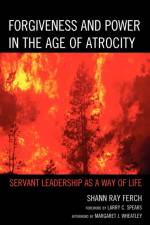
Forgiveness and Power in the Age of Atrocity coexists alongside the quiet subtleties of mercy, and people and nations currently encounter a world inIn a fresh rendering of the role of leaders as healers, Forgiveness and Power in the Age of Atrocity which not even the certainties of existence remain even as grace can sometimes arise under the most difficult circumstances. Ultimately, Forgiveness and Power in the Age of Atrocity is a book about the alienation and intimacy at war within us all. Ferch speaks to categorical human transgressions in the hope that readers will be compelled to examine their own prejudices and engage the moral responsibility to evoke in their own personal life, work life, and larger national communities a more humane and life-giving coexistence. In addition to a primary focus on servant leadership, the book addresses three interwoven aspects of social responsibility: 1) the nature of personal responsibility 2) the nature of privilege and the conscious and unconscious violence against humanity often harbored in a blindly privileged stance, and 3) the encounter with forgiveness and forgiveness-asking grounded in a personal and collective obligation to the well-being of humanity. Modernist and postmodernist notions of the will to meaning are considered against the philosophical notion of the will to power. The book examines the everyday existence of human values in a time when we inhabit a world filled as much with unwarranted cruelty as with the disarming nature of authentic and life-affirming love. The book asks the question: Can ultimate forgiveness change the heart of violence? In Forgiveness and Power, people are challenged not only by the work of profound thought leaders such as Mandela, Tutu, but also Simone Weil, Vaclav Havel, Emerson, Mary Oliver, Martin Luther King, Paulo Freire, bell hooks, and Robert Greenleaf. The hope of the book is that people of all ages and creeds come to a deeper understanding and of personal and collective responsibility for leadership that helps heal the heart of the world.
The educational system in China is marked by its dramatic inequality between rural and urban schools. The challenges facing rural schools are usually understood as disadvantages in funding, facilities, and staffing, which consequently result in undesirable student performance in general. This book, however, penetrates these phenomena on the surface and brings forth a much deeper moral crisis in rural education, a crisis that is entrenched in the complicated interlocking of formal and informal institutions within and beyond the school. The Demoralization of Teachers describes the work and workplace in a rural school from the perspective of teachers who were working there. It faithfully depicts the lamentable state of teachers' work morale in the school and, little by little as if a detective story, reveals the reasons for the teachers' demoralization by vivid narratives. The book demonstrates the profound impact on the meanings of teaching exerted by the state curriculum reform, the formal and informal norms and regulations in the school, and the erosion of moral integrity in the state bureaucracy and the society at large. The crisis in the rural school stops to be a ';rural' or educational problem in nature, but mirrors the societal-wide transformation in political economy as well as in ideology in the current reform China. The sheer complexity of the moral crisis in this ethnography calls for renewed efforts to identify and investigate the educational problems in rural China from fresh theoretical perspectives that situate rural education in broader historical and social contexts and processes.
The 2010 Midterm Elections were momentous in the history of U.S. campaigns. Readers of this book will follow the path of seven House and six Senate races from inception to election postmortem. The chapters are both narrative and provide analysis of an array of interesting and diverse contests from throughout the country. Each entry was written by one or more experts living in the state or region of the race. The authors provide succinct and highly readable chapters meant to illustrate the distinctive nature of the campaigns they are examining. Readers will see individual campaigns and elections up close and be able to compare and contrast one from another because of the common format employed throughout the book. Taken together, the chapters reveal that the roads to Congress, while similar in so many ways, each follow a unique route to Capitol Hill.
Jewish Wayfarers in Modern China: Tragedy and Splendor focuses on the many extraordinary contacts between East and West in China during the 20th century. Through a collection of short biographies situated in the context of Chinese and Western history, it offers a panoramic view of China as experienced by many different persons of Jewish origins during their sojourn in the Middle Kingdom. With their Western talents, skills, desires, hopes and expectations they tried to master their individual fates. There is the iconoclastic young woman journalist who enjoys breaking taboos at home in the USA. There is the swindler, the scoundrel known from novels by Mark Twain or Charles Dickens. There is the revolutionary, the man of thought and deed who thinks he knows what the Chinese need better than the Chinese themselves. There is the poetess loyal to her lost Chinese lover, the admirer of Chinese culture. There is the artist, fascinated by the exotic surroundings, portraying them with archetypes that merge East and West. There is the doctor, anxious to help. There is the archaeologist, desiring to make a name by discovering and returning with Chinese treasures. By showing us these characters in action, working for their own ambition or survival, employing their talents and previous experience, we find a distant mirror of our own society.One cannot return in a time machine to the past, but literature is a sort of virtual time machine, carrying us to distant periods of the past and exotic surroundings. The present book offers such a magical journey across vast reaches of space and back through time. Our impressions of visits to China have often been biased by sensationalistic journalism, Hollywood films and literary entertainment that have distorted the reality of this vast country. In the present book, we are shown the reality of life in Twentieth Century China for many Westerners through carefully-researched biographies of a wide variety of typical and less typical Western visitors to the Middle Kingdom.
In this thoughtful text, Brian Kane explores the foundations, methods, and conclusions of Catholic thinking on bioethics. With the advent of medical technologies and treatments that once seemed impossible, scientific knowledge brings with it opportunities to enhance, damage, or even destroy our humanity. Catholic theology has a long tradition of exploring this relationship between science and the human person. By providing an introductory explanation of Catholic theological thinking on bioethics, Kane offers a systematic approach to questions on the meaning of human existence and the power of human choice. He explains the ways Catholic readers can better understand ethical dilemmas and decisions regarding medicine and health careboth individually and collectively as members of society.
Set against the backdrop of democratization, increased opportunity, and access, income-based gaps in college entry, persistence, and graduation continue to grow, underlining a deep contradiction within American higher education. In other words, despite the well-intended, now mature process of democratization, the postsecondary system is still charged with high levels of inequality. In the interest of uncovering the mechanisms through which democratization, as currently conceived, preserves and perpetuates inequality within the system of higher education, this book reconsiders the role of social class in the production and dissemination of knowledge, the valuation of cultural capital, and the reproduction of social inequalities. Drawing upon the author's year-long qualitative research study within one ';democratized' institution of higher education and its associated art museum, Access to Inequality explores the vestiges of an exclusionary history within higher education and the art worldtwo related contexts that have arguably failed to adequately respond to the public's call to democratize.
Focusing on the interrelationships among political, economic, and social forces in the construction of prevailing cultural images and gender roles for women in society, the book examines both the process of creating and the resulting content of wartime mobilization messages found in magazine advertising aimed at American women.
As a playwright and a performer, Dario Fo (1926-) is one of the most important figures in world theatre. By the 1980s some were proclaiming him the most widely performed living playwright. In 1997 his achievements were acknowledged with the Nobel Prize for literature. Based on his interpretations of the Marxist social writer Antonio Gramsci, Fos politically motivated theatre strives to restore dignity to the popular culture of the masses. As part of this process, his theatre is structured on popular forms that challenge the preeminence of an authoritative text. In order to create a thematic frame, akin to certain oral traditions, Fo repeats themes and motifs that run throughout his theatre. Utilizing the mechanisms found in various oral traditions, Fo reaches beyond the confines of a given performance, by referring to the greater thematic frame. Dario Fo: Framing, Festival, and the Folkloric Imagination is a close, interdisciplinary study of his thematic frame and the techniques that allow him to refer to it throughout a performance. Using the tools of folklore performance studies and anthropology-including the works of some of the scholars that influenced Fo-this book explores his use of history and aspects of European culture that hark back to the carnival as a primordial fertility rite.
Full Spectrum Diplomacy and Grand Strategy: Reforming the Structure and Culture of U.S. Foreign Policy, by John Lenczowski, offers a solution to one of the greatest weaknesses in U.S. foreign policy that has exacerbated the unprecedented anti-Americanism of recent yearsthe U.S. Governments inability to conduct the full spectrum of diplomatic arts and to integrate them with the other arts of statecraft at the level of grand strategy. The analysis presents a critique of how the Department of States focus on traditional, government-to-government diplomacy comes at the expense of public diplomacy. Public Diplomacy is defined in the broadest sense as including all those arts that involve relations with, and influence over, foreign publics and opinion leaders, including: cultural diplomacy, exchanges, information policy, strategic communications, psychological strategy, political action, political warfare, and wars of ideas. Author John Lenczowski, one of the first modern advocates for the strategic integration of all the instruments of national power, calls for the development of an influence culture in U.S. foreign policy, and provides a roadmap for the reform of the structure and culture of American diplomacy. While addressing contemporary U.S. foreign policy, this study presents lessons in statecraft and grand strategy that are applicable for all times and places. Full Spectrum Diplomacy and Grand Strategy thus raises issues that are relevant not only to diplomats, but to practitioners of intelligence, counterintelligence, military strategy, and economic statecraft.
Social movements and civic organizations often face profound strategy dilemmas that can hamper their effectiveness and prevent them from contributing to transformative change and peace. In Zimbabwe two particular dilemmas have fed into and fueled destructive processes of political polarization-dividing society, leadership, and decision-makers well beyond its borders. As conceptualized in this study, the first is whether to prioritize political or economic rights in efforts to bring about nation-wide transformative change (rights or redistribution). The second is whether and how to work with government and/or donors given their political, economic, and social agendas (participation or resistance). This book investigates these issues through two social movement organizations-the National Constitutional Assembly and the Zimbabwe National War Veterans Association-and the movements they led to achieve constitutional change and radical land redistribution. Through in-depth case study analysis and peace and conflict impact assessment spanning the years 1997-2010, lessons are drawn for activists, practitioners, policy-makers, and scholars interested in depolarizing concepts underpinning polarizing discourses, transcending strategy dilemmas, and understanding how social action can better contribute to transformative change and peace.
What can motivate citizens in divided societies to engage in free, open, and reasoned dialogue? Attempts by philosophers to answer this question focus largely on elucidating what citizens owe to one another as free and equal citizens, as members of a shared social context, or as agents who are mutually dependent on one another for our well-being. In The Deliberative Impulse: Motivating Discourse in Divided Societies, Andrew F. Smith suggests that that a better answer can be offered in terms of what we owe to our convictions. Given the defining role they play in how we live our lives and regard ourselves, among the highest-order interests that we maintain is being in a position to do right by our convictionsto abide by conscience. By developing a clear understanding of how best to act on this interest, we see that we are well served by engaging in public deliberation. Particularly for citizens in societies that are fragmented along ethnic, cultural, ideological, and religious lines, our interest in abiding by conscience should give us clear moral, epistemic, and religious incentives to deliberatively engage with allies and adversaries alike. Scholars who focus on issues in political philosophy, ethics, and political theory will value this book for how it suggests we can overcome the motivational roadblocks to active political participation and robust deliberation.
Helping Humanity: American Policy and Genocide Rescue explores American foreign policy reactions to genocide and state caused humanitarian crises. This book provides an examination of the nature of genocide and Americas 19th century philanthropic efforts; it then offers case studies focused on the Cuban Insurrection, the Armenian Genocide, the Terror-Famine, World War II, and the Cambodian Genocide. It also includes a discussion of the difficulties encountered by would-be rescuers in the post-Cold War era. Pomakoy shows that the policies pursued by various presidents reflected a balance of policy considerations. Rarely did imperial or isolationist ambitions dominate American policy completely. Humanitarian concerns played an important, if rarely appreciated, role in foreign policy formulation, and represent a neglected dynamic in American history. Numerous rescue efforts developed as ordinary Americans joined with missionaries and diplomats to raise and distribute humanitarian aid. This peculiar blending of private and public resources grew apace with American wealth and power in the 19th and 20th centuries, and provided succor to those who could be reached. In Armenia this aid saved hundreds of thousands of lives. During World War II a similar campaign saved some of Hitlers victims from death. Sometimes American rescue efforts succeeded only because the use of force removed the underlying causes of the humanitarian crisis, as in Cuba in 1898, where an aid campaign did not succeed until Americas military might ended the fighting on the island. Other American presidents ignored, or downplayed, humanitarian crises, especially when the realities of geography and power politics prevented effective rescue. America has been roundly criticized for the absence of a genocide rescue policy. Helping Humanity revisits this discussion, arguing that American foreign policy reactions to genocide encompassed more activity than is usually recognized. Philanthropy, diplomatic pressure, war, and soft diploma
A Wittgensteinian Way with Paradoxes examines how some of the classic philosophical paradoxes that have so puzzled philosophers over the centuries can be dissolved. Read argues that paradoxes such as the Sorites, Russell's Paradox and the paradoxes of time travel do not, in fact, need to be solved. Rather, using a resolute Wittgensteinian ';therapeutic' method, the book explores how virtually all apparent philosophical paradoxes can be diagnosed and dissolved through examining their conditions of arising; to loosen their grip and therapeutically liberate those philosophers suffering from them (including oneself). The book contrasts such paradoxes with real, ';lived paradoxes': paradoxes that are genuinely experienced outside of the philosopher's study, in everyday life. Thus Read explores instances of lived paradox (such as paradoxes of self-hatred and of denial of other humans' humanity) and the harm they can cause, psychically, morally or politically. These lived paradoxes, he argues, sometimes cannot be dissolved using a Wittgensteinian treatment. Moreover, in some cases they do not need to be: for some, such as the paradoxical practices of Zen Buddhism (and indeed of Wittgenstein himself), can in fact be beneficial. The book shows how, once philosophers' paradoxes have been exorcized, real lived paradoxes can be given their due.
In recent years traditional foundations of respect for others have been challenged on the basis that universal grounds the assumption that we share a common humanity have resulted in the exclusion of particular others from full moral consideration or respect. This current questioning of the concept of a common humanity is of enormous significance, in that universalism has been one of the central assumptions of modern western philosophy and a foundational key to its moral and political theory. This book attempts to address the question of just what grounds are needed in order to justify respect for others, and in addressing this question raises issues of fundamental importance; such as, what exactly does it mean to be human? On what basis can we claim that all humans are equal? Are there differences between animals and humans, and are these differences of moral significance that is, should animals be accorded the same respect as humans? The author not only critically assesses past and current arguments for and against a common humanity, but also provides a distinctively new conceptualization of what it might mean to be human and why being human is indeed morally significant.
African Spirituality in Black Women's Fiction: Threaded Visions of Memory, Community, Nature and Being is the nexus to scholarship on manifestations of Africanisms in black art and culture, particularly the scant critical works focusing on African metaphysical retentions. This study examines New World African spirituality as a syncretic dynamic of spiritual retentions and transformations that have played prominently in the literary imagination of black women writers. Beginning with the poetry of Phillis Wheatley, African Spiritualityin Black Women's Fiction traces applications and transformations of African spirituality in black women's writings that culminate in the conscious and deliberate celebration of Africanity in Hurston's Their Eyes Were Watching God. The journey from Wheatley's veiled remembrances to Hurston's explicit gaze of continental Africa represents the literary journey of black women writers to represent Africa as not only a very real creative resource but also a liberating one. Hurston's icon of black female autonomy and self realization is woven from the threadwork of African spiritual principles that date back to early black women's writings.
In Nietzsche and Zen: Self-Overcoming Without a Self, Andre van der Braak engages Nietzsche in a dialogue with four representatives of the Buddhist Zen tradition: Nagarjuna (c. 150-250), Linji (d. 860), Dogen (1200-1253), and Nishitani (1900-1990). In doing so, he reveals Nietzsches thought as a philosophy of continuous self-overcoming, in which even the notion of self has been overcome. Van der Braak begins by analyzing Nietzsches relationship to Buddhism and status as a transcultural thinker, recalling research on Nietzsche and Zen to date and setting out the basic argument of the study. He continues by examining the practices of self-overcoming in Nietzsche and Zen, comparing Nietzsches radical skepticism with that of Nagarjuna and comparing Nietzsches approach to truth to Linjis. Nietzsches methods of self-overcoming are compared to Dogens zazen, or sitting meditation practice, and Dogens notion of forgetting the self. These comparisons and others build van der Braaks case for a criticism of Nietzsche informed by the ideas of Zen Buddhism and a criticism of Zen Buddhism seen through the Western lens of Nietzsche - coalescing into one world philosophy. This treatment, focusing on one of the most fruitful areas of research within contemporary comparative and intercultural philosophy, will be useful to Nietzsche scholars, continental philosophers, and comparative philosophers.
Richard Williamson's First Steps toward Detente provides a history of negotiations conducted from 1958-1963 between the United States, its Western allies in Europe, and the Soviet Union, in order to resolve the Berlin crisis. These negotiations established ongoing patterns of backchannel, ambassadorial, foreign minister and heads of state discussions. From Khrushchevs visit to the United States in 1959 and the difficult Paris 1960 and Vienna 1961 summits to the construction of the Berlin Wall, disarmament remained a parallel concern dependent on Berlin's resolution. Throughout most of 1962, the United States and Soviets made rigorous attempts to break a stalemate at Checkpoint Charlie, though neither side was truly ready to forfeit. Ultimately, the renewal of Berlin harassments and the Cuban missile crisis put an end to these efforts, but the closer relations that had developed through Berlin talks helped to enable the Limited Test Ban Treaty in 1963. The Berlin Crisis signaled a transition away from multilateral East-West relations to a bilateral U.S.-Soviet relationship, remaining oriented to military positions in Germany. In this book, Williamson explores the significance of these events and shows how the negotiations held between 1958 and 1963 provided the templates for detente.
Based on ethnographic research in Contra Costa County, California (CCC), Pimping the Welfare System highlights a welfare program implemented after welfare reform that differed in significant ways from the predominant work first approach implemented by most welfare programs. The book argues that by imparting dominant economic, social, and cultural capital, CCC's welfare program empowered participants and improved their quality of life and life chances. Successfully transmitting these types of capital, however, was dependent upon the discourses, practices, and pedagogy deployed by welfare workersas well as the policies, practices, and resources of the welfare program. In particular, CCC's welfare workers encouraged the acquisition and use of dominant capital (that which is desired by the labor market) by acknowledging and respecting the various types of capital welfare participants already had, and by encouraging participants to make strategic choices about deploying different types of capital. This book calls into question monolithic understandings of economic, social, and cultural capital and encourages a new conceptualization of capital that resists framing poor women as fundamentally ';lacking.' In addition, it points to ways welfare administrators and welfare workers can develop more empowering programs even within the confines of federal, state, and local regulations.
Abonner på vårt nyhetsbrev og få rabatter og inspirasjon til din neste leseopplevelse.
Ved å abonnere godtar du vår personvernerklæring.