












Gjør som tusenvis av andre bokelskere
Abonner på vårt nyhetsbrev og få rabatter og inspirasjon til din neste leseopplevelse.
Ved å abonnere godtar du vår personvernerklæring.Du kan når som helst melde deg av våre nyhetsbrev.

The notion of mode is critical in the reevaluation of melodrama. As a mode, melodrama appears not only as a dramatic genre pervaded by sensationalism, exaggerations, and moral polarities, but also as a cultural imaginary that shapes the emotional experience of modernity, characterized by anxiety, moral confusion, and the dissolution of hierarchy. Despite its usefulness, the notion of mode remains mystifying: What exactly are modes and how do they differ from genres? Refiguring Melodrama in Film and Television: Captive Affects, Elastic Sufferings, Vicarious Objects argues that, whereas genres divide a universe in terms of similarities and differences, modes express or modify an indivisible whole. This study contends that the melodramatic mode is concerned with the expression of the social whole in terms of suffering. Zarzosa explains how melodrama is not a cultural imaginary that proclaims the existence of a defunct moral order in a post-sacred world, but an apparatus that shapes suffering and redistributes its visibility. The moral ideas we associate with melodrama are only a means to achieve this end.
From prostitutes to polygamy, witches to widows, foreigners to slaves, the Bible is full of texts about women who have been classified as ';other' and pushed to the margins of society. In the academy, feminist, liberation and post-colonial theologians have challenged the disparaging categorization of these biblical women and redefined them as sacred insiders, whose contributions to Judeo-Christian history offer ongoing lessons about the inclusive nature of God. Letting the Other Speak: Proclaiming the Stories of Biblical Women helps pastors, Christian educators, professors and theological students bring the stories of six controversial biblical women to congregations by surveying historical and contemporary exegetical work on each passage, modeling exegeting a congregation in preparation for moving from text to sermon, and providing two sample sermons, one prophetic and one pastoral, for each text.
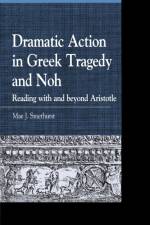
This book explores the ramifications of understanding the similarities and differences between the tragedies of Euripides and Sophocles and realistic Japanese noh. First, it looks at the relationship of Aristotle's definition of tragedy to the tragedies he favored. Next, his definition is applied to realistic noh, in order to show how they do and do not conform to his definition. In the third and fourth chapters, the focus moves to those junctures in the dramas that Aristotle considered crucial to a complex plot - recognitions and sudden reversals -, and shows how they are presented in performance. Chapter 3 examines the climactic moments of realistic noh and demonstrates that it is at precisely these moments that a third actor becomes involved in the dialogue or that an actor in various ways steps out of character. Chapter 4 explores how plays by Euripides and Sophocles deal with critical turns in the plot, as Aristotle defined it. It is not by an actor stepping out of character, but by the playwright's involvement of the third actor in the dialogue. The argument of this book reveals a similar symbiosis between plot and performance in both dramatic forms. By looking at noh through the lens of Aristotle and two Greek tragedies that he favored, the book uncovers first an Aristotelian plot structure in realistic noh and the relationship between the crucial points in the plot and its performance; and on the Greek side, looking at the tragedies through the lens of noh suggests a hitherto unnoticed relationship between the structure of the tragedies and their performance, that is, the involvement of the third actor at the climactic moments of the plot. This observation helps to account for Aristotle's view that tragedy be limited to three actors.
The Supreme Court is one of the most traditional institutions in America that has been an exclusively male domain for almost two hundred years. From 1981 to 2010, four women were appointed to the Supreme Court for the first time in U.S. history. The Rhetoric of Supreme Court Women: From Obstacles to Options, by Nichola D. Gutgold, analyzes the rhetoric of the first four women elected to the Supreme Court: Sandra Day O'Connor, Ruth Bader Ginsburg, Sonia Sotomayor, and Elena Kagan. Gutgold's thorough exploration of these pioneering women's rhetorical strategies includes confirmation hearings, primary scripts of their written opinions, invited public lectures, speeches, and personal interviews with Justices O'Connor, Ginsberg, and Sotomayor. These illuminating documents and interviews form rhetorical biographies of the first four women of the Supreme Court, shedding new light on the rise of political women in the American judiciary and the efficacy of their rhetoric in a historically male-dominated political system. Gutgold's The Rhetoric of Supreme Court Women provides valuable insight into political communication and the changing gender zeitgeist in American politics.
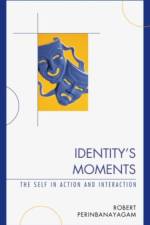
The work is an examination of the role of language in the constitution of self and in the presentation of identity. Following the path laid out by George Herbert Mead, Kenneth Burke and Mikhail Bakhtin the work presents self, identity and meaning as ongoing accomplishments between human actors who participate in what may be termed the dramas human relations. Human agents use language as symbolic actions with which they transform themselves and others, as well as places and things, clothing and money etc into meanings with which they conduct their lives.
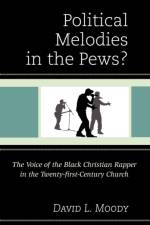
In this fascinating study of contemporary Christian worshippers, David L. Moody analyzes Christian rap music against traditional Christian theology. For many, mixing the sanctified worship of God with music originating from unconsecrated avenues has become difficult to accept. From the back alleys and streets of ';the hood' to the club scene of urban America, Christian rappers walk to a different beat than the preacher at the pulpit. However, similar to a street evangelist, the Black Christian rapper is about singing praise to God and delivering the gospel message to his ';lost homies' on the streets. Moody examines the emergence of hip hop based ministries and their place among youth with the Black community.
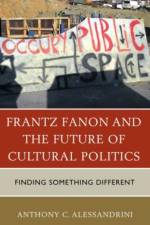
This book focuses on a reading of Frantz Fanon's work and life, asking how the work of a revolutionary writer such as Fanon might be best appropriated for contemporary political and cultural issues. Separate chapters introduce Fanon's life and examine the question of Fanon as our contemporary; review the field of ';Fanon studies' that has grown up around his work; bring Fanon into conversation with the critical contemporary figures Edward Said, Michel Foucault, Jamaica Kincaid, and Paul Gilroy; and turn to Fanon's work to think through the contemporary popular uprisings that have come to be known as the ';Arab Spring.' The book concludes by arguing that a reevaluation of Fanon's life and work can provide us with a particular set of lessons about solidaritylessons that are crucial for the contemporary political struggles that face us today and that will continue to confront us in the future. Finding Something Different: Frantz Fanon and the Future of Cultural Politics is inspired by Fanon's unsparing struggle against the depredations of racism and colonialism, and his lifelong commitment to finding something different.
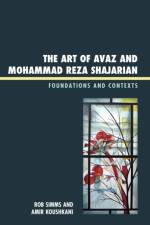
The Art of Avaz and Mohammad Reza Shajarian: Foundations and Contexts, by Rob Simms and Amir Koushkani, examines the traditional art of singing classical Persian poetry, as represented by its greatest living exponent. This in-depth study surveys the social and historical context of the twentieth-century tradition of avaz while placing Shajarian's early career within this complex culture, from being a child prodigy of Qur'an recitation in Mashhad to his rise to national prominence in the 1970s. As a globetrotting celebrity who is renowned for singing medieval poetry with impeccable technique and radiant inspiration, Shajarian's life and work provide a compelling case study for larger issues of reconciling tradition and modernity, and the crucial role of the individual in maintaining and renovating traditional art forms. Avaz is discussed in the broader context of Iranian narrative performance traditions, where the performer retells well-known scripts in a way that is appropriate to the audience and the present occasion, spinning the tale to convey a personal message. Shajarian's career also exemplifies the huge changes that Iranian musical culture underwent in the 1960s and 70s. Finally, the study includes a detailed examination of the materials and creative processes of Shajarian's artistic craft, including his acquisition process and training, vocal technique, selection and treatment of poetry, use of traditional musical materials, and his balance of engaging preset materials with improvisation. The Art of Avaz and Mohammad Reza Shajarian is an impressively detailed study of the music, life, and environment of the most influential musician in Iranian classical music of the past three decades.
This monograph represents the first comprehensive study of the multifaceted representations of the complex phenomenon of globalization in the diverse repertoire of the 2008 Nobel Laureate in Literature. This interdisciplinary investigation explores the initial euphoria related to the ambivalent concept of the ';global village' and how this evaporated dream can perhaps be reappropriated to create a better global society for both the human and Cosmic Other through the lens of Le Clezio's fiction. Chapter one offers a conceptual framework for understanding the Franco-Mauritian author's nuanced ideas concerning globalization. It also probes the original ambivalence of McLuhan's celebrated notion of a global village in addition to its euphoric reception. Chapter two explores the current state of the interconnected, interdependent modern world in which many disenfranchised and marginalized individuals are living a recurring nightmare. Chapter three examines Le Clezio's deconstruction of the simplistic ideology of consumerism that is indicative of contemporary consumer republics. This section also underscores the intricate systems of hegemonic domination, such as the media, created by the transnational corporations that dominate the global economic landscape to sustain their supremacy. Chapter four delves into Le Clezio's ecocentric humanism that extends to all other living creatures by debunking Manichean dualities that separate human beings from elemental matter and the rest of the universe. The final chapter examines recent texts, such as Raga, Ourania, and Histoire du pied et autres fantaisies, which encourage the reader to envision what a more just and egalitarian global village might encompass. These works dismiss neoliberal fantasies and consumerist ideology that have justified the systematic exploitation of everyone and everything in the name of progress, but they also urge the modern subject to be resilient in the face of tremendous adversity. Instead of accepting the imposition of a monolithic, socioeconomic model that is riddled with inequality and injustice and which serves the interests of the Happy Few, Le Clezio suggests that the first step is to resist integration into the global village by stoically confronting reality and having the necessary courage to propose another vision which counterpoints McLuhan's misguided one.
Revolution in the Social Sciences centers on integrating knowledge from sociology, psychology, anthropology, history, political science and economics in order to confront increasing worldwide problems that threaten all of us. That integration of knowledge of human behavior is essential for understanding those problems, given their enormous complexity coupled with the highly specialized nature of the social sciences and their limited communication across specialized fields. It carries further the ideas developed by the Sociological Imagination Group in the seven books it has published since its founding in 2000 (www.sociological-imagination.org): Beyond Sociologys Tower of Babel, Toward a Sociological Imagination, The Invisible Crisis of Contemporary Society, Understanding Terrorism, Armageddon or Evolution?Bureaucratic Culture and Escalating World Problems, and Saving Society.In addition to visible problems like war and terrorism with weapons of mass destruction that are becoming ever more threatening, there are relatively invisible problems. For example, there is an increasing gap between what people throughout the world wantincluding a decent standard of living and freedom from patterns of hatred like racism, sexism and ageismand what they are in fact able to get. There is, then, an increasing aspirations-fulfillment gap, largely produced by the revolution of rising expectations over the past five centuries. Political leaders who attempt to confront problems can only make limited progress on them, largely because of the failure of social scientists to integrate their knowledge and thus yield the understanding of these complex problems that is required.
The Critical Theory of Axel Honneth provides a comprehensive study of the work of Axel Honneth, tracing the theoretical trajectory from his earliest writings on philosophical anthropology to the development of a theory of recognition. The book argues that Honneth's early work provides important insights for the reconstruction of the normative project of critical theory and the articulation of a conceptual framework for analyzing social relations of power and domination. Danielle Petherbridge contends, however, that these aims are not fully realized in Honneth's more mature project and that central insights recede as his project develops. Petherbridge seeks to demonstrate that the basis for an alternative theory of intersubjectivity that can account for both an adequate theory of power and normative forms of subject-formation can be immanently reconstructed from within Honneth's own work. By contextualizing Honneth's project in relation to its theoretical influences, The Critical Theory of Axel Honneth provides a critical study and excellent entry point that will be essential reading for both students and scholars who work in the areas of European philosophy, critical theory, social and political philosophy, or social and political theory.
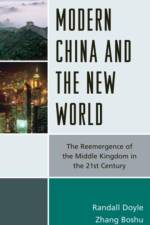
Modern China and the New World focuses upon a few of the main topics associated with Chinas recent rise to global prominence. Professor Randall Doyle writes about the impact that China will have on the geopolitical balance throughout the Asia-Pacific region. He also touches upon the effect that Chinas new power will have on U.S.-China relations in the 21st century. Finally, Professor Doyle writes about the continued role and influence that Dr. Henry Kissinger has upon interpreting and guiding modern U.S. policy concerning China, the Asia- Pacific region and Americas role in global affairs in the 21st century.Professor Boshu Zhang writes about Chinas continuing struggles with Tibet and the Dalai Lama. This topic has remained extremely sensitive for the Chinese leadership. He addresses the difficulties and contraditions existing within the Chinese Communist Party on the issue of Tibetan autonomy. Finally, Professor Zhang writes about the existing political system within China today. And, the future possibility of some democratic reforms occuring and transforming Chinese society itself. However, Zhang does indicate that the democratic process in China will be facing several domestic challenges and roadblocks along the way toward achieving a political reformation.Professors Randall Doyle and Boshu Zhang have addressed these extremely important topics within their respective chapters by incorporating not just tradtional reading and research of their chosen subjects, but by also intergrating their personal experiences from living and traveling within China.
Collective Identity, Oppression, and the Right to Self-Ascription argues that groups have an irreducibly collective right to determine the meaning of their shared group identity, and that such a right is especially important for historically oppressed groups. The author specifies this right by way of a modified discourse ethic, demonstrating that it can provide the foundation for a conception of identity politics that avoids many of its usual pitfalls. The focus throughout is on racial identity, which provides a test case for the theory. That is, it investigates what it would mean for racial identities to be self-ascribed rather than imposed, establishing the possible role racial identity might play in a just society. The book thus makes a unique contribution to both the field of critical theory, which has been woefully silent on issues of race, and to race theory, which often either presumes that a just society would be a raceless society, or focuses primarily on understanding existing racial inequalities, in the manner typical of so-called ';non-ideal theory.'
This book offers an original contribution to the debate on contemporary democratic ethics. It argues that public culture provides the mediating spaces required for processes of encounter, but should be supplemented with an open dialogue on history, memory, and identity. Since democratic modernity is consolidating its new phase characterized by the multiplicity of perspectives, the mediation of conflict, identity, and memory are required to continue fostering mutual understanding and the identification of issues of common concern. The historical emergence of a public culture is a democratic gain. Recognizing this offers opportunities for ethical transformation that respects diversity but also addresses the realities of conflict under conditions of postmodernity.
In this critical work on the political thought of Leo Strauss, Sean Noah Walsh addresses Leo Strauss's claims about esotericism in the philosophic texts of Plato. He challenges Strauss's understanding of esoteric writing as an attempt by Plato to secretly encode the highest truths ';exclusively between the lines' in order to avoid persecution. Indeed, through the character of Socrates, the speaker with whom Plato is inextricably associated, Walsh asserts that Plato's exoteric writings were sufficiently incendiary and provocative to demonstrate that a fear of persecution was not his highest priority. The politics that follow from Strauss's thought depend on the interpretation of these Platonic philosophical bases and by analyzing how the problem of fear has been confronted in the works of Plato and Leo Strauss, Walsh offers a direct and thorough account of the politics that emerge from Strauss's esoteric reading of political philosophy. Applying Lacanian psychoanalysis, Walsh investigates the discourse of Straussian esotericism. and examines Plato's writing for examples of exoteric risk, subjecting both Plato and Strauss's writings to Lacans psychoanalytic technique for interpreting the function of desire in discourse. Given the continuing influence of Strauss's ideas on contemporary politics, particularly within American foreign policy, Walsh's examination of this Straussian esotericism for these effects will prove an interesting read for political theorists, international relations scholars, and philosophers alike.
In this insightful book about constitutional law and slavery, George Anastaplo illuminates both how the history of race relations in the United States should be approached and how seemingly hopeless social and political challenges can be usefully considered through the lens of the U.S. Constitution. He examines the outbreak of the American Civil War, its prosecution, and its aftermath, tracing the concept of slavery and law from its earliest beginnings and slavery's fraught legal history within the United States. Anastaplo offers discussions that bring into focus discussions of slavery in Ancient Greece and within the Bible, showing their influence on the Constitution and the subsequent political struggles that led to the Civil War.
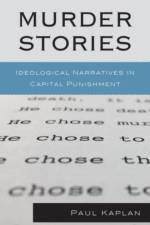
Murder Stories engages with the current theoretical debate in death penalty research on the role of cultural commitments to ';American' ideologies in the retention of capital punishment. The central aim of the study is to illuminate the elusive yet powerful role of ideology in legal discourses. Through analyzing the content and processes of death penalty narratives, this research illuminates the covert life of ';the American Creed,' (a nexus of ideologiesliberty, egalitarianism, individualism, populism, and laissez fairesaid to be unique to the United States) in the law. Murder Stories draws on the entire record of California death sentence resulting trials from three large and diverse California counties for the years 1996 2004, as well as interviews with 26 capital caseworkers (attorneys, judges, and investigators) from the same counties. Employing the theoretical framework proposed by Ewick and Silbey (1995) to study hegemonic and subversive narratives, and also the ethnographic approach advocated by Amsterdam and Hertz (1992) to study the producers and processes of constructing legal narratives, this book traces the ideological content carried within the stories told by everyday practitioners of capital punishment by investigating the content, process, and ideological implications of these narratives.The central theoretical finding is that the narratives constructed by both prosecutors and defenders tend to instantiate rather than subvert the ideological tenets of the American Creed.
From a colonial campaign that was envisioned by France as the redemption of its Algerian ';children through Western civilization to Algerian Independence that was lived by both parties as a bloody divorce; recent Algerian history has been imagined and represented in terms of the family. Prominent authors such as Kateb Yacine and Mouloud Mammeri pondered their own fate during the War of Independence as the ';mixed' children of a failed colonial marriage. Contemporary postcolonial authors such as Rachid Boudjedra, Yasmina Salah, and Arezki Mellal have filled their narratives with orphaned children searching for ideal parents as a civil war ripped Algeria apart in the 1990s. Violent Beginnings: Literary Representations of Postcolonial Algeria explores how violence, during the War of Independence (19541962) to the more recent civil war (19912002), has shaped literary representations of both family and nation in contemporary literature. For example, discussions of the struggle for independence in Assia Djebar's La femme sans sepulture and Ahlam Mostaghanemi's Memory of the Flesh, represent sexual torture associated with this earlier war period as having a negative impact on victims' ability to have children and contribute to the development of the Algerian nation. Texts examining the more recent civil war such as Rachid Boudjedra's La vie l'endroit and Yasmina Salah's Glass Nation establish a link between the earlier violence of the independence struggle and contemporary events. Additionally, these texts proceed to demonstrate how violence has shaped familial and national structures, more specifically causing distorted familial bonds and political chaos in contemporary Algerian society.
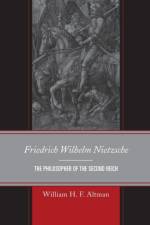
When careful consideration is given to Nietzsche's critique of Platonism and to what he wrote about Bismarck, Kaiser Wilhelm, and to Germany's place in ';international relations' (die Groe Politik), the philosopher's carefully cultivated ';pose of untimeliness' is revealed to be an imposture. As William H. F. Altman demonstrates, Nietzsche should be recognized as the paradigmatic philosopher of the Second Reich, the short-lived and equally complex German Empire that vanished in World War One. Since Nietzsche is a brilliant stylist whose seemingly disconnected aphorisms have made him notoriously difficult for scholars to analyze, Friedrich Wilhelm Nietzsche is presented in Nietzsche's own style in a series of 155 brief sections arranged in five discrete ';Books,' a structure modeled on Daybreak. All of Nietzsche's books are considered in the context of the close and revealing relationship between ';Friedrich Wilhelm Nietzsche' (named by his patriotic father after the King of Prussia) and the Second Reich. In ';Preface to ';A German Trilogy,'' Altman joins this book to two others already published by Lexington Books: Martin Heidegger and the First World War: Being and Time as Funeral Oration and The German Stranger: Leo Strauss and National Socialism.
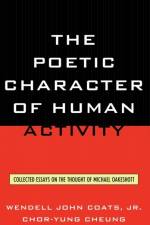
The Poetic Character of Human Activity is a collection of essays by two Oakeshott scholars, most of which explores the meaning of Oakeshott's pregnant phrase, ';the poetic character of human activity' by comparing and contrasting this idea with similar and opposing ones, in particular those of the Taoist thinker, Zhuangzi (Chuang Tzu), and his Western interpreter, A.C. Graham. Oakeshott's deep appreciation of the poetic and non-instrumental character of human activity led him to develop an interest in the works of Zhuangzi and Confucius. Comparison of shared themes between Oakeshott and these two Chinese thinkers facilitates appreciation of his elegant analytic style and his resort to use of metaphors and story-telling when conveying some of his most profound insights. The collection also contains essays contrasting Oakeshott's idea of the ';creative' in human experience with views of, among others, Plato, Leo Strauss and Eric Voegelin.Oakeshott used the phrase ';the poetic character of human activity' (arguably the animating center of his entire thought), to refer to the ';creative' character of human experiential reality, that is, to the fact that the form (the how) and content (the what) of all human experience and activity arise simultaneously and fluidly, and can be separated only at the expense of theoretical coherence and practical skill. The various essays in this collection explore the meaning of this claim, and its ramifications for the proper role of critical intellect in especially philosophy, morality, learning, and governance. There is also some brief contrast of Oakeshott with John Rawls, Alasdair MacIntyre, Charles Taylor, and Quentin Skinner.
This volume presents elite conflicts and political controversies in China from 1895 to 1978 as rooted in two diametrically opposed visions of leadership and political authority: a radical, charismatic model that instills absolute authority in the single leader whose will guides the polity and whose word is the basis of policy formulation, versus an institutional model in which authority inheres in organization and where ';collective' leadership and decision-making govern the political realm. The former model in modern Chinese history entailed a leader principle and personality cult that began with Sun Yatsen and Chiang Kaishek in the Nationalist Party (KMT) and reached its peak with the leadership cult of Chinese Communist Party (CCP) Chairman Mao Zedong, especially during the 1966-1976 Great Proletarian Cultural Revolution. The latter model with its emphasis on ';collective leadership' (jiti lingdao) and administrative rationalism began as a reaction among early members of the CCP against the promotion of the Sun and Chiang leadership cults and became a central governing principle in the Communist Party that served as official leadership doctrine beginning with the formation of the Party in 1921.While tensions over leadership issues were relatively muted in the pre-1949 period and early 1950s of CCP history as an apparent compromise was reached in which from 1943 onward a cult of the leader was promoted for propaganda purposes but with collegial decision-making governing inner Party decision-making, the mid-to-late 1950s saw this compromise among the top leadership come under increasing strain and finally break down. Devoted to a fundamentally different vision of a socialist China from other top leaders on a number of economic, social, and political fronts, Mao Zedong pushed his domination of the policy process that ultimately provoked a wholesale assault on the CCP apparatus throughout the country while the leader cult reached mythic proportions during the Cultural Revolution. Confronted by the possibility of civil war and generally opposed to the takeover of the polity by the radical Gang of Four led by his wife Jiang Qing, by the mid-1970s the aging great leader acquiesced to the rebuilding of the CCP along traditional, institutional lines.
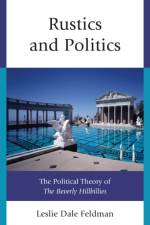
The Beverly Hillbillies includes the portrayal of rich versus poor, the American dream, wealth, and social mobility in popular culture. The Hillbillies was a phenomenon of post-World War II America, the second wave after the 1950s, the dustbelt Depression meets the promise of opportunity achieved through luck. Luck counts in liberal society. It is, said Machiavelli, ';the arbiter of half of what we do.' But is success based on luck really the American dream? And who is the bigger success storythe Hillbillies or those who have earned their wealth? Whom do we want to be or be like? Everyone wants to win the lottery, but is everyone willing to do what it takes to achieve financial independence without winning the lottery? Does winning the lottery bring social status or can it only be achieved by labor?In sum, Paul Henning's brilliant comedy series The Beverly Hillbillies is replete with political ideas and has come to occupy a special place in popular culture as a classic television icon because of its deeper meaning and relationship to how we think about wealth, status, social mobility and the American dream.
The life and work of C.S. Lewis after his conversion in 1931 is well known and his reputation shows no signs of diminishing. His earlier years have not been so well studied, particularly between the ages of 16 and 22 when he studied privately and at Oxford, served in the British army, was wounded in France, entered into his affair with Janie Moore, and wrote and published his first book of poems. To correct and augment the limited accounts of this period, Lewis's life is presented with the general and specific background which makes it more meaningful, particularly as it throws light on his character. The romantic myth of him as a soldier-poet is dispelled, largely through an extensive review of the poems in Spirits in Bondage and the self-centered life that produced them. A valuable comparisonnot to the advantage of Lewisis drawn with two undoubted soldier-poets, Robert Graves and Siegfried Sassoon. The purpose is not to disparage or belittle Lewis but to show what had to be overcome in his limited and unpleasant early moral character in order to produce the devoted Christian of later years.
Delegitimation has become the new battleground for Israel and the critics of Israeli military operations. But the Israeli experience reveals a more general engagement where all states act strategically to build legitimacy for their policies and all resist attempts at delegitimation. To understand these processes it is necessary to see how politicized moral and legal judgments shape both the use of force by states and our judgments about the means and the outcomes. This is a book about legitimacy, military lawyers, and security. More particularly, it is about how the legitimacy of Israel's asymmetric military operations cannot be detached from the politics of law and ethics. Sometimes it is enough that states respect the laws of armed conflict, but at other times they may be held to a higher standard. This does not happen in a vacuum. Rather it is the product of political engagement in the murky politics of international legitimacy where standards are negotiable and some states get a harder time than others. There is a strong theoretical analysis underpinning a discussion that constantly returns to the practical problems of modern armed conflict where combatants hide among civilians and states complain about the unrealistic expectations of human rights NGOs. Here, the law is unclear and there are choices to be made. The book presents new research into the involvement of Israeli military lawyers in operational targeting decision making that has life and death consequences. The case studies concern targeted killing during the Second Intifada, Israel's 2006 Lebanon War, the 2009 Operation Cast Lead in Gaza and, finally, the 2010 Israeli maritime interception of the ';Turkish Flotilla' to Gaza. The investigation identifies a struggle between the proponents of human rights in war and those who promote the rights of states to deploy military force for the security of their citizens. But not all parties to a military conflict are held to the same standards. In fact, the analysis maps a complex political deployment of law and ethics in the strategic calculation of legitimacy costs and the diplomatic processes whereby they are contested, with policy implications for those in charge of the design and execution of military operations.
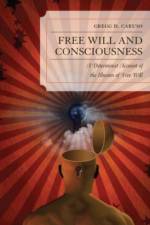
In recent decades, with advances in the behavioral, cognitive, and neurosciences, the idea that patterns of human behavior may ultimately be due to factors beyond our conscious control has increasingly gained traction and renewed interest in the age-old problem of free will. In this book, Gregg D. Caruso examines both the traditional philosophical problems long associated with the question of free will, such as the relationship between determinism and free will, as well as recent experimental and theoretical work directly related to consciousness and human agency. He argues that our best scientific theories indeed have the consequence that factors beyond our control produce all of the actions we perform and that because of this we do not possess the kind of free will required for genuine or ultimate responsibility. It is further argued that the strong and pervasive belief in free will, which the author considers an illusion, can be accounted for through a careful analysis of our phenomenology and a proper theoretical understanding of consciousness. Indeed, the primary goal of this book is to argue that our subjective feeling of freedom, as reflected in the first-person phenomenology of agentive experience, is an illusion created by certain aspects of our consciousness.
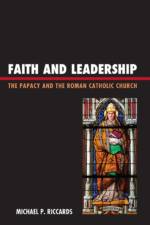
This study is a comprehensive history of the papacy, the oldest elective office in the world, and how it has managed over the centuries the most complex voluntary association of faith. The book argues that in fact through most of its existence, the papacy has adapted managerial models of the secular world and applied them to the Catholic Church. Since its emergence from the Jewish synagogues to a persecuted minority in the Roman Empire to becoming the established religion of the West, the Church and the papacy engaged the world on its own terms. It is only after the Council of Trent did the Church become somewhat more divorced and estranged from the environment around it. This book focused on those changes and on the great popes across the centuries who reformed and altered Catholicism. Special attention is directed to Gregory I, Innocent I, Innocent III, Pius IX, Leo XIII, Pius XI, Pius XII, John XXVII, Paul VI, and John Paul II. The conclusion is that the persistence of the Catholic Church for so many centuries was due to its ability to preserve the faith, but re-establish its forms and managerial class.
What are the social and cultural features that have the most impact on the interpretation of the legal standard, ';best interest of the child'? One method for answering this question is through a comparison of two societies, Sweden and the United States, both of which apply the same legal standard to similar contested custody and visitation cases. This study views love, law, and knowledge as separate discourses. Love encompasses the interpretations of the actors whose claims arise from the emotions associated with care, concern, and relationships, namely parents, the children who are the subject of a case, and other family members. Justice encompasses the interpretations and claims which are made by judges, but its discourse includes the legal process and legal policies. Knowledge is encompassed by the concerns and claims of professionals and/or experts including social science discussions of care, welfare, and psychology and the interpretations and descriptions given by the professionals and experts regarding the actors in the cases. This book hypothesizes that a comparison of two societies that focuses on the interaction between the discourses of love, justice, and knowledge, in the process of decision-making in best interests of the child disputed custody cases, reveals features of decision-making that would be unavailable to researchers studying custody disputes in only one society.
This analysis of the human need to persuade offers a new, creative, application of Aristotelian essentialism to human discourse. Using Thomas Aquinas's adaptation of essentialism as a starting point, Jeffrey J. Maciejewski argues that persuasion is natural to human beings and that it possesses dispositional properties that bring about stages of human action that ultimately harmonize the operations of the mind in addition to harmonizing human relationships. Aquinas's philosophy of human nature is reviewed and re-examined in order to discover why it is that humans need to persuade themselves and each other. The book should be of considerable interest to scholars of human nature, Thomist philosophy, and those interested in the history of rhetoric and rhetorical theory.
The technological revolution linked to high speed rail (HSR) has been accompanied by myths and claims about its contribution to society and the economy. Although HSR is unquestionably a technological advance that has become a symbol of modernity, this review and analysis of the international experiences shows that the conditions necessary to have a positive impact, economically, socially and environmentally, are enormously restrictive. The Economics and Politics of High Speed Rail: Lessons from Experiences Abroad, by Daniel Albalate and Germ Bel, introduces the main questions policy makers and scholars should examine when considering and studying HSR implementation, with particular emphasis on the US's recent interest in this technology and possible application in California. Albalate and Bel then review the experiences of the most significant implementations of HSR around the globe. This in-depth international perspective includes chapters on the pioneers of HSR (Japan and France), the European followers (Germany, Spain and Italy), as well as Asian experiences in China, Taiwan, and Korea. Albalate and Bel's study provides a clear distinction between the myths and realities associated with this transportation innovation. Among the most relevant findings, this study highlights how HSR projects that do not satisfy highly restrictive conditionson mobility patterns, measured costs, and economically rational designsthat make it desirable have been the source of huge financial debacles and the economic failure of HSR in most cases, which result in unfortunate consequences for taxpayers. The Economics and Politics of High Speed Rail is a rigorous investigation of the economic and political challenges and ramifications of implementing new public transportation technology.
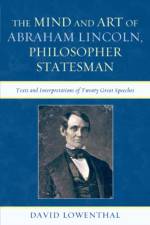
By analyzing many of Lincolns most important speeches, The Mind and Art of Abraham Lincoln, Philosopher Statesman shows him to be a profound and systematic thinker who tries to get at the root of issues, not all of them strictly political. Lowenthal emphasizes Lincolns manner of writing, which enables him to conceal his most radical thoughts, and pays special attention to the reasoning and artfulness with which he treats a wide variety of subjects. The book follows Lincoln from his Perpetuation or Lyceum address in 1838 to his last speech just after Lees surrender, as he confronts the great issues of the day and lays out the fundamentals of American politics. Along the way, Lowenthals careful analysis frees Lincoln of the charge of racial prejudice with which he has been saddled in recent years.
Abonner på vårt nyhetsbrev og få rabatter og inspirasjon til din neste leseopplevelse.
Ved å abonnere godtar du vår personvernerklæring.