


















Gjør som tusenvis av andre bokelskere
Abonner på vårt nyhetsbrev og få rabatter og inspirasjon til din neste leseopplevelse.
Ved å abonnere godtar du vår personvernerklæring.Du kan når som helst melde deg av våre nyhetsbrev.

Fear grips those who doubt that their existence has meaning, and the prevailing notion that humans are situated on a dot in the middle of a dark, cold universe leaves people shivering in cosmic insignificance. Many would argue that science and technology have separated individuals from God while others would say that people have lost their faith, and some would assert that God is dead. Many simply do not know what to believe. Today's self-help industry is a testament to the search for meaning in an age of uncertainty and faltering religious structures. The truth is that technology and science now answer many of the questions that used to be left to God. This development has confounded people's ability to integrate what is known today with what was once thought. The disparity between past and present beliefs may be observed in the concept of the angel. There are many who claim that any lingering belief in angels is merely the residue of imaginary or wishful thinking, and there are others who hold that angels (wings, halos, and harps) literally exist. How is one to reconcile such contradictory beliefs? C. G. Jung's theory of synchronicity (meaningful coincidence) provides a vehicle for the exploration and possible reconciliation of such questions. Rather than echoing the skeptic who says angels cannot exist or the religious enthusiast who affirms their immanence, one might reframe the entire discussion. Like the biblical concept of annunciation, in which an angel delivers a heavenly message to an earthly individual, synchronicity defines the moment at which the eternal touches the temporal.
Featuring a foreword by Congressman Glen Browder, Politics on a Human Scale examines political decentralization in the United States, from the founding of the republic to the present.Part of the desirable equilibrium is a sense of proportionality. Some sizes, some amounts, some levels are more appropriate than others. Decentralism is the best political tool to ensure equilibrium, to promote proportionality, and to obtain appropriate scale. Power distribution should be as wide as possible. Government functions should be as close to the people as practicable. In this way, individual human beings are not swallowed by a monstrous Leviathan. Persons are not at the mercy of an impersonal bureaucracy led by the far-away few. Decentralism gives us politics on a human scale. It gives us more democracy within the framework of a republic. The longest chapters in the book deal with crucial turning points in U.S. historyspecifically, when decentralists lost the upper-hand in the two major political parties. Decentralism in our nation runs deep, both intellectually and historically. It also has considerable popular support. Yet today it is a virtual political orphan. In Washington, neither major political party is serious about dispersing power to lower levels of government or to the people themselves. Still, there are dissident politicians and political movements that remain committed to the decentralist principle.Power needs to be held in check, partly through decentralization, because power holds a great and dangerous attraction for humans. Recognition of this human tendency is the first step in guarding against it and getting back on a better path.
Interactions among individuals representing culturally dissimilar and politically unequal groups are a ubiquitous feature of modern life. Navigating Power: Cross-Cultural Competence in Navajoland by Gelaye Debebe is concerned with how these interactions affect task coordination in organizational settings. While much research has addressed the effect of cultural differences on these interactions, very little work has been done examining the role of political inequality.Research suggests that cross-cultural breakdowns arise from differing cultural values and assumptions. Overcoming these breakdowns requires cross-cultural competence. This competence entails the ability to sustain a learner stance in the face of ambiguity, uncertainty, and negative or ambivalent emotional states. Cross-cultural learning is also viewed as a mutual process in which individuals examine their assumptions and jointly construct novel solutions. This book suggests that where power inequalities rooted in historical events are coupled with cultural differences, politically subordinate group members have a keen understanding of the dominant group culture. For them, the violation of historical sensitivities rooted in collective memories, and not cultural clash, are potent triggers for communication breakdown. Because of political inequality, mutuality is not a given in the learning process. Frequently there is a presumption that the knowledge and expertise of dominant group members is universal, better and legitimate. Faced with this situation, subordinate group members draw on power-based rules to interrupt the dominant postures of the politically powerful group.To illustrate these dynamics, Navigating Power draws upon qualitative data from an inter-organizational relationship between an Anglo and Navajo organization. It focuses on two contrasting patterns of interaction, the first of which involves ignoring and suppressing context, and the second involves reading and writing context.
In this book, Author Katharine N. Harrington examines contemporary writers from the French-speaking world who can be classified as literary ';nomads.' The concept of nomadism, based on the experience of traditionally mobile peoples lacking any fixed home, reflects a postmodern way of thinking that encourages individuals to reconsider rigid definitions of borders, classifications, and identities. Nomadic identities reflect shifting landscapes that defy taking on fully the limits of any one fixed national or cultural identity. In conceiving of identities beyond the boundaries of national or cultural origin, this book opens up the space for nomadic subjects whose identity is based just as much on their geographical displacement and deterritorialization as on a relationship to any one fixed place, community, or culture. This study explores the experience of an existence between borders and its translation into writing that. While nomadism is frequently associated with post-colonial authors, this study considers an eclectic group of contemporary Francophone writers who are not easily defined by the boundaries of one nation, one culture, or one language. Each of the four writers, J.M.G. LeClezio, Nancy Huston, Nina Bouraoui, and Regine Robin maintains a connection to France, but it is one that is complicated by life experiences, backgrounds, and choices that inevitably expand their identities beyond the Hexagon. Harrington examines how these authors' life experiences are reflected in their writing and how they may inform us on the state of our increasingly global world where borders and identities are blurred.
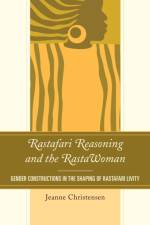
Rastafari Reasoning and the RastaWoman:Gender Constructions in the Shaping of Rastafari Livity examines the complex ways that gender and race shaped a liberation movement propelled by the Caribbean evolution of an African spiritual ethos. Jeanne Christensen proposes that Rastafari represents the most recent reworking of this spiritual ethos, referred to as African religiosity. The book contributes a new perspective to the literature on Rastafari, and through a historical lens, corrects the predominant static view of Rastafari women.In certain Rastafari manifestations, a growing livity developed by RastaMen eventually excluded women from an important ritual called Reasoninga conscious search for existential and ontological truth through self-understanding performed in a group setting. Restoring agency to the RastaWoman, Christensen argues that RastaWomen, intimately in touch with this spiritual ethos, challenged oppressive structures within the movement itself. They skirted official restrictions, speaking out in public and written forums whenever such avenues presented themselves, and searched for their own truth through conscious intentional self-examination characteristic of the Reasoning ritual.With its powerful, theoretically informed narrative, Rastafari Reasoning and the RastaWoman:Gender Constructions in the Shaping of Rastafari Livity will appeal to students and scholars interested in religious transformation, resistance movements, gender issues, critical race studies, and the history and culture of the English-speaking Caribbean.
Ludwig Wittgenstein's On Certainty explores a myriad of new and important ideas regarding our notions of belief, knowledge, skepticism, and certainty. During the course of his exploration, Wittgenstein makes a fascinating new discovery about certitude, namely, that it is categorically distinct from knowledge. As his investigation advances, he recognizes that certainty must be non-propositional and non-ratiocinated; borne out not in the things we say, but in our actions, our deeds. Many philosophers working outside of epistemology recognized Wittgensteins insights and determined that his works abrupt end might serve as an excellent launching point for still further philosophical expeditions. In Exploring Certainty: Wittgenstein and Wide Fields of Thought, Robert Greenleaf Brice surveys some of this rich topography. Wittgensteins writings serve as a point of departure for Brices own ideas about certainty. He shows how Wittgensteins rough and unpolished notion of certitude might be smoothed out and refined in a way to benefit studies of morality, aesthetics, cognitive science, philosophy of mathematics. Brices work opens new avenues of thought for scholars and students of the Wittgensteinian tradition, while introducing original philosophies concerning issues central to human knowledge and cognition.
This book explores the differences in Muslim attitudes and approaches to the public square in sub-Saharan Africa via a comparative-historical analysis of Muslim politics in Northern Nigeria and Senegal since independence in 1960. While Northern Nigeria has been mired in intermittent religious conflicts and violence, Senegal has maintained peaceful and tolerant relationships in inter-faith and public affairs. Yet, the two Muslim societies had similar Islamic backgrounds in Sufi orders Qadiriya and Tijaniya in Northern Nigeria; and Tijaniya, Muridiya, Qadiriya and Lahiniya in Senegal known for their peaceful approach to public affairs. Furthermore, the two Muslim societies belong to the ';black African Islamic cultural zone.' These common traits would suggest similar approaches to public affairs, but this has not been the case.The salient factors which are analyzed in the book include the historical factors (the success or failure to establish an Islamic state and the impact of different colonial administrations and ideologies), the extent of homogeneity of the social structure in each country, and strength of the contemporary state in both countries. The combination of these factors illustrates the experiences of the Muslims which further determine their divergent approaches to the public square.
A Realist Metaphysics of Race: A Context-Sensitive, Short-Term Retentionist, Long-Term Revisionist Approach, Jeremy Pierce defends a social kind view of racial categories. On this view, the biological features we use to classify people racially do not make races natural kinds. Rather, races exist because of contingent social practices, single out certain groups of people as races, give them social importance, and allow us to name them as races. Pierce also identifies several kinds of context-sensitivity as central to how racial categorization works and argues that we need racial categories to identify problems in how our racial constructions are formed, including the harmful effects of racial constructions. Hence, rather than seeking to eliminate such categories, Pierce argues that we should also make efforts to change the conditions that generate their problematic elements, with an eye toward retaining only the unproblematic aspects. A Realist Metaphysics of Race contains insights relevant not just to professional philosophers in metaphysics, philosophy of race, social philosophy, philosophy of language, and philosophy of science, but also to students and scholars working in sociology, biology, anthropology, ethnic studies, and political science.
This innovative work critically studies the contemporary problems of one segment of science, technology, engineering, and math (STEM) education. The lack of a diverse U.S.-based pool of talent entering the field of engineering education has been termed a crisis by academic and political leaders. Engineering remains one of the most sex segregated academic arenas; the intersection of gendered and racialized exclusion results in very few Latina engineers. Drawing on cutting-edge scholarship in gender and Latino/a studies, the book provides an analytically incisive view of the experiences of Latina engineers. Sponsored by the National Science Foundation through a Gender in Science and Engineering grant, the authors bridge interdisciplinary perspectives to illuminate the nuanced and multiple exclusionary forces that shape the culture of engineering. A large, multi-institution, longitudinal dataset permits disaggregation by race and gender. The authors rely on primary and secondary sources and incorporate an integrated mixed-methods approach combining quantitative and qualitative data. Together, this analysis of the voices of Latina engineering majors breaks new ground in the literature on STEM education and provides an exemplar for future research on subpopulations in these fields. This book is aimed at researchers who study underrepresented groups in engineering and are interested in broadening participation and ameliorating problems of exclusion. It will be attractive to scholars in the fields of multicultural and higher education, sociology, cultural anthropology, cultural studies, and feminist technology studies, and all researchers interested in the intersections of STEM, race, and gender. This resource will be useful for policy-makers and educational leaders looking to revitalize and re-envision the culture within engineering.
Computer simulations help advance climatology, astrophysics, and other scientific disciplines. They are also at the crux of several high-profile cases of science in the news. How do simulation scientists, with little or no direct observations, make decisions about what to represent? What is the nature of simulated evidence, and how do we evaluate its strength? Aimee Kendall Roundtree suggests answers in Computer Simulation, Rhetoric, and the Scientific Imagination. She interprets simulations in the sciences by uncovering the argumentative strategies that underpin the production and dissemination of simulated findings. She also explains how subjective and social influences do not diminish simulations' virtue or power to represent the real thing. Along the way, Roundtree situates computer simulations within the scientific imagination alongside paradoxes, thought experiments, and metaphors. A cogent rhetorical analysis, Computer Simulation, Rhetoric, and the Scientific Imagination engages scholars of the rhetoric of science, technology, and new and digital media, but it is also accessible to the general public interested in debates over hurricane preparedness and climate change.
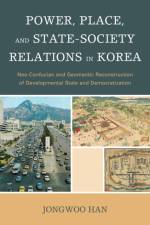
No book has addressed the simultaneous phenomena of Korea's rapid economic development and its vibrant democratization in a single coherent paradigm. The late developmentalist approach emphasizes the strong role of Korea's state and bureaucratic efficiency but does not explain how political development was concurrent with the economic miracles in the Han River; modernization and dependence theories also fail to explain the aspect of simultaneity in this phenomenon. What these three theories commonly miss is the unique relationship between state and society in Korea's long history of political culture. In this book, Jongwoo Han takes a holistic approach to understanding these phenomena by examining the state's role in the unprecedented economic development and society's capabilities to resist the state's centralized power. Han re-articulates state-society relations through Onuf's social constructivist approach based on three rules of a political community: hegemony, hierarchy, and heteronomy. This book expands upon this effort to re-construct the state and society relations in two ways. First, it produces case studies of the capital city of Hanyang (Joseon Dynasty from 1392 to 1910), Kyeongseong (Japanese colonial control from 1910 to 1945), and Seoul (1945-current). The capital city is analyzed as a container for the major ideologies and ways of thinking that have shaped three important political eras. Second, i adopts two indigenous thoughts, Neo-Confucianism and geomancy, as sources of the main political and cultural ideologies that shape Korea's state and society relations. These sources have never been treated as units of political analysis. This book finds that both Neo-Confucianism and geomancy, over two periods of Hanyang and Kyeongseong, are two main contributing factors of the emergence of the developmental state and vibrant democracy in Korea in the Seoul era.
What happens to a culture when it's most basic assumptions are questioned and rejected, but no new ones are offered to replace them? This book critically analyzes anti-modernist philosophy, the (perhaps futile) attempt to recover traditional worldviews and belief systems in order to cope with the void of meaning engendered by the upheavals of modernity. The textual focus of this book is interwar Germany, as it provides a dramatic and relatively recent example of cultural crisis, with a rich philosophical literature. The writings of Heidegger, Junger, Spengler, and others are discussed in detail. Key themes will be applied to our contemporary post-modern condition as well. The book examines the dangers of anti-modernism, both past and the present, but also discusses some of its implicit appeals.
Chinese moral education reform in the last three decades represents the most significant decentralization of decision-making power since the foundation of People's Republic of China in 1949. On one hand, it shows how de-politicized China's moral education curriculum has become following the introduction of China's ';Open-door' policy and economic reforms and the resultant social transformations. On the other hand, it reveals persistent problems in moral education caused by political stresses and tight state control. To explain these tensions, Power and Moral Education in China analyzes the characteristics of power relationships in school moral education curriculum goal-setting, content and pedagogy selection, and implementation. The ultimate purpose is to identify not only what factors impact Chinese moral education curriculum decision-making at the school level, but also how and why. Through a multiple case study conducted during 2008 in three schools in Shenzhen City, and based on four major data collection instruments (observation, interview, questionnaire, and document review), Wangbei Ye analyzes how power relationships have evolved in school moral education, and how and why school power affects school moral education. Contrary to the common belief that Chinese schools are passively impacted by external forces in moral education curriculum development, this book suggests that school power is a ';semi-emancipatory relationship' that acts as a major force shaping moral education. This means that although both the Chinese Communist Party and the state are positioned to control schools and moral education, schools nonetheless have the power to either negotiate for more influence, or partly emancipate themselves by collaborating with other external forces, responding to grass-root needs, empowering school teachers and adjusting internal school management style. This helps to explain the influence of Chinese schools in moral education and suggests a broader theory of power relationships in curriculum.
Creating Global Music in Turkey looks at the rise of 'world music' in Turkey by analyzing this country's various ';traditional' or ethnic music forms. The book focuses on the uniquely Turkish musical forms exemplified by Gypsy, Sufi, and Folk music, and explores how these have been incorporated into the global discourses of world music. In doing so, the book also shows how the place-making strategies of globalization are embodied through the construction of an ';authentic' Istanbul sound under the label of world music. The reader is invited to consider each musical tradition as being a unique realm in its incorporation into world music. The process of incorporation and appropriation is explained by examination of the specificities of each realm. This book is unique within the relevant literature, focusing on the production of a global cultural form outside of the Western world. It uses the findings of comprehensive ethnographic research to reveal to the reader the strategies of actors, the discursive mechanisms in the field, and how the world music markets operate.
The Transformative Power of Faith examines how and why some people, particularly those coming out of highly self-destructive, violent, and antisocial backgrounds who appear beyond repair, experience profound personal transformation through conversion to strong faith. Illustrated by stories of converts who came out of serious drug addiction, gangs, and poverty through adherence to a demanding faith, Erin Dufault-Hunter argues for a narrative approach to conversion. This holistic theoretical perspective offers an alternative epistemological stance to reductionistic models sometimes perpetuated among social scientists and religious ethicists alike. In this study, the narrative lens gives vision of the religious ';Other' a depth and complexity too often lacking. Such an approach allows a deeper understanding of the dynamics of personal transformation in ways that make sense of psychological and social factors without ignoring so-called ';spiritual' ones.
This book is about our appreciation for order and meaningfulness. It offers a new theory of that feeling inspired by Durkheim and Marx, then derives other theories to answer a range of questions: why we like to make ourselves orderly (in Chapter Three's theory of identity and commitment), why create shared orders of meaning (in Chapter Four's theory of culture); how we create those orders collaboratively through conversation (Chapter Five), and also through narrative, symbolic, and ritualistic formats (Chapter Six), and how orders of meaning are created in response to social structural position (Chapter Seven). In the end, this book shows how our sense of order both integrates and segregates us into productive associations with one another. And so, Explaining Culture is able to explain two patterns common to all growth: expansion and centralization. We see how our desire for novelty disperses us for resources, and that for familiarity draws us together to create meaningful order from them. Indeed, this book may offer a new approach to answering one of the most basic questions in both social and natural science: the question of how organic systems like society are created and maintained.Explaining Culture is an important new step in answering our most basic questions about culture, social interaction, and the emergence of order. The unique contribution of this work is in identifying the determinants of meaningfulness, and the ways we make the world meaningful by ordering it. Our valuing of order is rarely mentioned in sociology, but this book shows how it is the key influence in how we order ourselves and each other.
Notions of ustaarabu, a word expressing ';civilization,' and questions of identities in Zanzibar have historically been shaped by the development of Islam and association with littoral societies around the Indian Ocean. The 1964 Revolution marked a break in that history and imposed new notions of African civilization and belonging in Zanzibar. The revolutionary state subsequently introduced tourism and the market economy to maintain its hegemony over Zanzibar. In light of these developments, and with locals facing growing socio-economic marginalization and political uncertainty, Tourism and Social Change in Post-Socialist Zanzibar: Struggles for Identity, Movement, and Civilization examines how Zanzibaris are struggling to move through the local landscape in the post-socialist era and articulate their ideas of belonging in Zanzibar. This book further investigates how movements of Zanzibaris within the emerging and contending social discourses are reconstituting meanings for conceptualizing ustaarabu to define their roots in Zanzibar.
Studies in neuroscience demonstrate that a focus on mindfulness meditation and contemplative spiritual practice has the capacity to increase our non-anxious awareness and significantly lower our stress. Not only is this finding of immediate importance for pastoral counselors and psychotherapists, it will even necessitate a paradigm shift in the way that pastoral and spiritual practitioners approach the general care of souls. The starting point for such a paradigm shift is an acknowledgement of the built-in negativity bias of the brain, and how certain beliefs and theological views may inadvertently reinforce the bias to the detriment of individuals and faith communities. Once necessary for human survival, the ingrained bias can often be excessive for today's world, resulting in negatively disproportionate assessments of life events and human relationships. To balance the neural predisposition toward negativity and anxious awareness, it is necessary for pastoral and spiritual caregivers, and those in their care, to cultivate a regular contemplative-meditational practice.The Power of Neuroplasticity for Pastoral and Spiritual Care focuses on the groundbreaking finding of contemporary neurosciencethat the brain is built for change across the entire lifespan. It is designed to make the research accessible to and relevant for those engaged in the work of pastoral and spiritual care in order to help clients and congregants effect lasting and transformative changes in the mind and brain. Through the regular practice of contemplative prayer and meditation, we can literally calm the stress region of the brain in order to live less anxiously and experience more fully the peace and joy of the present moment. The introduction of mindfulness- and acceptance-based counseling approaches will provide pastoral and spiritual practitioners with an important therapeutic framework to situate their work, from which they can make more informed and effective interventions geared toward using the mind to change the brain.
Educational Theory and Jewish Studies in Conversation: From Volozhin to Buczacz, by Harvey Shapiro, PhD, brings together two different fields of studymodern Jewish studies and contemporary educational theoryto provide new theoretical frameworks for their interaction. Although Jewish studies and education programs at secular universities have joined denominational and transdenominational institutions of higher learning in adopting a dual or parallel course structure, there has been little scholarly attention given to the basis for doing so. Shapiro provides alternative theoretical frameworks for the relationship between Jewish studies and educational theory and discusses different ways of developing and articulating these relationships between disciplines. Shapiro shows what is at stake when students and faculty think and communicate together across discoursesin particular, between the fields of education and Jewish studies. Presenting an alternative to conventional notions of interdisciplinarity, this book's import extends to virtually all relationships between the humanities and professional education when these different discourses illuminate and challenge one another.
The book is a contribution to the fields of pragmatism, intercultural philosophy, and social and political ethics. The argument in the book runs along two lines: firstly, four pragmatist philosophers (William James, John Dewey, Richard Rorty, and Roberto Mangabeira Unger) are discussed by putting them into their respective intercultural contexts. They are interpreted as philosophers that were/are either explicitly or implicitly linked to some of the key tenets in comparative and/or intercultural philosophy of the twentieth/twenty-first century. Secondly, the book looks to their particular works and discusses the role of the body and its important ethical potential. In their respective contexts, it looks at the possibilities for linking James, Dewey, Rorty, and Unger to the original idea of the interculturally oriented ethical pragmatism. In this endeavor, the book also approaches the philosophies of Arthur Schopenhauer, Luce Irigaray, and Enrique Dussel in order to show their importance for a historical and contemporary (feminist and intercultural/global) debate about the philosophy of American pragmatism. The book concludes with two chapters i.e. with a discussion of Irigaray's ';ethical pragmatism' and finally with some reflections on contemporary Slovenian and French philosophy (Zizek, Badiou) as linked to the communism-democracy controversy. In both cases, again, pragmatist and intercultural methods are employed and the role of the body in their respective oeuvres is reflected.
There is hardly any university, college, or even high school left where they do not teach Darwinismand rightly so. Yet, most of these places do more preaching than teaching. They teach more than they should, and at the same time, they teach less than they should. Most books on Darwinism are either oriented on biology or philosophy, but this book tries to combine both approaches, so it explains the biological aspects for (future) philosophers as well as the philosophical aspects for (future) biologists. It leaves Darwinism intact, but removes the ';sting' that many of its opponents dislike. In what Verschuuren calls ';The Good' parts of Darwin's legacy, the author explores what Darwin's great contributions are to the study and theory of evolution. At the same time, the book will also delve into the areas where Darwin's thoughts were not so perfect or even wrong, especially in a philosophical sense ';The Not So Good' parts of his legacy. Almost all books on the philosophy of biology, and neo-Darwinism in particular, were born in the cradle of logical positivism or linguistic analysis. This book, on the other hand, tries to cross the border between the physical and the meta-physical.
Time plays many crucial roles in Descartes' physics, metaphysics, and epistemology, but has been an understudied area of his philosophy. Rebecca Lloyd Waller argues for a new interpretation of Descartes' account of time in light of the views held by his major predecessors. By studying Descartes' account of time through its historical context, Lloyd Waller contends that Descartes' views are actually consistent, comprehensive, and more historically significant than has been recognized. Descartes offers a type of temporal dualism composed of intrinsic duration and an innate idea of time-in-thought. Lloyd Wallers explanation of Descartes time-in-thought is also the key to resolve many significant problems in the contemporary literature. Given both its historical sensitivity and its ability to directly engage and address common interpretive puzzles, Descartes temporal Dualism offers a significant contribution to the understanding of an important, but frequently neglected component of Descartes' ontology.
Black Middle-Class Women and Pregnancy Loss: A Qualitative Inquiry is the first qualitative research case study of its kind on Black Infant Mortality (BIM) to focus on a target group of black American-born middle-class professional married women who have all lived through the experience of infant loss. This target group allows Lisa Paisley-Cleveland to examine the BIM phenomenon outside the poverty paradigm and issues attached to teenage pregnancy, as well as to explore contributing factors attached to the persistent black and white disparity in infant mortality rates, which according to CDC's January 2013 report are 12.40 and 5.35 respectively.This book raised the following question: given the disparity in the infant mortality rates among middle-class black and white women, are there factors attached to the pregnancy experience of middle-class black women that could help us understand the adverse birth outcomes for this target group? While investigating the answer to this question, Paisley-Cleveland provides readers entry into the pregnancy experiences of eight women from pregnancy planning to infant loss, and the book examines feelings, events, circumstances, interactions, behaviors, culture and history embedded in their pregnancy stories to explicate possible factors connected to adverse birth outcomes. It links the women's personal stories to clinical, and psychosocial factors, placing their experiences at the center of the research, and demystifying assumptions. The study's narratives and conclusions are built into a literary structure which helps to make a complex subject relatable and understandable to a wide audience. Black Middle-Class Women and Pregnancy Loss will be an invaluable resource for medical professionals; professionals in public health, mental health, and social work; sociologists; and anyone working or invested in womens health.
Genocide occurs when a government attempts to exterminate systematically a large percentage of its own citizens or subjects, simply because they fall into a particular group defined by religion, ethnicity, political affiliation, or (rarely) other group identification ranging from occupation to gender status. Genocide has been a major cause of death worldwide over the last 100 years or more, and is far from being eliminated. Through examining available cases, Warning Signs of Genocide: An Anthropological Perspective shows that genocide becomes a live danger when group hatredsespecially religious, ethnic, and politicalare exploited by political regimes as major ways of seizing and maintaining power. Genocide is actually invoked, however, only when such regimes feel they are threatened, usually either because they are new and not consolidated in power or because they are challenged by local rebellions, civil war, or (less often) international war or major economic decline. Knowing these warning signs should make the international community take note that genocide is virtually certain to occur, and take action to stop it. This book joins others in noting that the international community has rarely intervened in time, and in the hope that these findings will encourage more prompt action.
A Mirror for Lovers: Shake-speare's Sonnets as Curious Perspective, by William F. Zak, seeks to identify in Shake-speare'e sonnet sequence the structural and thematic features of the satirical tradition born in Plato's Symposium. Through this study, Zak traces the power of an idea to endure, re-animate, and enrich itself through time: Plato's discrimination of the true nature of love in The Symposium. Born anew in its medieval reincarnations (The Romance of the Rose, The Vita Nuova, and The Canzoniere of Petrarch), the tradition begun in Plato's Symposium was then resuscitated in the Elizabethan sonnet sequence revival, most notably in Shake-speare's Sonnets. With extended examination of all the texts in the Q manuscript, A Mirror for Lovers makes a case for the mutually illuminating relationship among the sonnets to the fair young man and the dark lady, ';A Lover's Complaint,' and the mysterious dedication that until now have never received attention as an integral symbolic matrix of meaning.
The Making of Les Bleus traces the Fifth Republic's quest to create elite athletes in two global team sports, football and basketball, primarily at the youth level. While the objective of this mission was to improve performances at international competitions, such programs were quickly seized upon to help ease domestic issues and tensions. The onset of the Cold War forced countries of all sizes to rethink their relevancy. A country's ability to exert ';soft power,' or influence others through the cultural sphere, became more important. Sport was but one way through which to do so. The extent to which France harnessed the athletic domain was unprecedented among other West European nations. In France, sport, particularly at the youth level, was used to cultivate soft power internationally, to transmit republican ideals of democracy and fair play to the youth, and to examine and create a modern, post-colonial French identity in a globalizing world. The French sought to find a ';third way' in sports, much in the way that it sought to create an alternative between the diplomatic policies of Washington and Moscow. Fifth Republic sports systems placed the training of elite athletes under the state. At the same time, private clubs also played an important role in developing players to serve the republic in elite competition.Examination of the republic's quest to create elite athletes provides perspective on how France coped with and adapted to the post-1945 world. In what ways did the country reconfigure its global role? How did domestic changes impact society? In a globalizing, post-colonial world, how has France come to terms with the past? In what ways has France sought to create a new ';French' identity? This story helps answer such questions. The history of the state's cooption of youth sports forms a compelling tale and serves as a prism through which to investigate the larger history of France, the evolution of society, the impacts of the media revolution, and the government's mission of public health. It underscores just how much things have changedyet still remained the same.You can find a podcast interview with the author about this book at: http://newbooksinsports.com/2013/11/14/lindsay-krasnoff-the-making-of-les-bleus-sport-in-france-1958-2010-lexington-books-2012/
This book examines the historical and current practices of rebuilding abandoned and disinvested communities in America. Using a community in East Baltimore as an example, Race, Class, Power, and Organizing in East Baltimore shows how the social structure of race and class segregation of the past contributed in the creation of our present day urban poor and low-income communities of color; and continue to affect the way we rebuild these communities today. Specific to East Baltimore is the presence of a powerful and prestigious medical complex which has directly and indirectly affected the abandonment and rebuilding of East Baltimore. While it has grown in power and land over the past 100 years, the neighborhoods around it have decreased in size and capital, widening the gap between the rich and the poor. The author offers a critical analysis of the relationships between powerful private institutions like the Johns Hopkins Medical Institutions and government and their intention in rebuilding urban communities by asking the question ';How do we determine equity in benefit?' Focusing on a current rebuilding project using eminent domain to displace historical African-American communities, and the acquiring of land for private development, this book details the role of community organizing in challenging these types of non-community participatory rebuilding processes, resulting in the gentrification of urban neighborhoods. The detailed analysis of the community organizing process when families are displaced offers similarly affected communities a tool box for challenging current developers and government in unfair rebuilding practices. The context of these practices highlights the current laws and policies that contribute to continued displacement and disadvantage to poor communities without addressing the rhetoric of the intention of government-subsidized private development. This book examines the effect of such non-participatory and non-transparent rebuilding practices on the health of the people and place.
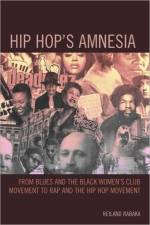
What did rap music and hip hop culture inherit from the spirituals, classic blues, ragtime, classic jazz, and bebop? What did rap music and hip hop culture inherit from the Black Women's Club Movement, New Negro Movement, Harlem Renaissance, Hipster Movement, and Black Muslim Movement? How did black popular music and black popular culture between 1900 and the 1950s influence white youth culture, especially the Lost Generation and the Beat Generation, in ways that mirror rap music and hip hop culture's influence on contemporary white youth music, culture, and politics? In Hip Hop's Amnesia award-winning author, spoken-word artist, and multi-instrumentalist Reiland Rabaka answers these questions by rescuing and reclaiming the often-overlooked early twentieth century origins and evolution of rap music and hip hop culture. Hip Hop's Amnesia is a study about aesthetics and politics, music and social movements, as well as the ways in which African Americans' unique history and culture has consistently led them to create musics that have served as the soundtracks for their socio-political aspirations and frustrations, their socio-political organizations and nationally-networked movements. The musics of the major African American social and political movements of the 1950s, 1960s, and 1970s were based and ultimately built on earlier forms of ';African American movement music.' Therefore, in order to really and truly understand rap music and hip hop culture we must critically examine both classical African American musics and the classical African American movements that these musics served as soundtracks for. This book is primarily preoccupied with the ways in which post-enslavement black popular music and black popular culture frequently served as a soundtrack for and reflected the grassroots politics of post-enslavement African American social and political movements. Where many Hip Hop Studies scholars have made clever allusions to the ways that rap music and hip hop culture are connected to and seem to innovatively evolve earlier forms of black popular music and black popular culture, Hip Hop's Amnesia moves beyond anecdotes and witty allusions and earnestly endeavors a full-fledged critical examination and archive-informed re-evaluation of ';hip hop's inheritance' from the major African American musics and movements of the first half of the twentieth century: classic blues, ragtime, classic jazz, swing, bebop, the Black Women's Club Movement, the New Negro Movement, the Harlem Renaissance, the Bebop Movement, the Hipster Movement, and the Black Muslim Movement.
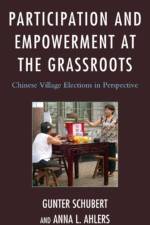
This monograph ties in the scholarly debate on Chinese village elections and their consequences for China's political system. It draws on comparative fieldwork conducted in six villages in two counties in Jiangxi and Jilin Provinces and one district in Shenzhen between 2002 and 2005, producing data from some 140 in-depth interviews of villagers and local officials up to the prefectural level. The major objective of this book is as much a critical assessment of the research literature of Chinese village elections published over the last fifteen years as to sharpen the reader's sight for the scope and limits of this important reform to generate regime legitimacy in the local state, an issue which has so far been neglected in the study of Chinese village elections. It hence contributes to our understanding of the nexus between political participation and cadre accountability at the grassroots, and highlights a number of factors ensuring the persistence of one-party rule in contemporary China.
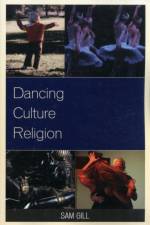
In this provocative study of dancing, Sam Gill examines the interpretive styles of a variety of cultural dance traditions in discourse with the philosophic traditions of Schiller, Merleau-Ponty, Barbaras, Derrida, Leroi-Gourhan, and Baudrillard. As a scholar of religion, Gill provides special consideration to the importance of this emerging appreciation of dancing as a perspective inclusive of body and experience. Each chapter delves into the many factions of dancing: moving, gesturing, self-othering, playing, seducing, and masking. Gill also draws on the analysis of contemporary dance films and musicals, his experience as a dancer and dance teacher, his extensive research on dance traditions, and his interest in neurobiology and phenomenology to develop the core of this rich exploration of ';dancing,' the structurality of all dances.
Abonner på vårt nyhetsbrev og få rabatter og inspirasjon til din neste leseopplevelse.
Ved å abonnere godtar du vår personvernerklæring.