






















Gjør som tusenvis av andre bokelskere
Abonner på vårt nyhetsbrev og få rabatter og inspirasjon til din neste leseopplevelse.
Ved å abonnere godtar du vår personvernerklæring.Du kan når som helst melde deg av våre nyhetsbrev.

Giorgio Strehler Directs Carlo Goldoni uses Giorgio Strehler's Goldoni productions (and Arlecchino servitore di due padroni in particular) as a means to defining his directorial aesthetic. The book provides a framework for examining the director's career that is expansive rather than restrictive, using Goldoni and Arlecchino servitore di due padroni as a through-line for Strehler's fifty-year career at the Piccolo Teatro di Milano. This research defines Strehler's multifaceted style and brings to light interrelationships among his various works, creating a base from which a variety of subsequent critical inquiries can be made. It also establishes Strehler's identity within the larger scope of the Italian theatre as a whole. Finally, it creates the critical challenge of finding more expansive notions of directorial style and concept that unite diverse ideologies without delimiting our understanding of the director. Crucial to understanding Strehler's work with Arlecchino servitore di due padroni is his consistent reinterpretation of the play, which received no less than five distinct productions during Strehler's lengthy career. His repeated reworking of existing productions provides a baseline for examining what elements were maintained and what elements changed or evolved. The four key influences that defined Strehler's aesthetic in his work with Arlecchino were commedia dell'Arte, Bertolt Brecht, ';refractive theatricality' and Jacques Copeau. Through these productions, Strehler created a dialogue with his audience and helped change the reputation of Carlo Goldoni both in his own country and abroad.
The foreign policy writings of John Rawls and Amartya Sen provide insight and clarity into some of the most difficult problems confronting humanity. What is the most effective strategy of national defense? Does an effective strategy of national defense involve the possession of nuclear weapons? Why must the right to voteand the right to health care and the right to an education and the right to employmentcenter the foreign policy of a democracy? These are questions Rawls and Sen raise and answer in their writings. This book describes the foreign policy of Rawls and Sen while building up towards a policy recommendation. Human rights protect civilians from heads of state and their armiesand the foreign policy of a democracy must promote human rights. But the nature of this recommendation is very specific. By redirecting some military spending to development goals, the core needs of more civilians can be better met while simultaneously advancing human security.http://www.bu.edu/today/2013/pov-nuclear-armament-is-a-lose-lose/ http://www.bu.edu/today/2014/pov-to-stop-bad-guys-ratify-the-united-nations-arms-trade-treaty/
Has postmodern American culture so altered the terrain of medical care that moral confusion and deflated morale multiply faster than both technological advancements and ethical resolutions? The Ethos of Medicine in Postmodern America is an attempt to examine this question with reference to the cultural touchstones of our postmodern era: consumerism, computerization, corporatization, and destruction of meta-narratives. The cultural insights of postmodern thinkerssuch as such as Foucault, Deleuze and Guattari, Lyotard, Baudrillard, Bauman, and Levinashelp elucidate the changes in healthcare delivery that are occurring early in the twenty-first century. Although only Foucault among this group actually focused his critique on medical care itself, their combined analysis provides a valuable perspective for gaining understanding of contemporary changes in healthcare delivery. It is often difficult to envision what is happening in the psychosocial, cultural dynamic of an epoch as you experience it. Therefore it is useful to have a technique for refracting those observations through the lens of another system of thought. The prism of postmodern thought offers such a device with which to ';view the eclipse' of changing medical practice. Any professional practice is always thoroughly embedded in the social and cultural matrix of its society, and the medical profession in America is no exception. In drawing upon of the insights of key Continental thinkers such and American scholars, this book does not necessarily endorse the views of postmodernism but trusts that much can be learned from their insight. Furthermore, its analysis is informed by empirical information from health services research and the sociology of medicine. Arnold R. Eiser develops a new understanding of healthcare delivery in the twenty-first century and suggests positive developments that might be nurtured to avoid the barren ';Silicon Cage' of corporate, bureaucratized medical practice. Central to this analysis are current healthcare issues such as the patient-centered medical home, clinical practice guidelines, and electronic health records. This interdisciplinary examination reveals insights valuable to anyone working in postmodern thought, medical sociology, bioethics, or health services research.
The Political Life of Bella Abzug, 19201976: Political Passions, Women's Rights, and Congressional Battles, by Alan H. Levy, marks the first full biography of Bella Abzug. Abzug was one of woman in politics in mid- and late-twentieth-century America. Levy traces the New York City world of Russian-Jewish immigrants into which Abzug was born. He then examines her education through Columbia Law School, her marriage, and her early work both as a labor attorney and as an advocate for many controversial causes, including that of an African-American falsely accused of raping a white woman in Jim Crow Era Mississippi. Levy studies Abzug's work for nuclear disarmament, her activism against the Vietnam War, and her successful bid for Congress in 1970. From there, the biography details the myriad of issues with which Abzug grappled as a Member of Congress from 1971 to 1977, and ends with her close loss to Daniel Patrick Moynihan in a bid for the U.S. Senate in 1976. A second book, studying the rest of Abzug's life from 1976 to 1998, is to follow.
The Body and Shame: Phenomenology, Feminism, and the Socially Shaped Body investigates the concept of body shame and explores its significance when considering philosophical accounts of embodied subjectivity. Body shame only finds its full articulation in the presence (actual or imagined) of others within a rule and norm governed milieu. As such, it bridges our personal, individual and embodied experience with the social, cultural and political world that contains us. Luna Dolezal argues that understanding body shame can shed light on how the social is embodied, that is, how the bodyexperienced in its phenomenological primacy by the subjectbecomes a social and cultural artifact, shaped by external forces and demands.The Body and Shame introduces leading twentieth-century phenomenological and sociological accounts of embodied subjectivity through the work of Edmund Husserl, Maurice Merleau-Ponty, Jean-Paul Sartre, Michel Foucault and Norbert Elias. Dolezal examines the embodied, social and political features of body shame. contending that body shame is both a necessary and constitutive part of embodied subjectivity while simultaneously a potential site of oppression and marginalization. Exploring the cultural politics of shame, the final chapters of this work explore the phenomenology of self-presentation and a feminist analysis of shame and gender, with a critical focus on the practice of cosmetic surgery, a site where the body is literally shaped by shame. The Body and Shame will be of great interest to scholars and students in a wide variety of fields, including philosophy, phenomenology, feminist theory, women's studies, social theory, cultural studies, psychology, sociology, and medical humanities.
This book examines, from a sociological perspective, teacher-student power relations in classroom learning and teaching. The case study consists of four Hong Kong primary schoolsand sixteen classrooms thereinthat were selected as research sites to explore the concept of teacher-student power relations. Observations, individual interviews, and document analysis were the main data collection methods employed. Wong provides the historical context for the issue of teacher-student power relationship by reviewing the traditional Chinese cultures and values, in particular the values of respect for authority and for teachers, and demonstrates the intermingling of Chinese and Western cultures in contemporary Hong Kong Chinese society. She reviews the major educational initiatives carried out in Hong Kong since the 1970s, showing how Western educational policies promoting student-centric teaching modes have encouraged changes in classroom culture. With reference to the observed seventy-three lessons, the study identified three patterns of teacher-student power relationsTeacher Domination, Relatively Balanced Opportunity for Power Sharing, and Student Self-Empowermenteach involving different degrees of power being exercised by teacher and students. The coexistence of these three power patterns and the two corresponding power situations (student empowerment and disempowerment) can be explained as the result of multileveled, intertwined interactions among six factors related to social culture, education policy, school and classroom contexts, and to the individual players concerned. The book thus contributes to the understanding of teacher-student power relations in the context of Hong Kong by proposing a theoretical framework that reflects local socio-cultural, educational, and school contexts.
Diversity and the Common Good: Civil Society, Religion, and Catholic Sisters in a Small City examines how Catholic Sisters and their congregations have been critical nodes in religious and civil networks, investing their social capital to address one of the most pressing issues facing American communities today: diversity. ';Bluffton,' situated in Americas heartland, is revealed as a community that has confronted racism of the ugliest kind and chosen to work toward a good society for its citizens, driven by the concerted efforts of its Catholic Sisters and highly committed civic and religious actors. Blending quantitative and qualitative data collected over three years and scholarship on civil society, Meg Wilkes Karrakers narrative style engages scholars from sociology, political science, public administration, and religious, but also speaks to community leaders and citizens seeking to understand how they can act on behalf of the common good in their own communities. Notably, Diversity and the Common Good tells the story of a community that ';works!' Given recent criticisms of American Sisters by the Vatican, this story of the great good done by Sisters must be told now.
The international community has followed up its 2001 invasion of Afghanistan with a complex, multi-faceted peacebuilding project. However, informed observers believe that this Western-led mission in Afghanistan has failed to address the inherent peacebuilding needs of Afghanistan and has hindered the formation of a locally experienced sustainable peace. In response, emerging peacebuilding theories and rhetoric have pointed to an urgent need for revised peacebuilding paradigms and strategies that hold local, Afghan ownership of peacebuilding activities as a central concern.This book responds to this need for revised peacebuilding paradigms and: (1) introduces the topic of local ownership of peacebuilding in Afghanistan; (2) surveys current shifts in peacebuilding theory and practice that are only starting to be realized on the ground; (3) sets the context for a discussion of local ownership of peacebuilding; (4) reports on the perceptions of foreign and Afghan peacebuilding leaders working in Afghanistan in regards to the journey towards local ownership of peacebuilding; and (5) suggests the creation of a locally designed and led conflict transformation system that might help restructure local-foreign relations and advance the journey towards Afghan ownership of peacebuilding.
For a century now, scholars have searched for the ';source' of Marcel Proust's startlingly innovative novel la recherche du temps perdu. Some have pointed to Henri Bergson, Sigmund Freud, or Paul Sollier. Others have referenced the novels of Henry James. But no one has focused on the more significant influence of the writings of Henry's older brother, the psychologist and Harvard professor William James. A close comparison reveals the degree to which Proust's novel stems from James's psychological and philosophical theories.William James was a prominent member of the scientific, medical and philosophical communities in Proust's Paris and was close friends with two men well known to Proust. His works were translated into French and reviewed in French journals and newspapers. This book discloses how Proust likely became familiar with William James and illustrates how James's writings were key to Proust's ability to craft the book he had been trying to write, extending even to his use of similar language and imagery and a narrative schema that arguably mimics James's descriptions of consciousness, perception, and memory. Proust's hero assiduously explores the vague, uncertain, relational aspects of experience, the trials and comforts of habit, the salvational potential of memory, the ';moral' aspects of personal history teeming with impression and desirethese are the truths of human psychology and behavior theorized by William James and made fictional flesh in Proust's rendition of lived experience.
What are the societal effects of Europeanization? How successful is the EU's project to create an overarching European identity representative of all its citizens, transcending national boundaries, and including those previously excluded as national minorities? This study addresses these questions by adapting the Social Identity Theory's (SIT) concept of ';social identity' to the discussions of ';European identity,' offering a novel approach that remedies previous definitional and ontological problems of the term. The conceptualization of a ';European social identity' is generated here to invite a reconsideration of conventional understandings of how minorities' group identities are formed. Presenting itself as a challenge to nations and nationality, the European integration process has yet to achieve its supra-national ideal, falling instead into the trap of nationalizing those who are subsumed under the category of minorities in practicearguably because of a faulty theoretical understanding of the term. The new ';Others' of Europeanization have been chosen specifically to emphasize, despite the EU's ';united in diversity' rhetoric, the marked lack of united destiny and common heritage of selected European nationals. Among these new Others, Russophones in the Baltic states, the Roma people, populations of the Western Balkans, immigrants and guest workers, and Muslims residing in European countries have all been excluded from Europe's new social identity. Through in-depth historical analysis, this book aims to correct this problem, providing both European studies and broader political science literatures with a new understanding of minorities that is more dynamic both in practice and theory.
Francis Bacon, long considered a minor figure in the founding of modern political thought, is now recognized as one of its foremost thinkers. Bacon not only championed a new type and method of scientific inquiry, he also developed a plan for how modern society could be re-ordered to accommodate and promote scientific progress. Bacon's scientific writings cannot be wholly understood apart from his political writings, and many of his works combine the two topics so subtly that it is difficult to even place them in a definitive category; in this book, Kimberly Hurd Hale identifies the thread in Bacon's body of work that links modern science and liberalism. Hale provides a detailed analysis of New Atlantis, examining Bacon's place in the founding of modern political philosophy and the ways he relates to Plato, Machiavelli, and Hobbes. Hurd argues that Bacon's demonstration of scientific rule in the New Atlantis is not meant as a blueprint for modern society; rather it shows us the dangers of a scientific society devoid of liberty. By examining what is troubling about the New Atlantis, this book explains what problems lead to the emergence of Atlantean societies, i.e. societies that are prosperous, ambitious, and doomed. It shows that Bacon's portrait of Bensalem may provide the light necessary to guide those of us living in a world shaped by modern science through the dangerous seas.
Wisdom and Initiation in Gabon: A Philosophical Analysis of Fang Tales, Myths, and Legends is a study of the philosophical significance of Fang mythology and the rituals of Initiation that lead to Wisdom. Bonaventure Mve Ondo argues that Fang tales, myths, and legends are components of the foundation of a worldview that sustains and protects a unique, historical Fang identity. For Mve Ondo, the contemporary challenges to the existence and identity of the Fang require, perhaps more than ever, recognition of the central role of mythology. At an historical moment when Africans are faced with the challenges of westernization, the metaphysics of the Fang, illustrated and preserved by tales, myths, and legends, is a critical element of Fang survival. Mythology is far more than a collection of amusing or awe inspiring stories, they are profoundly important moral lessons for the Fang in their continuing encounters with such contemporary challenges as materialism and, as the ';stories' in this book illustrate, the constant struggle to live lives of purpose and meaning. For Mve Ondo, the critical, central issue for the Fang is to focus on the distinction at the heart of his analysis, i.e., the crucial distinction between ';to have' and to ';to be.' The lessons transmitted from generation to generation by these marvelous stories are, Mve Ondo argues, central to living lives that reflect and perpetuate the eternal truths of the Fang experience.
In the 1930s, the United States was beset with an economic crisis so serious that it threatened the future of the nation. On the national level, Franklin Roosevelt initiated and developed a variety of reforms and experiments as part of the New Deal. Some Americans looking for change believed Roosevelt was going in the wrong direction, while others believed he was too timid in his reforms. Still others thought he had not broken free of the restraints placed on him by the financial interests of the country. Many Americans had their own ideas about how to address the financial crisis and took matters into their own hands. In Utopian Movements and Ideas of the Great Depression, Donald W. Whisenhunt explores several lesser-known movements for change and reform in the Great Depression Era including communal societies, proposals for reform, and analyses of several books that propose solutions to the nations economic ills. Arguably, America has been a Utopian experiment from its beginning; the movements and ideas of the 1930s were simply the latest manifestations of that experiment. Though not well known, the people and events studied represent the thinking of some of the most articulate and driven Americans during the economic crisis. Despite their lack of obvious success, they represent an important American ideathat an average person can devise solutions to societys problems. These movements and ideas embody the American belief in progress and the power of the individual.
Justice in the Marketplace in Early Modern Spain examines two late scholastic economic treatises, the Provechoso tratado de cambios of Cristobal de Villalon (1542) and the Instrucion de mercaderes of Saravia de la Calle (1544). It does this in the context of the two principal questions that economic historians pose concerning the economic literature of the Spanish late scholastics in general. Is there a clear link between this literature and modern economic science, and does it manifest a free market orientation? Michael D'Emic draws two conclusions. First, there is a palpable relationship between the work of these two authors and modern economic analysis, particularly that of financial economics. Second, the authors fundamentally disagreed on most questions, mostly concerning the justice of the free market. Villalon condemns the workings of the market and refuses to allow any possibility that the profit motive may be morally neutral. With considerable clarity, he articulates a cost of production theory of value and advocates a system of prices based upon labor and cost and administered by civil authority. Saravia counters with an elegant expression of the utility theory of value and argues with logical force that prices established by the workings of the market are fundamentally just. He allows considerable moral latitude to the pursuit of profit, which he regards as spiritually dangerous but not necessarily evil. Through the lens of their opposing views on economic value, the market price, and what does or does not constitute the sin of ';usury,' the authors, with astonishing technical acumen, observe, analyze, and pass moral judgment on a remarkably wide range of complex transactions, most of which have counterparts in twenty-first century financial markets. In the process, they tackle problems that still bedevil economists and accountants in our own day, such as the difference between a sale and a borrowing, the ';just' value of future income flows, and the presence of asymmetrical information in pricing. The result is a vivid record of the color and texture of early modern economic life that reveals a surprising degree of financial sophistication that the present book makes accessible to the modern reader.
This book examines the present crisis of Greece's political economy as a crisis of stateness, tackling the domestic as well as the international dimensions. It represents the first attempt by Greek academics to put forward a theoretically-informed, interdisciplinary analysis of Greece's fiscal, economic, and political crisis. The approach aims to fill a major gap, combining insights from comparative politics, political economy, international relations theory, and legal-institutional analysis, in a theoretically informed account of the Greek case in comparative and theoretical perspective. The book tackles the issue of the possible next steps for the EU under the influence of the crisis of the eurozone, including a thorough analysis of national sovereignty seen from a domestic and an international point of view, focusing on critical processes in the international arena such as interdependency and dependency, while a legal-institutional chapter demonstrates the erratic way in which Greek government dealt with sovereign debt. The project comes at the right time in order to address a highly contentious chapter in the political development of the Greek state and of the European South. As the crisis in the eurozone's weaker periphery unfolds, Lavdas, Litsas, and Skiadas use the Greek crisis in order to address a much larger and critical issue: the role and predicament of stateness in the developing EU.
Abolishing White Masculinity from Mark Twain to Hiphop examines white American male literature for its social commentary on the construction of whiteness in the United States. Whiteness has always been a contested racial identity in the U.S., one in a state of construction and reconstruction throughout critical cultural and historical moments. This text examines how white American male writers have grappled with understanding themselves and their audiences as white beings.Abolishing White Masculinity from Mark Twain to Hiphop specifically brings a critical whiteness approach to American literary criticism and strengthens the growing interdisciplinary field of critical whiteness studies in the humanities. Critical whiteness studies shifts the attention from solely examining people and perspectives of color in race discourse to addressing whiteness as an essential component of race ideology. The primary contribution of this perspective is in how whites construct and see whiteness, for the larger purpose of exploring the possibilities of how they may come to no longer construct and see themselves through whiteness. Understanding this is at the heart of contemporary discussions of post-raciality.Abolishing White Masculinity from Mark Twain to Hiphop uses the following texts as canonical case studies: Puddn'head Wilson and Those Extraordinary Twins by Mark Twain, The Great Gatsby and The Beautiful and the Damned by F. Scott Fitzgerald, and Angry Black White Boy and The End of the Jews by Adam Mansbach. Each underscores the dialectic of formation, deformation, and reformation of whiteness at specific socio-historical moments based upon anxieties about race possessed by whites and highlighted by white fictionists. The selected writers ultimately serve dually as co-constructors of whiteness and social critics of their times through their literature.
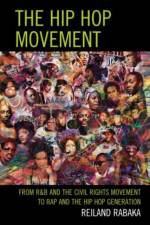
The Hip Hop Movement offers a critical theory and alternative history of rap music and hip hop culture by examining their roots in the popular musics and popular cultures of the Civil Rights Movement and Black Power Movement. Connecting classic rhythm & blues and rock & roll to the Civil Rights Movement, and classic soul and funk to the Black Power Movement, The Hip Hop Movement explores what each of these musics and movements contributed to rap, neo-soul, hip hop culture, and the broader Hip Hop Movement. Ultimately, this book's remixes (as opposed to chapters) reveal that black popular music and black popular culture have always been more than merely ';popular music' and ';popular culture' in the conventional sense and reflect a broader social, political, and cultural movement. With this in mind, sociologist and musicologist Reiland Rabaka critically reinterprets rap and neo-soul as popular expressions of the politics, social visions, and cultural values of a contemporary multi-issue movement: the Hip Hop Movement.Rabaka argues that rap music, hip hop culture, and the Hip Hop Movement are as deserving of critical scholarly inquiry as previous black popular musics, such as the spirituals, blues, ragtime, jazz, rhythm & blues, rock & roll, soul, and funk, and previous black popular movements, such as the Black Women's Club Movement, New Negro Movement, Harlem Renaissance, Civil Rights Movement, Black Power Movement, Black Arts Movement, and Black Women's Liberation Movement. This volume, equal parts alternative history of hip hop and critical theory of hip hop, challenges those scholars, critics, and fans of hip hop who lopsidedly over-focus on commercial rap, pop rap, and gangsta rap while failing to acknowledge that there are more than three dozen genres of rap music and many other socially and politically progressive forms of hip hop culture beyond DJing, MCing, rapping, beat-making, break-dancing, and graffiti-writing.
The Flexible Imagination: At Work in the Transnational Corporate Offices of Jakarta, Indonesia is a behind-the-scenes ethnography examining the social interactions between individuals from different cultural and national backgrounds who work together in the halls of some of the most notorious Fortune 500 corporations out of Southeast Asia. In the transnational corporate spaces of Jakarta, Indonesia, there is a frustrating struggle for coherence and meaning by expatriate and national populations still new to the morphing and ';flexible' world of global capitalism. Many of those newly engaged in the machinations of our global economy struggle to make sense of their unfamiliar surroundings. In this situation, where localities and social constellations are in a state of constant flux, people rely on their imagination in the construction of a social reality that makes senseprovides enough social stabilityto get through the routine activities of a typical work day. The imaginary put to use by those discussed in this book ties together bodies of knowledgehistoric and current, academic and popular, economic and culturalin an attempt to create a transnational working reality that makes sense. Thus, the term ';flexible imagination' encapsulates the variable and shifting nature of these imaginary processes.
This book addresses the relationship between Moscow and Havana in the period between the Russian and Cuban Revolutions, i.e. from November 1917 to January 1959. It analyzes the reasons why in this era before the Cuban Revolution, which is traditionally thought to have ignited Moscow's interest in the Caribbean island, a relationship existed between the two countries at a variety of different levels. In order to do this, both the attention that the Third International, or Comintern, gave to Cuba, as well as Moscow's formal state-to-state relations with Havana, are examined. In addition, United States policy towards both socialism and the Soviet Union are analyzed, due to the role that Washington played in Cuba prior to the Cuban Revolution. Following this, an examination of the events, process and dynamics that characterized the nature of the relationship between Moscow and Havana from 1917 to 1959 will be conducted. A number of conclusions will be given, but the primary one is that prior to January 1959, the Kremlin took considerable interest in Cuba and did not suffer from ';geographical fatalism,' as has traditionally been thought. This is significant in itself, but also in light of the relationship that rapidly developed between Moscow and Havana in the aftermath of the Cuban Revolution, as a number of factors that were important in the pre-1959 relationship would also be significant after 1959. Furthermore, this analysis is also important for the contemporary bilateral relationship between Russia and Cuba, as both governments have made increasing reference to the multifaceted relationship that existed prior to 1959.
This book examines the literature of Shiga Naoya, who is highly regarded in modern Japan for his unique style and methods of describing his personal experiences and emotions. Contributing new findings to the field of scholarship on Shiga, this study focuses in particular on Shiga's nature-inspired writings and discusses how he created some vivid images of nature that became famous and still linger in Japanese people's minds. Shiga's remarkable sensitivity toward nature and the influences he received from earlier writers in Japan and abroad is examined. The complexity and depth of his understanding of nature is further revealed in his fascination with the supernatural, which also contributed to the creation of his literary style.
Shape-Shifting Capital: Spiritual Management, Critical Theory, and the Ethnographic Project is positioned at the intersection of anthropology, critical theory, and philosophy of religion. First, Gonzlez explores the phenomena of ';workplace spirituality' in a language that is accessible to a general readership. Taking contemporary trends in organizational management as a case study, he argues, by way of a detailed ethnographic study of practitioners of workplace spirituality, that the conceptual and institutional boundaries between religion, science, and capitalism are being redrawn by theologized management appropriations of tropes borrowed from creativity theory and quantum mechanics. Second, Gonzlez makes a case for a critical anthropology of religion that combines existential concerns for biography and intentionality with poststructuralist concerns for power, arguing that the ways in which the personalization of metaphor bridges personal and social histories also helps bring about broader epistemic shifts in society. Finally, in a postsecular age in which capitalism itself is explicitly and confidently ';spiritual,' Gonzlez suggests that it is imperative to reorient our critical energies towards a present day evaluation of postmodern capitalism's boundary-blurring. Gonzlez further argues that the kind of ';existential deconstruction' performed by what he calls ';existential archeology' can serve the needs of any social criticism of neoliberal ';religion' and corporate spirituality.
This book uses the case of the rise and fall of the Internet gambling industry to illustrate a new approach to understanding how public policy is made in the United States. The theory advanced is that different phases of the policy process are governed by three distinct political dynamics: constraint, momentum, and discretion. The book maps this CMD model of the policy process onto the case of Internet gambling, examining the full range of political venues in which issues of public policy are acted upon. It argues that constraint rules the day in the early phases of the policy process, momentum builds in the middle, and discretion comes into play most prominently as the policy cycle concludes. This CMD model both draws attention to previously understudied elements of policymaking, and explores the dynamic and interrelated nature of these three phases of the policy process.
The past fifty years has seen the emergence of an energetic dialogue between religion and the natural sciences that has contributed to a growing desire for interdisciplinarity among many constructive theologians. However, some have also resisted this trend, in part because it seems that the price one must pay for such engagement is much too high. Interdisciplinary work appears overly abstract and methodologically restrictive, with little room for systematic theologians self-consciously operating within a particular historical tradition. In Interdisciplinary Interpretation: Paul Ricoeur and the Hermeneutics of Theology and Science, Kenneth A. Reynhout seeks to address this concern by constructing an alternative understanding of interdisciplinary theology based on the hermeneutical thought of Paul Ricoeur, generally recognized as one of the most interdisciplinary philosophers of the twentieth century. Appealing to Ricoeur's view of interpretation as the dialectical process of understanding through explanation, Reynhout argues that theology's engagement with the natural sciences is fundamentally hermeneutical in character. As such, interdisciplinary theologians can faithfully borrow meaning from the sciences through a process of ';interdisciplinary interpretation,' a process that can honestly attend to the legitimate challenges posed by the natural sciences without automatically requiring the evacuation of theological norms and convictions. Reynhout's creative appropriation of Ricoeur's hermeneutics succeeds in providing a novel interdisciplinary vision, not only for theology but also for interdisciplinary work in general.
Chinese Religious Art is a broad survey of the origins and development of the various forms of artistic expression of Chinese religions. The study begins with an overview of ancient archaeology in order to identify nascent religious ideologies in various Neolithic Cultures and early Chinese historical eras including the Shang dynasty (1300-1050 BCE) and Zhou Dynasty(1000-221 BCE) up until the era of the First Emperor (221-210 BCE) Part Two treats Confucianism as a religious tradition examining its scriptures, images, temples and rituals. Adopted as the state ideology in the Han dynasty, Confucian ideas permeated society for over two thousand years. Filial piety, ethical behavior and other principles shaped the pictorial arts. Part Three considers the various schools of Daoist belief and their expression in art. The ideas of a utopian society and the pursuit of immortality characterize this religion from its earliest phase. Daoism has an elaborate pantheon and ritualistic art, as well as a secular tradition best expressed in monochrome ink painting. Part Four covers the development of Buddhist art beginning with its entry into China in the second century. Its monumentscomprised largely of cave temples carved high in the mountains along the frontiers of China and large metropolitan temples provide evidence of its evolution including the adoption of savior cults of the Buddha of the Western Paradise, the Buddha of the Future, the rise of Ch'an (Zen) and esoteric Buddhism. In their development, these various religious traditions interacted, sharing art, architecture, iconography and rituals. By the twelfth century a stage of syncretism merged all three traditions into a popular religion. All the religions are reviving after their extirpation during the Cultural Revolution. Using historical records and artistic evidence, much of which has not been published, this study examines their individual and shared manner of worshipping the divine forces.
Metatheory and Interviewing: Harm Reduction and Motorcycle Safety in Practicedescribes and applies a unique approach for advancing harm reduction theory. Emily J. Haas and Marifran Mattson argue that using harm reduction as a metatheory to guide qualitative interviews strengthens the use and acceptance of harm reduction and the application of constructs within health theories. Through analysis of in-depth interviews with respective participantsat-risk motorcyclistswhich are informed by harm reduction metatheory, the authors examine how this unique approach to interviewing can be used to link metatheory, theory, methodology, and ultimately application and translation of research results. Metatheory and Interviewing culminates with a discussion of how the way we conduct and analyze interviews facilitates a deeper, more intimate conversation with research participants by encouraging them to incorporate the same, overarching harm reduction framework to provide feedback about changing specific health behaviors. Scholars of health communication and research will understand the critical role of a humanistic attitude and pragmatic communication with participants, as well as the importance of further extrapolating these strategies to their broader target audience.
China is on the rise in the globalized world. The relationship between China and the United States has become the most important global issue in the twenty-first century. It is urgent to understand what is happening in China and where China is heading. However, there are many misconceptions about China in the West, which affect Westerners' ability to objectively understand China, and, ultimately influence the making of foreign policy toward China. The author attempts to challenge the misconceptions coming from both Western societies and China, and offer an integrated picture of contemporary China through systematically examining the major aspects of contemporary Chinese society and culture with the most recent data, and presents convincing arguments in eighteen chapters for spurring mutual understanding between China and the West. The author intends this book to be an interdisciplinary and comprehensive guide to China for a general audience, and it covers a wide variety of topics, including history, family, population, Chinese women, economy, environmental issues, politics, religion, media, U.S.-China relations, and other subjects. This book demonstrates the author's extensive research and thoughtful examination of many sides of controversial issues related to China with a nice balance of Western and Chinese scholarship. This is one of the few that are authored by scholars who originate from China and have their professional career in the United States, but it is distinctive from the rest of studies on this subject in that the author is committed to examining today's China from Chinese as well as Western perspectives. This is not only a scholarly book, but also is suitable for general classes on China.
Feminist Advocacy: Gendered Organizations in Community-based Responses to Domestic Violence examines victim advocacy through a gendered organizations perspective. This monograph draws from in-depth interviews with twenty-six domestic violence victim advocates to examine their experiences with gendered policies and practices in the justice system, child protective services, and shelters. Andrea J. Nichols explores justice system interventions related to pro-arrest, dual arrest, no-drop prosecution, protective orders, and the actions of police and judges. In addition, she examines policies and practices related to child protective services that negatively affect battered women, such as charges for failure to protect and lost custody. Nichols also explores the most contentiously debated shelter policies, including curfew, confidentiality, substance abuse, entrance requirements, admitting adolescent boys, and mandatory classes. Drawing from advocates' narratives of their experiences, Feminist Advocacy bears significant implications for policy and practice in community-based responses to domestic violence. This book will prove especially valuable to anyone who studies or works in the fields of social work, human services, criminal justice, or criminology, including advocates, practitioners, students, academic researchers, and those interested in intimate partner violence.
If there is a central conceptual framework that has reliably borne the weight of modern physics as it ascends into the twenty-first century, it is the framework of quantum mechanics. Because of its enduring stability in experimental application, physics has today reached heights that not only inspire wonder, but arguably exceed the limits of intuitive vision, if not intuitive comprehension. For many physicists and philosophers, however, the currently fashionable tendency toward exotic interpretation of the theoretical formalism is recognized not as a mark of ascent for the tower of physics, but rather an indicator of swayone that must be dampened rather than encouraged if practical progress is to continue. In this unique two-part volume, designed to be comprehensible to both specialists and non-specialists, the authors chart out a pathway forward by identifying the central deficiency in most interpretations of quantum mechanics: That in its conventional, metrical depiction of extension, inherited from the Enlightenment, objects are characterized as fundamental to relationsi.e., such that relations presuppose objects but objects do not presuppose relations. The authors, by contrast, argue that quantum mechanics exemplifies the fact that physical extensiveness is fundamentally topological rather than metrical, with its proper logico-mathematical framework being category theoretic rather than set theoretic. By this thesis, extensiveness fundamentally entails not only relations of objects, but also relations of relations. Thus, the fundamental quanta of quantum physics are properly defined as units of logico-physical relation rather than merely units of physical relata as is the current convention. Objects are always understood as relata, and likewise relations are always understood objectively. In this way, objects and relations are coherently defined as mutually implicative. The conventional notion of a history as ';a story about fundamental objects' is thereby reversed, such that the classical ';objects' become the story by which we understand physical systems that are fundamentally histories of quantum events.These are just a few of the novel critical claims explored in this volumeclaims whose exemplification in quantum mechanics will, the authors argue, serve more broadly as foundational principles for the philosophy of nature as it evolves through the twenty-first century and beyond.
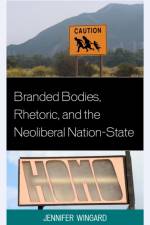
Branded Bodies, Rhetoric, and the Neoliberal Nation-State, by Dr. Jennifer Wingard, explores how neoliberal economics has affected the rhetoric of the media and politics, and how in very direct, material ways it harms the bodies of some of the United States' most vulnerable occupants. The book is written at a moment when the promise of the liberal nation state, in which the government purports to care for its citizens through social welfare programs financed by state funds, is eroding. Currently, state policies are defined by neoliberal governmentality, a form which privileges privatization and individual personal responsibility. Instead of the promise of citizenship and the protections that come with it, or ';the American Dream' to use a more common euphemism, the state uses certain bodies that will never be accepted as citizens as an underclass in service of capital (think ';Guest Worker Programs'). And those underclassed ';bodies' are identified through branding. In order to demonstrate just how damaging branding has become, Wingard offers readings of key pieces of legislation on immigration and GLBT rights and their media reception from the past twenty years. By showing how brands are assembled to create affective threats, Branded Bodies, Rhetoric, and the Neoliberal Nation-State articulates how dangerous the branding of bodies has become and offers rhetorical strategies that can repair the damage to bodies caused by political branding. Branded Bodies, then, is an intervention into the rhetorical practices of the nation-state. It attempts to clarify how the nation state uses brands to forward its claims of equality and freedom all the while condemning those who do not ';fit in' to particular categories valued by the neoliberal state.
Student Politics in Communist Poland tackles the topic of student political activity under a communist regime during the Cold War. It discusses both the communist student organizations as well as oppositional, independent, and apolitical student activism during the forty-five-year period of Polands existence as a Soviet satellite state. The book focuses on consecutive generations of students who felt compelled to act on behalf of their milieu or for what they saw as the greater national good. The dynamics between moderates and radicals, between conformists and non-conformists are analyzed from the points of view of the protagonists themselves. The book traces ideological evolutions, but also counter-cultural trends and transnational influences in Polands student community as they emerged, developed, and disappeared over more than four decades. It elaborates on the importance of the Catholic Church and its role in politicizing students. The regimes higher education policies are discussed in relation to its attempts to control the student body, which in effect constituted an ever growing group of young people who were destined to become the regimes future elite in the political, economic, social, and cultural spheres and thus provide it with the necessary legitimacy for its survival. The pivotal crises in the history of Communist Poland, those of 1956, 1968, 1980-1981, are treated with a special emphasis on the students and their respective role in these upheavals. The book shows that student activism played its part in the political trajectory of the country, at times challenging the legitimacy of the regime, and contributed in no small degree to the demise of communism in Poland in 1989. Student Politics in Communist Poland not only presents a chronological narrative of student activism, but it sheds light on lesser known aspects of modern Polish history while telling part of the life stories of prominent figures in Polands communist establishment as well as its dissident and opposition milieux. Ultimately, it also provides insights into modern-day Poland and its elite, many of whose members laid the groundwork for their later careers as student activists during the communist period.
Abonner på vårt nyhetsbrev og få rabatter og inspirasjon til din neste leseopplevelse.
Ved å abonnere godtar du vår personvernerklæring.