





















Gjør som tusenvis av andre bokelskere
Abonner på vårt nyhetsbrev og få rabatter og inspirasjon til din neste leseopplevelse.
Ved å abonnere godtar du vår personvernerklæring.Du kan når som helst melde deg av våre nyhetsbrev.

Mentoring At-Risk Students through the Hidden Curriculum of Higher Education reveals how the institutional culture and social networks of universities influence the academic success of underrepresented students. This book is based on a qualitative study that integrates a sociological and higher education theoretical framework to examine the impact of mentoring programs on students' acquisition of institutional cultural capital and social capital during their college experience.This book offers an innovative mentoring model that illuminates how students can navigate the hidden curriculum of higher education. In addition, the book provides practical strategies on how to avoid academic mine fields in order to thrive in college. This book is written for administrators, faculty, student affairs professionals and students to promote retention, academic success, and create a more transparent, inclusive, and equitable higher education system.See here for an article by the author on mentoring programs in colleges and universities published in Inside Higher Ed: http://www.insidehighered.com/news/2014/08/04/book-argues-mentoring-programs-should-try-unveil-colleges-hidden-curriculumTo learn about a recent presentation by the author, see here: http://diverseeducation.com/article/66772/?utm_campaign=Diverse%20Newsletter%203&utm_medium=email&utm_source=Eloqua&elq=82772667e2334157934731fc05a8fe9c&elqCampaignId=358
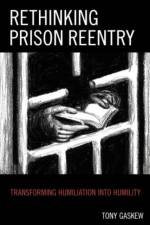
Rethinking Prison Reentry: Transforming Humiliation into Humility describes a prison-based education pedagogy designed to address a prevalent racial politics of shaming, self-segregation, and transgenerational learned helplessness. So many incarcerated black men face insurmountable psychosocial obstacles when attempting to make the successful transition back into ownership of their lives. Tony Gaskew confronts the issue of redemption and reconciliation head-on by critically examining the ';triads of culpability' when it comes to crime and justice in America: (1) of those who commit crimes; (2) of those who enforce criminal laws; and (3) of those who stand by and do nothing. He explores the growth of a black counterculture of crime that has created modern-day killing fields across urban neighborhoods and challenges the incarcerated black men trapped within its socially constructed lies, helping them to draw upon the strength of their cultural privilege to transform from criminal offender into incarcerated student.
Ritual Practices in Congregational Identity Formation investigates the educational roles of ritual practices in the process of congregational identity formation. Son identifies and analyzes various kinds of Christian rituals with respect to how rituals influence the formational processes of a congregation's identity. Based on Victor Turner's ritual theory, this book also investigates the pedagogical and transformative efficacies of ritual practices within the dynamics of congregational education.
The Work of Play: Child Psychotherapy in Contemporary Korea is an ethnography that investigates a child play therapy program as it leaves the United States and takes root in South Korea. At the heart of this book is a group of female therapists figuring out how to make a living in an emerging sector while improving the lives of the children they treat. They grapple with questions about maintaining program fidelity while translating and transforming the program to be socially and culturally relevant. Based on years of research, The Work of Play traces how therapeutic expertise is cultivated by combining instinct with formal training. Readers will follow a group of therapists as they form professional roots in the pediatric mental health landscape of contemporary Seoul and see what life is like at the intersection of stigma and demand.
A common observation of the Senate today is that it is paralyzed by gridlock; the Senate is currently composed of ideologically polarized members, and the majority and minority leaders exercise more influence because they lead more cohesive political parties. However, the argument that the Senate and by extension, the Congress, are undermined by rampant obstruction overlooks the fact that the contemporary Senate is still capable of overcoming the differences among its members without descending into an endless debate of ideological partisanship and irreconcilable gridlock. While current treatments of the Senate often seek to explain why gridlock happens, in this book, James Wallner addresses the important question of why gridlock does not happen. His answer is quite simple: The Senate changes the manner in which it makes decisions on a case-by-case basis in order to limit conflict between its members. Yet, the Senate's ability to produce important legislation in the current environment may undermine the institution's deliberative function. Wallner puts forth the unique proposition that while the contemporary Senate may indeed be broken, it is not broken in the sense typically acknowledged. Put simply, deliberation has succumbed to the Senate's bipartisan determination to avoid gridlock and pass important legislation.
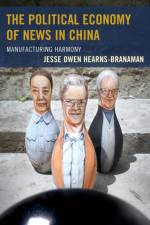
The Political Economy of News in China: Manufacturing Harmony is the first full-scale application of Herman and Chomsky's classic propaganda model to the news media content of a country with a system that is not outwardly similar to the United States. Jesse Owen Hearns-Branaman examines the news media of the People's Republic of China using the five filters of the original model. He asks provocative questions concerning the nature of media ownership, the effect of government or private ownership on media content, the elite-centered nature news sourcing patterns, the benefits and costs of having active special interest groups to influence news coverage, the continued usefulness of the concepts of censorship and propaganda, the ability of advertisers to indirectly influence news production, and the potential increase of pro-capitalist, pro-consumerist ideology and nationalism in Chinese news media. This book will appeal to scholars of international media and journalism.
Many conservative extremists have argued that Obama was advancing a socialist agenda, immersing himself in African-American radicalism, and pushing big government liberal policies during his first term. The Republican Party, we once knew, has been pushed to the extreme right and has rendered itself unwilling to compromise with the first African American president in order to credit him with any degree of success. The Party's chief goal was to take back the White House in the 2012 presidential election by any means necessary to push their radical agenda, as some have boldly stated. With the help of Republican governors in certain swing states, the Republican Party knew it had a chance to win the White House by passing voter suppression ID laws. Consequently, from white church pulpits to the political arena, conservative radicals have divided the American electorate and have played on the irrational apocalyptic fears of many that Obama will destroy the exceptional nature of America. Conservative radicals have shaped our national debate and have driven our discourse with eliminationist and racialized rhetoric against the Obama presidency. Consequently, many anti-Obama narratives have hit the bookstores and have consumed the intellectual life of an overly suspicious, low information general public where many lack the critical and political thought about ways they need to know to emancipate themselves from destructive prevailing ideologies. Obama's Political Saga serves as a counter-narrative to the paranoid politics of anti-intellectual and anti-science radicals and hopefully provides a reasonable discussion about Obama's political saga in his first term. These anti-Obama narratives have resurrected themselves from the Jim Crow era, influencing a segment of the conservative base to believe that equal rights for African Americans, other Americans of color, and women would threaten the social order by diminishing white (male) privilege. Therefore, we need counter-narratives to help us engage in genuine political and intellectual debate about the first African American president and his legacy.
Invisible Language: Its Incalcuable Significance for Philosophy reveals that although the use of language is visible or audible, the medium employed boasts neither of these attributes. Garth L. Hallet suggests that from Plato until now, the intangibility of language has exercised a far more profound influence in philosophy than even Wittgenstein came close to demonstrating. Indeed, without that pervasive factor of language, the history of philosophy would have been undeniably different. Yet philosophy is, and can legitimately aspire to be, much more than a struggle between language and human comprehension of it. Ultimately, this book suggests that philosophy's positive possibilities, so often obscured by linguistically-inattentive practice, reach as far as human thought can reach.
The twenty-first century is likely to witness Asia's two largest civilizations, China and India, join the United States in an elite club of global superpowers. By some economic indicators, the two Asian giants are already the second and third largest economies in the world, and they are developing world-class militaries to complement that economic clout. While Beijing and Delhi have spent the past half-century free from armed conflict and enjoy cordial diplomatic relations, elements of rivalry have shadowed the relationship since the two countries went to war in 1962 over their disputed Himalayan border. In the twenty-first century, that rivalry has evolved in unpredictable ways, advancing in some arenas and retreating in the face of growing cooperation in others.Cold Peace: ChinaIndia Rivalry in the Twenty-First Century updates and deepens our understanding of the ChinaIndia relationship by unraveling the complex layers of the contemporary ChinaIndia rivalry. This book draws from over 100 interviews with subject-matter experts, government officials, and military officers in India, China, and the United States between November 2011 and July 2013. It also benefits from rare and unique field research at the disputed ChinaIndia border in Ladakh and Arunachal Pradesh; at the contested town of Tawang in the Himalayas; at Dharamsala, the seat of the Tibetan Government in Exile; at the Andaman and Nicobar Islands; and on Hainan Island, which administers China's South China Sea territories. With 14 chapters dedicated to issue-specific studies, including Threat Perceptions in China-India Relations, the border dispute, Tawang, Tibet, the Dalai Lama succession issue, maritime security, and the role of the United States and Pakistan in SinoIndian relations, Cold Peace provides a comprehensive examination of the evolution of ChinaIndia relations.
At certain moments in his political essays, Kant conceives of socio-historical emancipation as a process of working ourselves out of pathological legacies, suggesting that emancipation would involve a process of working through our affective attachments to entrenched, regressive social arrangements. Jackson shows how Freud's analyses of melancholia, mania and the work of mourning can contribute to an understanding of key dimensions of such pathological social fixations, as well as the possibility of working through the past. This book argues that bringing Freud's provocative analyses of loss to bear on particular philosophical treatments of history leads to a more coherent, psychoanalytically informed understanding of history. Although Freud does not himself integrate these themes into a theory of socio-political emancipation, his thinking nonetheless can be read as contributing to such a theory. To develop this idea the book draws on thinkers such as Karl Marx, Theodor Adorno, Edmund Husserl, Martin Heidegger, Axel Honneth, and Judith Butler. The book engages students and scholars of contemporary continental philosophy by arguing for connections between psychoanalysis, philosophy, and critical theory.
Party Systems in East Central Europe analyzes the formation of political parties in the nations of this region. In the first part, the authors concentrate on the key periods and turning points in this development, connecting them with the democratization of the countries in the region in the last third of the nineteenth century. This includes a look at the period before World War I, between the wars, and particularly in the times after the fall of the communist regimes. The analysis focuses chiefly on the ideological background that gave way to the rise of political parties in the region. In relation to this, the authors base their writing mainly on the socio-political theory of Stein Rokkan. The second part of the book is a political analysis of the key aspects related to party politics. First, the authors examine the ties of political parties to broad social processes, using the classic theories of Giovanni Sartori and Stein Rokkan. Next, they continue with the analysis of the operation of parties within governments, with a special focus on the creation of coalition governments, functioning of coalitions and coalition governance. Last, some defects are reflected upon, as well as unfinished processes related to the fast establishment of political parties in the region, e.g., absence of firm links with social groups, high volatility, instability of parties, etc.
In Transversal Ecocritical Praxis: Theoretical Arguments, Literary Analysis, and Cultural Critique, Patrick D. Murphy, Ph.D, utilizes ecocriticism and ecofeminism to develop his concept of transversal practice: an interdisciplinary combination of theory and applied criticism. He begins by explaining the necessity for cutting across disciplinary boundaries of all kinds in order to address the ecological dimensions of culture and literature. The dialogical foundation of this orientation is elaborated through a consideration of the theories of Mikhail Bkahtin, particularly in terms of the ethical responsibilities of the reader and critic. Murphy then takes up issues of identity and subject formation in relation to genetics, embodiment, and selfhood. These same issues play out in the history of the aesthetic category of the sublime, which the author critiques from an ecofeminist perspective. Following that, he turns attention to cultural issues of consumption, both at home and internationally, looking particularly at postcolonial literature and forms of resistance to globalizations and agricultural land grabs. Resistance and postcolonial literature is further analyzed through consideration of two book-length Latin American poetic sequences, one by Pablo Neruda and the other by Ernesto Cardenal. Switching from works focused on the present, Murphy turns his attention then to how these themes play out in the future oriented worlds of science fiction. He concludes with two chapters that combine ecocriticial cultural critique and economic analysis in studies of the destructive role of megadams, particularly in Asia, and the impact of the combined threats of peak oil and climate change on one islands tourist economy. The conclusion contains a discussion of further drivers of future ecocritical analysis. Traversing a wide range of examples, literary, cultural and economic, this work fleshes out the benefits of an ethically grounded interdisciplinary ecocriticism.
Literature is not only about aesthetics, but also almost equally about economics. The successful marketing of an author and his literary works is more dependent on the activities of cultural merchants than on the particular words and phrases found in the author's prose. Marketing Literature and Posthumous Legacies focuses on the creation of symbolic capital for the literary legacies of Leonid Andreev and Vladimir Nabokov that was eventually exchanged by cultural merchants for financial and ideological profit. Yuri Leving and Frederick H. White discuss the ways in which certain cultural merchants created symbolic meaning for these two authors through a process of collusion, consecration, and the marketing of tangible and intangible products that lead to some sort of transaction. The promotion and maintenance of posthumous legacies involves an intricate network of personal interests that drive the preservation of literary reputations.
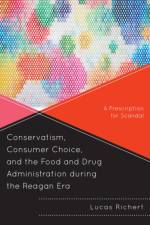
In the last quarter of the 20th century, politicians in Washington, as well as interest groups, regulatory policy makers, and drug industry leaders were forced to confront the hot-button issue of pharmaceutical regulation. The struggle always centered on product innovation, consumer protection, and choice in the free market. As the American economy stuttered in the late 1970s, the stakes were extremely high for the powerful drug industry and the American public. At the center of this drama was the Food and Drug Administration, which was censured from both the left and right of the political spectrum for being too strict and too lenient in the application of its regulatory powers. Lucas Richert explores the FDA, drugs, and politics in the context of the watershed Reagan era, a period when the rhetoric of limited government, reduced regulation, and enhanced cooperation between businesses and U.S. regulatory agencies was on the ascent. As he investigates the controversies surrounding Laetrile, Reye's Syndrome, Oraflex, patient package inserts, diet pills, and HIV/AIDS drugs, Richert argues that the practical application of conservative economic principles to the American drug industry was A Prescription for Scandal.
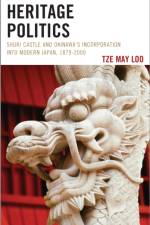
Heritage Politics: Shuri Castle and Okinawas Incorporation into Modern Japan, 18792000 is a study of Okinawa's incorporation into a subordinate position in the Japanese nation-state, and the role that cultural heritage, especially Okinawa's iconic Shuri Castle, plays in creating, maintaining, and negotiating that position. Tze May Loo argues that Okinawa's cultural heritage has been and continues to be an important tool with which the Japanese state and its agents, the United States during its 27-year rule of the islands (19451972), and the Okinawan people articulated and negotiated Okinawa's relationship with the Japanese nation state. For these three groups, Okinawa's cultural heritage was a powerful way to utilize the symbolism of material objects to manage and represent the islands' cultural past for their own political aims. The Japanese state, its agents, and American authorities have all sought to use Okinawa's cultural heritage to control, discipline, and subordinate Okinawa. For Okinawans, their cultural heritage gave them a powerful way to resist Japanese and American rule, and to negotiate for a more equitable position for themselves. At the same time, however, this book finds that Okinawan strategies to deploy their cultural heritage politically are deeply intertwined with, and to a significant extent enabled by, precisely these Japanese and American attempts to govern Okinawa through its heritage. This examination of the political role of Okinawa's cultural heritage is a window into a wider process of how nation-states and other political formations make themselves thinkable to the people they rule, how the ruled seek out spaces to make claims of their own, and how cultural pasts, once made usable, are implicated in these processes.
Christian Lotz argues that Immanuel Kant's idea of a mental schematism, which gives the human mind access to a stable reality, can be interpreted as a social concept, which, using Karl Marx, the author identifies as money. Money and its ';fluid' form, capital, constitute sociality in capitalism and make access to social reality possible. Money, in other words, makes life in capitalism meaningful and frames all social relations. Following Marx, Lotz argues that money is the true Universal of modern life and that, as such, we are increasingly subjected to its control. As money and capital are closely linked to time, Lotz argues that in capitalism money also constitutes past and future ';social horizons' by turning both into ';monetized' horizons. Everything becomes faster, global, and more abstract. Our lives, as a consequence, become more mobile, ';fluid,' unstable, and precarious. Lotz presents analyses of credit, debt, and finance as examples of how money determines the meaning of future and past, imagination, and memory, and that this results in individuals becoming increasingly integrated into and dependent upon the capitalist world. This integration and dependence increases with the event of electronics industries and brain-science industries that channel all human desires towards profits, growth, and money. In this way, the book offers a critical extension of Theodor Adorno's analysis of exchange and the culture industry as the basis of modern societies. Lotz arguesparadoxically with and against Adornothat we should return to the basic insights of Marx's philosophy, given that the principle of exchange is only possible on the basis of more fundamental social and economic categories, such as money.
In 20122013, one of the largest U.S. newspaper chains, Advance Publications, determined its main product was no longer newspapers but news, and switched from daily print publication of The Times-Picayune of New Orleans to three days a week, while upgrading its presence online (';Digital First'). More than two hundred employees, including half the newsroom, were laid off in one of the poorest U.S. cities with among the lowest literacy rates and percentages of households with Internet access. The decision raised a furor in New Orleans. Beginning with an historical overview of The Times-Picayune, from its 1837 founding through the present, The Times-Picayune in a Changing Media World: The Transformation of an American Newspaper describes the crucial role the dailies played in the 1960 school desegregation crisis, as well as the impact of the switch on print coverage of hard news in the context of media developments, and provides a detailed analysis of specific print editions of The Times-Picayune and its digital formats conducted before and after the switch. This study of the evolution of The Times-Picayune is instructive for all concerned with what the transformation might portend for the news profession and for the traditional role of the press in the digital age.
This book traces the history of working people who helped established the foundation of the American empire in the Pacific from its origins after the American Revolution to its coming of age in the 1840s and 1850s. Beginning with the expeditions of the Columbia and the Lady Washington, Lampe argues that the early American Pacific can best be considered through the interaction of four major locations, connected through the networks of trade: the merchant ship, the Northwest Coast, Honolulu, and Canton (Guangzhou). In each of these locations, the labors of a diverse population of working people was harnessed in the critical labors of empire building, including the transportation of goods. The central question that the consideration of working people in the Pacific economy during this period is, Lampe argues, the role of power applied on these laborers by an international capitalist class, emerging alongside the Pacific commercial empires. Lampe also finds that this power was not uncontested and emerged in response to the activities of labor. Working people, on the ship and in the port cities, found ways to secure their piece of the profitable trade, often through illicit means.
In The Marquis d'Argens: A Philosophical Life Julia Gasper analyzes the life and works of an influential Enlightenment writer and philosopher. The facts of d'Argens' life as well as his works have been a source of controversy due to the many rumors and anonymous publications erroneously linked to him. Through meticulous research, Gasper provides the only comprehensive list of d'Argens' works and separates the realities of his life from the myths that have built up around him. Accused of being a libertine or an unoriginal mimic of greater minds, d'Argens has too often been dismissed as an unimportant figure. Gasper defends this much maligned philosopher and reveals how imaginative and influential he truly was.
This book analyses the public discourse of Elizabeth Dole. It explores the way in which this trail-blazing public figure navigated the double binds that confront women who obtain and exercise political power. The text argues that Dole crafted a conservative, feminine persona in which she depicted herself as a selfless public servant. This sense of servant was defined through Dole's appeal to the transcendent moral purposes of Christianity. She used this image to great effect in her most noteworthy public addresses, especially her 1996 Republican National Convention speech in support of her husband's presidential campaign. In her 2008 unsuccessful North Carolina U.S. Senate reelection campaign Elizabeth Dole's political style unraveled in the face of a series of effective attacks by her opponent, Kay Hagan, and her own desperate rhetorical appeals to stave off defeat.
Mystical Science and Practical Religion examines the religious discourse employed by Muslim, Hindu, and Sikh applied science professionals and students, mainly engineers and Information Technology (IT) workers. Although applied scientists, especially immigrants to the United States, have shown high rates of religiosity, there have been few studies of this subject. Based on interviews with forty-five professionals and students, Cimino finds that although they are from different faiths, these applied scientists share a common discourse that blends religion and science. They each view their religions as the ';most scientific.' Their work and study reshapes how they practice and conceptualize their faiths, though not in the expected directions of secularization and fundamentalism. This book provides a unique look at how the much contested fields of science and religion interact in real life.
Many political figures insist that their anti-immigration sentiments have nothing to do with race and racism. Americans seem largely unconvinced, which is why politicians must protest so loudly and often. In order to deflect accusations of racism, public figures evoke the neo-liberal principle that calls for protection of state health and resources. Yet contemporary philosophers such as Hanna Arendt, Michel Foucault, and Giorgio Agamben argue that neo-liberal ideology is racist. Sokthan Yeng applies their analysis to the debate over immigration policies to show that neo-liberalism not only recodes traditional racist rhetoric but also expands systemic racism. Politicians can say that their anti-immigration policies are meant to protect the nation's economy and strength. It is no coincidence, however, that the populations most affected by these regulations are ethnic and cultural minorities such as Mexican and Muslim immigrants. The analysis presented in The Biopolitics of Race will be valuable to philosophers and other scholars or students interested in critical race theory, feminism, and queer theory. It also has implications for anyone working in public health, bioethics, or migration studies.
The strong relationship that historians have described between the South and the trans-Appalachian West in the early nineteenth century had its origins in the twenty-year period after the American Revolution when a group of far-sighted southerners, with James Madison in the forefront, worked to form a political bond between the two regions. While many historians have taken this close relationship for granted or have dismissed it as a natural product of cultural similarities, strong family bonds and slavery being just two, it was built deliberately by a handful of forward-looking southerners with hard work and dedication. Jeffrey A. Zemler carefully analyzes the development of this bond and the history of these two regions during this twenty-year period, which is far more complicated than historians have imagined or described.
The Cross and Reaganomics: Conservative Christians Defending Ronald Reagan, by Eric R. Crouse, offers important insights on why Reaganomics was a major reason conservative Christians supported Reagan at the polls. On election night in November 1980, Americans witnessed the victory of a conservative to the presidency. With the United States experiencing economic stagnation and high inflation, many were hopeful of Ronald Reagan's deeds matching his optimistic rhetoric of America's potential. What followed was a decade of economic transformation, military buildup, and a political awakening of conservatism. One story that has not received much attention is the relationship between conservative Christians and Ronald Reagan's economic policies. Crouse argues that conservative Christians were among the strongest champions of limited government, free enterprise (particularly small business), and anticommunism. A surprising number of conservative Christian leaders discussed the works of major free market economists. Conservative Christians embraced and tapped into the traditional American values of individual opportunity, personal responsibility, and human freedomall themes they believed were front and center in Reaganomics. Although American pluralism prevented any plan to Christianize the nation by politics, in the sphere of economics conservative Christians did witness political and cultural gains.
Sandberg and Aqertit analyze how, over the course of twenty-five years, dedicated, smart, and politically effective Moroccan women, working simultaneously in multiple settings and aware of each other's work, altered Morocco's entrenched gender institution of regularized practices and distinctive rights and obligations for men and women. In telling the story of these Moroccan gender activists, Sandberg and Aqertit's work is of interest to Middle East and North Africa (MENA) area specialists, to feminist and gender researchers, and to institutionalist scholars. Their work operationalizes and offers a template for studying change in national gender institutions that can be adopted by practitioners and scholars in other country settings.
Nature's Sublime uses a radical new form of phenomenology to probe into the deepest traits of the human process in its individual, social, religious, and aesthetic dimensions. Starting with the selving process the essay describes the role of signs and symbols in intra and interpersonal communication. At the heart of the human use of signs is a creative tension between religions symbols and the novel symbols created in the various arts. A contrast is made between natural communities, which flatten out and reject novel forms of semiosis, and communities of interpretation, which welcomes creative and enriched signs and symbols. The normative claim is made that religious sign/symbol systems have a tendency toward tribalism and violence, while the various spheres of the aesthetic are comparatively non-tribal, or even deliberatively anti-tribal. The concept/experience of beauty and the sublime is meant to replace that of religious revelation. The sublime is not merely an internal mode of attunement, contra Kant, but comes from the very depths of nature in the potencies of nature naturing.
Genocide represents one of the deadliest scourges of the human experience. Communication practices provide the key missing ingredient toward preventing and ending this intensely symbolic activity. The Rhetoric of Genocide: Death as a Text reveals how strategic communication silences make this tragedy probable, and how a greater social ethic for communication openness repels and ends this great evil. Careful analysis of practical historical figures, such as the great debater James Farmer Jr., along with empirical policy successes in places such as Liberia provide a communication-based template for ridding the world of genocide in the twenty-first century.
';Be true to yourself'it is a dictum so ubiquitous that it can seem like both philosophical wisdom and an empty truism. Should we aspire to an ideal of living authentically? What does it mean to be true to yourself? Against Authenticity: Why You Shouldnt Be Yourself is a philosophical exploration and critique of the ideal of authenticity. Simon Feldman argues that if being true to ourselves is a matter of maintaining a strong will, being psychologically independent, achieving self-knowledge, or being morally conscientious, then the best lives we can lead should be expected to involve substantial inauthenticity. Feldman suggests that various construals of the ideal of authenticity presuppose metaphysically confused notions of the self (for example, that there is a determinate ';true self') and that under the guise of indisputable wisdom the ideal perpetuates both objectionably relativistic as well as reactionary moral thinking. Feldman concludes that the ideal of authenticity is one that we would be better off abandoning, independent of our other moral or ethical commitments. With implications for every readers conception of authenticity and identity, Against Authenticity is an exciting challenge for students and scholars of ethics, metaethics, metaphysics, and moral psychology.
This book studies several of Mark Helprin's novels in terms of their relation to Dante's Divine Comedy. The authors demonstrate that A Soldier of the Great War, In Sunlight and in Shadow, and Winter's Tale substantially correspond to, respectively, Dante's Inferno, Purgatorio, and Paradiso. The author himself has acknowledged his debt to Dante and references to the Comedy appear throughout his works. It is not that Helprin's novels track their Dantean antecedents slavishly, or even follow the structure of the Canticles explicitly. Rather, the central arguments of Dante's three works are taken up by Helprin in his novels. In adopting Dante's essentially Platonic doctrine of mediation, Helprin's characters are fully instantiated human beings who also mediate and reveal the divine. In his engagement with Dante, Helprin affirms the core philosophical, theological and psychological arguments of the Comedy, and then modifies those arguments in a distinctly modern way. Specifically, Helprin focuses on human freedom as the necessary precondition for justice to exist, both for individuals and for societies. In the final chapter of the book, the authors turn to Helprin's Freddy and Fredericka. In this novel, Helprin both assumes Dante's argument, and then radically alters it, by pointing to the possibility of a just regime on earth, rather than one that exists merely in heaven. While accepting much of Dante's metaphysical argument, Helprin shows the virtues of liberal democracy as that form of political regime that is most able to unite human eros with eternal principles. In the end, Helprin's novels are remarkable for the way in which they advocate for ancient virtues, while insisting upon the distinctly modern liberal account of human freedom as the necessary foundation for human flourishing.
Imagination and Postmodernity addresses the role of the imagination in philosophy today. By focusing on philosophy at the boundary of reason with constant reference to Kant's view of the boundary-limit, it is possible to advance a viable alternative to deconstructing the imagination. Patrick L. Bourgeois puts forth the claim that by refocusing the imagination in the postmodern conversation, a far-reaching contemporary position can be reached that reestablishes the position of the humanities as central against the anti-humanism of deconstruction. This work addresses some of the challenges and problems that emerge in conflicting positions within contemporary philosophy, including a concentration on the role of the imagination in the work of Paul Ricoeur in contrast and in opposition to its role in such postmodern thinkers as Derrida and Lyotard. This treatment requires going back to the role of the imagination in the period of Kant and his immediate followers in order to clarify the various ways of seeing the imagination then and now, for the role today is anticipated in the nineteenth century. Finally, this work, as a creative appropriation of the position of Paul Ricoeur, presents a role for the imagination today that is more encompassing than most thinkers allow for.
Abonner på vårt nyhetsbrev og få rabatter og inspirasjon til din neste leseopplevelse.
Ved å abonnere godtar du vår personvernerklæring.