
















Gjør som tusenvis av andre bokelskere
Abonner på vårt nyhetsbrev og få rabatter og inspirasjon til din neste leseopplevelse.
Ved å abonnere godtar du vår personvernerklæring.Du kan når som helst melde deg av våre nyhetsbrev.

The core contention of The Legitimacy of Miracle is that a priori philosophical dismissals of the possibility or probability of justified belief in miracles fail. Whether or not it is rational to believe that events best understood as miracles actually occur is not to be decided on the basis of armchair theorizing, but rather on the basis of meticulous examination of the evidence. Such examination, however, needs to be set free from unwarranted assumptions that miracles are ';impossible, improbable, or improper.' Philosophical analysis can play an important role in clearing away conceptual underbrush and question-begging presuppositions, but it cannot take the place of detailed consideration of historical and contemporary evidence. Robert Larmer demonstrates that the proper role of philosophy, as regards to the belief in miracles, is to provide an in-principle rejection of in-principle arguments either for or against.The arguments contained in this book will be of particular interest to students and scholars of philosophy, theology, history, and religious studies, though it is written in a style accessible to anyone interested in a philosophical examination of belief in miracles.
This book is about values and principles that have formed the backbone of the exceptionality of America. These values and principles have shaped the way leadership in America has evolved and prescribed the way leaders have practiced their craft. It is about what both leaders and their followers implicitly know about what a good leader is and does and about why they follow one leader and not another. The book is about how leaders in all facets of society thinkor should thinkabout their interrelationships with other human beings. For relationships is the essence of leadership. We can only lead those in some kind of association with us as. Only together can we do whatever task the leader of our particular organization asks of us today and every day of our lives. This is true not just at work, but in the family, our collective social and recreational pursuits, and even when alone doing something we want to get done. Because all we do ultimately will impact our attitudes and actions or those of others. For that finally is what leadership isimpact on another!This book identifies the values and principles of leadership the founding leaders identified and used and that have marked American culture for over two centuries in all dimensions of life. It defines and delimits the actions and attitudes of mind of the exceptional leaders who first articulated and then led in terms of those values as they made America. The ideas about exceptional leadership discussed are taken from their own leadership example and from their thoughtful conclusions. The ideas are fully American. These first leaders drew up the blueprint for what America is and has become. Their creation has survived countless challenges over the two hundred years of its creation to become the United States of America.
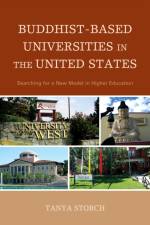
Buddhist-Based Universities in the United States: Searching for a New Model in Higher Education investigates in depth four American Buddhist universities, namely, the Dharma Realm Buddhist University, the University of the West, the Soka University of America, and the Naropa University, all of which offer degrees in liberal arts and professional fields, and at the same time educate their students in the philosophy and practices of Buddhism. Buddhist universities in the United States are unique because there are no comparable universities based on the philosophy and practices of other Asian religions also popular in the United States, such as Hinduism, Confucianism, or Sikhism. Even the Jewish community has created only two universities in which professional skills and liberal arts are taught from the position of the moral-philosophical principles of Judaism. This book presents the institutional history and academic programs of four Buddhist universities in America and analyzes Buddhist-based pedagogical principles, as well as teaching and learning techniques, which can be very useful for other colleges and universities in the United States.
Political debates are an important facet of modern election campaigns. How politicians frame an argument, how the audience perceives it, and how the media decides to display it are key components in analyzing the outcome of a political debate, and ultimately, an election. Drawing mainly on the functional theory of political campaign discourse, William L. Benoit examines a wide variety of debates not only in the United States but across the globe. Because each phase of election offers new challenges, specific attention is paid to how primary versus general and incumbency influence the content of political leaders' debate practices. Specifically, the book delves into the history and nature of debates in various United States elections, including presidential, vice presidential, senatorial, gubernatorial, and mayoral candidates. Also examined are debates ranging from the United Kingdom to South Korea to Australia. Benoit also employs the issues ownership theory and functional federalism theory as a deeper part of the analysis. This book offers a critical examination and comprehensive overview of election debate theory.
The question of whether Israel is capable of coping with long-term warfare has long haunted scholars of Israel studies. This book tackles the question through a thorough analysis of the Israeli national ethos. The national ethos of a people is the integrating element that defines a nations identity and bonds it into a coherent social group. However, in the Israeli case, two competing forms of national ethos threaten to tear society apart and weaken it: a republican ethos that cherishes the national group and a liberal ethos that puts the individual above all. In creating an account of Israels ability to fight possible future wars, this book carefully examines these two competing forms of national ethos that create an ideological dichotomy in Israel. Each ethos has its reasoning, its inherent logic, its historic origins, and theories of social science that can explain the background for its development. This book offers a comprehensive analysis of each ethos that takes account of the environment, setting, and circumstances through which it ought to be understood. The deep inquiry into the dynamics of Israels national ethos enables a new comprehension of the wobbliness of Israeli politics, and leads to certain conclusions about the fatal question that this book set out to findwhether Israel will eventually survive its international struggles or perish.
Hannah Arendt and Karl Marx: On Totalitarianism and the Tradition of Western Political Thought is the first book to examine Hannah Arendt's unpublished writings on Marx in their totality and as the unified project Arendt originally intended. In 1952, after the publication of The Origins of Totalitarianism, Hannah Arendt began work on the project ';Totalitarian Elements in Marxism.' First conceived of as a companion to The Origins of Totalitarianism, Arendt neither completed this project, nor its subsequent revision, ';Marx and the Tradition of Western Political Thought.' Filling in many of the gaps in our understanding of the trajectory of Arendt's thought from the time she published Origins in 1948 to the publication of The Human Condition in 1958, Tama Weisman traces and evaluates the development of Arendt's thought on Marx, how his thought could be used toward totalitarian ends, and his place in the tradition of Western political thought. Although highly critical of much of Arendt's reading of Marx, Hannah Arendt and Karl Marx advances a persuasive critique of Marx implied but never developed in Arendt's Marx project. Drawing on several of Arendt's more persuasive criticisms of Marx in combination with her evaluation of the tradition of Western political thought, Weisman makes a compelling case for the charge that when Marx left philosophy to change the world, he paved the way for the loss of our sense of awe and wonder in philosophical, political, and worldly experience.
Philosophers often use the term ';naturalism' in order to describe their work. It is commonplace to see a metaphysical, epistemological and/or ethical position self-described and described by others as one that is ';naturalized.' But what, if anything, does the term naturalized add--or subtract---to the position being articulated? I demonstrate in The Problem of Naturalism: Analytic and Continental Perspectives, that the term naturalism connotes such a broad meaning that it is difficult to demarcate naturalism from philosophy itself. Still, many philosophers have tried to provide non-trivial and non-vacuous definitions of the term. My book, by and large, argues that such attempts are unsuccessful. Instead, I argue that naturalism is an attitude and neither a methodology nor a substantive position. I then articulate the guidelines the naturalist needs to follow, as well as the virtues he or she needs to practice, in order for the term naturalism to do any meaningful work. Much of the book explains and then critiques the various attempts to define naturalism in the Anglo-American secondary literature. Some of the criticisms I raise seem to emanate from the internal logic of the naturalistic position being expressed. However, others have emerged from gleaning the work of such Continental thinkers as: Nietzsche, Husserl, Heidegger and Foucault. I use these thinkers in order to expose the unjustified implicit and sometimes explicit assumptions that many naturalistic philosophers presume to hold when they attempt to render a clear, distinct and robust naturalist position.
Recovering Hegel from the Critique of Leo Srauss offers a defense of modernity against the critique of the influential mid-twentieth century political philosopher, Leo Strauss. Strauss, whose influence on contemporary conservative political theory is well documented, discovered the ground of much of what he found wanting in contemporary political and social life to lie in the philosophy of the 19th century German philosopher, G. W. F. Hegel. Specifically, Strauss accused Hegel of being the greatest exponent of historicism and thus the relativism that afflicts modern thought. Ultimately, according to Strauss, this has led to the nihilism and general mediocrity that characterizes modern western culture. In this book, Sara MacDonald and Barry Craig examine Strauss's reading of Hegel and argue that in fact it is a mis-reading. Contrary to Strauss's interpretation, this book holds that Hegel was no relativist and in fact sought to show the compatibility of objective, eternal truth with modern human subjectivity. At the same time, it illustrates the way in which Hegel's thought prepared the ground for enlightened modern liberal democracies and also remains relevant to current social and political conversations.
Identity and African American Men: Exploring the Content of Our Characterization provides a comprehensive, research-based account of the ideologies and mindsets of many young African American men. Identity and African American Men makes a unique contribution to the literature by offering a conceptual framework that identifies the multiple identity components possessed by young African American men. Such a framework expands the conversation about African American men and their behaviors by broadening the understanding of who these individuals are, the identities they possess, and how their identity-based attitudes and orientations may influence the behaviors exhibited by them.
Twenty years ago Ukraine gained its independence and started on a path towards a free market economy and democratic governance. After four successive presidents and the Orange Revolution, the question of exactly which national model Ukraine should embrace remains an open question. Constructing the Narratives of Identity and Power provides a comprehensive outlook on Ukraine as it is presented through the views of intellectual and political elites. Based on extensive field work in Ukraine, Karina V. Korostelina describes the complex process of nation building. Despite the prevailing belief in a divide between two parts of Ukraine and an overwhelming variety of incompatible visions, Korostelina reveals seven prevailing conceptual models of Ukraine and five dominant narratives of national identity. Constructing the Narratives of Identity and Power analyzes the practice of national self-imagination. Karina V. Korostelina puts forward a structural-functional model of national narratives that describes three major components, dualistic order, mythic narratives, and normative order, and two main functions of national narratives, the development of the meaning of national identity and the legitimization of power. Korostelina describes the differences and conflicting elements of the national narratives that constitute the contested arena of nation-building in Ukraine.
He who can change the Constitution controls the Constitution. So who does control the Constitution? The answer has always been: ';the people.' The people control the Constitution via the Article V amending process outlined in the Constitution itself. Changes can only be made through Article V and its formal procedures. Article V has always provided a means of perfecting the Constitution in an explicit, democratically authentic, prudent, and deliberative manner. In addition to changing the Constitution Article V also allowed the people to perfect and preserve their Constitution at the same time. In recent years Article V has come under attack by influential legal scholars who criticize it for being too difficult, undemocratic, and too formal. Such scholars advocate for ignoring Article V in favor of elite adaptation of the Constitution or popular amendment through national referendums. In making their case, critics also assume that Article V is an unimportant and expendable part of the Constitutional structure. One notable scholar called the Constitution ';imbecilic' because of Article V.This book shows that, to the contrary, Article V is a unique and powerful extension of the American tradition of written constitutionalism. It was a logical extension of American constitutional development and it was a powerful tool used by the Federalists to argue for ratification of the new Constitution. Since then it has served as a means of ';perfecting' the US Constitution for over 200 years via a wide range of amendments. Contrary to contemporary critics, the historical evidence shows Article V to be a vital element in the Constitutional architecture, not an expendable or ancillary piece. This book defends Article V against critics by showing that it is neither too difficult, undemocratic, nor too formal. Furthermore, a positive case is made that Article V remains the most clear and powerful way to register the sovereign desires of the American public with regard to alterations of their fundamental law. In the end, Article V is an essential bulwark to maintaining a written Constitution that secures the rights of the people against both elites and themselves.
Children's Rights and Moral Parenting offers systematic treatment of a variety of issues involving the intersection of the rights of children and the moral responsibility of parents. Mark C. Vopat offers a theory of the relationship between children, parents, and the state that can be applied to the real life decisions that parents are often in the position to make on behalf of their children. In many instances, our current view of parental rights has granted parents far more discretion than is morally warranted. Vopat arrives at this conclusion by carefully considering the unique status children have; socially, legally, and morally in most western societies.Childrens Rights and Moral Parenting is essentially contractualist in the Rawlsian tradition. While it may appear counterintuitive to speak of children in terms of the social contract tradition, there is much this approach can do to provide some conceptual clarity to the nature of the relationship between children, parents and the state. The overarching theme of the book is the moral independence of children from extreme forms of parental and, at times, social control. The objective of the book is to provide an argument for extending the range of things owed to children, as well as making the case for fully including children in the moral community.
This book is devoted to one of the central issues in U.S.-Russian and NATO-Russian relationsballistic missile defense. Drawing on more than 2,000 primary sources, interviews with Russian and NATO officials, and a variety of Russian and Western publications, this book offers an unparalleled, in-depth analysis of the reasons behind Russia's policy towards the construction of a U.S ballistic missile defense in Europe. It provides a critical assessment of the decision-making mechanisms that shape Russia's position on ballistic missile defense, as well as Russia's strategic relations with the United States and Russia's interaction with European and non-European powers. Lilly argues that contrary to Moscow's official claims during the Putin era, Russian objections to the construction of ballistic missile defense in Europe have not been wholly dictated by security concerns. To Russia, missile defense is not purely an issue in and of itself, but rather a symbol and instrument of broader political considerations. At the international level, the factors that have shaped Russia's response include Moscow's perception of the overall state of U.S.-Russian relations, the Kremlin's capacity to project influence and power abroad, and NATO's behavior in the post-Soviet space. Domestically, the issue of missile defense has been a facilitating instrument for strengthening Putin's regime and justifying military modernization. Taken together, these instrumental considerations and their fluctuating intensity in different periods prompt the Russian leadership to pursue contradictory policy approaches simultaneously. On the one hand, the Kremlin seeks U.S. cooperation, while on the other hand, it threatens retaliation and reinforces Russian offensive capabilities. The result is Moscow's incoherence, inconsistency, and double-speak over the issue of missile defense.
Religious world-views reserve a central and prominent place for human moral action, yet they must also contend with the reality of human moral failings. Is it possible to anchor moral knowledge and practice in the framework of a moral universe? If so, how do you explain why things go wrong? Must the religions appeal to faith alone, or can they develop a rational framework for their moral visions? The Metaphysics of Kindness: Comparative Studies in Religious Meta-ethics explores the attempted solutions of four pivotal philosophers from very different traditions: the Neo-Confucian Zhu Xi, the German Idealist Arthur Schopenhauer, the Mahayana Buddhist Santideva, and the progenitor of the Kyoto School, Nishida Kitaro. Each position is investigated sympathetically and independently, yet there is an underlying commonality weaving the different studies together: compassion. Each philosopher treats compassion not only as one virtue among others, but as a kind of meta-virtue, the one that is in some respect the logical and/or psychological basis for all the other virtues. It is also a trait that is both at the heart of human nature, and also somehow at the heart of nature itself.
As globalization proceeds at an ever increasing and more unrelenting pace, relations among the world's religions are taking on both a new visibility and a new urgency. Christian theologians and others intent on innovative formulations in the theology of religions are making interreligious dialogue with non-Christians a priority. One way to promote creative scholarship in this quest is to tap into interdisciplinary resources, and the author of this volume is uniquely qualified to do so since he holds graduate degrees in both theology and cultural anthropology. Refuge in Crestone: A Sanctuary for Interreligious Dialogue elucidates how the praxis of interreligious dialogue, as outlined in key Vatican documents in the Catholic Church, could be better served by attending to the qualitative ethnographic methods of sociocultural anthropology. Because the material, behavioral, and cognitive aspects of dialogueas revealed in daily life, common social and political action, religious experience, and theological exchangeare embedded in culture, they are amenable to ethnographic analysis. Using the unique, multi-religious Colorado site of Crestone and its environs as a fieldwork ';laboratory' and self-described ';Refuge for World Truths,' the ethnographic data gleaned from this project exemplify the creative interdisciplinary contributions of anthropology to theologizing. It seeks to demonstrate, using an empirical, multi-religious community as its focus, how anthropology can support interreligious dialogue. The results of such dialogue could not only assist the scholarly community by helping theologians arrive at new formulations in the burgeoning area of the theology of religions, but might also serve the more practical goal of promoting peaceas an alternative to violencein today's complex and sorely troubled world.
Through reference to over six hundred scenes from film and televisionas well as a diverse and cross-disciplinary academic bibliographyMasturbation in Pop Culture investigates the role that masturbation serves within narratives while simultaneously mirroring our complicated relationship with the practice in real life and sparking discussions about a broad range of hot-button sexual subjects. From sitcoms to horror movies, teen comedies to erotic thrillers, autoeroticism is easily detected on screen. The portrayal, however, is not a simple one. Just as in real life a paradox exists where most of us masturbate and accept it as normal and natural, there simultaneously exists a silence about it; that we do it, but we don't talk about it; that we enjoy it but we laugh about it. The screen reflects this conflicted relationship. It is therehundreds and hundreds of timesbut it is routinely whispered about, mocked and presented as a punchline, and is inevitably portrayed as controversial at the very least.Masturbation in Pop Culture investigates the embarrassment and squeamishness, sexiness and inappropriateness of masturbation, showcasing and analyzing how our complex off screen relationship is mirrored in film and television.
In the wake of the 1952 Revolution, Egypt's future Nobel laureate in literature devoted himself exclusively to writing for film. The Aesthetic of Revolution in the Film and Literature of Naguib Mahfouz is the first full-length study in English to examine this critical period in the author's career and to contextualize it within the scope of post-revolutionary Egyptian politics and culture. Before returning to literature in 1959 with his post-revolutionary masterpiece Children of the Alley, Mahfouz wrote or co-wrote some twenty odd scripts, many of them among the most successful in Egyptian history. He did so at a time when film was the country's second largest export commodity after cotton and the domestic film industry in Egypt the fourth largest in the world. Artistically, his screenplays channeled the ideology of the revolution, often raising themes of oppression and liberation, and almost always within a storyline of criminal transgression. But as he discussed in later articles and interviews, the capacity for film to enumerate the flow of lifethrough montage, jump cuts, lighting, and close upshelped him to develop a darker, faster, and more complex vision of society. This technological revolution was followed by a literary one in the 1960s, a time when Mahfouz would generate through a series of short, trenchant, and often comedic novellas, a deeply measured meditation on the experience of collective upheaval and the interpersonal impact of political transformation.
Hair, Headwear, and Orthodox Jewish Women comments on hair covering based on an ethnographic study of the lives of Orthodox Jewish women in a small non-metropolitan synagogue. It brings the often overlooked stories of these women to the forefront and probes questions as to how their location in a small community affects their behavioral choices, particularly regarding the folk practice of hair covering. A kallah, or bride, makes the decision as to whether or not she will cover her hair after marriage. In doing so, she externally announces her religious affiliation, in particular her commitment to maintaining an Orthodox Jewish home. Hair covering practices are also unique to women's traditions and point out the importance of examining the women, especially because their cultural roles may be marginalized in studies as a result of their lack of a central role in worship. This study questions their contribution to Orthodoxy as well as their concept of Jewish identity and the ways in which they negotiate this identity with ritualized and traditional behavior, ultimately bringing into question the meaning of tradition in a modern world.
The intersections of aging, media, and culture are under-explored given trends in population aging, rapid increases in the mediation of everyday life, and the growing cultural significance of media consumption at the global level. This book brings together an international collection of critical scholars, both well-established and up-and-coming, from the various academic disciplines that share a common interest in the future study of aging and media. This anthology of original articles integrates aging theory and media studies through a study of core issues including the media's influence on the construction of ';old age,' the reciprocal influence of aging on media industries, age-based identities in a mediated world, issues of gender and sexuality in an aging society, and the practical implications of a more integrated approach between the two fields. The chapters explore the intersections between aging and media in the realms of advertising/marketing, television, film, music, celebrity and social media, among others.
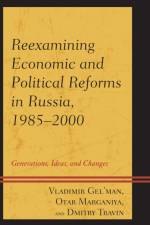
Reexamining Economic and Political Reforms in Russia, 19852000: Generations, Ideas, and Changes analyzes the impact of generational changes and ideational changes on major political and economic reforms conducted in Russia during the late twentieth century. This book examines how the policy agenda was shaped by the ideas of the generations' representatives for the ';sixtiers' and ';seventiers.' Representatives of the generation of ';sixtiers' conducted reforms from 1985 to 1991 and invested major efforts in political liberalization but did not pay enough attention to economic reforms. On the other hand, the reformers from the generation of ';seventiers,' who were in charge of policy making from 1991 to 1998, were genuinely oriented toward market building but rather insensitive to the democratization of the political regime. This book explores how these differences in ideational agendas produced inconsistent and controversial outcomes from both stages of reforms.
The Qur'an makes extensive use of older religious material, stories, and traditions that predate the origins of Islam, and there has long been a fierce debate about how this material found its way into the Qur'an. This unique book argues that this debate has largely been characterized by a failure to fully appreciate the Qur'an as a predominately oral product.Using innovative computerized linguistic analysis, this study demonstrates that the Qur'an displays many of the signs of oral composition that have been found in other traditional literature. When one then combines these computerized results with other clues to the Qur'an's origins (such as the demonstrably oral culture that both predated and preceded the Qur'an, as well as the ';folk memory' in the Islamic tradition that Muhammad was an oral performer) these multiple lines of evidence converge and point to the conclusion that large portions of the Qur'an need to be understood as being constructed live, in oral performance.Combining historical, linguistic, and statistical analysis, much of it made possible for the first time due to new computerized tools developed specifically for this book, Bannister argues that the implications of orality have long been overlooked in studies of the Qur'an. By relocating the Islamic scripture firmly back into an oral context, one gains both a fresh appreciation of the Qur'an on its own terms, as well as a fresh understanding of how Muhammad used early religious traditions, retelling old tales afresh for a new audience.
Climate Change in Bangladesh: Confronting Impending Disasters is a comprehensive analysis of climate change impacts on Bangladesh, followed by a review of measures for confronting the manifested threats of climate change on the people and environment of Bangladesh. Using an integrative approach, the authors blend their own work on indigenous adjustments to climatic hazards in Bangladesh with an analysis of the role of modern engineering intervention and disaster management policies in alleviating these hazards. There is also an emphasis on the environment and people of coastal Bangladesh who are at risk of inundation due to global warminginduced sea level rise. Thus, in addition to analyzing main climatic disasters at some lengthtropical cyclones (hurricanes), floods, droughts, and sea level risekey topics of human dimensions of climate change include climate change victims, climate refugees, climate justice, public policies on climate change, and a sample of adaptation measures for living with the rising sea levels.
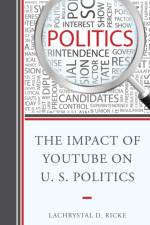
The Impact of YouTube on U.S. Politics provides a historical, descriptive, and conceptual analysis of the broad and evolving political impact of YouTube. It specifically addresses how politicians, campaigns, the media, and the public utilize YouTube for political campaigning, communication, and engagement. The text provides a synthesized illustration of the ways in which YouTube has become a requisite political tool and normalized as a central platform for political communication in the United States. LaChrystal Ricke discusses political YouTube videos and strategies spanning across the 2006, 2008, 2010, and 2012 election cycles, and addresses the potential impact of YouTube in future U.S. elections.
This book explores the central question of how to cultivate a continued sense of self in the radically changing Chinese society, a question that is highly related to the current ongoing educational reform. If education cannot respond to the problem of students' disconnection from the changing society, learning cannot truly happen in school and the reform will fail. Zhang suggests a philosophy of education that highlights the cultivation of students' unique but inclusive individuality so that students learn how to nurture their own mind in this profoundly changing society rather than becoming empty and lost. The discussion of this proposed question is inspired by the thoughts of the American pragmatist John Dewey and Chinese Confucian scholar Liang Shuming. It is not the author's intention to have a pure philosophical discussion, but rather to refer to their philosophies to help answer the practical question of cultivating individuality in an educational setting during this period of China's modern transition.
Life in a Black Community: Striving for Equal Citizenship in Annapolis, Maryland, 1902-1952 tells the story of a struggle over what it meant to be a citizen of a democracy. For blacks, membership in a democracy meant full and equal participation in the life of the town. For most whites, it meant the full participation of only its white citizens, based on the presumption that their black neighbors were less than equal citizens and had to be kept down. All the dramas of the Jim Crow eralynching, the KKK, and disenfranchisement, but also black boycotts, petitioning for redress of grievances, lawsuits, and political activismoccurred in Annapolis. As they were challenging white prejudice and discrimination, tenacious black citizens advanced themselves and enriched their own world of churches, shops, clubs, and bars. It took grit for black families to survive. As they pressed on, life slowly improvedfor some. Life in a Black Community recounts the tactics blacks used to gain equal rights, details the methods whites employed to deny or curtail their rights, and explores a range of survival and advancement strategies used by black families.
Reconciling and Rehumanizing Indigenous-Settler Relations: An Applied Anthropological Perspective presents a unique and honest account of an applied anthropologist's experience in working with Indigenous peoples of Canada. It illustrates Dr. Nadia Ferrara's efforts in reconciliation and rehumanization, showing that it is all about recognizing our shared humanity. In this self-reflective narrative, the author describes her personal experience of marginalization and how it contributed to a more in-depth understanding of how others are marginalized, as well as the fundamental sense of belongingness and connectedness. The book is enriched with stories and insights from her fieldwork as a clinician, a university professor, and a bureaucrat. Dr. Ferrara shows how she has applied her experience as an art therapist in Indigenous communities to her current work in policy development to ensure the policies created reflect their current realities. Reconciling and Rehumanizing Indigenous-Settler Relations describes the cultural competency course for public servants Dr. Ferrara is leading, as a means to break down stereotypes and showcase the resilience of Indigenous peoples. She makes a compassionate and urgent call to all North Americans to connect with their responsibility and compassion, and acknowledge the injustices that the original peoples of this land have faced and continue to face. Reconciliation requires concrete action and it starts with the individual's self-reflection, engagement in authentic human-to-human dialogue, learning from one another, and working together towards a better future, all of which is chronicled in this insightful book.
Testimony demands the witness to demonstrate her knowledgethat knowledge that she must have by the fact of being a witness to something, even if this something exceeds the possibility of expression by any means amenable to verification. Expressing the Inexpressible in Lyotard and Pseudo-Dionysius: Bearing Witness as Spiritual Exercise rigorously studies the inexpressible expression provoked by two illustrative examples: the silenced testimony of the Holocaust survivor, in Jean-Franois Lyotard's The Differend, and the religious faithful, in Pseudo-Dionysius' The Divine Names. Though coming from vastly different philosophical moments, the methods used by Lyotard and Dionysius prove to dissolve the apparent heterogeneity of postmodernism and Neoplatonist Christian mysticism and open radical new lines of dialogue. Melanie Victoria Walton critically evaluates each thinker and tradition, rethinks witnessing, testimony, sublimity, and apophaticism, and then engages them together to forge a new reading of silence and eros. The resulting insights will be especially valuable to students and scholars of Continental philosophy, philosophy of religion, theology and religious studies, medieval studies, and Holocaust studies.
The social conscience of Sir Thomas Fowell Buxton (1786-1845) developed as he operated a brewery in Spitalfields, nineteenth-century London's poorest parish. His interest and research on penal discipline brought him national prominence and led to a parliamentary career that lasted nearly two decades. Buxton's association with noted activist William Wilberforce led to his own involvement in the anti-slavery movement, a cause he fiercely championed, resulting in Britain's abolition of slavery in 1834. Buxton's involvement in the disastrous 1841 Niger expedition effectively ended his public career and paved the way to British imperialism in Africa. A man of many interests, Buxton also supported Catholic emancipation and ending the Hindu suttee. Few nineteenth-century social reformers have had as much of an impact or have cast as long a shadow as Buxton. At the time of his death, many saw him as the epitome of Christian activism, yet today Buxton remains largely ignored and forgotten.David Bruce examines the life of one of Great Britain's most prominent social activists. Using his personal papers, and the papers and books of his friends, associates, and contemporaries, The Life of Sir Thomas Fowell Buxton paints a portrait of a unique individual driven to improve his world.
This book argues that the gap between the official transparency rhetoric and the censorship reality has demonstrated the discrepancy between what the Party is and what it claims to be. Such a discrepancy is manifested by the reality that the reformed news industry, a hybrid of market-oriented commercialization and party-state control, has largely failed to deliver either the voice of the disenfranchised groups or the value of journalism. To observe the discrepancy, this book investigates the role of transparency in the Chinese news media. Media transparency, which goes beyond the issue of censorship and press freedom, has been undermined by the consensus reached between the party-state and the media on political and market control. It is this mutually accommodating and benefiting scheme between power and profits that has been hollowing out the substance of the transparency rhetoric and distorting the Marxist idea of press freedom as freedom for all. This book argues that the cause of such a gap between rhetoric and reality is rooted in the disjuncture of political representation of both the party-state and the profit-seeking media.
This book explores Socrates' role as narrator of the Lysis, Charmides, Protagoras, Euthydemus, and Republic. New insights about each dialogue emerge through careful attention to Socrates' narrative commentary. These insights include a re-reading of the aporetic ending of the Lysis, a view of philosophy as a means of overcoming tyranny in the Charmides, a reconsideration of virtue in the Protagoras, an enhanced understanding of Crito in the Euthydemus, and an uncovering of two models of virtue cultivation (self-mastery and harmony) in the Republic. This book presents Socrates' narrative commentary as a mechanism that illustrates how the emotions shape Socrates' self-understanding, his philosophical exchanges with others, and his view of the Good. As a result, this book challenges the dominant interpretation of Socrates as an intellectualist. It offers a holistic vision of the practice of philosophy that we would do well to embrace in our contemporary world.
Abonner på vårt nyhetsbrev og få rabatter og inspirasjon til din neste leseopplevelse.
Ved å abonnere godtar du vår personvernerklæring.