

























Gjør som tusenvis av andre bokelskere
Abonner på vårt nyhetsbrev og få rabatter og inspirasjon til din neste leseopplevelse.
Ved å abonnere godtar du vår personvernerklæring.Du kan når som helst melde deg av våre nyhetsbrev.

This textbook is an introduction to game theory, which is the systematic analysis of decision-making in interactive settings. Game theory can be of great value to business managers. The ability to correctly anticipate countermove by rival firms in competitive and cooperative settings enables managers to make more effective marketing, advertising, pricing, and other business decisions to optimally achieve the firm's objectives. Game theory does not always accurately predict how rivals will act in strategic situations, but does identify a decision maker's best response to situations involving move and countermove. As Nobel Prize winner Thomas Shelling noted: ';We may wish to understand how participants actually do conduct themselves in conflict situations; an understanding of the ';correct' play may give us a bench mark for the study of actual behavior.' The concise and axiomatic approach to the material presented in this textbook is easily accessible to students with a background in the principles of microeconomics and college mathematics. The selection and organizations of topics makes the textbook appropriate for use in a wide range of curricula by students with different backgrounds.
The surprise of the Yom Kippur War (1973) rivals that of the other two major strategic surprises in the twentieth centuryOperation Barbarossa, the German surprise attack on the Soviet Union and the bombing of Pearl Harbor. The major difference between these events is that Israeli intelligence had a lot more and better quality information leading up to the attack than did the Soviet Union or the United States prior to those attacks. Why, then, was the beginning of the Yom Kippur War such a surprise?While many scholars have tried to explain why Israel was caught unawares despite its sophisticated military intelligence services, Dalia Gavriely-Nuri looks beyond the military, intelligence, and political explanations to a cultural explanation. Israeli Culture on the Road to the Yom Kippur War reveals that the culture that evolved in Israel between the Six Day War and the Yom Kippur War played a large role in the surprise. Gavriely-Nuri's analysis provides new and innovative insights into the relationship between culture and socio-political phenomena and security.
As a woman who traversed the North African Orient in male costume, who spoke Arabic as well as French, and who professed Islam while transgressing many of its instructions, Isabelle Eberhardt seems to fit within Mikhail Bakhtin's definition of the carnivalesque as the impulse to blend that which is usually kept separate by artificial boundaries and hierarchies. Nevertheless, this study demonstrates that her evolution in the Maghreb is carnivalesque only in appearance. Despite her transvestism, the writer left unquestioned the traditional definitions of masculinity and femininity; it is her subscription to the patriarchal equation of maleness with power and womanhood with weakness which makes her borrow a masculine identity. In a similar way, her appropriation of several elements of Oriental culture does not prevent her from reproducing age-old Orientalist stereotypes. As portrayed in her texts, the natives are either aestheticized as picturesque figures from a bygone age or denigrated as uncivilized, dark-minded creatures. And because Orientalism, as Edward Said has famously argued, is but a textual manifestation of colonialism, Eberhardt's Orientalist texts make her the accomplice of the colonialist project, a project which she also served by acting as a mediator between General Lyautey and native tribes. In discussing Eberhardt's involvement in the colonial mission and her perpetuation of the patriarchal and Orientalist traditions, this study questions the image of rebel-figure that is usually assigned to her. Instead, it shows the writer's literary and political gestures to be embedded in a marked quest for empowerment through the double (literary and political) conquest of the Orient.
Sren Kierkegaard's Christian existentialism provides a unique framework for thinking about the problem of religious pluralism. This problem arises from the fact that there are lots of different religions in the world and each of them teaches different things. Accordingly, it is difficult to know which one, if any, ought to be believed in as actually being true. Fehir defends his view of Kierkegaard's understanding of faith and uses it to deal with common philosophical problems related to pluralism. In the course of advancing this argument, Kierkegaardian Reflections of the Problem of Pluralism also engages in interreligious dialogue by comparing Kierkegaard's views with representatives from Buddhism, Judaism, and Taoism.
Worldly Virtue argues that general discussions of virtue need to be complemented by attention to specific virtues. Each chapter addresses a single virtue, most of them traditional (e.g., honesty, generosity, and humility), and sometimes newly framed (';earthly virtue,' for instance, and ';open hope.') The final essay breaks ground by identifying virtues specific to the fact that we age. The book draws upon various spiritual traditions, especially Christianity and Buddhism, for what they value and the practices that sustain those values; at times it identifies ways in which each can mislead. The book also draws from contemporary sciences, natural but especially behavioral. Anthropologists and sociologists, for instance, have identified a universal norm of reciprocity; virtuous generosity must respect this need to give back. In another example, new understandings of addiction suggest that temperance requires dealing with pain as much as resisting pleasure. Because no single template applies to every virtue, different questions are asked about each. Nevertheless each chapter addresses the often-neglected question of how the virtue in question is acquired, and how social context can support or impede its acquisition. The book is addressed to philosophers, but may also be of interest in religious studies, for its philosophical development of religious themes.
Prolegomena to a Carnal Hermeneutics introduces the importance of body politics from both Eastern and Western perspectives. Hwa Yol Jung begins with Giambattista Vico's anti-Cartesianism as the birth of the discipline. He then explores the homecoming of Greek mousike (performing arts), which included oral poetry, dance, drama, and music; Mikhail Bakhtin's dialogical body politics; the making of body politics in Hannah Arendt, Emmanuel Levinas, and Luce Irigaray; Marshall McLuhan's transversal and embodied philosophy of communication; and transversal geophilosophy. This tour de force will be an engaging read for anyone interested in the above thinkers, as well as for students and scholars of comparative philosophy, communication theory, environmental philosophy, political philosophy, or continental philosophy
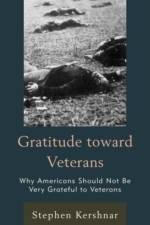
Gratitude toward Veterans: Why Americans Should Not Be Very Grateful to Veterans looks at whether veterans typically satisfy these conditions and argues that they do not. The book should be taken seriously not only by scholars in military ethics and ethics in general, but also by anyone interested in the question of how much gratitude is owed to people holding different roles.
This book examines Russia's emergence after the collapse of the Soviet Union and its creation of a security architecture in the post-Soviet space. Many scholars argue that Russia is a coercive power in the region that forces states to act in only its own interests. While acknowledging Russia's power this author argues that it is not able to merely force states to behave as it wants them to. Instead, Russia must use bilateral and multilateral cooperation to develop a security architecture that provides order, stability and predictable behavior for both Russia as the hegemon and the weaker powers in the region. By building this security architecture, Russia and the other states in the post-Soviet space are better able to achieve their strategic goals and provide for their own security. To achieve this, weaker states are able to press for certain concessions from Russia regarding how to structure bilateral relations as well as multilateral organizations. While Western politicians have argued that Russia has tried to reestablish the Soviet Union through coercive means, the reality is much more of a nuanced interaction among all of the states in the region, which ensures state sovereignty while allowing the weaker states to pursue their own interests. Using network analysis, this author shows how the regional structural architecture of cooperation was built and indicate how Russia is able to achieve order. This book also shows that there is a lack of order where states have refused to cooperate in building the structural architecture, which has led to conflict and territorial disputes.
The Unity of Oneness and Plurality in Platos Theaetetus offers a reading of the Theaetetus that shows how the characters' failure to give an acceptable account (i.e a logos) of knowledge is really a success; the failure being a necessary result of the dialogue's implicit proof that there can never be a complete logos of knowledge. The proof of the incompatibility of knowledge and logos rests on the recognition that knowledge is always of what is, and hence is always of what is one, while logos is inherently multiple. Thus, any attempt to give a logos of what is known amounts to turning what is one into something multiple, and hence, that which is expressed by any logos must be other than that which is known. In this way The Unity of Oneness and Plurality in Platos Theaetetus provides its readers with developed sketches of both a Platonic epistemology, and a Platonic ontology.An account of the incompleteness of all accounts is, obviously, a very slippery undertaking. Platos mastery of his craft is on full display in the dialogue. Besides offering a reading of Platos epistemology and ontology, The Unity of Oneness and Plurality in Platos Theaetetus investigates the insights and difficulties that arise from a close reading of the dialogue through a sustained analysis that mirrors the movement of the dialogue, offering a commentary on each of the primary sections, and showing how these sections fit together to supply an engaged reader with a unified whole.
The discrepancy between the fourteenth amendment's true meaning as originally understood, and the Supreme Court's interpretation of its meaning over time, has been dramatic and unfortunate. The amendment was intended to be a constitutional rule for the promotion and protection of people's rights, administered by the states as front-line regulators of life, liberty, and property, to be overseen by Congress and supported by federal legislation as necessary. In this book, William B. Glidden makes the case that instead, the amendment has operated as a judge-dominated, negative rights-against-government regime, supervised by the Supreme Court. Whenever Congress has enacted legislation to protect life, liberty, or property rights of people in the states, the laws were often overturned, narrowly construed, or forced to rely on the power of Congress to regulate interstate commerce, under the Supreme Court's constraining interpretations. Glidden proposes that Congress must recover for itself or be restored to its proper role as the designated federal enforcement agency for the fourteenth amendment.
It has been all too tempting to characterize the Tea Party as an irrational, racist, astro-turf movement composed of members who are working to subvert their own economic interests. Race, Gender, and Class in the Tea Party reveals a much messier and much more fascinating analysis of this movement. Drawing upon in-depth interviews with organizers and fieldwork at conservative campaign trainings and conventions, its rich ethnographic data explores how the active folks in this movement, specifically organizers in one Midwestern state, understand their world, and how they act on that basis to change it. As this book will reveal, most Tea Party organizers do depend on deeply flawed understandings of race and classeither believing wholeheartedly in myths, or confining their analyses to the narrow limits of the conservative media system. Yet, Tea Party racism is simply American racism. Race, Gender, and Class in the Tea Party reveals the complexities and contradictions inherent in this movement, where organizers attempt to reconcile their personal experiences with their conservative politics. In the end, these dynamics reveal as much about us as it does about the Tea Party. It is certain to challenge all of our politics, and especially our scholarly thinking, about the movement, and offers a path toward real conversations about our collective future in the United States.
More than two billion dollars. That's how much money was spent in the 2012 presidential campaignthe most expensive campaign in history. Each party raised and spent more than one billion dollars as the traditional boundaries of campaign financing were ignored. Both parties could do so because they were playing in a game with new rulesrules that largely developed after the 2010 Supreme Court ruling known as Citizens United. That case removed many restrictions on donation limits, particularly for corporations and unions. The result was the development of a new set of political players called ';Super PACs' that were allowed to enter the political arena and spend an unlimited amount of money on behalf of clients.This book looks at how Super PACs raised and spent money and influenced the 2012 election. It provides an insightful look at how both right- and left-leaning groups approached the election and impacted the political process.
In Polish Hero Roman Rodziewicz: Fate of a Hubal Soldier in Auschwitz, Buchenwald, and Postwar England, Aleksandra Ziolkowska-Boehm traces the remarkable and tragic tale of Roman Rodziewicz, a true Polish hero of the Second World War. Roman's childhood was spent in Manchuria where his father, first deported to Siberia, later worked as an engineer for a Chinese company. Following the loss of his parents early in life after returning to free Poland, Roman was trained to manage a self-sufficient estate farming and producing various livestock, vegetables, and honey. Prior to the German invasion of Poland, Roman attended military school at the Suwalki Cavalry Brigade. After the surrender of the Polish army, the partisan forces of Major Hubal continued to fight the Germans. The brave anti-German activities of the Hubal partisans beckoned Roman and he joined them. About eight months later Major Hubal was killed. Roman escaped and joined the underground as an officer fighting the German occupation forces. Captured and tortured, Roman was subsequently imprisoned in Auschwitz and later Buchenwald. After the American army rescued Roman, he joined the Polish army in Italy. At the end of World War II Roman settled in England. One of the greatest misfortunes of his life was losing contact with his fiance Halinka, and later learning she had married believing him to be dead. Two weeks after her marriage, she received a letter from Roman that he had survived the war. They met many years later, and Aleksandra Ziolkowska-Boehm witnessed the meeting of Halinka and Roman in Warsaw. Roman continues to live in England now having reached the age of 100 years in January 2013. Polish Hero Roman Rodziewicz explores the incredible story of one Polish soldier of World War II, and provides an illuminating contribution to the historical record of the period.
Witches, Tea Plantations, and Lives of Migrant Laborers in India: Tempest in Teapot is a unique book that brings together a holistic theoretical approach on the subject of witchcraft accusations, specifically those taking place inside a tea workers community in India. Using a combination of in-depth and extensive qualitative methods, and drawing on sociological, anthropological, and historical perspectives, Chaudhuri explores how adivasi (tribal) migrant workers use witchcraft accusations to deal with worker-management conflict. Chaudhuri argues that witchcraft accusations can be interpreted as a periodic reaction of the adivasi worker community against their oppression by the plantation management. The typical avenues of social protest are often unavailable to marginalized workers due to lack of organizational and political representation and resources. As a result, the dain (witch) becomes a scapegoat for the malice of the plantation economy. Within this discourse, witch hunts can be seen not as exotic and primitive rituals of a backward community, but rather as a powerful protest by a community against its oppressors. The book attempts to understand the complex network of relationshipsties of friendship, family, politics, and genderthat provide the necessary legitimacy for the witch hunt to take place. In most cases examined here, seemingly petty conflicts within the villagers often escalate to a hunt. At the height of the conflict, the exploitative relationship between the plantation management and the adivasi migrant workers often gets hidden. The book demonstrates how witchcraft accusations should be interpreted within this backdrop of labor-planters relationship, characterized by rigidity of power, patronage, and social distance.Witches, Tea Plantations, and Lives of Migrant Laborers in India should appeal to criminologists, sociologists, anthropologists, labor historians, gender scholars, labor migration scholars, witch hunt and witchcraft accusation global scholars, adivasi scholars, South Asian scholars, and anyone interested in India's tribes, witchcraft accusations, gender in a global world, labor conflict, and Indian tea plantations.
From Celibate Catholic Priest to Married Protestant Minister: Shepherding in Greener Pastures describes a previously unstudied population of celibate Catholic priests who left the priesthood and eventually became married Protestant ministers. Stephen Fichter alternates from narrative to descriptive as he follows the lives of three of his study participants before, during, and after their dual transition. The descriptive sections include a history of religiously motivated celibacy and a review of the four leading forerunners in the field of Catholic clergy research. This scholarly study is the first time that these transitional clerics have candidly explained their difficult journeys of discernment. Religion, love, loss, and commitment are all analyzed in the context of this unique group of men, and the profiles in this book are memorable not only for the richness of their content, but alsoand maybe most importantlyfor their humanity. Lessons can be drawn for all people, especially those who have ever suffered a mid-life crisis.
Globalization's Impact on Cultural Identity Formation: Queer Diasporic Males in Cyberspace examines diasporic, queer, cultural identity formations in an era of globalization by utilizing cyber-ethnography as a critical, cultural, and qualitative method. Atay presents cyber-ethnography as a method to make sense of complex, globally infused, and cultural experiences, examines how one creates and recreates cultural identity through lived and mediated realities, and analyzes how one uses mediated forms, such as web pages, chat rooms, blogs, and webcams, to understand and negotiate personal identity. Atay utilizes critical research methods, such as cyber-ethnography, to investigate different aspects of cultural identities as presented on these venues. This book aims to show the interconnected nature of cultural identity segments by highlighting some of the powerful cultural and social forces that mold our identities in this ever more global world.
Besides massive race prejudice and the perceived vindictiveness of the radical Republicans, another factor that contributed strongly to the derailment of reconstruction after the Civil War was the conflicting decisions taken by the political leaders. Lincoln warned against differences between the friends of freedom, and to overcome these, took charge of the reconstruction of Louisiana and showed how it should be done by pitting benefits of enlightened free government against the prejudices of the populace. Unfortunately, his example was lost on his successor, Andrew Johnson, whose encouragement of Southern resistance to the North's terms aggravated factionalism within the Republican party. The moderates dominated in the drafting of the Fourteenth Amendment, where they incorporated the statesmanlike principle of a benefit, self-government in exchange for Southerners protecting the rights of all their citizens, black and white. However, this statesmanlike bargain was practically abandoned in Congress's response to the Southern states' rejection of the Fourteenth Amendment, the Congressional Reconstructions Act. The fears of the moderates that the new state governments would not protect rights led them to propose universal suffrage, while the fears of the radicals that disloyal men would rule led them to provide for the disfranchisement of many ex-rebels and to hold any governments established, provisional only, subject to congressional change at will. As result the incentive for native white Southerners to participate in the new state governments in exchange for rights protection was drastically weakened. The consequences of this legislative straight jacket made it extremely difficult for Republicans in the defeated states to establish permanent political footholds. Some tried to hold onto power without attempting to cultivate native white support and lost their states for the Republicans. Three other leaders' efforts to strike a balance between radicals and Democrats fell flat. Imprudent decisions of the Grant Administration shattered the attempts of three more states to establish a common ground with moderate Democrats. On the positive side, there was a leader in Virginia who figured out the kind of political arrangement necessary for Republicans to survive, and in Florida, a moderate Republican Governor, Ossian Bingley Hart, exercised real statesmanship to lead the most successful of all reconstruction governments.Statesmanship in reconstruction could have spared the South some severe hardships. Despite the vast change in public opinion on race relations over the last nearly 150 years, there are still lessons drawn from this study that can be applied to present day Civil Rights Policy.
Naturalism's Philosophy of the Sacred: Justus Buchler, Karl Jaspers, and George Santayanaoffers an interpretation of the sacred based on the ordinal naturalism of Justus Buchler, one of the most important philosophers of the twentieth century whose work is experiencing a renaissance. This book seeks to find common ground between theists and atheists by arguing that religious beliefs should be retained because they provide a poetic response to nature's mysteries, while also addressing the atheist's concerns regarding the tendency of religious believers to demonize nonbelievers and to idolize their own conceptions of the sacred. The heart of Martin O. Yalcin's argument is that religious violence can be traced to the belief that God is far more real and therefore far more valuable than nature. In contrast to this view, he develops a philosophy of the sacred from the perspective of ontological parity which holds that all things are equally real. He argues that when the sacred is leveled to the plane of nature as one of its innumerable orders, then the virtues of piety and charity replace the vices of demonization and idolization so evident in religions that insist on the utter incommensurability of God with respect to the created order. In the course of developing an aesthetic interpretation of the sacred, Yalcin explores not only the metaphysical categories of Justus Buchler, but also those of Karl Jaspers and George Santayana. The dialogue with Jaspers unearths the absolute otherness of the sacred as the intrinsically unethical dimension of any variant of theism. Having undermined the total absolution of the sacred, Naturalism's Philosophy of the Sacred suggests an alternative aesthetic form of sacred engagement that piggybacks on Santayana's thoroughly natural poetic rendition of the sacred. This book will be of great value to students and scholars working in departments of religion, philosophy, and theology.
The romantic perception of the American Southwest as a wild and dangerous frontier where heroic settlers prove their endurance has often responded to a common human desire to escape from the pressures of civilization and experience an ';authentic' relationship with nature. This idealized notion about life in the Southwest, however, has contributed the subjugation of the indigenous populations and the natural world while helping rationalize the conquest of both. In Myth and Environment in Recent Southwestern Literature, Theda Wrede brings contemporary Southwestern American literature under the microscope to examine the ways in which the mythic narrative has influenced attitudes toward the land in the region. Focusing on popular novels by Corrmac McCarthy, Barbara Kingsolver, Leslie Marmon Silko, and Denise Chvez, Wrede explores the psychology behind the myth and discusses the ways in which the four authors deploy the mythic narrative, interrogate its validity, and offer visions for alternative modes of inhabiting the Southwest. In combining ideas from a culturally sensitive ecofeminist theory, psychoanalysis, postcolonial studies, and literary studies, the study offers an innovative conceptual framework for discussions about environmental responsibility in the twenty-first century. Finally, it also encourages its readers to partake in the process of mythogenesis by imagining ';sustainable' narratives to help rescue the promise of the Southwest for the new millennium.
Ironically, the philosophy of love has long been neglected by philosophers, so-called ';lovers of wisdom,' who would seemingly need to understand how one best becomes a lover. In Kierkegaard and the Philosophy of Love, Michael Strawser shows that the philosophy of love lies at the heart of Kierkegaard's writings, as he argues that the central issue of Kierkegaard's authorship can and should be understood more broadly as the task of becoming a lover. Strawser starts by identifying the questions (How should I love the other? Is self-love possible? How can I love God?) and themes (love's immediacy, intentionality, unity, and eternity) that are central to the philosophy of love, and he develops a rich context that includes analyses of the conceptions of love found in Plato, Spinoza, and Hegel, as well as prominent contemporary thinkers. Strawser provides an original and wide-ranging analysis of Kierkegaard's writingsfrom the early The Concept of Irony and Edifying Discourses to the late The Moment, while maintaining the prominence of Works of Love to demonstrate how Kierkegaard's writings on love are relevant to the emerging study of the philosophy of love today. The most unique perspective of this work, however, is Strawser's argument that Kierkegaard's writings on love are most fruitfully understood within the context of a phenomenology of love. In interpreting Kierkegaard as a phenomenologist of love, Strawser claims that it is not Husserl and Heidegger that we should look to for a connection in the first instance, but rather Max Scheler, Dietrich von Hildebrand, Emmanuel Levinas, and most importantly, Jean-Luc Marion, who for the most part center their thinking on the phenomenological nature of love. Based on an analysis of the works of these thinkers together with Kierkegaard's writings, Strawser argues that Kierkegaard presents readers with a first phenomenology of love, a point of view that serves as a unifying perspective throughout this work while also pointing to areas for future scholarship. Overall, this work brings seemingly divergent perspectives into a unity brought about through a focus on lovewhich is, after all, a unifying force.
Black Muslims and the Law: Civil Liberties From Elijah Muhammad to Muhammad Ali examines the Nation of Islam's quest for civil liberties as what might arguably be called the inaugural and first sustained challenge to the suppression of religious freedom in African American legal history. Borrowing insights from A. Leon Higgonbotham Jr.'s classic works on American slavery jurisprudence, Black Muslims and the Law reveals the Nation of Islam's strategic efforts to engage governmental officials from a position of power, and suggests the federal executive, congressmen, judges, lawyers, law enforcement officials, prison administrators, state governments, and African American civic leaders held a common understanding of what it meant to be and not to be African American and religious in the period between World War II and the Vietnam War. The work raises basic questions about the rights of African descended people to define god, question white moral authority, and critique the moral legitimacy of American war efforts according to their own beliefs and standards.
This study investigates Indian working womens sense of the discourses surrounding work and careers. In interviews conducted with seventy-seven women across socioeconomic statuses, castes, classes, and occupational and generational categories in the city of Pune, India, women express how feeling bound by tradition confronts excitement about ongoing changes in the country. The work lives of these women are influenced symbiotically by Indias sociocultural practices and the contemporary phenomenon of globalization. Using feminist standpoint theory as a theoretical lens, Suchitra Shenoy-Packer explores how women deconstruct, coconstruct, and reconstruct systems of knowledge about their worlds of work as embedded within and influenced by the intersections of society, socialization, and individual agency. The meanings that Indian women associate with their work as well as their definition of a career in twenty-first-century India will be of interest to students and scholars of feminist theory, womens studies, globalization, Asian studies, and labor studies.
Gossip Girl: A Critical Understanding provides a critical analysis of The CW's hit teen television drama Gossip Girl. Lori Bindig analyzes episodes as a set of media texts that blur the boundaries between hegemonic and counter-hegemonic content. Using political economy, textual and audience analyses, Bindig dissects how the show presents ideological content in regard to gender, race, class, sexuality, and consumerism, ultimately unearthing potential ramifications of Gossip Girl and other popular media texts. In addition, Bindig examines the expansive fan community and its engagement with the show through online forums and YouTube. Gossip Girl: A Critical Understanding will appeal to scholars of media, audience studies, and popular culture.
This book examines the text of the CW network television series Supernatural, a program based in the horror genre that offers viewers myriad religious-based antagonists, through the portrayals of monsters which its two main characters ';hunt' and destroy, as well as storylines based in the Bible. Even as the series' producers claim a non-religious perspective, we contend that story arcs and outcomes of episodes actually forward a hegemonic portrayal of Christianity that portrays a good-versus-evil motif regarding the superiority of Christianity. The depiction of its protagonist brothers, Dean and Sam Winchester of Lawrence, Kansas, forwards a pro-American perspective to a more generalized fight against evil in contemporary times.
Equitable Sharing: Distributing the Benefits and Detriments of Democratic Society argues that a principle of equitable sharingone that requires the benefits and detriments of social life to be fairly distributed among all members of societyis fundamental to the concept of democracy and is implicit in the founding documents of the democratic society the United State purports to be. To illustrate the centrality of equitable sharing to democracy, this book examines the political philosophies of John Locke, John Stuart Mill, and John Rawls. Locke's libertarianism, Mill's utilitarianism, and Rawls' egalitarianism represent major strains of Western democratic theory, and all contain a principle of equitable sharing in some form. To illustrate the centrality of equitable sharing to U.S. society, the book examines the Declaration of Independence and the Constitution. While these documents do not set forth a particular version of equitable sharing, they contain elements of all of Locke's, Mill's and Rawls' philosophies and evidence a commitment to equitable sharing as fundamental to the democratic society they contemplate. The task of U.S. society throughout its existence has been to engage in an on-going dialogue that gives life to the commitment to equitable sharing set forth in its founding documents. As the elected representatives of the people and the repository of the powers through which to implement much of what equitable sharing requires, the primary responsibility for implementation rests with the legislative branch. This book argues that the Supreme Court, interacting with the public and the legislature, also has a meaningful role to play in the dialogue over the requirements of equitable sharing and can play this role in a manner consistent with democratic principles. This point is illustrated through a discussion of several contemporary issues: same sex marriage, racial integration in public schools, health care, and the regulation of the electoral process.
Impact of Globalization on the Local Press in China investigates Chinese news production and content, as well as the main factors that have caused significant changes to Chinese newspapers over the past three decades. By conducting an in-depth study of a particular leading newspaper group in China, Beijing Youth Daily, Zhang identifies and analyzes essential changes in press structure, news organization, and the role of journalists, thus revealing the relations between the global and local, external and internal influences, the Party-state and the media, and the media and the market. This is the first comprehensive study of news making at both macro and micro levels in China. It provides up-to-date empirical data analysis on the operation and practices of transforming Chinese newspapers; offers a tool to form, clarify, and refine concepts on media globalization and journalism in developing countries like China; and serves as a reference point for policy makers, media practitioners, academics, and students who engage in journalism studies, Chinese studies, media management, and globalization studies.
The Politics of State Intervention: Gender Politics in Pakistan, Afghanistan and Iran examines how three culturally and religiously interconnected neighboring states have sought to regulate the lives of their female populace in order to gauge how successful, or unsuccessful, these efforts have been at the grassroots level. Utilizing a historical framework, it explores the gender specific policies of these states to assess whether or not shared cultural, religious, and social characteristics translate into similar gender policies and outcomes across borders, and if not, why. Through comparison, it conclusively identifies social and political roadblocks that threaten both the long term prospects and security for all females; as well as factors that tend to somewhat ameliorate detrimental tendencies.
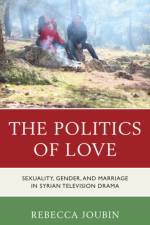
Dramatic miniseries are the primary arena for the expression of postcolonial Syrian culture and artistic talent, an arena that unites diverse aspects of artisanship in a struggle over visions of the past, present, and future of the nation. As the tour de force of the television medium, blossoming amidst persisting authoritarianism, these miniseries serve as a crucial and complex artistic avenue through which political and social opposition manifests. Scholars have tried to come to terms with a highly critical culture produced within attempted state co-optation, and argue that politically critical culture operates as a ';safety valve' to release frustrations so that dissenters are less likely to mobilize against the government. Through research fueled by a viewing of over two hundred and fifty miniseries ranging from the 1960s to the presentas well as an examination of hundreds of press reports, Facebook pages, and extensive interviews with drama creatorsthis book turns away from the dominant paradigm that focuses on regime intent. When turning attention instead to the drama creators themselves we witness the polyphony of voices employing love and marriage metaphors and gender (de)constructions to explore larger issues of nationalism, self-identity, and political critique. At the heart of constructions of femininity are the complications that arise with the symbiosis of pure femininity with authentic national identity. Deconstructing masculinity as political critique has been less complicated since it is not implicated in Western identity issues; on the contrary, illustrations of subservient masculinity serve to subtly denounce government corruption and oppression. Miniseries from the 1960s demonstrate that the focus of the qabaday (tough man) on female sexuality comes from his own political alienation vis--vis the state, and is part of a vicious cycle of state violence vis--vis the citizen. In recent years, and in particular after the uprising, we can see the emerging definition of the true qabaday as one who does not suppress a woman's sexuality, thereby allowing for full equality in relationships as the basis of a truly free society.
Fiction, including novels, plays, and films, can be a powerful force in educating students and employees in ways that lectures, textbooks, articles, case studies, and other traditional teaching approaches cannot. Works of fiction can address a range of issues and topics, provide detailed real-life descriptions of the organizational contexts in which workers find themselves, and tell interesting, engaging, and memorable stories that are richer and more likely to stay with the reader or viewer longer than lectures and other teaching approaches. For these reasons, Exploring Capitalist Fiction: Business through Literature and Film analyzes 25 films, novels, and plays that engage the theories, concepts, and issues most relevant to the business world. Through critical examinations of works such as Atlas Shrugged and Wall Street, Younkins shows how fiction is a powerful teaching tool to sensitize business students without business experience and to educate and train managers in real businesses.
Aquinas on Beauty explores the nature and role of beauty in the thought of Thomas Aquinas. Beginning with a standard definition of beauty provided by Aquinas, it explores each of the components of that definition. The result is a comprehensive account of Aquinas's formal view on the subject, supplemented by an exploration into Aquinas's commentary on Dionysius's Divine Names, including a comparison of his views with those of both Dionysius and those of Aquinas's mentor, Albert the Great. The book also highlights the tight connection in Aquinas's thought between aesthetics and ethics, and illustrates how Aquinas preserves what is best about aesthetic traditions preceding him, and anticipates what is best about aesthetic traditions that would follow, marrying objective and subjective aesthetic intuitions and charting a kind of via media between the common extremes.
Abonner på vårt nyhetsbrev og få rabatter og inspirasjon til din neste leseopplevelse.
Ved å abonnere godtar du vår personvernerklæring.