




















Gjør som tusenvis av andre bokelskere
Abonner på vårt nyhetsbrev og få rabatter og inspirasjon til din neste leseopplevelse.
Ved å abonnere godtar du vår personvernerklæring.Du kan når som helst melde deg av våre nyhetsbrev.

Drawing on solid ethnographic fieldwork as well as many hours of interviews, Leprosy and a Life in South India: Journeys with a Tamil Brahmin tells the life story of Das, a Tamil Brahmin born in the newly post-colonial India of the early 1950s. After being diagnosed with leprosy, Das spent over a decade on the streets of Bombay and Madras, learning to survive as an unofficial station porter, hotel bellhop, and sometimes tourist guide. He won and lost fortunes on horses, he gambled, and he learned firsthand of the pleasures to be had in Bombay's red light district. But for all the joy that comes through so vividly in his account, Das's story unfolds against a backdrop of everyday violence and hardship. Re-investigated through the prism of an individual life, what are often presented as the rigid social categories of caste, religion and kinship come to be seen in fresh new ways. Through this life history account, Leprosy in South India captures all this in ways conventional accounts do not, offering a unique take on what it is to be an Indian in contemporary India.
Philosophical hermeneutics provides a model of interreligious dialogue that acknowledges the interpretive variability of truth claims while maintaining their relation to a preinterpretive reality. The dialectic and tensive structure of philosophical hermeneutics directly parallels the tension between the diversity of belief and the ultimacy of the sacred. By placing philosophers like Gadamer, Ricoeur, Peirce, and Whitehead in conversation, J. R. Hustwit describes religious truth claims as coconstituted by the planes of linguistic convention and uninterpreted otherness. Only when we recognize that religious claims emerge from a dalliance back and forth across the limits of the understanding can we appreciate the engagement between religions. In terms of dialogue, this approach treats religious truth claims as tentative hypotheses, but hypotheses that are frequently commensurable and rationally contestable. Interreligious dialogue goes beyond facilitating bonhomie or negotiating tolerance; dialogue can and should be a disciplined space for rationally adjudicating claims about what lies beyond the limits of human understanding.
Leaving Christendom for Good argues that the solution to some of the most troubling tensions in the life of the Catholic Church since Vatican II can be found in the council's document Gaudium et spes. This text's view of the church's mission and social relationships as dialogical has the capacity to liberate. Part One studies the contemporary place of religionwith particular reference to Charles Taylor's groundbreaking work, A Secular Ageand examines Gaudium et spes's dialogical view of the church-world relationship. Part Two explores what true dialogue entails and how it is best understood theologically, engaging critically with Joseph Ratzinger's view of the church-world relationship. The book's final chapter considers two practical implications of its argument: how evangelization can be best understood today, and how the church can best approach issues in the public sphere.
Small World, Big Market: Global Business provides an overview of the development of international business with special emphasis on oil production, an essential part of economic development. The book focuses on major trade patterns, including the Silk Road that connected China with Europe beginning at the turn of the millennium; the Chinese Tribute Trade that connected China to Southeast Asia, Africa, and the Mideast beginning in the thirteenth century; the spice trade between Southeast Asia and India by the early fifteenth century; and European-dominated world trade. This volume examines gold and silver trade from the Americas to Europe in the sixteenth century, and also covers the development of the Americas, together with existing African slave trade throughout Eurasia, giving rise to the expansion of African slave. Budd Hebert also discusses common principles and personal character tools for bringing together diverse cultures to facilitate international business. Small World, Big Market culminates by highlighting selected trends that impact international business.
The Political Life of Bella Abzug, 19761998 is the second part of the first full biography of Bella Abzug. Alan H. Levy explores the political life of one of the most important women in politics in mid- and late-twentieth-century America. This second part takes up Abzug's life from the point in 1976 when she narrowly lost her bid for the N.Y. Democratic Party's nomination for the U.S. Senate. The biography follows her subsequent failed effort to win the Democratic Party's nomination for Mayor of N.Y.C. in 1977, her leading a controversial National Women's Convention in Houston in late 1977, her failed attempt to return to the U.S. Congress in 1978, and her conflicts with President Jimmy Carter and his administration. The biography then traces the efforts in which Abzug was engaged to regain political prominence, and her work on behalf of women at both national and international levels. Through the events in Abzug's life, Levy explores tensions that surrounded the contrasts between political principles, which idealized a world in which gender posed no barriers to any human effort, and political views, which sought to extol and develop notions of gender and of ideas about its special meanings in human affairs and politics.
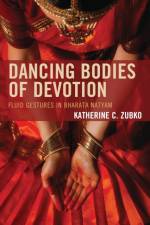
Dancing Bodies of Devotion: Fluid Gestures in Bharata Natyam examines how Bharata Natyam, a traditionally Hindu storytelling dance form, moves across religious boundaries through both incorporating choreography on Buddhist, Christian, Muslim, and Jain themes and the pluralistic identities of participants. Dancers traverse religious boundaries by reformulating an aesthetic foundation based on performative rather than solely textual understandings of rasa, conventionally defined as a formula for how to physically craft emotion on stage. Through the ethnographic case studies of this volume, dancers of Bharata Natyam innovatively demonstrate how the rasa of devotion (bhakti rasa), surprisingly absent from classic dance-related texts, serves as the pivotal framework for expanding on their own interreligious thematic and interpretive possibilities. In contemporary Bharata Natyam, bhakti rasa is not just about enhancing religious experience; instead, these dancers choreographically adapt various religious identities and ideas in order to emphasize pluralistic cultural and ethical dimensions in their work. Through the dancing body, multiple religious and secular interpretations fluidly co-exist.
This handbook promotes a comprehensive strategy founded on evidence-based programming for juvenile justice systems to adopt or enhance their current system. The comprehensive strategy is supported strongly by the broad research base that is now available. This strategy recognizes, first, that a relatively small proportion of the juveniles who initially enter the juvenile justice system will prove to be serious, violent, or chronic offenders, but that group accounts for a large proportion of the overall amount of delinquency. An important component of a comprehensive evidence-based juvenile justice system, therefore, is distinguishing these offenders from others and focusing attention and resources on that smaller group. Second, a comprehensive strategy recognizes that serious, violent, or chronic delinquency emerges along developmental pathways that progress from less to more serious profiles of offending. Priority must be given to interrupting these offender careers by calibrating the level of supervision and control of the juveniles' behavior to their level of risk. The third major component of a comprehensive strategy, therefore, is effective intervention programs that are capable of reducing the recidivism of those juveniles at risk for further delinquency. The Comprehensive Strategy for Serious, Violent, and Chronic Juvenile Offenders is an administrative framework that supports a continuum of services that parallel the development of offender careers. This framework emphasizes evidence-based programming specifically on recidivism reduction, and supports protocols for developing comprehensive treatment plans that match effective services with offender treatment needs along the life-course of delinquent careers, as they move from intake onward, to probation, community programs, confinement, and reentry. Juvenile justice systems will benefit from incorporation of a comprehensive strategy as provided in the handbook.
This book provides an in-depth survey of Britain's Mandate in Palestine, an issue crucial to understanding the continuing atmosphere of mistrust and violence in the region that continues to the present. At the conclusion of the First World War (191418), the League of Nations awarded a Mandate to Great Britain, which entailed governing a part of the defunct Ottoman Empire, a part which became known as Palestine. The Mandate, empowering Britain to govern this area for an unspecified period, had as one of its main objectives the understanding that Britain would assist the Zionist Movement in the creation of a Homeland for the Jewish people in Palestine.During the thirty years that Britain ruled Palestine, it made no serious effort to carry out this commitment. The author discusses a variety of reasons for this failure, but the greatest obstacle preventing it from fulfilling its Mandate was that Britain completely miscalculated the reaction of the large Arab majority in the country. In fear of repercussions from the growing Arab nationalism various British Governments over the years decided that their best interests would be served by appeasing the Palestine Arabs and reneging on the British promise to Zionism. As the author shows, Britain's failure to fulfil its Mandate obligations was a major contribution to the problems that have persisted in the Middle East for decades.
Sub-Saharan Africa is experiencing an impressive measure of economic revivalism that is driven by both national and international forces at the beginning of the twenty-first century. That political and business leaders in the region are determined that development in this millennium will not mimic the slow pace of growth in the twentieth is a given. Undoubtedly, the rapid spread of information communications technology (ICT) and contemporary investments of China in the region's growth agenda bear this thesis out. This book, among other things, advances the theory that improving human rights practices and the democracy projecti.e. democratic consolidation in sub-Saharan Africa will create an enabling environment that is critical for stimulating the current inspiring development objectives.
Although Cameroon's image as a stable nation with a strong economy may have mitigated against any large-scale migration by Cameroonians following independence, the economic collapse beginning in the mid-1980s and the coerced implementation of democratic reforms in the early 1990s exposed fault lines in the nation's economic and political institutions. As a result, thousands of Cameroonians have left the country in search of a better life abroad. While Europe remains the favorite destination for many of these migrants, a significant number have also come to the United States. Cameroonian Immigrants in the United States examines the increase in the population of Cameroonians in the United States in the last two decades, the difficulties that many of them must endure in order to come to America, and the challenges they face adapting to their new environment. Despite the problems they face, these new immigrants are creating a home in America. At the same time, however, they remain connected to their country of birth through remittances to friends and family members and other forms of investments and development projects in their communities.
';I no sooner perceived myself in the world,' wrote English philosopher John Locke, ';than I found myself in a storm.' The storm of which Locke spoke was the maelstrom of religious fanaticism and intolerance that was tearing apart the social fabric of European society. His response was A Letter Concerning Toleration (1689), arguably the most important defense of religious freedom in the Western tradition. In God, Locke, and Liberty: The Struggle for Religious Freedom in the West, historian Joseph Loconte offers a groundbreaking study of Locke's Letter, challenging the notion that decisive arguments for freedom of conscience appeared only after the onset of the secular Enlightenment. Loconte argues that Locke's vision of a tolerant and pluralistic society was based on a radical reinterpretation of the life and teachings of Jesus. In this, Locke drew great strength from an earlier religious reform movement, namely, the Christian humanist tradition. Like no thinker before him, Locke forged an alliance between liberal political theory and a gospel of divine mercy. God, Locke, and Liberty suggests how a better understanding of Locke's political theology could calm the storms of religious violence that once again threaten international peace and security.To read an interview with the author about the book on Patheos.com, see here: http://www.patheos.com/blogs/jesuscreed/2015/01/10/under-locke-and-key/
Christian Faith, Justice, and a Politics of Mercy: The Benevolent Community assumes that the most profound moral conflict today is between two virtuesjustice and mercy. Gilman argues that the two are organically linked through the common experience of compassion. In an unjust world, justice cannot establish itself, but requires, in public as well as private life, projects of merciful benevolence. Mercy alone has the power to subvert patterns of injustice, and mercy and projects of benevolence are tailored to establish and sustain patterns of justice, especially fair economic outcomes. To show this, against Rawl's Difference Principle, Gilman argues for a Distribution Principle, which states that social and economic inequalities should be addressed by policies that directly and primarily benefit the least advantaged members of society, while at the same time minimizing burdens and/or maximizing benefits for the most advantaged. Along the way he shows how in the United States benevolence as a public virtue was disestablished along with religion; how it might and should be re-established without re-establishing religion; and how the Christian tradition provides resources for evolving morally from a liberal, procedural practice of justice to one that embraces egalitarian, economic justice as well. Finally, he demonstrates how in the global community today, Christianity and other traditions can and should make ';benevolent community' a reality.
The Kennedy assassination has produced a number of conspiracy theories based largely upon intriguing questions, speculation, and inference. Thousands of books and articles have been written about the assassination with a large majority of the published material arguing for a conspiracy of one kind or another. However, a relatively small volume of literature has been written from a scholarly and academic perspective.The Faces of Lee Harvey Oswald provides the first comprehensive scholarly analysis of Lee Harveys Oswalds role in the JFK assassination. Scott P. Johnson objectively examines the various narratives of Lee Harvey Oswald created by researchers and authors over the last fifty years. He finds that at first glance any theory related to Oswald's role appears as convincing as the next, particularly when researchers carefully select information that only advances their preferred theory. In reality, however, Oswald's role in the assassination offers little certainty when one looks at the mystery surrounding Oswald's life and death as well as the complexity and ambiguity surrounding the murder of President Kennedy. Rather than putting forth a single theory, Johnson lays out the known facts against each theory and allows the readers to make their own decision.
Conflict between work and family life is an all too familiar experience for many Americans. The difficult choices facing women who combine paid work with childcare are the subject of a deluge of books and articles in addition to an ongoing public debate about how women and men should balance their work and family commitments. Although we know a great deal about the social and cultural environment fueling these contradictions among middle-class and upper middle class women, we know little about the forces that influence poor and low-income women. Work and Family Commitments of Low-Income and Impoverished Women addresses this omission and gives voice to women in poverty as it traces the moral and cultural structures that help shape the meaning and value of paid work and motherhood among a group of mothers who rely on welfare or a combination of low-wage work and welfare to provide and care for their families. This portrayal of poor women's lives rarely enters the work-life debate over women's choices, generally characterized as between mothers who have to work versus those who choose to. Judith Hennessy puts low-income women front and center to shed light on less explored aspects of the moral and cultural foundations of contemporary work and family conflict from interviews and survey data of a group of low-income and poor mothers on and off welfare.Hennessey explores the paradox in American society where combining paid work with caring for children continues to generate considerable ambivalence (and often guilt) on the part of married middle-class mothers for devoting too much time to paid work and supposedly neglecting their children. While poor and working class mothers who might otherwise rely on welfare are relegated to working at low-wage jobs outside the home in fulfillment of their family responsibilities.
This book chronicles Robert J. McKees active participation in a successful protest action, led primarily by black females in the historically African American community of West Las Vegas, Nevada, from 2008-2013. The residents protested the closure of a main street (F Street) in their community for the expansion of Interstate 15. The community felt the street closure was racially motivated, with the intent of further alienating and isolating this already marginalized community. The street closure was one of many instances in a protracted history of events that further exacerbated race relations in Las Vegas. With only minimal support from the black church, courageous women mobilized their community from a neighborhood coalition into a successful community protest group, despite resistance from city officials and a racist backlash from some Las Vegas residents. The key players in this work were then-Mayor Oscar Goodman, State Senator and now U.S. Congressman Steven Horsford, and a host of local and state leaders.The closing of F Street creates an environ for McKee to discuss the current problems of race relations, urban sociology, city planning, social action, ethnography, and institutionalized racism.
Counterrevolution and Repression in the Politics of Education revisits the ideas of Herbert Marcuse in order to examine how his observations on counterrevolution are applicable to present conditions in politics, particularly those pertaining to the politics of education. While Marcuse's influence in the academy has noticeably waned since its zenith in the late 1960's, his observations seem more relevant than ever, especially in the current context of economic crises, ideological polarization, and a heightened disaffection with capitalism. In particular, this book focuses on how counterrevolution functions within the field of ideology, manipulating the acquisition, representation, and exercise of reason in order to diminish the faculties of dissent and render utopian projects as the paramount political obscenity. While we are most familiar with counterrevolution in its guise of bloodstained battlefields and ditches filled with the bodies of dissidents, Marcuse alerts us to the decidedly ideological character of counterrevolution in late capitalism. In advanced industrial society, counterrevolution functions by converting the needs of the working class, turning a potentially revolutionary segment of society into clients and supporters of the very system that oppresses them. Furthermore, the counterrevolution in the advanced industrial society is purely preemptivethere is no revolution to be undone or turned back. Starting from the foundation provided by Marcuse, this book demonstrates how the tactics of counterrevolution have been applied in the present for the purpose of undermining criticism and dissent and how counterrevolution has intervened within the politics of reason. In the last several years alone, we have witnessed attempts by state powers to reorganize college and university curricula, a heightened denigration of intellectuals and academics within political discourse, pervasive encroachment of consumerism in the collegiate experience, and the rapid expansion of online teaching. By using Marcuse's ideas, this book demonstrates that rather than unconnected and isolated, these phenomena are unified by the counterrevolutionary strategy of limiting and obstructing the acquisition of reason for the final aim of narrowing the possibilities for dissent.
The Freedom of Peaceful Action is the first installment of the trilogy The Nature of Liberty, which makes an ethical philosophic case for individual liberty and the free market against calls for greater government regulation and control. The trilogy makes a purely secular and nonreligious ethical case for the individual's rights to life, liberty, private property, and the pursuit of happiness as championed by the U.S. Founding Fathers. Inspired by such philosophic defenders of free enterprise as John Locke, Herbert Spencer, and Ayn Rand, The Nature of Liberty shows that such individual rights are not imaginary or simply assertions, but are institutions of great practical value, making prosperity and happiness possible to the degree that society recognizes them. The trilogy demonstrates the beneficence of the individual-rights approach by citing important findings in the emerging science of evolutionary psychology. Although the conclusions of evolutionary psychology have been long considered to be at odds with the philosophies of individual liberty and free markets, The Nature of Liberty presents a reconciliation that reveals their ultimate compatibility, as various important findings of evolutionary psychology, being logically applied, confirm much of what philosophic defenders of liberty have been saying for centuries. Moreover, proceeding from the viewpoint of Rand, this work argues that the structure of society most conducive to practical human well-being is commensurately the most moral and humane approach as well.The trilogy's first installment, The Freedom of Peaceful Action, focuses on the secular, philosophic foundation for a society based on individual rights. Starting from a defense of the efficacy of observational reason against criticisms from Immanuel Kant and Karl Popper, it demonstrates how a philosophic position of individual liberty and free markets is the logical result of the consistent application of human reason to observing human nature. This installment demonstrates that any political system that wishes for its citizens to thrive must take human nature into account, and that an accounting of human nature reveals that a system of maximum liberty and property protection is the one must conducive to peace and human well-being.
Hunting Down Social Darwinism is the third and final installment in the trilogy, The Nature of Liberty. The trilogy gives a secular, ethical defense of laissez-faire capitalism, inspired by Ayn Rand's ideas. The trilogy's first book, The Freedom of Peaceful Action, provided the philosophic theory behind the ethics of a free-enterprise system based on the individual rights to life, liberty, and private property which John Locke described. The second installment, Life in the Market Ecosystem, explained how free enterprise functions much as a natural ecosystem wherein behavioral norms develop, bottom-up, from repeat interactions among individual participants in the economy. As such defenses of free enterprise are frequently criticized as ';social Darwinism,' however, this third and final installment of the trilogy asks the question, ';What is social Darwinism?' The book embarks on a hunt for the term's meaning, explores social Darwinism's beginnings, and examines whether it is fair to describe such nineteenth-century free-market advocates as Herbert Spencer and William Graham Sumner as social Darwinists. It then addresses the accusation that the free-market Darwinism commonly ascribed to Spencer and Sumner rationalized bigotry and founded the pseudoscience of eugenics. In the process, the book refutes various myths about the topic popularized by such scholars as Richard Hofstadter and John Kenneth Galbraith. The extent to which the popular narratives about social Darwinism prove to be inaccurate holds enormous ramifications for current controversies. It has implications for debates over the ethical appropriateness of reducing taxpayer spending on social welfare programs, and also sheds new light on the pros and cons of attempts to apply biological evolutionary theory to the study of human social institutions. Additionally discussed is the manner in which various prominent figures in economics, evolutionary psychology, and Complexity Theory have grown famous for advancing ideas which Spencer and Sumner originated, even as such figures simultaneously downplay the importance of Spencer and Sumner to their field. Following the hunt for social Darwinism, this work sums up the trilogy with some final thoughts on the importance that liberty holds for every effort to live life to the fullest.
Knowledge Workers in Contemporary China: Reform, and Resistance in the Publishing Industry concentrates on the trajectories of the labor process transformation of knowledge workers, mainly editors, in the Chinese publishing industry. The book focuses on their changing social, economic, and political roles; their dilemmas, challenges, and opportunities associated with current social reform; and China's integration into the global political economy. At its core, the book addresses three different yet interrelated processes of the political economy of communication: commodification, structuration, and spatialization in the Chinese publishing industry. It examines whether worker organizations and trade unions are effective in presenting editors' legitimate rights and interests in current publishing reform. Through the political economic analysis of knowledge workers in China's publishing industry, Jianhua Yao helps readers better understand the broader social and economic transformations, specifically the network of power relations and institutional contexts in which Chinese editors are situated, that have been taking place in China since the late 1970s.
Among all the worlds' democracies, the American system of government is perhaps the most self-conscious about preventing majority tyranny. The American constitutional system is predicated on an inherent ideational and institutional tension dating back to the foundation of the nation in the eighteenth century, which constrains innovative policy development. Namely, the framers designed a system that simultaneously seeks to protect the rights of the minority out of power and provide for majority rule. These opposing goals are based on the idea that limiting governmental power will guarantee individual liberty. The Path of American Public Policy: Comparative Perspectives asks how this foundational tension might limit the range of options available to American policy makers. What does the resistance to change in Washington teach us about the American system of checks and balances? Why is it so difficult (though not impossible) to make sweeping policy changes in the United States? How could things be different? What would be the implications for policy formation if the United States adopted a British-style parliamentary system? To examine these questions, this book gives an example of when comprehensive change failed (the 1994 Contract with America) and when it succeeded (the 2010 Affordable Care Act). A comparison of the two cases sheds light on how and why Obama's health care was shepherded to law under Nancy Pelosi, while Newt Gingrich was less successful with the Contract with America. The contrast between the two cases highlights the balance between majority rule and minority rights, and how the foundational tension constrains public-policy formation. While 2010 illustrates an exception to the rule about comprehensive policy change in the United States, the 1994 is an apt example of how our system of checks and balances usually works to stymie expansive, far-reaching legislative initiatives.
Zoopoetics assumes Aristotle was right. The general origin of poetry resides, in part, in the instinct to imitate. But it is an innovative imitation. An exploration of the oeuvres of Walt Whitman, E. E. Cummings, W. S. Merwin, and Brenda Hillman reveals the many places where an imitation of another species' poiesis (Greek, makings) contributes to breakthroughs in poetic form. However, humans are not the only imitators in the animal kingdom. Other species, too, achieve breakthroughs in their makings through an attentiveness to the ways-of-being of other animals. For this reason, mimic octopi, elephants, beluga whales, and many other species join the exploration of what zoopoetics encompasses. Zoopoetics provides further traction for people interested in the possibilities when and where species meet. Gestures are paramount to zoopoetics. Through the interplay of gestures, the human/animal/textual spheres merge making it possible to recognize how actual, biological animals impact the material makings of poetry. Moreover, as many species are makers, zoopoetics expands the poetic tradition to include nonhuman poiesis.
The Metaphysics of Detective Marlowe: Style, Vision, Hard-Boiled Repartee, Thugs, and Death-Dealing Damsels in Raymond Chandler's Novels is a comparative study of ';the life and times' of an American idol, Raymond Chandler's detective Philip Marlowe. It is a bitter-sweet critical exploration, meant to redefine the exceptional cultural profile, as well as the moral and social obsessions of one of America's eminent fictional heroes. The study paints a colorful picture of the irresistible blend of romantic blind faith and social, moral and political toughness which characterized the United States in the 1930s-40s, with the memorable throng of drug dealers, hit men, vamps, corrupt politicians, and eccentric millionaires that colonize Raymond Chandler's work. As the only defender of truth and honor in the Californian ';Waste Land,' Philip Marlowe emerges as a symbolic figure, celebrated for the unique place he holds in the American hard-boiled mythology. The volume comprises an Introduction, Marlowe Before Marlowe, and four large chapters, each focusing on the innovations and enduring strategies behind Chandler's persuasive vision: The Doughy Mass of Depravity, A Phantasm Called Style, The Villainy Septet and Marlowe After Marlowe.As presented in this book, Philip Marlowe is a sentimentalist of the worst type: one embarrassed to show his true feelings. He is tough, but not tough enough and, consequently, a charming loser, always defeated in his confrontations with psychopath monsters and the legions of death-dealing damsels. The Californian detective's gentleness and callousness are endearing: the gentleness is always callous, and the callousness is barely gentle. He seems to be the survivor of an extinct species, living for and by a code of honor. He believes in the purity of desires, expressed in a nascent idiom, a kind of secret/public language that heralds the resurrection of the new hard-boiled diction. His genuine candor is perfectly expressed in the directness of his talk, a brilliant example of rhetorical tightrope walking. Philip Marlowe embodies the contradictions of the problematic modernismhalf bedlam, half expressionismof his time and ours alike. The tradition he inaugurated is consistently illustrated today by James Ellroy, Allan Guthrie, Walter Mosley, Megan Abbott or Charlie Hudson.
Chinas Economic Development, 1950-2014: Fundamental Changes and Long-Term Prospects is a comprehensive and up-to-date analysis of Chinese economic development from 1950-2014 focusing on current world-wide attention to the economic reform. Chu-yuan Cheng covers a wide range of topics, including the cultural effects and ideological influences on Chinas economic development; the process of Chinas transition from a planned to a market economy, leadership changes and the root of the Cultural Revolution; the machine-building industry and scientific and engineering manpower in China; Chinas new development plans in the twenty-first century and the process and consequence of the Quiet Revolution; the international economic relations including the U.S.-China, Sino-Japanese economic relations and access to WTO; economic relations across the Taiwan Strait and the formation of the Greater China Economic Sphere; and the long-term development prospect of the Chinese economy in the twenty-first century and beyond.
Niccol Machiavelli, though best known as a teacher of princes, is also a teacher of republics. In his Discourses on Livy, he argues that republican liberty depends upon a contentious mixture of elitism and populism. Only the elite's wily pursuit of domination, combined with the people's spirited resistance to such domination, can produce that compromise between servitude and license known as liberty. The task of the founder and the statesman is to construct and maintain the appropriate ';orders and modes' within which each party to the conflict can make its appropriate contribution. The elite, at its best, contributes prudence, military virtue, and the capacity to innovate, while the people contributes moral and political stability. David Levy explains and defends Machiavelli's conception of liberty as conflict, and then uses that conception as the lens through which to understand his views on religion, war and imperialism, goodness and corruption, and the relation between republics and princes. Also discussed is Machiavelli's own kind of wiliness: his artful and often ironic mode of writing. Levy shows that Machiavelli's republican teaching as a whole remains persuasive today, and deserves careful consideration by all those concerned with the survival and the success of liberty.This book will be of interest both to beginning and more advanced students of Machiavelli, as well as to students of modern republicanism and of the history of ideas.
The economic theories of Karl Marx and his disciples continue to be anthologized in books of literary theory and criticism and taught in humanities classrooms to the exclusion of other, competing economic paradigms. Marxism is collectivist, predictable, monolithic, impersonal, linear, reductive in short, wholly inadequate as an instrument for good in an era when we know better than to reduce the variety of human experience to simplistic formulae. A person's creative and intellectual energies are never completely the products of culture or class. People are rational agents who choose between different courses of action based on their reason, knowledge, and experience. A person's choices affect lives, circumstances, and communities. Even literary scholars who reject pure Marxism are still motivated by it, because nearly all economic literary theory derives from Marxism or advocates for vast economic interventionism as a solution to social problems. Such interventionism, however, has a track-record of mass murder, war, taxation, colonization, pollution, imprisonment, espionage, and enslavement things most scholars of imaginative literature deplore. Yet most scholars of imaginative literature remain interventionists. Literature and Liberty offers these scholars an alternative economic paradigm, one that over the course of human history has eliminated more generic bads than any other system. It argues that free market or libertarian literary theory is more humane than any variety of Marxism or interventionism. Just as Marxist historiography can be identified in the use of structuralism and materialist literary theory, so should free-market libertarianism be identifiable in all sorts of literary theory. Literature and Liberty disrupts the near monopolistic control of economic ideas in literary studies and offers a new mode of thinking for those who believe that arts and literature should play a role in discussions about law, politics, government, and economics. Drawing from authors as wide-ranging as Emerson, Shakespeare, E.M. Forster, Geoffrey of Monmouth, Henry Hazlitt, and Mark Twain, Literature and Liberty is a significant contribution to libertarianism and literary studies.
Stories of soldiers suffering from Post-Traumatic Stress Disorder dominate news coverage of the return from wars in the Middle East. On the surface, the stories call our attention to psychic trauma and the need for mental health services for veterans; scratch that surface and we see that PTSD has morphed from a diagnostic category into a cultural trope with broad societal implications. In PTSD: Diagnosis and Identity in Post-empire America, Jerry Lembcke exposes those implications. Lembcke reprises PTSD's formulation following the war in Vietnam, examining how its medical discourse provided a psychological alternative to the political interpretations of veterans' opposition to the war psychiatrists said veteran dissent was cathartic, a form of acting-out. Lembcke drills deeply into the modern history of war-trauma treatment, picking up the threads left by nineteenth-century work on men and hysteria, and following them into the treatment of ';shell shock' in World War I. With great originality, Lembcke also shows how art and the media led the ';science' of war trauma, and then how the followers of Sigmund Freud showed that shell-shock symptoms were as likely to be expressions of fears and conflicts internal to the patients as the effects of exploding shells. The line drawn by the Freudian critique of the medical/neurological model would resurface in debates leading to PTSD's inclusion in the DSM in 1980 and on-going deliberations over the definition and meaning of Traumatic Brain Injury. In core chapters, Lembcke shows the influence of film, theater, television, and news coverage on public and professional thinking about war trauma. The inglorious nature of recent wars, from Vietnam through Iraq and Afghanistan, leaves Americans searching for meaning in those conflicts and finding it in loss and sacrifice. Lembcke warns that the image of damaged war veterans is working metaphorically in these dangerous times to construct a national self-image of defeat and damage that needs to be avenged. It is a dangerous end-of-empire narrative that needs to be engaged, he says, lest its dangers reach fruition in more war. The insights found in this book make it an invaluable resource for scholars of sociology, medical sociology, psychology, military studies, gender studies, and history of psychiatry, and a riveting read for anyone interested in the subjects it treats.
Ernst Cassirer and the Autonomy of Language examines the central arguments in Cassirer's first volume of the Philosophy of Symbolic Forms. Gregory Moss demonstrates both how Cassirer defends language as an autonomous cultural form and how he borrows the concept of the ';concrete universal' from G. W. F. Hegel in order to develop a concept of cultural autonomy. While Cassirer rejected elements of Hegel's methodology in order to preserve the autonomy of language, he also found it necessary to incorporate elements of Hegel's method to save the Kantian paradigm from the pitfalls of skepticism. Moss advocates for the continuing relevance of Cassirer's work on language by situating it within in the context of contemporary linguistics and contemporary philosophy. This book provides a new program for investigating Cassirer's work on the other forms of cultural symbolism in his Philosophy of Symbolic Forms, by showing how the autonomy of culture is one of the leading questions motivating Cassirer's philosophy of culture. With a thorough comparison of Cassirer's theory of symbolism to other dominant theories from the twentieth century, including Heidegger and Wittgenstein, this book provides valuable insight for studies in philosophy of language, semiotics, epistemology, pyscholinguistics, continental philosophy, Neo-Kantian philosophy, and German idealism.
Joseph A. Rodriguez critically examines the urban design and revitalization initiatives undertaken by both the government and the people of Milwaukee, Wisconsin. In the 1990s, New Urbanists followed a city tradition of using urban design to solve problems while seeking to elevate the city's national reputation and status. While New Urbanism was not the only design element undertaken to further Milwaukee's redevelopment, the elite focus on New Urbanism reflected an attempt to fashion a self-help narrative for the revitalization of the city. This approach linked New Urbanist design to the strengthening of grassroots community organizing and volunteerism to solve urban problems. Bootstrap New Urbanism: Design, Race, and Redevelopment in Milwaukee uncovers a practice with implications for urban history, architectural history, planning history, environmental design, ethnic studies, and urban politics.
Navigating New Media Networks examines the changes introduced into society through the increasing use of communication technology. The development of a networked society has allowed individuals to acquire the social resources and support needed to thrive in the modern world, but it has also placed great pressure on the individual to conduct the communication work needed to form and maintain relationships. McEwan explores this issue by delving into topics like identity, privacy, communication competence, online communities, online social support, mediated relational maintenance, and mobile communication. This work will be of interest to scholars of sociology, psychology, and communication.
Media and Politics in Contemporary Italy is the first book to provide a comprehensive examination of the media system in Italy during the last twenty years. Seeing the rise of new political actors and the growing role of the Internet and social media, the general elections of February 2013 have symbolically closed a twenty-year period of Italian history dominated by Silvio Berlusconi politically and by television as channel of political communication. The analysis focuses on change and continuity with past media structures, cultures and practices, and considers the ';Berlusconi factor,' namely the impact of one man on the country's media system, journalism, and political communication.
Abonner på vårt nyhetsbrev og få rabatter og inspirasjon til din neste leseopplevelse.
Ved å abonnere godtar du vår personvernerklæring.