




















Gjør som tusenvis av andre bokelskere
Abonner på vårt nyhetsbrev og få rabatter og inspirasjon til din neste leseopplevelse.
Ved å abonnere godtar du vår personvernerklæring.Du kan når som helst melde deg av våre nyhetsbrev.

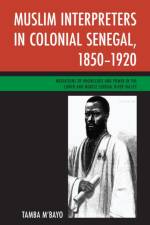
This book investigates the lives and careers of Muslim African interpreters employed by the French colonial administration in Saint Louis, Senegal, from the 1850s to the early 1920s. It focuses on the lower and middle Senegal River valley in northern Senegal, where the French concentrated most of their activities in West Africa during the nineteenth century. The Muslim interpreters performed multiple roles as mediators, military and expeditionary guides, emissaries, diplomatic hosts, and treaty negotiators. As cultural and political powerbrokers that straddled the colonial divide, they were indispensable for French officials in their relations with African rulers and the local population. As such, a central concern of this book is the paradoxical and often contradictory roles the interpreters played in mediating between the French and Africans. This book argues that the Muslim interpreters exemplified a paradox: while serving the French administration they pursued their own interests and defended those of their local communities. In doing so, the interpreters strove to maintain some degree of autonomy. Moreover, this book contends that the interpreters occupied a vantage position as mediators to influence the construction of colonial discourse and knowledge, because they channeled the flow of information between the French and the African population. Thus, Muslim interpreters had the capacity to shape power relations between the colonizers and the colonized in Senegal.
Analog Culture in the Digital Age: Pressing Matters examines the resurgence of vinyl record technologies in the twenty-first century and their place in the history of analog sound and the recording industry. It seeks to answer the questions: why has this supposedly outmoded format made a comeback in a digital culture into which it might appear to be unwelcome? Why, in an era of disembodied pleasures afforded to us in this age of cloud computing would listeners seek out this remnant of the late nineteenth century and bring it seemingly back from the grave? Why do many listeners believe vinyl, with its obvious drawbacks, to be a superior format for conveying music to the relatively noiseless CD or digital file? This book looks at the ways in which music technologies are both inflected by and inflect human interactions, creating discourses, practices, disciplines, and communities.
This book is an ethnographic study of a HIV/AIDS choir who use music to articulate their individual and collective experiences of the disease. The study interrogates as to understand the bigger picture of HIV/AIDS using the approach of microanalysis of music event. It places the choir, and the cultural and political issues addressed in their music in the broader context of South Africa's public health and political history, and the global culture and politics of AIDS.
The Politics of Perfection: Technology and Creation in Literature and Film provides an exploration of the relationship between modern technological progress and classical liberalism. Each chapter provides a detailed analysis of a film or novel, including Fritz Lang's Metropolis, Ridley Scott's Prometheus, Michael Gondry's Eternal Sunshine of the Spotless Mind, Kazuo Ishiguro's Never Let Me Go, and Margaret Atwood's Oryx and Crake. These works of fiction are examined through the lens of political thinkers ranging from Plato to Hannah Arendt. The compatibility of classical liberalism and technology is questioned, using fiction as a window into Western society's views on politics, economics, religion, technology, and the family. This project explores the intersection between human nature and creation, particularly artificial intelligence and genetic engineering, using works of literature and film to access cultural concerns. Each of the works featured asks a question about the relationship between technology and creation. Technology also allows humanity to create new types of life in the forms of artificial intelligence and genetically engineered beings. This book studies works of literature and film as evidence of the contemporary unease with the progress of technology and its effect on the political realm.
Small States in the International System addresses the little understood foreign policy choices of small states. It outlines a theoretical perspective of small states that starts from the assumption that small states are not just large states writ small. In essence, small states behave differently from larger and more powerful states. As such, this book compares three theories of foreign policy choice: realism (and its emphasis on structural factors), domestic factors, and social constructivism (emphasizing norms and identity) across seven focused case studies from around the world in the 20th Century. Through an examination of the foreign policy choices of Switzerland, Ireland, Finland, Norway, the Netherlands, Belgium, Ethiopia, Somalia, Vietnam, Bolivia and Paraguay, this book concludes that realist theories built on great power politics cannot adequately explain small state behavior in most instances. When small states are threatened by larger, belligerent states, the small state behaves along the predictions of social constructivist theory; when small states threaten each other, they behave along realist predictions.
Protecting the natural environment and promoting environmental sustainability have become important objectives for U.S. policymakers and public administrators at the dawn of the twenty-first century. Institutions of American government, especially at the federal level, and the public administrators who work inside of those institutions, play a crucial role in developing and implementing environmental sustainability policies.This book explores these salient issues logically. First, it explores fundamental concepts such as what it means to be environmentally sustainable, how economic issues affect environmental policy, and the philosophical schools of thought about what policies ought to be considered sustainable. From there, it focuses on processes and institutions affecting public administration and its role in the policy process. Accordingly, it summarizes the rise of the administrative state in the United States and then reviews the development of federal environmental laws and policies with an emphasis on late twentieth century developments. This book also discusses the evolution of American environmentalism by outlining the history of the environmental movement and the growth of the environmental lobby. Finally, this book synthesizes the information to discuss how public administration can promote environmental sustainability.
This book explores a deeply personal aspect of globalization: the adoption of Asian children by white Americans. It is based on dozens of interviews with adoptive mothers and adoption social workers, nearly two hundred letters and essays written by Korean birth mothers who put their children up for adoption, and field work at an adoption agency in South Korea. It also includes analyses and explanations of U.S. and South Korean governments' social characteristics and policies regarding adoptions and how relations between nations have affected international adoption. The book focuses on whether the commonly held notion that adoptions are to serve children's welfare and their best interests has tended to render gendered aspects of international adoptions invisible. Factors such as gender inequality, social control of women's reproductive power, patriarchic family structure, and social beliefs concerning womanhood and motherhood that affect international adoptions are revealed in this book. The multiple ways in which adoptive, birth, and foster mothers experience gender oppression from their different social positions of class, race, and nationality are explored and the interdependencies and inequalities of the motherhoods of these three groups of women are brought to light.
The Philosophical Contexts of Sartre's The Wall and Other Stories: Stories of Bad Faith presents a philosophical analysis of all five stories in Sartre's short-story collection. Kevin W. Sweeney argues that each of the five stories has its own philosophical idea or problem that serves as the context for the narrative. Sartre constructs each story as a reply to the philosophical issue in the context and as support for his position on that issue. In the opening story, ';The Wall,' Sartre uses the Constant-Kant debate to support his view that the story's protagonist is responsible for his ally's death. ';The Room' presents in narrative form Sartre's criticism that the Freudian Censor is acting in bad faith. In ';Erostratus,' Sartre opposes Descartes's claim in his ';hats and coats' example that we recognize the humanity of others by using our reason. In ';Intimacy,' Sartre again opposes a Cartesian position, this time the view that our feelings reveal our emotions. Sartre counters that Cartesian view by showing that the two women in the story act in bad faith because they do not distinguish their feelings from their emotions. The last story, ';The Childhood of a Leader,' shows how the protagonist acts in bad faith in trying to resolve the question of who he is by appealing to the view that one's roots in nature can provide one with a substantial identity. The stories are unified by showing the characters in all five narratives engaged in different acts of bad faith.The Philosophical Contexts of Sartre's The Wall and Other Stories is written for scholars interested in Jean-Paul Sartre's early literary and philosophical work, as well as for students interested in Sartre and twentieth-century French literature.
Concerned with scholarly, popular, and religious backdrops that understand the connection between psychedelics and mystical experiences to be devoid of moral concerns and ethical dimensionsa position supported empirically by the rise of acid fascism and psychedelic cults by the late 1960sPsychedelic Mysticism: Transforming Consciousness, Religious Experiences, and Voluntary Peasants in Postwar America traces the development of sixties psychedelic mysticism from the deconditioned mind and perennial philosophy of Aldous Huxley, to the sacramental ethics of Timothy Leary, Richard Alpert, and Ralph Metzner, to the altruistic religiosity practiced by Stephen Gaskin and The Farm. Building directly off the pioneering psychedelic writing of Huxley, these psychedelic mystics understood the height of psychedelic consciousness as an existential awareness of unitive oneness, a position that offered worldly alternatives to the maladies associated with the postwar moment (e.g., vapid consumerism and materialism, lifeless conformity, unremitting racism, heightened militarism). In opening a doorway to a common world, Morgan Shipley locates how psychedelics challenged the coherency of Western modernity by fundamentally reorienting postwar society away from neoliberal ideologies and toward a sacred understanding of reality defined by mutual coexistence and responsible interdependence.In 1960s America, psychedelics catalyzed a religious awakening defined by compassion, expressed through altruism, and actualized in projects that sought to ameliorate the conditions of the least advantaged among us. In the exact moments that historians and cultural critics often locate as signaling the death knell of the counterculture, Gaskin and The Farm emerged, not as a response to the perceived failures of the hippies, nor as an alternative to sixties politicos, but in an effort to fulfill the religious obligation to help teach the world how to live more harmoniously. Today, as we continue to confront issues of socioeconomic inequality, entrenched differences, widespread violence, and the limits of religious pluralism, Psychedelic Mysticism serves as a timely reminder of how religion in America can operate as a tool for destabilization and as a means to actively reimagine the very basis of how people relatesuch a legacy can aid in our own efforts to build a more peaceful, sustainable, and compassionate world.
This book is an investigation of wisdom in its diverse nature and types. Wisdom may be as everyday as folk adages or as arcane as a religious parable. In one form it is highly practical, and in another it addresses what is fundamentally real. In another form it is moral wisdom, and when it is psychological wisdom it can inform wise judgment. It can be philosophical, and it can be religious. And in one form it is mystical wisdom. These types of wisdom are essentially different, even when they overlap. Often wisdom is proffered in wise sayingssuch as proverbs, aphorisms, or maximsbut one form, mystical wisdom, defies articulation.In this book all these types of wisdom will be presented, drawing upon a diversity of sources, and critically examined. Offered wisdom carries in its train a number of issues, not the least of which is how to distinguish between true wisdom and pseudo-wisdom.Also it may be asked of wisdom, when it is true, whether it is true relativistically, varying with culture, or true universally. Many types of wisdom have their origin in antiquity, but can there be new forms of wisdom? Does wisdom, as contemporary philosophers have maintained, have an underlying universal nature? This book addresses these issues and others.
Negotiating Palestinian Womanhood: Encounters between Palestinian Women and American Missionaries, 1880s1940s is the first analytical study to examine the American Quaker educational enterprise in Palestine since its establishment in the late nineteenth century during the Ottoman rule and into the British Mandate period. This book uses the Friends Girls School as a site of interaction between Arab and American cultures to uncover how Quaker education was received, translated, internalized, and responded to by Palestinian students in order to change their position within their society's structural power relations. It examines the influence of Quaker education on Palestinian women's views of gender and nationalism. Quaker education, in addition to ongoing social and political transformations, produced mixed results in which many Palestinian women showed emancipatory desires to change their roles and responsibilities in either radical, moderate, or conservative ways. As many of their writings in the 1920s and 1930s illustrate, Quaker ideals of internationalism, peace, and nonviolent means in conflict resolution influenced the students' advocacy for cultural nationalism, Arab unity across tribal and religious lines, and responsible citizenship.
In The Moral and Political Philosophy of Immigration: Liberty, Security, and Equality, Jose Jorge Mendoza argues that the difficulty with resolving the issue of immigration is primarily a conflict over competing moral and political principles and is thereby, at its core, a problem of philosophy. Establishing the necessity of situating the public debate on immigration at the center of philosophical debates on liberty, security, and equality, this book brings into dialog various contemporary philosophical texts that deal with immigration to provide some normative guidance to future immigration policy and reform. As a groundbreaking work in social and political philosophy, it will be of great value not only to students and scholars in these fields, but also those working in social science, public policy, justice studies, and global studies programs whose work intersects with issues of immigration.
Building Relationships: Online Dating and the New Logics of Internet Culture uses an apparatus approach to media analysis to examine logics of compatibility, online dating site procedures, and user narratives of popular matchmaking sites. Shepherds investigation serves as a case study to help understand the larger relationship between contemporary identity and what she calls matching technologies, as well as the complex of big data, computational processing, and the cultural assumptions that power today's most popular web applications.
Previous attempts to set up an Ethics based on the writings of Charles S. Peirce have generally begun and ended with the 1898 lecture, Philosophy and the Conduct of Life. It was in that lecture that Peirce famously argued that Theory and Practice should be kept distinct. In this book, Aaron Massecar argues that this lecture opens up a uniquely Peircean Ethics that brings theory into practice through an ethics of intelligently formed habits. This argument is first based on a re-reading of the 1898 lecture, then turns to the evolution of Peirce's Normative Sciences, specifically with reference to the role of Ethics as a Normative Science. Peirce initially leaves Ethics outside the sciences, saying that it is too practical, but he later changes his mind and begins to see the centrality of Ethics for determining right conduct based an appreciation of the ideals of conduct from Aesthetics. The result is a theory of Ethics as critical self-control that unifies the sciences under one general aim, as dictated by Peirce's basic model and his theory of inquiry: the removal of sources of irritation and doubt.The next step is to look at the objects of critical self-control. For that, Massecar looks to Peirce's work on habits: habits function as the bridging point between theory and practice. The book describes how habits can be brought under critical self-control through an active process of deliberative, thoughtful reflection. The end result is a description of intelligently formed habits that not only responds to critics of the 1898 lecture but that opens up a place for a uniquely Peircean Ethics.
This book examines the challenges that Pakistani-American families have faced in their attempts to assimilate within the U.S. school culture since the September eleventh terrorist attack. Negative stereotyping has permeated into schools, and affected Pakistani-American students and their families. Reza examines this phenomenon from a parental lens in order to describe how 9/11 has altered the involvement of Pakistani-American parents in their children's schools, and whether or not schools are appropriately addressing these issues and concerns. Reza connects formal initiatives taken by U.S. schools to promote greater integration while encouraging multiculturalism, and relays the experiences of Pakistani-American parents to provide readers with a unique perspective on the challenges that this population faces in assimilating within the U.S. school culture. Recommendations are offered to policymakers and educators on how to promote greater Pakistani-American parental involvement in U.S. schools.
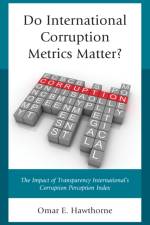
Transparency International's CPI is used as the authoritative tool to assess countries' corruption perceptions scores by both international governments and several international agencies. The use and reference of TI's CPI does not translate as the main factor in regards to the increase and or decrease of aid flow. Surprisingly, there was no evidence that the CPI affected the credit rating and or investment flow into Jamaica. It did indicate, however, that TI's CPI is reflective of the global market perceptions of Jamaica's economy. Research shows that the index does change policy responses in Jamaica as government officials across varying agencies pay attention to the index and the progression and or worsening of the country's score.
American Farms, American Food bridges the gap between agricultural production and food studies allowing readers to learn about both subjects up close and in detail. Beyond that, the book provides background on the domestication, breeding, and development of crop plants and livestock that have become the food we eat. Themes such as the family farm, local food production, organic agriculture, genetically modified crops, food imports, and commodity exports are developed in nine separate chapters. The chapters treat specific crops or livestock types from the point of view of both production and consumption, highlighting the changes that have taken place in both farming strategies and food preferences over the years.
Korean and Korean American Life Writing in Hawaii examines such self-representing genres as lyric poems, oral history, autobiography, and memoirs written by Korean and Korean Americans from the early twentieth century to the present, in order to explore how these people have shaped their individual or collective identities. Their representations, produced in different periods by successive generations, reveal how Koreans in their diaspora to Hawai';i came to terms with their ethnic and local selves, and also how the sense of who and what they are changed over the years, both within and beyond the initial generation.Looking into their individual and collective identities in lyric poems, oral history, autobiography, and memoirs reveals how the earliest arrivals, their children, and their grandchildren have come to terms with their national, ethnic, and local selves, and how their sense of identity changes over the course of time, both within and beyond the initial generation. In the lyric poems found in Korean-language periodicals of the native-born generation, we can trace the significance of the motherland and Hawai';i for these writers' sense of identity. The oral histories of first-generation women, most of whom arrived as picture brides, also represent another ';us': often vulnerable Koreans who define themselves in relation to both the present culture and to Korean men. The self developed by the second-, third-, and in-between-generation Koreans diversifies because their identity is not defined exclusively by their ancestral land, extending to Hawai';i and to America. This study focuses on three main areas of emphasis: Hawai';i; Korean language and culture; and life writing. By tracing how identity changes with each generation, this study reveals how identity formation for Hawai';i diasporic Koreans has evolved.
This book is an exploration and interpretation of the diverse symbols and images that represent the sacred presence of God in the Book of Psalms. These images of sacred spaces and objects represent diverse conceptions of ';the sanctuary' or sacred spaces, objects and texts that mediate God's presence and bridge the gap between the ineffable nature of God as transcendent and beyond human comprehension and as immanently and intimately present in human experience. I explore the multivalent ways in which images of sacred spaces and objects facilitate prayer and contemplation. This book represents a valuable contribution to the study of Psalms and biblical theology, spirituality and prayer.
A History of Anthropology as a Holistic Science defends the holistic scientific approach by examining its history, which is in part a story of adventure, and its sound philosophical foundation. It shows that activism and the holistic scientific approach need not compete with one another. This book discusses how anthropology developed in the nineteenth century during what has been called the Second Scientific Revolution. It emerged in the United States in its holistic four field form from the confluence of four lines of inquiry: the British, the French, the German, and the American. As the discipline grew and became more specialized, a tendency of divergence set in that weakened its holistic appeal. Beginning in the 1960s a new movement arose within the discipline which called for abandoning science as anthropology's mission in order to convert into an instrument of social change; a redefinition which weakens its effectiveness as a way of understanding humankind, and which threatens to discredit the discipline.
This book explores the ';Golden Age' of Sephardic Jewry on the Iberian Peninsula and its perception in German Jewish culture during the era of emancipation. For Jews living in Germany, the history of Sephardic Jewry developed into a historical example with its distinctive valence and signature against the pressure to assimilate and the emergence of anti-Semitism in Germany. It provided, moreover, a forum to engage in internal dialogue amongst Jews and external dialogue with German majority society about challenging questions of religious, political, and national identity. In this respect, the perception of prominent Sephardic Jews as intercultural mediators was key to emphasizing the skills and values Jews had to offer to civilizations in the past. German Jews invoked this past significance in their case for a Jewish role in present and future societies, especially in Germany.
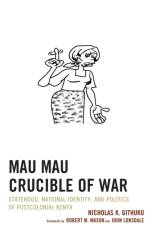
Mau Mau Crucible of War is a study of the social and cultural history of the mentalite of struggle in Kenya, which reached a high water mark during the Mau Mau war of the 1950s, but which continues to resonate in Kenya today in the ongoing demand for a decent standard of living and social justice for all. This work catalyzes intellectual debate in various disciplines regarding not just the evolution of the Kenyan state, but also, the state in Africa. It not only engages historians of colonial and postcolonial economic and political history, but also sociologists, anthropologists, political scientists, and those who study personality and social branches of psychology, postcolonialism and postmodernity, social movements, armed conflict specialists, and conflict resolution analysts.
The scope and theory of American public administration have expanded outward over time through the process of interdisciplinary discourse. Interdisciplinary approaches are rooted in ancient times, but it is in modern applications that the process has become most noticeable as a substantive influence in how academic disciplines and professional practices evolve. The process of interdisciplinary discourse occurs first by decoding and interpreting basic language and concepts, and then progresses to an operationalization of ideas, consensus-building, synthesis and integration, and eventually the systematization of knowledge. It is from the systematization of knowledge that a discipline's foundations are forged and evolve. Government is as old as society, but American public administration emerged as a structured field largely toward the late nineteenth-century, developing over the course of 125 years through the exchange of interdisciplinary ideas. The current literature on interdisciplinary approaches focuses almost exclusively upon basic teaching and research applications. This book extends the topic significantly by developing a formal process by which basic, intermediate, and advanced levels of communication are analyzed and understood. The value of this approach rests in being able to explore public administration history and contemporary times through the assorted contexts and ideas which affected the lower order core constructs (concepts, values, and principles) and higher order associational constructs (methodologies, theories, and foundations) that have been forged. As the field's scope and theory expanded over time through the exchange of interdisciplinary content, lower levels of consensus from within caused segments of academicians to argue that an intellectual crisis had occurred, reflecting the lack of a unifying theory or paradigm. Debate over what role traditional modes of inquiry and thought would have in a contemporary era of scientific techniques naturally propelled the field into a normative-science debate. This, along with the rise of competing theories, advancements in technology, and an emphasis on establishing public administration as a relevant field with professional stature, led to two subsequent recastings during which the field has modernized and updated itself gradually over the course of several years. A third recasting may be on the horizon, carrying forward the many shaping influences of interdisciplinary discourse.
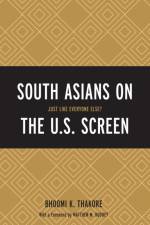
How does the media influence society? How do media representations of South Asians, as racial and ethnic minorities, perpetuate stereotypes about this group? How do advancements in visual media, from creative storytelling to streaming technology, inform changing dynamics of all non-white media representations in the 21st century? Analyzing audience perceptions of South Asian characters from The Simpsons, Slumdog Millionaire, Harold and Kumar, The Office, Parks and Recreation, The Big Bang Theory, Outsourced, and many others, Bhoomi K. Thakore argues for the importance of understanding these representations as they influence the positioning of South Asians into the 21st century U.S. racial hierarchy. On one hand, increased acceptance of this group into the entertainment fold has informed audience perceptions of these characters as ';just like everyone else.' However, these images remain secondary on the U.S. Screen, and are limited in their ability to break out of traditional stereotypes. As a result, a normative and assimilated white American identity is privileged both on the Screen, and in our increasingly multicultural society.
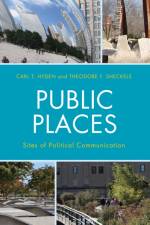
This book rhetorically and historically examines the contextual and experiential dimensions of a wide range of public placesfrom memorials to stadiumsthat are rife with political implications. Fourteen public places ranging from the national to local, from 9/11 memorials to a baseball park are analyzed. The authors investigate the histories of these public spaces, examine their designs, and discuss their political implications in order to outline their role within the public sphere. This book begins with a loose theoretical framework for understanding public places as rhetorically drawn from extant scholarship, and concludes with a systematic means of exploring the allocation of power by public places. Recommended for scholars of communication studies, rhetoric, political science, and architecture.
This book is a detailed examination of parental authority: what justifies and what are the proper limits of a parent's authority over her children? Dennis Arjo focuses on and criticizes attempts to answer these and related questions in the context of liberal philosophy of education. He also offers an alternative framework for thinking about parental authority that draws on recent philosophical work in Virtue Ethics, Care Ethics, and Confucianism that challenges some of the assumptions of contemporary liberal theory.This book will be of interest to philosophers working in ethics, political philosophy and philosophy of education.
Historians and biographers of psychoanalysis, psychotherapy, psychology, medicine and culture, even Wikipedia, believe Ernest Jones discovered Freud in 1904 and had become the first English-speaking practitioner of psychoanalysis by 1906. Psychoanalysis in Britain, 18931913 offers radically different versions to that monolithic Account propagated by Jones over 70 years ago. Detailed readings of the contemporaneous literature expose the absurdities of Jones's claim, arguing that he could not have been using psychoanalysis until after he exiled himself to Canada in September 1908. Removing Jones reveals vibrant British cultures of ';Mind Healing' which serve as backdrops for widespread interest in Freud. First; the London Psychotherapeutic Society whose volunteer staff of mesmerists, magnetists, hypnotists and spiritualists offered free psycho-therapeutic treatments. Then the wondrous Walford Bodie, who wrought his free ';miraculous cures,' on and off the music-hall stage, to adoring and hostile audiences alike. Then the competing religious and spiritual groups actively promoting their own faith healings, often in reaction to fears of Christian Science but often cow-towing to orthodox medical and clerical orthodoxies. From this strange milieu emerged medically qualified practitioners, like Edwin Ash, Betts Taplin, and Douglas Bryan, who embraced hypnotism and psychotherapy. From 1904 British Medical Journals began discussing Freud's work and by 1908 psychiatrists, working in lunatic asylums, were already testing and applying his theories in the treatment of patients. The medically qualified psychotherapists, who formed the Medical Society for the Study of Suggestive Therapeutics, soon joined with medical members from the Society for Psychical Research in discussing, proselytizing, and practising psychoanalysis. Thus when Jones returned to London, in late summer 1913, there were thriving psychotherapeutic cultures with talk of Freud and psychoanalysis occupying medical journals and conferences. Psychoanalysis in Britain, 18931913, with its meticulous research, wide sweep of vision and detailed understanding of the subtle inter-connections between the orthodox and the unorthodox, the lay and the medical, the social and the biographical, as well as the byzantine complexities of British medical politics, will radically alter your understanding of how those early twentieth century ';Mind Healing' debates helped shape the ways in which the ';talking cure' first started infiltrating our lives.
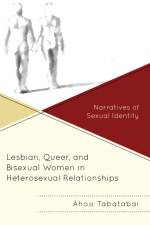
This book draws on interviews with women who left relationships with women to begin relationships with men, and uncovers how the women make sense of who they are. The women who leave female partners to begin relationships with male partners have the capacity to redefine their sexual identity. They can essentially call themselves whatever they want. However, their capacity for such a creative process is limited. In the process of framing their decision in a way that renders their claim to a stable identity legitimate, the women communicate their understandings of notions of identity, community, and belonging. The women also show a nuanced regard for sexual categories. They stretch the boundaries of some categories, while preserving and even policing the boundaries of other categories. This book is in no way an ex-gay narrative. It is entirely the voices of feminist, queer women who find themselves viewed by society as heterosexual, but who themselves, with two exceptions, do not identify as such. This book is a rich collection of wonderfully human stories about what it means to be ';true' to oneself.
This biography of Queen Mara de Molina thematically explores her life and demonstrates her collective exercise of power and authority as queen. Throughout her public life, Mara de Molina's resilient determination, as queen and later as regent, enabled her to not only work tirelessly to establish an effective governing partnership with her husband King Sancho IV, which never occurred, but also to establish the legitimacy of her children and their heirs and their right to rule. Such legitimacy enabled Queen Mara de Molina's son and grandson, under her tutelage, to fend off other monarchs and belligerent nobles. The author demonstrates the queen's ability to govern the Kingdom of Castile-Leon as a partner with her husband King Sancho IV, a partnership that can be described as an official union. A major theme of this study is Mara de Molina's role as dowager queen and regent as she continued to exercise her queenly power and authority to protect the throne of her son Fernando IV and, later, of her grandson Alfonso XI, and to provide peace and stability for the Kingdom of Castile-Leon.
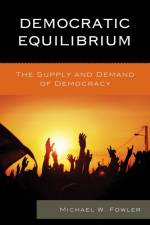
Democratic Equilibrium: The Supply and Demand of Democracy defines a model for political change, change that results in either an increase or decrease in democracy. The book presents a model that builds upon the existing literature to bridge several major gaps in political change theory. This book provides a holistic supply and demand model that draws upon works from political science, economics, and history. The work conducts an econometric test of the model and validates the results with field research cases from Mexico, the Philippines, and Senegal. The econometric chapter is a rare quantitative analysis of the effects of violence and development upon democracy. This topic is central to contemporary academic and policy debates about how to create democracies, consolidate democracies, achieve development and improve security, especially within developing countries. This topic is especially timely as the Arab Spring represents a unique opportunity and challenge for democratic change across the Middle East and North Africa. Recent events in Tunisia and Egypt demonstrate that democracy studies remain just as relevant today as they were twenty years ago. The findings indicate that common structural explanations of democracy are incomplete since the structural relationships are not stable or constant over time. Instead, democratic change (or lack thereof) can be explained using a supply and demand model. Key actors (including the military, political parties, NGOs, the ruling regime, and civil society) are the suppliers and consumers that determine a country's resulting level of democracy. However, stating that actors are important is a major over-simplification. Each key actor builds preferences based upon a variety of factors, most importantly: security, income, and the adoption of democratic norms. It is this key dynamic that explains why insurgency, poverty, and under-development do not have a linearly negative effect on democracy. Instead, these factors have a centripetal effect on political development, pulling a country's government towards an intermediate state of political transition in which regimes stagnate in a partially democratic, partially autocratic regime type. Conversely, the model also explains why high income, democratic norms, and security do not necessarily lead to democratization in all cases.
Abonner på vårt nyhetsbrev og få rabatter og inspirasjon til din neste leseopplevelse.
Ved å abonnere godtar du vår personvernerklæring.