









Gjør som tusenvis av andre bokelskere
Abonner på vårt nyhetsbrev og få rabatter og inspirasjon til din neste leseopplevelse.
Ved å abonnere godtar du vår personvernerklæring.Du kan når som helst melde deg av våre nyhetsbrev.

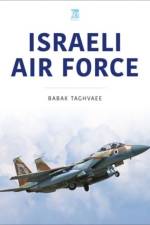
Celebrating its 75th anniversary in 2023, the Israeli Air Force has become a sophisticated and formidable power supported by highly trained personnel and a vast array of contemporary weaponry. Continually on alert in a regional hotspot, the Israeli Air Force has evolved to become the main pillar of defence for the nation. The force currently has 402 aircraft at its disposal, including 290 fighter-bombers, 136 helicopters and 80 unmanned aerial vehicles for reconnaissance, surveillance and attack. Each year, the Air Force carries out hundreds of combat sorties and training missions to keep its personnel trained to a state of readiness and to protect its borders. The history of the force and its aircraft are detailed alongside the significant wars that have shaped the current Air Force.
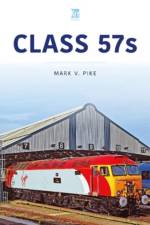
The Class 57 diesel locomotive was an outgrowth of the tremendously successful and iconic Class 47. Rebuilt from redundant Class 47s by Brush Traction at Loughborough between 1998 and 2003, the 33 resulting Class 57s are themselves divided into three sub-classes for differing purposes. Twelve are Class 57/0 for Freightliner to haul intermodal trains; 16 are 'Thunderbirds', commissioned by Virgin Trains to rescue failed Class 390 electric units on the West Coast Main Line; and five are dedicated to passenger use on Great Western Railway's 'Night Riviera' sleeper service. Featuring an EMD V12 two-stroke diesel engine and other modifications, the conversions represented a considerable cost saving over that of building completely new locomotives. Known irreverently as 'bodysnatchers', the Class 57s have filled a gap in available traction for the last two decades and the fleet is intact today, continuing to see use with various TOCs and have a future ensured by overhaul. All 33 locos are depicted in this volume, with over 200 images, showing the Class 57s in a variety of duties over the last 20 years.
This book provides an in-depth year by year examination of the multitude of post-war manufacturers, revealing an era that began with great conservatism and evolved into some of the most stylistically flamboyant and uniquely equipped sedans in automotive history
This book features over 180 images of locomotives from classes 20âEUR"27, operating across the UK.
In this book, illustrated with over 120 images, Pete London examines the hisotry of the Irish Air Wars.
When London Buses LtdâEUR(TM)s subsidiary companies were privatised in 1994, northwest London-based Metroline passed to its management. The company promptly took over Atlas Bus in 1995 and then n doubling its size in 1998 with the acquisition of neighbouring MTL London. A new livery of red with a deep blue skirt set Metroline apart from its rivals, and in 2000 a powerful but unusually hands-off patron was secured with the companyâEUR(TM)s sale to Delgro (later ComfortDelgro) of Singapore. Since then, Metroline has held its own as a dependable TfL contractor, continuing to expand with the acquisition of Thorpes and Armchair in 2004 and pulling off an even bigger coup in 2013 when First LondonâEUR(TM)s western portfolio was acquired as Metroline West. In terms of vehicles, the London Transport inheritance had all gone by 2004 and low-floor purchases moved to hybrids, including Borismasters, and now to electric buses. With over 250 colour pictures, this book is the first of a new series that explores the major corporate London bus operators that have arisen in the quarter-century since the privatisation of London Buses Ltd. Included are details of takeovers, reorganisations, vehicle comings and goings and the kind of unpredictable but wholesale changes that fascinate enthusiasts.
Carrying on from his first EC Electrics volume, which focussed on classes 86, 87, 90 and Driving Van Trailers (commonly known as DVTs), this book examines classes 91, 92 and DVTs around the UK. The British Rail (BR) Class 91 is a high-speed electric locomotive, which was ordered as a component of the East Coast Main Line modernisation and electrification programme of the late 1980s. The BR Class 92 is a dual-voltage electric locomotive, which was designed specifically to operate services through the Channel Tunnel between Great Britain and France.
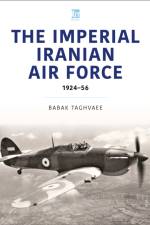
The history of the Iranian Air Force, currently known as the Islamic Republic of Iran Air Force (IRIAF), can be divided into two phases â¿ before the Islamic Revolution (1978â¿79) and after it. The origins of the force lie in the Imperial Iranian Air Force (IIAF), which became operation with its first fully trained pilots in 1925\. Until World War Two, the IIAF inventory consisted of entirely od European aircraft, however, following the British and Soviet invasion of Iran, the IIAFâ¿s bases were occupied and all aircraft destroyed. In this book, Babak Taghvaee examines the inventory of the IIAF during both world wars.
The Gulf War (1990â¿91) was an armed conflict between Iraq and a 42-country coalition led by the United States. It featured now-infamous missions such as Operation Desert Sheild and Operation Desert Storm and marked the introduction of live news broadcasts from the front lines of battle, primarily by the network CNN. It also gained notoriety for including three of the largest tank battles in American military history. Illustrated with over 230 images, this book covers the various armoured vehicles that were used by different nations during this conflict.
The railway system in Great Britain is the oldest railway system in the world, with the first locomotive-hauled public railways opening in 1825, which was followed by an era of rapid expansion. In direct contrast to this, the 1960s were a period of drastic reduction in the network where a desire for profitability led to the closure of many branch lines that were â¿uneconomicâ¿. However, the 1970s saw a renaissance in passenger services, with the introduction of InterCity 125 trains and other high-speed additions. In this book, illustrated with over 180 images, Arthur Wilson closely examines the period of 1974â¿78.
With over 180 images, this book provides the history of the company and its subsequent emergence as a clear market leader.
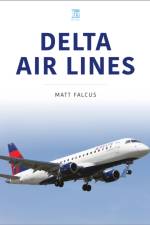
With over 140 images, this book presents Delta Air Lines, from its very start to its current position in the aviation world.
This book looks at the Class 56 and Class 58 locomotives and their service around the UK.
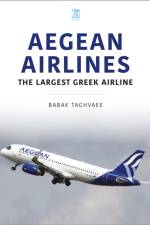
This book covers the history and current fate of the airline's aircraft and looks at Aegean Airlines' climb to the top of Greece's aviation industry.
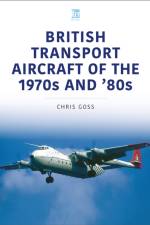
This book explores the transport aircraft that served during this time period.
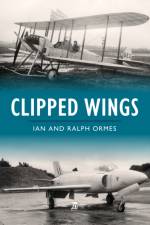
This book explores ten of these 'middle of the road' aircraft. Some were just poor aircraft; some came at the wrong time; some were misused; and some found themselves in the most awful of predicaments - they became the target of political bias.
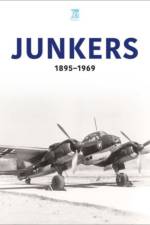
Covers every aircraft Junkers produced from 1895 to 1969. Features black and white historical images. Edited by the team at Aeroplane. Part of Aviation Industry Series.
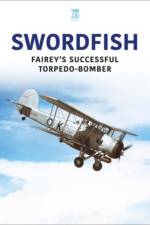
Highly illustrated history of the Swordfish. Features black and white historical images. Edited by the team at Aeroplane, the world's longest-established aviation magazine. Part of Historical Military Aircraft Series.
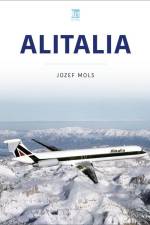
The story of Alitalia is one of many mergers in post-war Italy, followed by expansion and ending in a series of subsequent bankruptcies. Alitalia was set up in 1946 as Aerolinee Italiane Internazionali as a result of an Anglo-Italian agreement with the Italian government (60 per cent) and BEA (40 per cent) as shareholders. The airline took to the sky on May 5, 1947 and transported in its first year some 10,000 passengers. For domestic flights, the airline used Fiat G-12 aircraft whereas international and intercontinental routes were served with Savoia-Marchetti SM.95 aircraft. On October 31, 1957, Alitalia merged with Linee Aeree Italiane. By that time, the shares were in the hands of the Italian Ministry of the Treasury, employees of Alitalia and KLM. In 1950, the Douglas DC4 was introduced. Starting in 1964, the airline would become the 'airline of the Pope' whenever he traveled abroad. By 1970, Alitalia had become the first European airline to fly with a fleet of all jets including Boeings, Caravelles and Douglas aircraft. In 1981, Alitalia started up Aermediterranea to replace defunct Itavia on the Italian domestic scene. Notwithstanding a rapid expansion, Alitalia encountered financial problems. In 2008, a group of investors around Sylvio Berlusconi formed the Compagnia Aerea Italiana (CAI) consortium to buy bankrupt Alitalia and to merge the airline with another bankrupt Italian carrier (low cost carrier Air One). On December 12, 2008, Alitalia's profitable assets were transferred to CAI leaving the debts to the Italian tax payers. On January 13, 2009, the 'new' Alitalia launched operations. The airline entered administration in 2017 following years of unprofitability. On 24 August 2021, Alitalia announced that it would cease operations on 15 October 2021. On 15 October 2021, in a hybrid reorganization, Alitalia sold its entire operation to ITA Airways, a newly formed state-owned flag carrier.
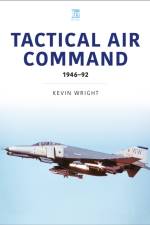
TAC was the largest of the USAF's major Cold War combatant commands. Formed in 1946 and headquartered at Langley AFB, Virginia, it operated a huge range of aircraft over the following 46 years until it was inactivated in 1992.In 1946, it was equipped with mainly World War Two aircraft types including P-47s and P-51s. It soon ushered into service jet aircraft operations with the P-80 and F-86. Within a few years, TAC was operating a wide range of tactical fighters, ground attack fighters, light bombers, tactical missiles, photographic reconnaissance and special mission aircraft (reconnaissance, special operations, and electronic warfare).TAC played a significant part in the Korean War, the Cuban missile crisis and later the wars in SE Asia and the Gulf in 1991. It came to operate a large number of tactical fighter and attack aircraft including the F-84, F-100 and F-105. As the 1960s progressed, they were joined by the A-7, F-111 and F-4 and, in the 1980s, supplemented by A-10s, F-15s and F-16s through to the end of the Cold War.In the run-up to any war with the USSR, Tactical Air Command was expected to deploy its combat airpower to USAF Commands in Europe and/or the Pacific. That deployment capability struggled during the 1970s. However, from 1978 to 1984, the strength and capability of TAC was transformed by its new commander, General Wilbur 'Bill' Creech. He organized, equipped and prepared his units (including ANG and AFRES elements) to deploy from the continental US to the frontline in Europe. Ready to fight and familiarized with their area of operations they could have joined the war immediately, drawing on pre-positioned weapons stocks.As the Soviet threat diminished towards the end of the 1980s, all TAC's preparations, planning and capabilities were tested for real following the Iraqi invasion of Kuwait in August 1990. Suddenly sent to Middle East in the countries surrounding Iraq, those well tested plans saw TAC aircraft form a major part of all coalition air forces that took part in Operations Desert Shield and Desert Storm. In 1992, in a major USAF reorganization TAC became Air Combat Command.
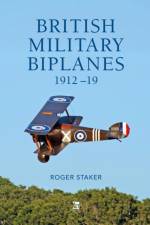
Covering the period from the establishment of the Royal Flying Corps in 1912 to the beginning of World War Two, this book explores the development of the major stalwart of military aviation: biplanes. Throughout this period, the birth of the British aviation industry took place with names such as de Havilland, Bristol, Handley-Page and many others emerging and eventually becoming synonymous with British aviation.World War One spurred innovation and development with the need to maintain or restore competitive advantage in air warfare. During this period, in addition to those aircraft that became household names, many prototype and experimental aircraft were constructed for military purposes, but did not enter service, either at all or in meaningful numbers. Nevertheless, the science of aviation was advanced.Post-World War One, the demand for military aircraft diminished. Even so, new designs emerged and innovation took place aided by engine and materials research and development. Again, not all aircraft were successfully entered into service.This book is a unique reference source for aviation historians and enthusiasts.
After the Norman conquest of 1066, the English lands gradually lost their Saxon character and became much more similar to continental Europe than previously; feudalism was brought to the British Isles by the Normans, together with a new model of centralized monarchy, thus changing the administrative and social structures of England forever. After a few decades, however, the new royal family initiated by William the Conqueror disappeared due to the lack of direct heirs and thus the Kingdom of England entered a chaotic phase characterized by civil conflicts, as well as by the search for a new royal house that could assume control over the turbulent English lands. This historical period, known as 'The Anarchy', began in 1135 and ended only in 1154, when the first Plantagenet was crowned as monarch of the English realm. The new royal family would have kept power over its kingdom for more than three centuries, until the outbreak of the War of the Roses. During this long period, the Plantagenet kings fought a series of conflicts, which can be grouped into three main categories: wars fought against the French monarchy in continental Europe, wars fought in the British Isles against the 'Celtic nations' (Wales, Scotland and Ireland) and civil conflicts fought in England against rebel aristocrats. This book pays special attention to the wars fought by England against Wales, Scotland and Ireland; at the same time, it provides a detailed overview of the 'minor' conflicts that saw the Plantagenet monarchs campaigning in France. This book will cover the history, organization and equipment of the English armies that fought the many wars of the early Plantagenet period.
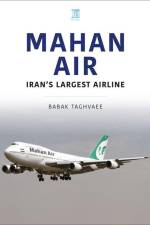
Established 31 years ago by means of a fleet of Soviet-made Tupolev Tu-154 passenger aircraft, Mahan Air soon turned into the largest airline of Iran. Despite being highly sanctioned by the US government and many other EU countries, Mahan Air has managed to take the place of Iran Air, Iran's flag carrier, in many of the domestic and international routes to Iran in recent years.Under control of retired Generals of Islamic Revolutionary Guard of Corps (IRGC), the airline plays an important role in transportation of personnel and troops of the Quds Force (IRGCQF) branch of the force from Iran to Syria, Lebanon and Iraq. Within the past eleven years, thousands of IRGCQF members were deployed to Syria using passenger aircraft, such as the large fleet of Airbus A310s of the airline.Mahan Air also serves political interests of the Iranian government in the Middle East and Latin America. The airline has had two of its A340-303s, two Airbus A340-642s and one of its Boeing 747-3B3Ms leased to flag carriers of Syria and Venezuela. Despite being heavily sanctioned, Mahan Air has not only managed to maintain its fleet of Avro Jet RJ70/85/100s, Airbus A310s, A300s, A340s and Boeing 747s but also managed to increase their numbers to a level to become the largest airline of the country, connecting it to East and Southeast Asia by means of its large fleet of long-haul and wide-body passenger aircraft.
The Tomcat is the most popular US Navy aircraft of all time and quite possibly the best-known Cold War jet fighter of them all. This book covers the F-14 Tomcat's role as a precision bomber from the early 1990s through the early stages of the War on Terror until its retirement in 2006. Filled with first-hand accounts, in-action photos, and detailed histories on its operations, this book showcases the Tomcat in all its glory.
Written by expert author who previously worked with NASA and the USAF. Full of images, diagrams and animated mock-ups. Looks at the history of the Mars programmes and their future.
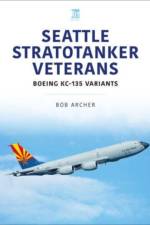
Author is an avid aviation photographer and this book features full-colour images. Covers every version of the KC-135 tanker. Part of Modern Military Aircraft Series.
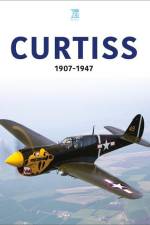
This new book edition looks at the aircraft created by Curtiss and the company itself.
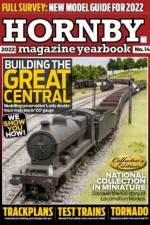
The Hornby Magazine Yearbook is always eagerly anticipated and features the very best of the UK's colourful railway modelling monthly. Concentrating the highlights of the previous 12 months, the yearbook offers a variety of features in all major scales and gauges. Highlights of the 14th edition include the inside story of the magazine's latest layout project, authoritative reviews of the year's best new locomotives, detailed step by step modelling guides, historical features and more. Plus the team looks forward to the key releases of 2022. The Hornby Magazine Yearbook is an annual institution not to be missed.
Abonner på vårt nyhetsbrev og få rabatter og inspirasjon til din neste leseopplevelse.
Ved å abonnere godtar du vår personvernerklæring.