

Gjør som tusenvis av andre bokelskere
Abonner på vårt nyhetsbrev og få rabatter og inspirasjon til din neste leseopplevelse.
Ved å abonnere godtar du vår personvernerklæring.Du kan når som helst melde deg av våre nyhetsbrev.

In early 2017, photographer Janet Holmes met a hen suffering from reproductive illness at the Wild Bird Fund in New York City, where she volunteered as a caregiver. During her search to find a permanent home for the hen after she was discharged from the Fund''s clinic, Janet Holmes discovered a network of people (primarily women) who turn their homes into sanctuaries for rescued chickens. She decided to make portraits of the chickens and their rescuers to honour both the birds who had suffered so much before their rescue and the people who invested so much love, time, and money caring for them.
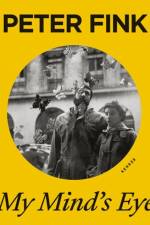
Beginning as a designer, Peter Fink (1907, Grand Rapids - 1984, New York City) travelled the globe from the 1950s to 1970s, moving in hidden streets and industrial towns of postwar Japan, France, Portugal, northern Africa, and the Middle East, photographing workers and street scenes. Arts and culture are recurring themes, as well as the life of workers, families or children in each new place he observed, but also expressive portraits and fashion, surreal still-lives, or his radical Refractions - reflections on architecture.
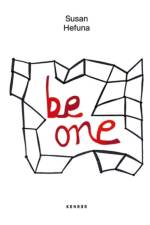
Susan Hefuna embraces a wide range of media, including drawing, sculpture, and installation as well as video, photography, and performance. Her textile works are exploring the visual and cultural signifiers that have come to embody her unique inter-cultural identity. The striking graffiti-like textile series Be One triggers varying emotions and feelings and reminds us that all is connected on this planet. This publication presents new textile works, drawings and films such as Angst Eats Soul, Munich, 2016, and Times Square, 2019.
Len Lye was one of the most important experimental filmmakers of the 1930s to 1950s. At the same time, initially in New Zealand and Australia, later in London and in New York City, he created a fascinating body of work embracing all artistic disciplines which the exhibition showcases in all its variety and breadth. The three-volume catalogue presents the exhibited works and new texts by leading experts on Len Lye in one volume each. The central volume is the first facsimile edition of his Totem & Taboo sketchbook.
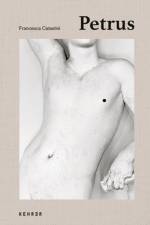
Petrus reflects on a certain rhetoric of masculinity in Western culture. It is about the human drive to define ourselves and the world through a definite form. Form is never stable though. It is the ever-changing result of a never-ending tension between forces pushing from within and pressures coming from without. Through a cynical, tender, and arbitrary analysis of what probably cannot be sliced and diced Francesca Catastini plays with archetypes and images considering the way they sculpt ourselves and shape our views.
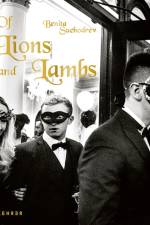
The tourist season is over, the promenade is empty and Brexit is at the door when Benita Suchodrev returns to the British coastal town of Blackpool to photograph the hidden reality behind the famous Amusement Mile. She leads us to local churches, soup kitchens, youth shelters, old age homes and impoverished neighbourhoods, meets bizarre characters, underage mothers, drug-addicts, artists, and hermits. She photographs strangers on train platforms, homeless in torn rags feasting on ham sandwiches and coffee under a dark overpass, closed storefronts and deserted alleys on a rainy night.
Alles ist mit einer dicken Schicht aus feinem Staub u¿berzogen. Der Boden brennt, und u¿ber einer riesigen Fla¿che ha¿ngen giftige Gase und Rauch. Mitten in dieser apokalyptischen Landschaft graben Menschen mit bloßen Ha¿nden im Erdreich. U¿berall im indischen Bundesstaat Jharkhand wird Kohle abgebaut. Die Einheimischen nennen sie den »schwarzen Diamanten«. Das Gleichgewicht zwischen Mensch und Natur ist sehr empfindlich. Die Fotos dieser Serie veranschaulichen, wie schwer es fu¿r den Menschen ist, alte Muster zu durchbrechen: Wider besseres Wissen setzen wir den Raubbau an der Erde immer weiter fort.Seit 2008 fotografiert Sebastian Sardi Minen. Mit seinem Projekt Black Diamond portra¿tiert er die Kohlearbeiter aus na¿chster Na¿he und erforscht gleichzeitig die Zwiespa¿ltigkeit der menschlichen Natur.
A career started in the beauty industry gave Ann Massal the feeling that Plato''s take on beauty as truth was long dead. She subsequently decided to study photography to try to express her very own view. With similarities to the crazy world of Alice in Wonderland, Massal''s pictures are never expected. Using a vast array of techniques - dripping, bleaching, cutting, rotting - she distorts images to offer us her outlook on beauty: ambiguous, sinful, and always colourful.
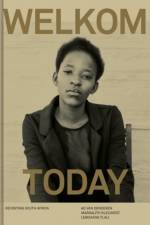
In the early 1990s Dutch photographer Ad van Denderen travelled to Welkom, a small mining town in South-Africa, to document the last days of apartheid. 25 years later his critically acclaimed photo book Welkom in Suid-Afrika was discovered by Lebohang Tlali, who grew up in Welkom''s neighbouring township Thabong. Welkom Today combines new and historic photographs by Van Denderen, Tlali, as well as images from family albums, newspaper archives, and essays. In a multivocal, non-hierarchical way, the project opens up to multiple histories and perspectives, across generations and backgrounds.
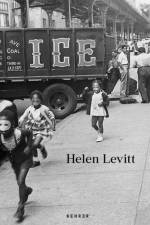
As a passionate observer and chronicler of everyday street life in New York, Helen Levitt (1913 2009) spent decades documenting residents of the city''s poorer neighbourhoods such as Lower East Side and Harlem. Levitt''s oeuvre stands out for her sense of dynamics and surrealistic sense of humour, and her employment of colour photography was revolutionary: Levitt numbers among those photographers who pioneered and established colour as a means of artistic expression. The book features around 130 of her iconic works.
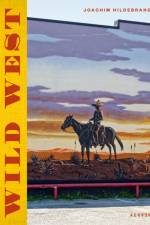
Joachim Hildebrand travelled through the seven states of the American Southwest, in which the Wild West is located both geographically and in our imagination. Today, where the wilderness has been displaced by ''civilization,'' Hildebrand discovers entirely different scenes than those generally associated with the Wild West and the American frontier. Setting his sight on blurred contours, contradictions, borders, and transitions from urbanity to landscape, Hildebrand deconstructs the myths of the Wild West and the ''manifest destiny'', which are so essential for the self-understanding of the USA.
For the Ekonda pygmies, the most important event in the life of a woman is the birth of her first child. The mother is called Wale (primiparous nursing mother). For several years after giving birth, she lives in semi-seclusion, separated from her husband, cared for by other female tribe members and covered daily in red powder made of Ngola wood. When the time comes to re-enter society, she puts on a show for the community, translating lessons learned during seclusion into songs and dances. These celebrations captured the attention of French photographer Patrick Willocq.
Abonner på vårt nyhetsbrev og få rabatter og inspirasjon til din neste leseopplevelse.
Ved å abonnere godtar du vår personvernerklæring.