
























Gjør som tusenvis av andre bokelskere
Abonner på vårt nyhetsbrev og få rabatter og inspirasjon til din neste leseopplevelse.
Ved å abonnere godtar du vår personvernerklæring.Du kan når som helst melde deg av våre nyhetsbrev.

Suitable for families caring for people with Alzheimer disease. This fourth edition includes fresh information on medical research and the delivery of care. It includes: information on diagnostic evaluation; resources for families and adult children who care for people with dementia; legal and financial information; and more.
Representationalism and its subject mark the beginning of political modernity; Shakespeare's tragedies greet political representationalism with skepticism, bleakness, and despair.
Containing helpful summaries and checklists throughout and based on Mazur's thirty years of research experience, this accessible and informative guide will give all IRB members the tools they need to protect human lives and facilitate the research process.
He contends that biblical laws did not emerge from social imperatives in ancient Israel, but instead from the careful, retrospective study of the nation's history and identity.
Bat ecologists, bat conservationists, forest ecologists, and forest managers will find in this book an indispensable synthesis of the topics that concern them.
Arranged according to the recognized mammal families, it will serve as a valuable reference for both students and professional mammalogists.
With the sensitivity of a dedicated doctor and the curiosity of an accomplished scholar, Trimble offers an insightful analysis of how the study of people with paradigmatical neuropsychiatric conditions can be the cornerstone to unraveling some of the mysteries of the cerebral representations of our highest cultural experiences.
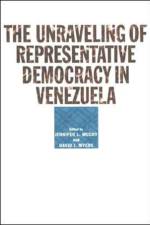
Quade, Benjamin Reilly, Andrew Reynolds, David Samuels, Richard Snyder, Richard Soudriette, R. Kent Weaver
It teases out the finer points of division on the public battlefields of literature and politics and the new world of contesting sexual economies.
The life's work of one of the most knowledgeable researchers in the field, this richly illustrated, magisterial book combines sound scientific principles and meticulous research and belongs on the shelf of every paleontologist and mammalogist.
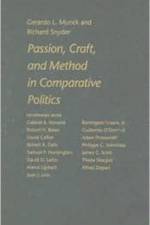
Giving voice to scholars who practice their craft in different ways yet share a passion for knowledge about global politics, Passion, Craft, and Method in Comparative Politics offers a wealth of insights into contemporary debates about the state of knowledge in comparative politics and the future of the field.
This is the definitive work on Medicare's prospective payment system (PPS), which had its origins in the 1972 Social Security Amendments, was first applied to hospitals in 1983, and came to fruition with the Balanced Budget Act of 1997. Drawing on interviews with more than sixty-five major policy makers, Rick Mayes and Robert A. Berenson explain how Medicare's innovative payment system triggered shifts in power away from the providers (hospitals and doctors) to the payers (government insurers and employers) and how providers have responded to encroachments on their professional and financial autonomy."An exhaustively researched and provocative tale of the politics behind how doctors and hospitals are paid in America--and the roots of our health care morass."--Atul Gawande, MacArthur Fellow, author of Better: A Surgeon's Notes on Performance"Whether discussing the Social Security Amendments of 1972 or the Balanced Budget Act of 1997, Mayes and Berenson entertain readers with insider anecdotes about the ideological and practical battles government policymakers fought with powerful provider lobbies."--New England Journal of Medicine"This slender volume offers value on several dimensions. First, it is an explication of recent history that connects the dots from prospective payment to Medicare-based deficit reduction to cost shifting to managed care. By the same token, the story here serves as a bracing corrective to the mythology of market-based reform and the assumption that government's role in health is inescapably a negative one."--Health Affairs"A highly readable book that traces the history of Medicare prospective payment systems from their enactment in 1983 until today."--Journal of Health Politics, Policy and LawRick Mayes, Ph.D., is an associate professor of public policy at the University of Richmond and a faculty research fellow at the Petris Center on Healthcare Markets and Consumer Welfare at the UC-Berkeley School of Public Health. He is the author of Universal Coverage: The Elusive Quest for National Health Insurance and the coauthor of Medicating Children: ADHD and Pediatric Mental Health. Robert A. Berenson, M.D., is a senior fellow at the Urban Institute and coauthor of The Managed Care Blues and How to Cure Them. From 1998 to 2000, he was in charge of Medicare payment policy and managed care contracting in the Health Care Financing Administration (now the Centers for Medicare and Medicaid Services).
This original and progressive work affirms the urgent need for child advocacy and provides valuable guidance to those seeking to participate in efforts to help all children live healthier, happier lives.
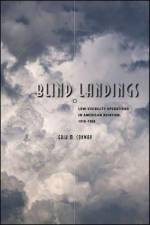
By the end of World War II, the very concept of landing blind therefore had disappeared from the trade literature, a victim of human limitations.
Reflecting on the experiences and contributions of the company's engineers and physicists, Ndiaye traces Du Pont's transformation into one of the corporate models of American success.
To fill this void, Frank and Glied suggest that institutional resources be applied systematically and routinely to examine and address how federal and state programs affect the well-being of people with mental illness.
Pangle shows how these analysts have in effect imported Straussian impulses into a "newkind of political and social science.
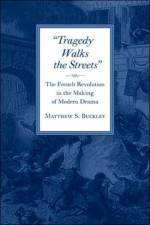
Surveying this expanded field of inquiry, Buckley weaves together a coherent formal genealogy of the drama during this period and offers a new, more continuous generic history of modern drama in its first and most turbulent phase of development.
Above all, sentimental texts used emotion as an important form of social and cultural distinction, as the attribution of sentience and feeling helped to define who would be recognized as human.
Romero and Luis Salamanca, Central University of Venezuela; Harold Trinkunas, Naval Postgraduate School.
They compare post-World War II globalization with the great wave of economic integration that occurred in the late nineteenth century, analyze the rise of the political ideology of the "globalization project"-Reaganism-Thatcherism-and discuss issues of gender and global inequalities.
Like the Bob Scott book on which it builds, this edition will soon become familiar to every serious student of the sport.
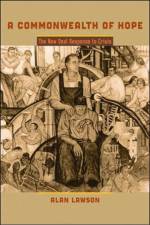
Drawing from a wide variety of scholarly texts, records of the Roosevelt administration, Depression-era newspapers and periodicals, and biographies and reflections of the New Dealers, Lawson offers a comprehensive conceptual base for a crucial aspect of American history.
He discusses the strategies the Romans employed to alleviate or prevent flooding, their social and religious attitudes toward floods, and how the threat of inundation influenced the development of the city's physical and economic landscapes.
She tells the story of a woman whose life and work spanned a historical moment when womanhood was being redefined by the acceptance of a woman's sexuality as distinct from her biological, reproductive role-a development that is still causing controversy today.
A succinct yet comprehensive history, Cars and Culture highlights the technical changes that altered the appearance and performance of automobiles, along with the myriad forces that have shaped the car's development.
Chai concludes with reactions to theory: Coleridge's proposal of the conflict between reason and understanding as a model of theory, Mary Shelley's effort to replace theory with a different kind of relationship to external others, and Holderlin's reflection on the limits of representation and the possibility of fulfillment beyond it.
space program and the rise of the women's movement in America.
"We need these fictions,Jones writes, "to help us imagine our way out of the social structures and mind-sets that mythologize the past, fragment individuals, prejudge people, and divide communities."
Imaginatively conceived, deeply informed, and elegantly written, Sensory Worlds of Early America convincingly establishes sensory experience as a legitimate object of historical inquiry and vividly brings America's colonial era to life.
Abonner på vårt nyhetsbrev og få rabatter og inspirasjon til din neste leseopplevelse.
Ved å abonnere godtar du vår personvernerklæring.